

Hushan Reservoir Environmental Education Center: A Model of Sustainable Educational Architecture in Taiwan
This article explores the Hushan Reservoir Environmental Education Center as a model of sustainable educational architecture in Taiwan, blending nature and culture.


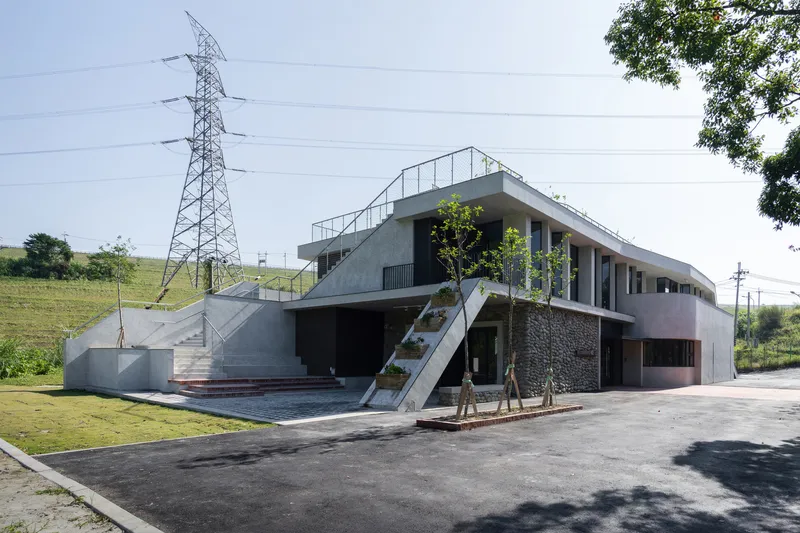
The Hushan Reservoir Environmental Education Center, designed by KDS Architects, is an architectural landmark in Douliu City, Yunlin County, Taiwan. This project was developed as part of an environmental conservation initiative during the construction of the Hushan Reservoir. Beyond serving as an ecological education space, the center is a response to local cultural and historical significance, integrating sustainable design principles with deep-rooted community connections.
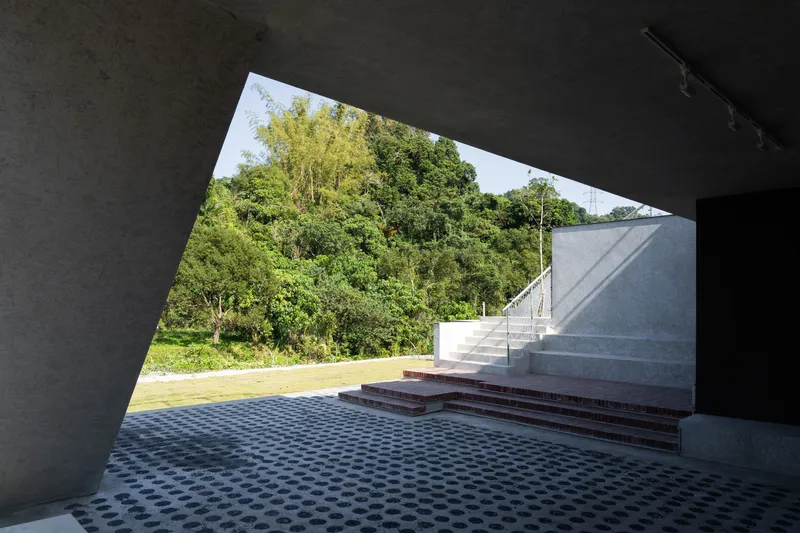
A Vision for Sustainable Educational Architecture
Designed to be more than just an education hall, the Hushan Reservoir Environmental Education Center embodies an approach that harmonizes architectural expression with historical and environmental themes. The project reflects a broader commitment to sustainable educational architecture in Taiwan, where cultural identity, ecological awareness, and environmental stewardship merge into a single architectural narrative.
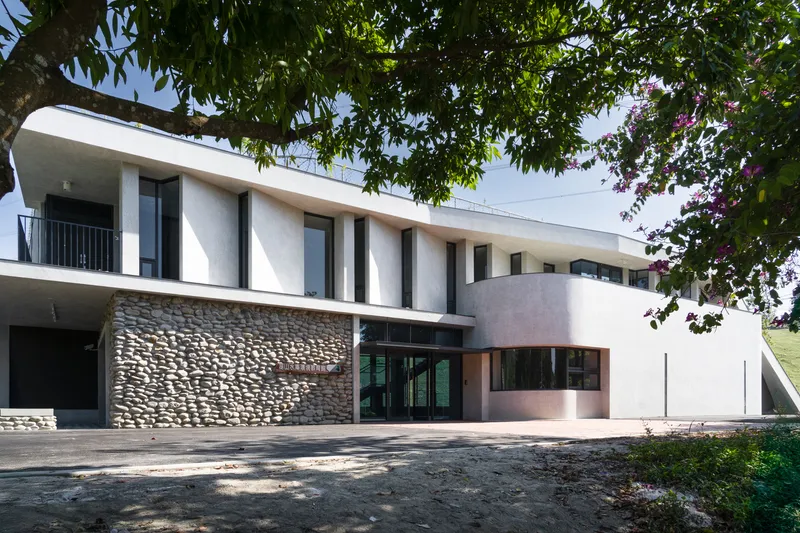
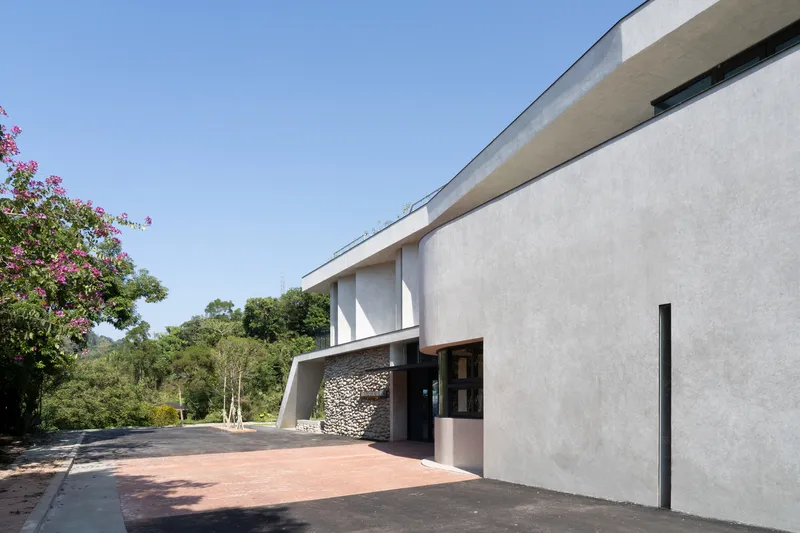
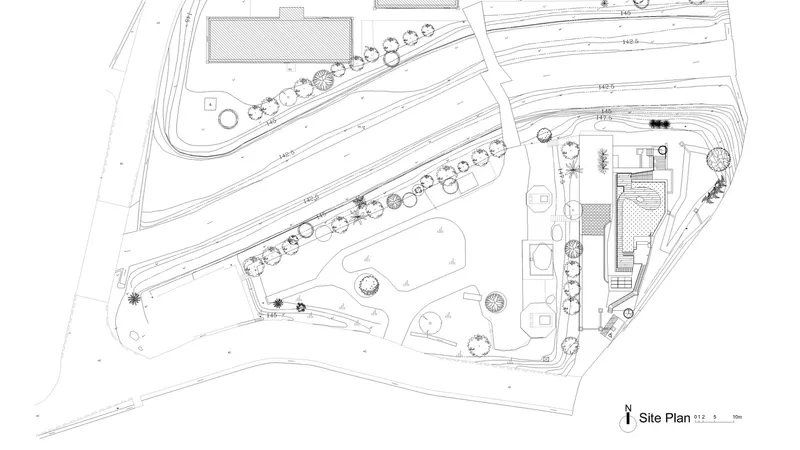
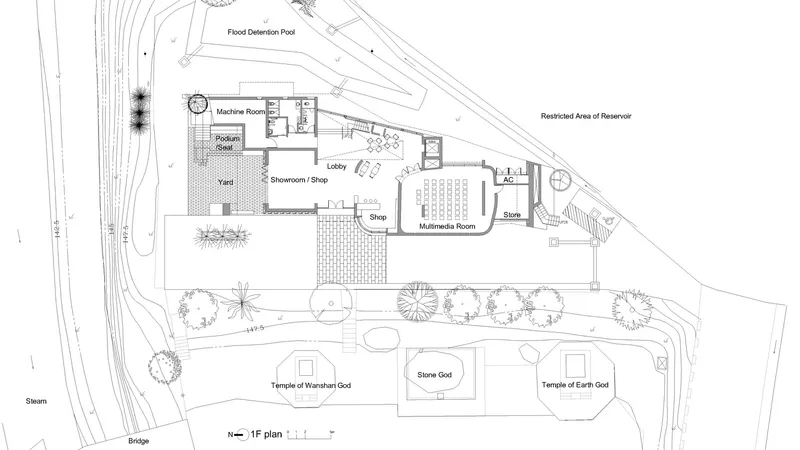
One of the defining cultural elements of the site is the Stone God, a sacred local landmark that was relocated due to the reservoir’s construction. Historically, residents would circle it three times as a ritual for protection while herding cattle. Along with the Wanshan God and the Earth God, it was moved to an open space in front of the dam, creating the Three Gods Park. The education center, positioned between this park and the dam, symbolizes conservation, cultural continuity, and the evolving relationship between nature and human settlement.
Architectural Concept: A Dialogue Between Nature and Culture
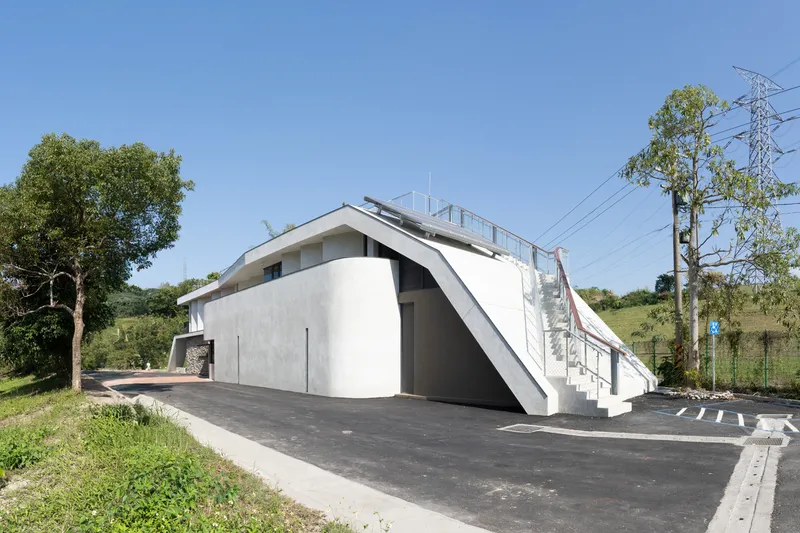
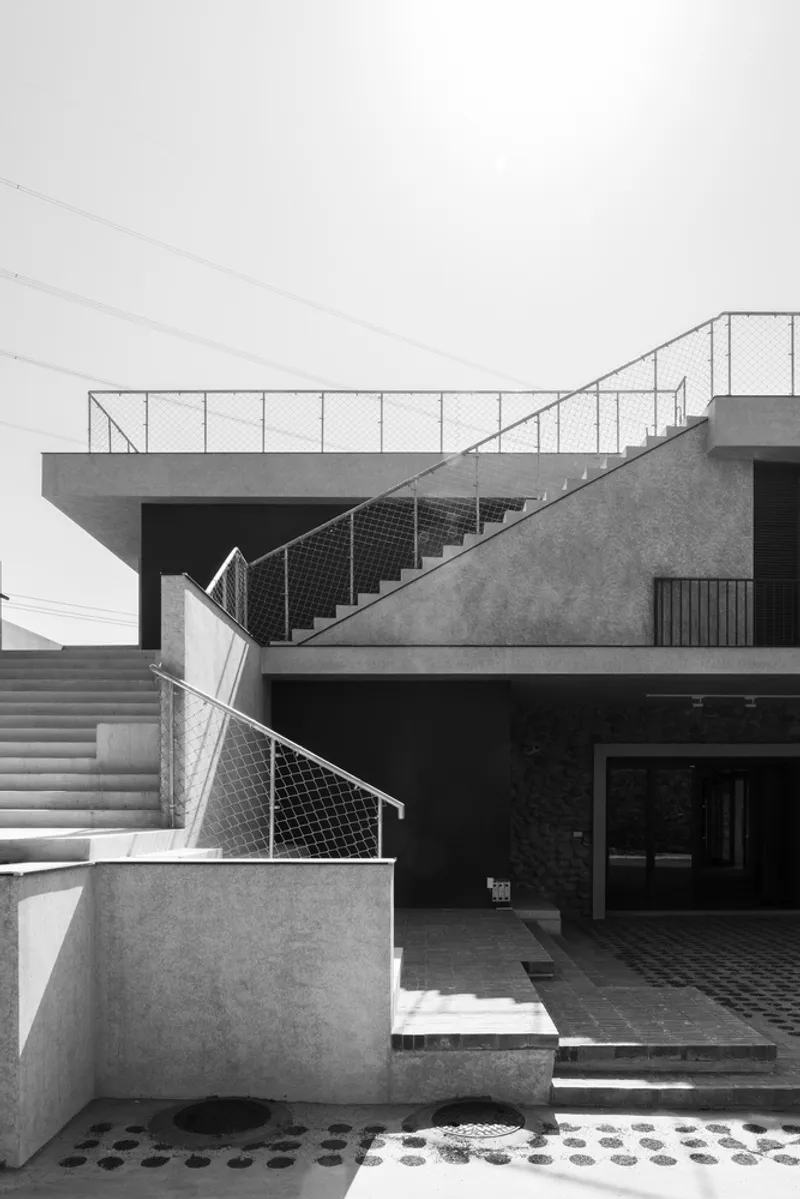
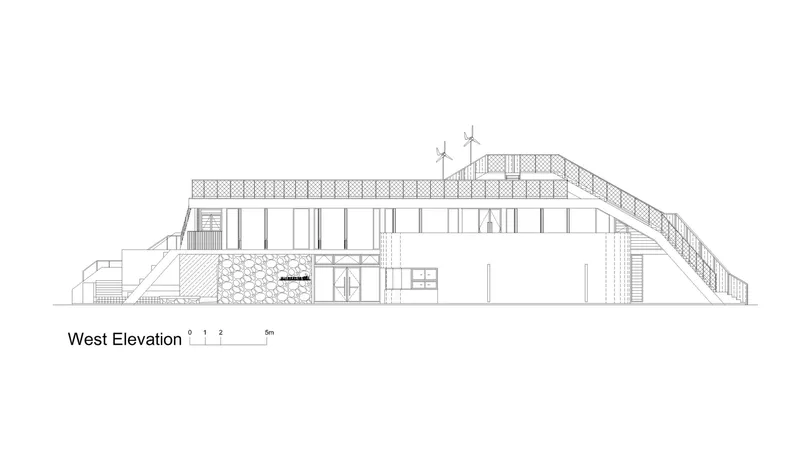
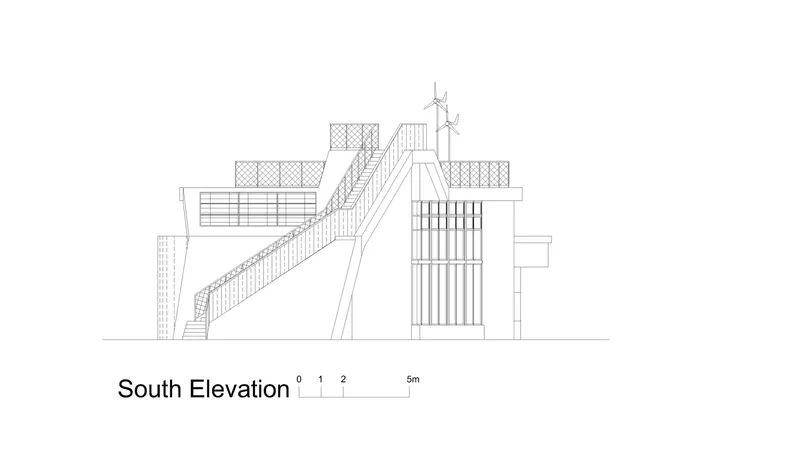
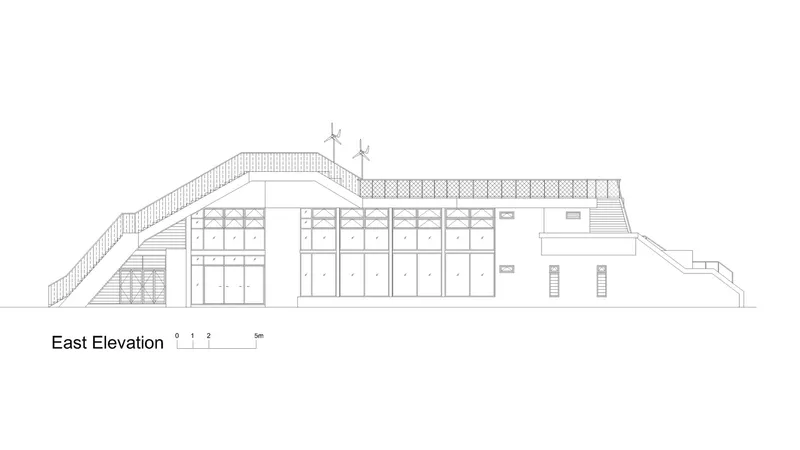
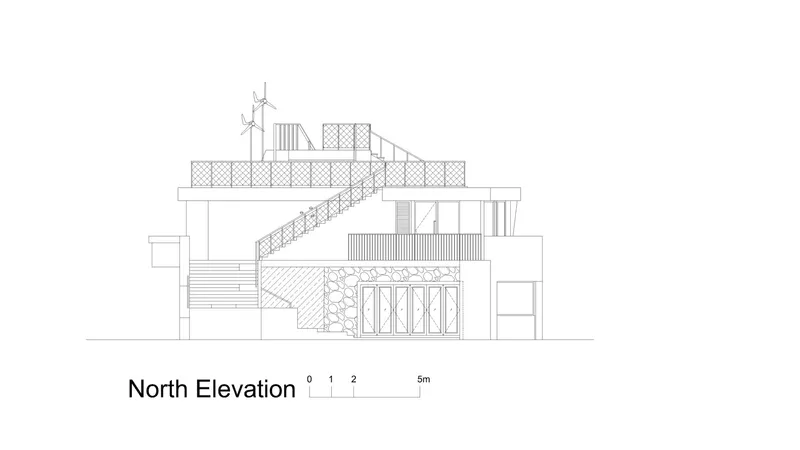
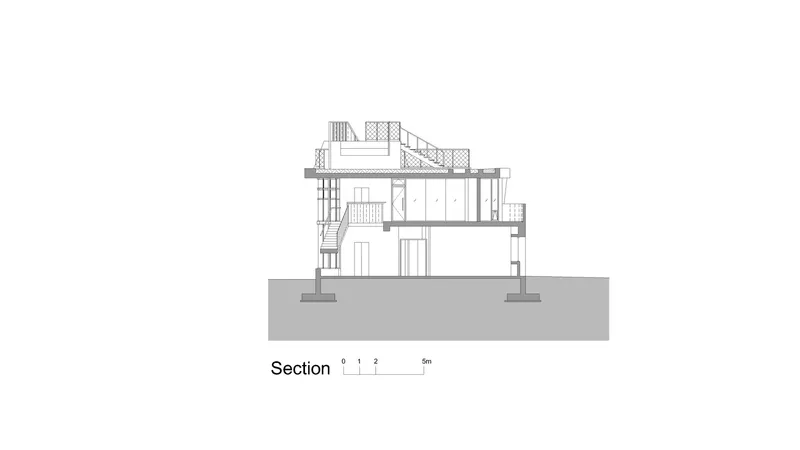
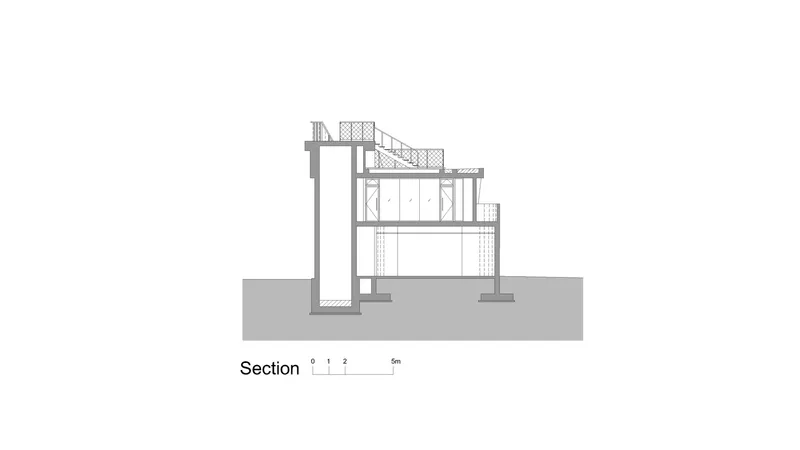
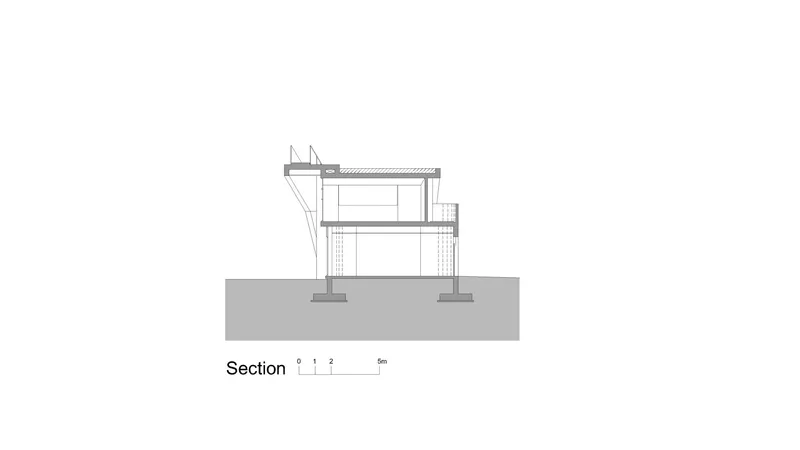
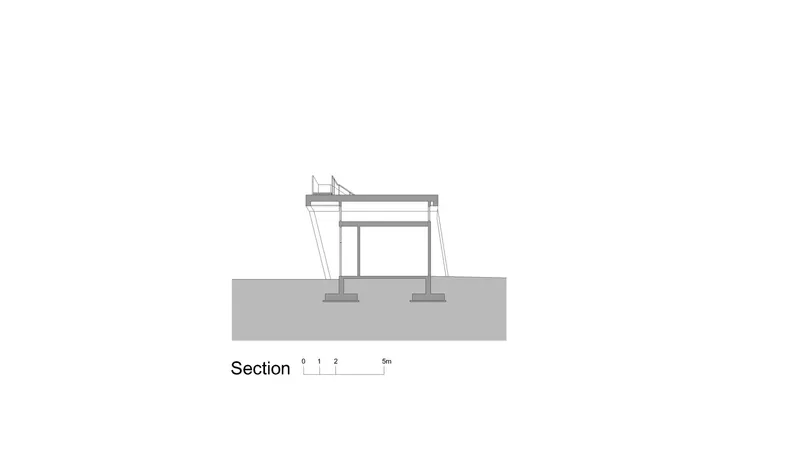
The design of the center draws inspiration from three key natural elements—stone, water, and earth—reflecting the region’s historical, environmental, and emotional significance. The architectural form of the building is deliberately shaped to symbolize the revealing of the Stone God, marking the shifts in history and landscape. Its trapezoidal volume mirrors the dam’s structure, fostering a visual and symbolic connection between the reservoir, the cultural heritage of the site, and the surrounding settlements.
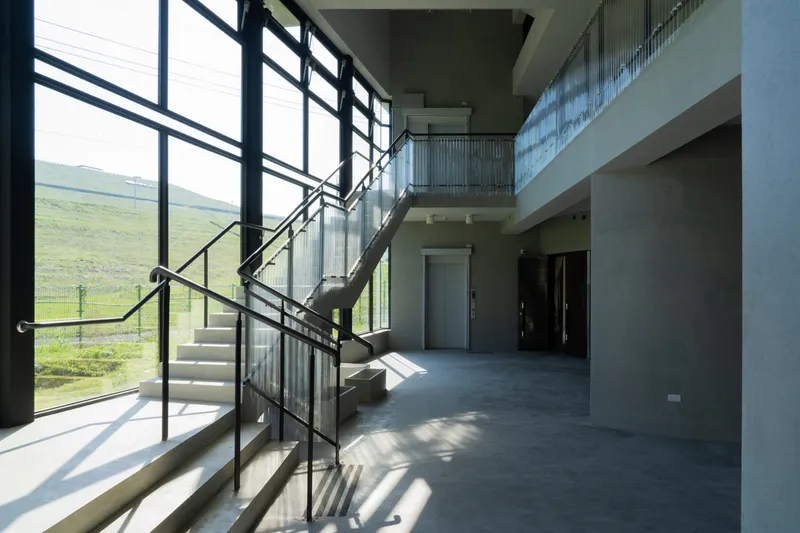
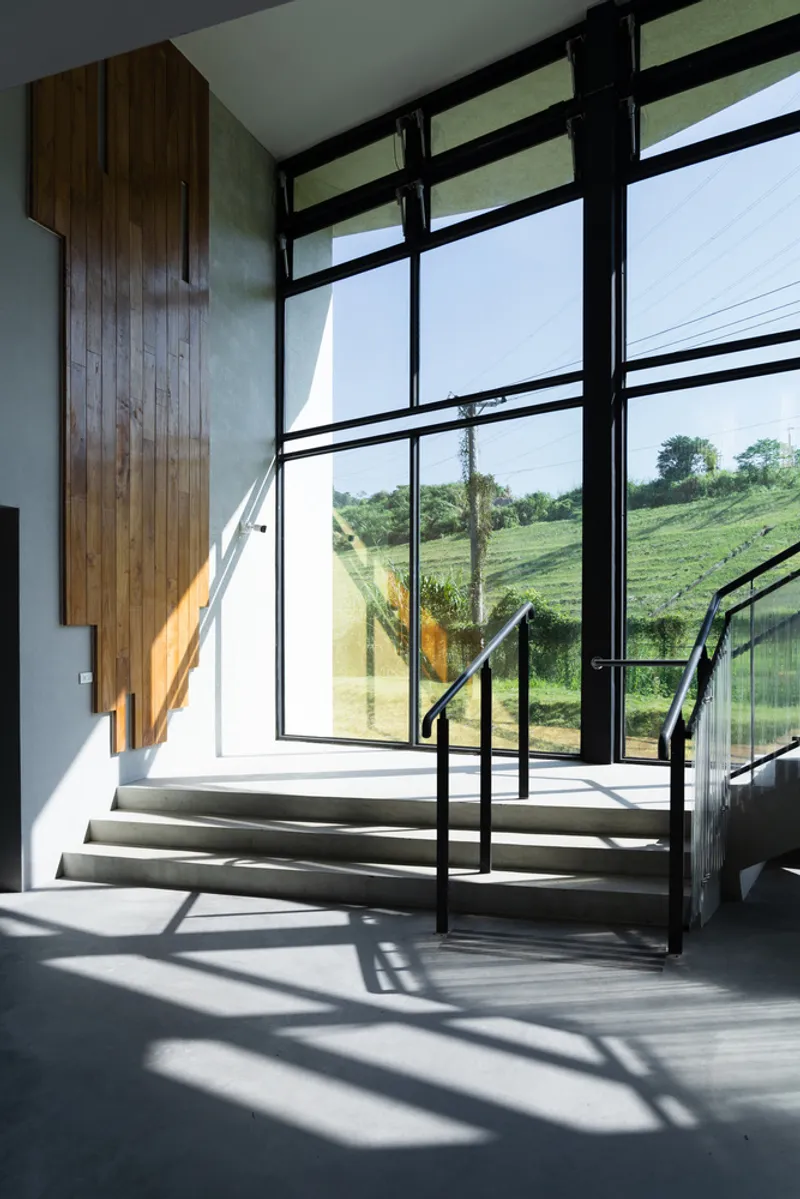
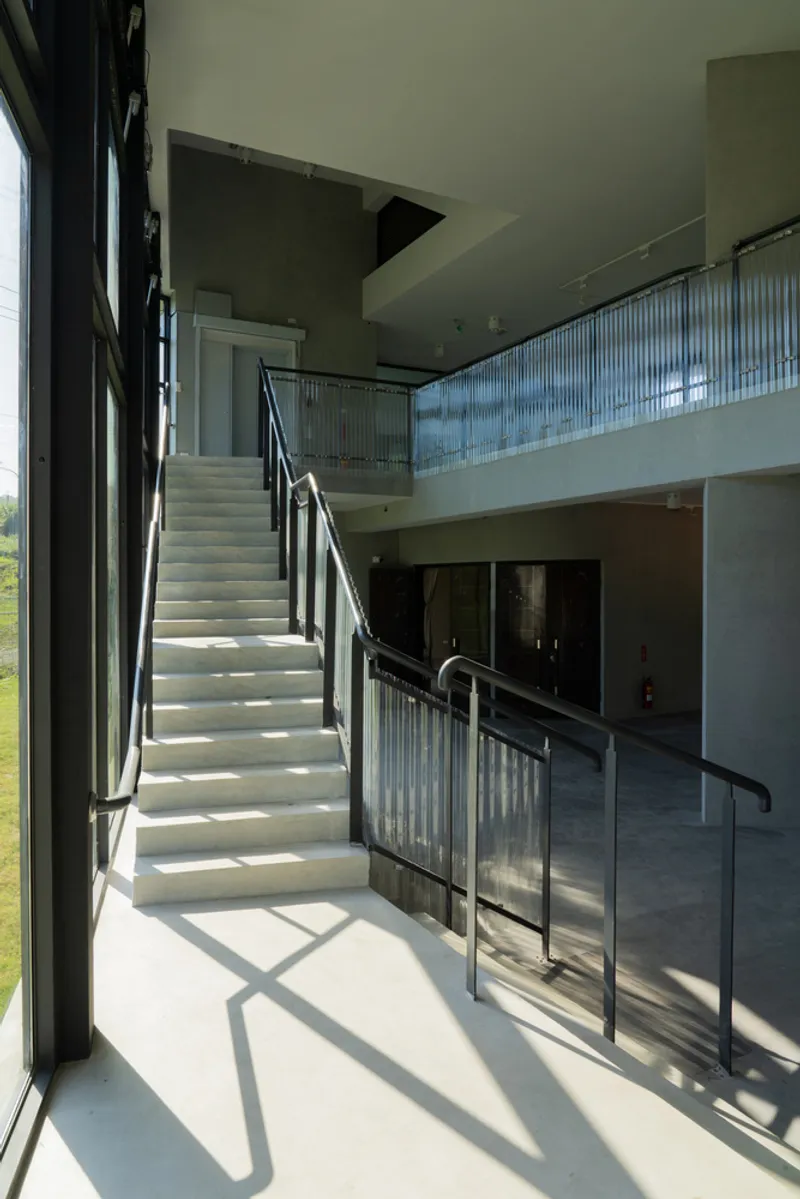
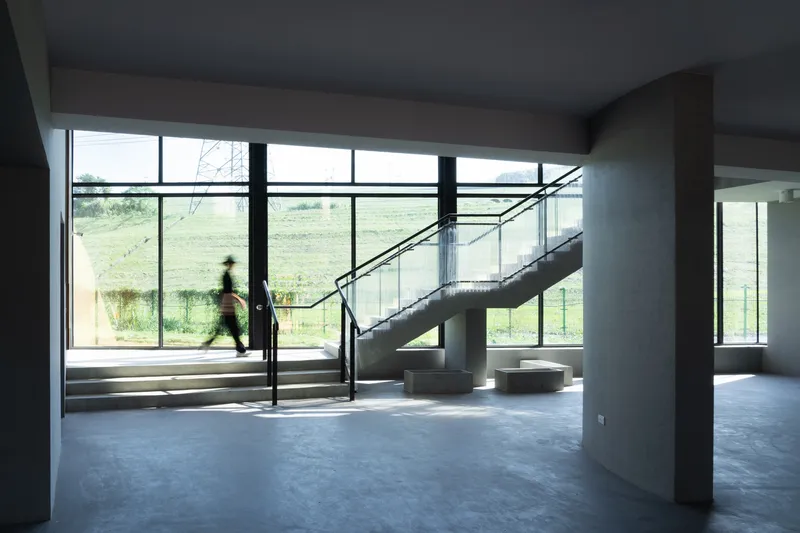
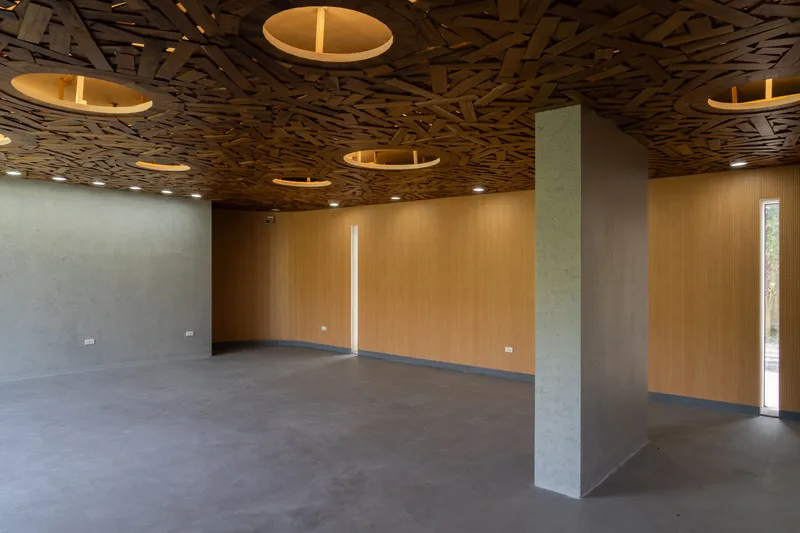
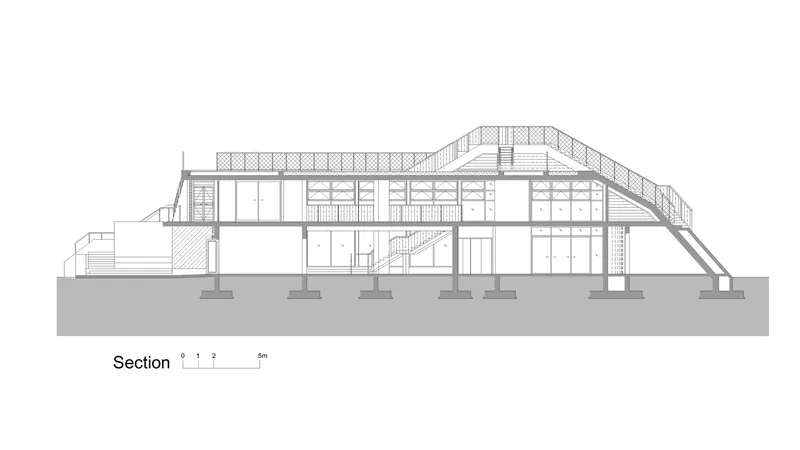
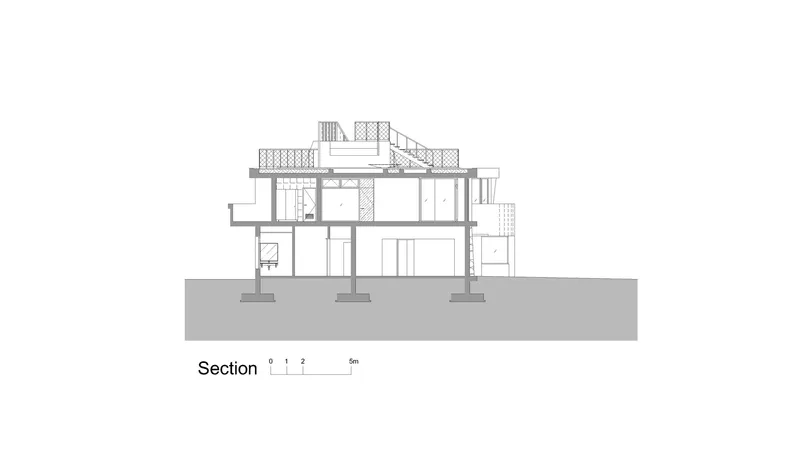
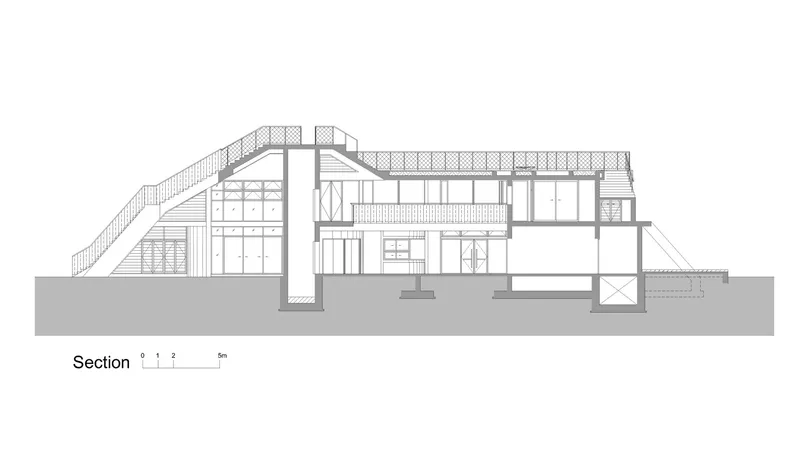
A core aspect of the center’s architectural philosophy is fluidity. The interior of the structure is designed as a column-free space, allowing an unobstructed flow between areas. This seamless spatial experience aligns with the natural elements of the reservoir and the nearby stream, reinforcing the building’s integration into its environment.
Sustainable Design Strategies and Environmental Harmony
Sustainability is central to the project, ensuring that the building remains in harmony with its natural setting while minimizing its environmental footprint. The center employs passive design strategies such as shaded windows, natural ventilation, and foldable doors to regulate indoor temperature and reduce energy consumption.
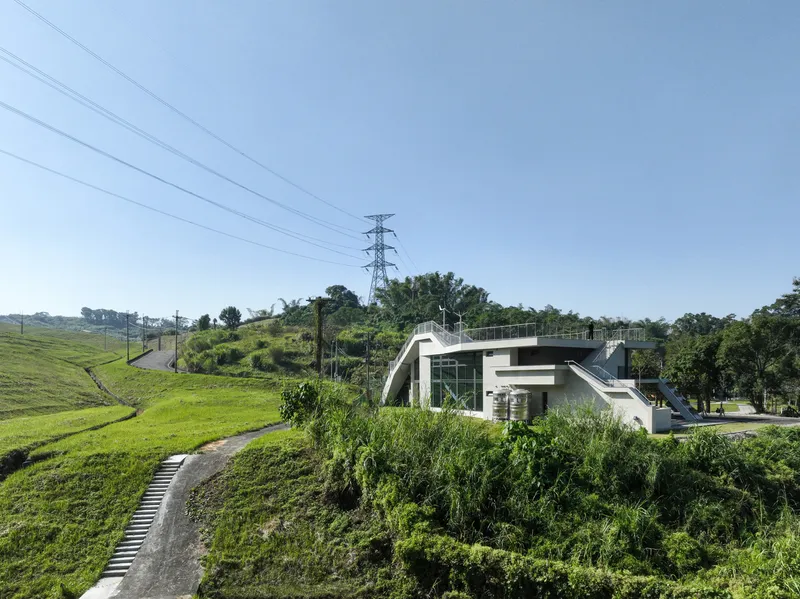
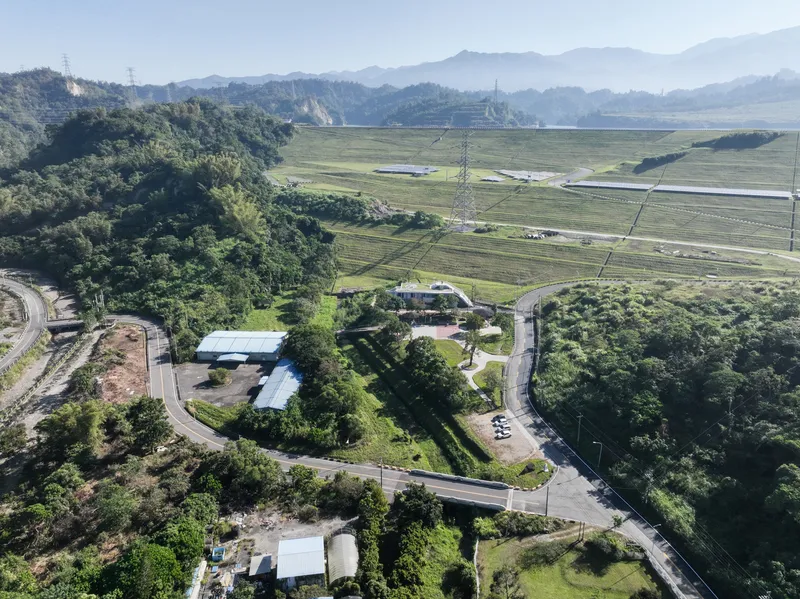
Large openings frame panoramic views of the dam, the Stone God, and the conservation area, enhancing the visitor’s connection to the landscape. The circulation route of the building mimics the ritual movement around the Stone God, reinforcing historical memory while creating a meaningful spatial journey.
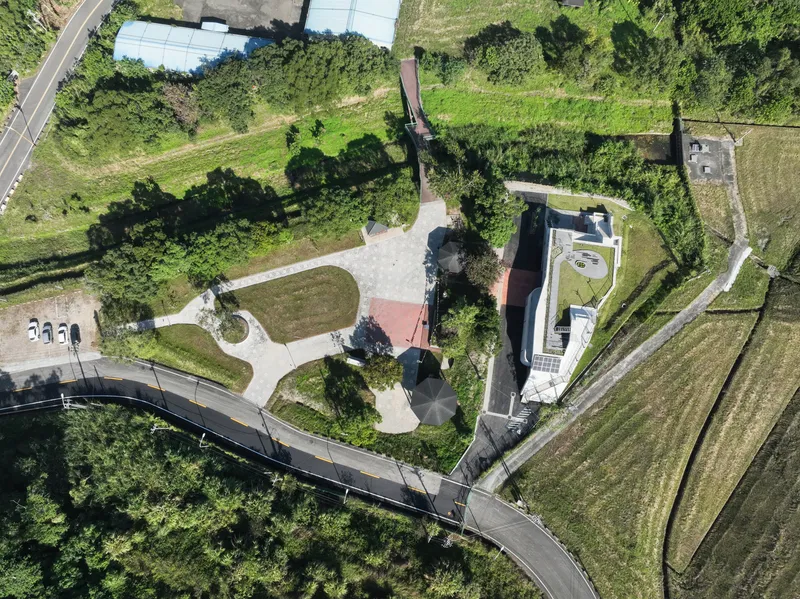
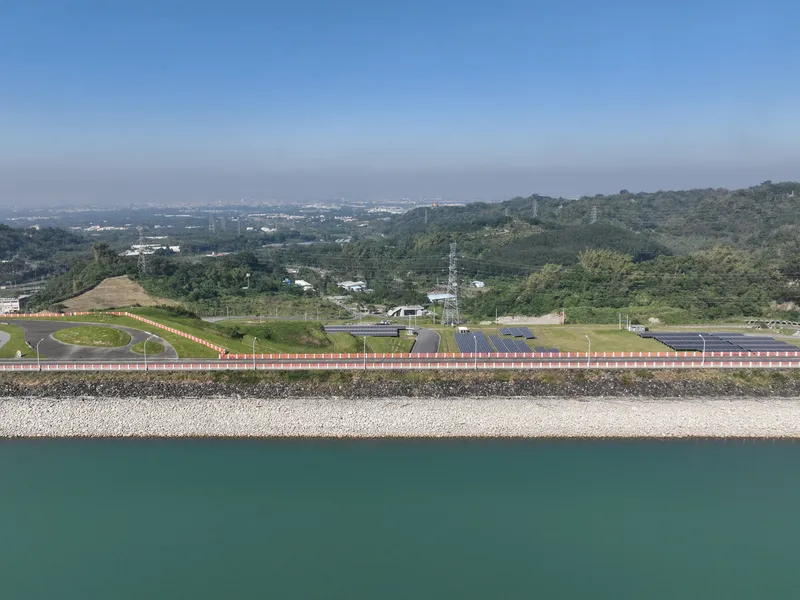
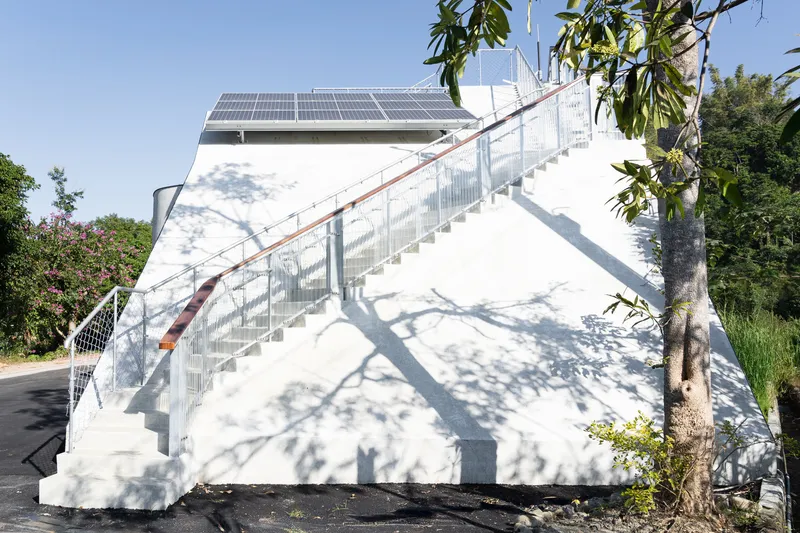
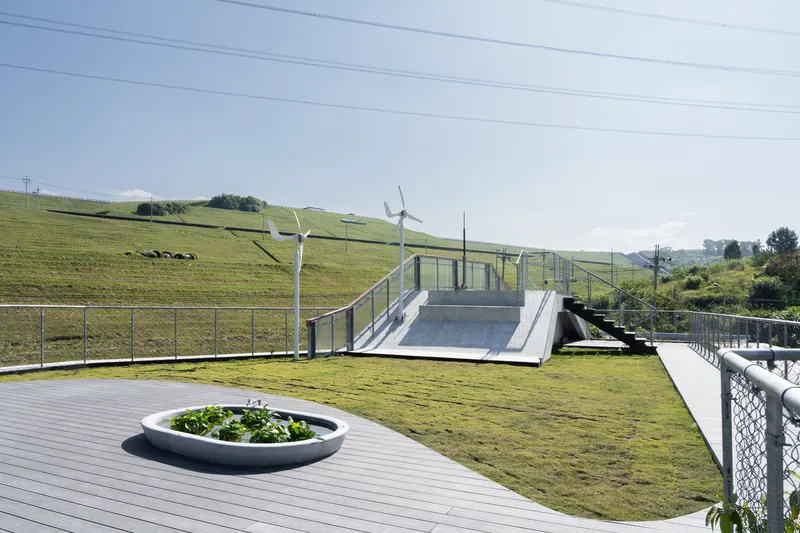
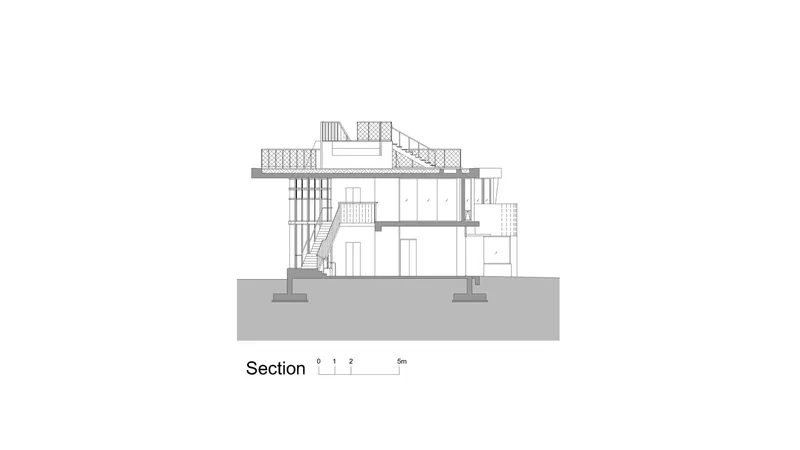
A significant feature of the building’s sustainable approach is its rooftop, which includes greenery and wind turbines. This highlights the balance between land transformation, conservation, and energy efficiency. The design also emphasizes the importance of water, with a rooftop shaped like a water droplet and a basin that symbolizes the reservoir’s role in sustaining life.
Cultural and Material Integration
The Hushan Reservoir Environmental Education Center is deeply rooted in local materials and traditional construction techniques. Regional stone, reclaimed wood, and metal elements allow the building to seamlessly blend into its surroundings while maintaining a low environmental impact. This choice of materials reflects a commitment to low-tech, low-cost architecture, ensuring durability and ease of maintenance while embracing traditional craftsmanship.
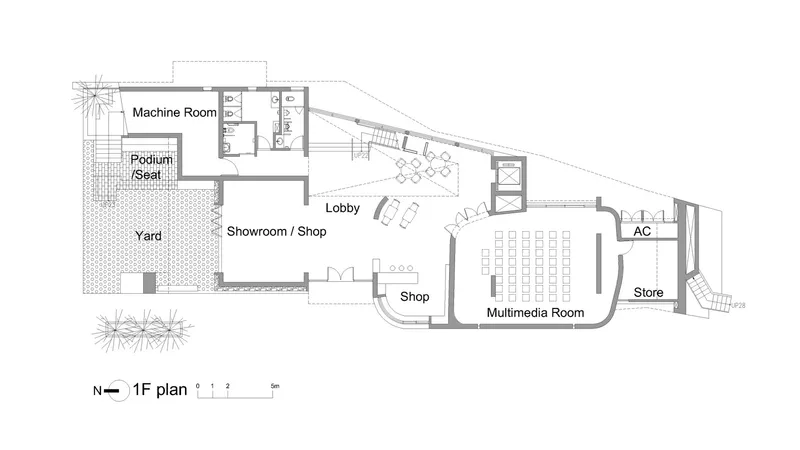
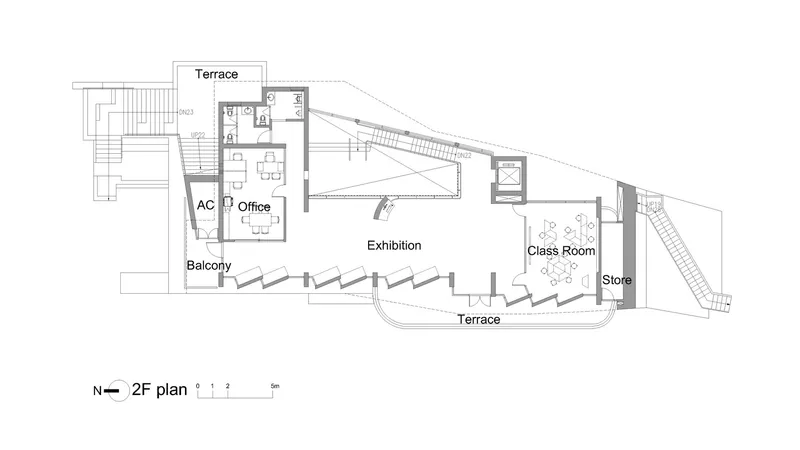
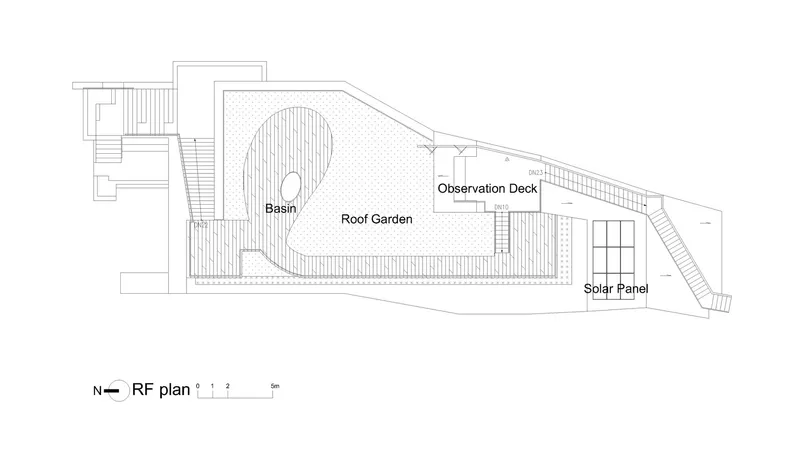
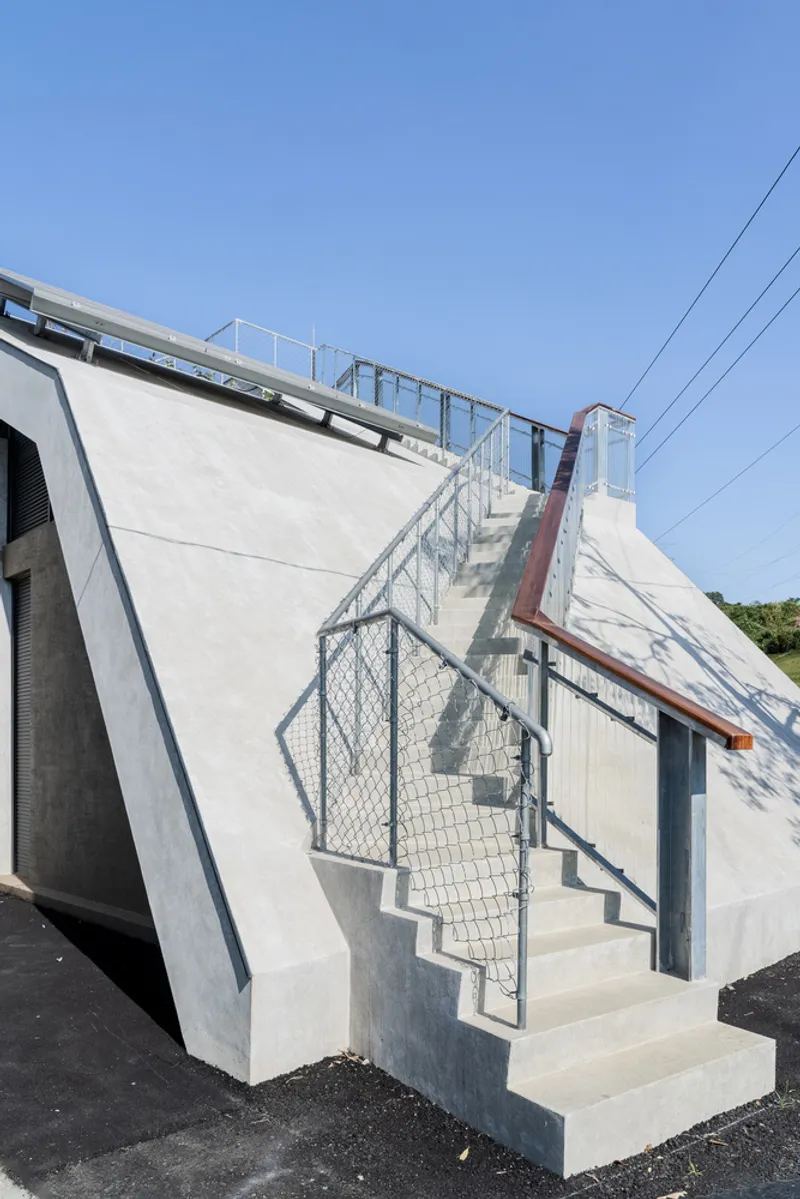
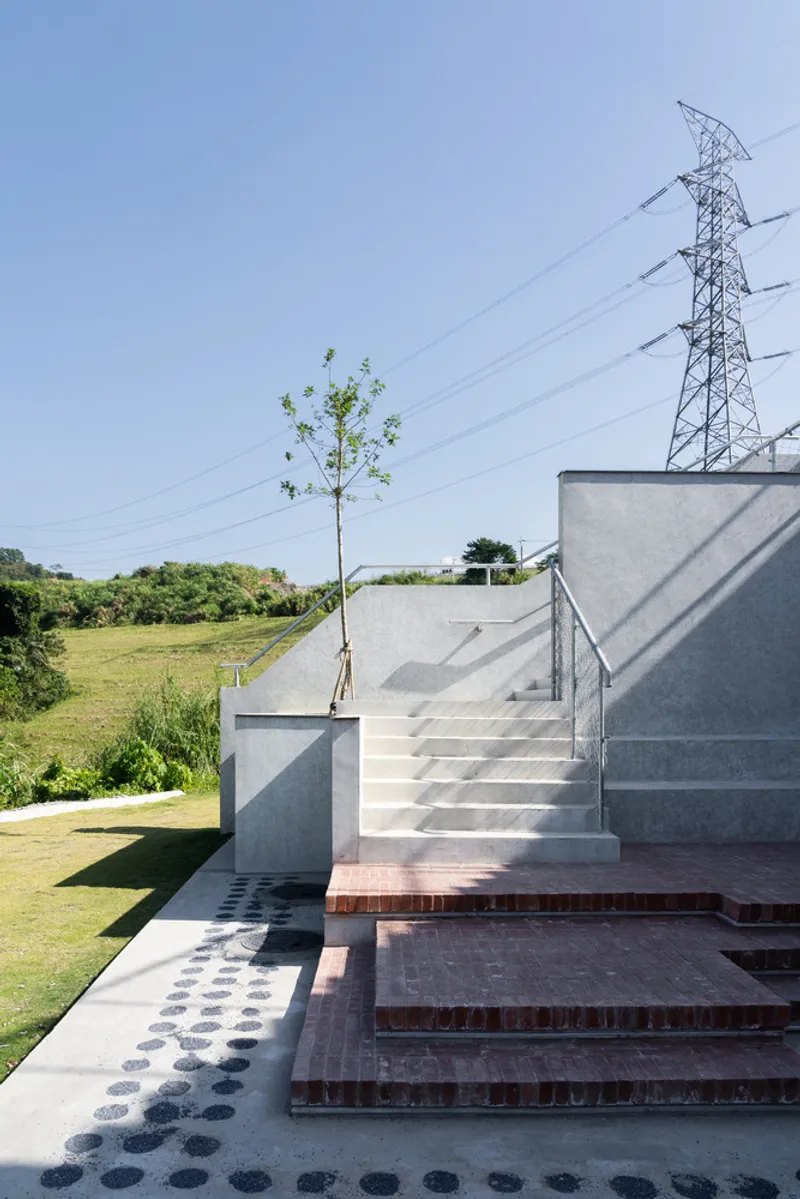
The south-facing stairs reference the historical journeys of herders ascending the mountains, adding a cultural narrative to the building’s design. This symbolic approach enhances the connection between the past and present, reinforcing the educational center’s role as a space for learning, memory, and environmental awareness.
A Holistic Approach to Sustainability and Community
The Hushan Reservoir Environmental Education Center is more than just a physical structure; it is a reconciliation between human development and environmental preservation. As a hub for ecological education and cultural heritage, the center fosters a deeper understanding of the delicate balance between nature and community.
All Photographs are works of Manka Huang


Popular Articles
Popular articles from the community


LT2A and OPEN Architectes Thread a Brick and Glass High School Through a Wooded Belgian Campus
In Braine-l'Alleud, a 3,000 m² wing for Collège Cardinal Mercier pairs pale brick with a glazed colonnade, deferring to a small chapel and a dense wood.

Cube Design Draws an Ecological Corridor Between Two Shenzhen Hills with the Nankai Building
Beside Shenzhen's container docks, the Nankai Building pairs stacked balconies with a climbing green screen to connect two hillsides across its height.


Aquadapt: An Underwater Habitat That Rewrites Its Rooms by the Hour
Curved modules ring the seabed while one shell shifts from breakfast room to cinema, farm and football pitch as residents' needs change.

FCC Arquitectura Expands a Portuguese Granite House with a Board-Marked Concrete Wing
In Portugal, JV House pairs a cleaned-up whitewashed and granite dwelling with a timber-shuttered concrete extension, courtyards and a garden pool.

Similar Reads
You might also enjoy these articles

Bamboo Housing Challenge 2026: Design Affordable, Sustainable Homes Using Bamboo
An international design competition by Bamboo U and IBUKU inviting architects and designers to reimagine affordable housing using bamboo — with the winning design built full-scale in Bali.

Computational Design & Education: Beegraphy Design Awards Introduces 7th Category (Featuring Jiyun's Innovative Approach)
Dive into Beegraphy’s 7th Design Awards category, where computational design meets education to create immersive, interactive learning tools, inspired by Jiyun’s work.
From Parametric Lighting to Urban Furniture: Join the 2nd Workshop in Beegraphy’s Computational Design Series
Dive into Cutting-Edge Design Techniques and Practical Applications with Industry Experts

Last Call: Unleash Your Architectural Genius in SHAK's Kindergarten Design Competition
Urgent call for architects to join SHAK's kindergarten design competition before the looming deadline

Explore Architecture Competitions
Discover active competitions in this discipline

Challenge to reimagine the Iron Throne

Photograph architecture without architects

Illustrate the lost glory of Angkor Wat - Render Challenge

Design challenge to reuse E-waste
Comments (0)
Please login or sign up to add comments
No comments yet. Be the first to comment!