Hydro Shell Nexus: Redefining Sustainable Underwater Architecture
Innovating biomimetic architecture for sustainable coral reef research while protecting fragile marine ecosystems.


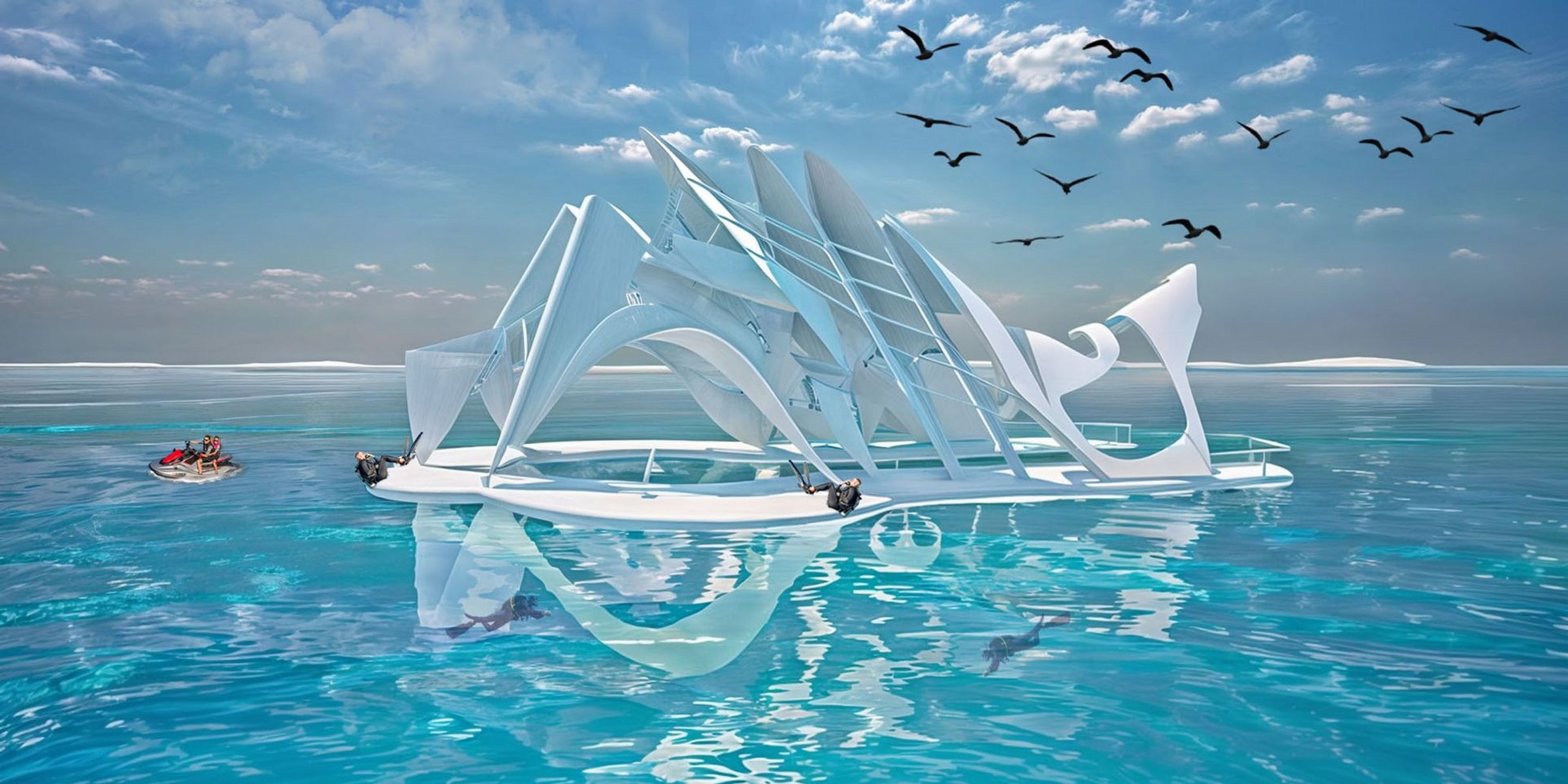
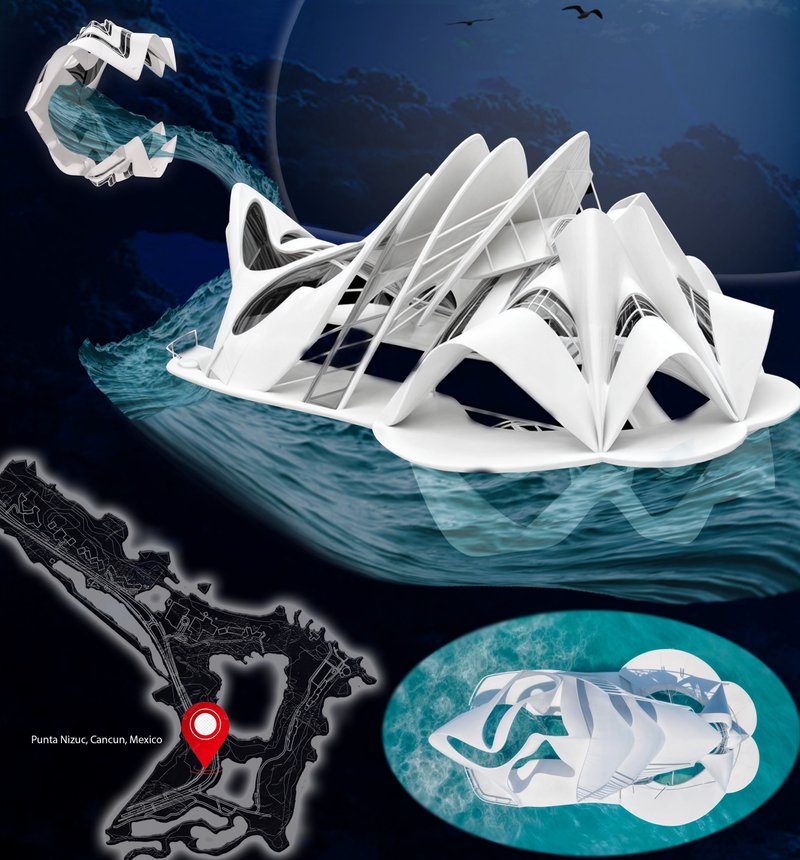
The Hydro Shell Nexus represents a groundbreaking approach in sustainable underwater architecture, merging advanced biomimetic design with ecological preservation. This floating research facility, located in Punta Nizuc, Cancun, Mexico, minimizes human impact on coral reefs while facilitating scientific exploration. Conceptualized by Angel Gamboa, Kreshalia Byrd, and Jovanny Salasar, the project was a shortlisted entry in the esteemed Underwater Web competition, emphasizing its innovative and academic relevance.
Pioneering Sustainable Design
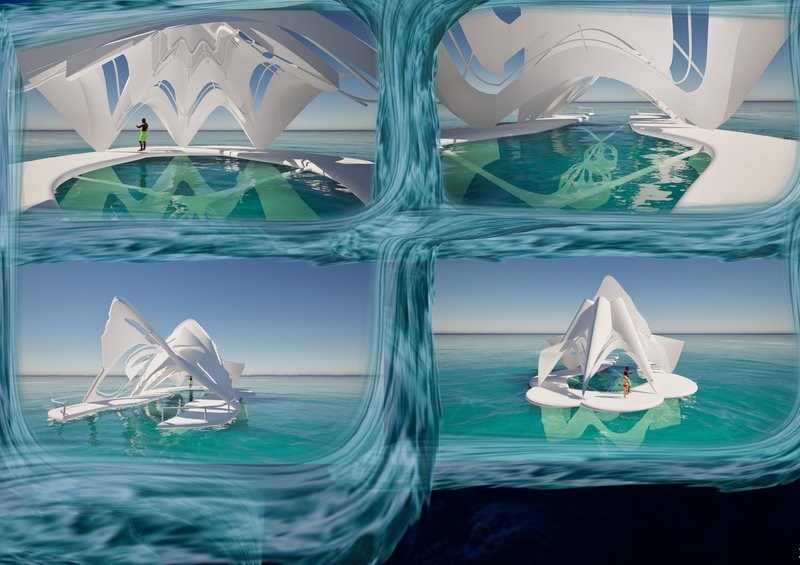
The Hydro Shell Nexus is an engineered response to the challenges of coral reef conservation. This floating structure offers researchers and divers a controlled, immersive environment to study marine ecosystems without disrupting their natural balance. Inspired by biomimetic architecture, the design harmonizes human activity with the aquatic environment by adopting forms and functions modeled on marine life, such as clams, lobsters, and coral formations. This nature-inspired approach illustrates the potential of architecture to bridge ecological sensitivity with functional ingenuity.
Defining Features of the Hydro Shell Nexus
1. Clam-Inspired Facade: Supporting Coral Growth and Diver Safety
Central to the Hydro Shell Nexus is its clam-shaped structure, which doubles as a platform for coral cultivation and a safe access point for divers. The surface fosters coral growth, aiding reef restoration efforts and providing researchers with firsthand observational opportunities. Beneath this facade, an underwater cage ensures diver safety by offering a secure transition zone into the surrounding marine environment.
2. Lobster-Inspired Fins: A Multi-Functional Innovation
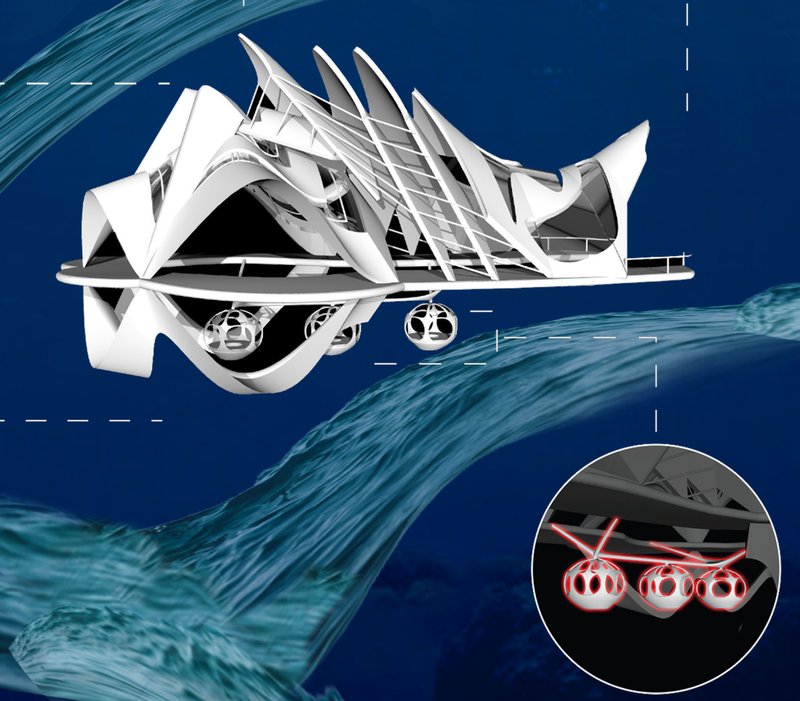
The fins, mimicking the form of lobster shells, serve dual purposes in both aesthetics and utility. Acting as wind catchers, they channel air into an integrated oxygen delivery system that maintains breathable conditions within the submerged viewing galleries. Additionally, these fins protect the structure from turbulent oceanic conditions, enhancing its resilience and sustainability. This biomimetic adaptation aligns architectural form with environmental functionality.
3. Immersive Underwater Viewing Pods
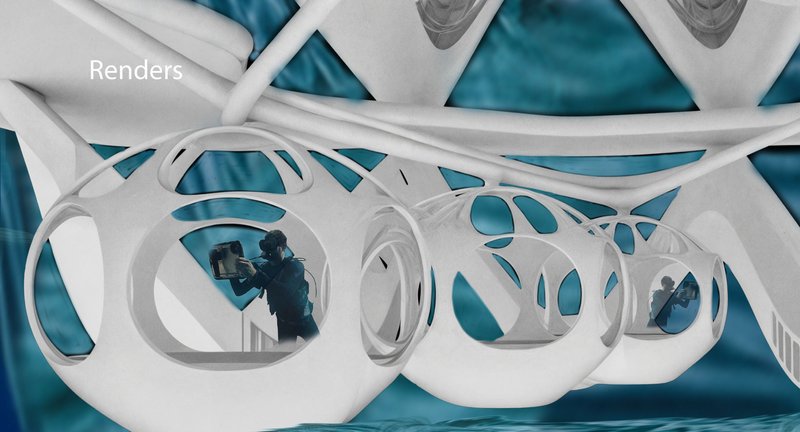
Three submerged observation pods offer researchers unobstructed views of the coral reef ecosystem. These pods are accessible exclusively through diving, ensuring minimal disruption to marine life. Encased within the clam-inspired base, these pods embody the protective ethos of the design while providing a cutting-edge platform for ecological studies.
Environmental Stewardship Through Adaptability
The Hydro Shell Nexus demonstrates a commitment to reducing its ecological footprint. Unlike permanent installations on the ocean floor, this floating structure is fully redeployable, allowing it to support global coral reef research initiatives across multiple sites. This adaptability underscores the principles of sustainable architecture by prioritizing flexibility and minimizing long-term environmental impact.
Sustainable Materials and Modular Construction
The Nexus is constructed using environmentally conscious materials and modular techniques, enabling efficient assembly and deployment. This method not only ensures cost-effectiveness but also makes the structure an accessible option for global research organizations seeking scalable and sustainable solutions for marine exploration.
The Hydro Shell Nexus epitomizes the potential of biomimicry to inspire innovative, eco-friendly architectural solutions. By incorporating forms and systems inspired by marine organisms, the design achieves a symbiotic relationship between human innovation and environmental preservation. This project by Angel Gamboa, Kreshalia Byrd, and Jovanny Salasar sets a benchmark for future advancements in underwater architectural design, offering a model for balancing scientific discovery with ecological stewardship.