KalaSetu: A New Landmark in Public Space Architecture
A cultural foot-over bridge that transforms movement into meaning, reconnecting people, art, and the riverfront through an immersive spatial journey.


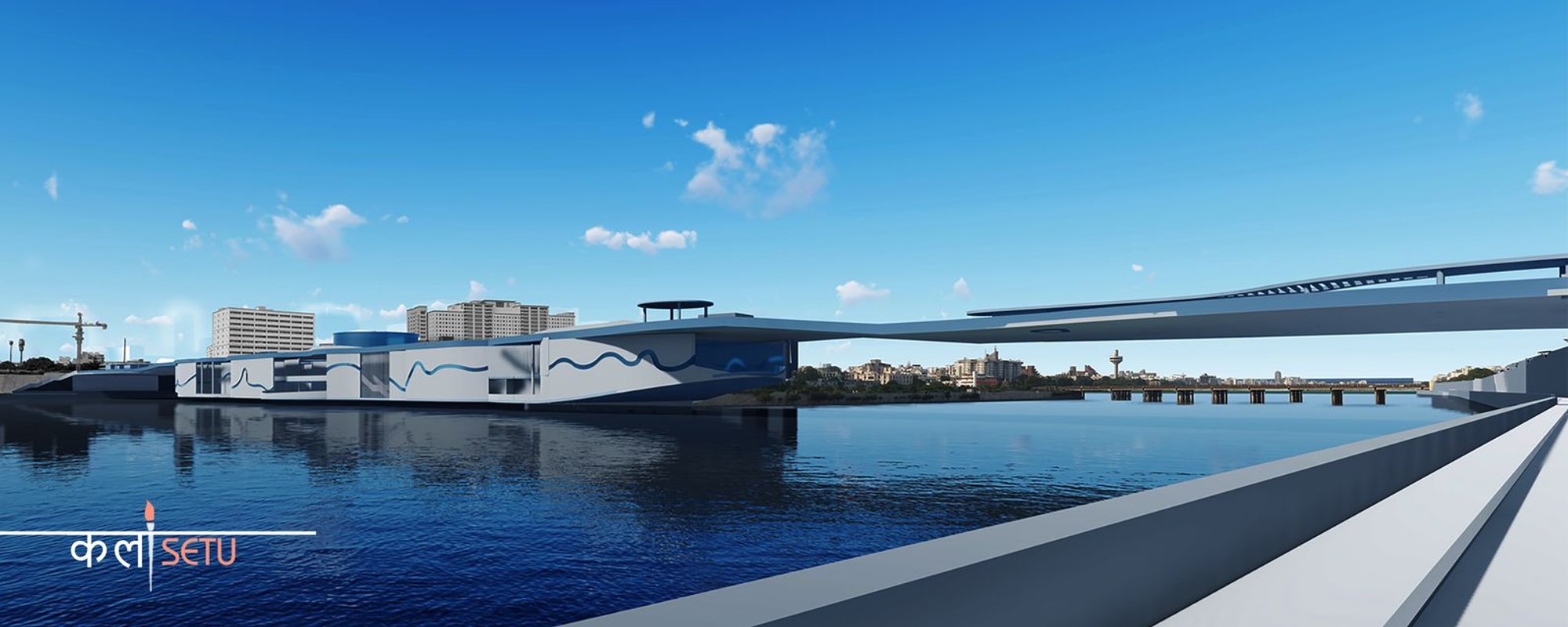
KalaSetu reimagines what a bridge can be. More than a passage from one bank to another, it becomes a living piece of public space architecture, where movement becomes experience, and experience becomes cultural participation. Designed by Ravi Thacker and Palash Trivedi, this visionary proposal—honored as the People’s Choice Award entry of Bharat Bhavan 2020—creates a seamless dialogue between art, community, and the Sabarmati riverfront.
In a time when public spaces are increasingly expected to serve multiple social, cultural, and emotional functions, KalaSetu positions itself not merely as infrastructure but as an activated cultural corridor. Here, art persists for itself while dissolving into the fluidity of public life. The foot-over bridge becomes a catalyst—bridging not only two sides of the city but the often-overlooked gap between art, culture, and everyday living.
Reinterpreting Movement as Cultural Engagement
Traditional foot-over bridges prioritize efficiency and connectivity. KalaSetu preserves this function but elevates it through spatial drama and choreographed experiences. The design breaks free from the linear typology of pedestrian bridges, using organic forms, sunken levels, layered walkways, and interspersed display pockets to create a dynamic narrative.
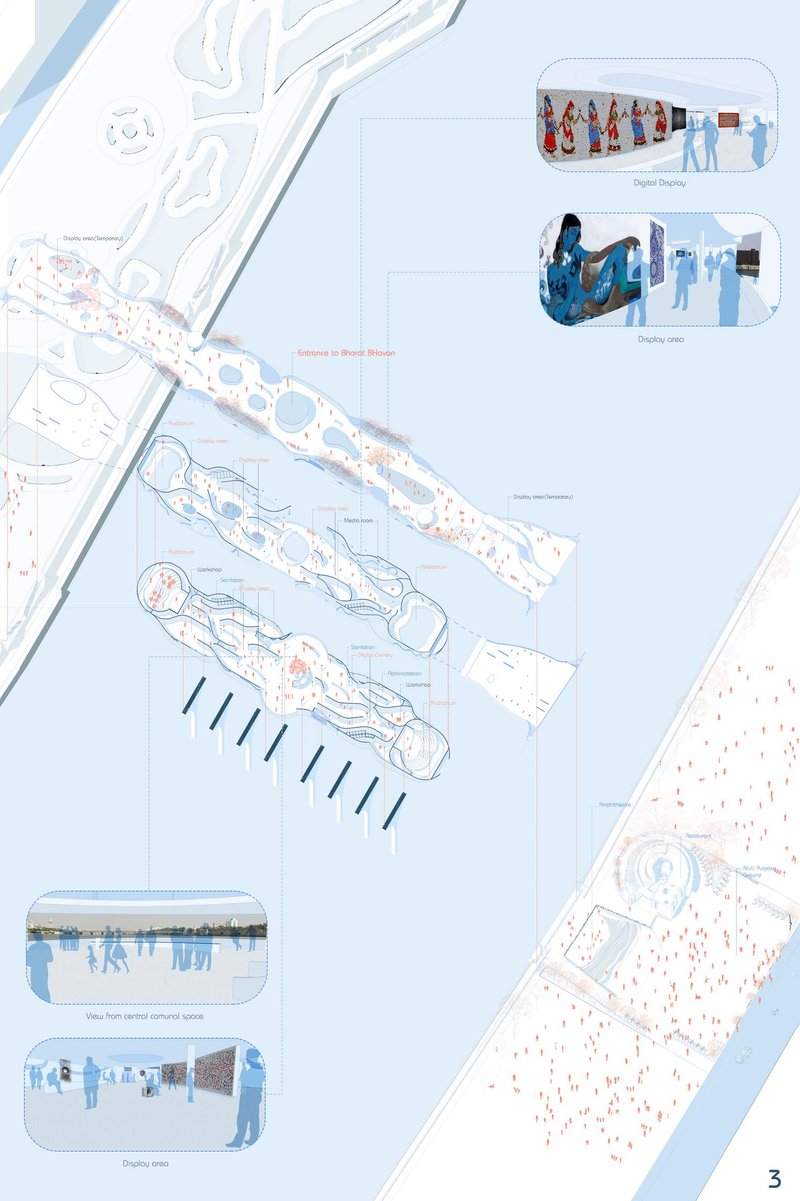
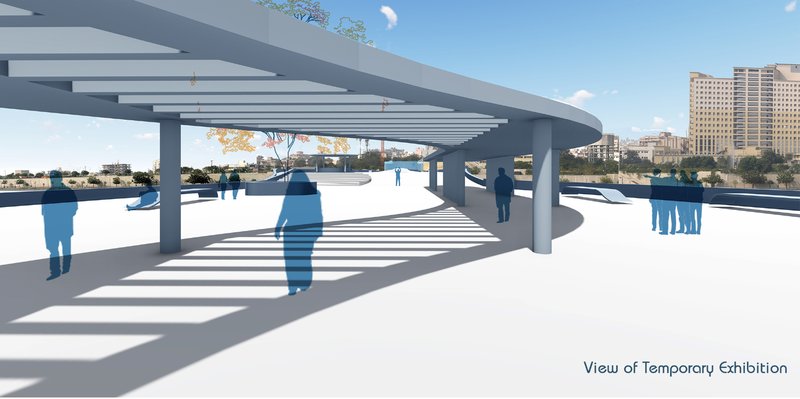
As visitors move across the structure, they transition through curated experiences—digital installations, temporary exhibitions, performance pockets, communal plazas, and quiet reflective zones. The bridge becomes a cultural loop, where the city’s rhythms intertwine with the arts.
This layered movement flow is not just architectural; it is symbolic. KalaSetu positions art as an accessible everyday experience, embedded within the very act of walking, strolling, gathering, and observing.
Embedding Art into Public Space Architecture
The project excels in its seamless integration of public space architecture, using the riverfront as both backdrop and inspiration. The design language draws from fluidity and porosity—qualities that reflect the nature of rivers, communities, and artistic expression.
Key architectural strategies include:
1. A Submerged, Fluid Envelope
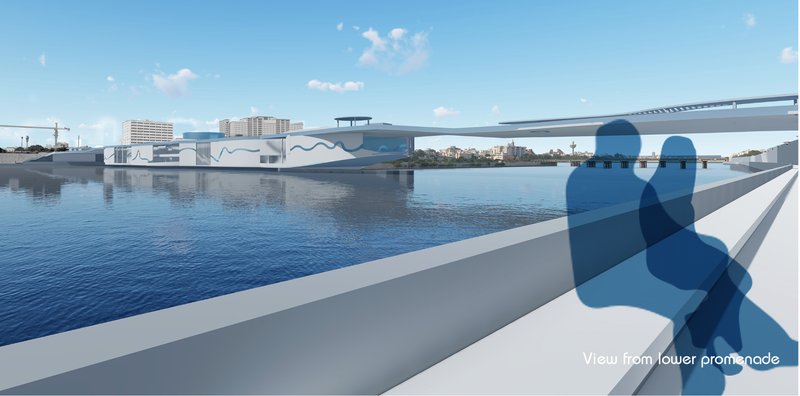
The structure dips below the traditional promenade level, allowing art-filled interior volumes to emerge only subtly above the waterline. This gesture softens the built form and enhances the immersive quality of the experience.
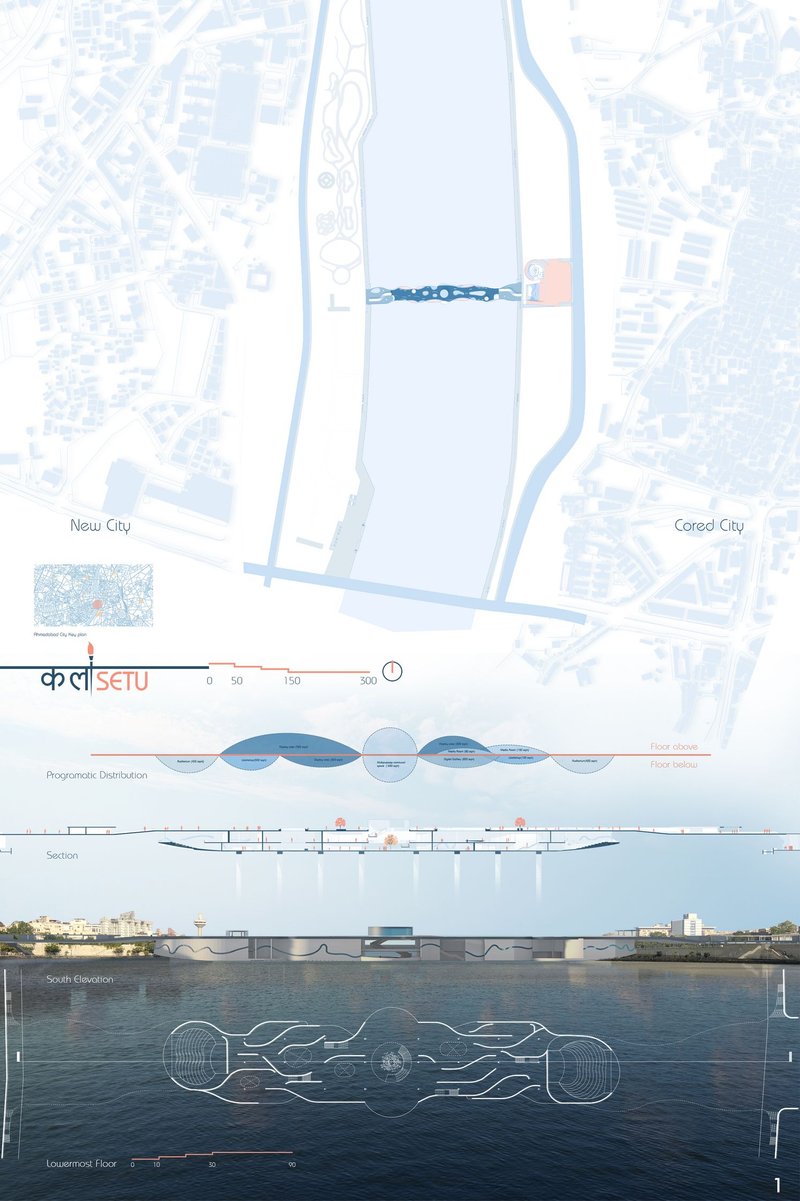
2. Programmatic Distribution Across Levels
The bridge is conceived as a multi-layered organism:
- Uppermost floor → open public terraces, exhibition pockets, performance zones
- Intermediate paths → circulation loops, shaded walkways, platforms for temporary art
- Lowermost floor → media rooms, digital galleries, installations, and enclosed multi-use halls
Each level contributes to the narrative, enabling KalaSetu to behave like a floating cultural spine.
3. Sculpted Voids and Viewing Funnels
Circular and elliptical voids puncture the structure, forming courtyards, skylights, and visual connectors. They frame the sky above and the river below, reminding visitors of the environment they are part of.
4. Seamless Integration with the Riverfront Masterplan
KalaSetu is positioned as an extension of the broader Bharat Bhavan precinct—an entryway into a cultural ecosystem. It mirrors the energy of the riverbank while reinforcing the city’s need for inclusive, participatory public architecture.
Space as Experience: Interactions that Build Culture
KalaSetu is not just a pedestrian link—it is an encounter.
- Promenade seating areas allow people to pause and observe the river.
- Open exhibition decks create opportunities for artists to showcase work in evolving, context-rich settings.
- Digital galleries enable contemporary and interactive displays.
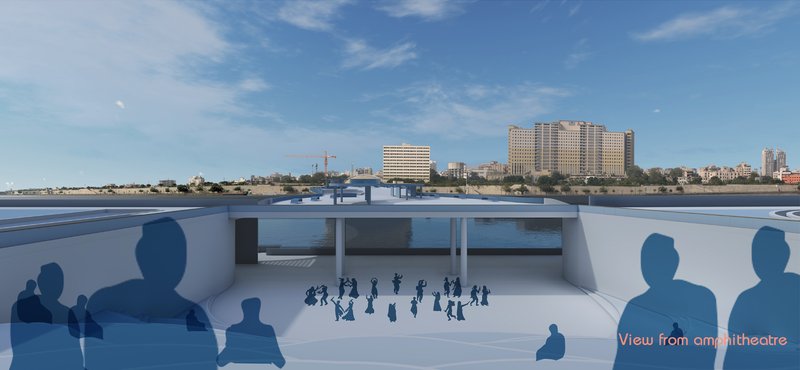
- Amphitheatre pockets foster community events, performances, and gatherings.
- Central communal plazas act as social condensers where festivals, workshops, and spontaneous activities can unfold.
Every spatial gesture strengthens the project’s purpose—to democratize art by making it lived, shared, and felt in the public domain.
Architectural Process: From Concept to Cultural Infrastructure
The design development reflects a clear methodological progression:
- Identifying the need for a cultural bridge as part of the Bharat Bhavan extension.
- Submerging the built volume into the river edge to maintain openness and continuity.
- Introducing a structural grid, anchoring the design’s organic envelope.
- Breaking the walls into fluid surfaces, generating the characteristic morphology.
- Strategically distributing programs across upper, central, and lower levels.
This process produces a structure that is visually fluid yet programmatically precise—ideal for a public space intended to evolve with the community’s artistic needs.
KalaSetu as Cultural Infrastructure for the Future
In its essence, KalaSetu proposes a progressive model for cultural architecture. It shifts attention from monumental cultural buildings to distributed cultural networks, embedding creativity into the city’s everyday pathways.
The project demonstrates how public space architecture can:
- Support cultural participation
- Reinforce identity
- Strengthen community ties
- Transform infrastructure into experience
- Bring art closer to citizens
KalaSetu is not simply a bridge—it is a promise of how cities can reclaim the cultural dimension of public life.