
Geumchon Gukbab: A Bowl-Shaped Restaurant in Korea
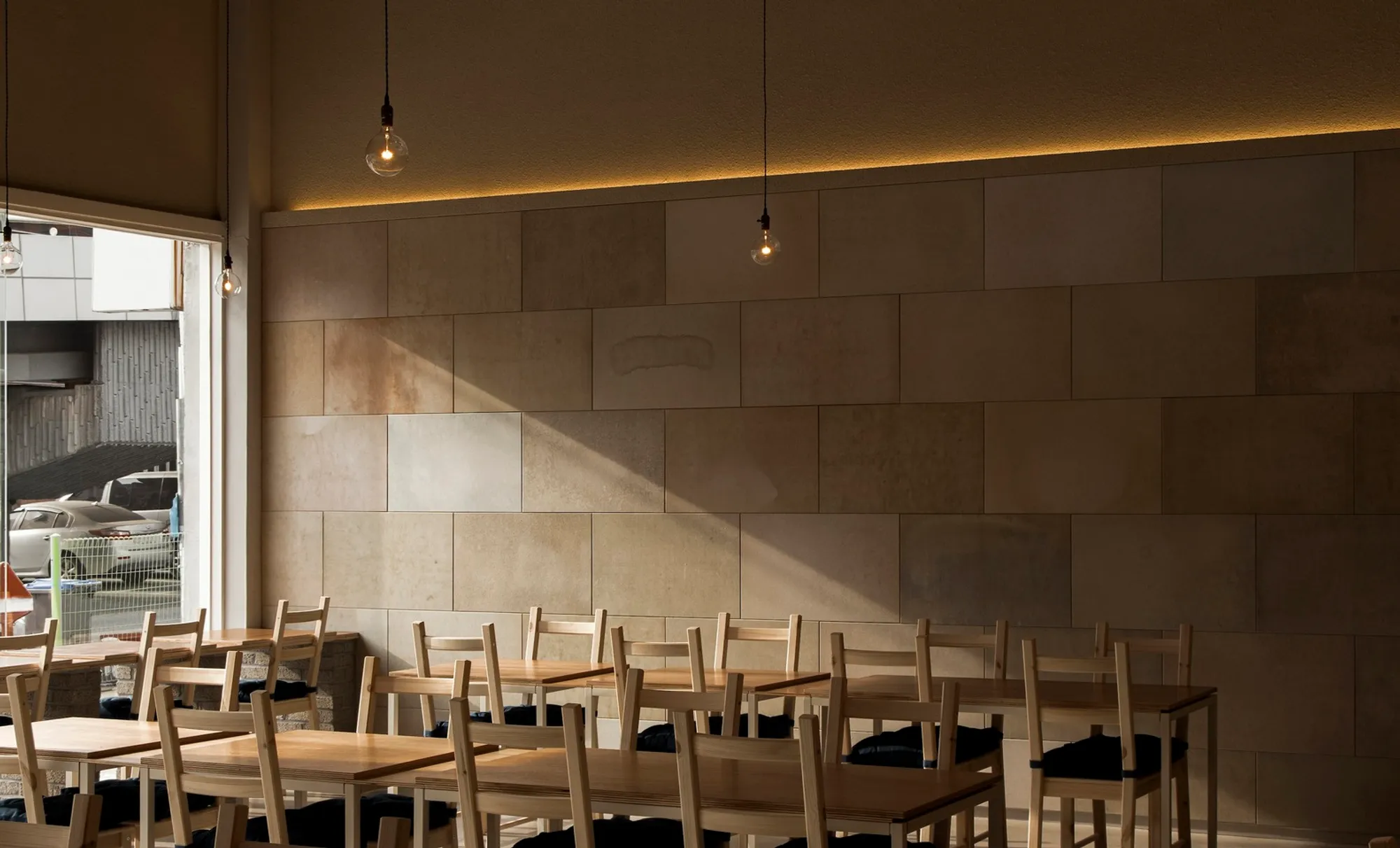
Atelier Ah designed a gukbab restaurant in Gumi-si with a lacquer paper ceiling curved like an earthenware bowl. Five materials, one idea, total calm.


Gukbab is one of the most unpretentious dishes in Korean cuisine: rice in broth, served fast, eaten alone or in company, often at six in the morning. It does not ask for a designed restaurant. It asks for a clean counter and a hot bowl. Geumchon Gukbab, designed by Atelier Ah in Gumi-si, South Korea, gives it one anyway, and the result is more serious and more beautiful than most fine-dining interiors.
The project is the flagship for a gukbab business that has been operating for 20 years. The brief was to design an interior that honours the dish, the tradition, and the speed of service without turning any of it into decoration. Atelier Ah's answer was to build the entire ceiling as a single curved surface inspired by the earthenware bowl that gukbab is served in.
The Bowl as Ceiling

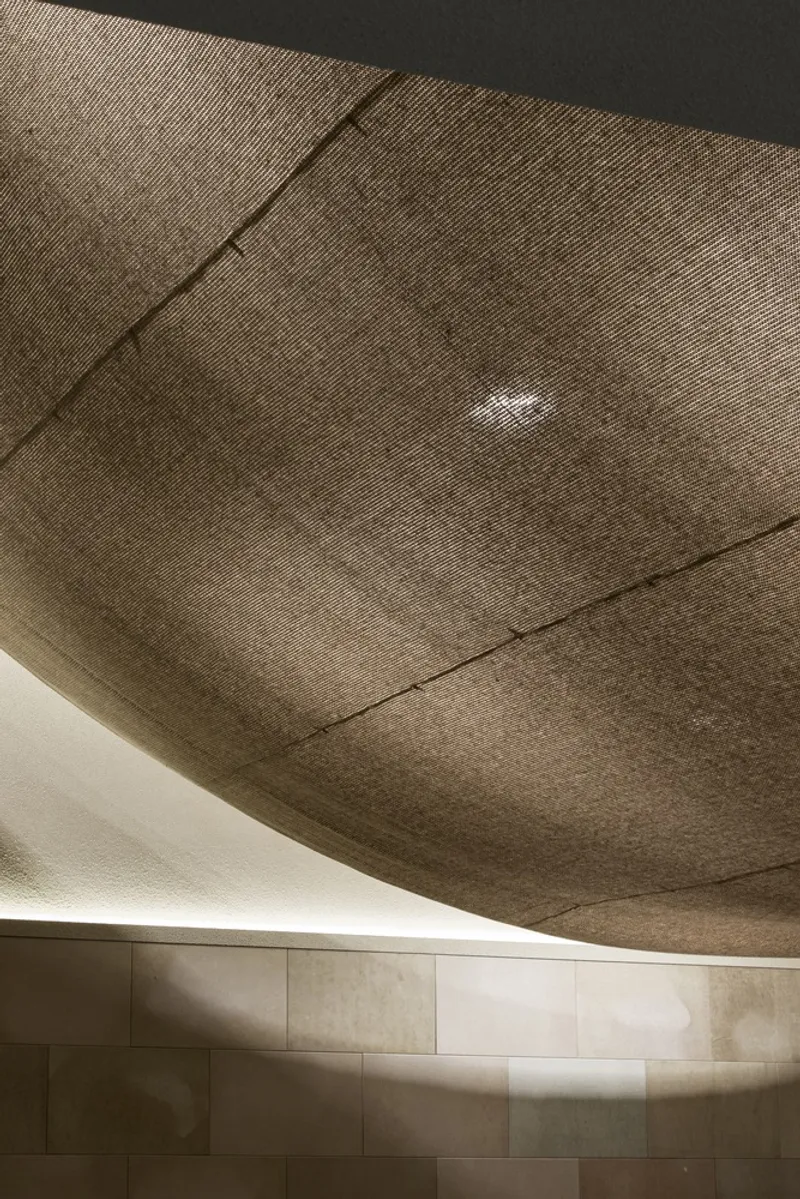
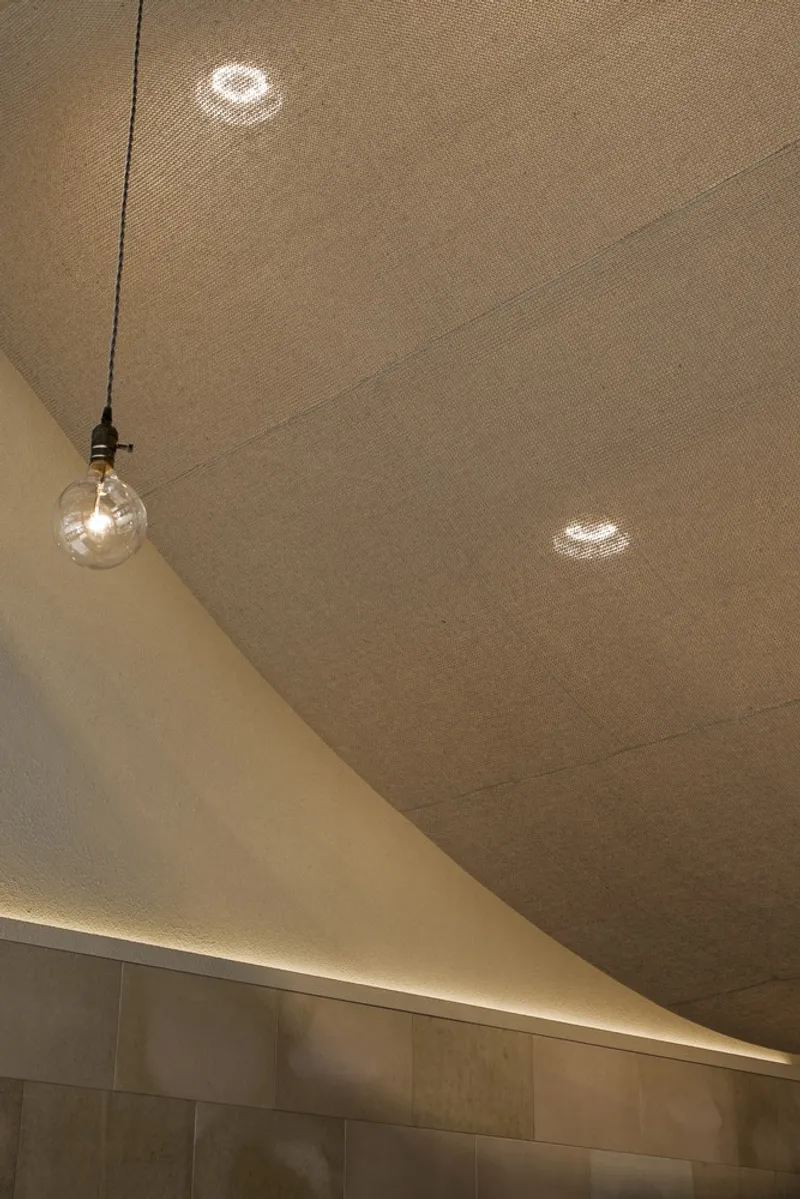
The defining element is a curved ceiling that sweeps down from the gable ridge like the inside of a bowl. The surface is clad in lacquer paper, a traditional Korean finishing material that is textured, warm, and matte. It catches light softly and changes tone through the day. At midday, a band of sun crosses the surface. At night, pendant bulbs glow against it.
This is not a literal translation of a bowl into architecture. It is an abstraction: the curve, the enclosure, the warmth, and the sense of being held. The ceiling does what good restaurant architecture should do: it creates atmosphere without distracting from the food.
Lacquer Paper Walls
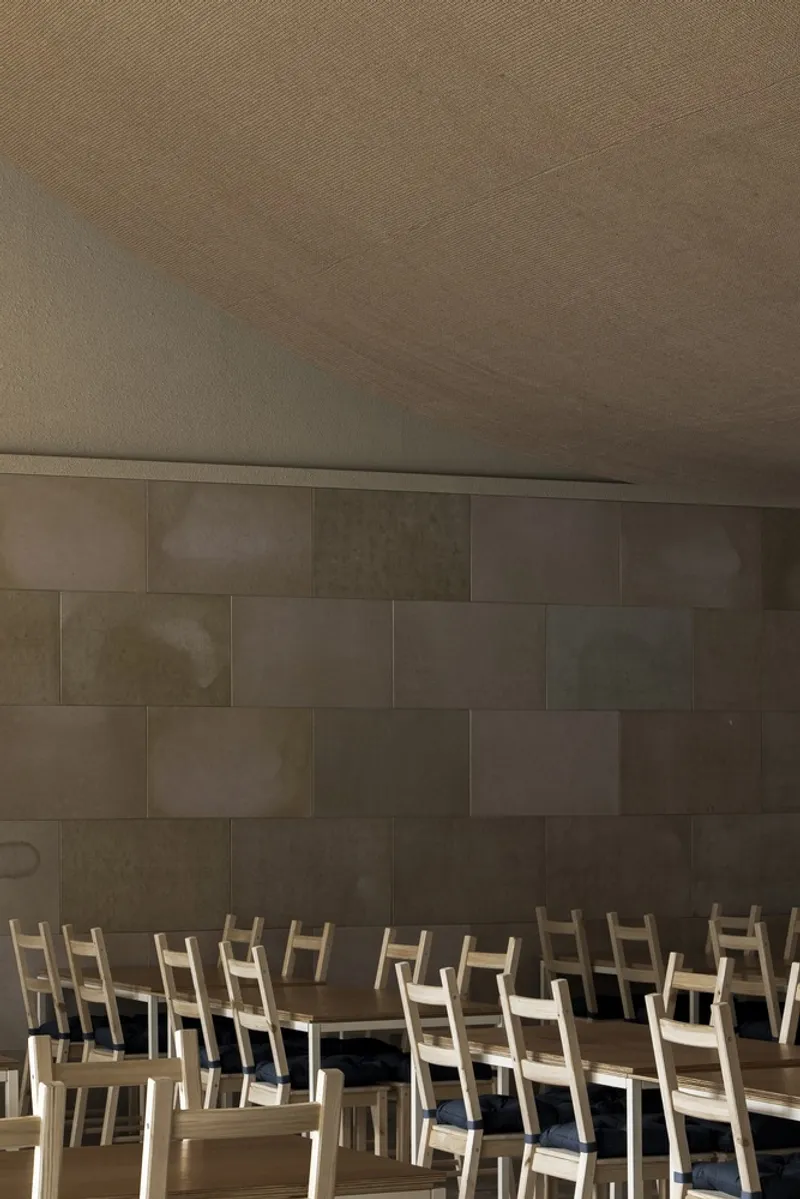

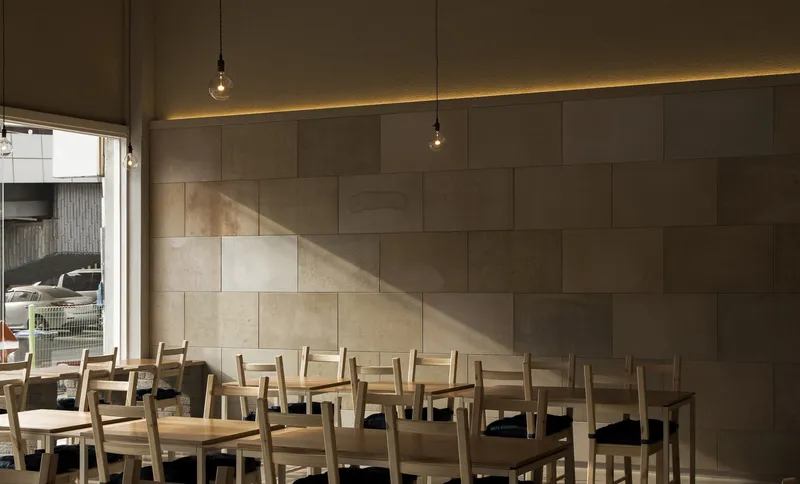
The walls continue the lacquer paper treatment, but in panels rather than a continuous surface. The tones graduate from light to dark across the wall, creating a quiet depth. Each panel is slightly different, reflecting the handmade nature of lacquer paper. Against this surface, a single pendant bulb and a thin brass light strip are the only fixtures.
The material strategy is extreme in its restraint. Lacquer paper, concrete block, brick, oak, and brass. Five materials, and nothing else. This discipline is what gives the room its calm. Every surface earns its place.
The Street Facade
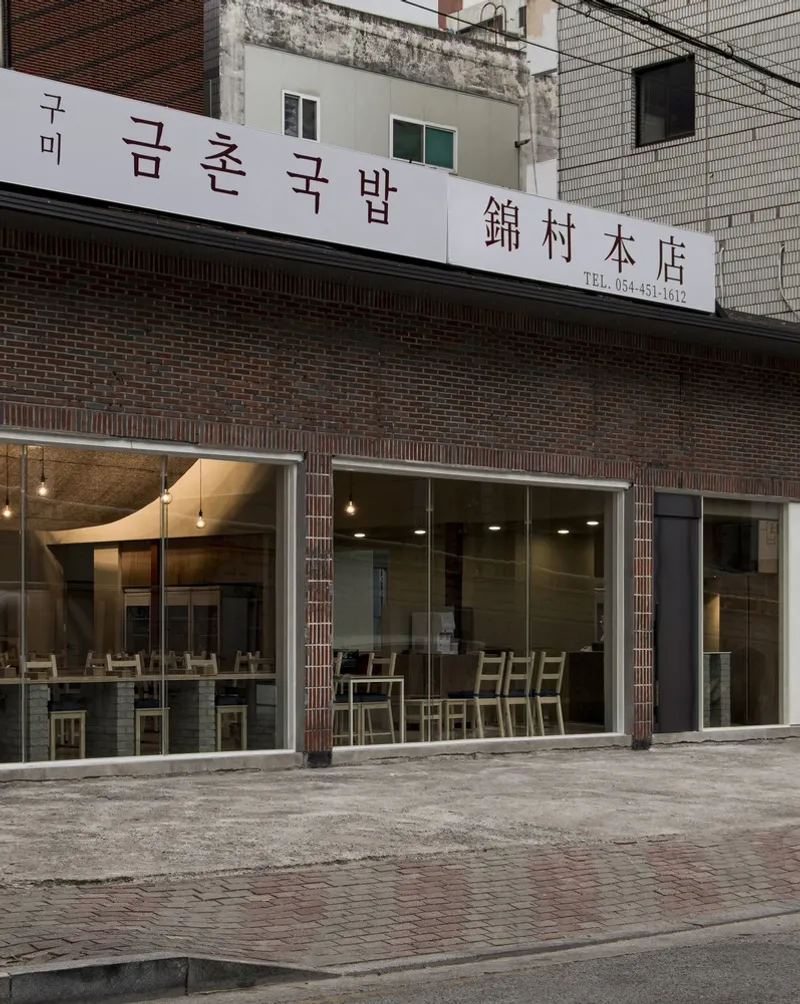
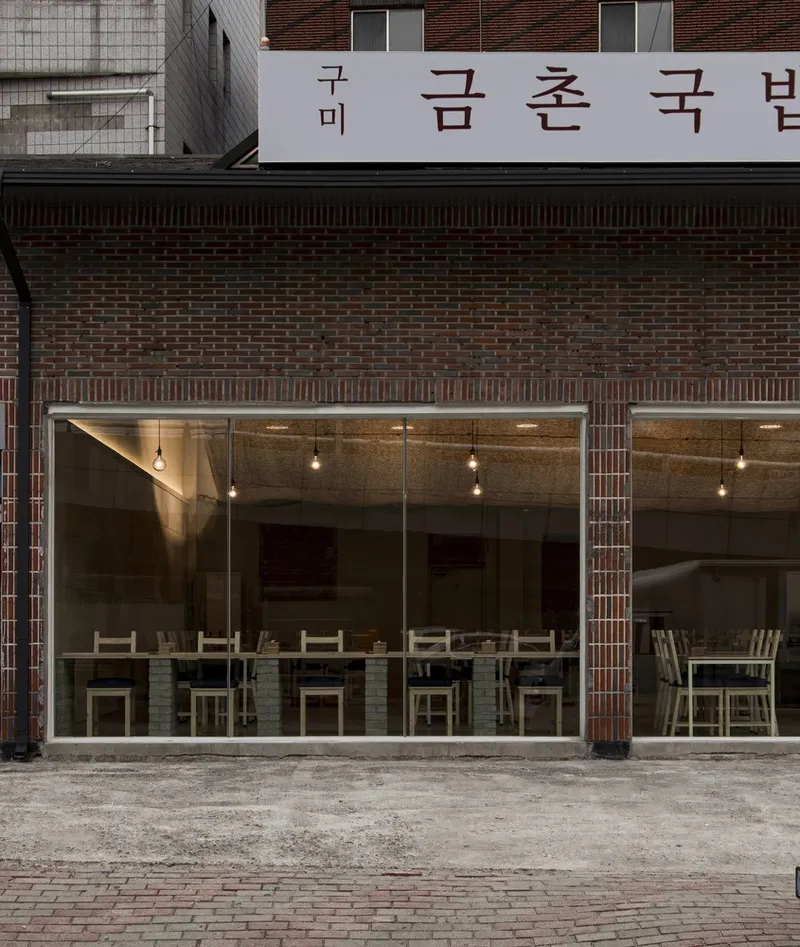
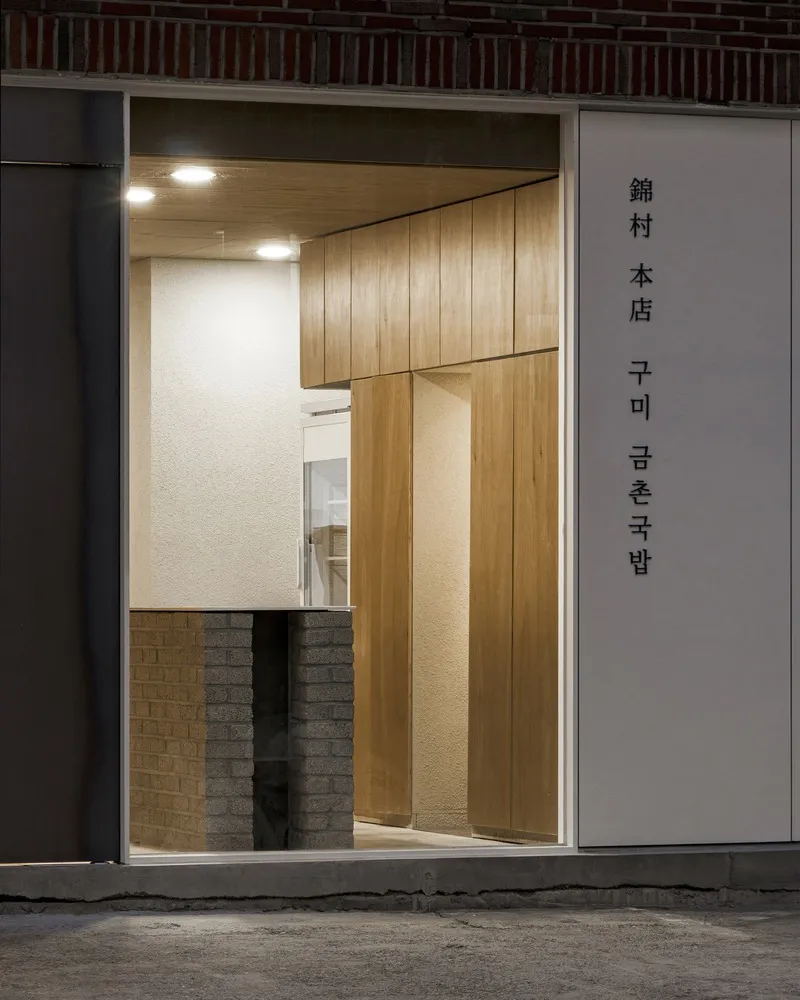
The facade is dark brick with full-width glass and Korean hangul signage. It reads as a neighbourhood restaurant, not a design project. This is deliberate. Gukbab is everyday food. The exterior should not intimidate. It should say: come in, sit down, eat.
At night, the interior glows through the glass. The lacquer ceiling catches the warm light and radiates it outward. The building becomes a lantern. This is the most effective kind of restaurant signage: the architecture itself.
Counter and Kitchen
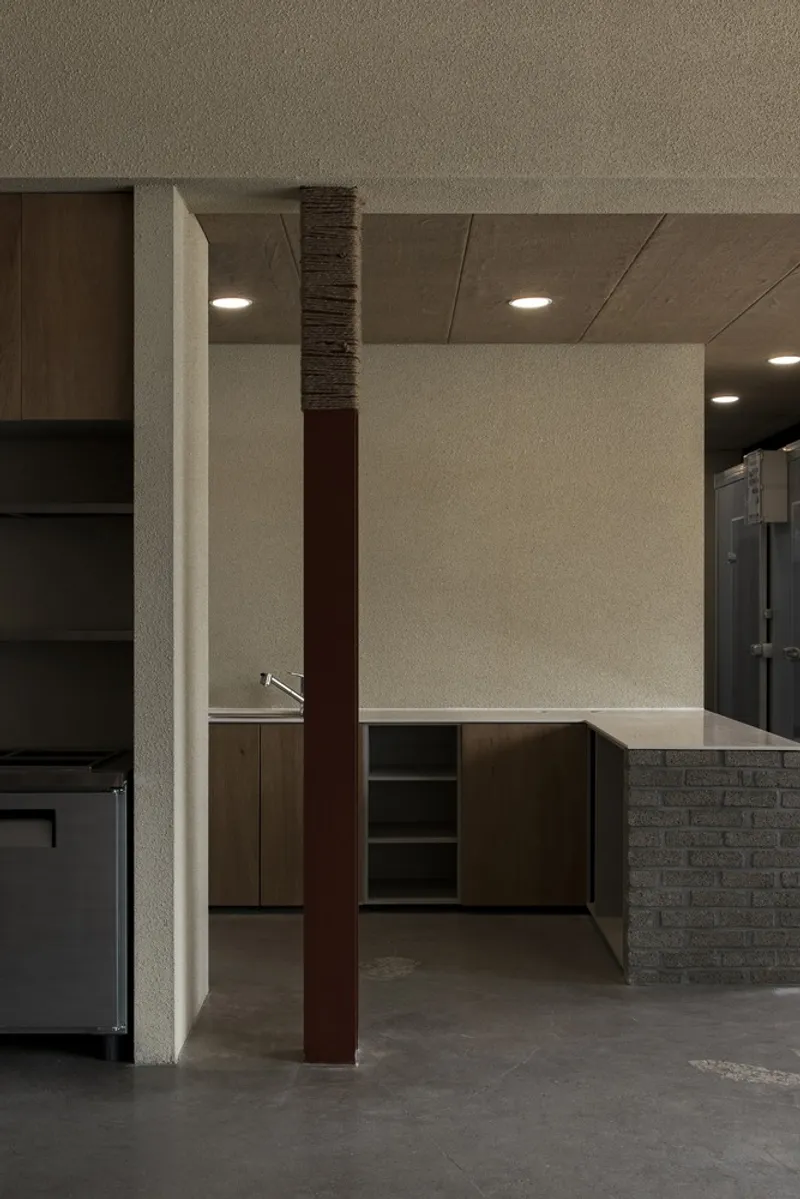
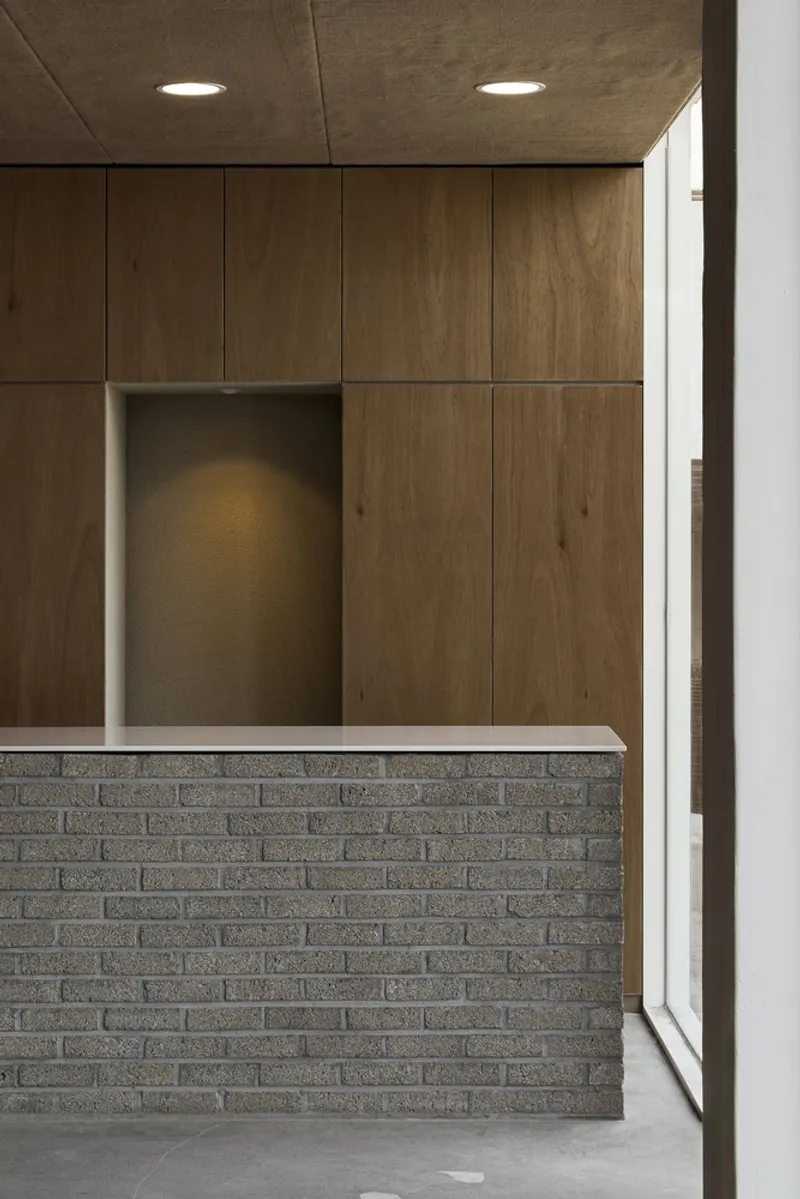
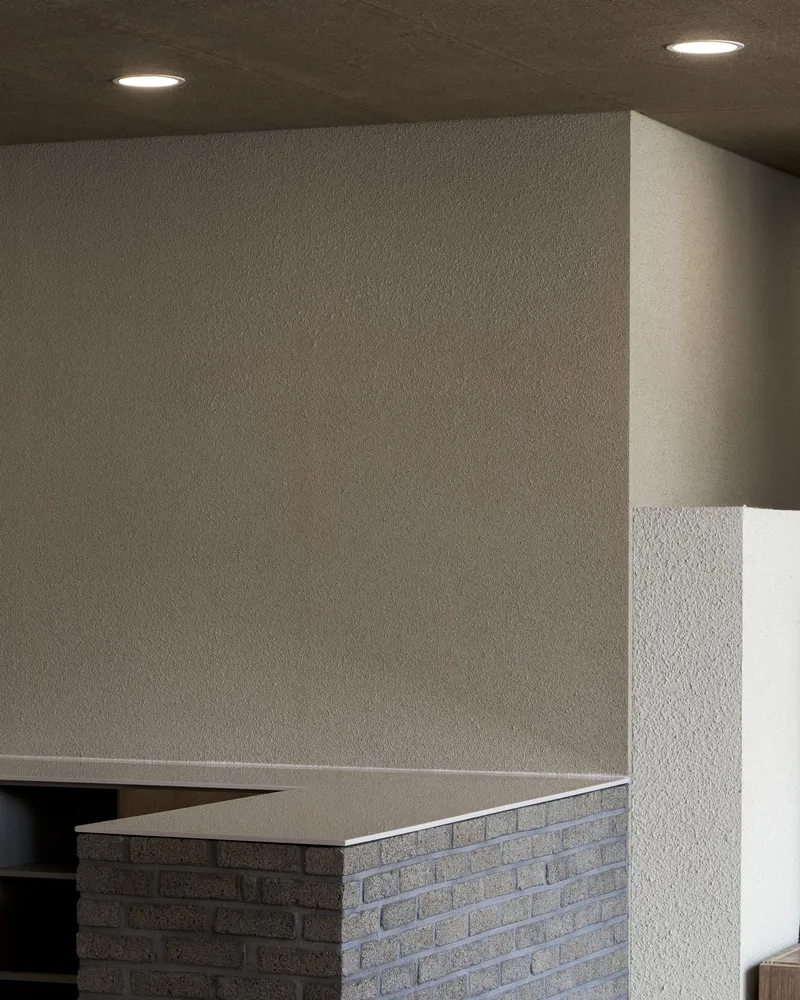
The service counter separates the dining hall from the kitchen. It is a simple element: grey brick base, oak top, stainless steel behind. The kitchen is visible but contained. Three zones handle different functions: one for the signature pig head preparation, one for the main cooking, and one for finishing. The layout is designed for speed. Gukbab is not a slow-food experience. Orders come fast, bowls go out faster.
Light and Shadow
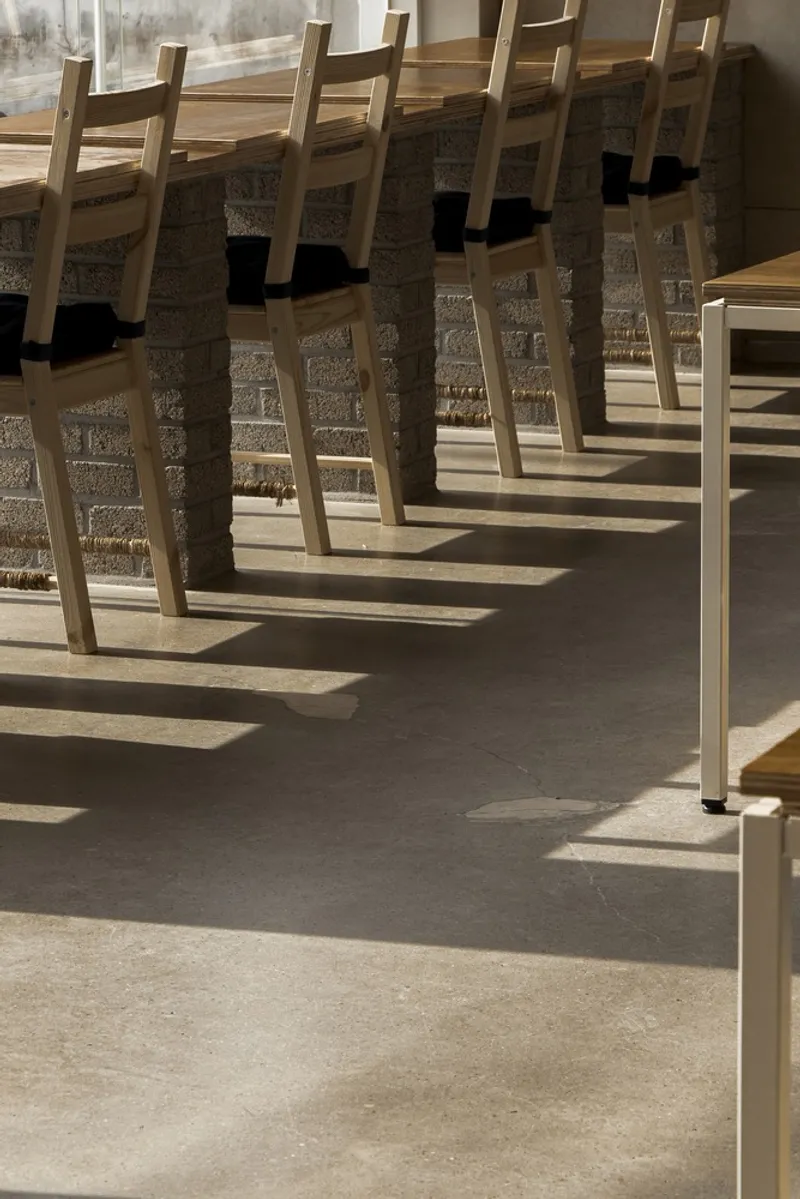
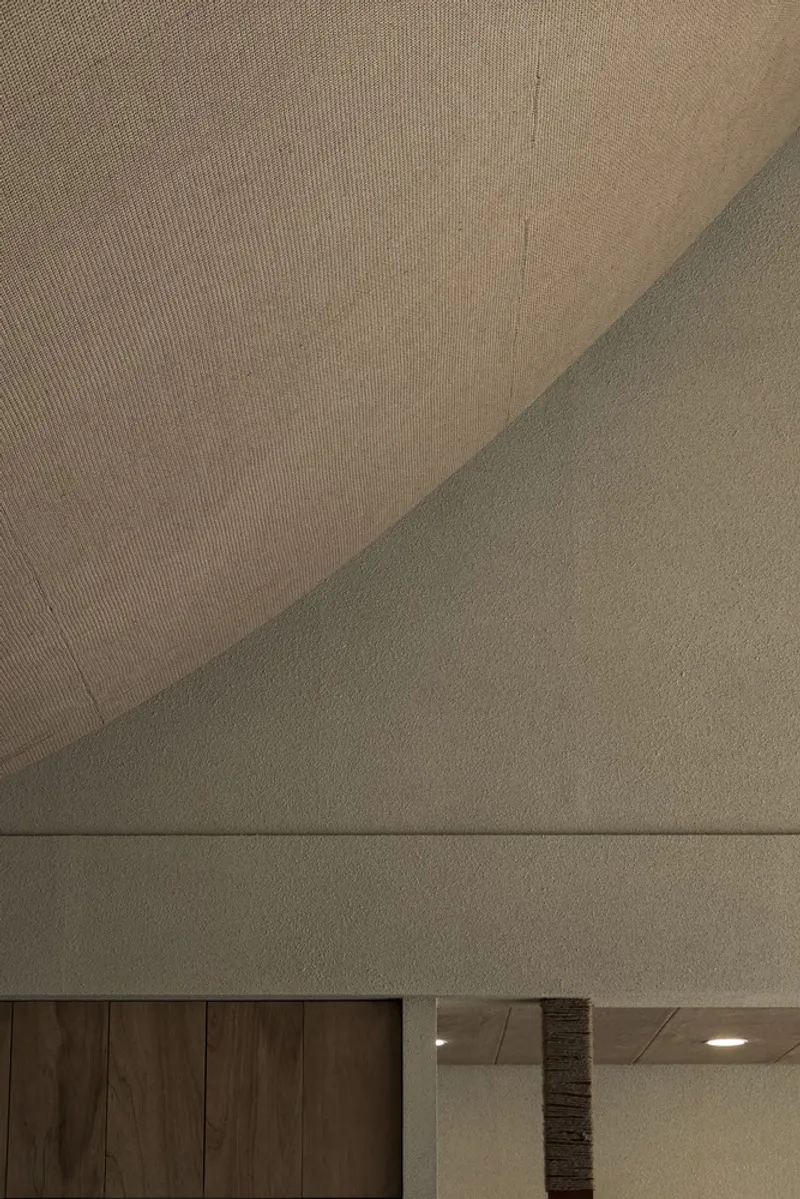
The photographs capture the restaurant in afternoon sun, when long shadows of chair legs cross the floor and the lacquer ceiling glows warmest. This is not an accident. The gable structure, with its high ridge and sloping sides, channels light along the ceiling surface. The building was oriented for this moment.
Good restaurant light is warm, directional, and changing. Geumchon Gukbab achieves all three through section and material rather than through artificial fixtures. The pendants are secondary. The ceiling is the light source.
Plan and Concept

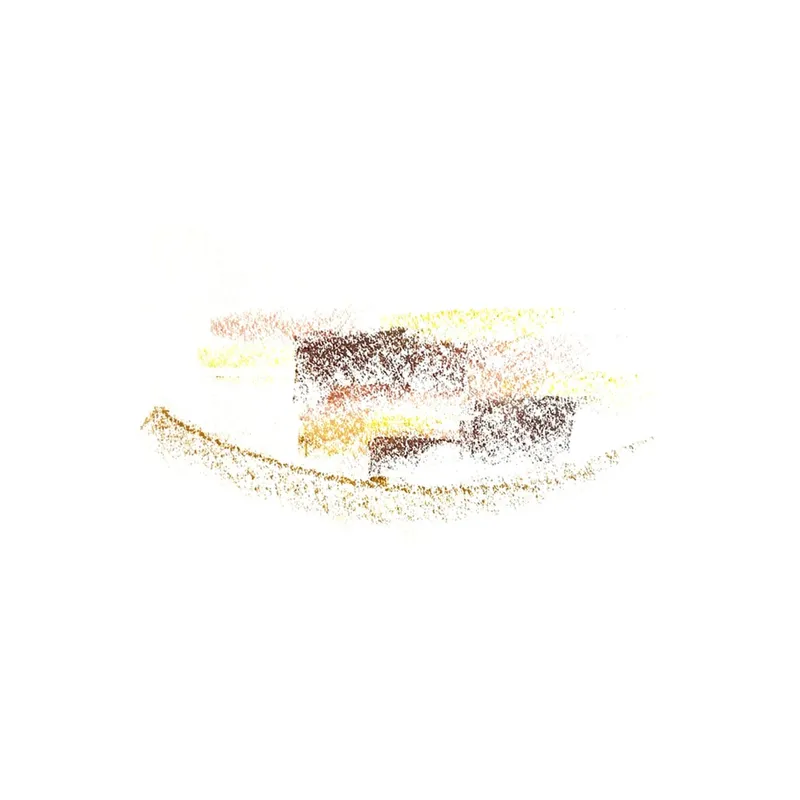
The floor plan shows a straightforward layout: dining hall on one side, counter and kitchens on the other, with storage and services at the back. The concept sketch, a crayon drawing of the bowl form, shows where the idea began. The sketch is honest: it does not pretend the concept is more complex than it is. One idea, executed precisely.
Why This Project Matters
Restaurant interior design is saturated with trend: exposed filament bulbs, subway tiles, industrial pipe, Edison everything. Geumchon Gukbab ignores all of it. The design comes from the dish, not from Instagram. Lacquer paper is not fashionable. It is Korean. The curved ceiling is not a style. It is a bowl. The restraint is not minimal. It is respectful.
If you are designing a restaurant for a traditional cuisine, this project is worth studying for how it translates a cultural object into spatial experience without ever being literal, nostalgic, or decorative.
About the Studio
Share Your Own Work on uni.xyz
If you are working on restaurant interiors, hospitality design, or culturally grounded architecture, uni.xyz is a place to publish your work and connect with a global design community.
Project credits: Geumchon Gukbab by Atelier Ah. Gumi-si, South Korea.



Popular Articles
Popular articles from the community


The Earth Pod: 3D Printed Homes for Resilient Refugee Communities
The Earth Pod reimagines refugee housing through 3D printed homes made from clay, combining resilience, self-sufficiency, and rapid shelter.

Co-life: Sustainable Architecture for Age-Friendly Community Living
Co-life reimagines sustainable architecture for seniors through courtyards, rammed earth, shared gardens, and spaces designed for belonging.

The Ocean Hive: Sustainable Architecture for a Self-Sufficient Civilization at Sea
The Ocean Hive imagines sustainable architecture at sea, where modular habitats, algae, wave power and ocean waste sustain a growing colony.

The Musturak Paradise: Senior Living Architecture for a Connected Future in Temara, Morocco
The Musturak Paradise reimagines senior living architecture in Temara via private homes, social spaces, culture, community, and shared care.


Similar Reads
You might also enjoy these articles


Hodi-Mandai Geram
Project Function: Preservation and revitalization of the Intangible heritage and socio-spatial identity of the Hodi by Housing, Cultural Memory Center, Sacred Grove, landscape, local tourism economy


Olio Towers: A Mid-Rise for Performers That Fuses Housing, Rehearsal, and Stage
Located blocks from Houston's Theater District, this modular tower stacks living units around a central performance atrium.

Oasis: Modular Green Housing Carved into Dhaka's Urban Fabric
A shortlisted Plugin Housing entry reclaims unauthorized settlements in Dhaka with stepped concrete volumes, green roofs, and ventilation-driven design.

Black Hole: A Floating Megastructure for the Post-Physical Era
Emiliano Mazzarotto envisions a spherical, self-scaling arena where e-sports, digital hotels, and holographic stadiums replace traditional public space.


Explore Architecture Competitions
Discover active competitions in this discipline



Challenge to reimagine the Iron Throne


Photograph architecture without architects


Illustrate the lost glory of Angkor Wat - Render Challenge


Design challenge to reuse E-waste
Comments (0)
Please login or sign up to add comments
No comments yet. Be the first to comment!