
LETS MEET AGAIN
Understanding the effects of the Covid-19 pandemic on our society.

"Let's meet and catch up over a cup of coffee" was a common statement people said to each other as they met at a park hustling and bustling with children. This however since last year has transformed drastically. The Covid-19 pandemic changed our lives forever. Dealing with the grim fatalities whilst isolated at home in a confined space was challenging to say the least. We humans share everything, be it joy or sorrow. We humans did what we do best, adjust to the situation. The unavailability of in-person interactions in public settings now became over zoom. Meeting one's friends at the bar now became zoom meets. As the new normal keeps evolving each day, the increased use of social media is here to stay for the foreseeable future. The essay focuses on the shift to a more virtual world, analysing the pros and cons and understand the architectural implications of them.
A lot of our habits have changed due to the pandemic, but arguably the way we communicate has changed the most. Even during the initial months of the pandemic, industry reports show that as people spend more time indoors, their social media intake increases tremendously. An interesting observation to note is that the usage of video conferencing applications was far greater than messaging. This can be credited to work from home office calls, webinars and classes.
The data taken from a group shows an increase of 36% in voice calls, and 35% in social media while a 24% increase in email usage. It can be analysed that over 46% of the people increased their social media usage while only a mere 9% decreased their time on the phone.
With a 52% jump year-on-year in ad revenue on Snap chat and a 22% year-on-year increase in Facebook and a 526% increase in users on TikTok, the proof is in the pudding.
A seven-minute jump is seen on the use of social media from 2019. Tech giants and social media applications reinforced their positions in the world of communication and profited and grew during the pandemic.
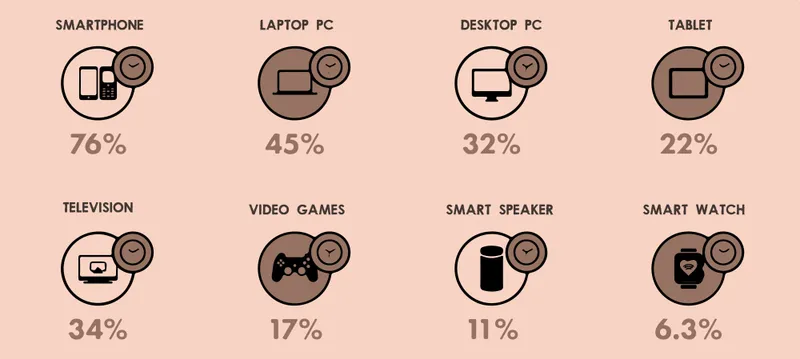 Increased screen time on each device
While the increased usage of social media applications has been an apt solution to solving several issues; from ordering groceries online to not gather in one place to obtaining valuable medical advice from doctors in virtual check-ups, all this has been possible in the virtual world. It has allowed us to be closer to our kin and shown us the importance of staying in touch with our friends and family.
On the other hand, the inequality in the communication and digital industry cannot be left unnoticed. In a world where most people around us have phones, there are many outside our social circles, that cannot afford a smartphone. In the US alone, 44% of the people lack a home broadband service and 29% of the people do not own a smartphone. Apart from the availability of internet services, the quality and maintenance of such devices also factor in as important issues which hinder digital conversations. Furthermore, people who do not possess the capabilities to use such apps are at a disadvantage. For most old-age people, using a smartphone is a new and confusing task. As they have spent the last year in isolation, they have been forced to learn and adapt to these new changes with no one around them to teach or help. This leads to feeling isolated and alone further and leads to people being disconnected from the rest. As we rely on the support of our family and friends in these times, lack of face-to-face help in digital communication can make quarantine and isolation though.
As most countries start their vaccine rollouts, booking a slot for one requires a smartphone, a fast internet connection, and the knowledge to use the right resources to book a slot. It is naïve to think that everyone has the privilege to all this. As this life-saving vaccine is rolled out, inequalities in the communication industry are highlighted.
Another disadvantage of our heavy reliance on the virtual world is its toll on mental health. “Phone anxiety is an offshoot of social anxiety disorder, which is one of the most common anxiety disorders,” says Jean Kim, a clinical assistant professor of psychiatry at George Washington University who has written about phone phobia. "It's characterized by people feeling fear in social situations; they have a flood of automatic negative thoughts and are self-critical." As people have increased their usage of video conferencing, anxieties relating to social cues and judgment from others on them lead to further deterioration of mental health. Social media also gives us a chance to compare our lives to the rest of the world. As the rest of the world made banana bread and danced on TikTok, having to catch up and be just as productive during a deadly pandemic takes a toll on one’s mental health.
Over the past year, more than 73% have negative connotations surrounding social media in general. This is contributed due to the above-mentioned reasons and the rat race to perfection as well as the social and political discourse and events. The more time we spend in front of our screens, the more we feel the urge to go out, look at the trees and rest our eyes on the nature around us. More than 86% of the surveyed people want to spend more time in parks and public squares, research conducted by the University of Sao Paulo said. "The research indicates a desire for reconciliation with the public space," explains architect Deize Sanches.
Doctor Thais Mauad, a member of the Boa Praça movement, also vouched for the fact that if social distancing and wearing a mask is strictly followed, the transmission rate is severely low in public spaces.
During the initial months of the pandemic, emphasis was laid on trying to make public transportation resilient. Public spaces were turned into emergency COVID-19 wards and testing centres. This further proves how critical public spaces are in times of emergency despite their other benefits of providing an escape from our lives online.
"It has made us value space and air, said Sarah Wigglesworth, founder of Sarah Wigglesworth Architects. "Hopefully, it has re-orientated our focus on the fact that buildings are about people."
From an architectural perspective, there has been a change in the way we design since the outbreak. Many cities and urban planners have realized the importance of cities with proper city squares, gardens, bicycle lanes, and pedestrian lanes.
Harm Timmerman, the owner of Shift architect urbanism, came up with an interesting approach to easily set up local markets in public squares. Since the local markets are shut during the pandemic, people are crowding at the supermarkets which are more expensive than local markets. To solve this, he proposed a 16-grid layout that can be quickly and cheaply replicated in any and every public square. With three distinguished counters on three sides for different commodities and separate entrances and exits to allow a smooth flow of people, this proposal allows people to buy groceries locally and also adhere to all social distancing procedures.
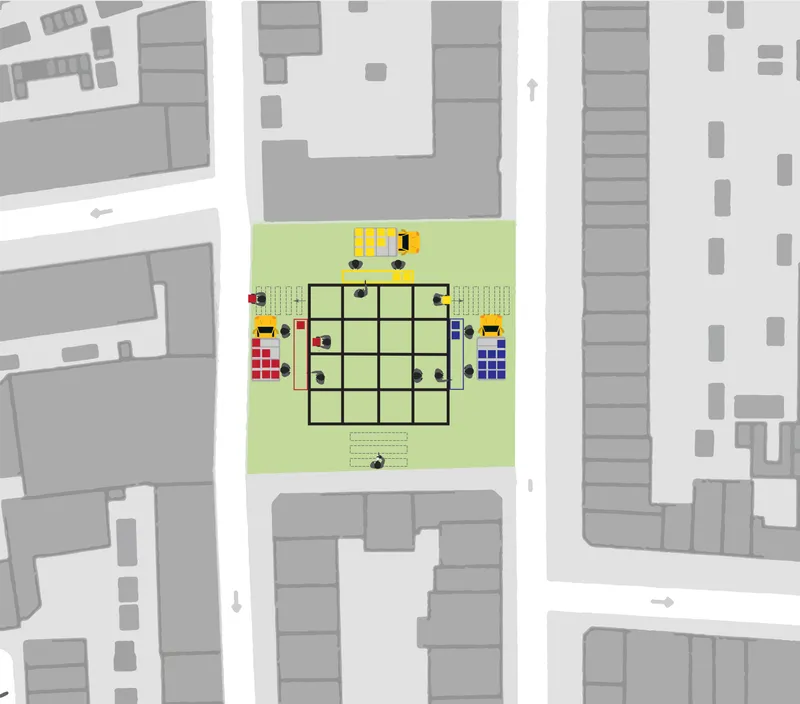 Local Market in a public square : solution to crowding in local and supermarkets
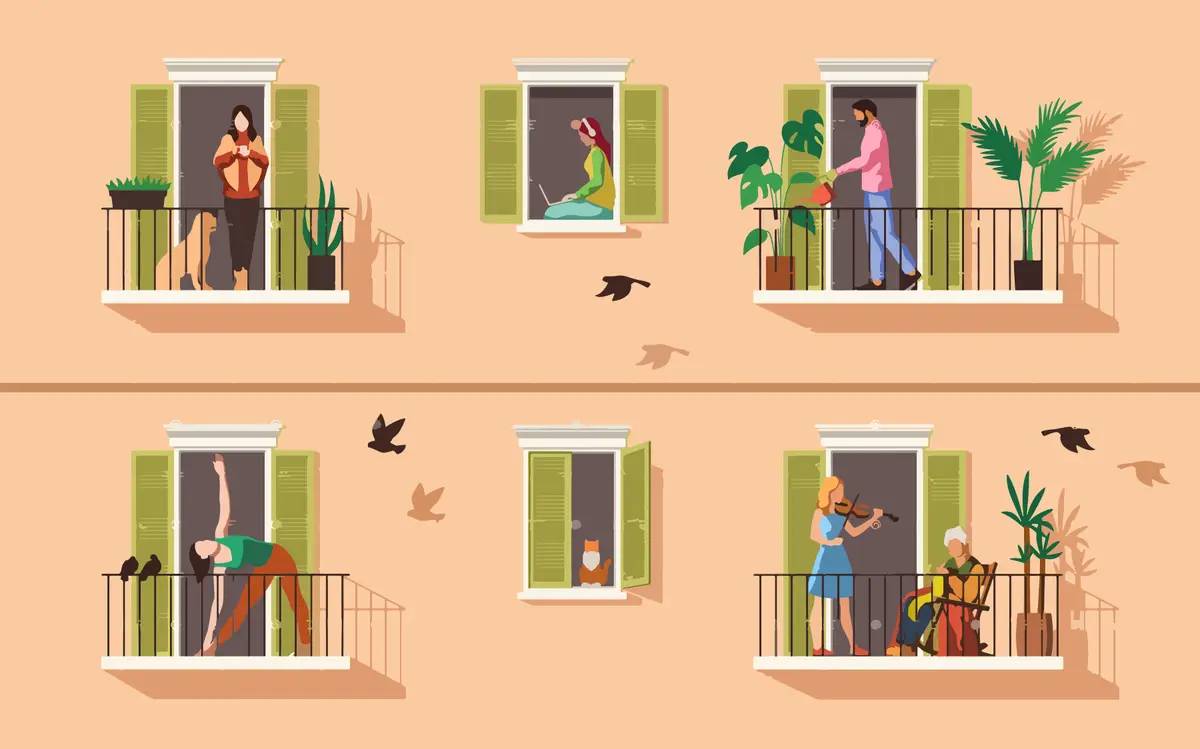
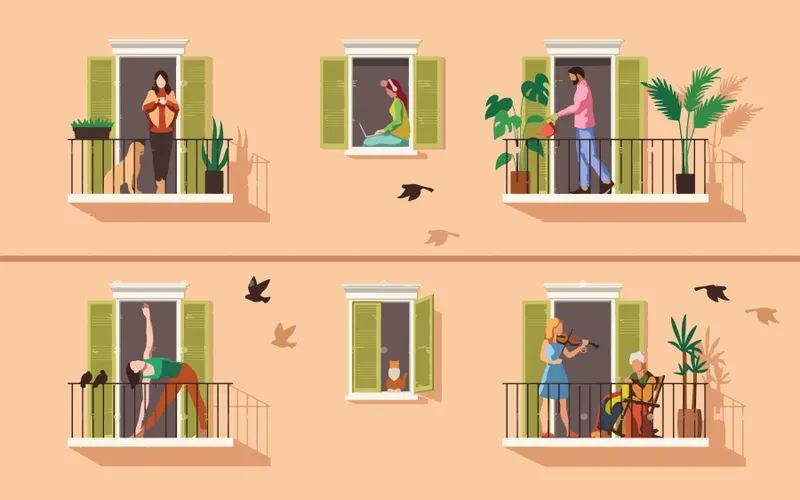
With a few of us gripping to every square foot of our balcony space, most of us were left staring at the empty roads through our windows. Social media and digital communication systems are here to stay, the architects and urban designers have now the opportunity to work with it, to design streets and cities for the people and make our buildings, cities, and ecosystem more resilient. One can never guarantee is there will or will not be another pandemic, but one can always be prepared for it.
"As an architect, you design for the present, with an awareness of the past, for a future which is essentially unknown." — Norman Foster
References (11)
Changes in Digital Communication During the COVID-19 Global Pandemic: Implications for Digital Inequality and Future Research
ISBN: None
Covid-19 pandemic and public spaces: improving quality and flexibility for healthier places
ISBN: None
Digital Inequality During a Pandemic: Differences in COVID-19-Related Internet Uses and Outcomes among the General Population
ISBN: None
Digital inequality in communication during a time of physical distancing: The case of COVID-19
ISBN: None
Norman Foster, Virgil Abloh and more share their thoughts on the global impact of Covid-19
ISBN: None
Shift AU creates research-by-design market to control COVID-19 contamination
ISBN: None


Popular Articles
Popular articles from the community


Co-life: Sustainable Architecture for Age-Friendly Community Living
Co-life reimagines sustainable architecture for seniors through courtyards, rammed earth, shared gardens, and spaces designed for belonging.

Hill & Cross Opera: Sculptural Opera House Architecture Shaped by Tallinn’s Landscape and Identity
Hill & Cross Opera reimagines opera house architecture in Tallinn through its sculptural hill, civic plaza, glass wave and a luminous cross.

Little Red Riding Hood: Architectural Design as a Journey Through Fear, Light, and Storytelling
Little Red Riding Hood reimagines the fairy tale through architectural design shaped by fear, light, scale, memory, uncertainty, and choice.

Play: Fragments of Their World
Familiar architecture becomes modular playground design, creating safe spaces where displaced children can learn, connect, imagine and play.

Similar Reads
You might also enjoy these articles

Day and Night Park: A Time-Based Urban Newsstand in Beijing
A temporary urban newsstand in Beijing blending travel, light, and reading through poetic colors, compact form, and community-focused design.

Modernist Patio Renovation in El Masnou, Barcelona by Oliver Segura Arquitectura + Cebrià Arquitectura
Modernist patio renovation blending tradition and innovation with a movable pool, leveled floors, and Catalan materials in El Masnou.

Alto Residencial Coop: Cooperative Housing Development in Santiago de Compostela by Carbajo Barrios Arquitectos
A linear cooperative housing complex blending white volumes and perforated metal façades, enhancing community living, natural light, privacy, and urban integration.

Vil Genis School by BPA ARCHITECTURE – Massy, France
Vil Genis School in Massy, France, features sustainable design, south-facing classrooms, community integration, accessible spaces, and modern educational architecture.

Comments (0)
Please login or sign up to add comments
No comments yet. Be the first to comment!