
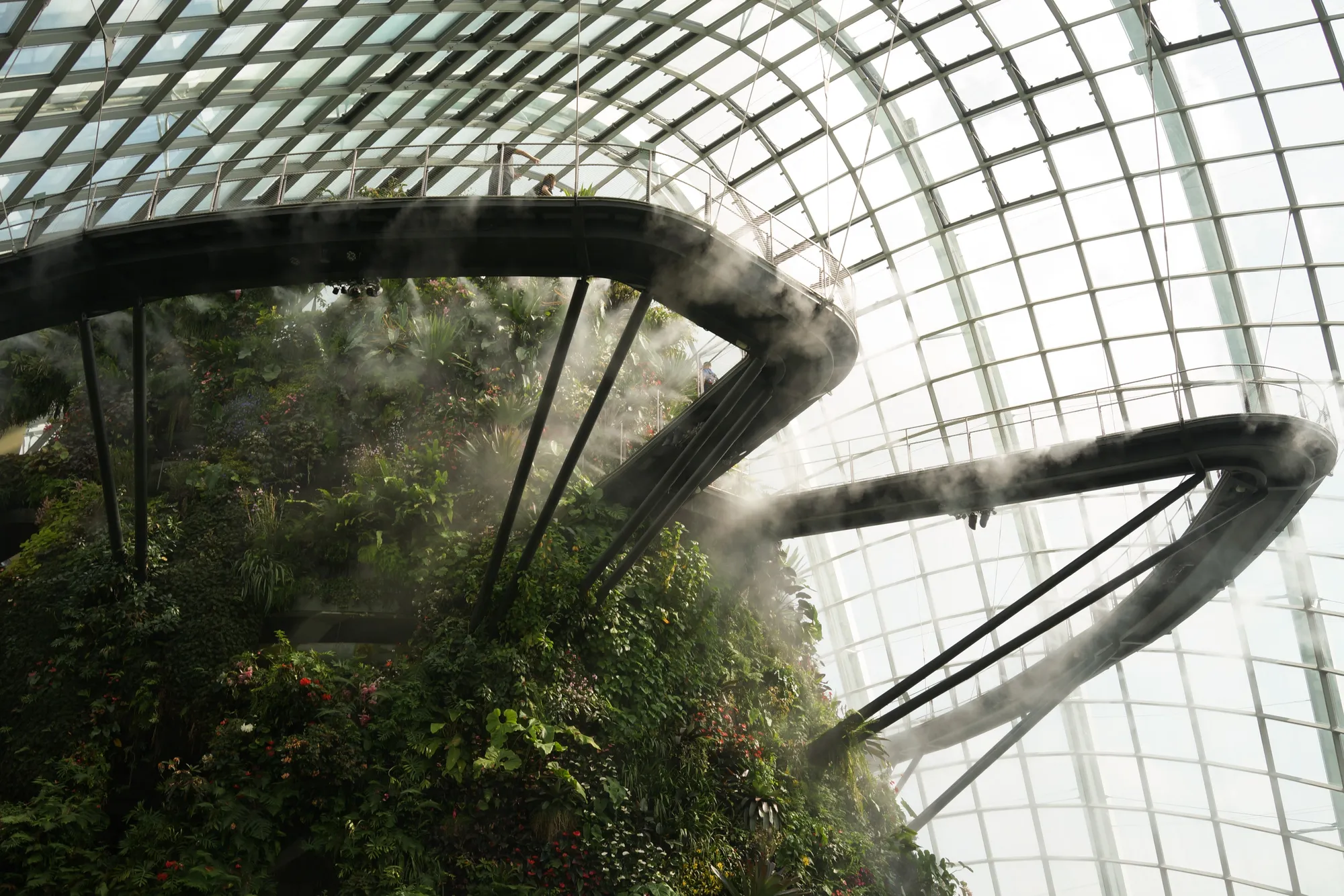
Mangrove Village
Questions and Answers

1. What was the concept behind the project?
Mangrove Trees are native to Indonesia and other countries and islands in the surrounding regions. They stand as a deep significance and representation of culture, history, beauty, and nature. Mangrove trees are known for their deep roots that extend several feet individually and serve as great coastal trees and provide excellent structure for a forest or grove. However, in recent studies, it has been discovered that Mangrove trees help reduce wave retention and rollback within the area where they are placed. Their roots enable them to serve as a boundary and suck up water to store it in their trunks.
Because of sea level rise and coastal erosion these mangrove forests are becoming few and far between; pushing them more inland away from their main source of survival, water. This project is reintroducing and connecting existing mangrove forests to the ones established in the design. Placing the mangrove trees on the edges of the island serves its purpose by keeping the water from overflowing onto the floating islands and providing greenspace for residents.
2. What was the intent behind the organization of elements across various levels (Architectural, Site, Urban)?
The intent was to focus on the urban spaces and sustainability portion over the architectural aspects. While the architecture and structure of the buildings are important, it is critical to think of the longevity of the site and incorporate natural and significant elements (mangrove trees and natural plantings) to identify where it makes sense to have the commercial buildings and homes in the most sustainable way possible.
However, in terms of constructing the homes and buildings, it was critical to have those reflect the history and cultural aspects of Semarang and Indonesia. Emphasizing natural lighting throughout the house, outdoor kitchens, and open windows for ventilation and community gatherings. By keeping this in mind it allowed the three core beliefs listed in the project to be reflected throughout the design.
3. How many iterations were tried to arrive at the outcome?
There were several iterations during the design process. The overall changes that were constant in each concept change were the change of circulation throughout the islands. The changes in circulation also impacted the shape and location of each island. It first started as having one main circulation pattern throughout the site and having the islands tucked into and between the main circulation path. The final product is the circulation paths and the islands responding together through a hierarchy of needs.
4. How was the program condensed into the final?
In the beginning, I created a list that had programmatic elements under three categories: Ecological, Cultural, and Ecotourism. There were several instances of overlap regarding the elements and amenities that were intended to be included, (mangrove forest, green farming, and natural planting areas). However, as I settled into the final concept design, I didn’t want to overcomplicate the program elements and I wanted to include amenities that only focused on all three of those design elements. However, the ultimate deciding factor was how each element plays a part in Semarang culture and history. Incorporating significant and critical local elements only will enhance the sustainability of the design. Therefore the program focused on green farming, mangrove forest, open space, courtyards, and floating markets.
5. What/How were the materials chosen?
Only materials that are found locally or regionally are incorporated throughout the design. From the wood and concrete in houses and commercial buildings to the natural production of silk and local goods that can be produced on the island. Even though the building and elements on the island are sustainable, it would be doing an injustice to the city and its residents if the materials used were not sustainable.
6. What is the expansion plan of the project?
While the islands are not interlocking islands, the structure and stability of each island allow for easy replication of each island to be added out of the site boundaries. The overall idea is to create a chain that can be expanded and add other programmatic elements to whatever needs have arrived.


Popular Articles
Popular articles from the community


Hill & Cross Opera: Sculptural Opera House Architecture Shaped by Tallinn’s Landscape and Identity
Hill & Cross Opera reimagines opera house architecture in Tallinn through its sculptural hill, civic plaza, glass wave and a luminous cross.

Riyadh For All: Intergenerational Urban Design for Active Aging in Rabat
Riyadh For All reimagines urban design in Rabat with intergenerational co-living, adaptive courtyards, and Moroccan cultural exchange today.

Co-life: Sustainable Architecture for Age-Friendly Community Living
Co-life reimagines sustainable architecture for seniors through courtyards, rammed earth, shared gardens, and spaces designed for belonging.

The Ocean Hive: Sustainable Architecture for a Self-Sufficient Civilization at Sea
The Ocean Hive imagines sustainable architecture at sea, where modular habitats, algae, wave power and ocean waste sustain a growing colony.

Similar Reads
You might also enjoy these articles

The Rhythm of Seasons
A Farmers' Market Connecting Nature and the City

More Than a Building-Designing a Living System
More Than a Building-Designing a Living System
Base Beyond
DESERT COMPOUND ARID: TOURISM OF ABSENCE AND ABUNDANCE

Comments (0)
Please login or sign up to add comments
No comments yet. Be the first to comment!