
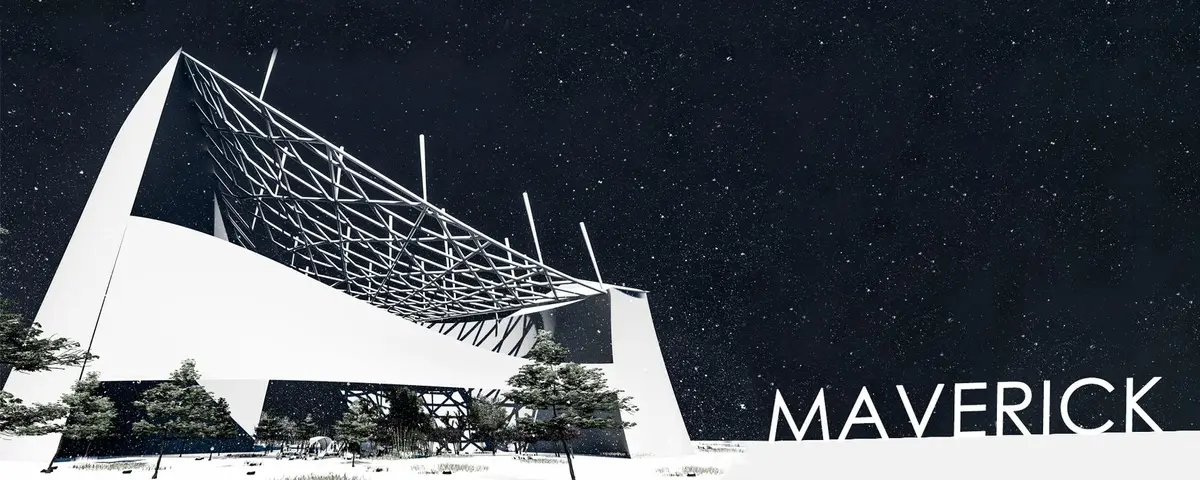
Maverick: A Regenerative Workspace That Generates Its Own Energy and Microclimate
Bladeless wind turbines, solar roofscapes, and a central biosphere core transform the office building into a self-sufficient organism.


What if an office building could produce more energy than it consumes, harvest its own water, and cultivate its own microclimate? Maverick takes that question seriously, proposing a workplace that breaks from the glass-box typology with flowing, shell-like roof forms embedded with bladeless wind turbines, solar panels, and rainwater collection systems. The result is not merely a low-energy building but a regenerative one: an architecture that heals rather than extracts.
Designed by Muhammed K. Abdulla, Sandeep Kumar, Salil Subair, and Umang Jain, Maverick positions itself within a conventional urban fabric of flat-roofed commercial buildings and proposes an alternative. Its organic geometry is not decorative; every curve serves as a functional device for energy harvesting and passive climate control. Positioned centrally within its site, the project reads as both a provocation and a proof of concept.
From Industrial Grids to Renewable Flows
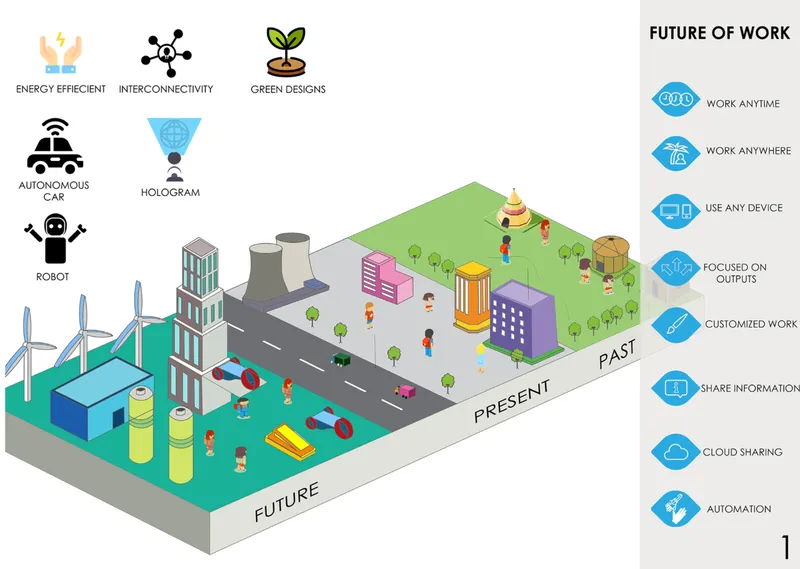
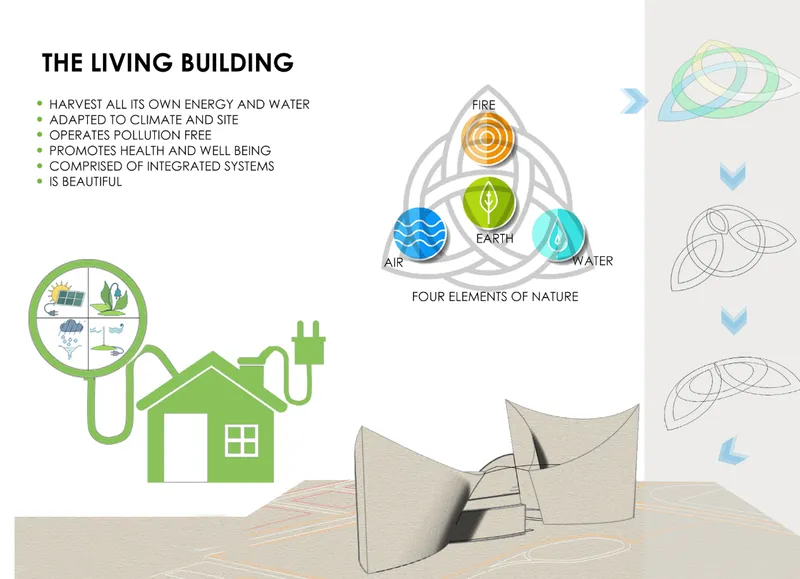
The isometric diagram traces a deliberate lineage from industrial energy infrastructure to a future powered by renewables. Rather than treating sustainability as a bolt-on feature, the designers map how energy zones shift from fossil-dependent systems to distributed, building-integrated generation. The rendering that follows makes the architectural argument concrete: sculptural volumes with sweeping rooflines house the energy systems diagrammed above, integrating them into the building's formal identity rather than hiding them on a rooftop.
TPX sheets clad the facades, providing cooling, shade, and energy efficiency simultaneously. Adaptive facade elements adjust to thermal conditions, reducing mechanical cooling loads. The building's energy independence is reinforced by what the designers call a "biosphere-driven energy system," where landscape, structure, and technology operate as a single metabolic loop.
Shell Roofs That Work as Energy Harvesters
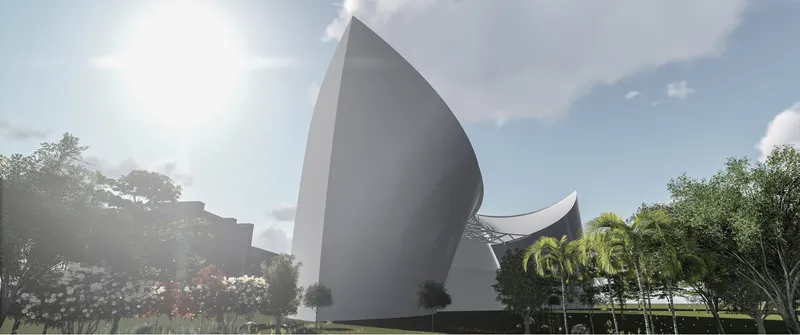
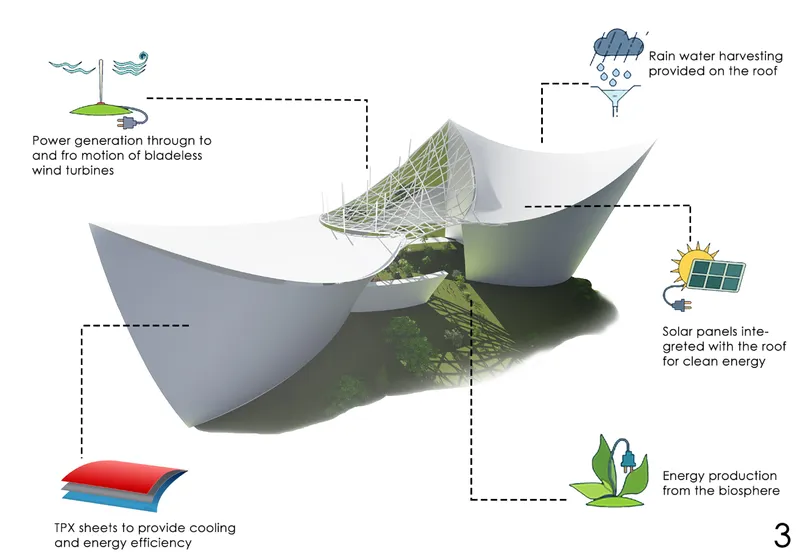
Seen from ground level, Maverick's white shell-like roof forms rise above the surrounding tree canopy with a calm authority. They look nothing like conventional office architecture, and that is the point. The curved profiles are optimized for two things: channeling wind across bladeless turbines that generate power through motion, and angling solar panels embedded in the roofline toward maximum exposure. Rainwater harvesting is woven directly into the roof geometry, with collection channels integrated into the sweeping surfaces.
The exploded diagram makes the engineering legible. Wind turbines sit at the peaks of curved volumes. Solar panels follow the south-facing slopes. Water circulation systems thread through the structure below. None of these systems are afterthoughts; each one shapes the form. The dynamic geometry that gives Maverick its visual identity is, in fact, the functional device that makes it self-sufficient.
A Biosphere Core Under a Lattice Dome
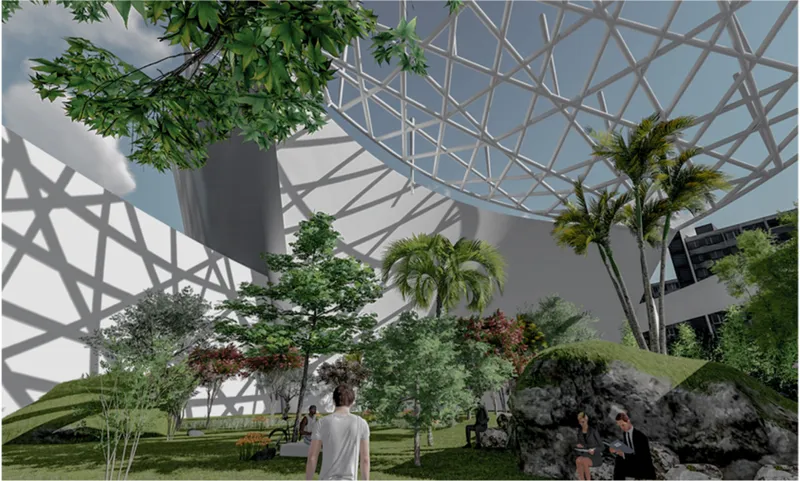
At the heart of the plan sits a central biosphere: a planted courtyard beneath a white lattice dome that acts as both a green lung and a social core. Trees grow inside. People walk through. The section reveals multiple levels interconnected by open atriums around this void, ensuring visual connectivity and cross-ventilation without mechanical systems. Underground infrastructure reinforces the strategy, handling water recirculation and energy storage out of sight.
The biosphere is more than landscape. It generates a microclimate within the building, moderating temperatures and humidity levels for the surrounding workspaces. Shaded gardens around its perimeter serve as zones for informal meetings and decompression, blurring the line between productive space and restorative environment.
Augmented Workspaces Where Technology Meets Landscape
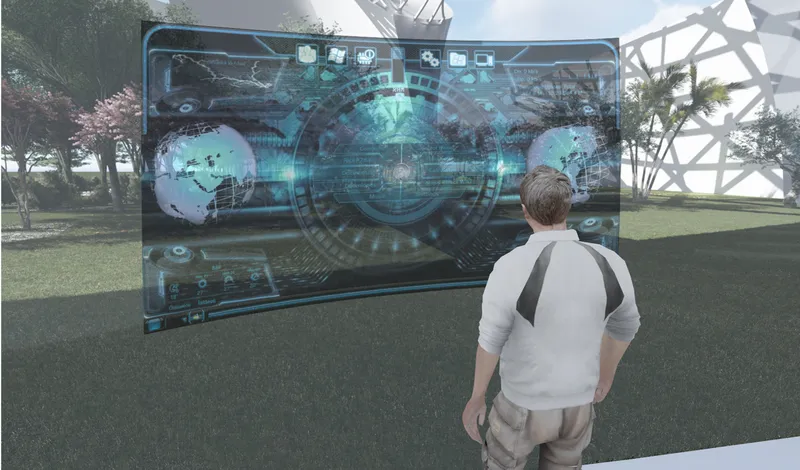
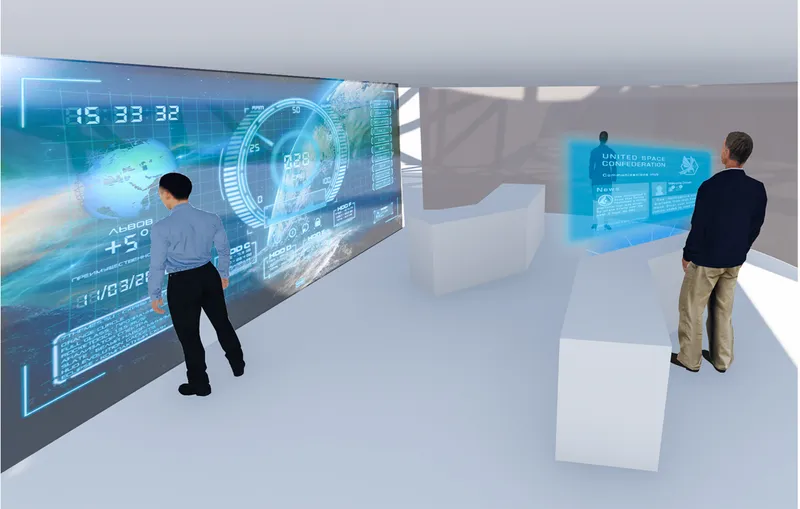
Maverick's vision extends beyond passive systems into the realm of augmented interaction. In the landscaped park area, a figure engages with a transparent digital interface display, suggesting that the building's exterior grounds function as outdoor workspaces equipped with holographic and augmented reality tools. Inside, a white angular gallery space hosts illuminated digital displays, positioning immersive technology as a natural component of the work environment rather than a novelty.
Virtual meeting zones and AR-based collaboration tools are embedded throughout the design, reflecting the team's conviction that future work will be mobile, interconnected, and technology-driven. The architecture does not simply house these tools; it frames them within spaces that prioritize human comfort, natural light, and visual connection to greenery. The juxtaposition of high-tech interfaces against planted courtyards and shaded walkways is deliberate: technology and nature are not opposing forces here but collaborators.
Why This Project Matters
Maverick is ambitious in scope, and that ambition is precisely what makes it worth studying. Too many sustainable workplace proposals treat green features as checklists: add solar panels, install efficient fixtures, include a green wall. This project instead asks what happens when sustainability becomes the generative logic of architectural form. The roof curves because the wind turbines need it to. The section opens because the biosphere needs ventilation. The facades adapt because human comfort demands it. Every design decision traces back to a performance requirement.
The designers frame Maverick as a manifesto, and the word fits. It argues that the architecture of tomorrow must not only serve its users but actively repair its environment. Whether every system proposed here reaches technical feasibility at this scale is a fair question, but the project's value lies in its refusal to compromise the ambition. In a field that often settles for incremental improvement, Maverick insists on transformation.
View the Full Project
About the Designers
Designers: Muhammed K. Abdulla, Sandeep Kumar, Salil Subair, Umang Jain
Enter a Design Competition on uni.xyz
uni.xyz runs architecture and design competitions year-round that reward proposals with spatial conviction and real site intelligence.
Project credits: Maverick by Muhammed K. Abdulla, Sandeep Kumar, Salil Subair, Umang Jain.


Popular Articles
Popular articles from the community


Aquadapt: An Underwater Habitat That Rewrites Its Rooms by the Hour
Curved modules ring the seabed while one shell shifts from breakfast room to cinema, farm and football pitch as residents' needs change.

Singing Woman: An Opera House That Performs Before the Curtain Rises
Ovidiu Cristian Pavel's conceptual opera house translates Estonia's choral identity into a sculpted waterfront landmark facing the Baltic Sea.

Manzana Morphosis: Stretching Barcelona's Grid into a Living Landscape for 2050
A radical reworking of the Eixample manzana turns density into a tool for generous public space, vertical ecology, and environmental performance.


FCC Arquitectura Expands a Portuguese Granite House with a Board-Marked Concrete Wing
In Portugal, JV House pairs a cleaned-up whitewashed and granite dwelling with a timber-shuttered concrete extension, courtyards and a garden pool.

Similar Reads
You might also enjoy these articles
Aquadapt: An Underwater Habitat That Rewrites Its Rooms by the Hour
Curved modules ring the seabed while one shell shifts from breakfast room to cinema, farm and football pitch as residents' needs change.

Play: Fragments of Their World: Remembered Architecture Rebuilt as a Modular Playground for Refugee Camps
Tom Gardner abstracts domes, arches and towers from the homelands of displaced families into a kit of child-scaled play parts for camp settlements.
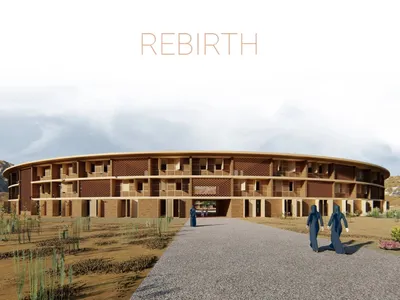
REBIRTH: A Circular Settlement Where Afghan Widows and Their Children Rebuild Life Together
A shortlisted Resile entry turns the circle into a protective ring of timber and brick, gathering homes, classrooms and gardens around a shared landscape.
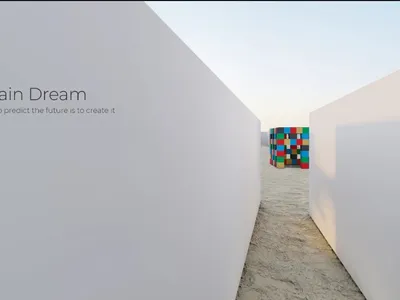
The Main Dream: A Recycled Plastic Kit That Lets Refugee Children Build Their Own Playground
Thirty-centimetre interlocking cubes that connect on three axes turn play into construction, letting children author the spaces they occupy.

Explore Futuristic Workspaces Competitions
Discover active competitions in this discipline

Challenge to reimagine the Iron Throne

Photograph architecture without architects

Illustrate the lost glory of Angkor Wat - Render Challenge

Design challenge to reuse E-waste
Comments (0)
Please login or sign up to add comments
No comments yet. Be the first to comment!