
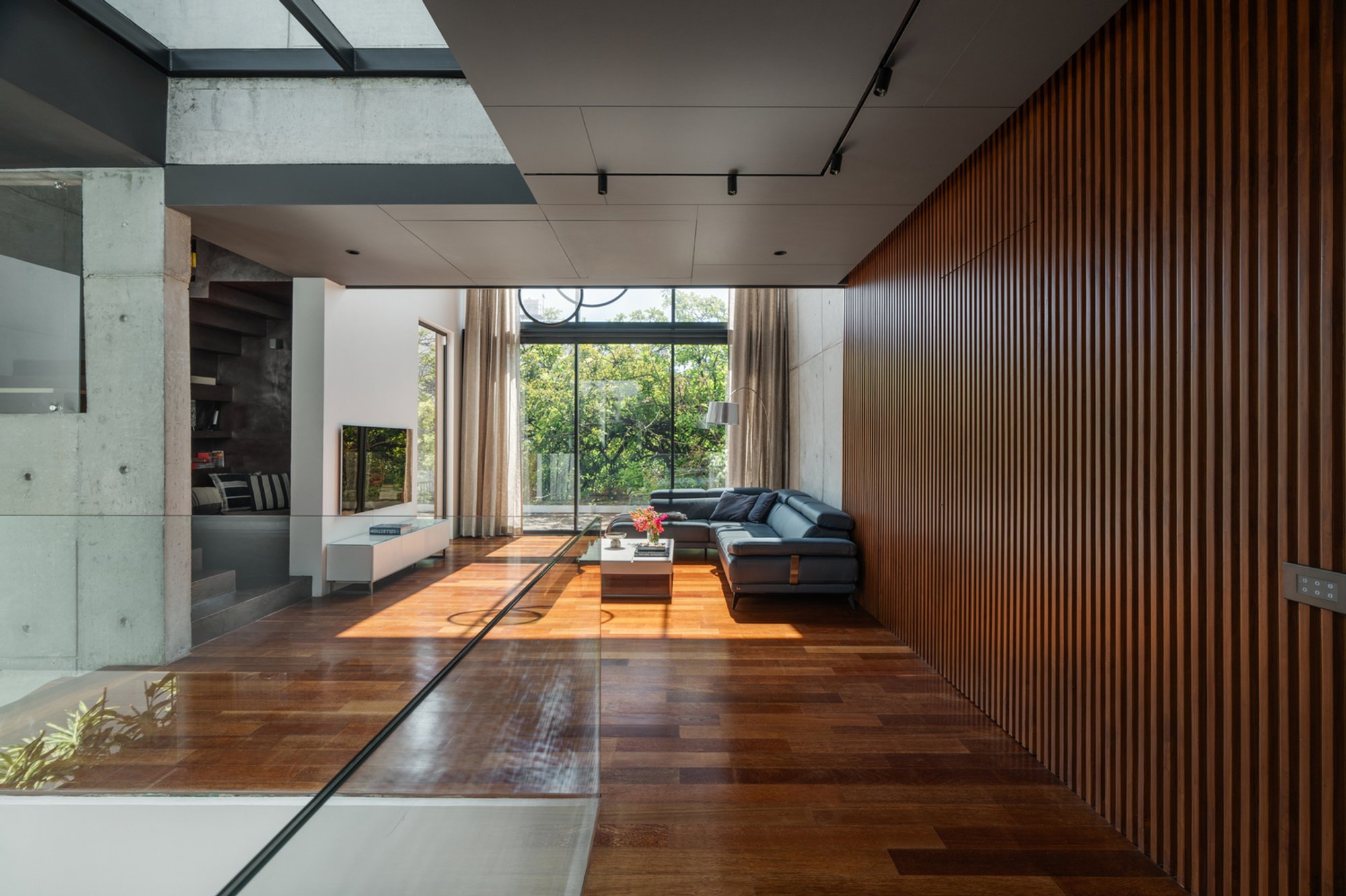
Modern Residential Architecture in Bangalore: House #396 by Architecture Paradigm
Explore the design philosophy behind House #396, a modern residential architectural marvel in Bangalore, blending light, materials, and nature.

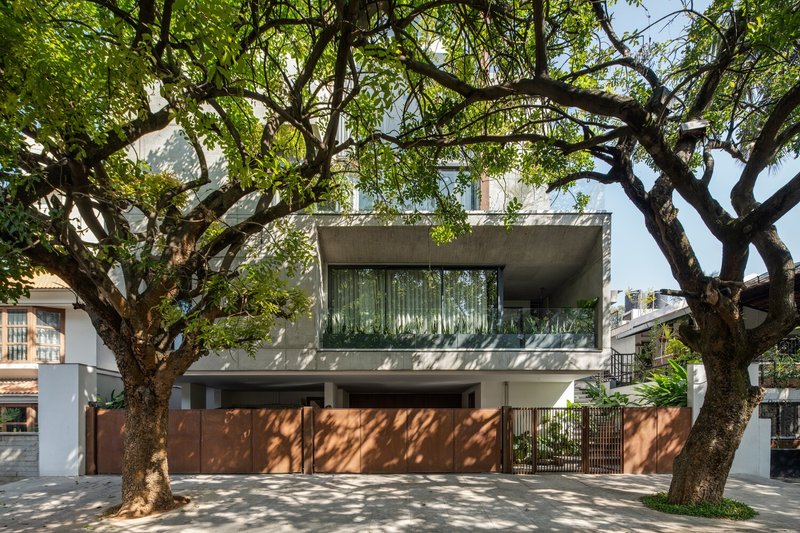
House #396, located in a leafy suburb of Bangalore, is a testament to modern residential architecture. Designed by Architecture Paradigm, this house is a perfect blend of light, form, and context. The architects meticulously planned every aspect of this home to create a space that connects the indoors with the outdoors, maximizing natural light, and fostering a relationship between the environment and the inhabitants. The design brief was clear: to create a bright and airy home that would serve as a contrast to the client's previous dimly lit house. The result is an extraordinary, light-filled dwelling that prioritizes sustainability and natural materials.
The Concept Behind House #396
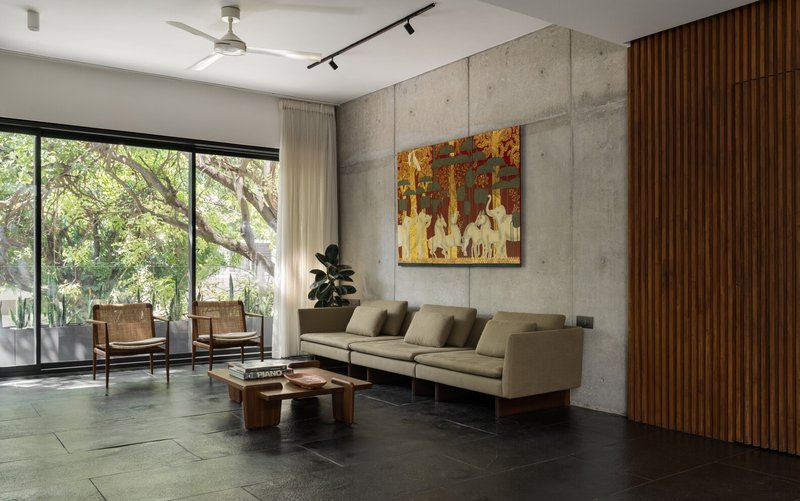
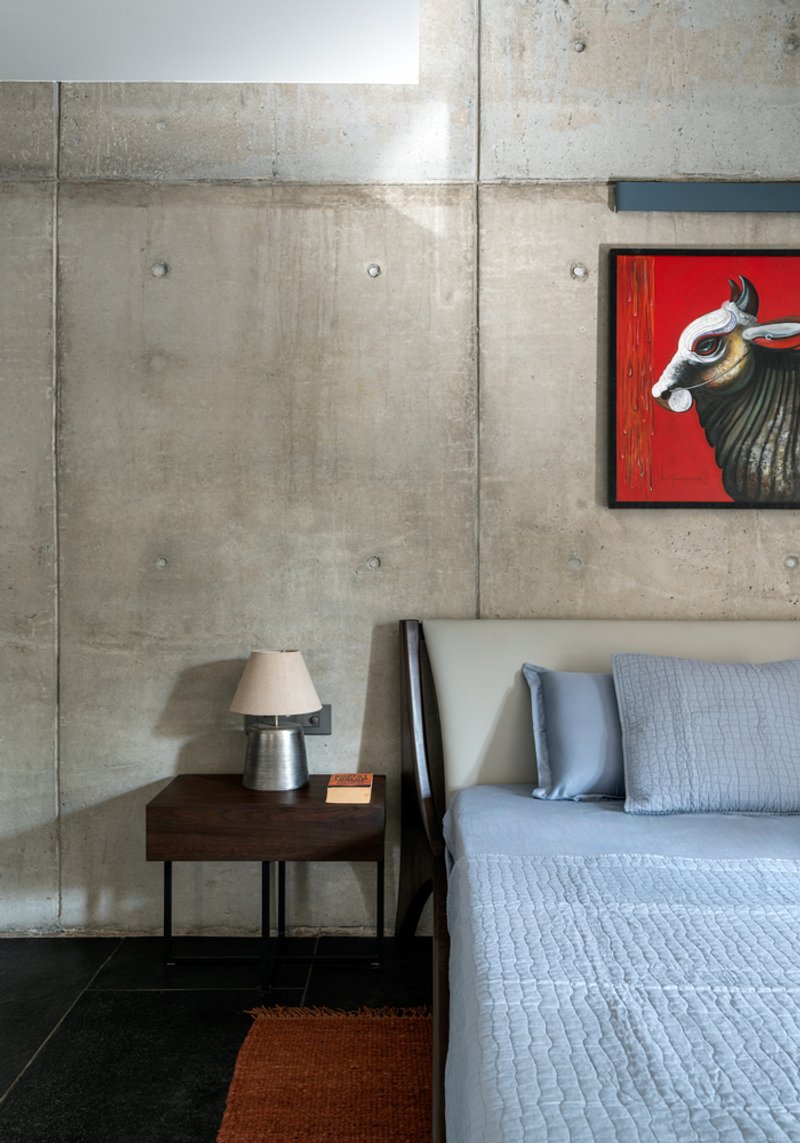
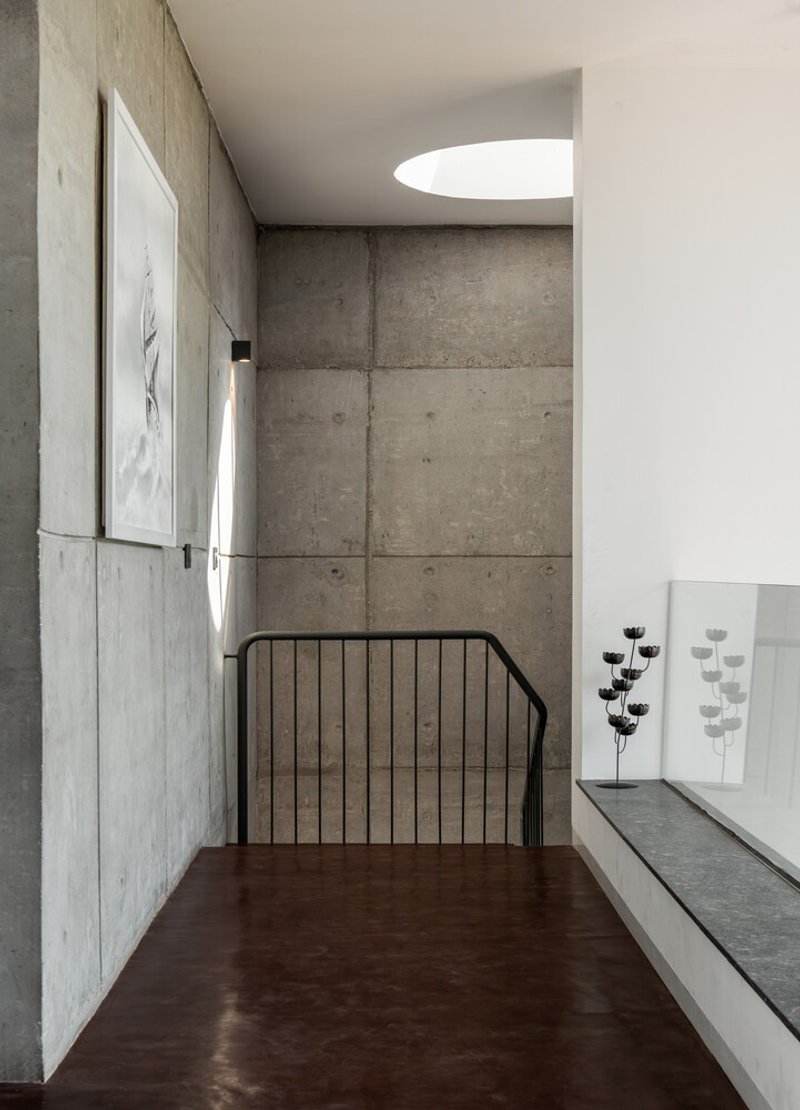
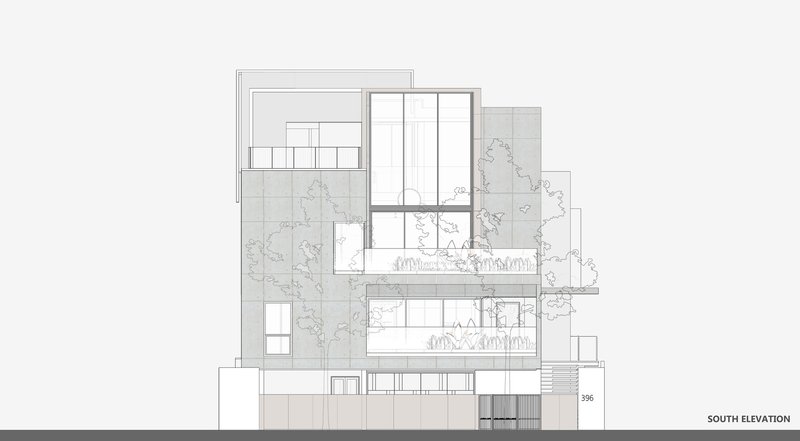
The architects’ approach was driven by the client's desire for a light-filled home and their affinity for form-finished concrete. Concrete is the backbone of the design, seamlessly integrating the house into its surroundings without overpowering the neighborhood’s aesthetic. The layout and material choices, particularly the form-finished concrete, are informed by the house’s context in the south-facing, tree-lined suburban area of Bangalore.
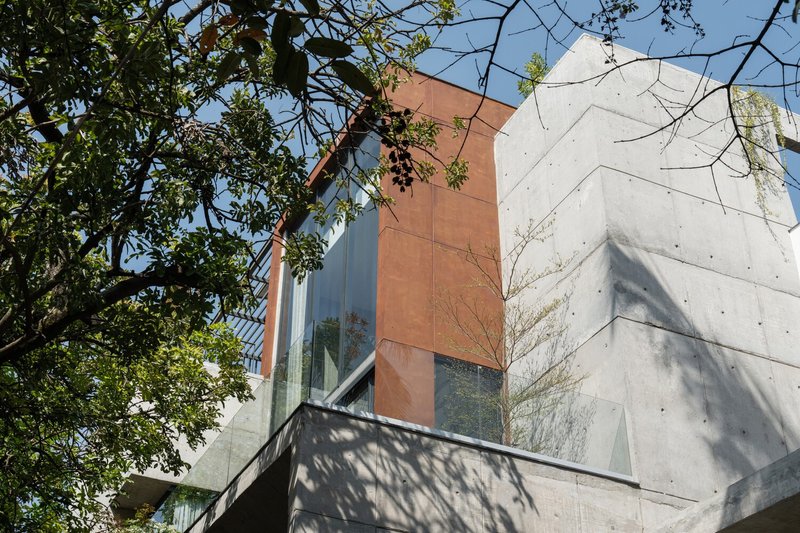
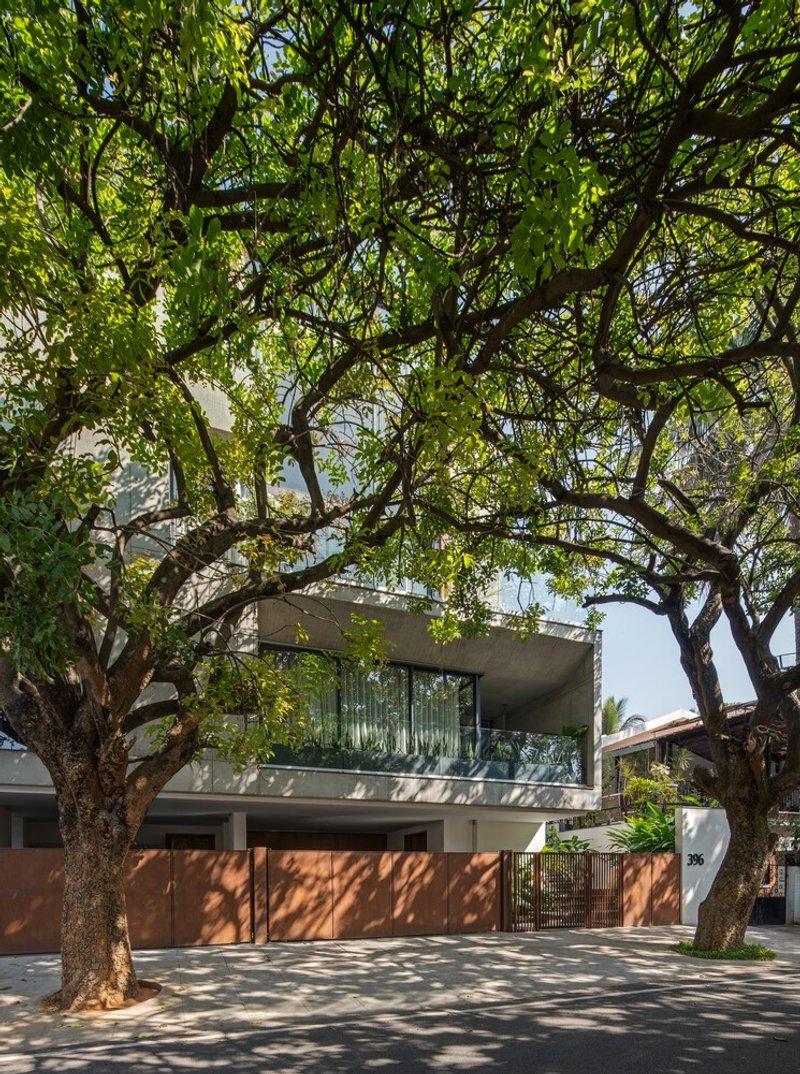
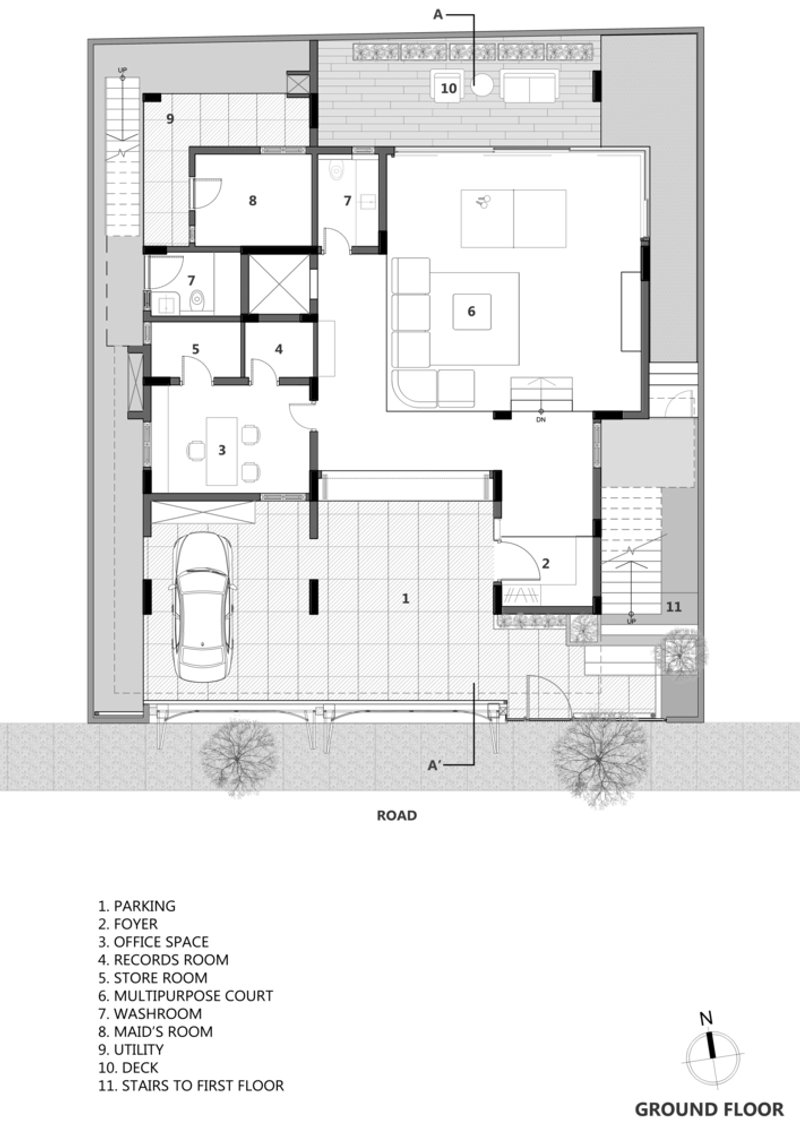
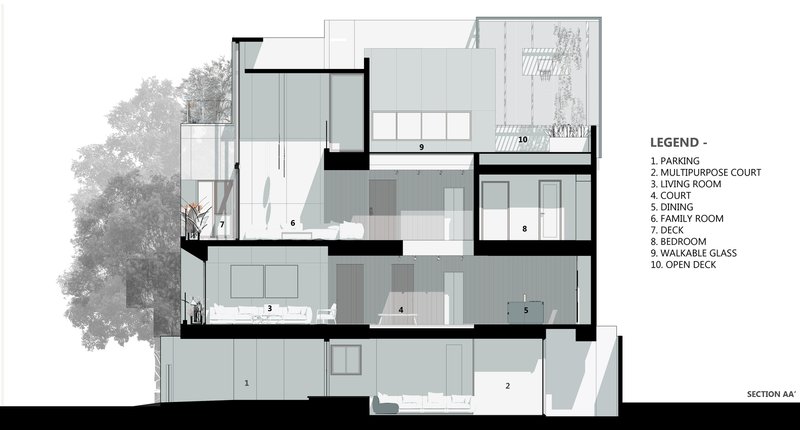
The layout of the house is characterized by two longitudinal zones: the western zone, which provides privacy and enclosure for living spaces, and the eastern zone, which remains open and welcoming. This zoning allows for a harmonious flow between various levels of the house and establishes a deep connection between the indoor and outdoor environments.
Design and Material Choices
The house spans 8,100 square feet and is distributed over two levels, with a connection to a terrace space. The primary spaces, such as the living room, dining area, and kitchen, occupy the first and second floors. Meanwhile, the ground floor features a sunken garden that further integrates the home with the natural surroundings.
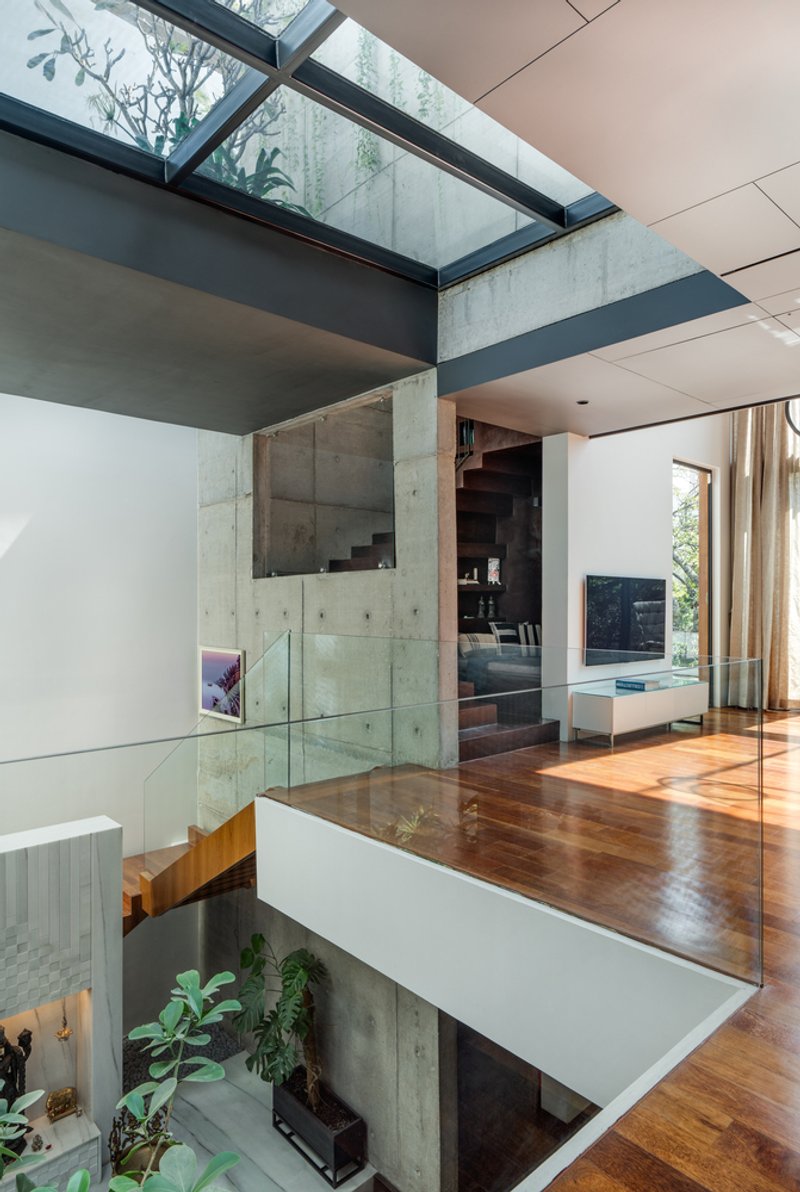
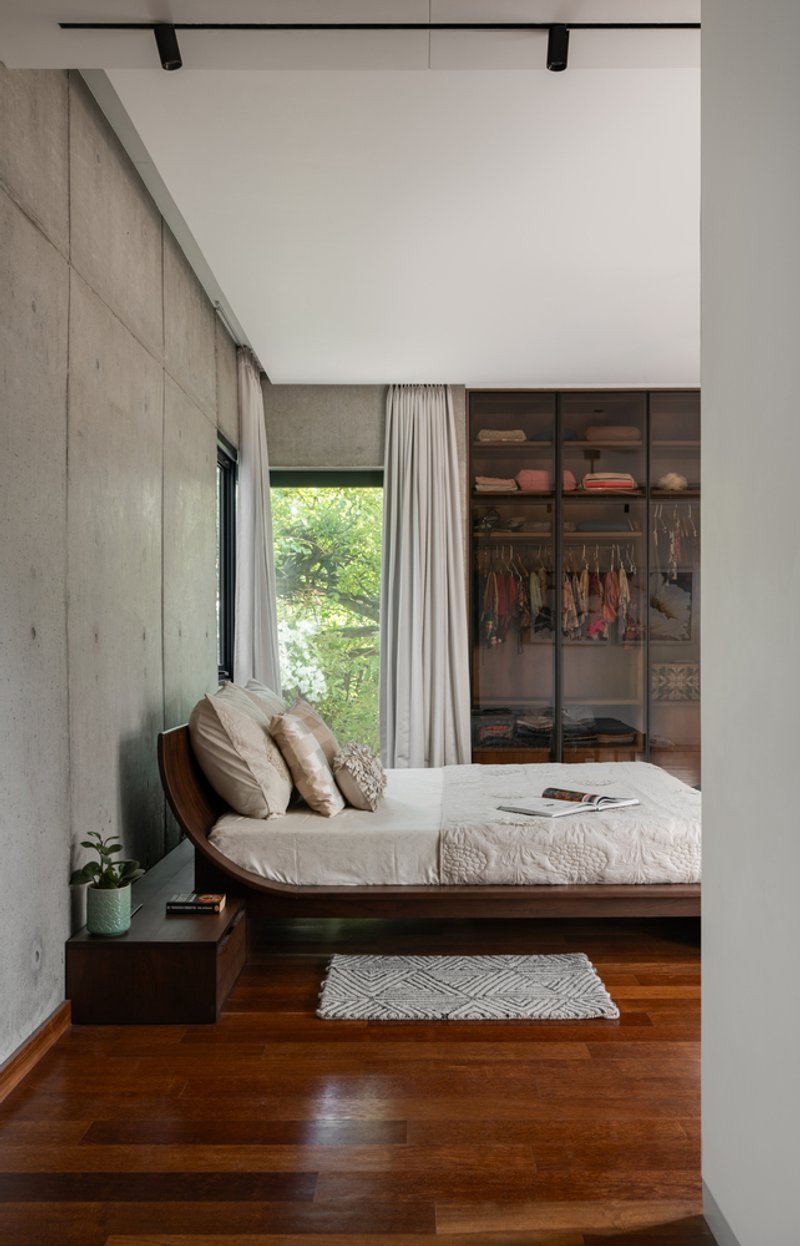
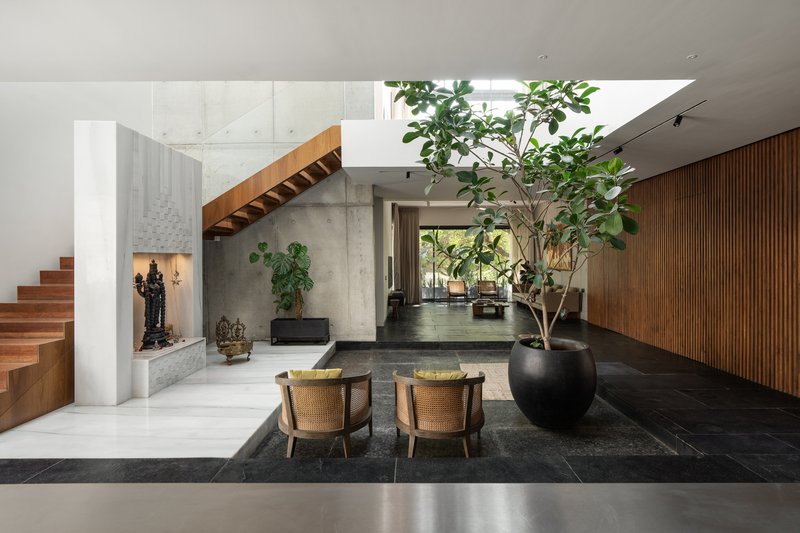
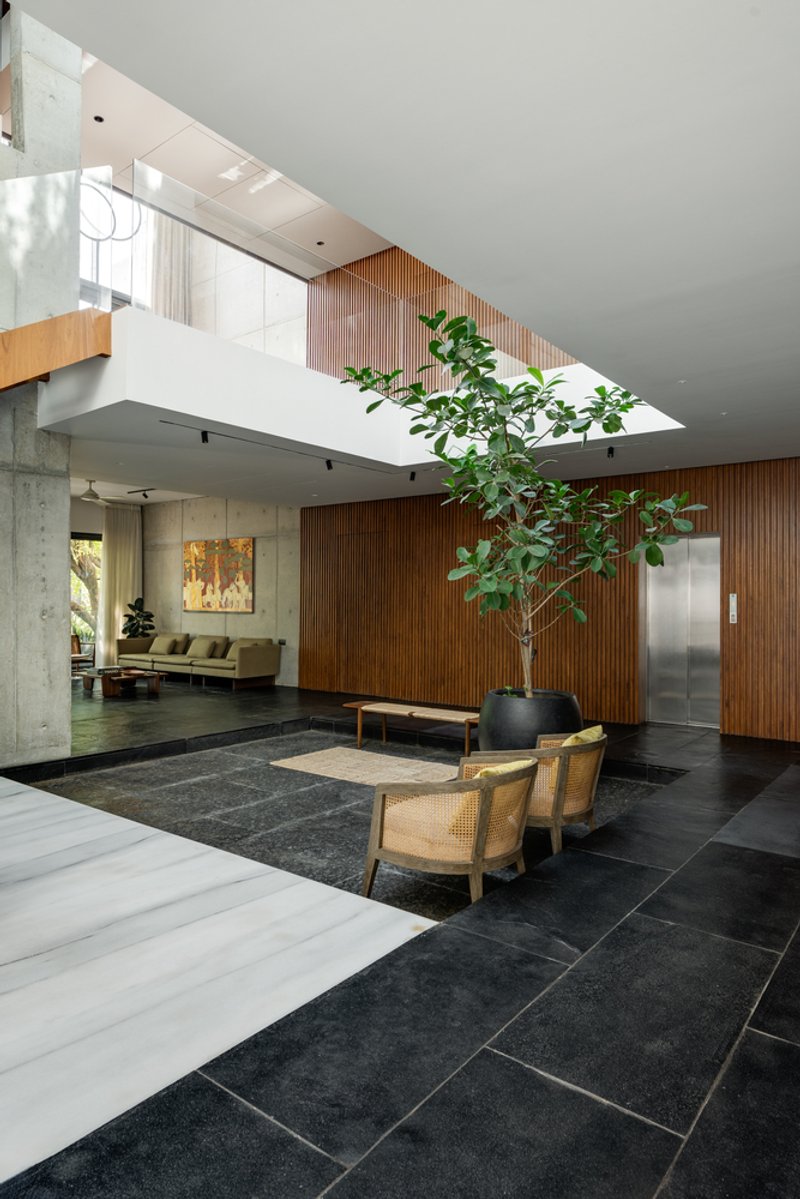
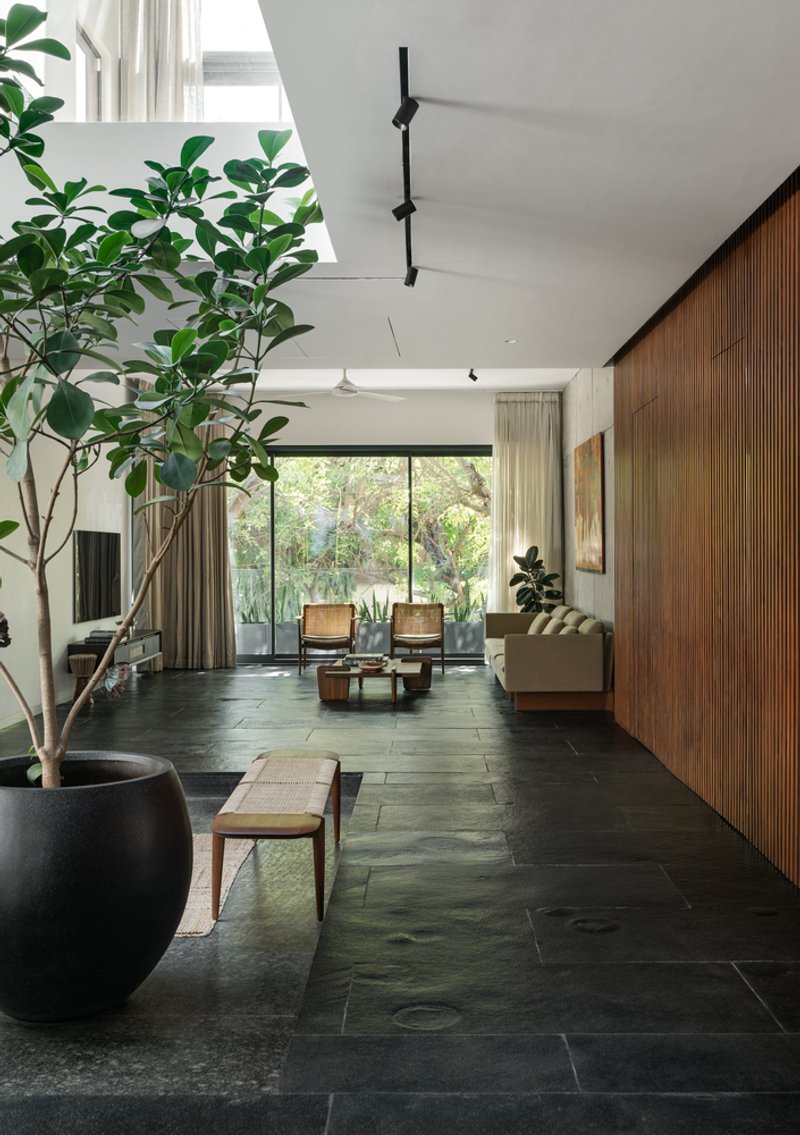
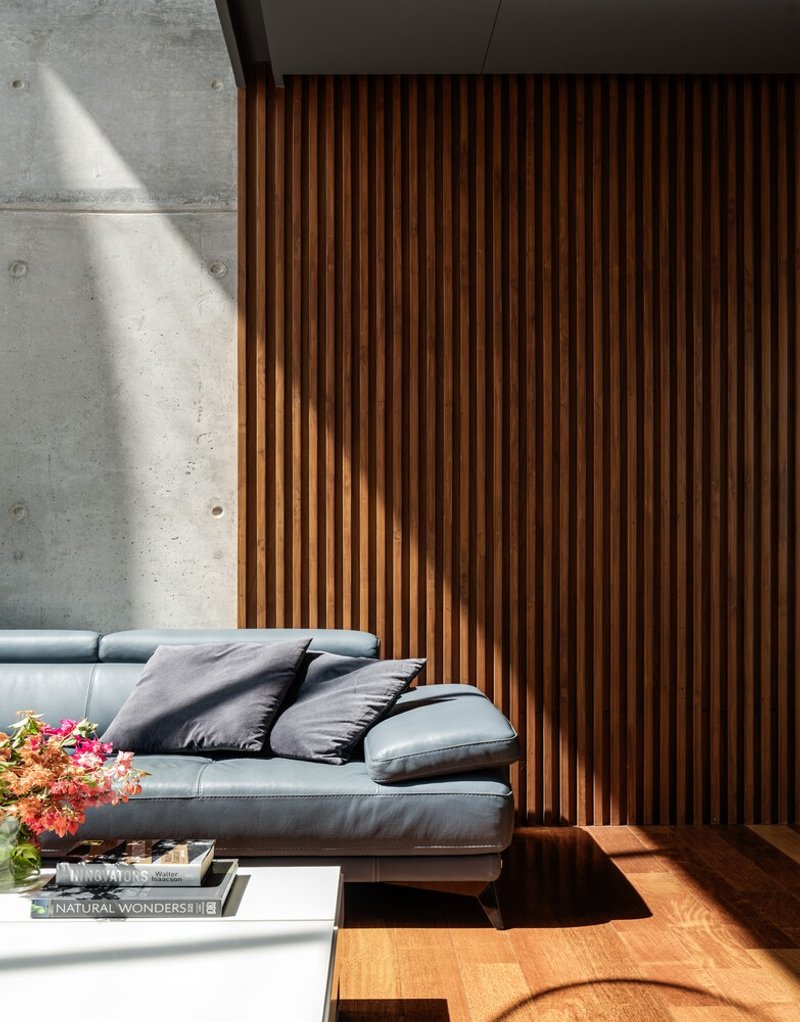
The use of natural materials is evident throughout the house. The matte black granite walls and kadapa flooring in the sunken zone create a cavernous yet intimate atmosphere. Pergolas and large folding doors allow for the flexibility of opening up the space when desired. These architectural elements foster an interaction with the environment, making the house both functional and aesthetically pleasing.
A Journey Through the House
Ground Floor Design
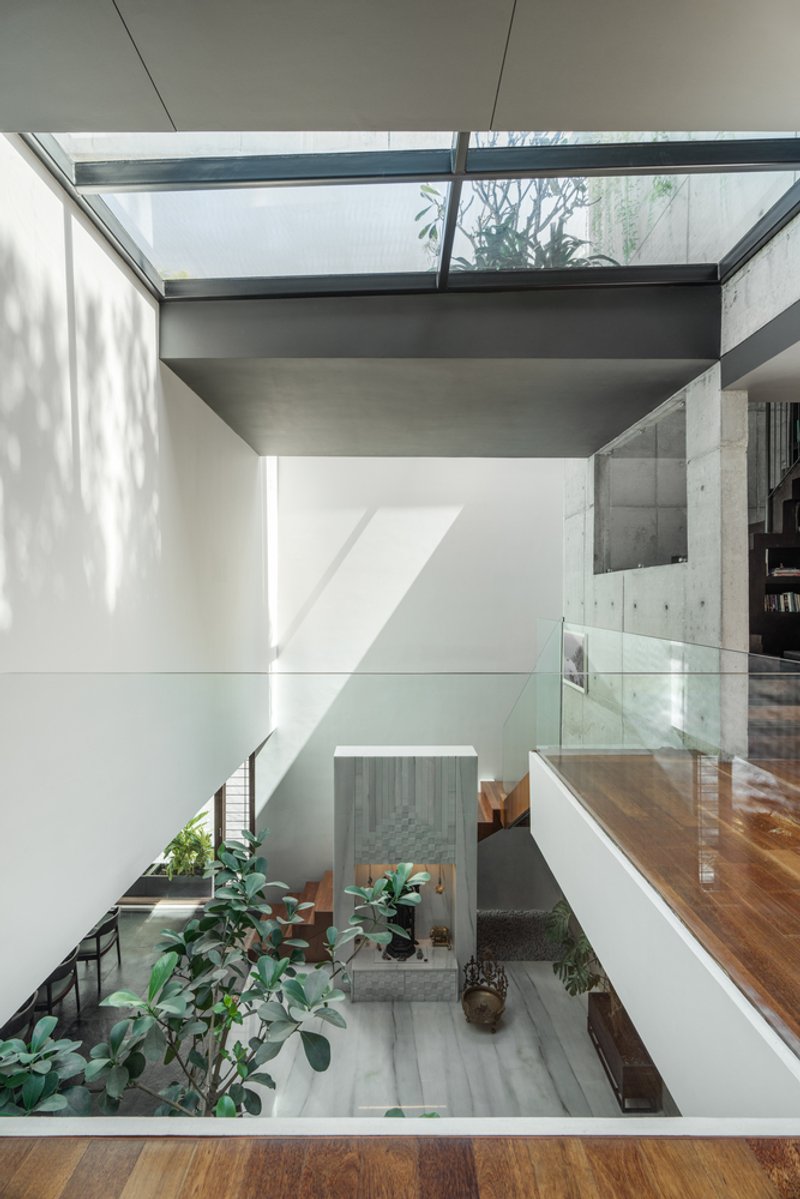
On the ground floor, the sunken garden and the surrounding black-clad granite walls create a serene outdoor retreat. The garden's pergola-lined slits allow sunlight to filter in, creating a dynamic interplay of light and shadow. The connection between the house and the garden is seamless, with large sliding doors that provide flexibility in opening or enclosing the space. The use of concrete and wood provides a natural, calming feel to the house.
Living and Dining Areas
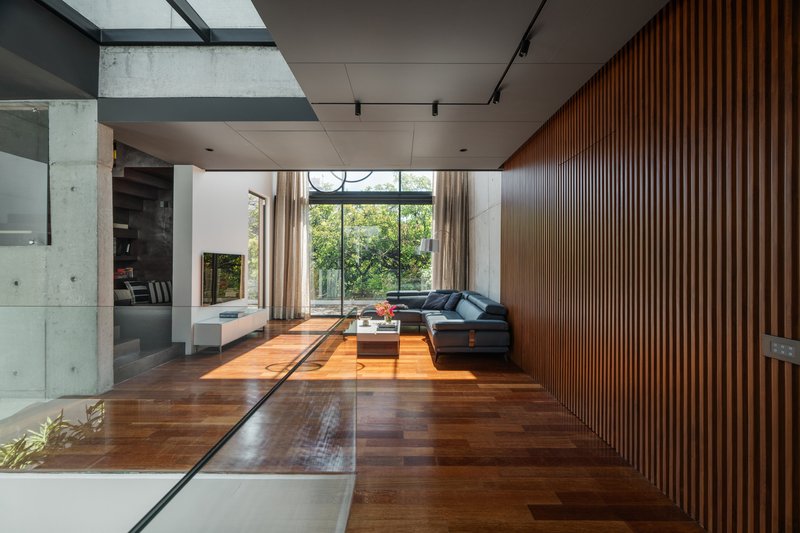
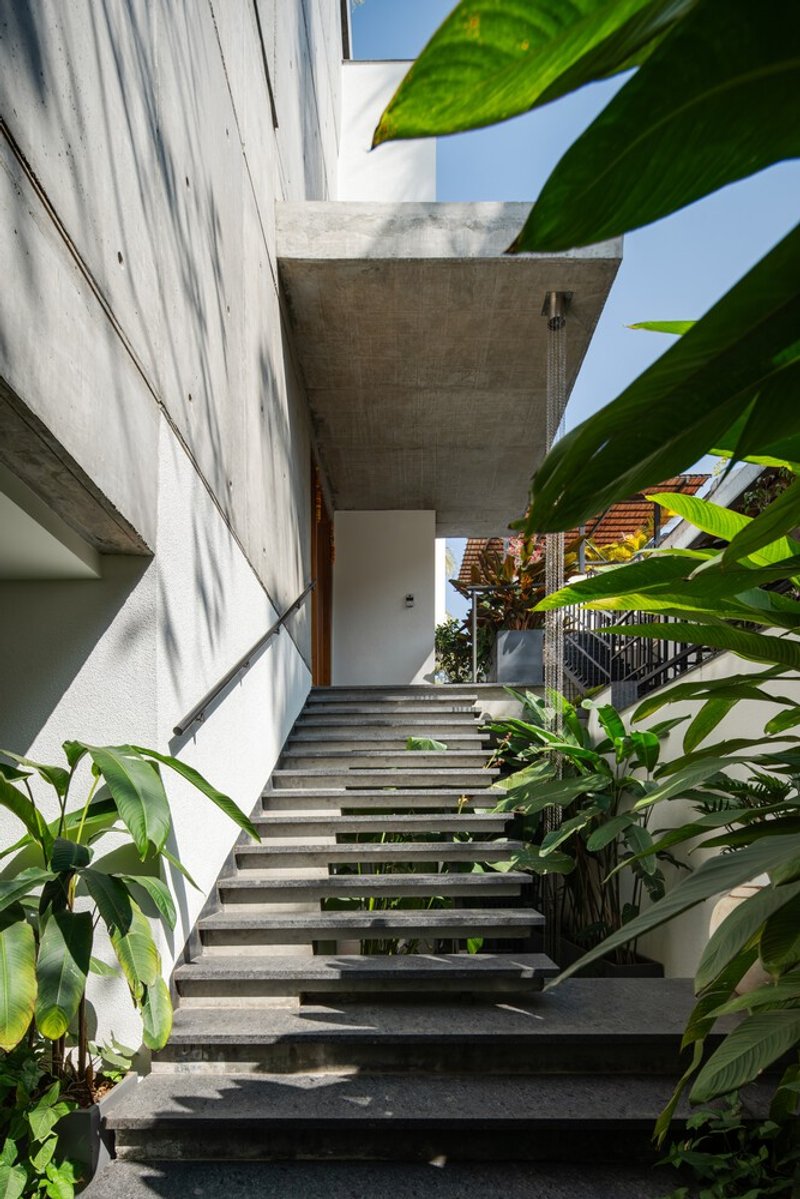
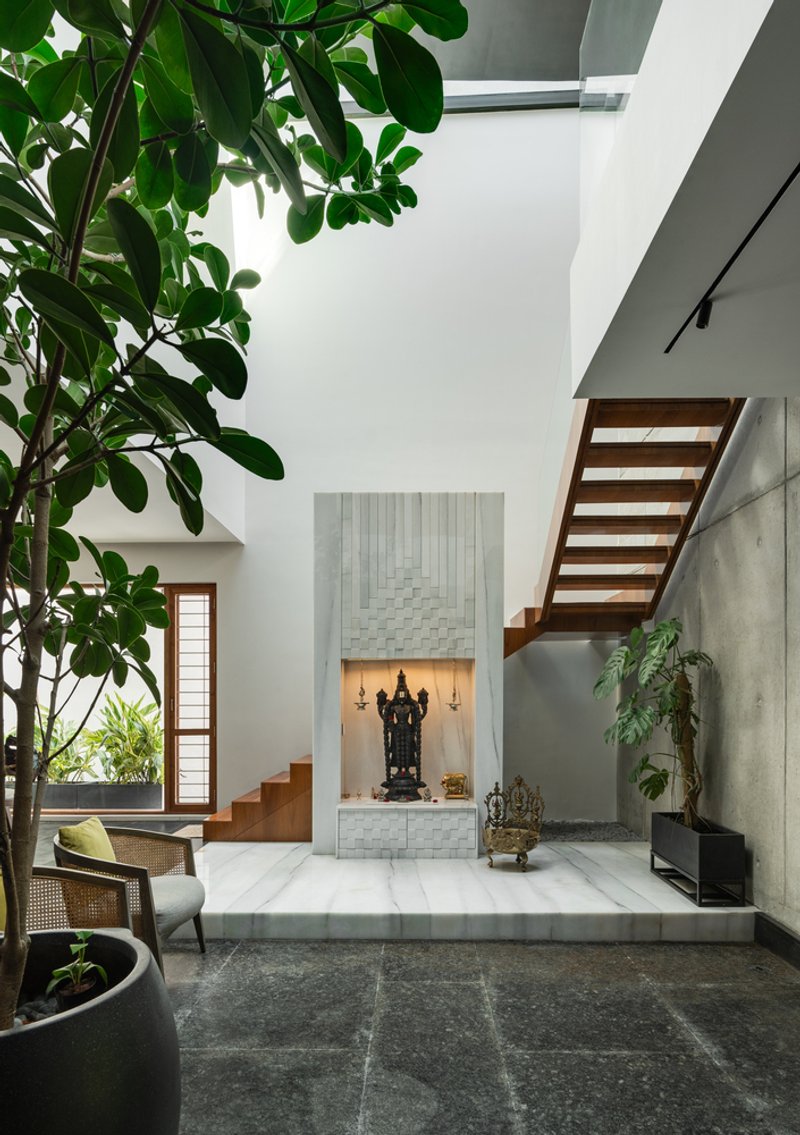
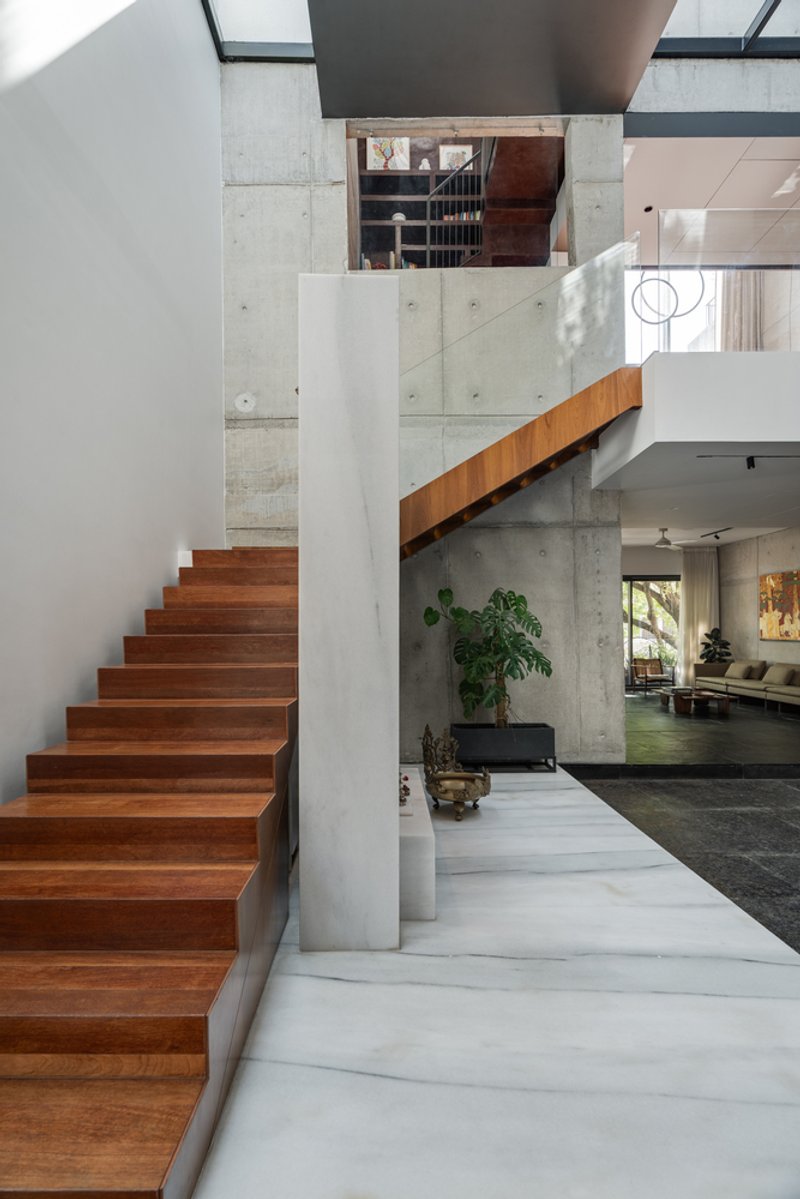
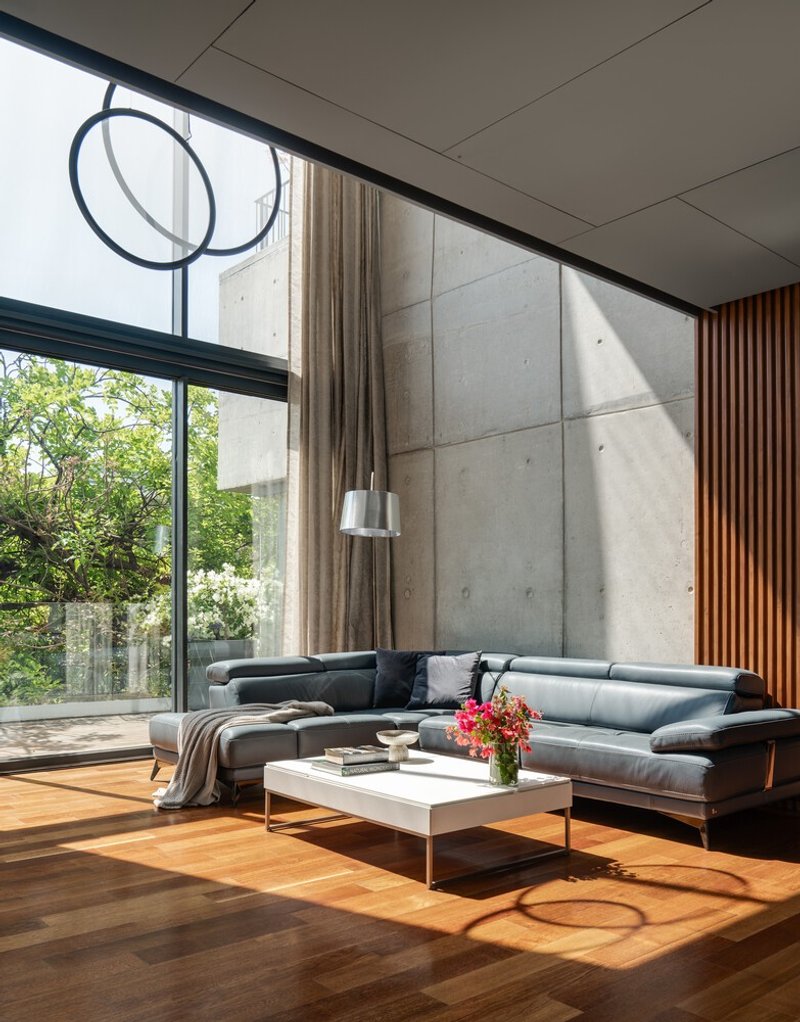
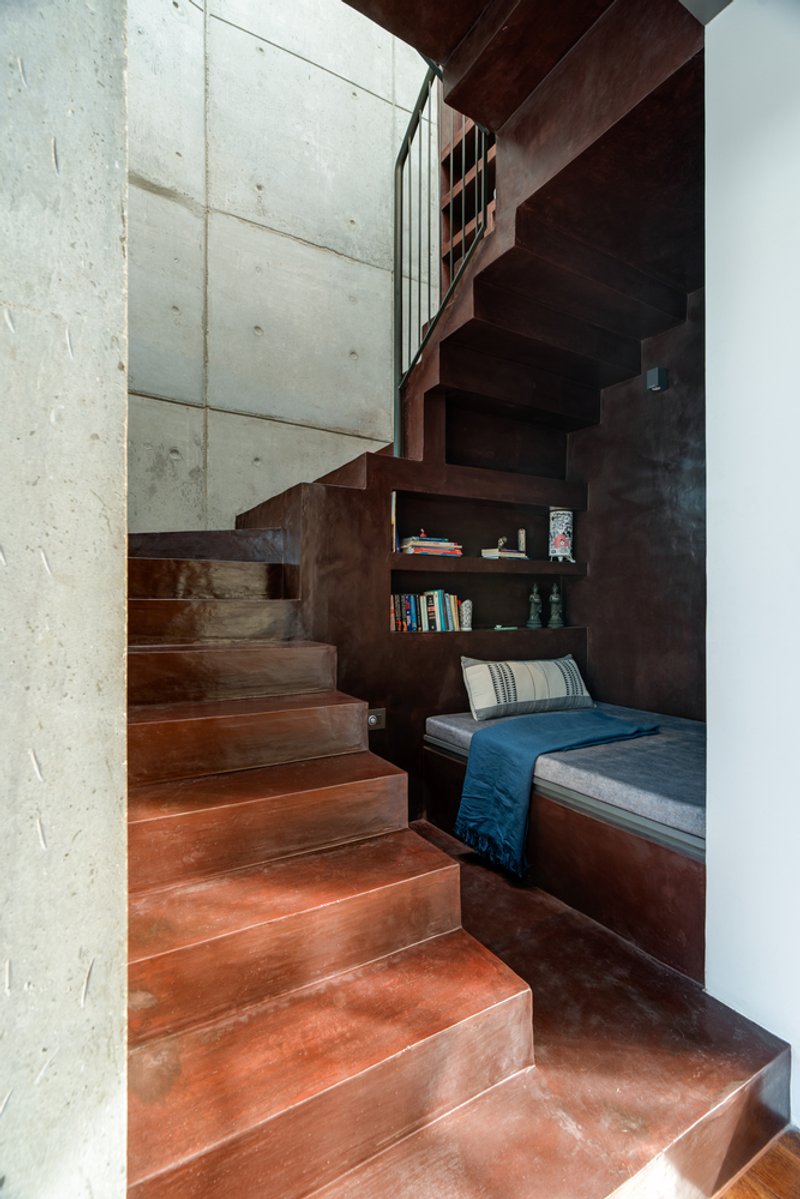
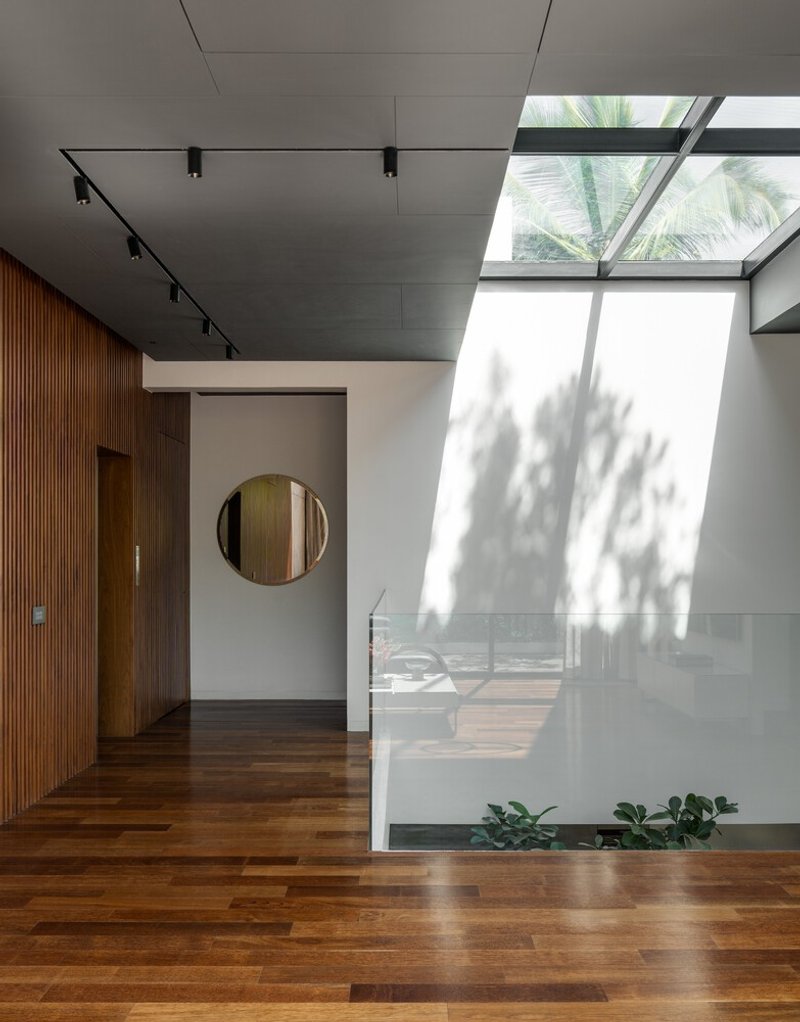
The living room, located on the first floor, is accessed via a set of cantilevered stairs, which offer a visual connection to the green space outside. The living and dining areas are designed to emphasize the play of light. Large apertures frame views of the south-facing sausage trees, and the courtyard ensures that light permeates deep into the house. These design elements create a dramatic yet poetic light effect, with shadows dancing across the interiors.
Upper Floor and Terrace
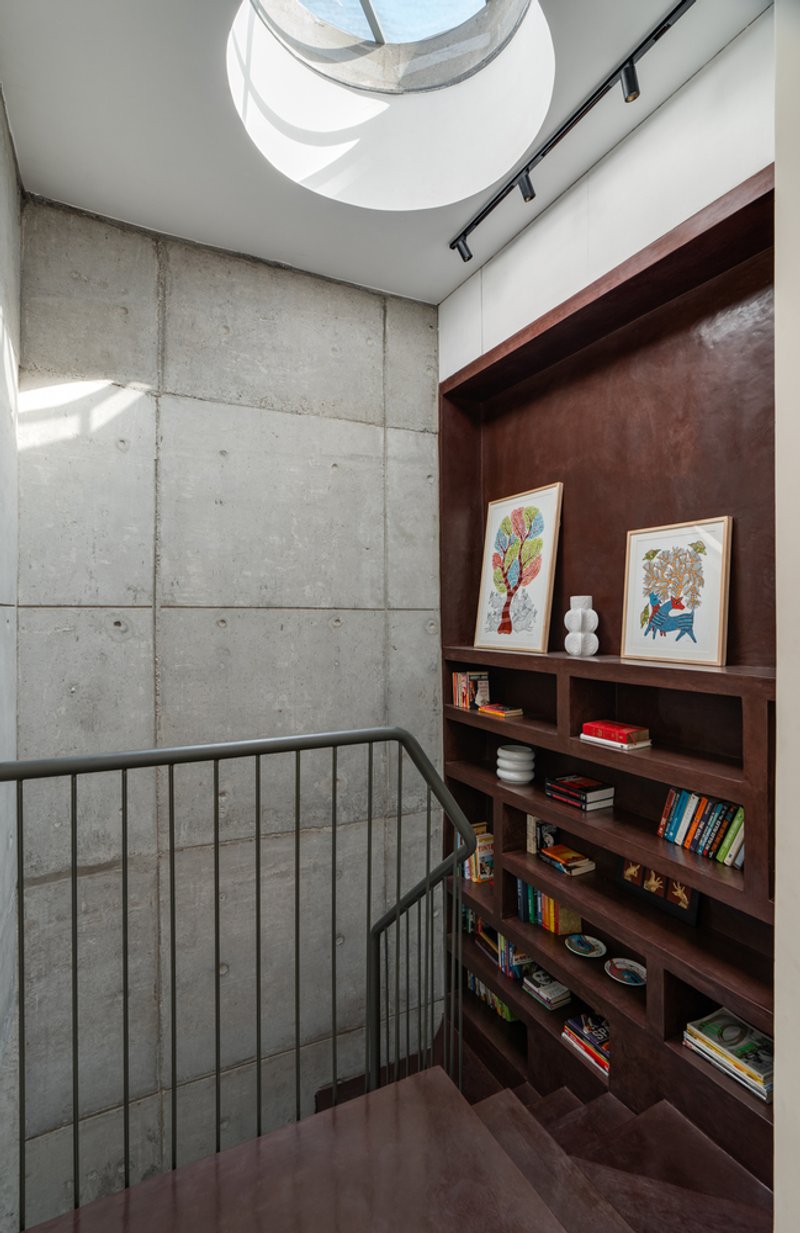
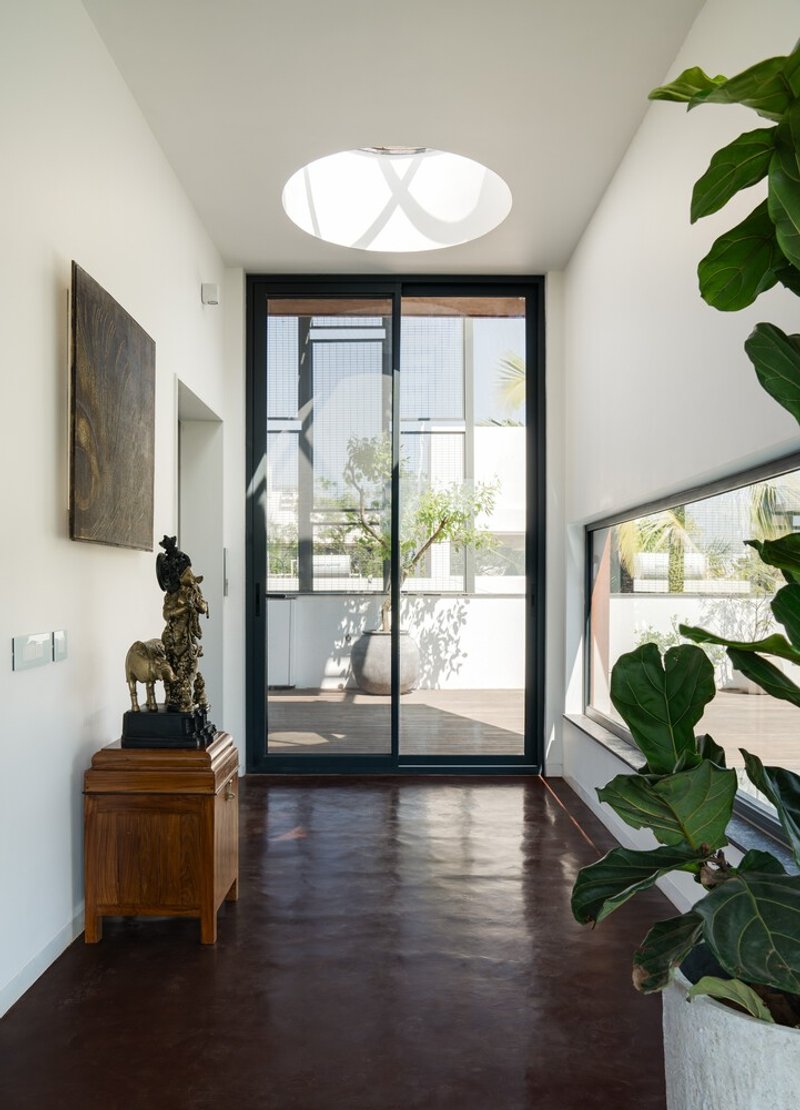
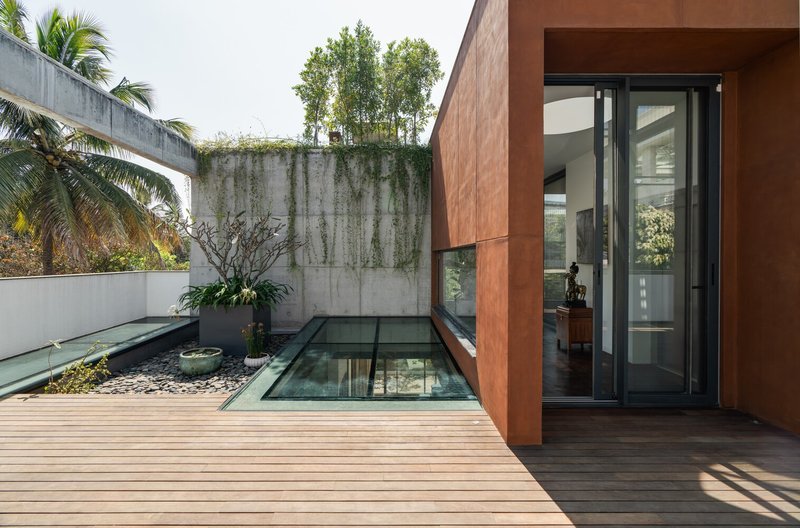
The second floor is characterized by expansive, open spaces with a large double-height aperture that frames views of the trees and sky. A metal staircase wrapped in wood connects the floors, and natural materials like wood and concrete continue to define the aesthetic of the home. The terrace offers a tranquil retreat with a raised deck and pergolas that provide shade and comfort. These spaces are designed for relaxation and recreation, further extending the connection between the house and its environment.
Sustainable Design and Integration with the Surroundings
One of the key design elements of House #396 is its emphasis on sustainability. The use of locally sourced materials, such as concrete, wood, and kadapa stone, helps reduce the environmental impact. The house’s orientation takes advantage of natural light, reducing the need for artificial lighting during the day. The strategic placement of windows and apertures maximizes cross-ventilation, ensuring that the house remains cool in Bangalore’s warm climate.
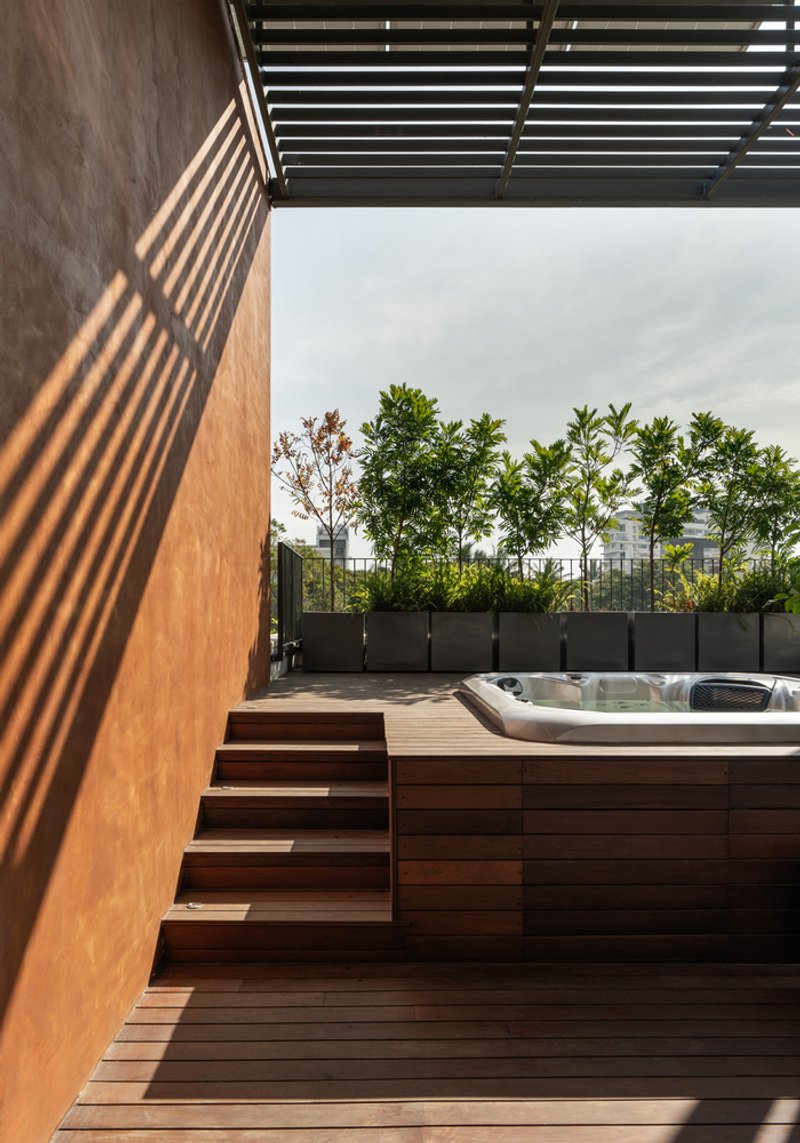
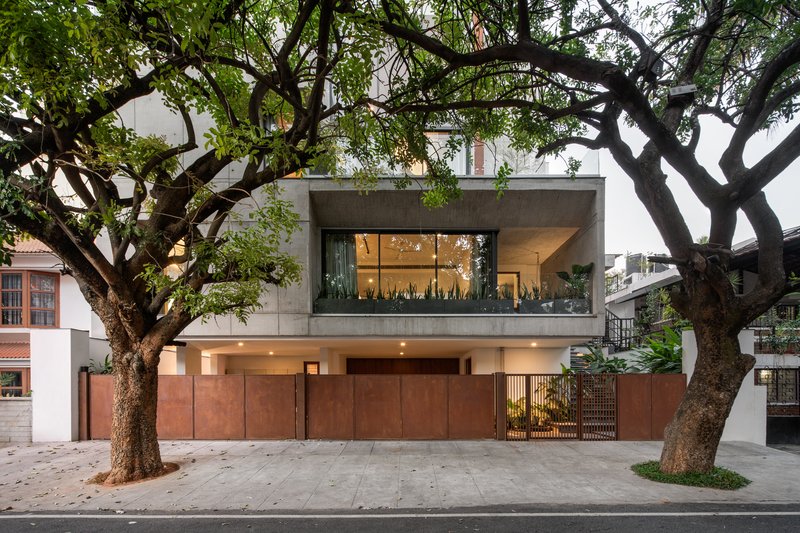
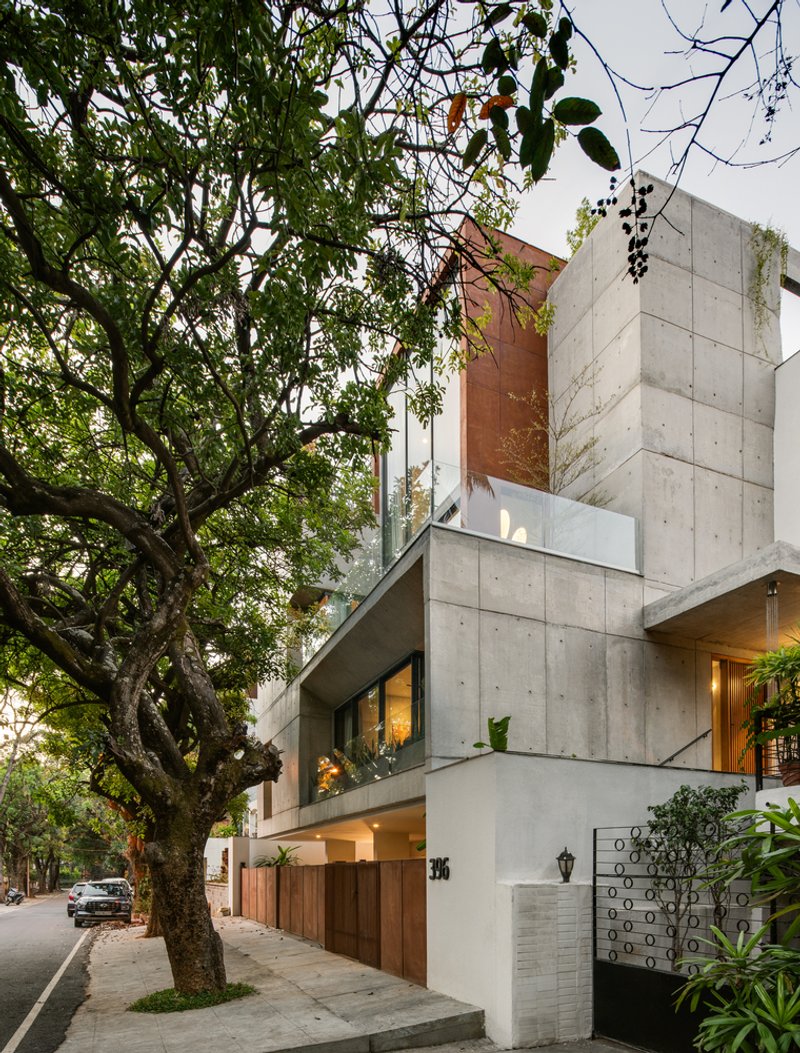
House #396 by Architecture Paradigm is a shining example of modern residential architecture in Bangalore. The thoughtful integration of form-finished concrete, sustainable materials, and a strong connection to the natural surroundings make this home a standout example of contemporary design. The house doesn’t just cater to the needs of its inhabitants but also fosters a deeper connection with its environment, blending modern living with the beauty of nature.
All photographs are works of Shamanth Patil




Popular Articles
Popular articles from the community


Solar Steam: A Climate-Responsive Architecture That Redefines the Monument
A climate-responsive memorial architecture that transforms heat, decay, and time into a living system reflecting humanity’s ecological impact.
Gads Hill Early Learning Center by JGMA: Adaptive Reuse Shaping Community-Focused Educational Architecture
Adaptive reuse transforms fragmented structure into vibrant early learning center with playful façade, natural light, and community-focused sustainable design.

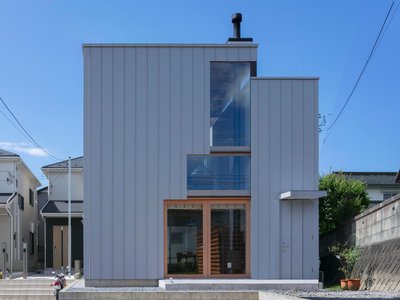
Split House: A Compact Urban Home Blending Privacy, Light, and Flexible Living in Japan
Compact Japanese home featuring DOMA space, flexible café potential, passive lighting, privacy zoning, and sustainable urban living design.


Similar Reads
You might also enjoy these articles

Free Architecture Competitions You Can Enter Right Now
No entry fees, real prizes. Here are the best free architecture competitions open for submissions in 2026.
Top 15 Architecture Competitions to Enter in 2026
From student-friendly idea competitions to prestigious international awards, here are the best architecture competitions open for entries in 2026. Updated regularly.

DIY & Engineering in Computational Design : Enter the BeeGraphy Design Awards
Showcase Your Creativity with Computational Design and Open Source Projects
Innovative Design Solutions: Award-Winning Projects from Recent Architecture Competitions
Exploring award-winning architectural projects shaping the future of design, sustainability, and community.


Explore Architecture Competitions
Discover active competitions in this discipline




The International Standard for Design Portfolios


The Global Benchmark for Architecture Dissertation Awards


The Global Benchmark for Graduation Excellence


Challenge to reimagine the Iron Throne
Comments (0)
Please login or sign up to add comments
No comments yet. Be the first to comment!