
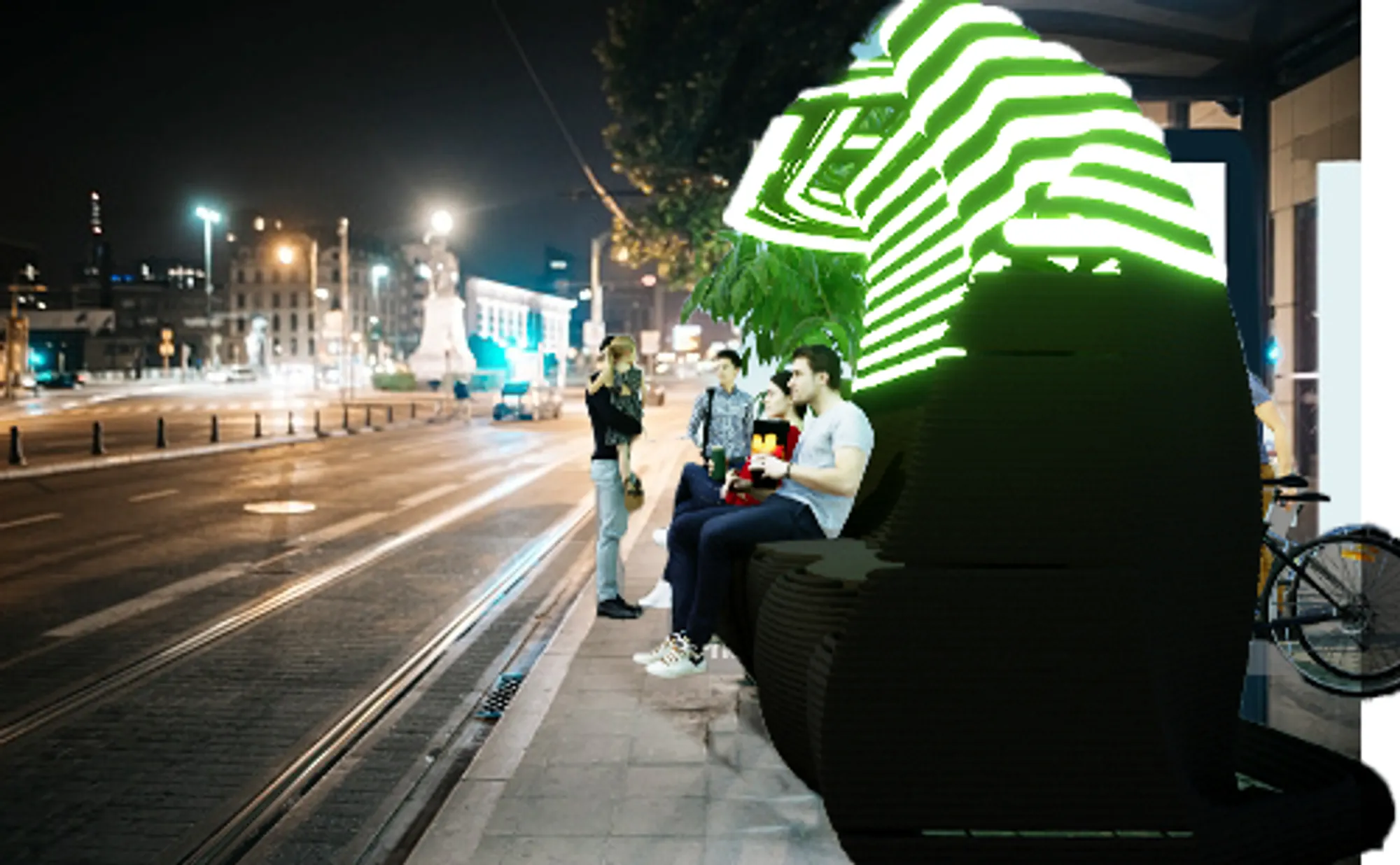
Mud-Ulor Bus Stop
Better Bus Stop for New Delhi

Our world is developing at an incredible pace and we see that the advancements of transportation remain at two different ends of the spectrum. It seems that there is an unfortunate understanding that as a country develops and attains greater economic power, more of its citizens will have the privilege of driving personal vehicles. However, is it not more logical for a developing country to invest in its public transport thus making cities more walkable and human friendly while helping the environment as well.
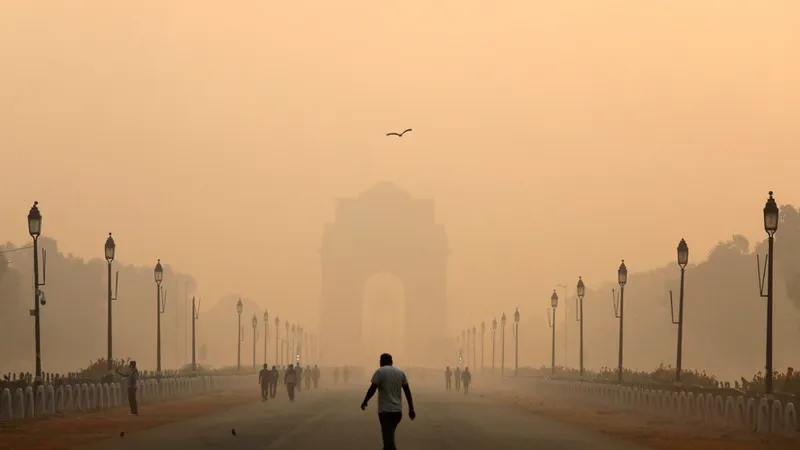
The concept of this project therefore has a strong relation to the use of sustainable materials in order to promote recycling and a lifestyle that will benefit the clean air that future generations need. The region the project pilot was planned on goes by the name Chandni Chowk in New Delhi, India. India is well known to have poor air quality to uncontrolled pollution, and terribly congested traffic due to the extensive use of motorbikes, Tuk-Tuks (3 wheeled scooter-like vehicles), and personal vehicles. The country has, however, recently invested in electricity powered buses, so it is our aim to promote the use of such buses along with clean modes of transportation to help the suffering ecology of Indian cities.
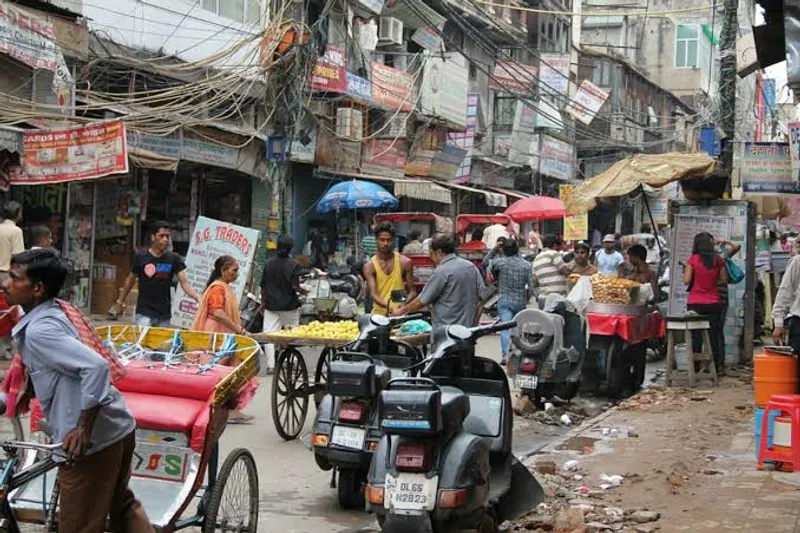
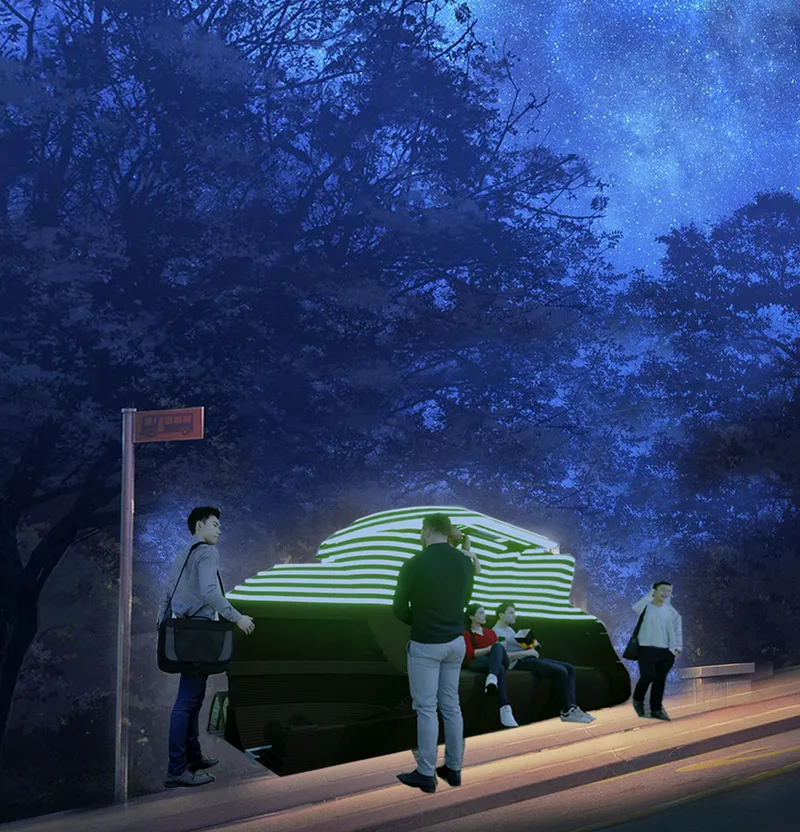
The organisation of elements is made to provide a contrast to the monotonous streets of the region. The 3D printed design allows for an organic form that will attract the attention of passers-by, thus promoting the usage of buses through interaction with the bus stops.
Eight iterations were attempted before arriving at the final outcome. These consisted of inorganic shapes, different modes of sheltering and leaning, extended seating units with additions of tables to increase interaction, water collection units and more.
Our team combed through many case studies of buses that promote usage and other modular systems that help to clean the air in any region. Finding the benefits of algae production to decrease air pollution, we decided to integrate this into the project, weaving it into the 3D produced mud and plastic volumes. On this note, extensive research was done on 3D printing and a seminar that explained the use of such robots was attended in order to deepen our understanding of the resources at hand.
As a team of four people, it is only natural that each person had their own ideas and preferences of form. After doing the case studies, it was decided that each member should use their own style to explain what their ideas for the system is and this was in turn presented to the group. We then pinpointed the strongest points of each design and decided on a style that best suited what we wanted to show and the task of modelling was left to two people. In this way, the final modules were modeled by one person and the program of each was confirmed by the group. This helped to avoid mismatching and confusion.
The main materials that are used are mud, recycled plastics (opaque and translucent), and algae. The decision was made considering that many regions are rich in unused soil and this would also benefit the environment by reducing the need to produce anything new. Since pollution is also a prevalent issue, recycled plastics were decided upon for areas that mud would not be suitable (such as the area to lock bikes). Algae might not be considered a ‘material’ in this case, but it is to live in the pipes to help in clearing the air.
In terms of the meeting of objectives, when it came to the conceptual or physical needs of the project, a meeting was held after a certain amount of research was done by each member, and a course of action was decided accordingly. This would include the taking on of tasks by certain members depending on the skill level of each.
This project is one that can be implemented anywhere in the world if one considers the change of materials needed for the region. The expansion plan for India would be to work with the local authorities of New Delhi in order to draw a better route for the electrical buses to reach more people. The bus stops could also increase in size and provide more functions once the roads are less congested and there is a lesser need for increased lanes. After connecting New Delhi via electric buses, the plan would be projected to the rest of India and may also be used in the train system of the country. Tubes and electrical trains could be promoted with more functions being printed for each space.
The project design is organic and flexible and can therefore be adapted to different uses and sizes as time goes on. Electricity production for self-sustaining bus stops, storm water harvesting, and the increase of algae culture in order to expand the reach of the fight against air pollution are just a few things that can be added as the size expansion of the project continues.


Popular Articles
Popular articles from the community


Co-life: Sustainable Architecture for Age-Friendly Community Living
Co-life reimagines sustainable architecture for seniors through courtyards, rammed earth, shared gardens, and spaces designed for belonging.

The Musturak Paradise: Senior Living Architecture for a Connected Future in Temara, Morocco
The Musturak Paradise reimagines senior living architecture in Temara via private homes, social spaces, culture, community, and shared care.

Play: Fragments of Their World
Familiar architecture becomes modular playground design, creating safe spaces where displaced children can learn, connect, imagine and play.

Lunar Spiral: Space Architecture Shaped by the Mathematics of the Universe
Lunar Spiral reimagines space architecture through Fibonacci geometry, lunar regolith, levitating habitats, and self-sustaining Moon living.

Similar Reads
You might also enjoy these articles

Day and Night Park: A Time-Based Urban Newsstand in Beijing
A temporary urban newsstand in Beijing blending travel, light, and reading through poetic colors, compact form, and community-focused design.

Modernist Patio Renovation in El Masnou, Barcelona by Oliver Segura Arquitectura + Cebrià Arquitectura
Modernist patio renovation blending tradition and innovation with a movable pool, leveled floors, and Catalan materials in El Masnou.

Alto Residencial Coop: Cooperative Housing Development in Santiago de Compostela by Carbajo Barrios Arquitectos
A linear cooperative housing complex blending white volumes and perforated metal façades, enhancing community living, natural light, privacy, and urban integration.

Vil Genis School by BPA ARCHITECTURE – Massy, France
Vil Genis School in Massy, France, features sustainable design, south-facing classrooms, community integration, accessible spaces, and modern educational architecture.

Comments (0)
Please login or sign up to add comments
No comments yet. Be the first to comment!