
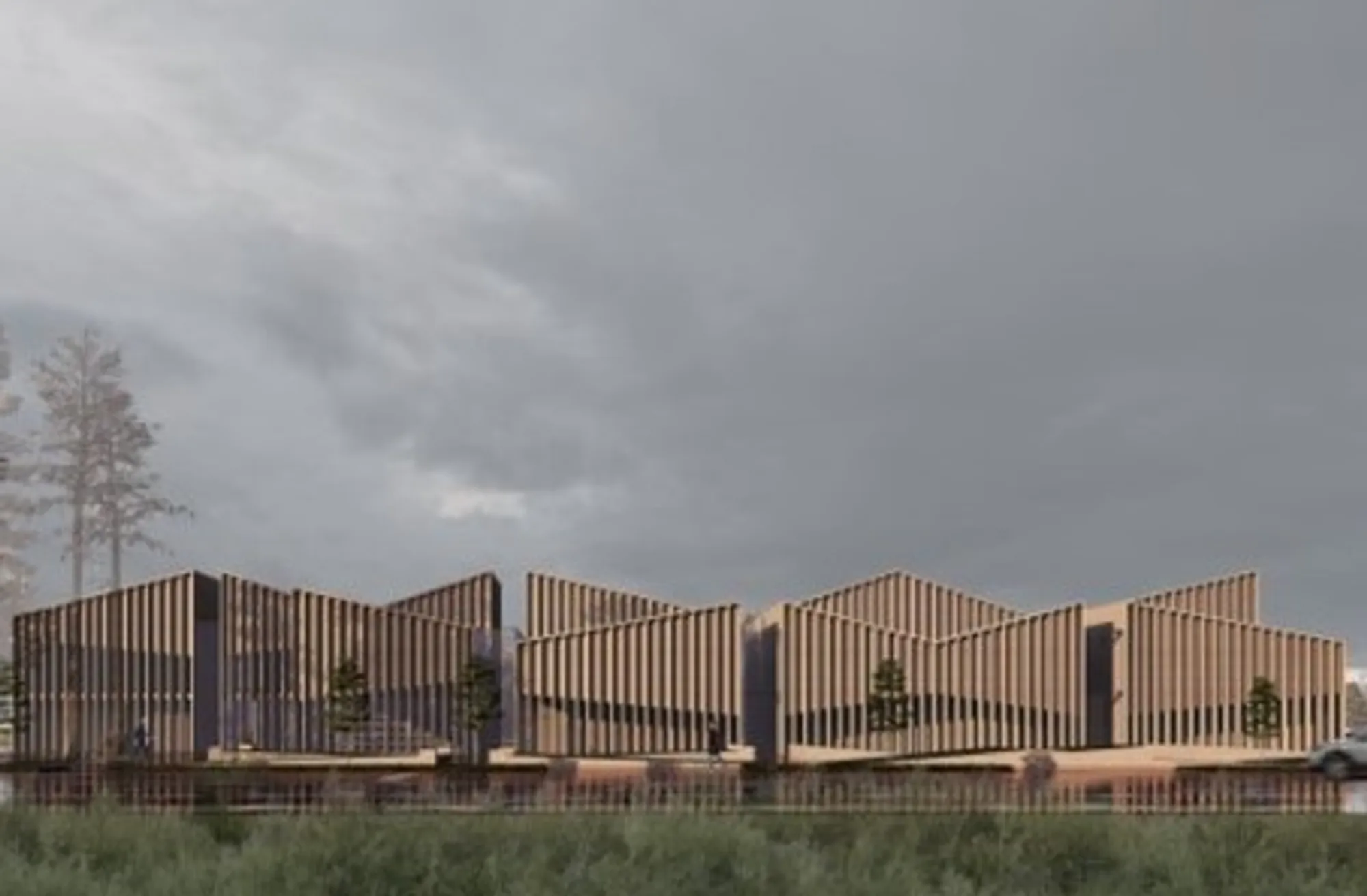
Neighborhood Court
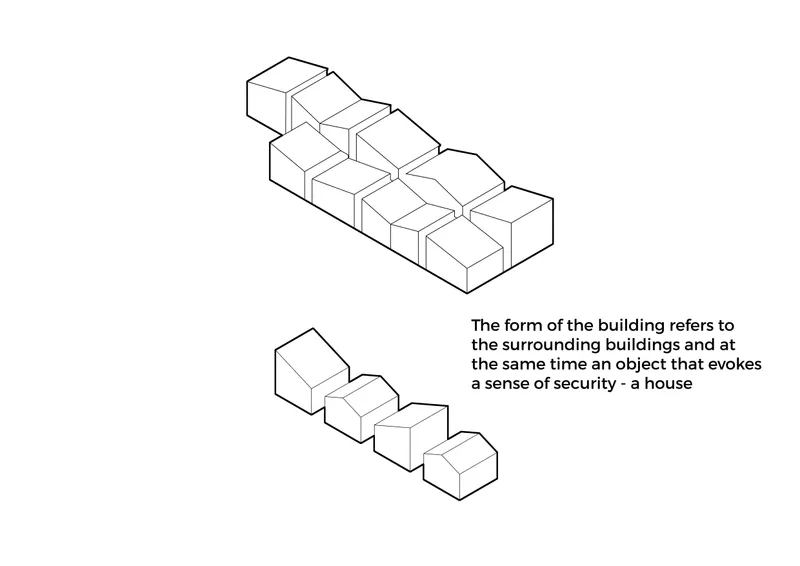
The courthouse refers to the scale and structure of the city of Washington. By dividing the volume into smaller segments, it naturally continues the existing urban structure.

HALL OF JUSTICE - DESCRIPTION
The courthouse project is created to support the local court system in Washington DC. There is a shortage of this type of public buildings in the immediate area, so the chosen location lends itself to the design of a judicial function. Washington DC is a relatively compact city covering an area of approx. 51 km sq, with a population of almost 47,000. Low-rise buildings of small volume and various architectural styles prevail in the vicinity of the designed facility. These are mainly small commercial buildings and residential houses set very close to each other on small plots.
Context
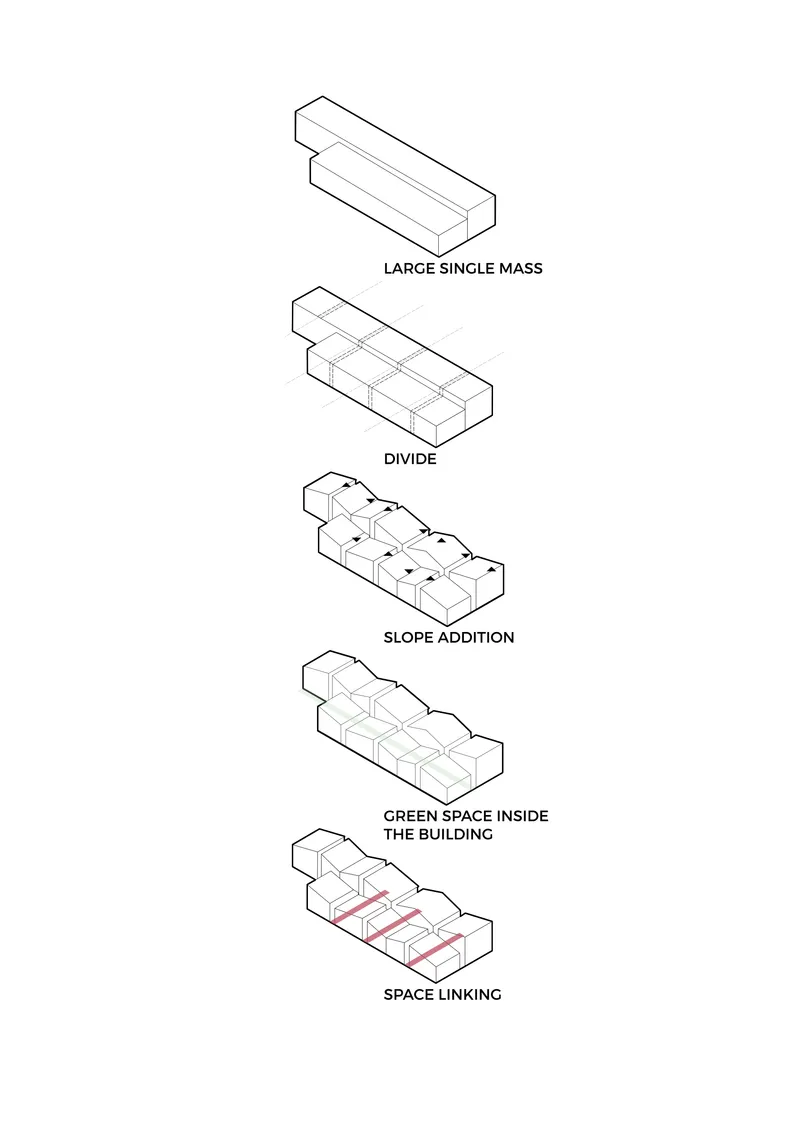
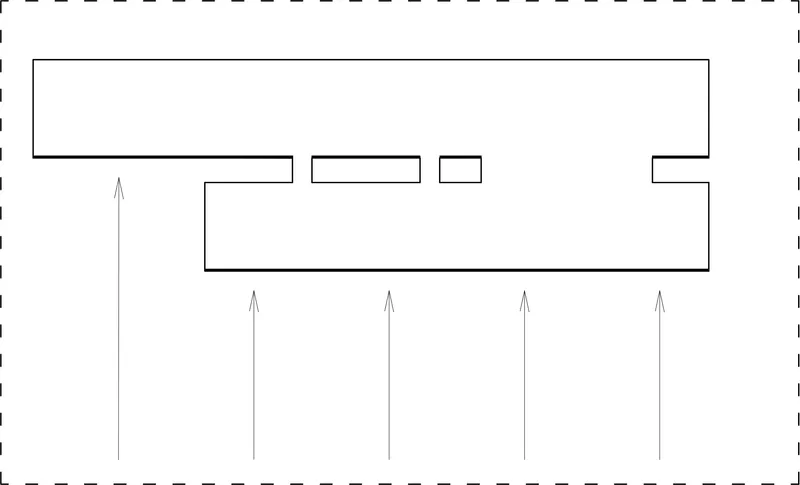
The designed courthouse is divided into regular, simple segments connected with one another. This spatial organization is a continuation of the existing urban structure - it refers to the scale and structure of the city. This allows both residents and visitors to get a better feel for the building's surroundings. Designed minimalist style elevations do not interfere with existing buildings and does not disturb the harmony.
Form + space
By dividing the building into segments and using patios, it is possible to provide daylighting in all the interiors. The patios are planted with greenery, which regulates the climate inside the courthouse. In addition, the possibility of natural ventilation has a positive effect on people inside the building. The greenery is also supposed to provide inner peace and allow visitors to calm down before the hearing begins. Also one of the patios serves as a rain garden providing retention of rainwater collected by the green roof slope surfaces.
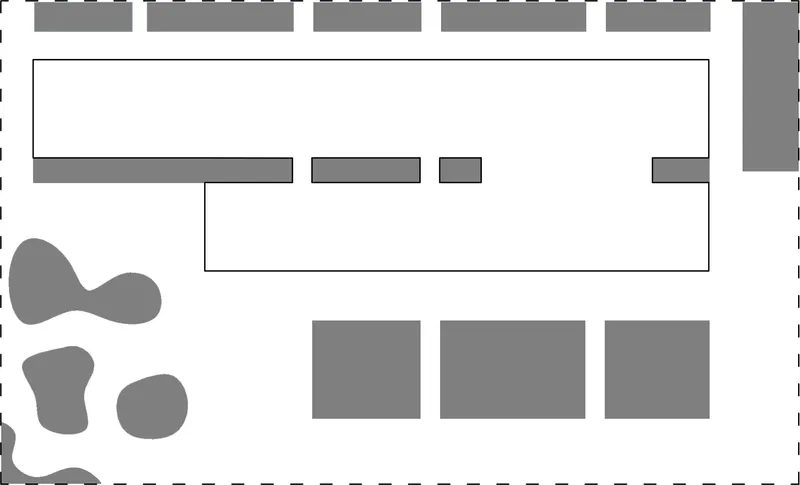
The entrance to the building is located on the south-west side. It is emphasized by high, glazed walls and a projected indentation of the building's corner in this place. This arrangement also allows to preserve the existing vegetation in this part of the plot. Tall perennial trees that grow here provide shade to the public plaza in front of the entrance.
The roof of the building creates a zigzag shape by connecting mono-pitched segments. This is supposed to refer to the mountainous terrain in the nearby region. This shape is emphasized by its repetition at the back and front of the building, as well as in the glazing of the front facade and the sloping lawn in front of the building.
Landmark
In the City of Olimpia, Washington, a large number of residents are involved in the wood industry. Therefore, in order to use local wood resources, the proposed courthouse structure is made of wood. The facades of the courthouse are designed using a dense pattern of vertical wooden louvres that provide a sense of privacy and intimacy inside the building. They also protect the interior from the harsh rays of the sun. From the outside, the facade creates an intriguing view, as from different vantage points the building can look completely different.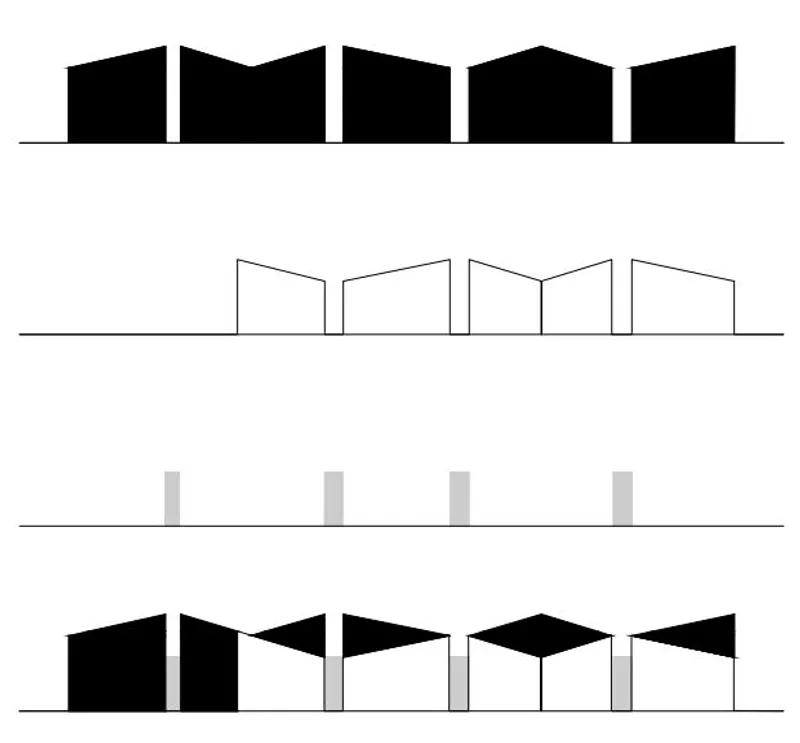
Concept
On the first floor there are separate circulation paths for the judges, which for safety reasons are separated from the public areas. However, walking judges can be seen through the glazed atriums, which allows for better understanding of the structure of the court building. Separate entrances are also designed at the back of the building for the back office of the court administration. Thus the project avoids mixing groups of people working in the building with visitors.
The basement of the building accommodates several parking spaces and technical rooms, as well as the holding cells. The underground parking is designed with an entrance from the main road. The basement circulation area also serves as a sluice, through which the detained defendants are introduced into holding cells and interrogation rooms. From there, they are transported by elevators to the courtrooms where their fate will be decided.
Accessibility
In places where segments of the building are connected, internal circulation is designed, which separates rooms according to their functions. All rooms accessible to visitors are located within the first floor. In order to make the building fully multifunctional, its interior has been zoned to conduct various proceedings in different spaces. For court trials, the following court units are located in the building:
- common pleas court
- domestic relations court
- juvenile court
- probate court
- county adult probation
Behind the building, on the north side, a multi-storey above-ground parking lot is planned, which can be used by all visitors. Parking provides spaces for people with disabilities and bike racks.
Public access to juristic knowledge
In addition to the courtrooms, the building is equipped with a two-storey library. Its first floor is open to all visitors of the building after passing through a security zone. The second floor of the library is reserved for court administration staff and judges.



Popular Articles
Popular articles from the community


Hill & Cross Opera: Sculptural Opera House Architecture Shaped by Tallinn’s Landscape and Identity
Hill & Cross Opera reimagines opera house architecture in Tallinn through its sculptural hill, civic plaza, glass wave and a luminous cross.

The Musturak Paradise: Senior Living Architecture for a Connected Future in Temara, Morocco
The Musturak Paradise reimagines senior living architecture in Temara via private homes, social spaces, culture, community, and shared care.

Lunar Spiral: Space Architecture Shaped by the Mathematics of the Universe
Lunar Spiral reimagines space architecture through Fibonacci geometry, lunar regolith, levitating habitats, and self-sustaining Moon living.

Conexión: Biophilic Design Reimagines High-Rise Living in Hong Kong
Conexión reimagines high-rise living in Hong Kong through biophilic design, green facades, shared spaces, daylight, water and nature within.


Similar Reads
You might also enjoy these articles
The Rhythm of Seasons
A Farmers' Market Connecting Nature and the City

More Than a Building-Designing a Living System
More Than a Building-Designing a Living System
Base Beyond
DESERT COMPOUND ARID: TOURISM OF ABSENCE AND ABUNDANCE






Comments (0)
Please login or sign up to add comments
No comments yet. Be the first to comment!