New European Parliament Building to be Designed by Pan-European Collective
Leading Designers from Across Europe to Collaborate on Landmark Project
The European Parliament building will be designed by EUROPARC, a five-nation architectural collective. This group, consisting of JDS Architects / Julien De Smedt Architects (DK/BE), Coldefy (FR), Carlo Ratti Associati (IT), NL Architects (NL), and Ensemble Studio (SP), along with support from UTIL (BE) and Ramboll (DK), was declared the winner of the international competition.
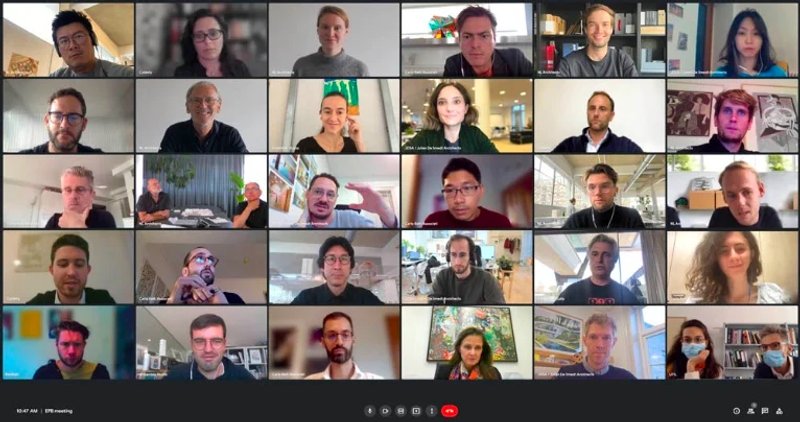
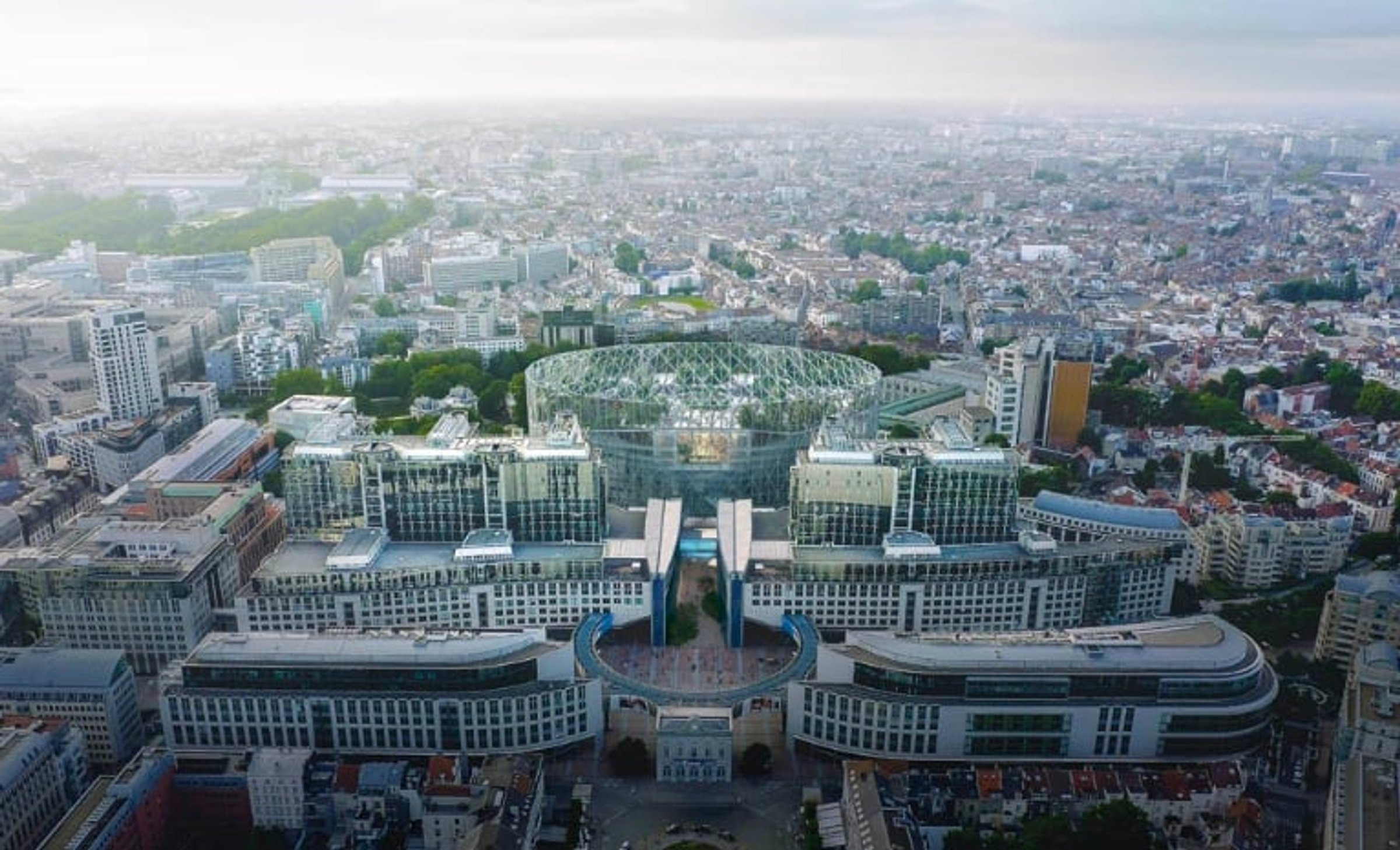
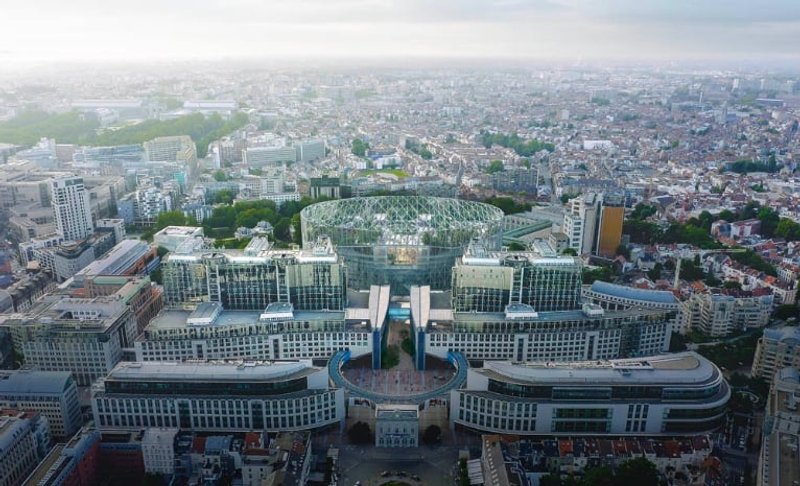
Their winning proposal emphasizes the renewal of the Paul-Henri Spaak Building in Brussels with a circular approach to minimize waste and promote sustainability. EUROPARC also strives to embody European democracy through its international composition and its provision of public spaces for everyone to access.
With over 30 nationalities represented among its teams, EUROPARC represents a new approach to architecture that values collaboration over individualism. This collective method prioritizes the knowledge and expertise of various disciplines over singular decision-making, a practice that was common in the last century.
The team underwent a collaborative effort that embodied the democratic ideals of the European Union. All members, with diverse cultural influences and expertise, worked together to create a unified design solution for the European Parliament building. The design aims to tackle pressing issues faced by Europe and the world, such as climate change, social disparities, and the merging of physical and digital realms. The team's mode of collaboration, with a remote and flexible approach, was influenced by the COVID-19 pandemic.
In May 2020, the European Parliament launched an international competition to renew the SPAAK Building. The goal was to create a sustainable and regenerative building that could engage with citizens and the city. Among the 15 submissions, EUROPARC's proposal was selected as the winner of the first prize in July 2022, standing out among the others. The jury commended the project for both its functional and symbolic qualities, calling it “... a genuine re-use proposal that offers an enhanced interface with the public and a new architectural expression to the building with useful sustainability features.”
The Proposal
The existing SPAAK building has several limitations. However, tearing it down and constructing a brand new "palace" might not be the solution. A significant portion of carbon emissions generated in the building sector come from constructing the basic structure of a building. If it were to be fully dismantled, all the expenses incurred would go to waste and have to be spent again on new construction.
Therefore, the best strategy would be to reuse as much of the SPAAK structure as possible and minimize its carbon footprint. Additionally, a well-designed renovation plan could significantly enhance the working conditions of the Parliament and foster better communication and exchange with European citizens, while still retaining most of the original structure.
EUROPARC's design for an urban area aims to strengthen the relationship between the building and the city. Opening up the block, it improves the flow of pedestrian traffic and creates a stronger connection between Place du Luxembourg and Parc Léopold. The public space is enlarged both inside and outside of the architecture, making it a more inviting experience for citizens and visitors to Brussels.
The building should not be inaccessible, but rather should be open and inviting. A public passage can be created through the Parliament, providing a grand entrance for visitors and becoming a hub in the pedestrian network of Brussels.
Furthermore, excavating the Spinelli building in front, along the axis from Gare d'Europe, can activate a magnificent feature. Removing the wall-like feature in the central part of the building transforms it into an inviting entrance to the Parliament, with open arms welcoming the public.
The Hemicycle
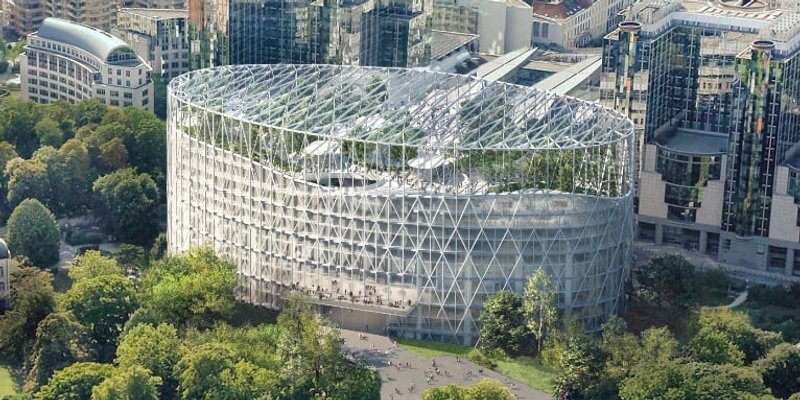
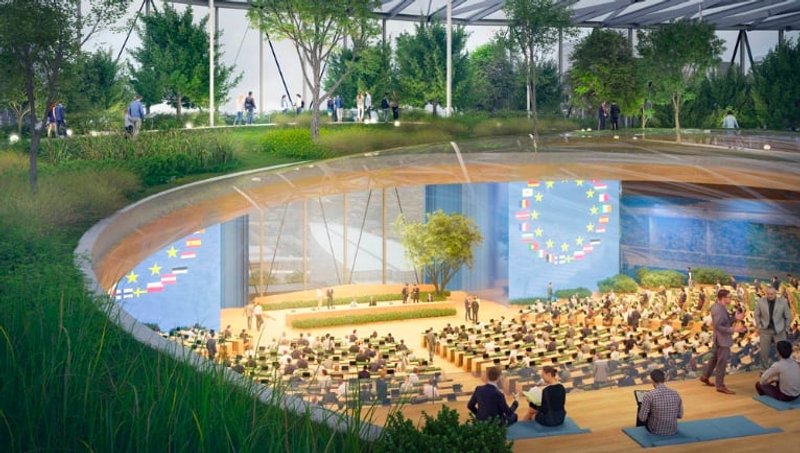
The European Parliament's newly designed assembly chamber referred to as the Hemicycle, will be relocated to the upper levels of the refurbished building to accommodate the modern needs of the chamber. The Hemicycle will be fitted with advanced digital technologies, enabling the dissemination of democratic discourse beyond physical barriers. The chamber will be seamlessly integrated with the Parliament's digital platform to increase transparency and promote external involvement. A standout feature of the room is the large windows that establish a visual connection between the Parliament, its rooftop garden, the city, and the general European public. One of these windows can also function as a display screen, providing real-time information during assemblies.
The Green Agora
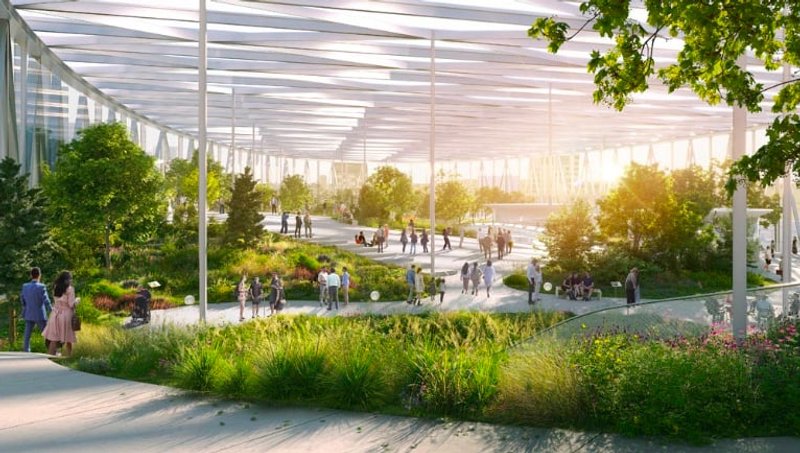
The Green Agora is the crowning jewel of the public experience in the new SPAAK building by EUROPARC. Drawing inspiration from Ancient Greece's "agora," which was a gathering place for the exchange of ideas, the botanical garden is a beacon of European democracy where citizens and members of the European Parliament can come together and engage in discussions. The Green Agora is visually connected to the Hemicycle through an open ceiling and brings together vegetation from all member states to form a unique European ecosystem.
The new SPAAK building, with its permeable ground floor, Hemicycle, and Green Agora, creates a civic ecosystem that places people at the centre of the experience and brings them closer to Europe's democratic processes. It is a one-of-a-kind infrastructure that provides members of the European Parliament with a space to carry out their duties and gives citizens access to a site of significant political and social importance. This new building enriches people's everyday lives and adds value to their experiences.
“With war on the doorstep of Europe, and an ensuing energy crisis ever more pressing, the challenges faced by the European Union are shared by us all.
As a team of Pan-European offices composed of more than 30 nationalities, we understand and feel the impact of these difficulties directly.
Our collective proposal to rethink the Parliament building in a way that minimizes environmental impact while expanding its openness and civic inclusion as embodiments of the values of European democracy are therefore evermore relevant.”
EUROPARC (collective JDSA-Coldefy-CRA-NL-ENSAMBLE)
Press release and images courtesy of Europarc, a design collective formed by JDSA / Julien De Smedt Architects (DK/BE), Coldefy (FR), CRA-Carlo Ratti Associati (IT), NL Architects (NL), Ensemble Studio (SP), with the support of engineering companies UTIL (BE) and Ramboll (DK).