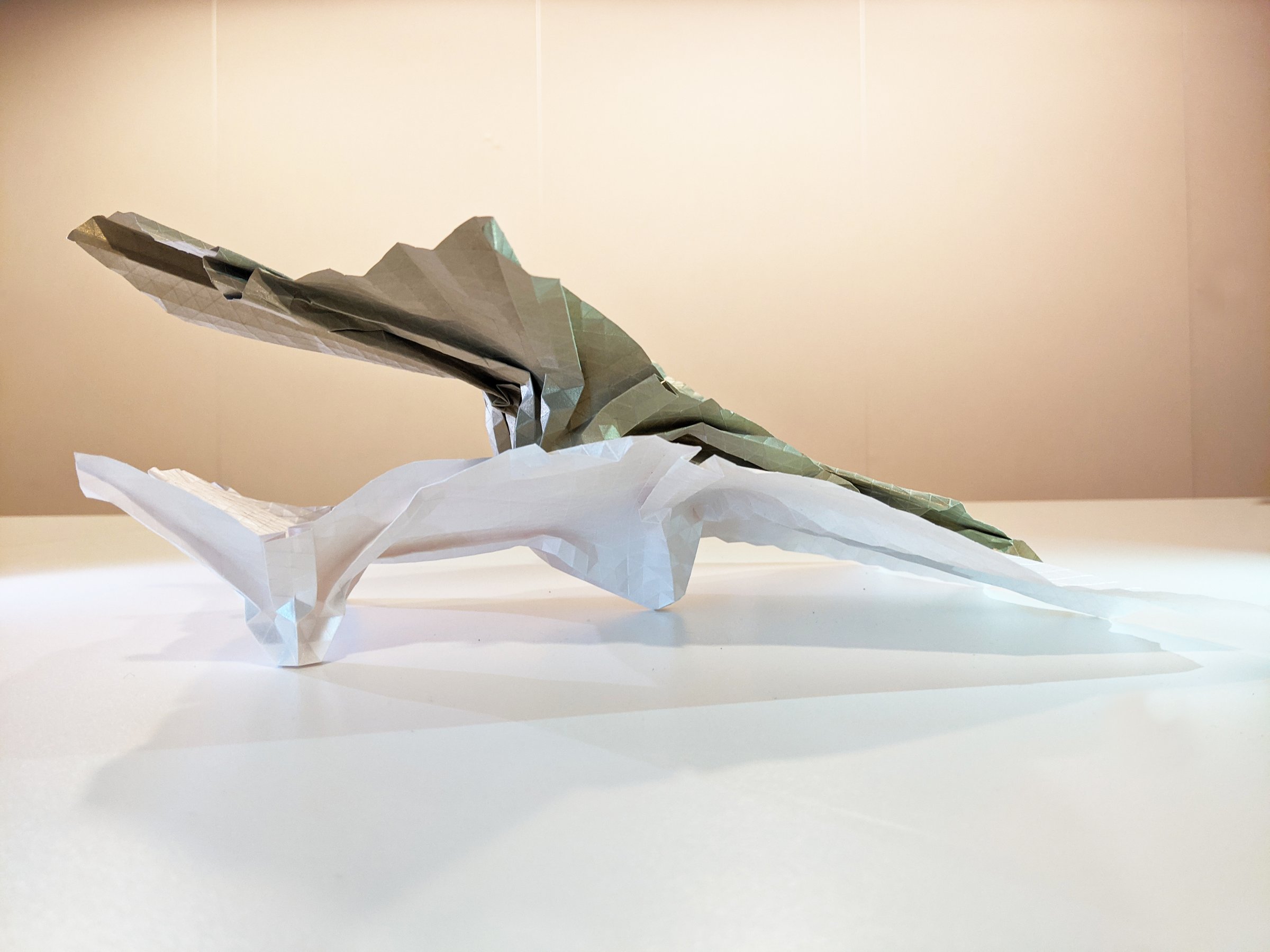
Origami Architecture Project
Design process journal


Our first concept involved an expansive roof with variously sized columns.
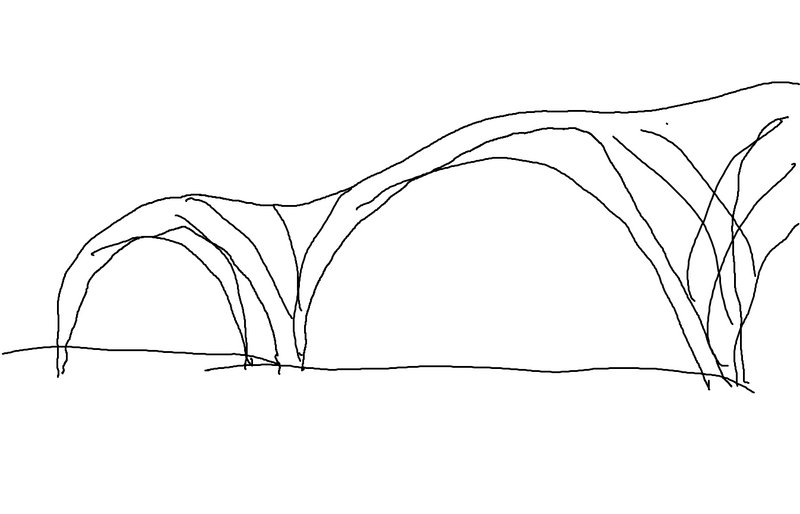
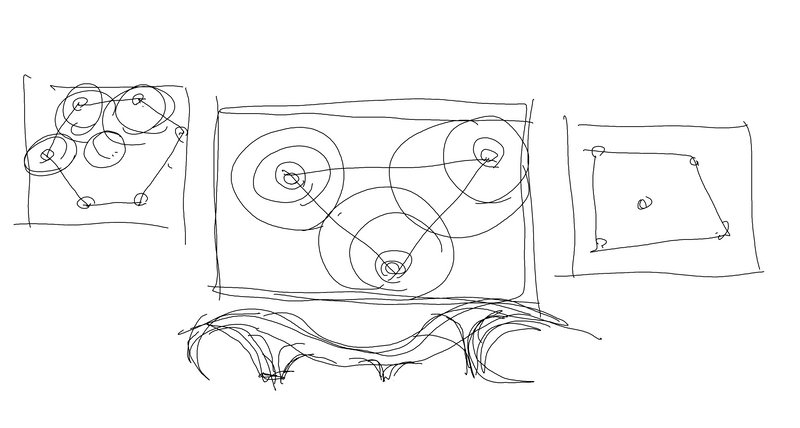
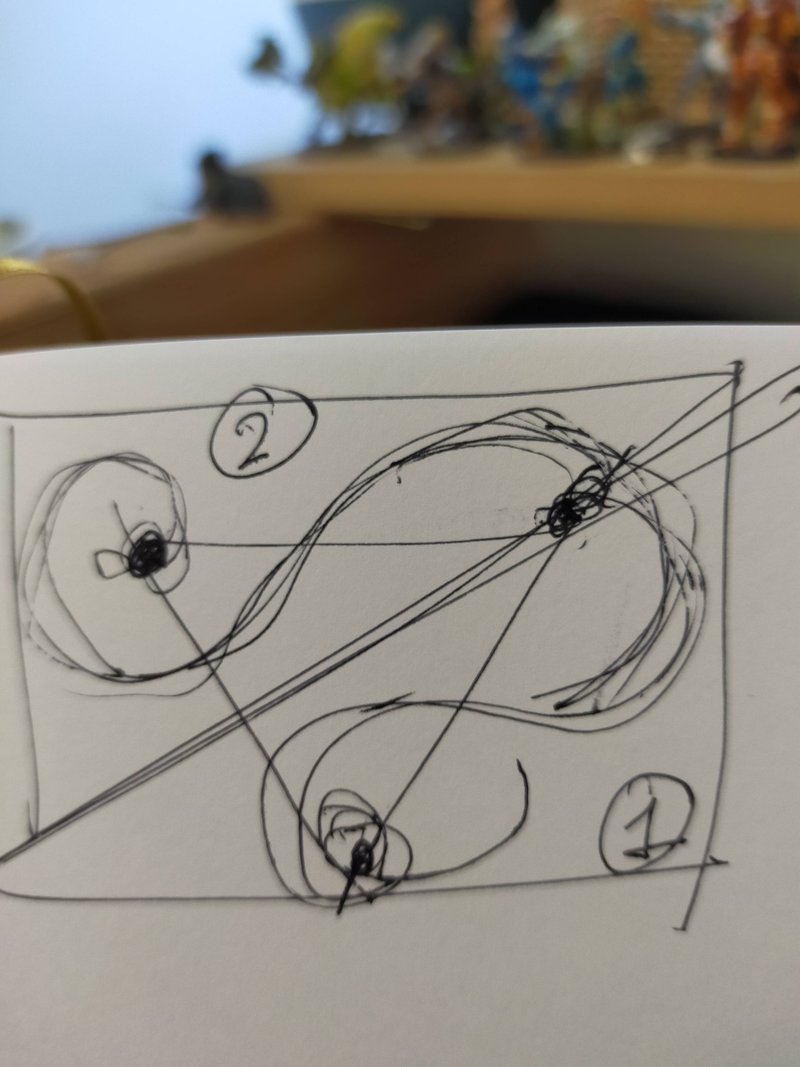
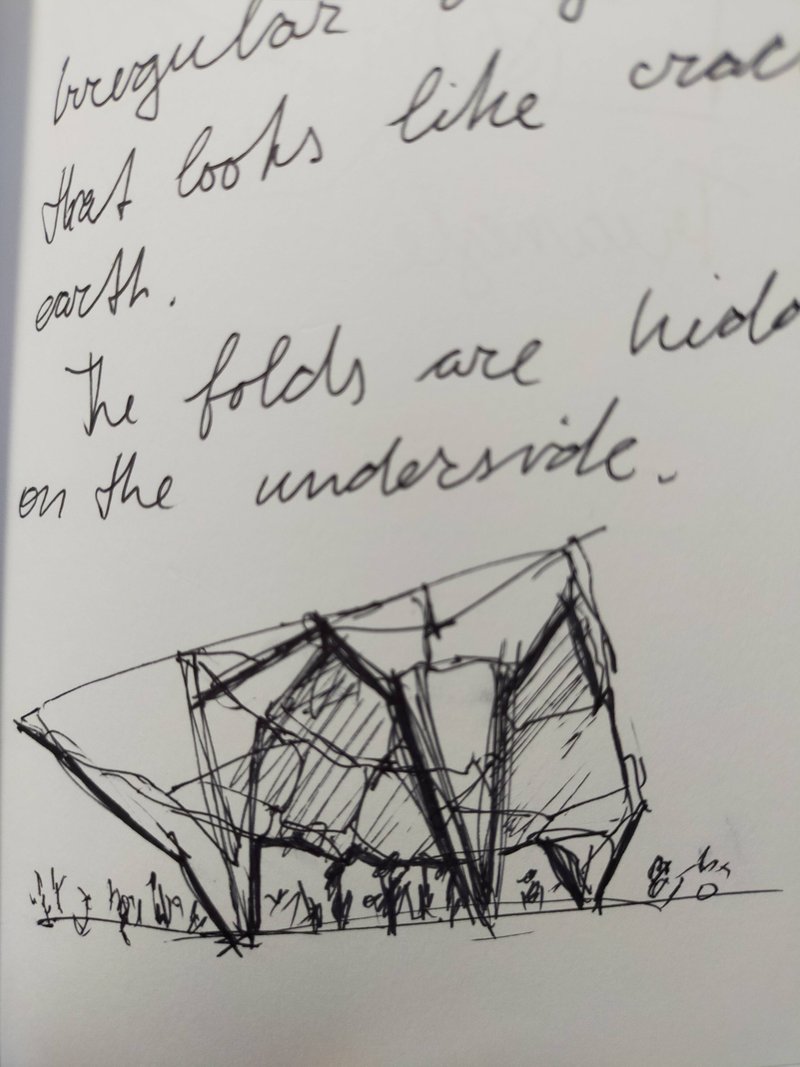
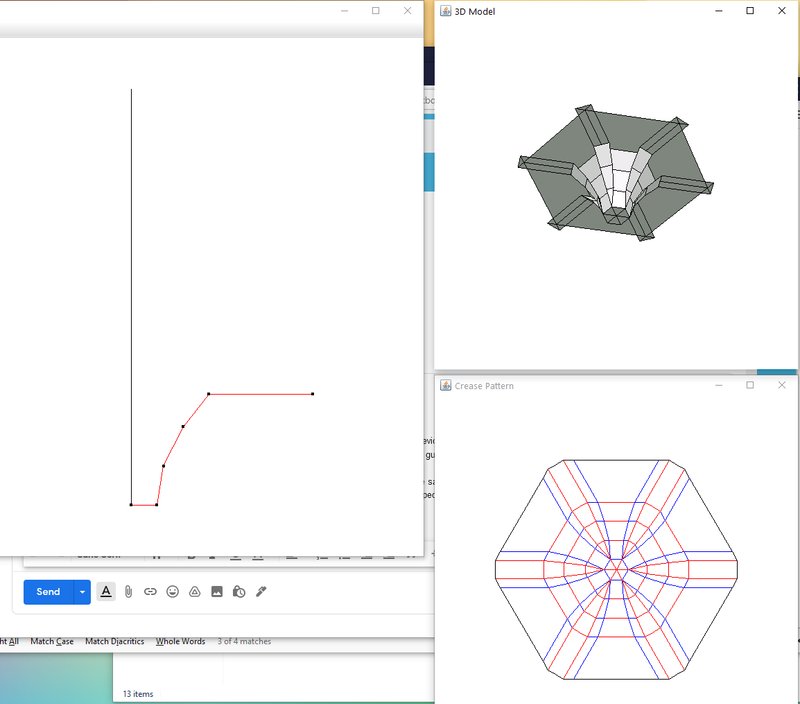
We began the origami design process using the software Ori-revo by Jun Mitani to sketch a column and generate the crease pattern.
We then sketched a crease pattern involving three of these columns, of different sizes, in one A3 sheet of paper.
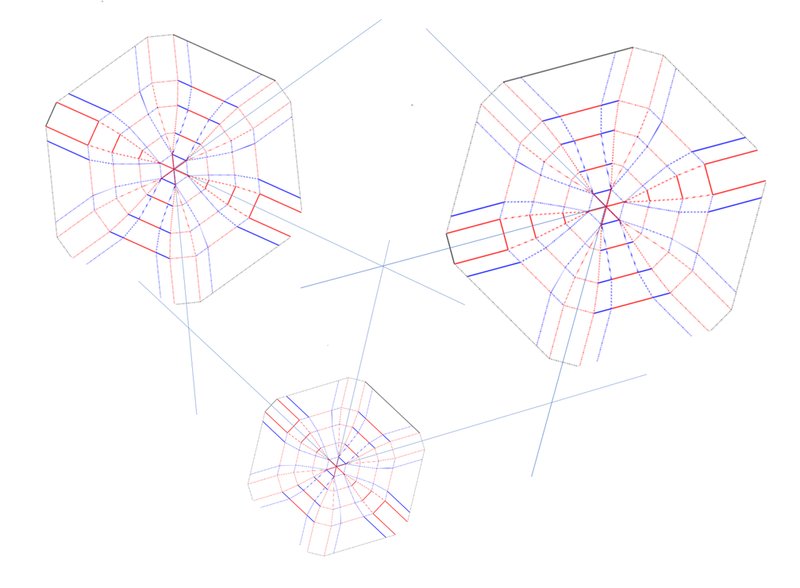
The crease pattern sketch shows the locations of various pleat intersections. Consulting origami artist Benjamin DiLeonardo-Parker for the general mathematical techniques of pleat intersections, we worked out the flat-foldability in our intersections. As a worst case scenario, where three set of pleats intersect they would need to create a fourth pleat.
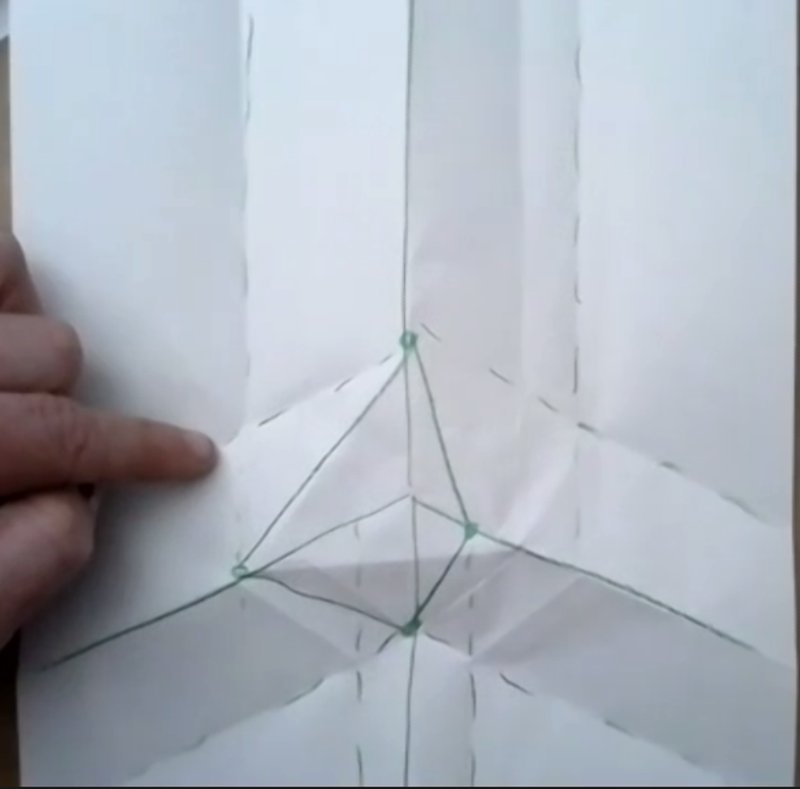
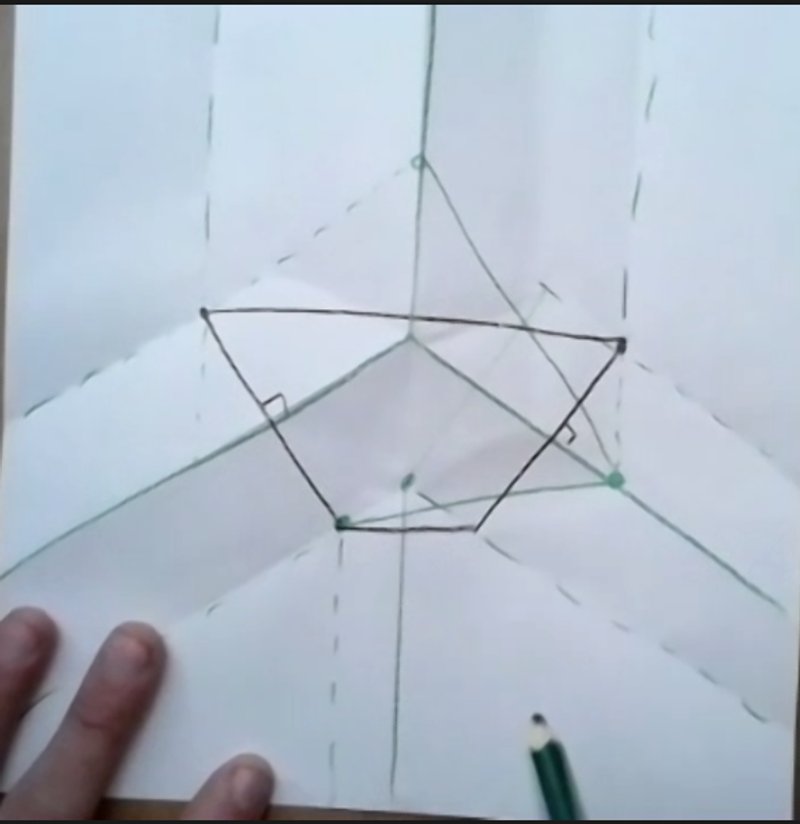
Thankfully when we folded the model, the intersection with three incoming pleats did not require a forth set of pleats coming out. We believe this was due to integer size proportions between the three columns.
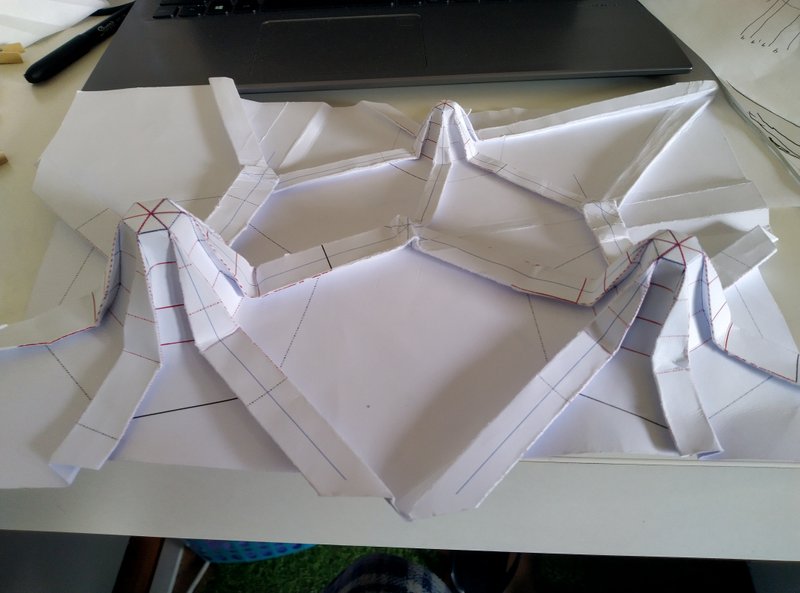
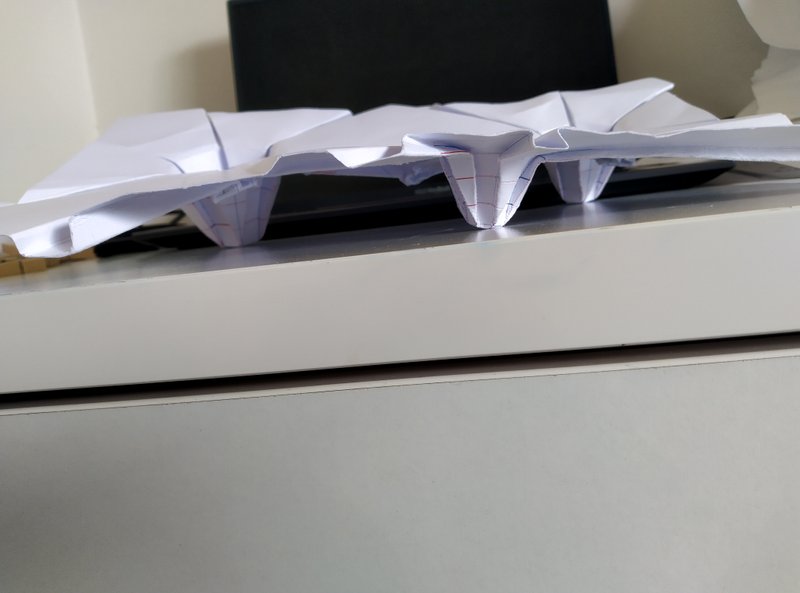
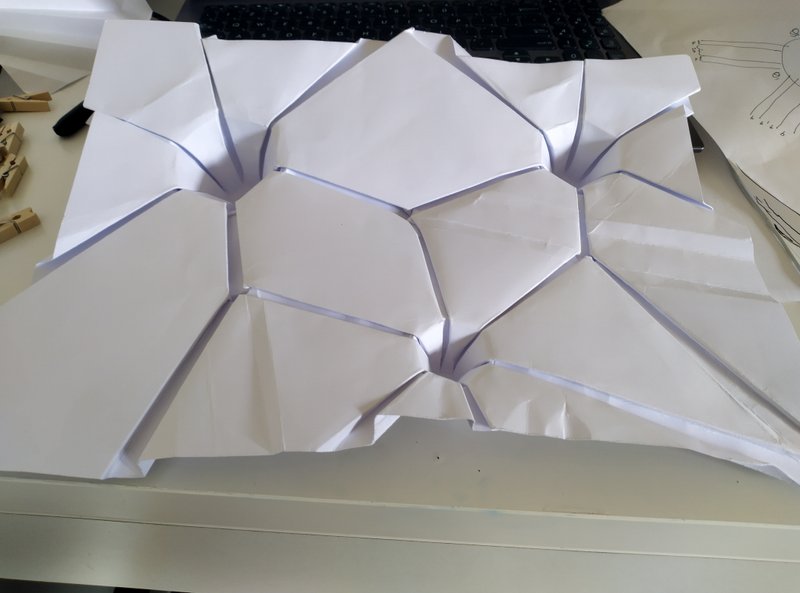
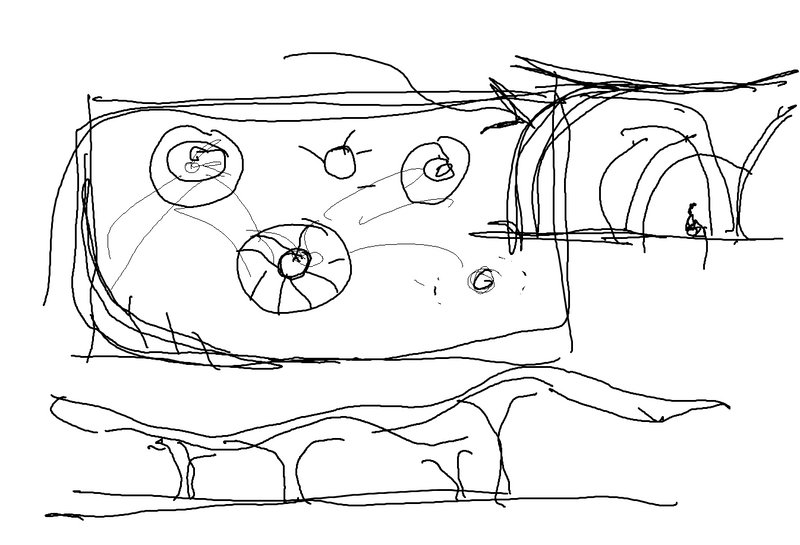
Based on the folding we created new conceptual artwork sketches.
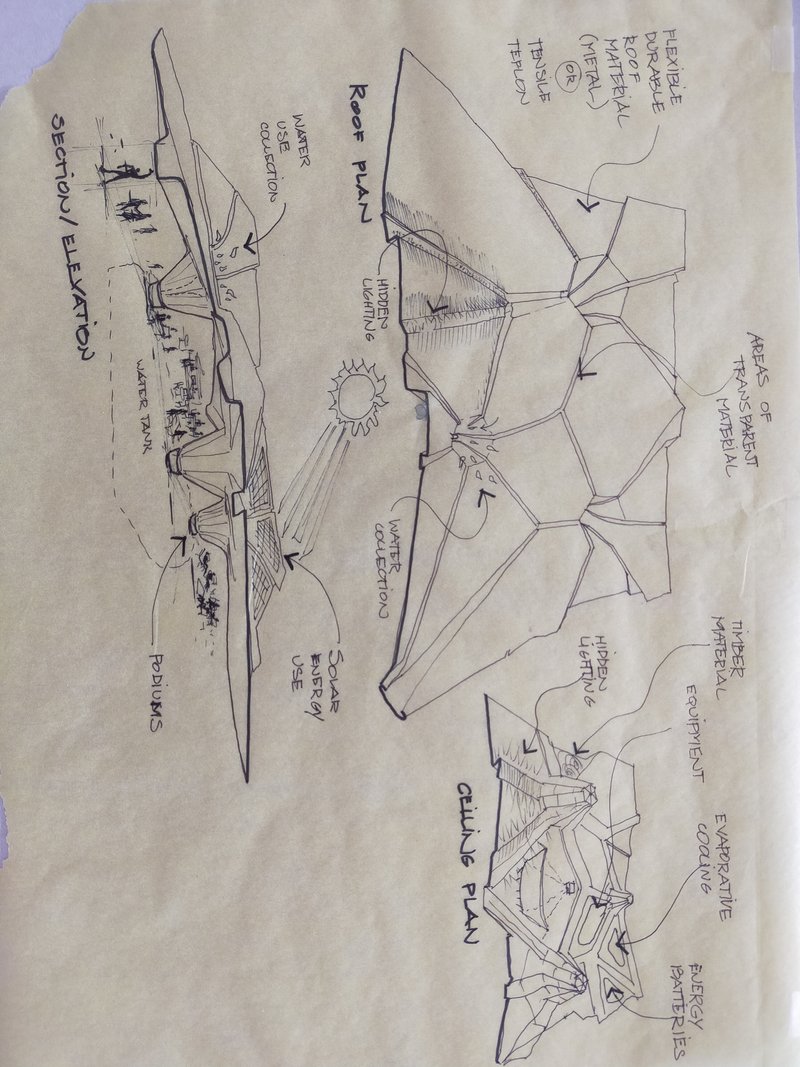
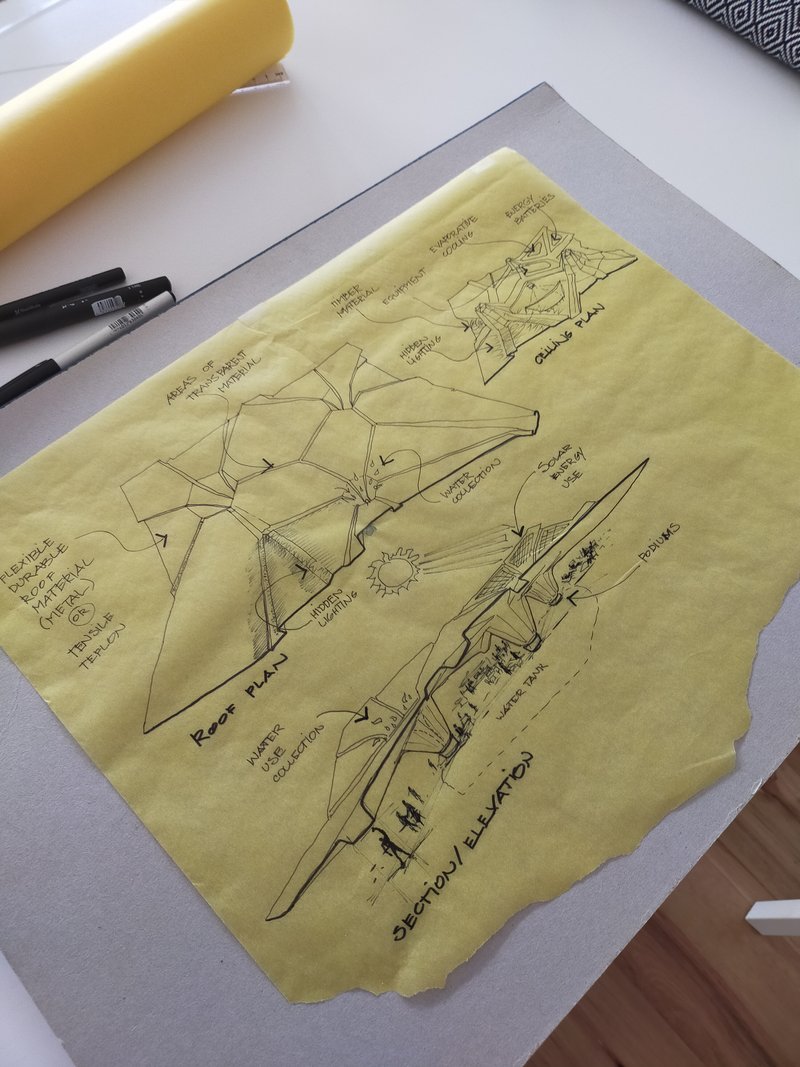
The arbitrary angles in the design create a striking architectural structure. However, we felt that it doesn't highlight the origami original sufficiently. We decided instead to constrain ourselves beyond just simply flat-foldability. We decided to use an underlying triangular grid. We tested out a sample column.
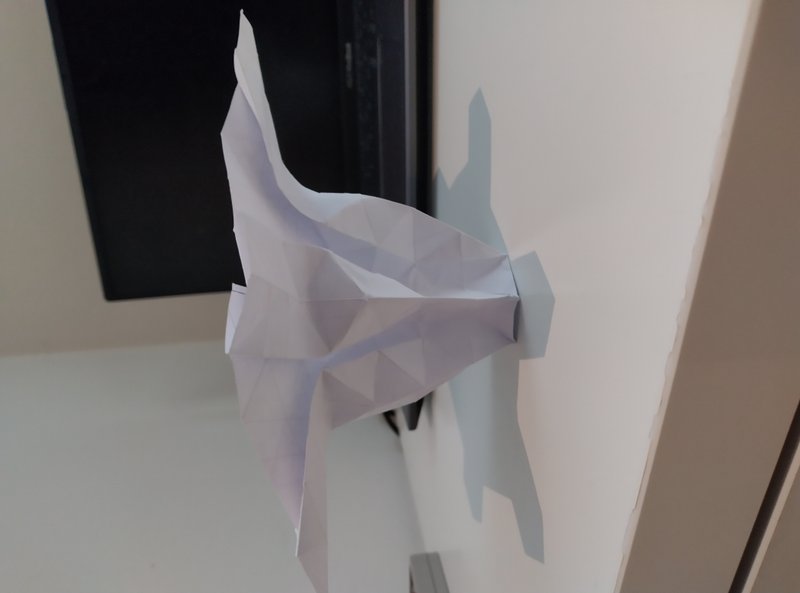
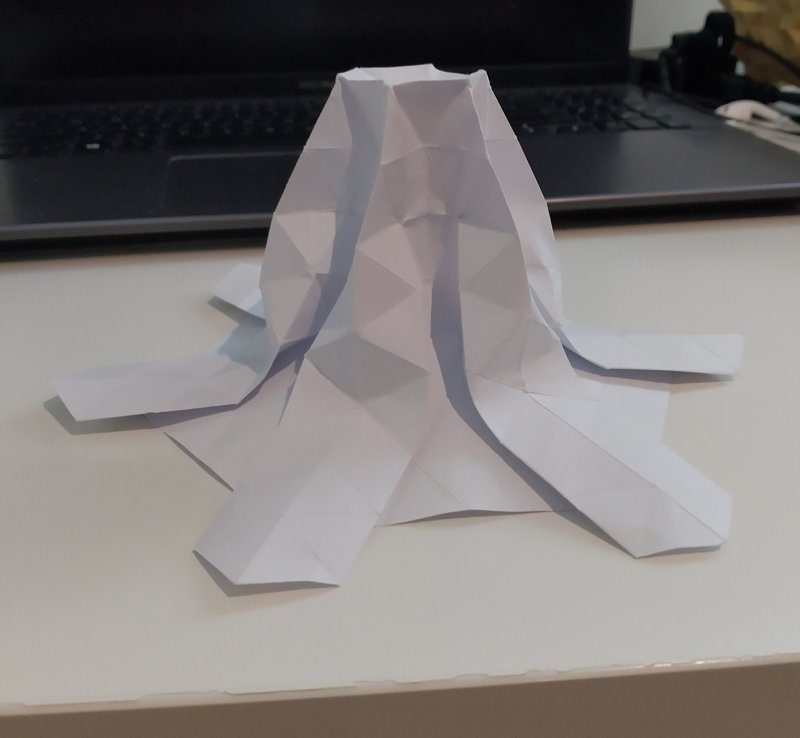
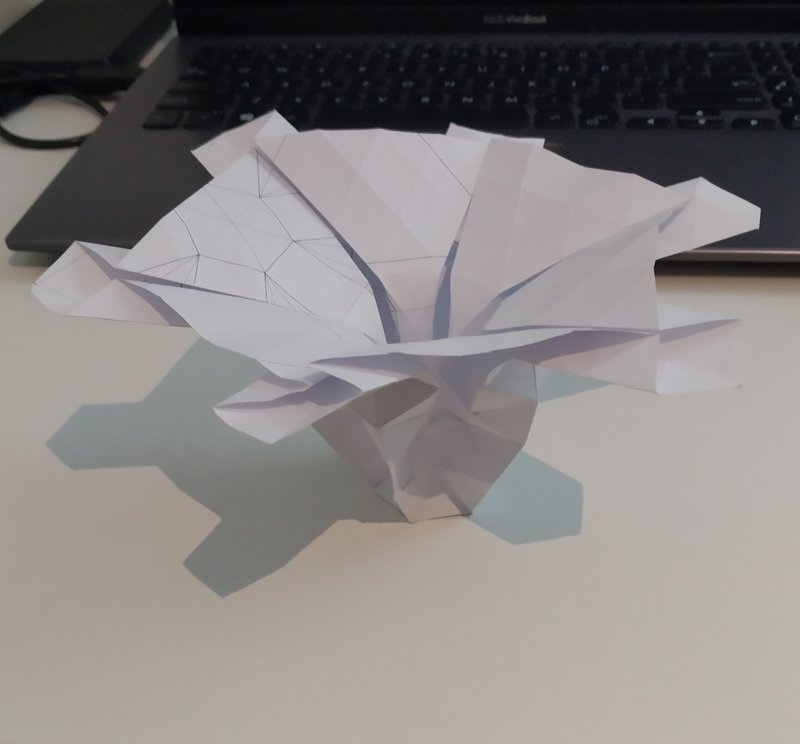
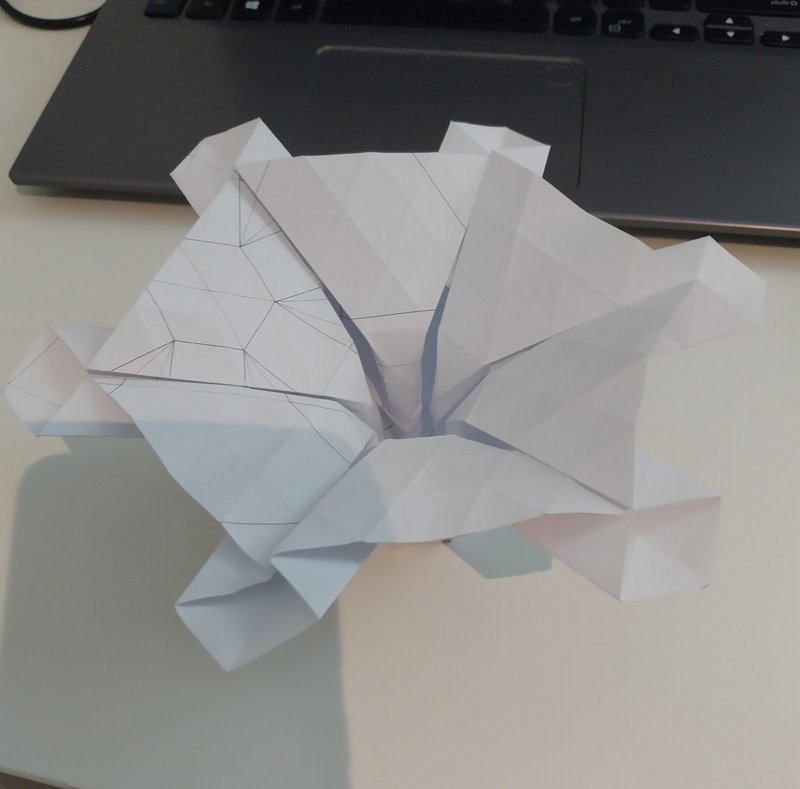
For differently sized columns, pleats of differing widths intersect producing an outgoing third set of pleats. We worked out the mathematics of such a pleat intersection.
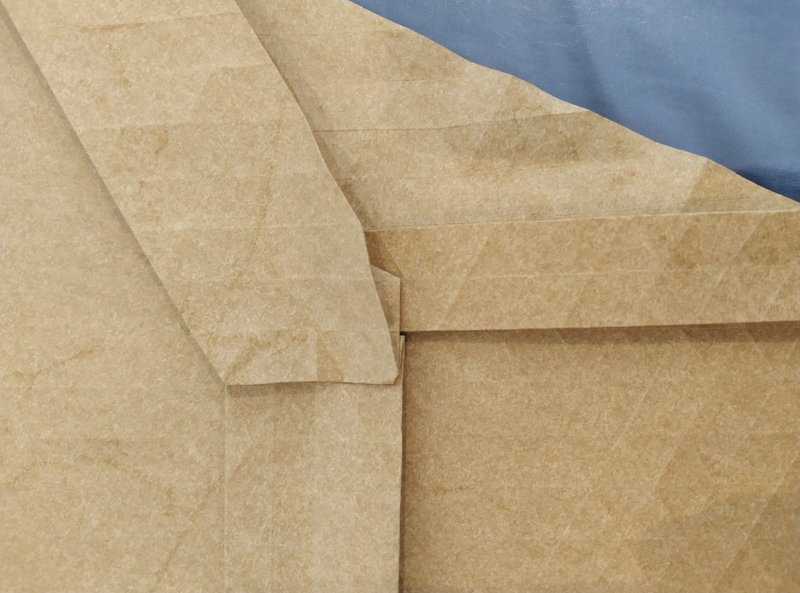
We then started folding a 64x64x64 grid on A3 paper.
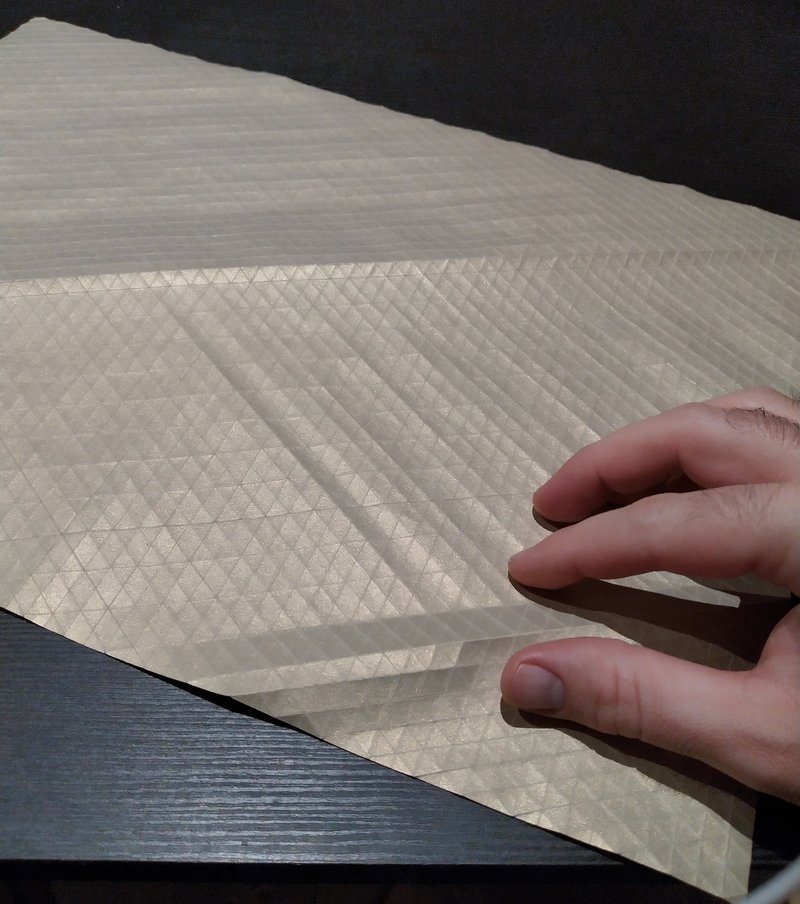
We folded three columns from this folded grid.
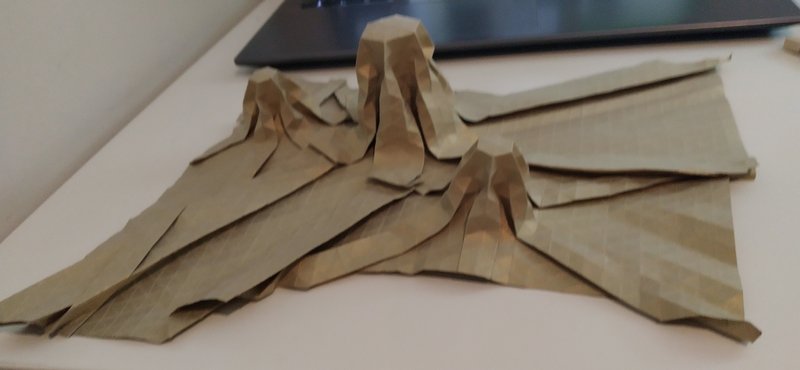
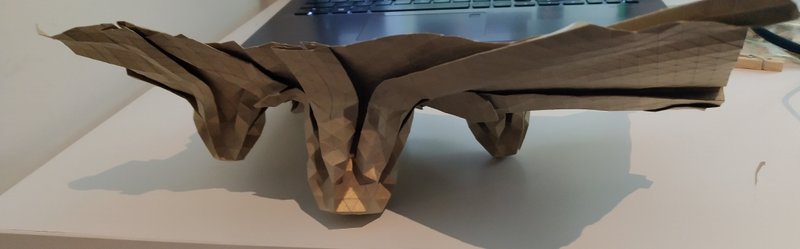
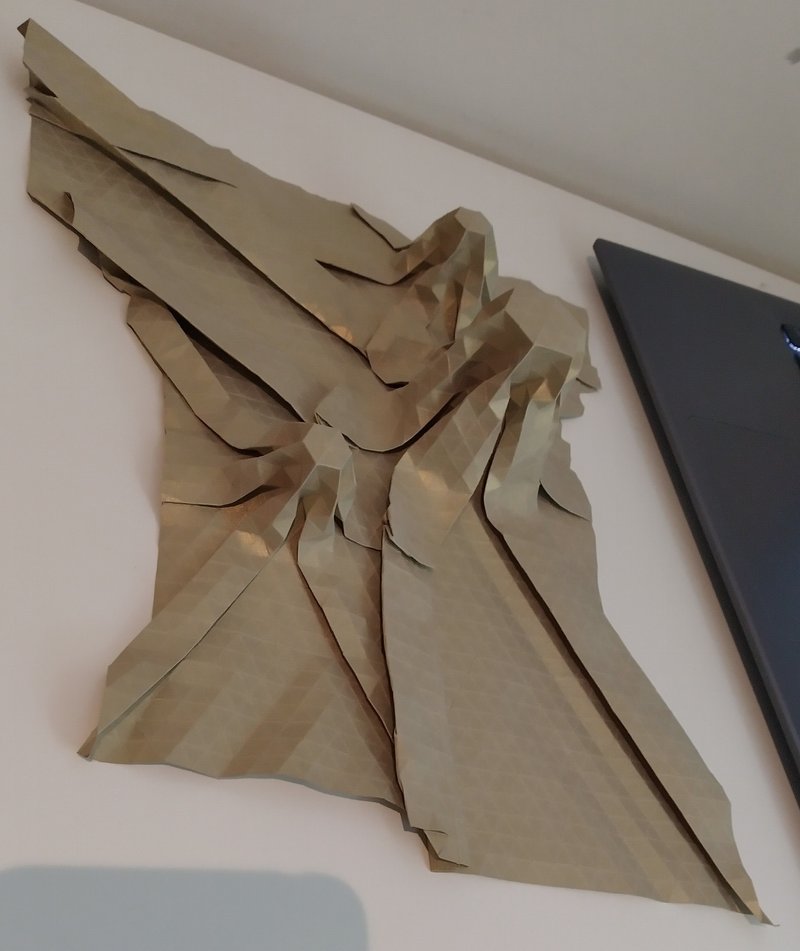
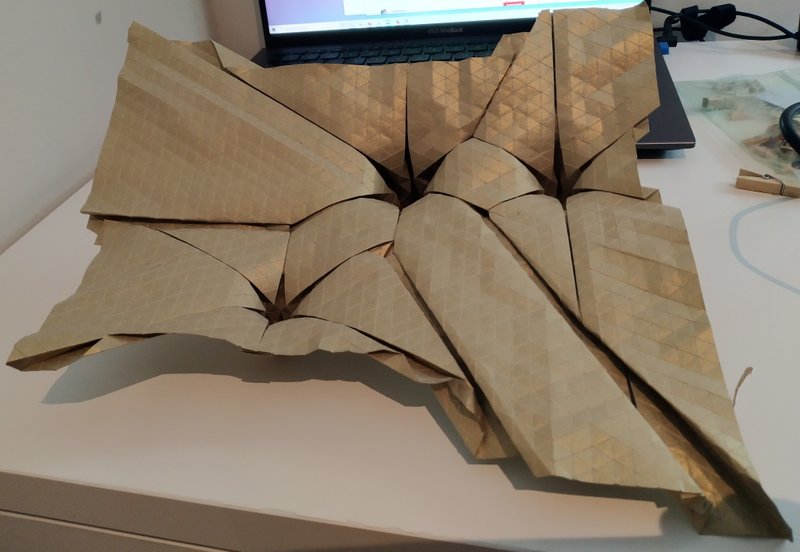
We created new conceptual sketches based on this folded origami model.
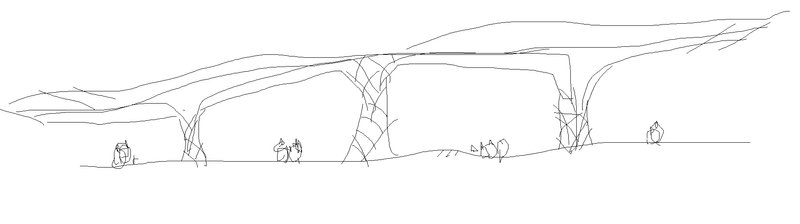
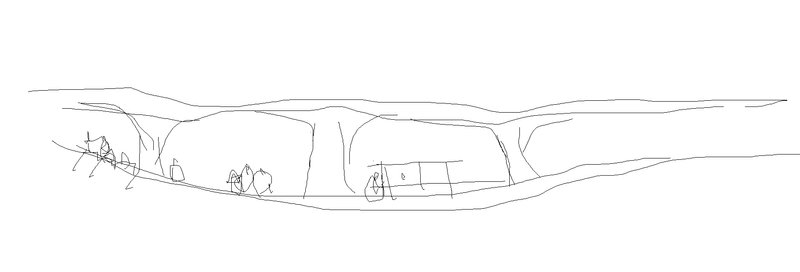
We decided to further constrain ourselves, limiting ourselves equal sized pleat widths for all columns. We folded a new sample origami folding.
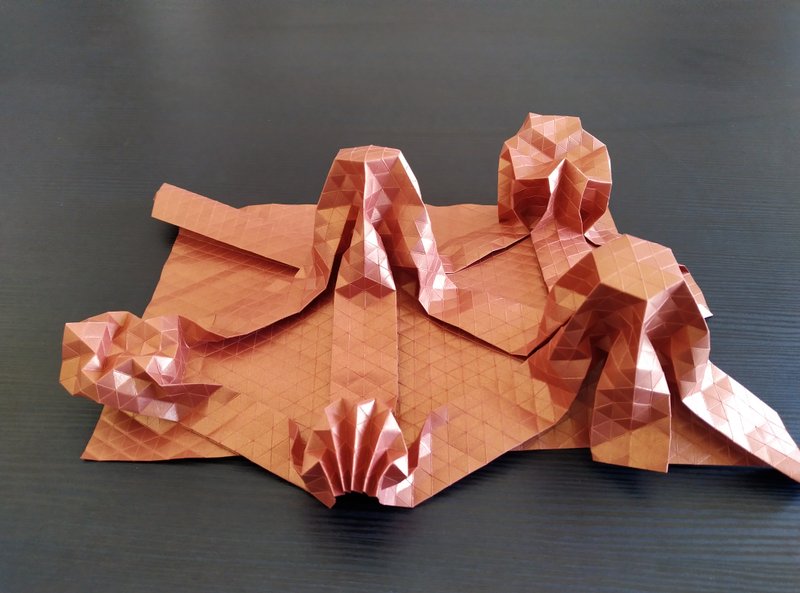
Based on this folding we drew new conceptual sketches, including our first idea of a multi-level design.
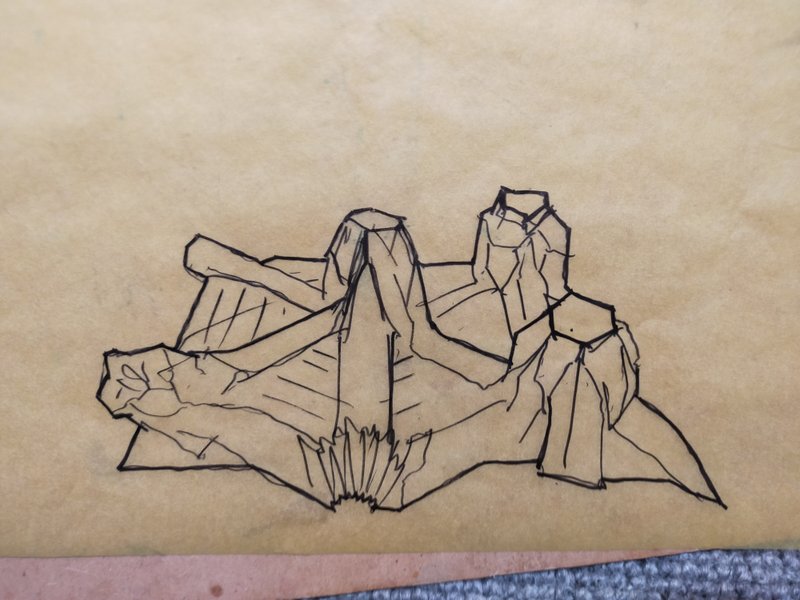
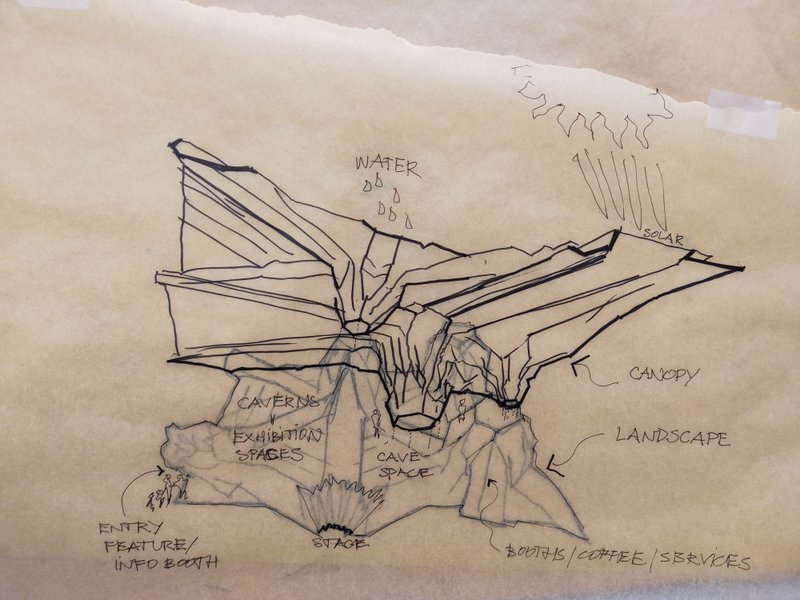
We decided to continue with a single consistent pleat width for all columns, and to finally move away from flat-foldability, towards a freer corrugation upon the underlying grid structure.
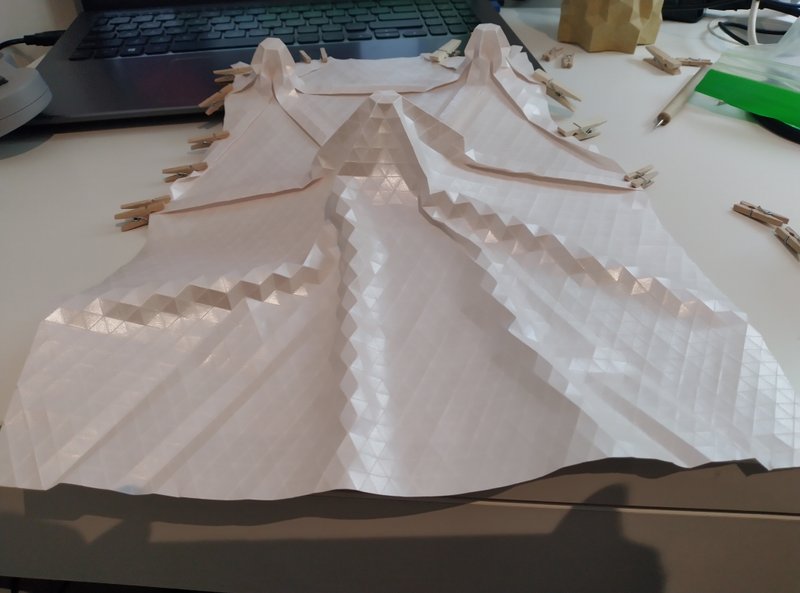
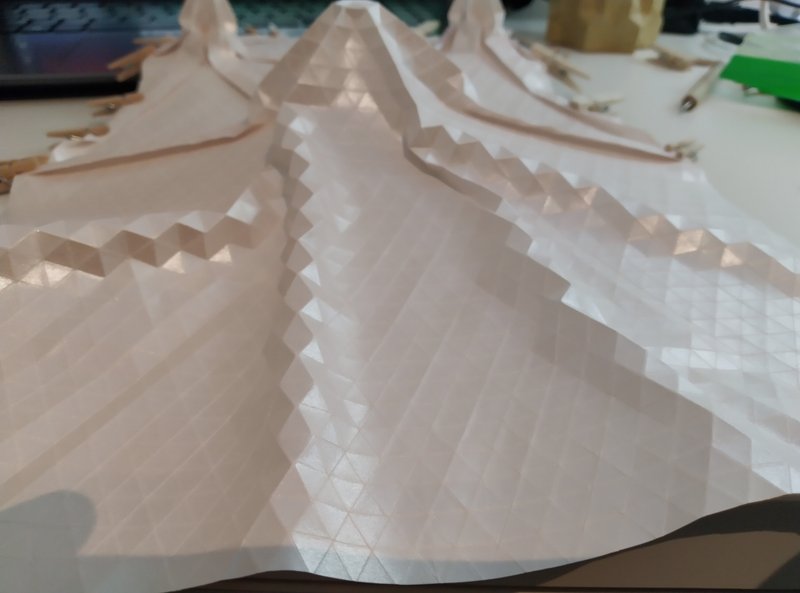
From the three folded origami models, we selected two.
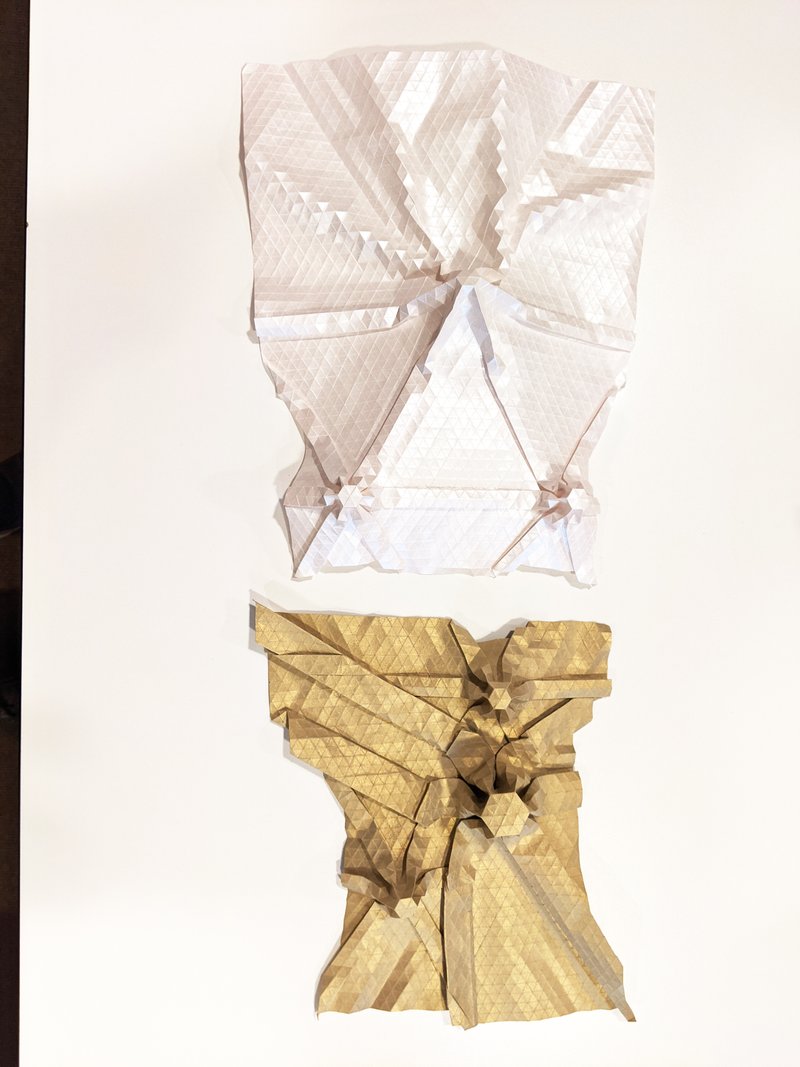
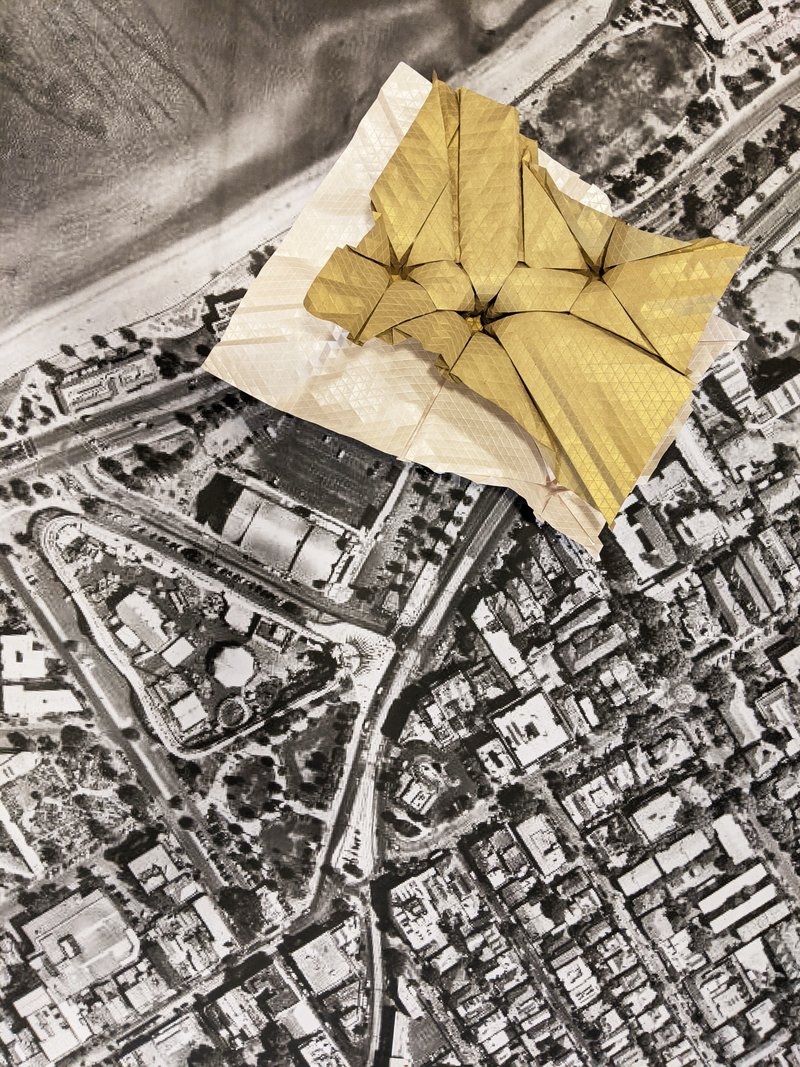
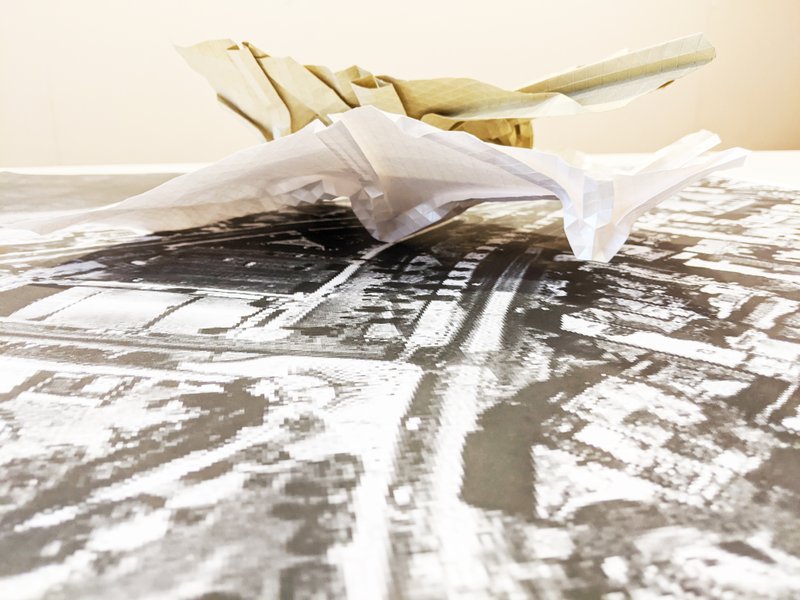
We finally decided upon a multi-level architectural project utilizing both of these folded origami works.
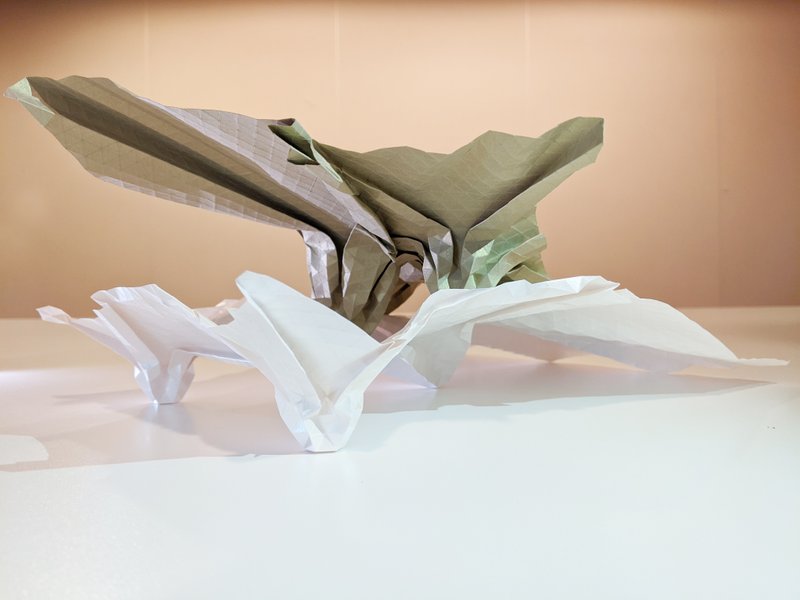
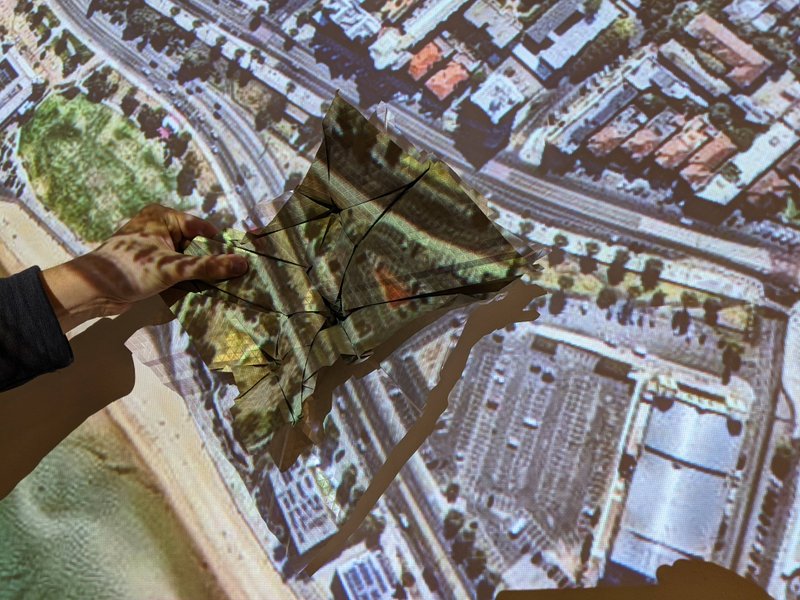
After much discussion, we decided on a site location, at St Kilda Beach in Victoria, Australia. The undulating structure will connect the ocean to the nearby businesses and housing, allowing a road to pass underneath it. We used a projector to work out the scales involved, as well as location, before printing a large copy of the map.