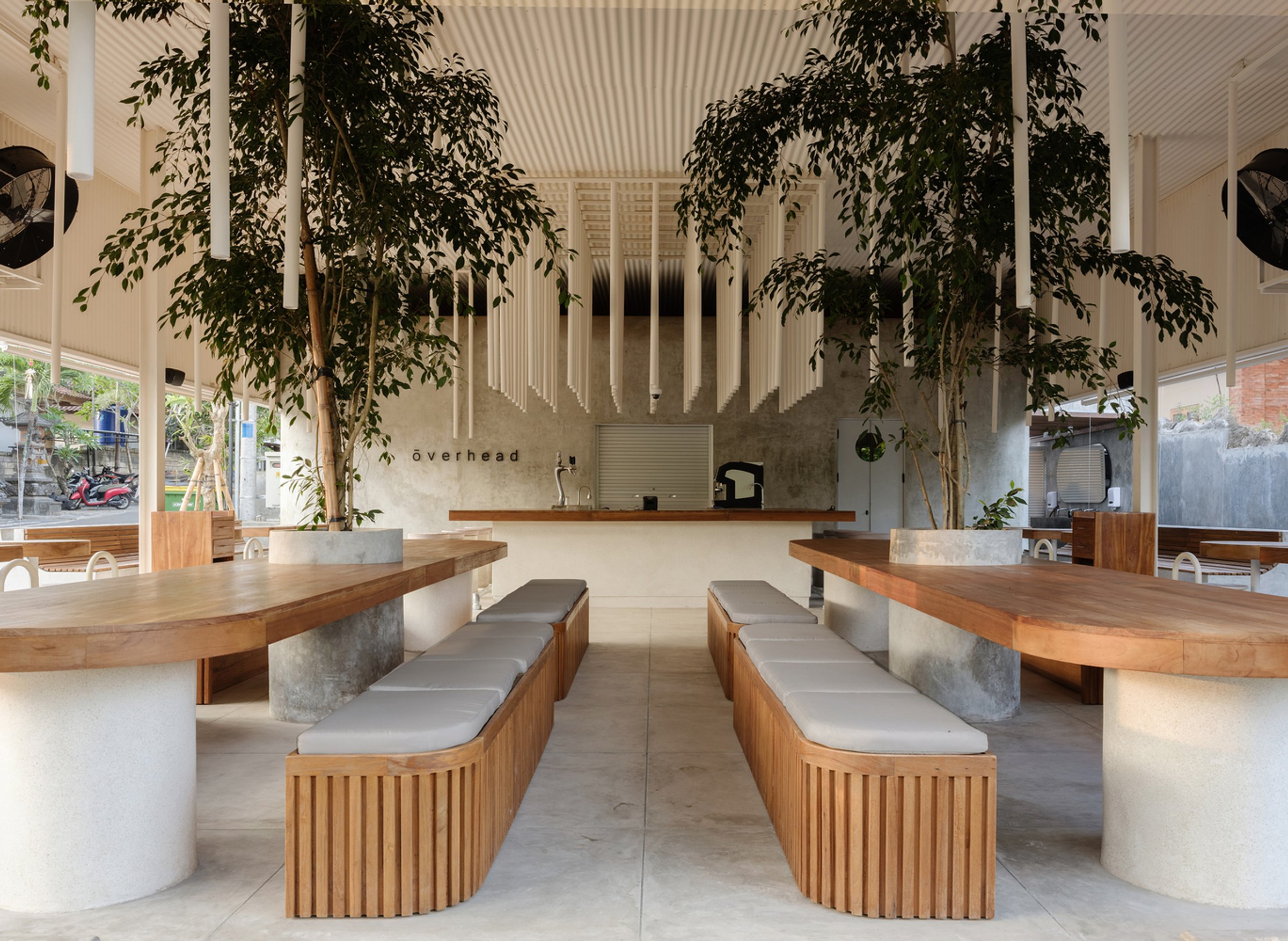
Overhead Restaurant: A Minimalist Restaurant Design in Bali
Overhead Restaurant in Bali is a minimalist architectural masterpiece by Max Tsybin, blending modern design with traditional and natural surroundings.


A Contemporary Landmark in the Heart of Bali
Overhead Restaurant, designed by Max Tsybin in collaboration with the Greywoods.pro team, is a striking example of minimalist restaurant design in Bali. Located in the vibrant Pecatu area on the Bukit Peninsula, this project embraces the contrast between modern architectural forms and the rich cultural and natural environment of Bali. With a focus on simplicity, geometric composition, and the interplay of light and shadow, the design creates a distinctive landmark while seamlessly integrating with its surroundings.
Site Context and Architectural Inspiration
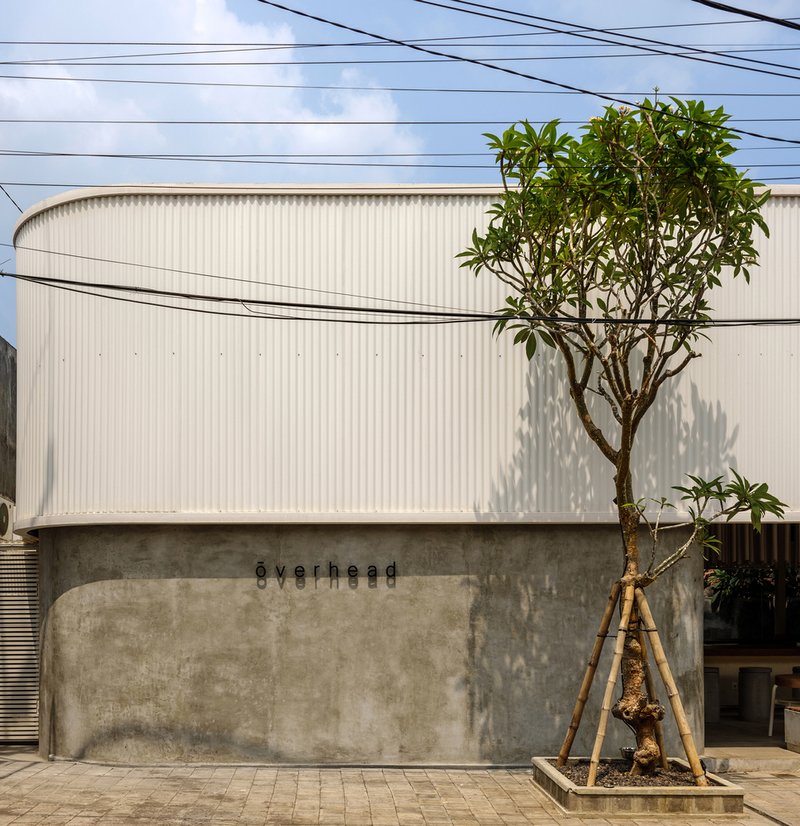
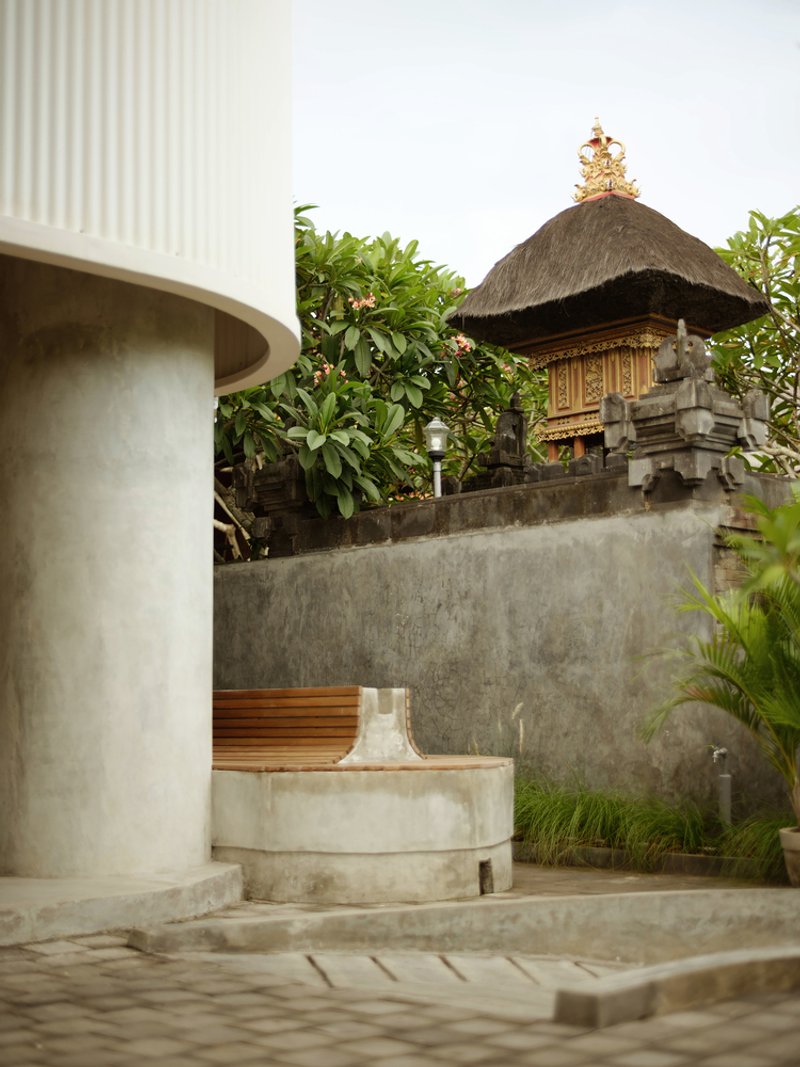
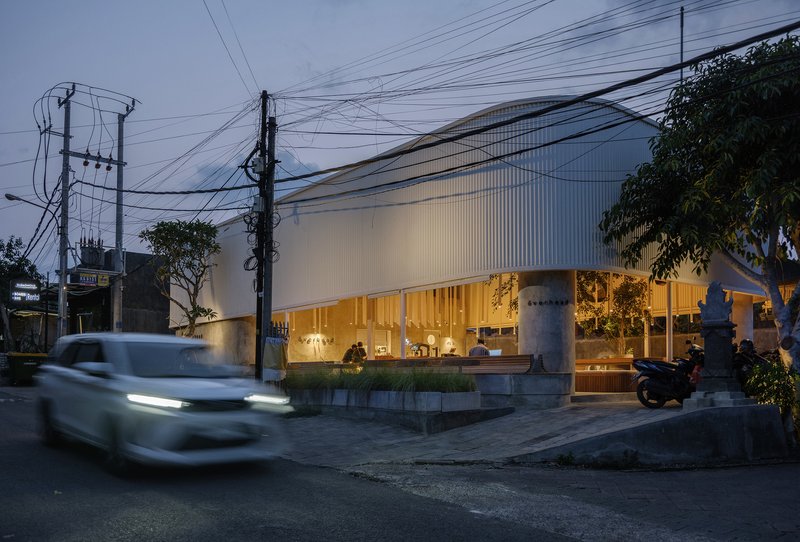
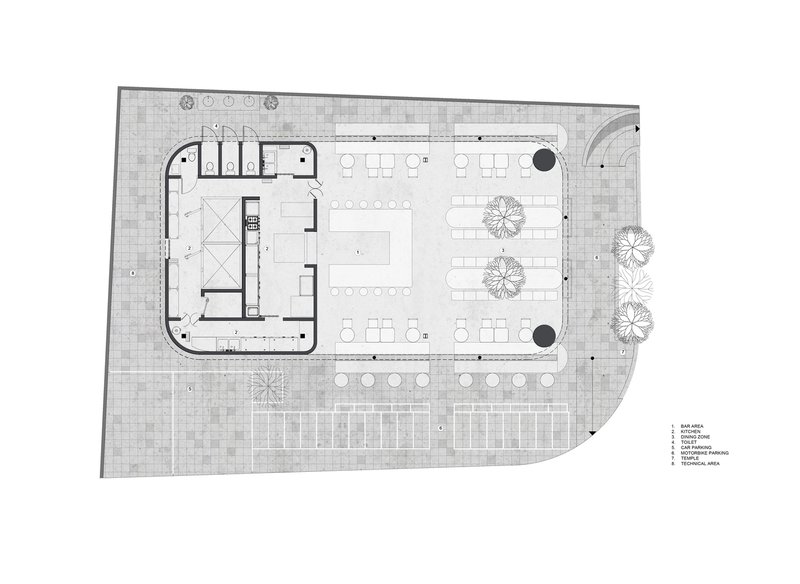
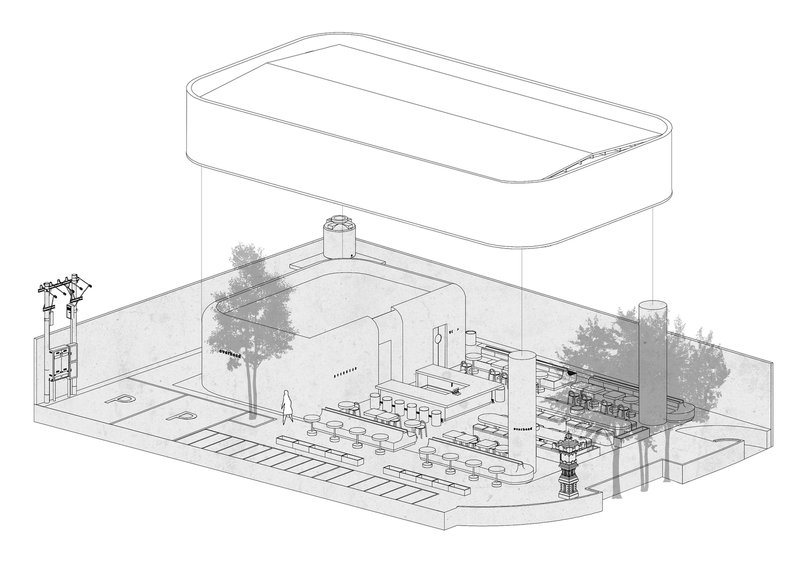
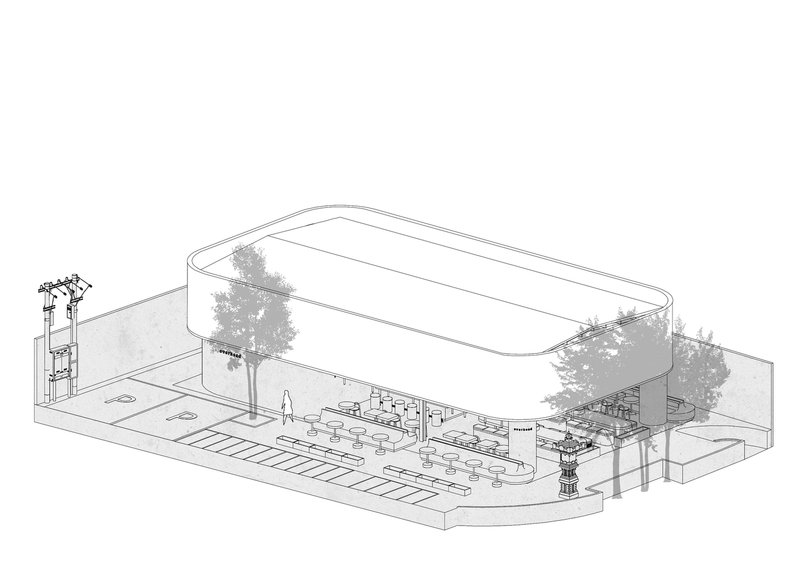
The restaurant is situated on a corner plot, surrounded by traditional Balinese architecture, house temples for religious offerings, and dense tropical vegetation. Overhead electrical cables crisscross the landscape, adding to the character of the location. Rather than competing with these elements, the design embraces them, creating a contemporary structure that enhances and respects the visual complexity of its environment.
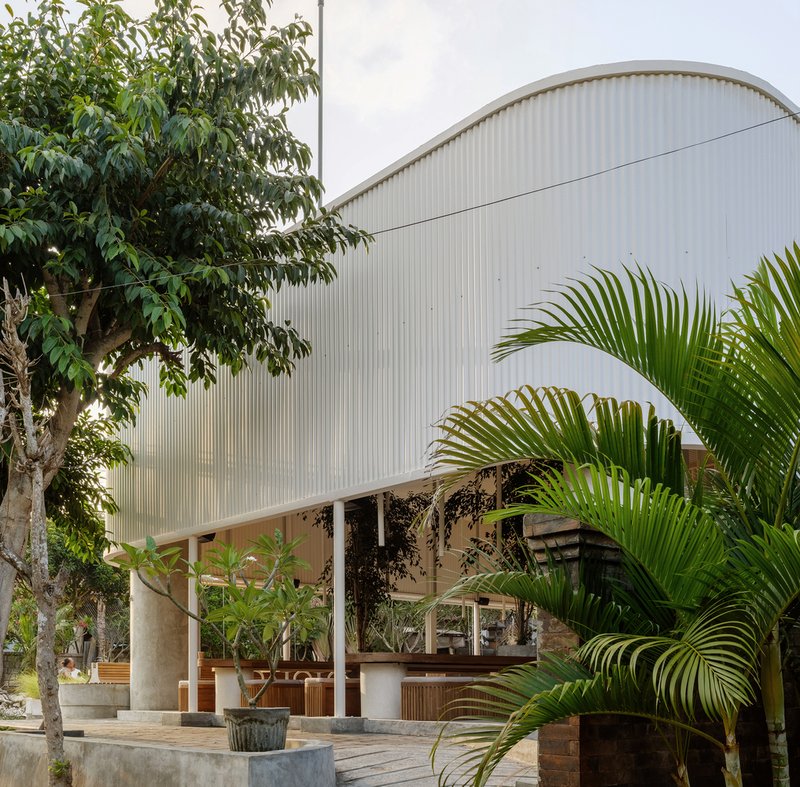
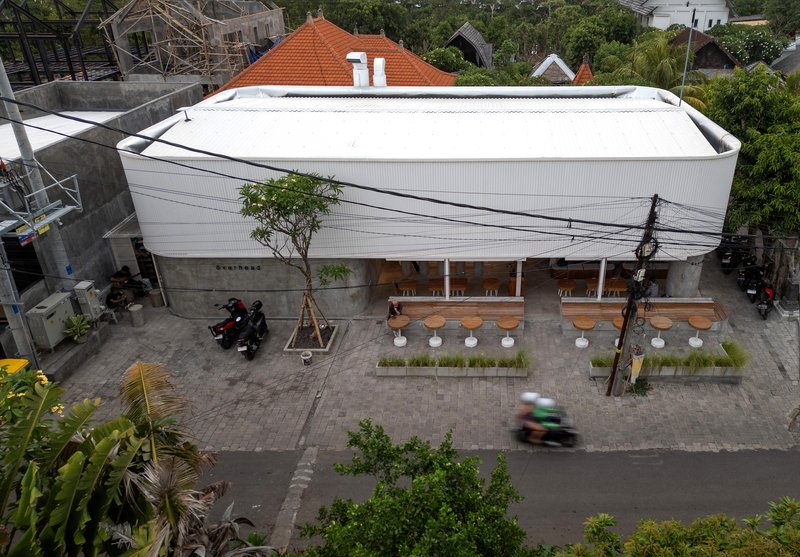
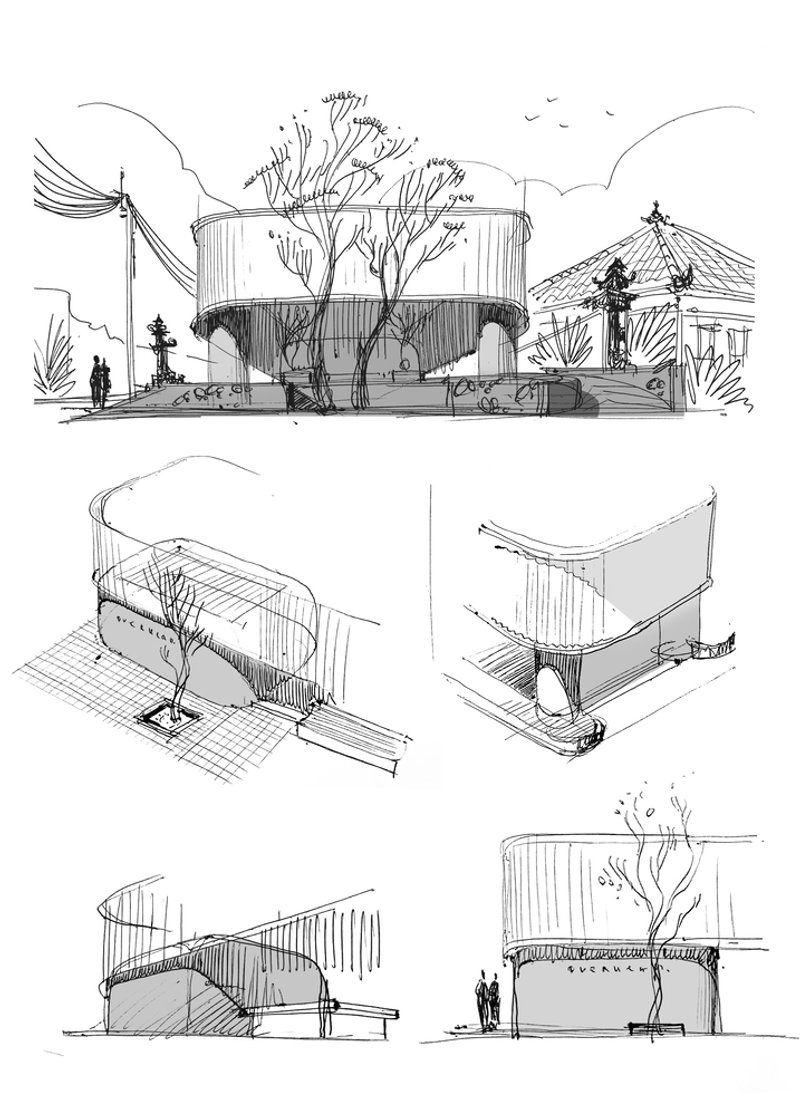
Inspired by the traditional and modern juxtaposition found in Bali, the design concept is based on contrast. The clean, large-scale geometric forms of the restaurant emphasize the details of the surrounding architecture, making the intricate elements of Balinese homes and lush greenery more pronounced. At the same time, the structure itself becomes a visual focal point, standing out against the organic forms of its setting.
Architectural Composition and Materiality
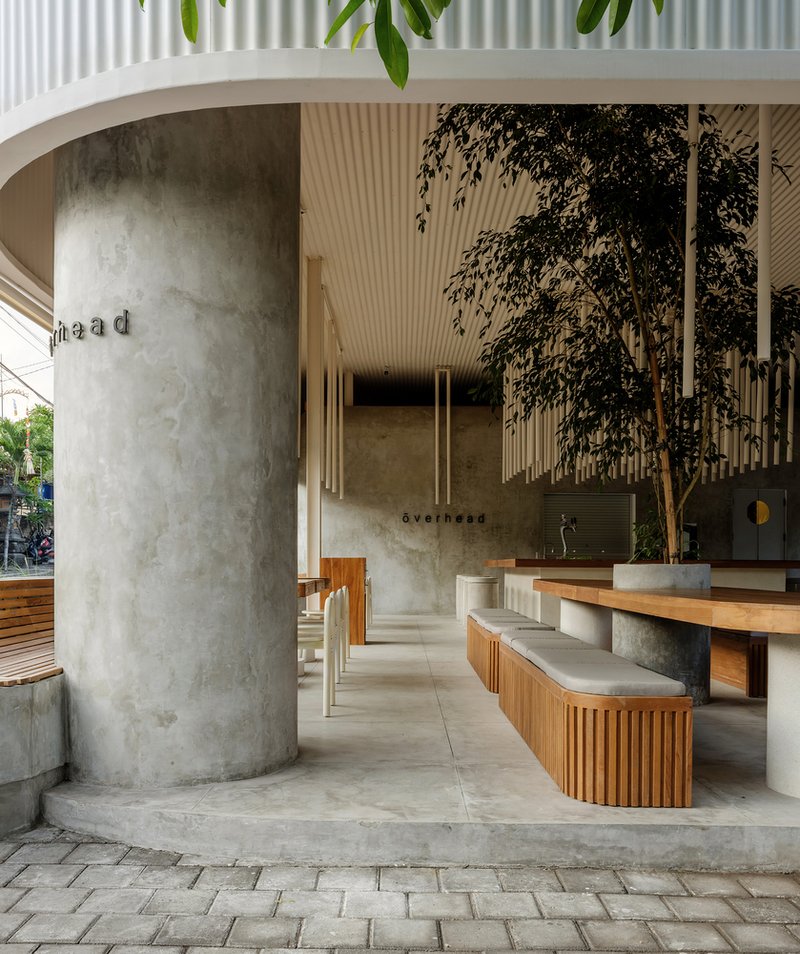
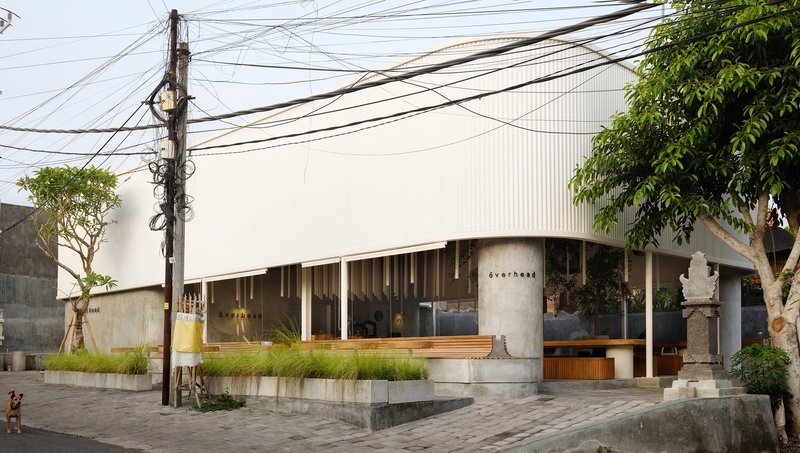
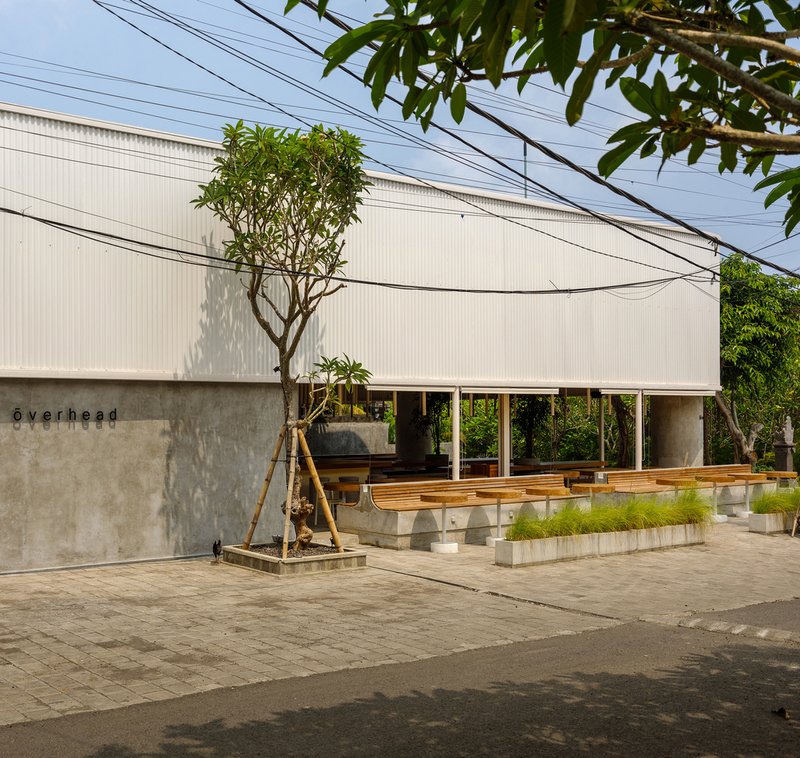
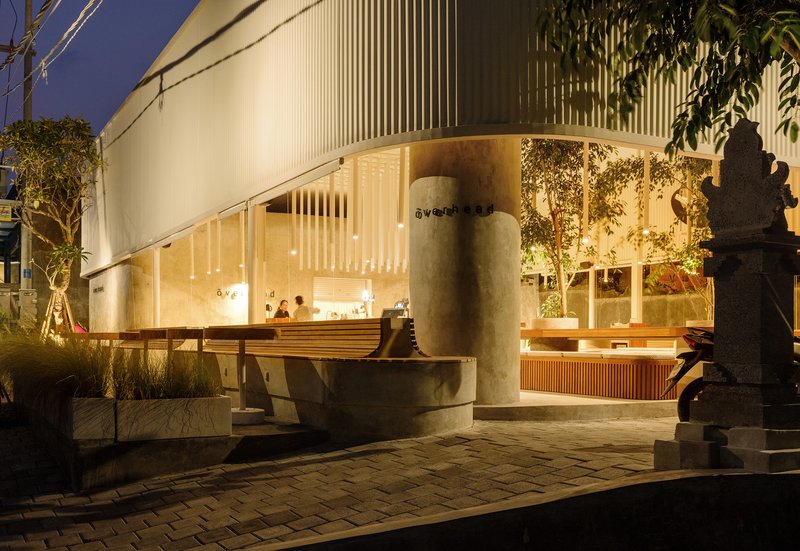
Overhead Restaurant is defined by bold geometric shapes that create a minimalist yet dynamic presence. The façade features ribbed textures, cornices, and cantilevered signage, adding depth to the otherwise restrained composition. Round columns support a massive overhang, providing shelter while enhancing the sculptural quality of the building. The integration of verdant plants softens the clean lines, connecting the architecture with nature.
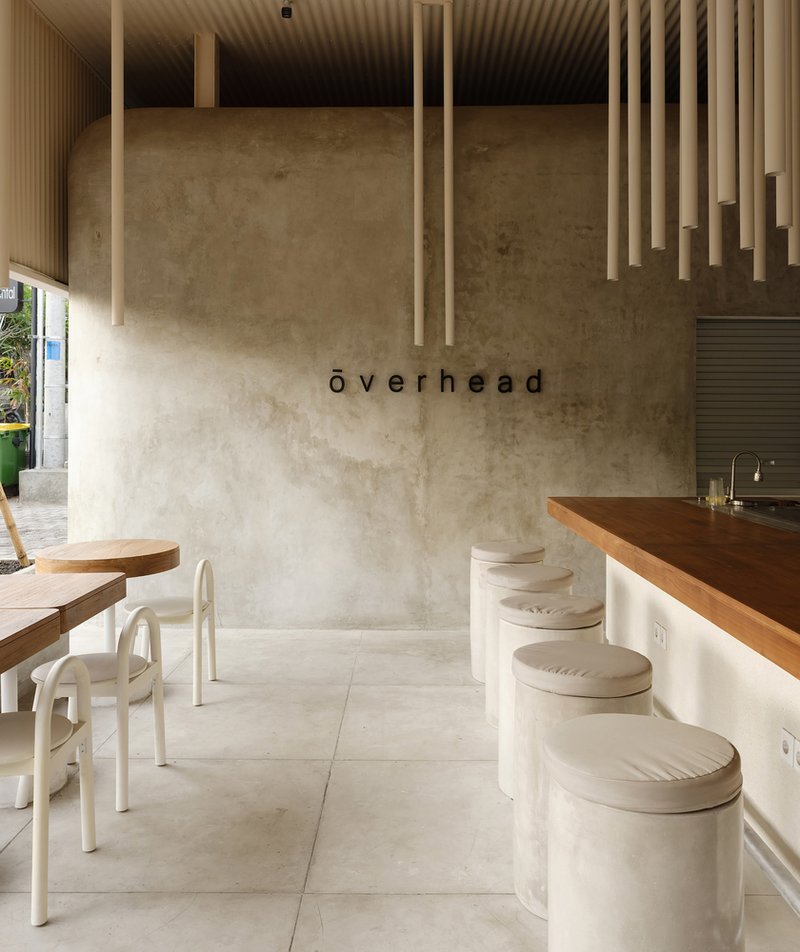
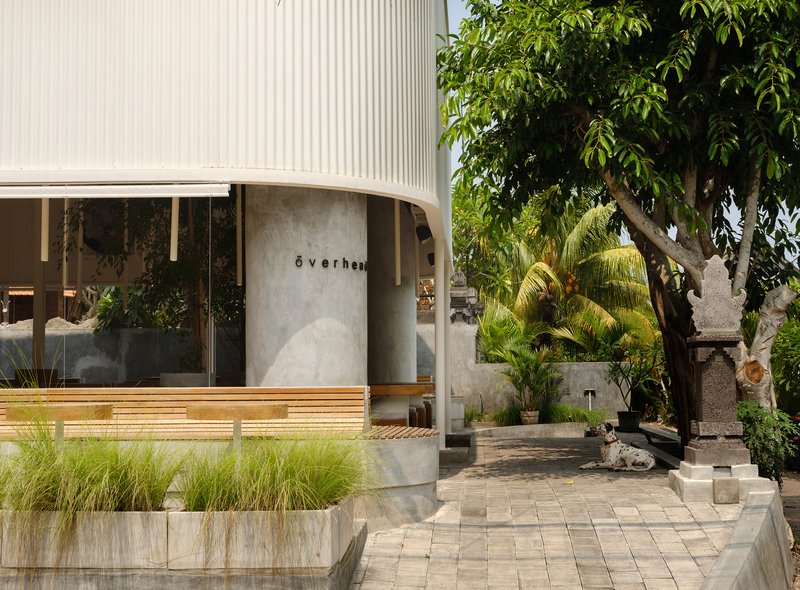
The material palette is simple yet carefully selected to enhance the play of light and shadow throughout the day. During the morning hours, sunlight filters through the foliage of a Frangipani tree, casting dappled patterns onto the façade. This interaction between natural light and architecture creates a constantly shifting visual experience, reinforcing the connection between the building and its environment.
The Role of Light in Defining Space
Lighting plays a crucial role in shaping the ambiance of Overhead Restaurant. In daylight, the structure appears bold and defined, with natural shadows accentuating its architectural elements. The ribbed façades and deep overhangs create an ever-changing display of light and dark, adding dynamism to the minimalist composition.
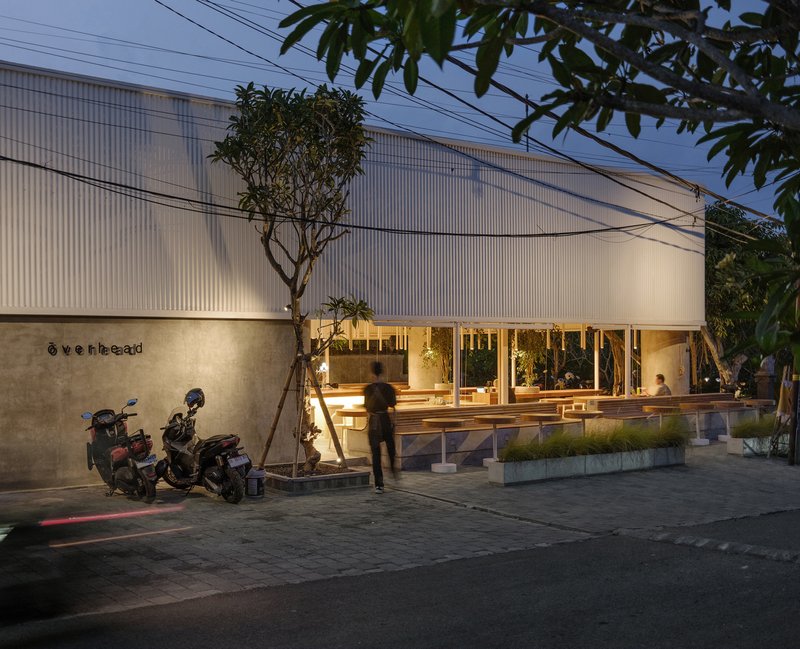
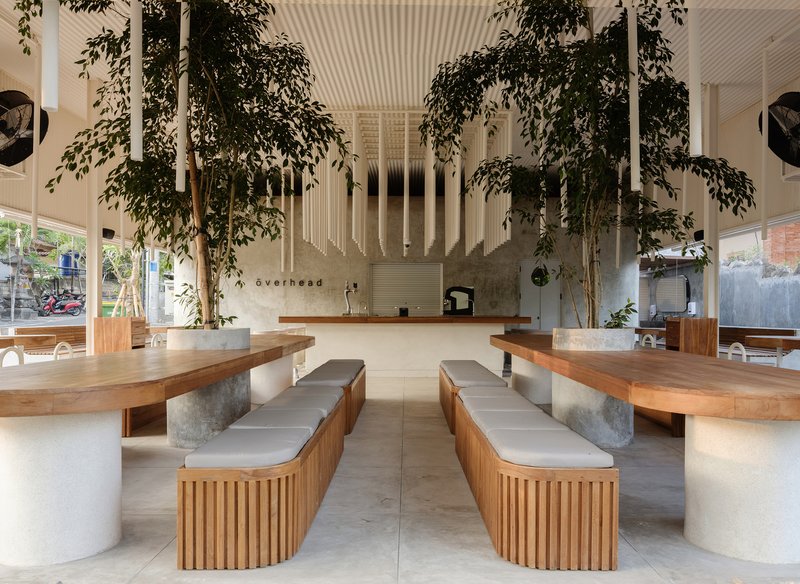
As night falls, the lighting concept transforms the restaurant’s presence. The exterior lighting is deliberately restrained, allowing the building to blend into the night while maintaining a sense of mystery. Soft, targeted illumination highlights key architectural forms, while the interior radiates a warm glow, inviting guests inside. This "outside-in" approach creates an intimate yet visually striking experience, enhancing the restaurant’s role as both a destination and a part of its surroundings.
Integration with the Cultural and Urban Landscape
Overhead Restaurant serves as both a backdrop and a statement within the urban fabric of Bali. Its minimalist aesthetic does not overpower the existing context but rather complements it, allowing traditional Balinese architecture and natural elements to remain prominent. The contrast between simplicity and detail is a defining characteristic of the project, reinforcing its connection to the cultural and architectural landscape of the region.
A Harmonious Blend of Modernity and Tradition
Overhead Restaurant exemplifies the potential of minimalist restaurant design in Bali, where contemporary architectural forms can coexist harmoniously with traditional and natural elements. Through its carefully curated use of geometry, materiality, and lighting, the project creates an engaging dialogue between modernity and heritage. It stands as a testament to how thoughtful design can elevate a space, transforming it into a landmark that both respects and enhances its environment.
All Photographs are works of Ilya Mitroshenkov