Passive Design Strategies in Residential Architecture: Namana House by Wright Inspires
Namana House showcases passive design strategies in residential architecture, blending natural materials, daylighting, and ventilation to create a sustainable, energy-efficient home.


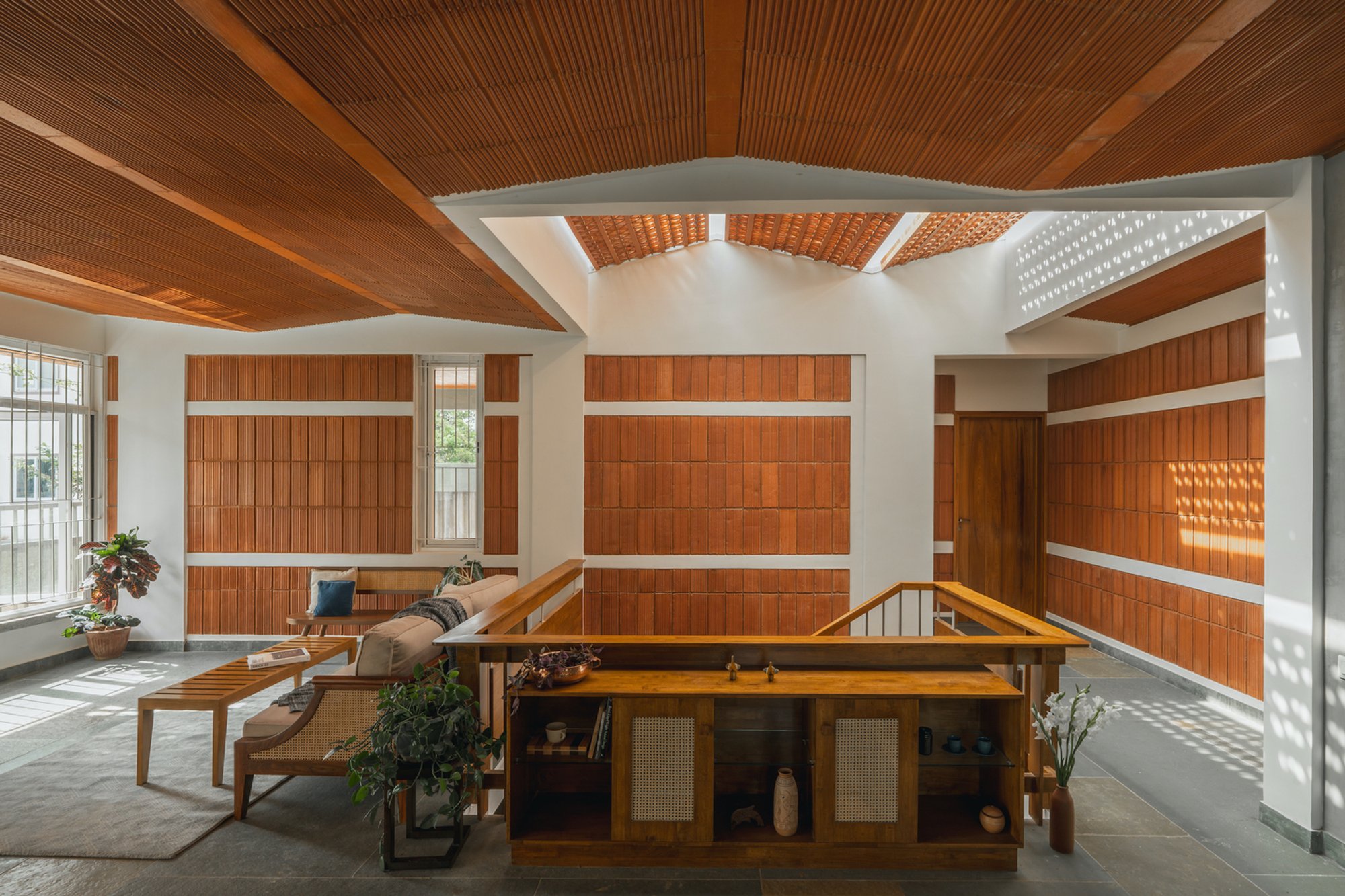
Namana House, designed by Wright Inspires, is an exemplary manifestation of passive design strategies in residential architecture. Nestled beside a tranquil vineyard, this east-facing home in India demonstrates how thoughtful spatial planning, material selection, and natural elements can create a harmonious and energy-efficient living environment. Through a combination of skylights, jaalis, and thermal-efficient materials, the design maximizes natural light, ventilation, and temperature regulation, reducing dependence on artificial systems while enhancing spatial comfort and aesthetics.
Site Context and Architectural Vision
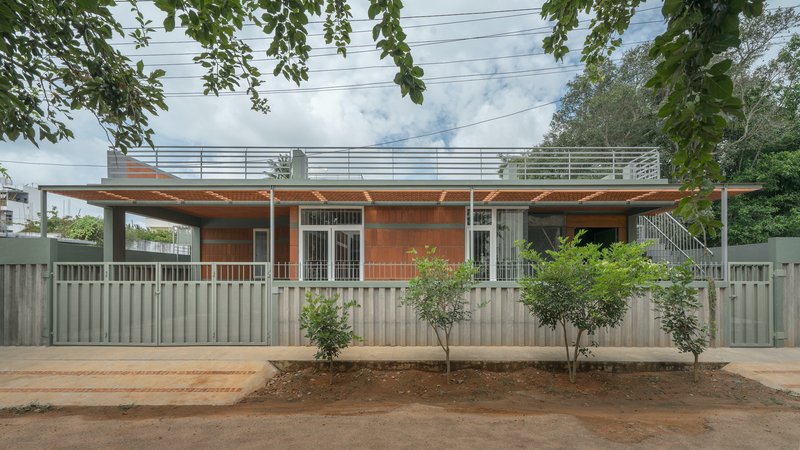
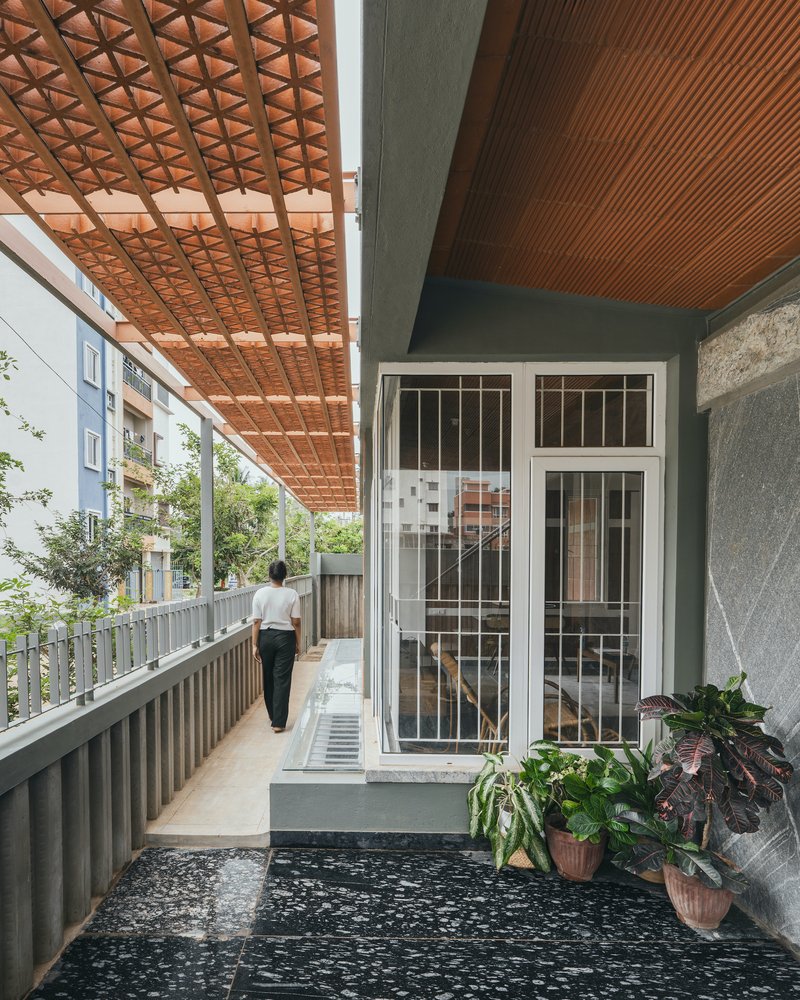
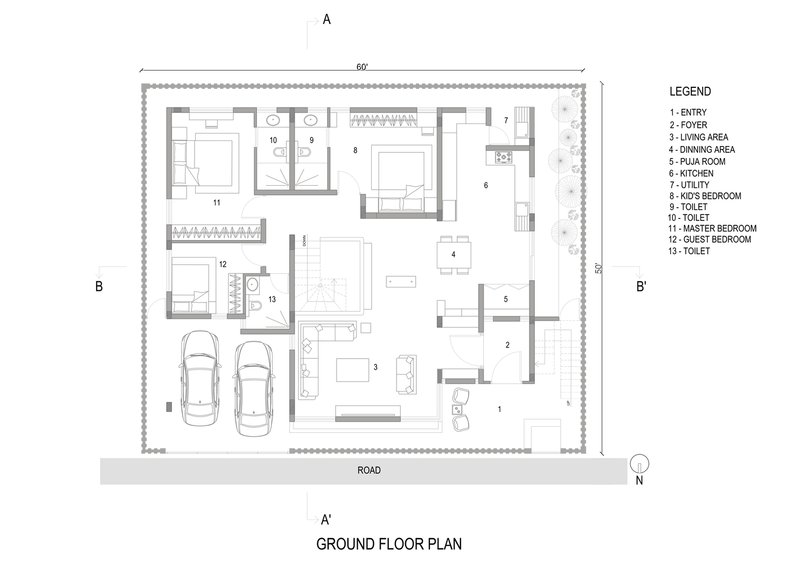
Located on a compact 60’x50’ plot, Namana House embraces its surroundings with an open yet structured layout. The single-story residence accommodates a family of three while ensuring privacy, fluidity, and visual continuity. The design integrates natural materials such as clay blocks, stone, and limestone, fostering a seamless connection between the built environment and its natural setting. Passive cooling techniques mitigate heat buildup, ensuring a comfortable indoor climate throughout the year.
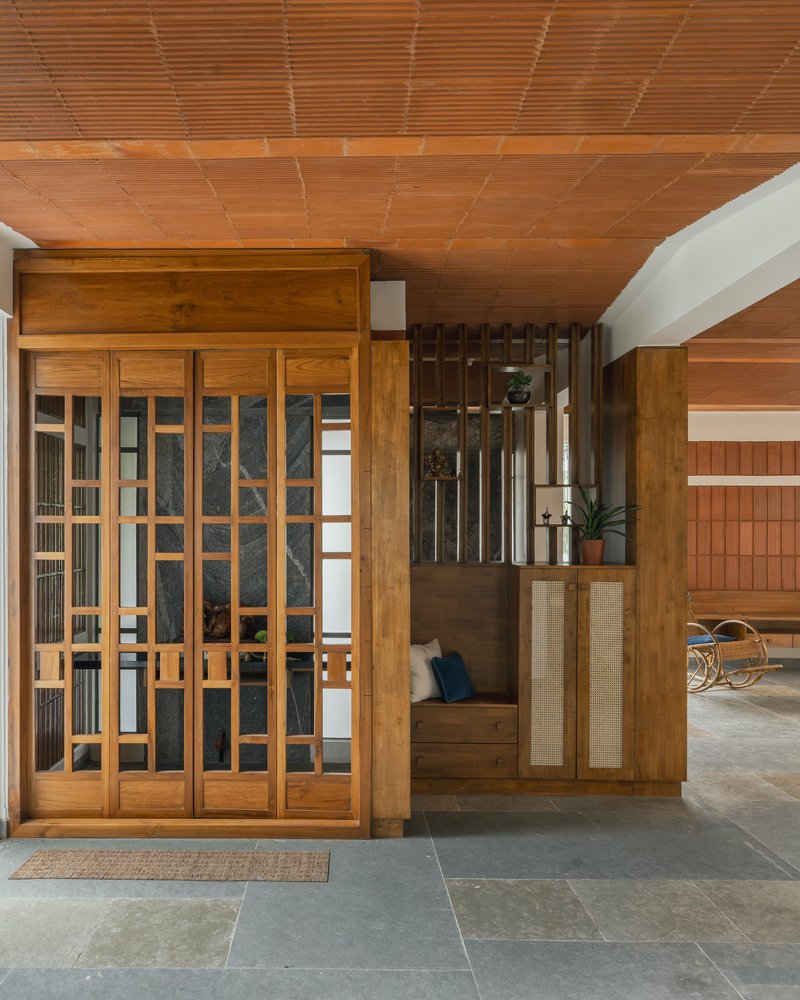
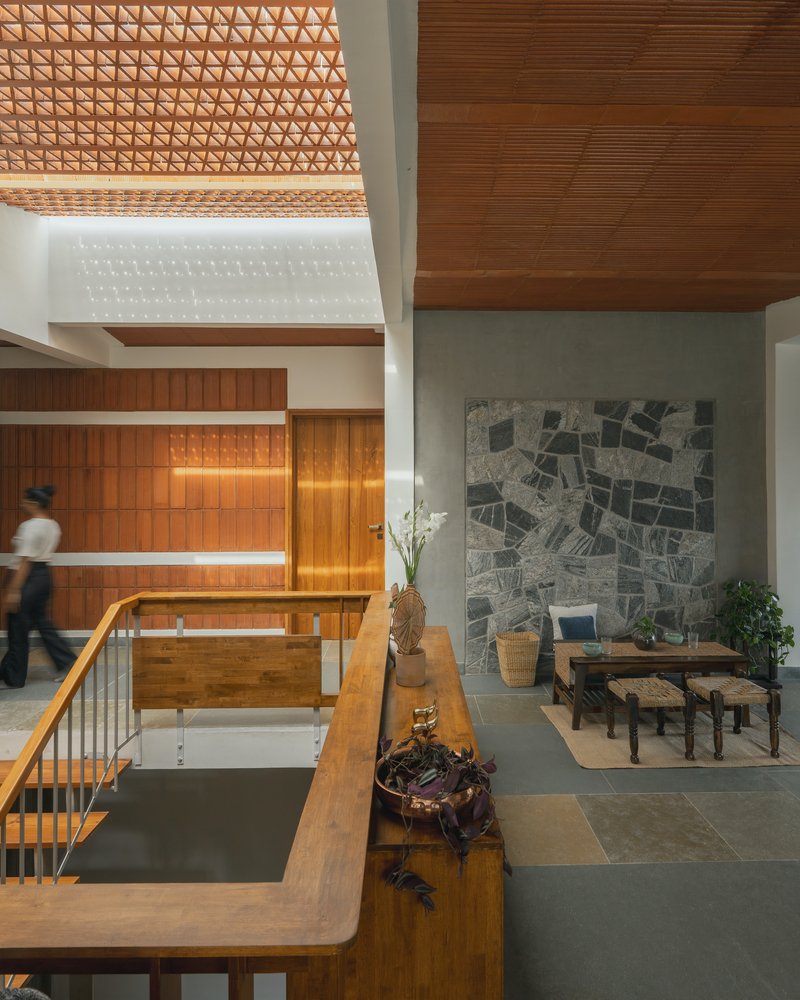
Spatial Flow and Natural Illumination
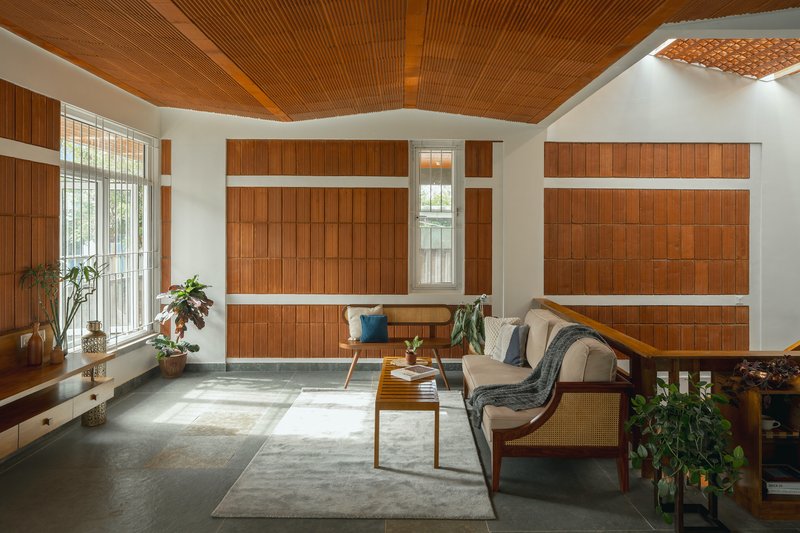
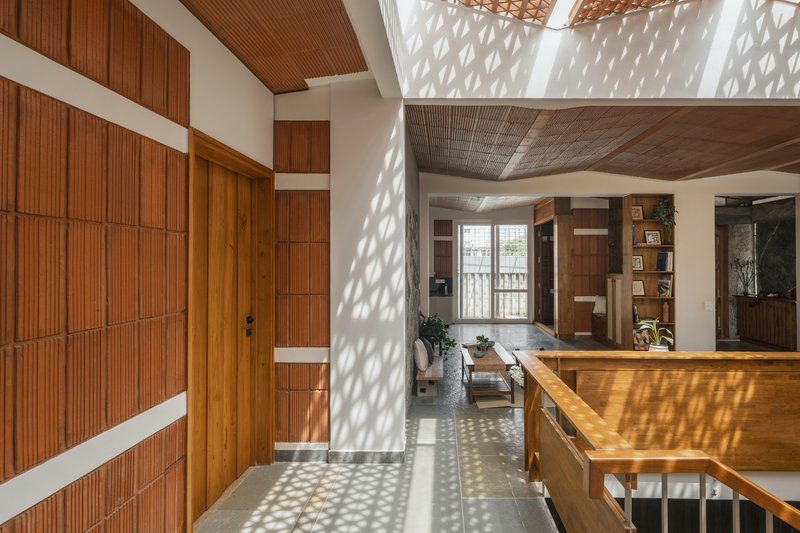
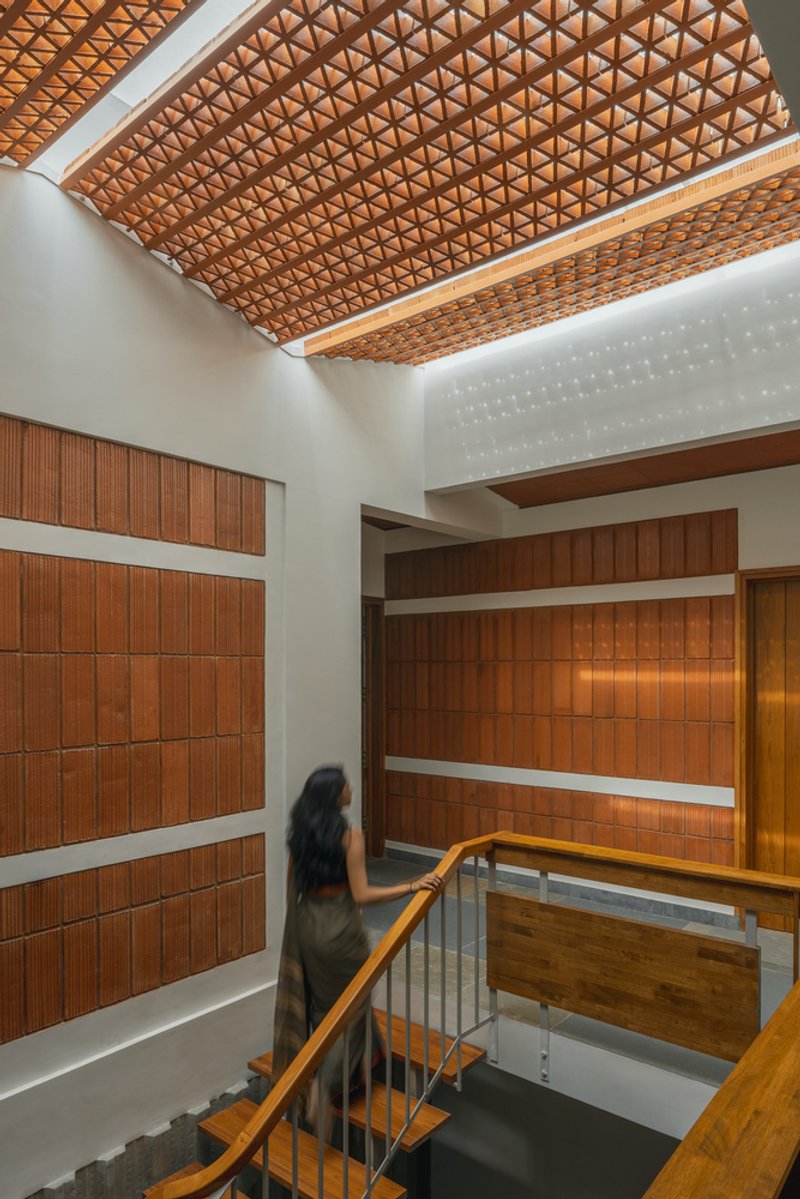
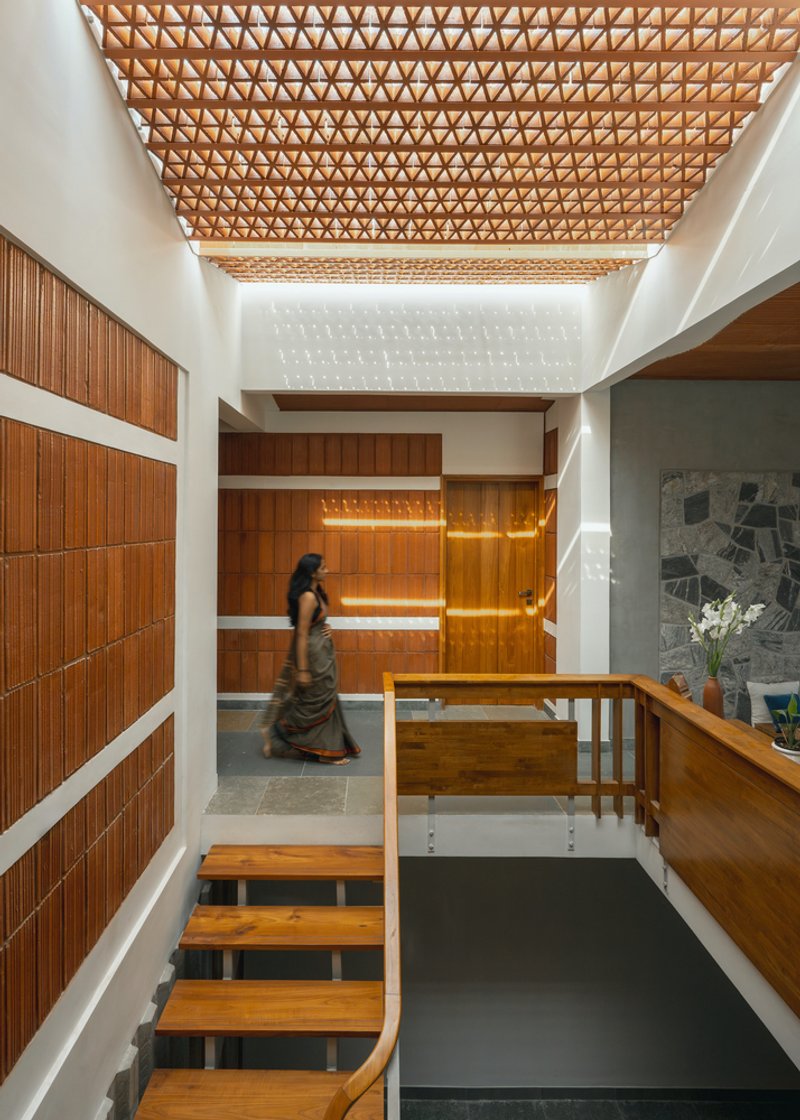
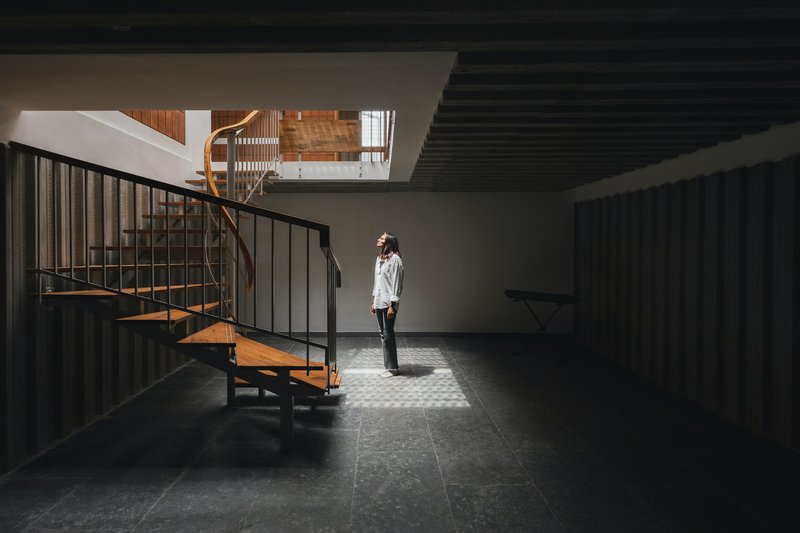
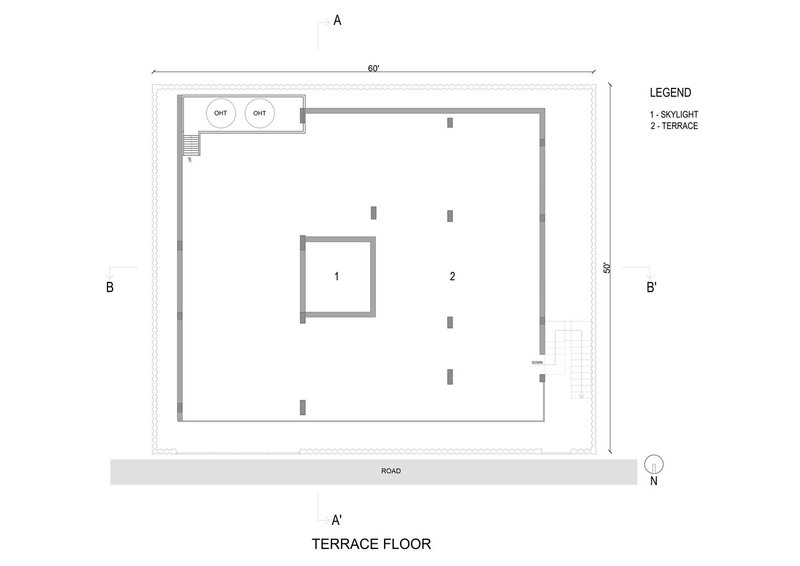
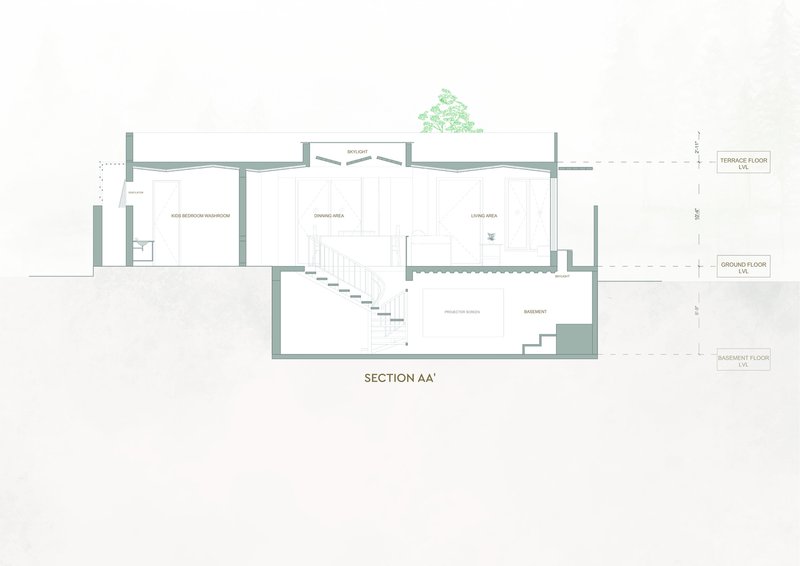
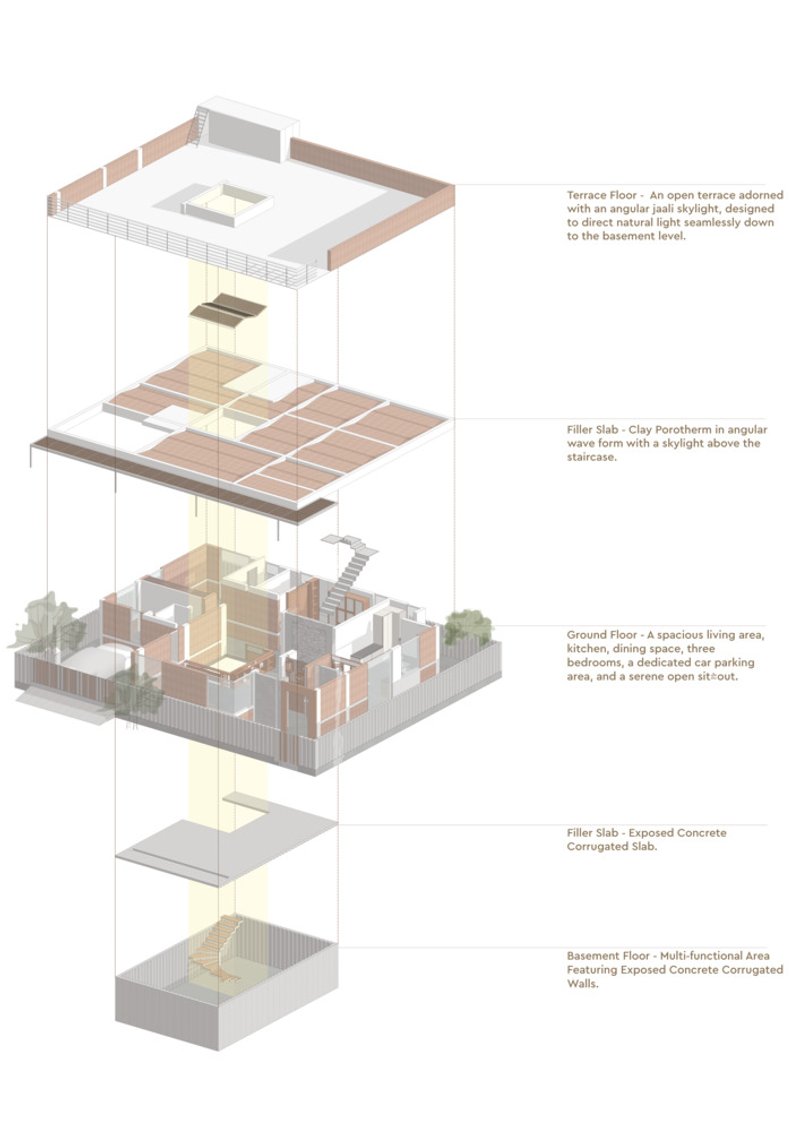
The architectural plan encompasses three bedrooms, an open-plan living, dining, and kitchen area, a deity room, and a recreational basement. A central axis promotes a free-flowing spatial arrangement while maintaining functional zoning. Skylights punctuate the roof, filtering daylight deep into the interiors and reducing the need for artificial lighting. The strategic placement of jaalis facilitates cross-ventilation, ensuring a continuous flow of fresh air while casting intricate patterns of light and shadow throughout the day.
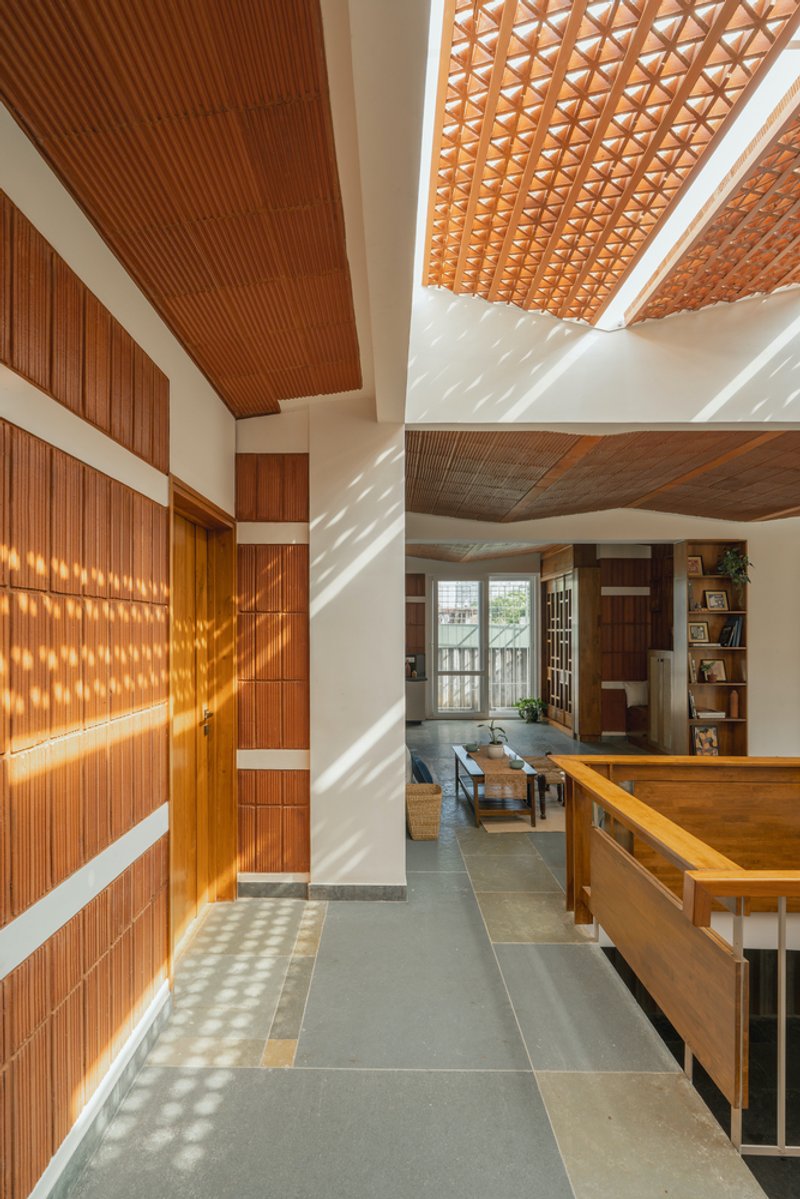
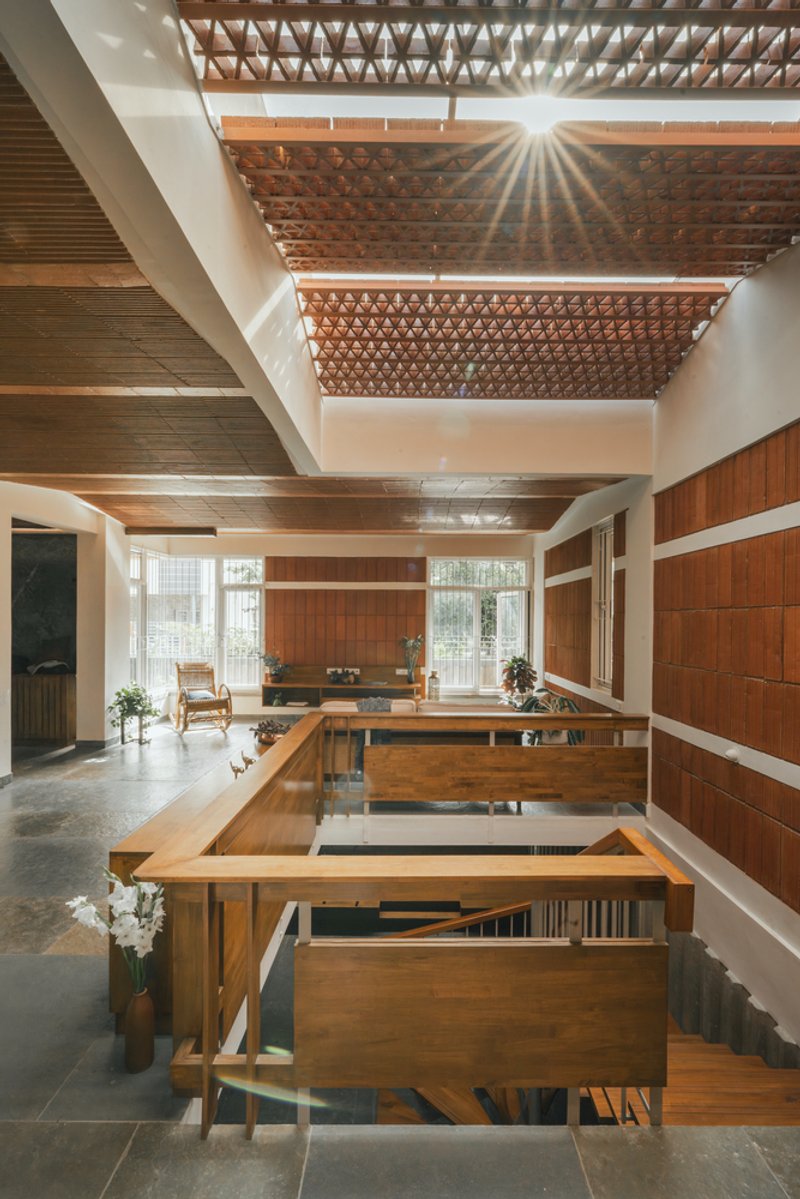
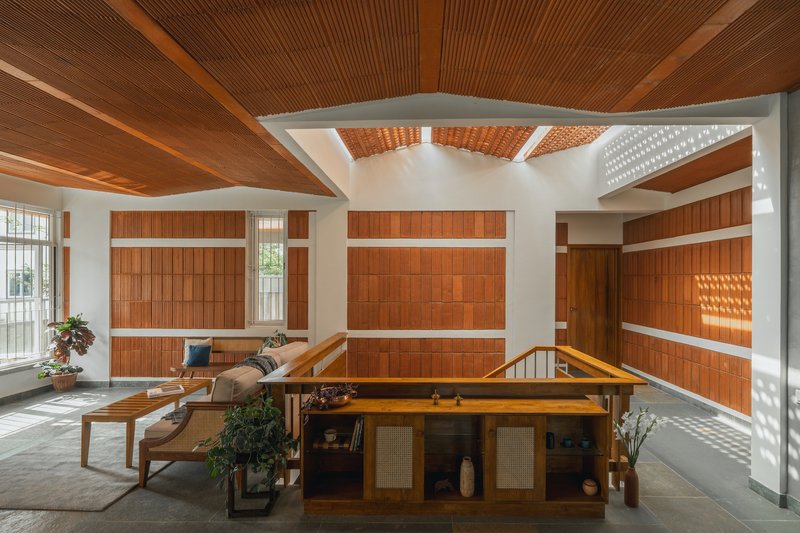
Glass insertions in the walls allow natural illumination to animate the interior surfaces, creating a dynamic interplay between light and materiality. These passive design strategies optimize the house’s energy efficiency, reducing reliance on mechanical systems for heating, cooling, and lighting.
Material Palette and Thermal Efficiency
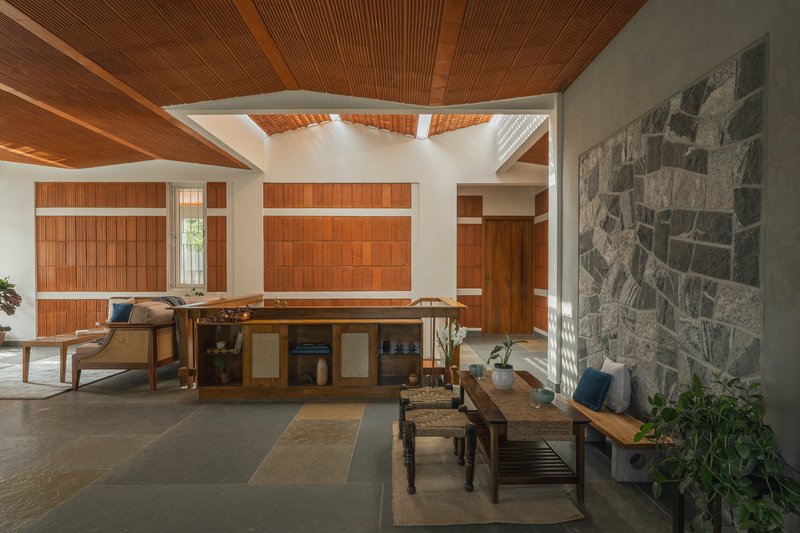
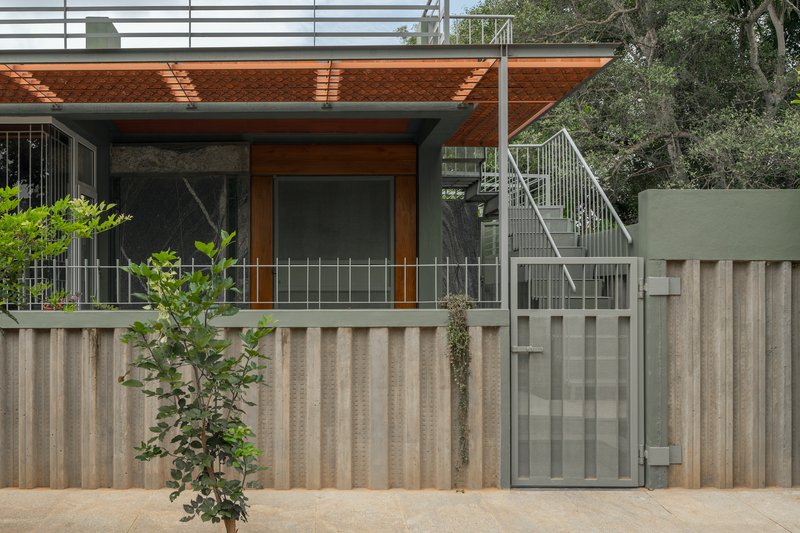
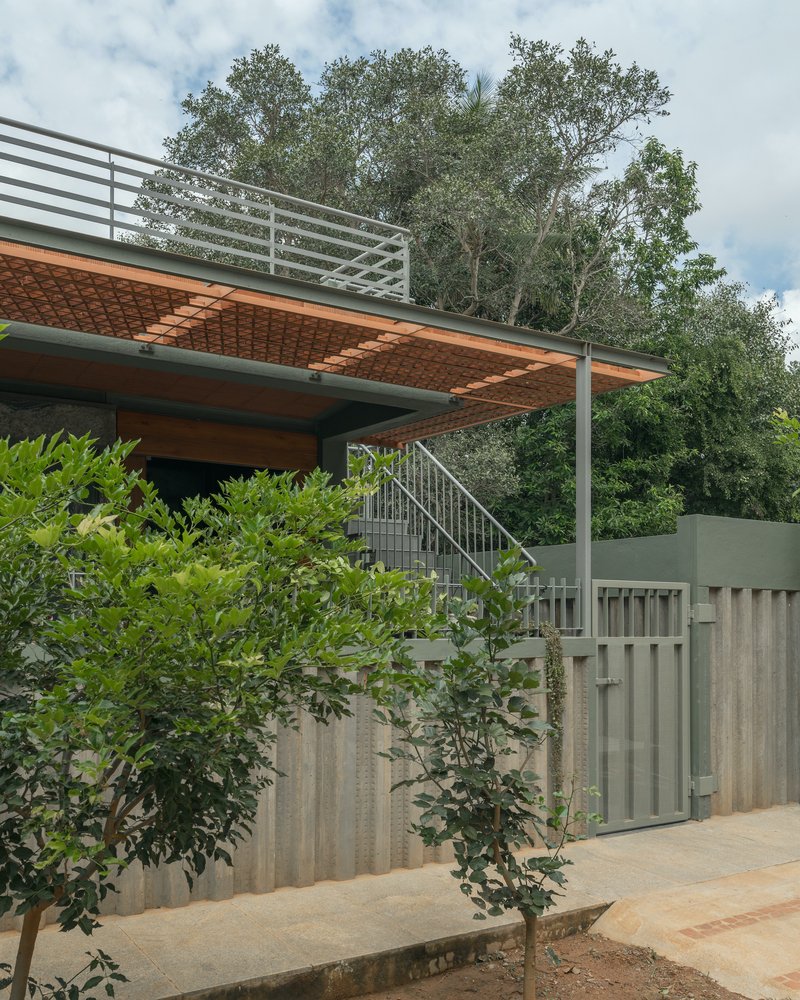
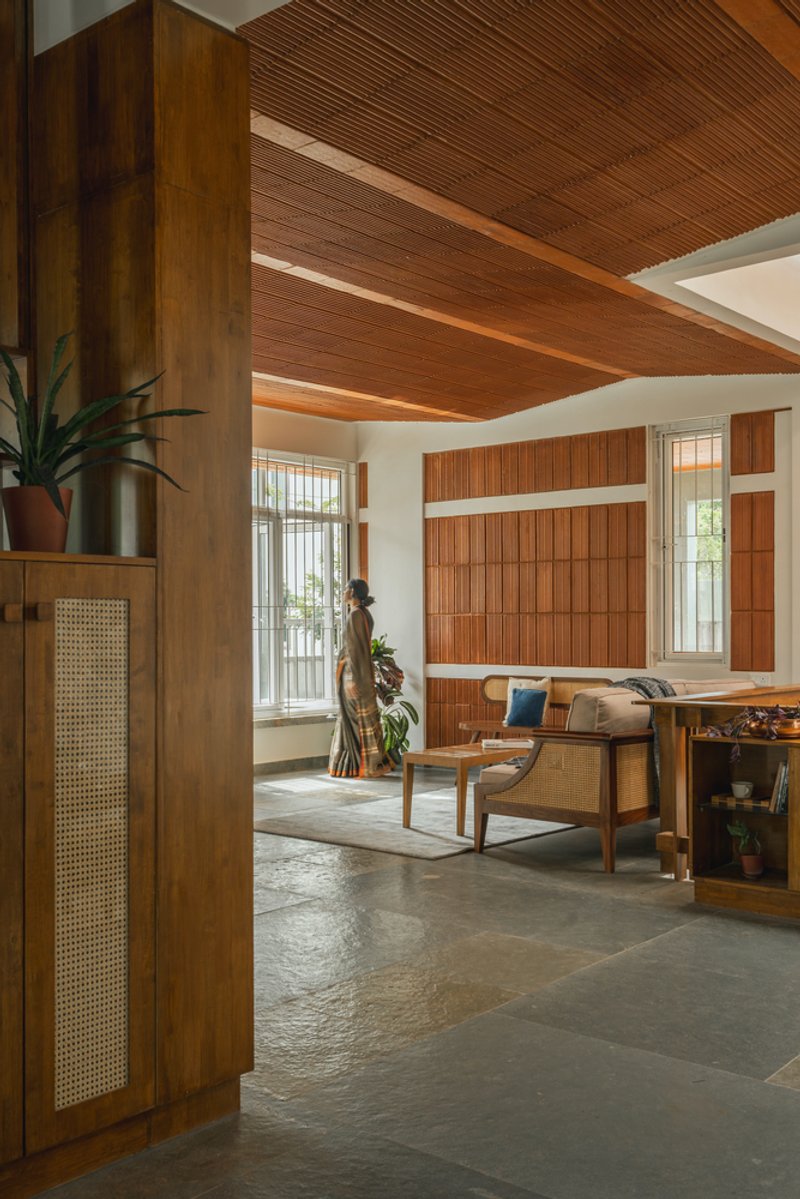
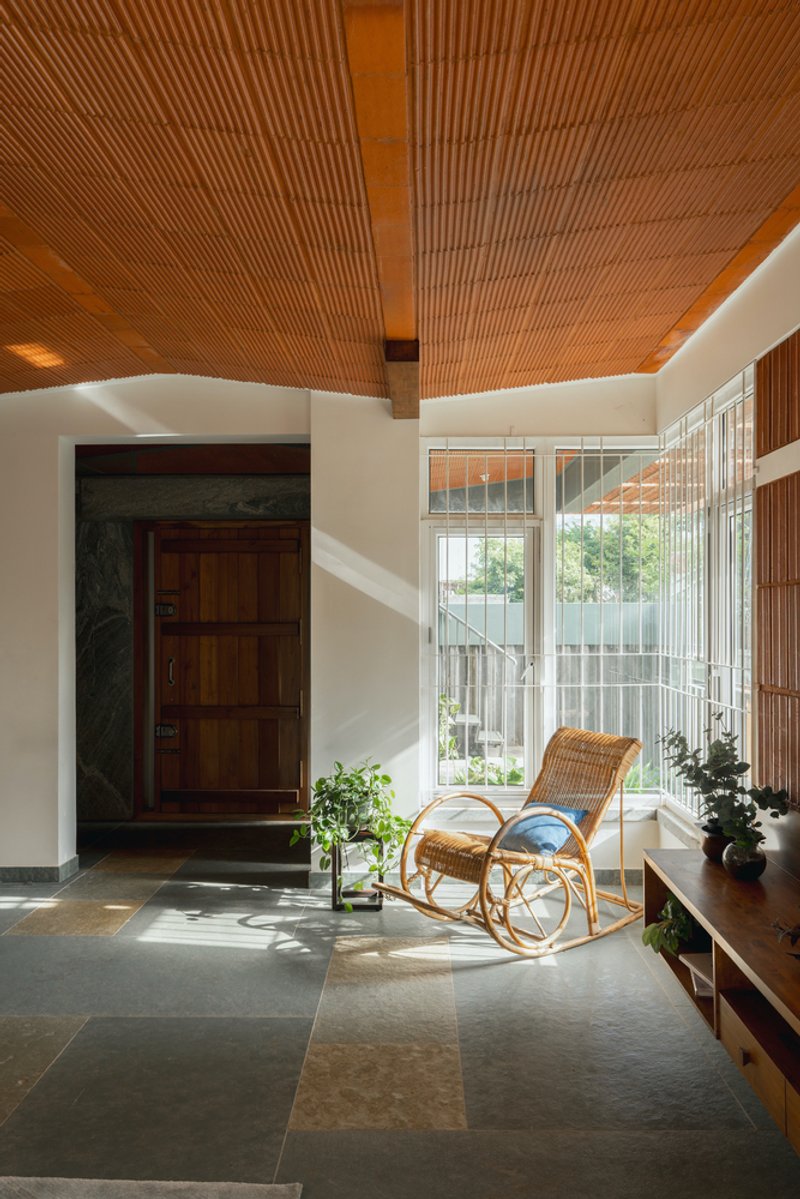
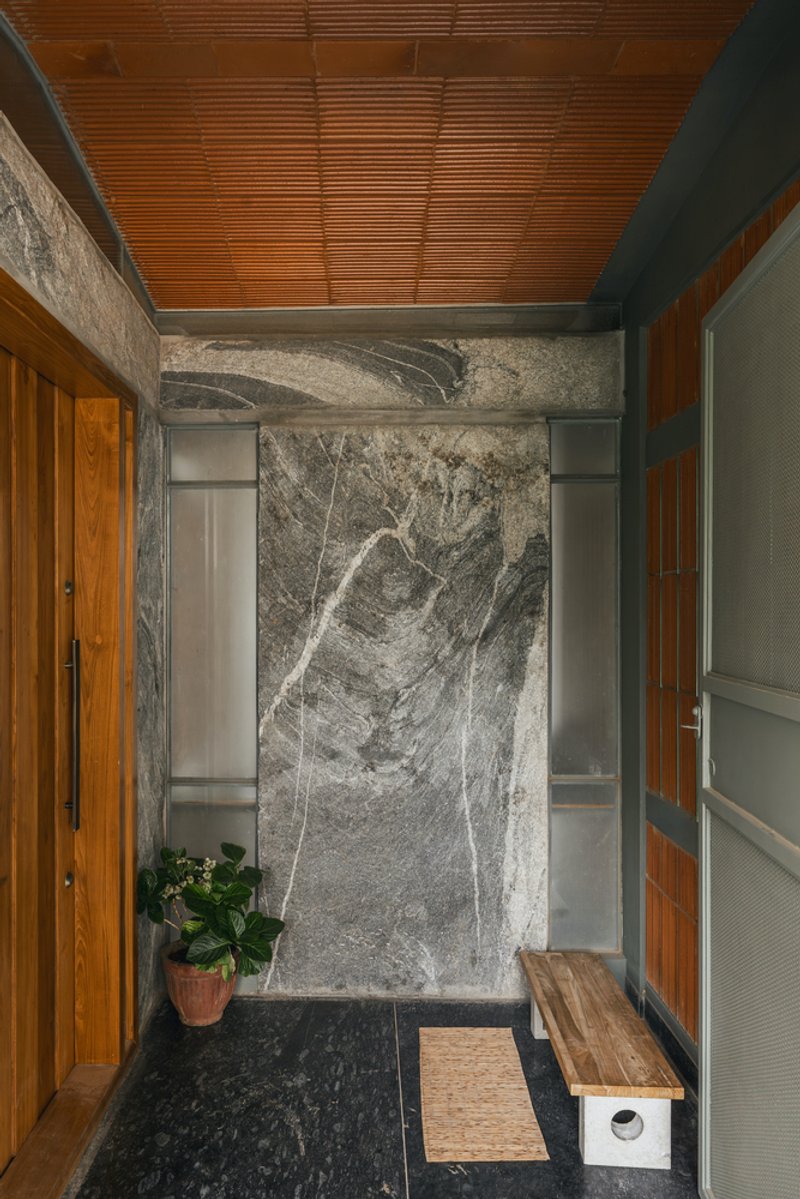
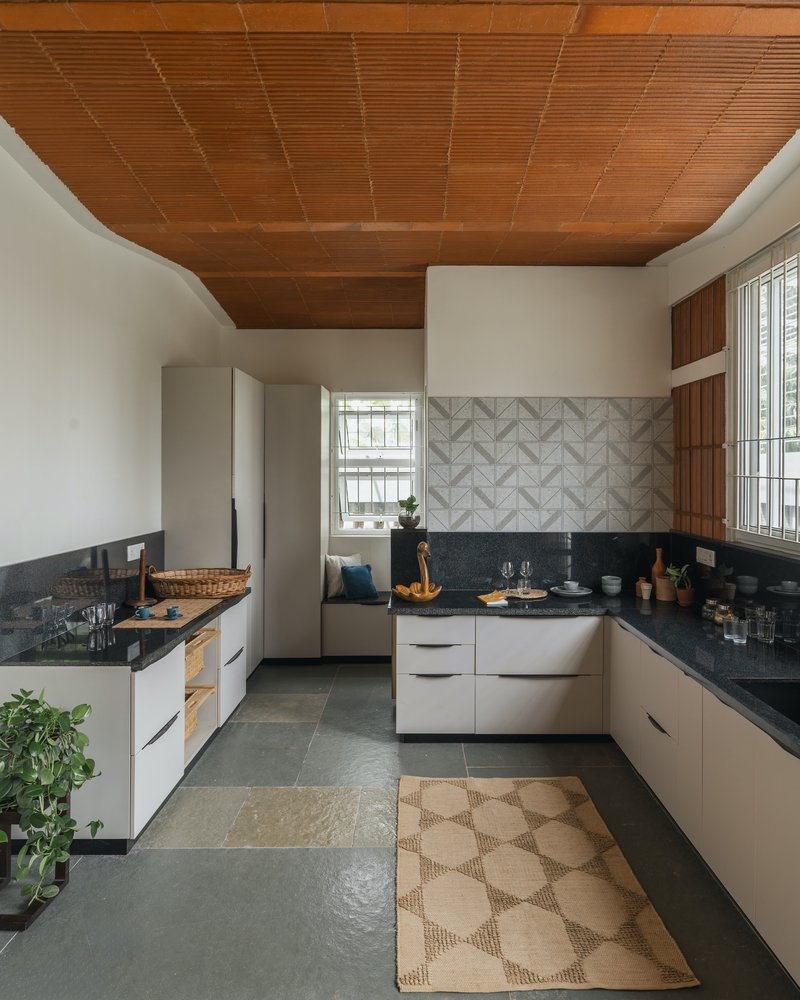
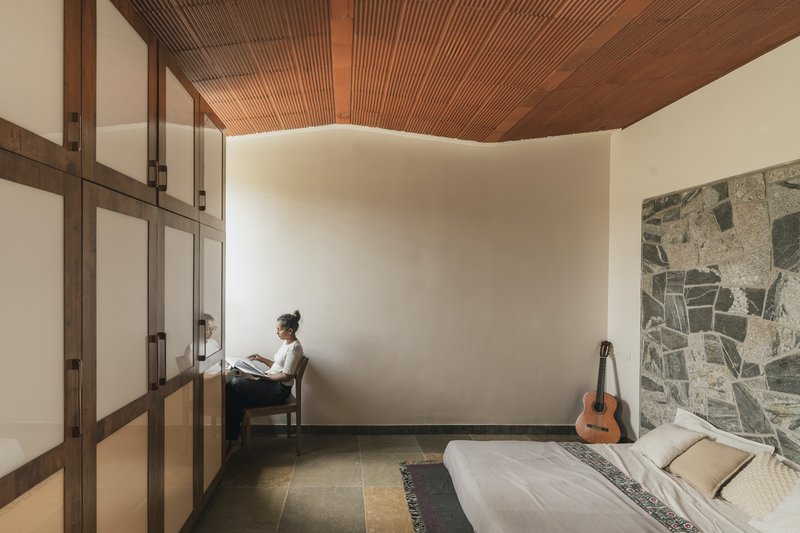
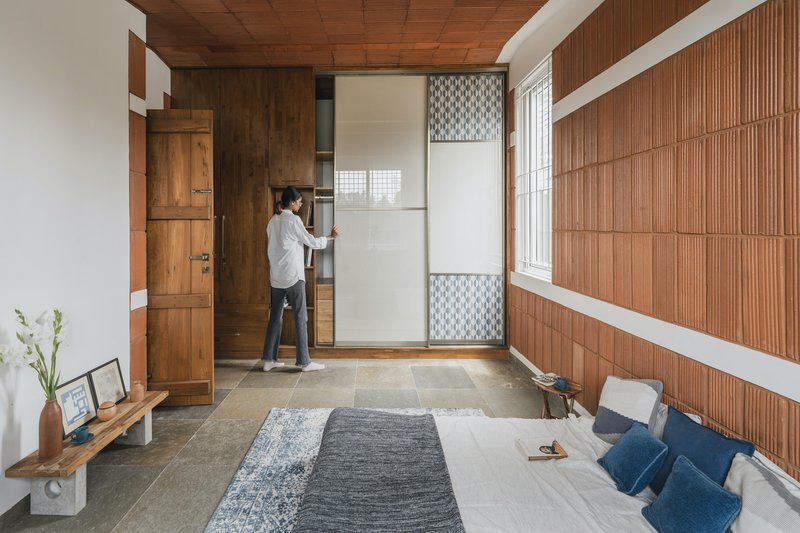
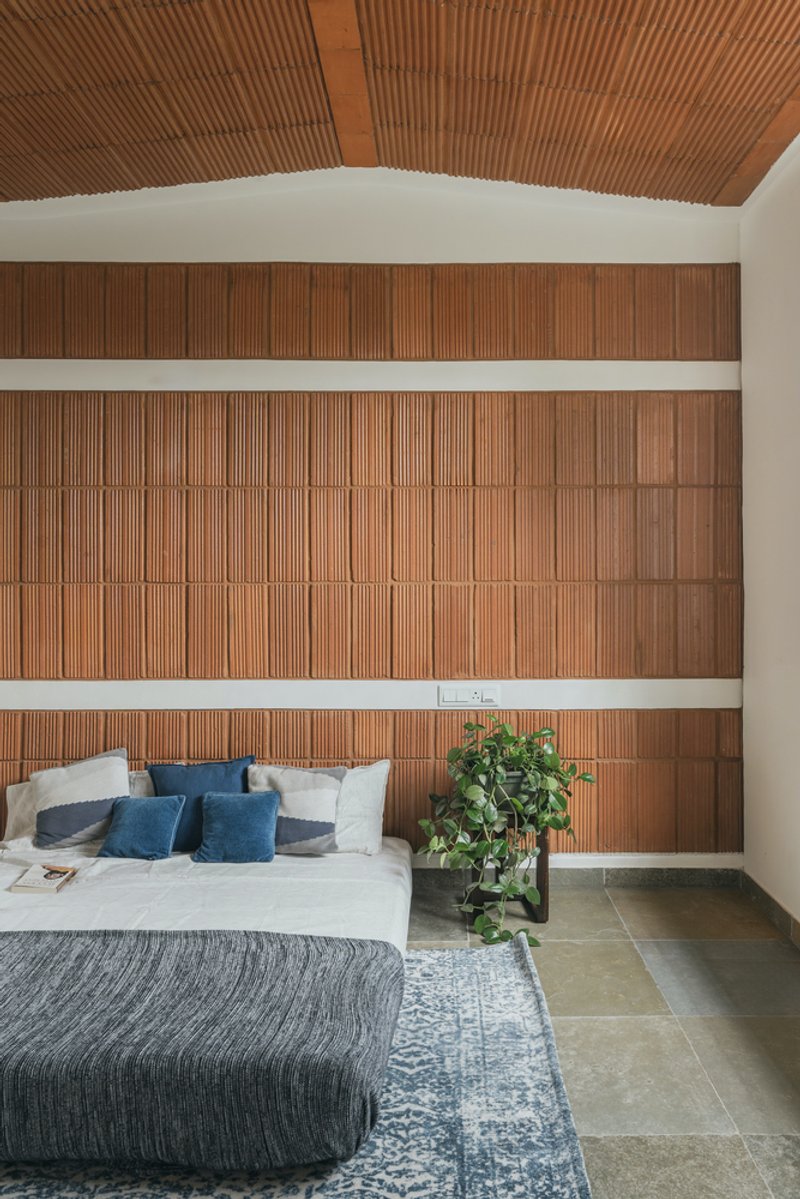
The use of exposed clay blocks, filler slabs, and natural stone is a defining aspect of Namana House’s material strategy. Chosen for their thermal insulation properties, these materials contribute to regulating indoor temperatures while adding visual and textural richness. The exposed clay blocks infuse the walls with an earthy warmth, while the angular filler slabs create rhythmic ceiling patterns that enhance spatial character and passive cooling.
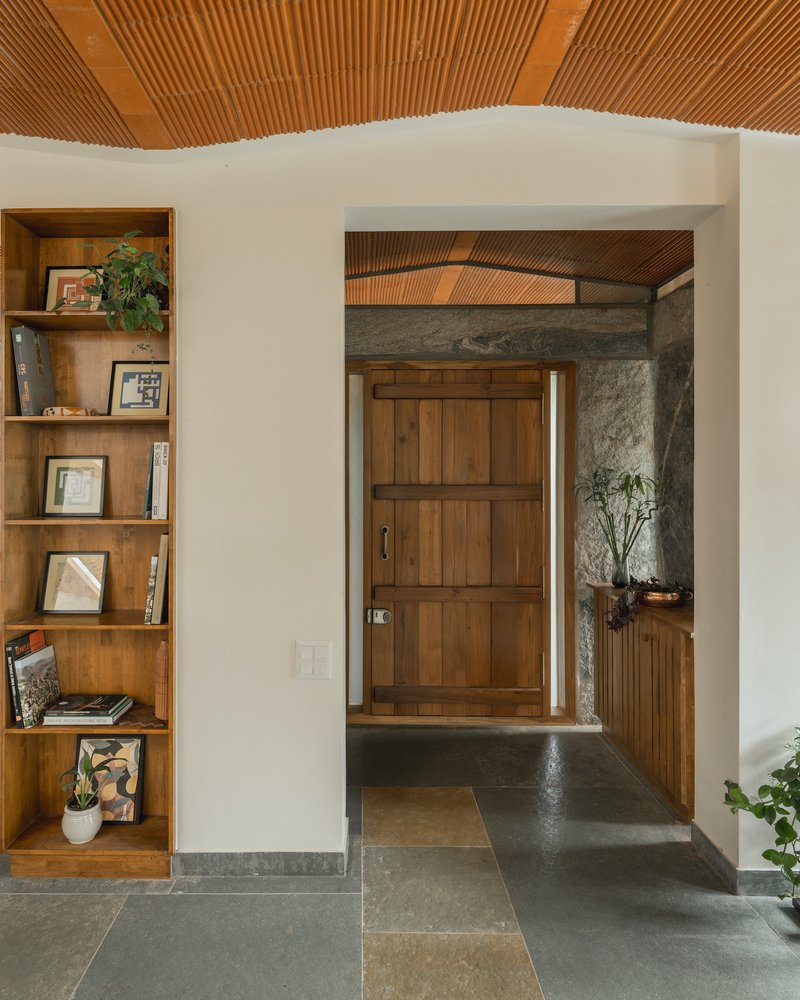
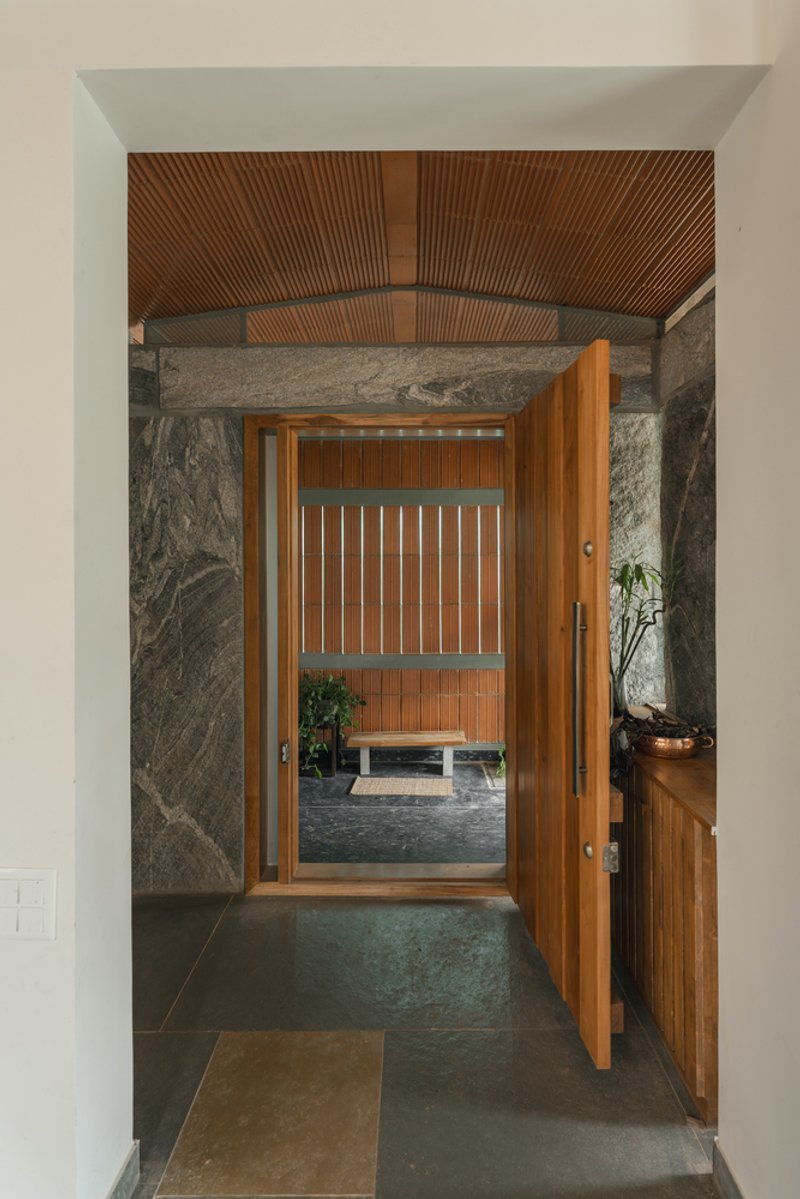
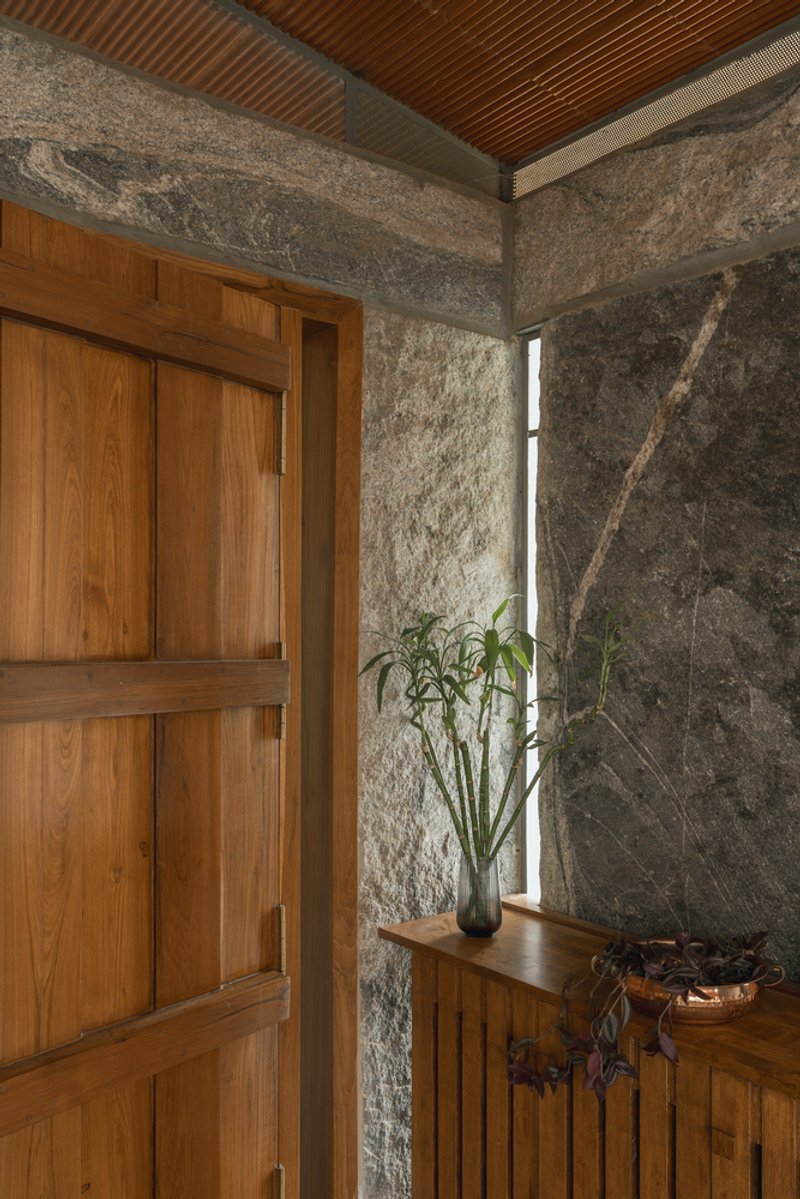
A monolithic slab of natural stone anchors the deity room, extending into the foyer to establish a sculptural continuity within the interior. Leather-finished Kota limestone, known for its durability and subtle elegance, enriches the flooring and surfaces, reinforcing the home's understated yet refined aesthetic. The vertical stone slabs framing the entrance create a bold yet minimalist gesture, grounding the façade with a sense of permanence and tranquility.
The Basement as a Multi-Functional Space
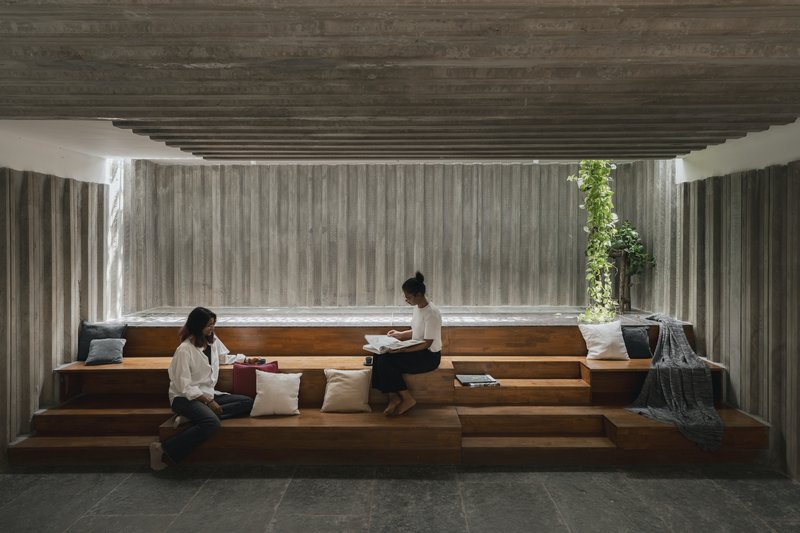
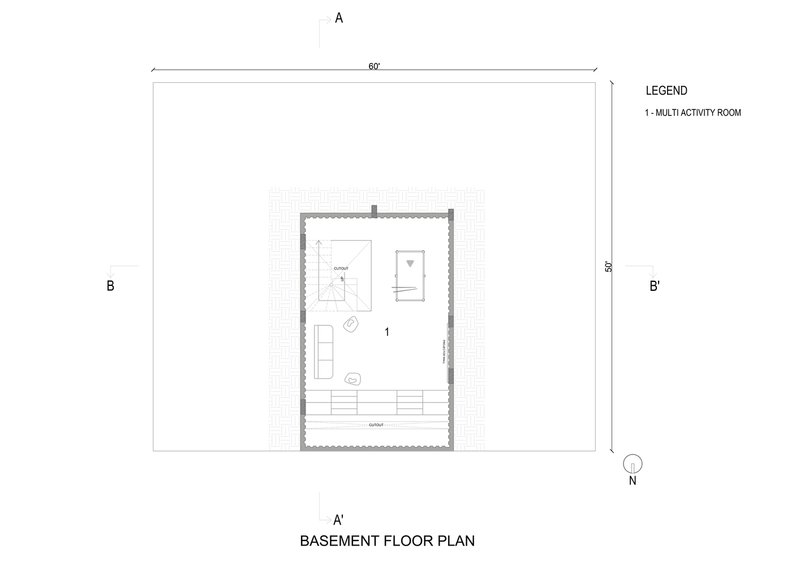
The basement extends the home’s spatial diversity by serving as a multi-functional recreational area. Exposed concrete walls, formed through corrugated sheet shuttering, enhance both acoustic performance and aesthetic appeal. This textured surface minimizes sound reverberation, making the space ideal for music, film screenings, or social gatherings.
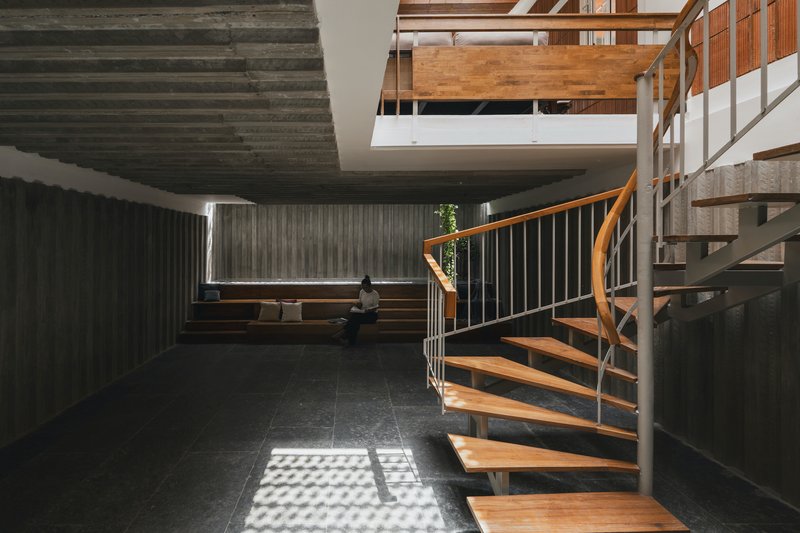
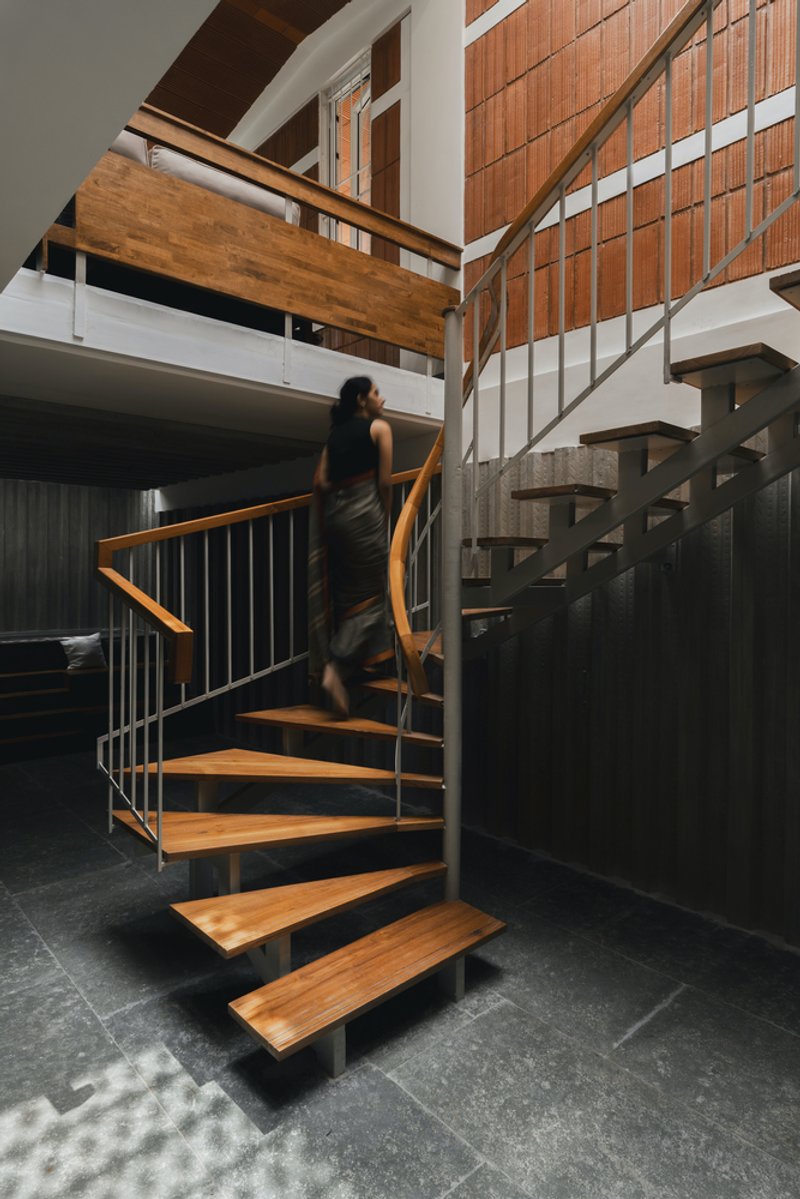
Stepped seating introduces a layered configuration that seamlessly integrates informal lounging with storage solutions. This architectural intervention not only optimizes spatial efficiency but also reinforces the home's emphasis on material tactility and functional adaptability.
Sustainability Through Passive Strategies
Passive design principles shape every aspect of Namana House, creating an energy-efficient residence that coexists harmoniously with its environment. Skylights and jaalis reduce the need for artificial lighting and mechanical ventilation, while the thermal mass of natural stone and clay blocks helps maintain indoor comfort. The house's orientation and materiality work together to mitigate heat gain during the summer and retain warmth in the cooler months.
Through its conscious integration of light, air, and materials, Namana House exemplifies a sustainable residential typology that is deeply rooted in its context. The design fosters an intimate dialogue between architecture and nature, transforming the built space into a living, breathing entity that responds to its surroundings.
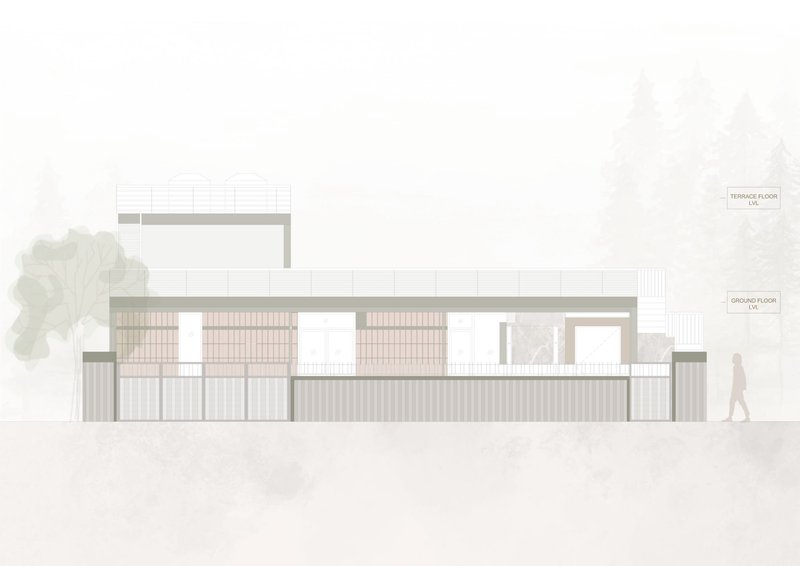
Namana House embodies the essence of passive design strategies in residential architecture, demonstrating how material choices, spatial planning, and environmental responsiveness can create a comfortable, energy-efficient home. By prioritizing natural light, ventilation, and thermal regulation, the house minimizes its ecological footprint while offering an immersive spatial experience. The seamless fusion of contemporary design and traditional passive techniques positions Namana House as a model for sustainable and mindful living.
All Photographs are works of Studio f/8 - Mr. Dinesh