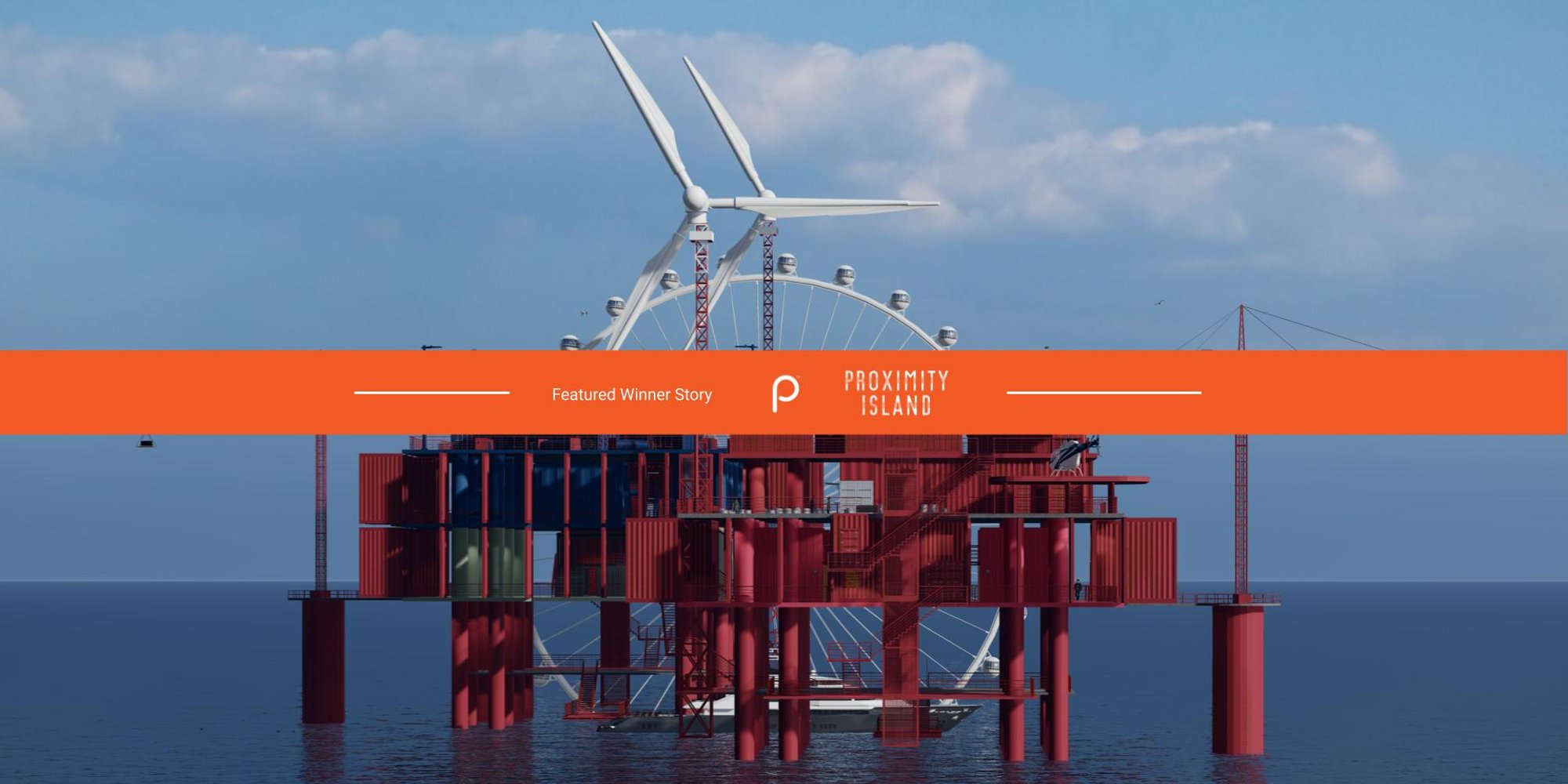
Look at the future use of industrial structures: Proximity Island
Architectural Ideas for Repurposing Oil rigs


Background
The oil and oil-gas platforms, more than 8000 present all over the planet until a few decades ago, have gradually been dismantled to free the seas from the strong pollution they cause. The so-called decommissioning process of fixed platforms is usually carried out by removing them entirely from the marine environment in which they are located, bringing them to the ground and then demolishing or disassembling them to sell valuable equipment or, in some cases, revamping the best pieces for later reuse in other fields.
As offshore settlements, these kinds of structures, due to their strong visual and evocative impact, constitute an excellent example of industrial archaeology in any sense which, however, only in rare cases have been known to be converted into spaces of civil architecture as artificial islands.
Despite the environmental political conflicts that they constitute nowadays, it is undeniable that from an architectural landscape point of view they have great visual strength and constitute a kind of punctual exaltation of the horizon line.
One of the biggest problems caused by the dismantling of these structures is the costs. Recent studies have validated that re-use and redevelopment are much cheaper than, for example, completely new construction and partly even more economical in reference to the resale of disassembled parts.
Brief
The purpose of this competition was the future use of industrial structures that have lost their original function, imagining that in the very near future oil and its derivatives would hopefully be replaced completely by renewable energy available to all people. The concept of offshore became much more an intermediate concept such as the foreshore in order to create fluid transition architectures in terms of spaces and functions.
In this way, the water, the sea, became the leitmotif for the creation of a water museum focused on the three main aspects of the sea: The ocean as the sea of the distance, The Mediterranean for proximity and The Adriatic as the sea of intimacy.
The brief was to use Reuse an Oil platform dismissed by its original function: Creation of a Museum of Open Waters.
This museum was only for temporary exhibitions, Workshops, installation but above all the space itself reflected the metaphors of the sea shown above. it would also have to interact with a small block of houses for short stays, for use by artists, students, marine biologists and refugees as an integral part of the history of the sea.
The competition was curated by Cesare Batelli.
The jury for the competition consisted of esteemed designers, professionals and academicians from around the world. The Lead Jurors for the competitions were as follows:
Yannis Graos, CEO, Yannis Graos Architects + Engineers, Greece
Antonello Marotta, Architect, Writer and Researcher (PhD), Department of architecture, University of Sassari, Italy
Yuri Avvakumov, Principal Architect, Studio Agitarch, Russia
Massimiliano Ercolani, Architect and Artist, DoKC Lab / Ercolani Bros., Italy
Donatella Cusma, Co-Founder, principal, Claret-Cup, USA
Some of the Best of competition projects are:
Winning Project: ArchiPelago - The sea satellite
By: Jakob Czinger, Diana Konovalova, Anna Orbanic & Sara Orbanic
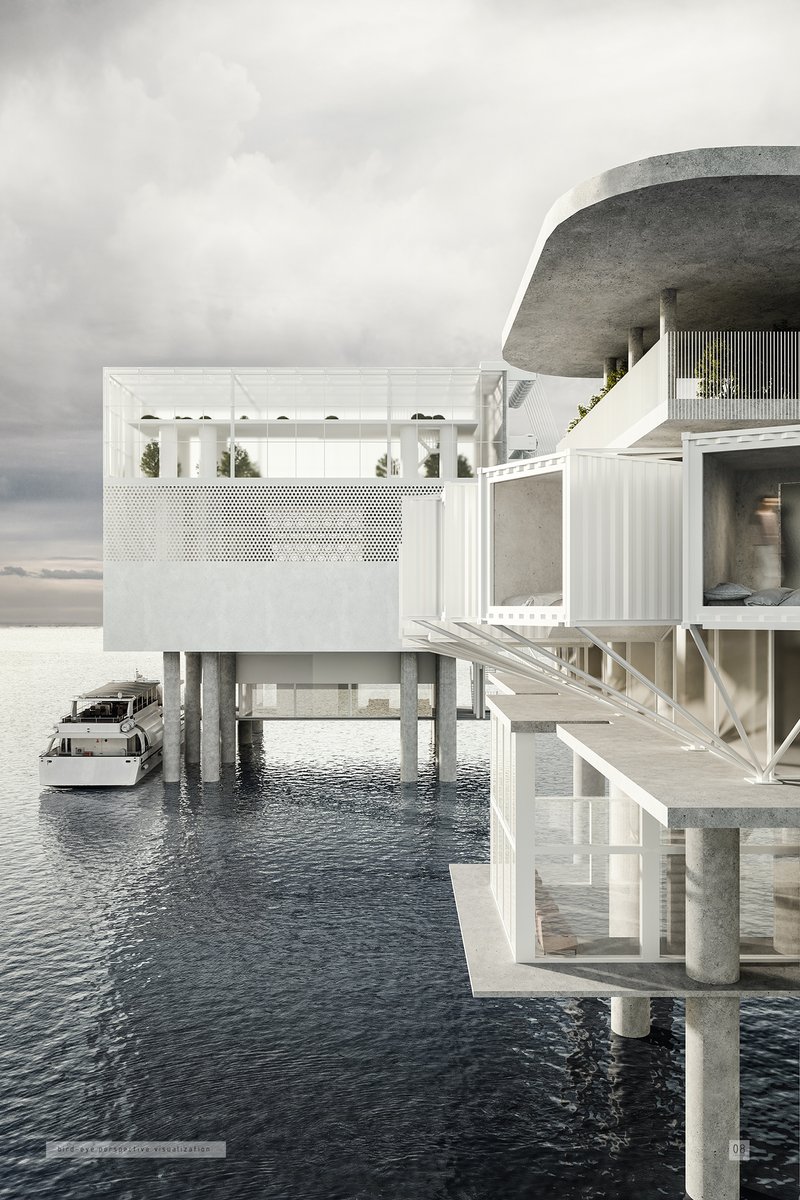 Description: ArchiPelago is a revitalized oil station recontextualizing the idea how abandoned industrial constructions in the middle of the sea can be reused. It offers new dimensions that emerge from the metaphors of water and introduces contemporary/sustainable design ideas to combine multi-purpose functions in offshore conditions.
-----------------
Runner - Up: ‘CORAL’ization
By: Daria Verkeenko
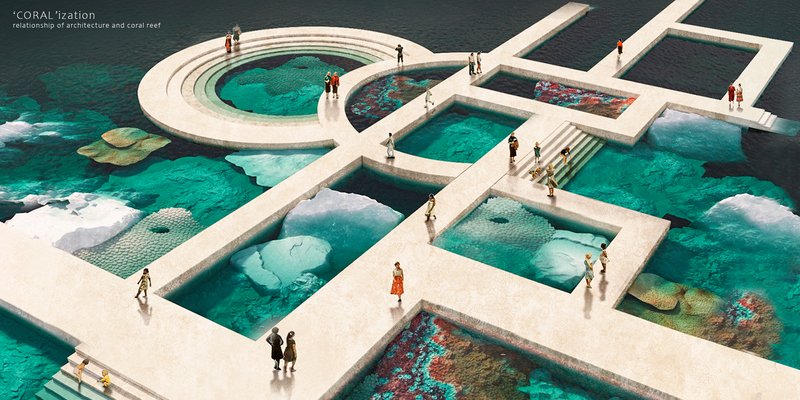 Description: Project explores the possible relationship between architecture and coral reefs. The concept is to transform a massive metal structure into a natural formation resembling a rock or cave right in the middle of the sea.
-----------------
Honorable Mention: Vertigo
By: Gabriele Filippi
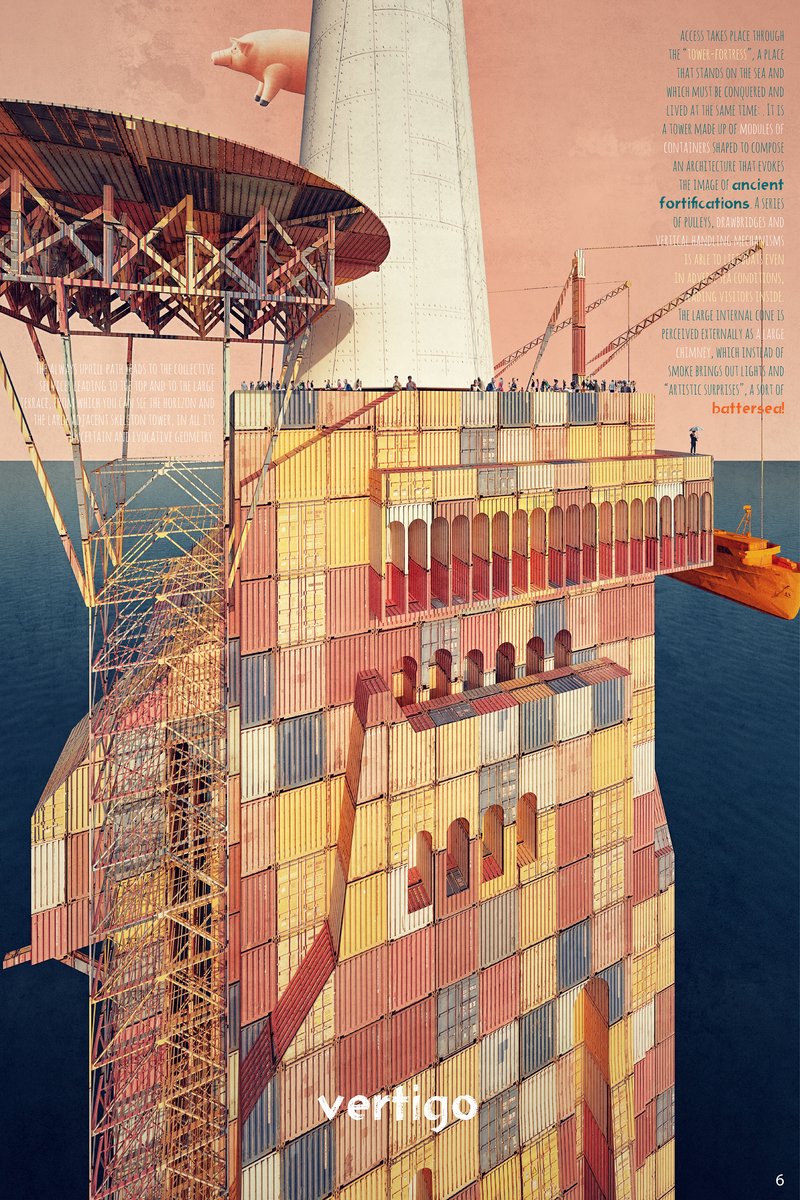
Description: The basic idea is to create a very strong, high and distinguishable iconic architectural sign: the two platforms become the support base of two installations-towers that welcome the functions inside them and become a path that stands on the sea. VERTIGO is the height, the amazement, the wonder, the fear, the restlessness.
--------------------
Honorable Mention: OLD CREATURES
By: M Ta, Hamid Reza Esmailnazari, Amin Jamali & Ali Kharaghanian
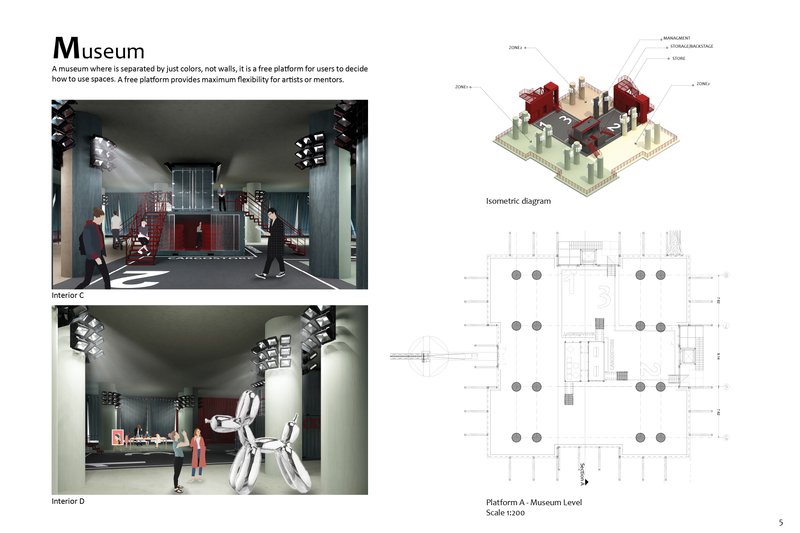
Description: The project is walking on an edge where identity and sustainability meet each other. The mother of fossil fuels which have ruined the environment during years and now, it is Old Creatures. Nothing is new, everything is recycled, the old containers and the old barrels. The live facade made by sheets of the old containers.
-----------------------
Honorable Mention: Between Sky and Water
By: Agur-Andri Tarmo
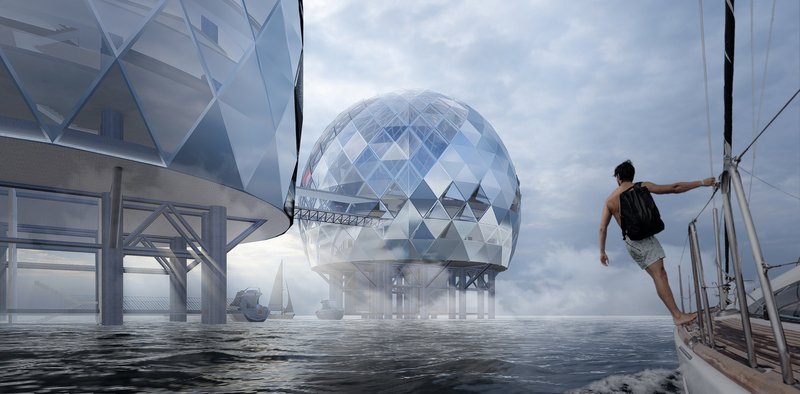
Description: The structure of the oil rig as an industrial element is reimagined in the most aesthetical way being converted into a unique getaway oasis, museum and science centre between sky and water, where people can brake away from their everyday routine. The building is in the middle of nowhere yet surrounded with a sea full of life giving endless possibilities.
-----------------------
Honorable Mention: The Hyper Armida
By: Alena Sorokina
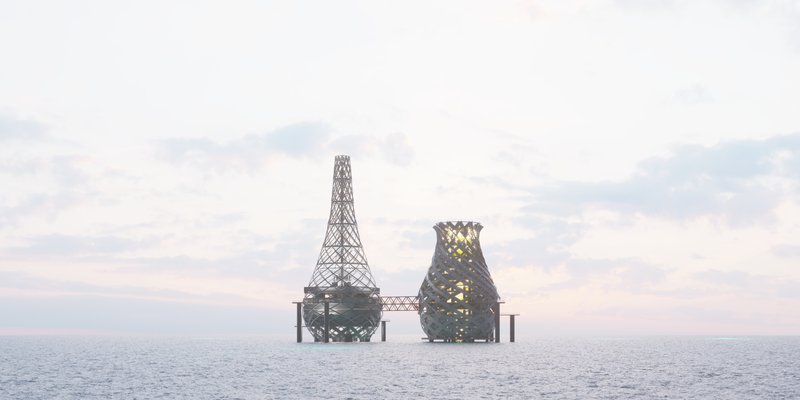
Description: The first underwater art village
--------------------
Honorable Mention: Proximity Island
By: Charlie Isham
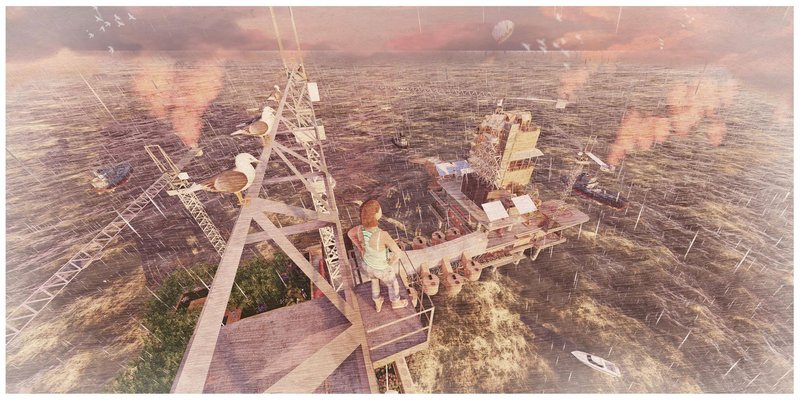
Description: Repurposing an oil rig to repent for its sins as a tool for ecocide by designing a modular city that helps users change their attitudes towards nature and the sea through art, learning, research and contemplation.
--------------------
Honorable Mention: Of Water & Spirit
By: Charisse Foo
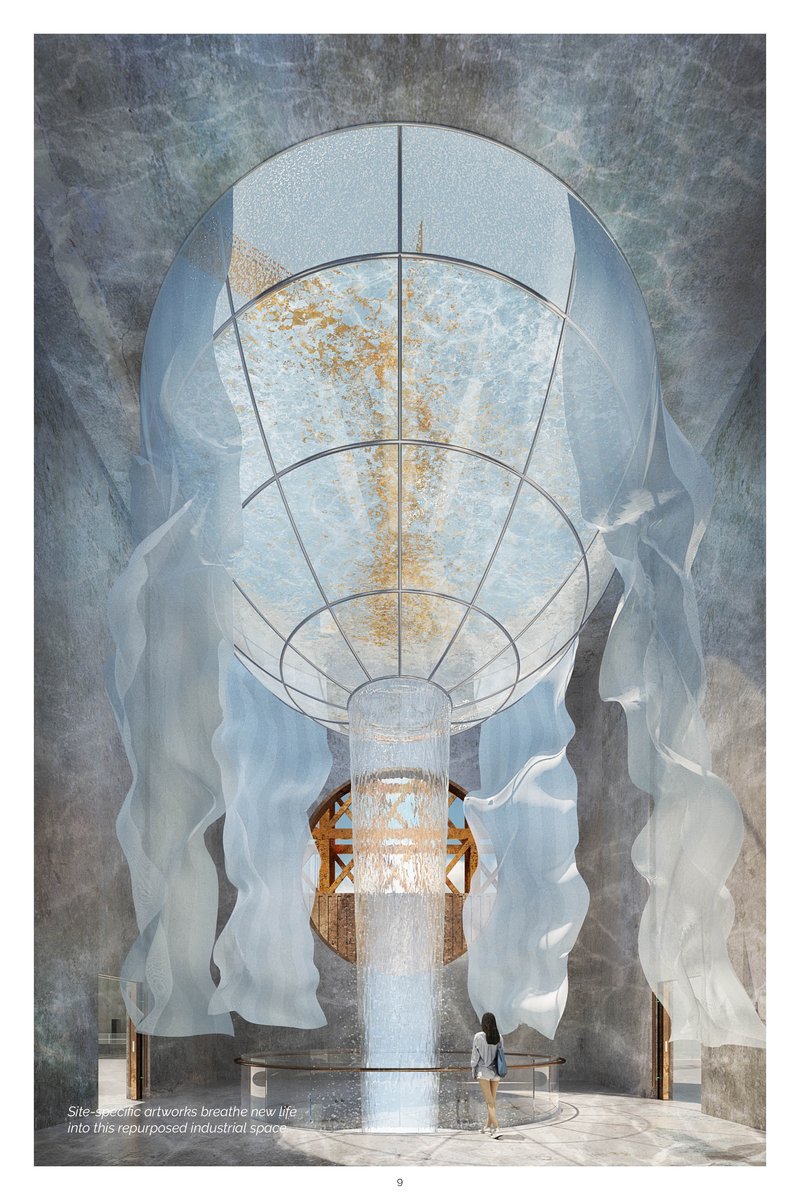
Description: This proposal draws from Ravenna’s early Christian baptisteries and postwar industrial history, in the hope of creating a public space that confronts visitors with the weight of its history, and inspires them by its connection to nature.
--------------------
People’s Choice: Mechanism of Memories
By: Georges Souaid & Charbel Moubarak
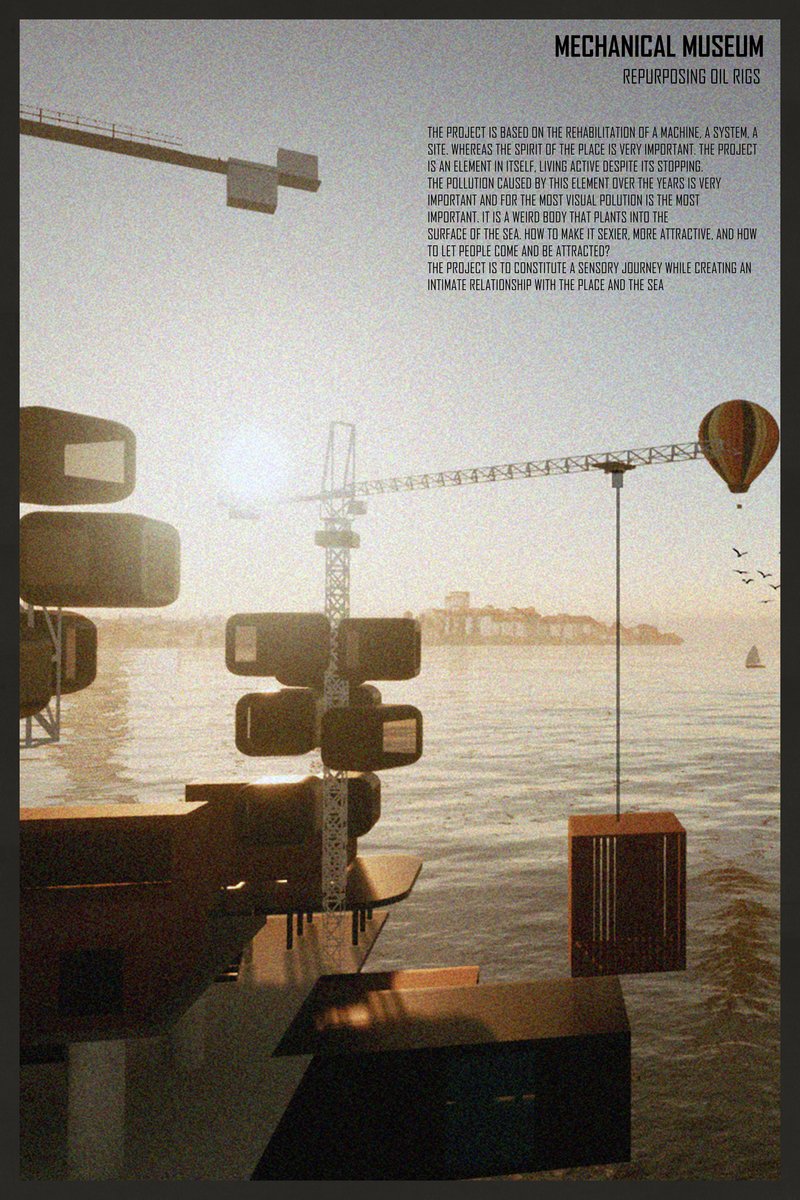
Description: A living machine in the memory of those alive
--------------------
Editor’s Choice: Proximity Island- Frame
By: Qiaoxi Wu
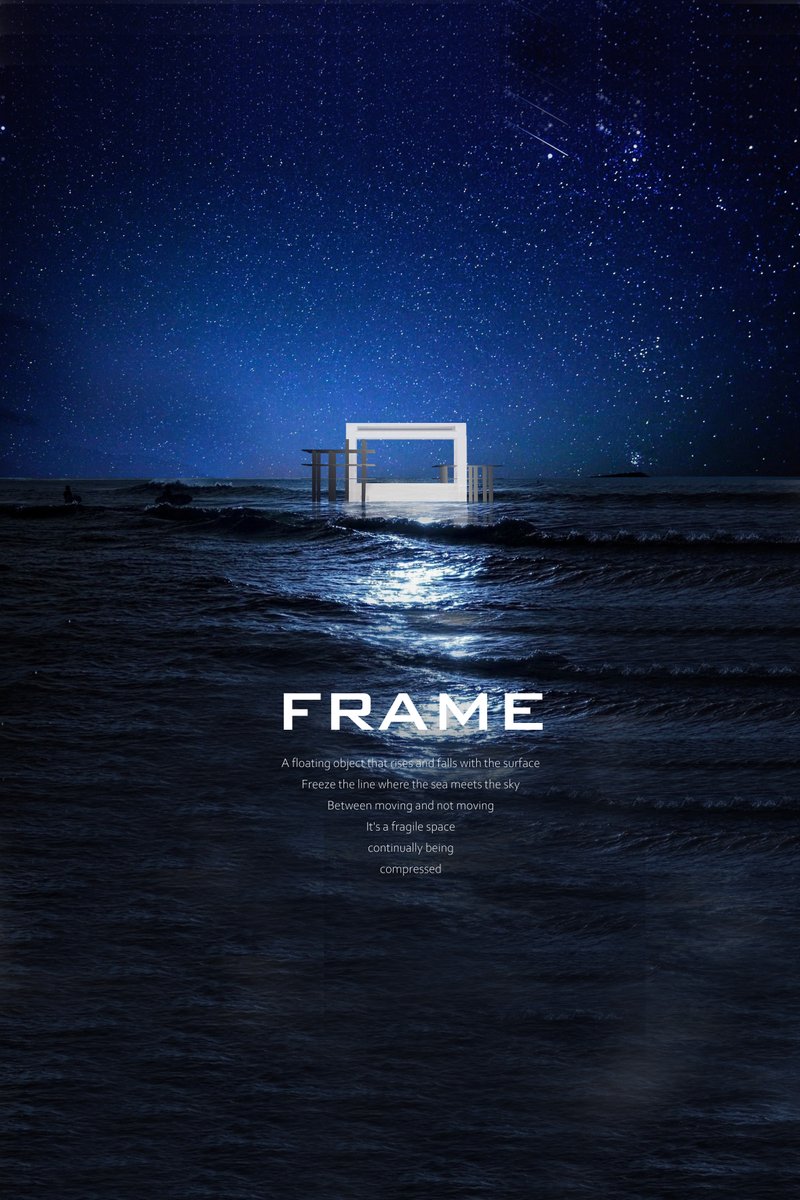
Description: A floating object that rises and falls with the surface Freeze the line where the sea meets the sky Between moving and not moving It's a fragile space continually being compressed.
--------------------
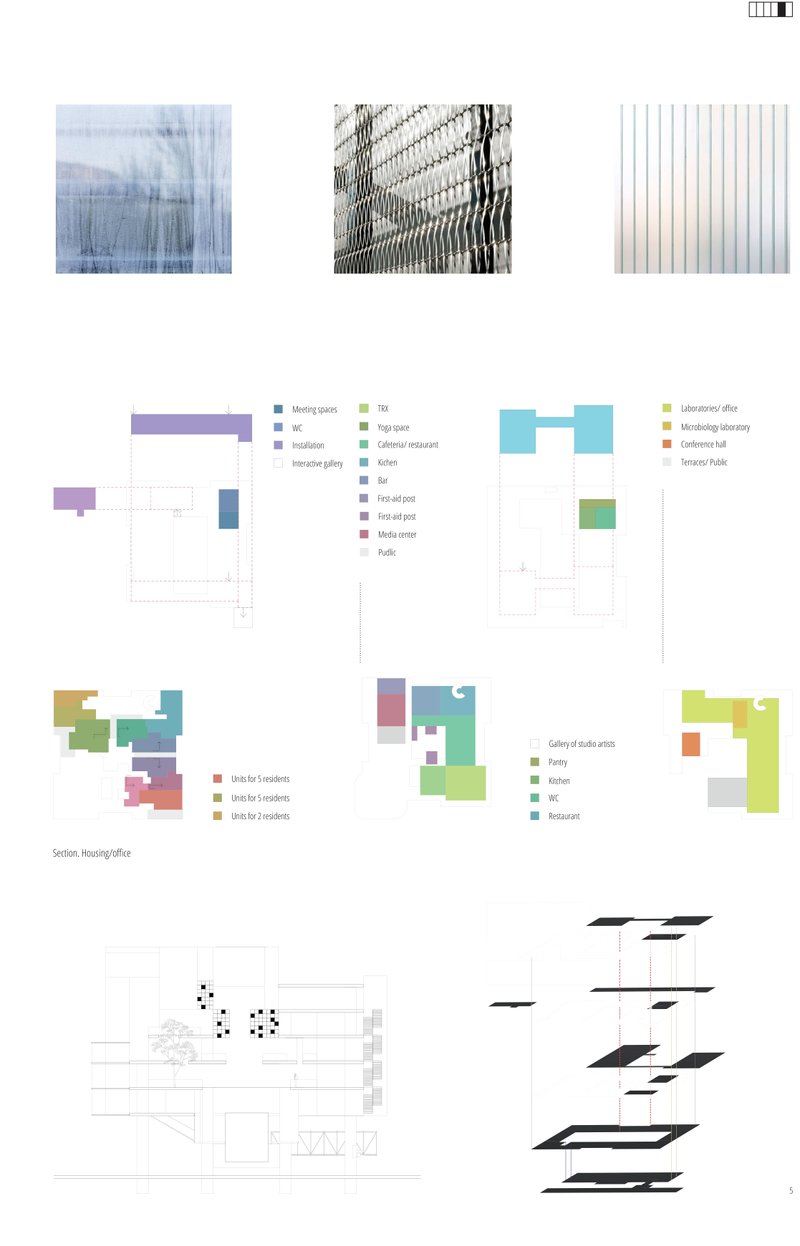
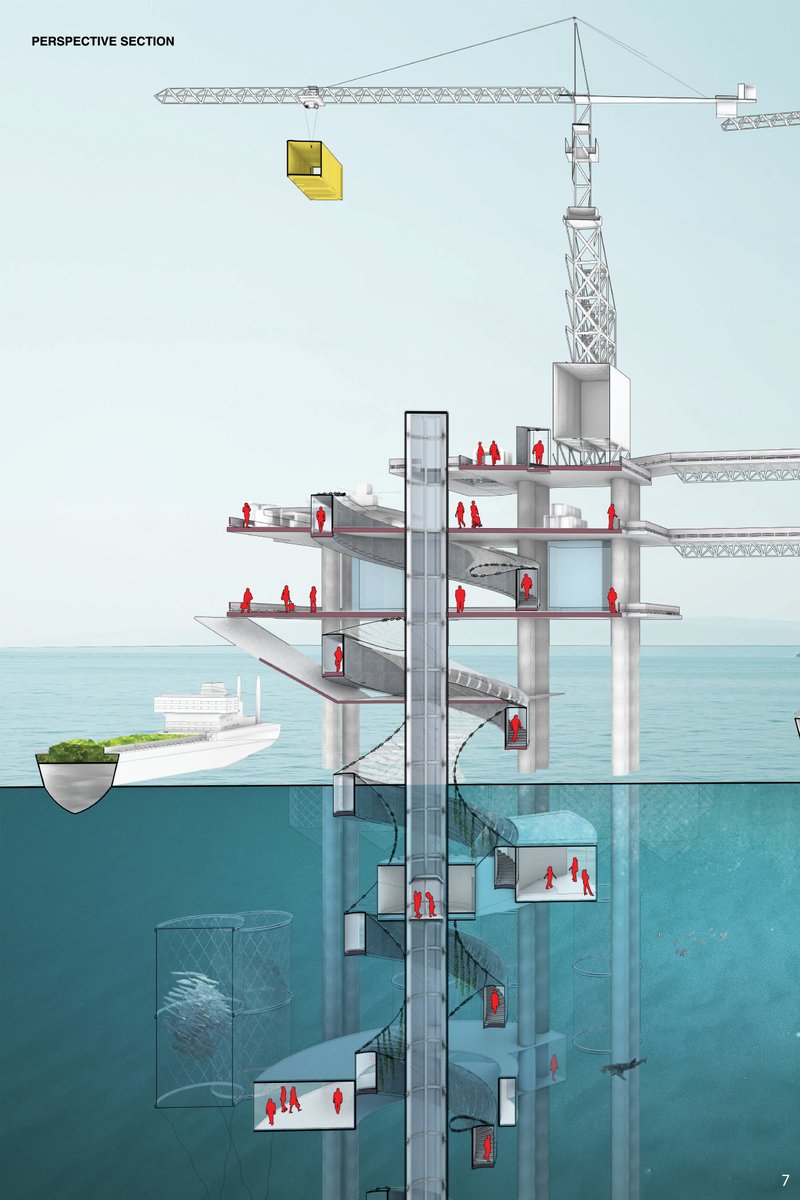
Editor’s Choice: Salinetorium
By: Zhenxiong Yang, Alan Fan, Chia-Chia Liu & Veronica Rosado
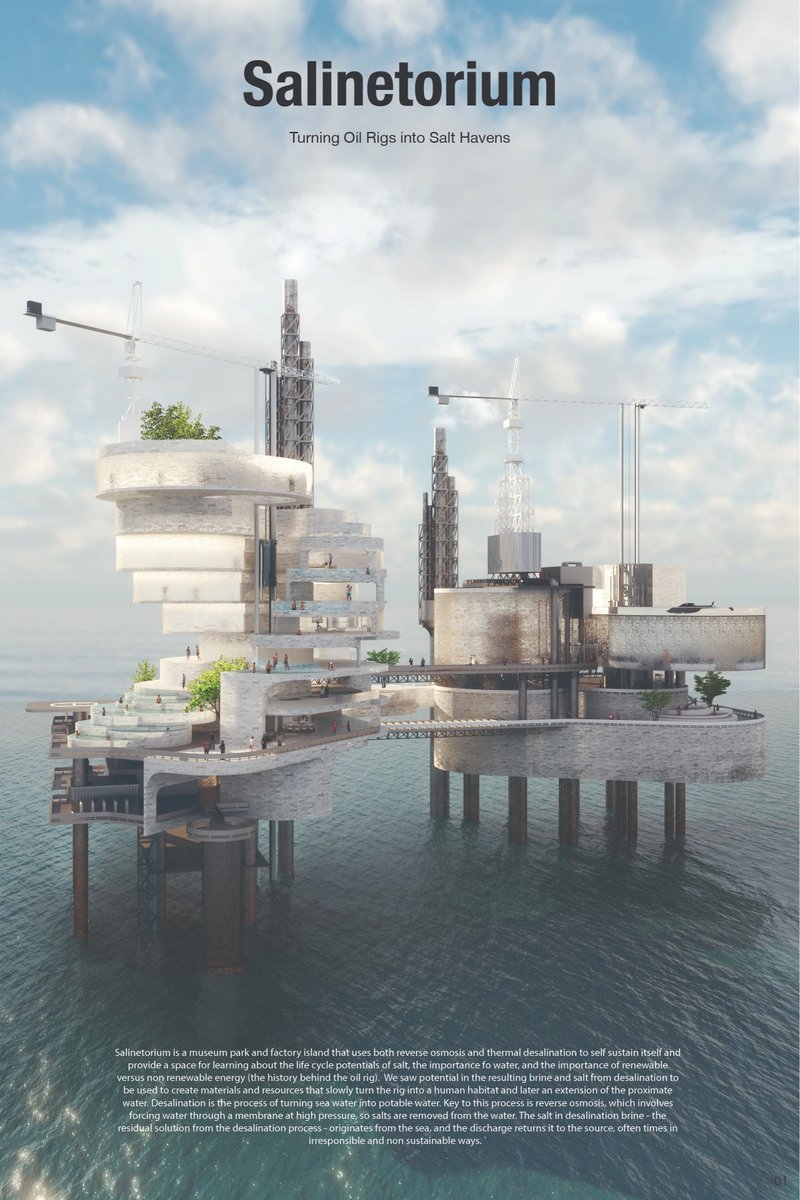
Description: A museum park and factory island that sustain itself and provide a space for learning about the life cycle of salt, the importance of water, and the significance of renewable versus non renewable energy. We explore the potential of using salt as a material to slowing transform the rig into a human habitat and later an extension of the proximate water.
--------------------
Editor’s Choice: Distant shore museum
By: Vladyslav Pavelskyi, Irina Makarenko & Настя Путиловская
Description: Dreams of life in between two powerful elements.
--------------------
Editor’s Choice: Proximity Island: A Nomadic Future
By: Shi Zhang
Description: The proximity island will be the habitation of marine life in the long run. In the short run, it grants people a chance to reevaluate their relationship with ocean life and environment. It is not only an anchor point stand in ocean but also a turning point of an coexisting condition that is upcoming.
--------------------
Editor’s Choice: Ridare
By: Ishan Dsa & Pradhip R
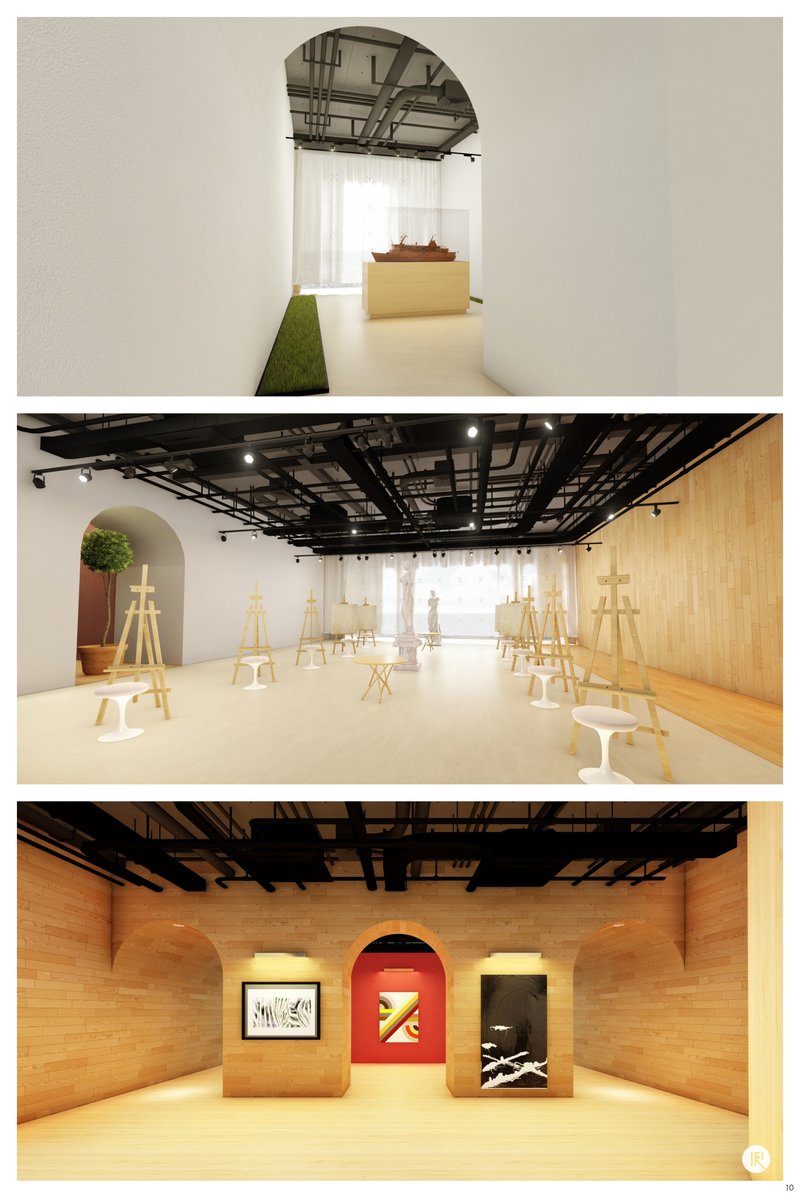
Description: Ridare is a repurposed design of a decommissioned oil rig.
--------------------
Editor’s Choice: Taken from the ocean and return from...
By: 圆圆 林
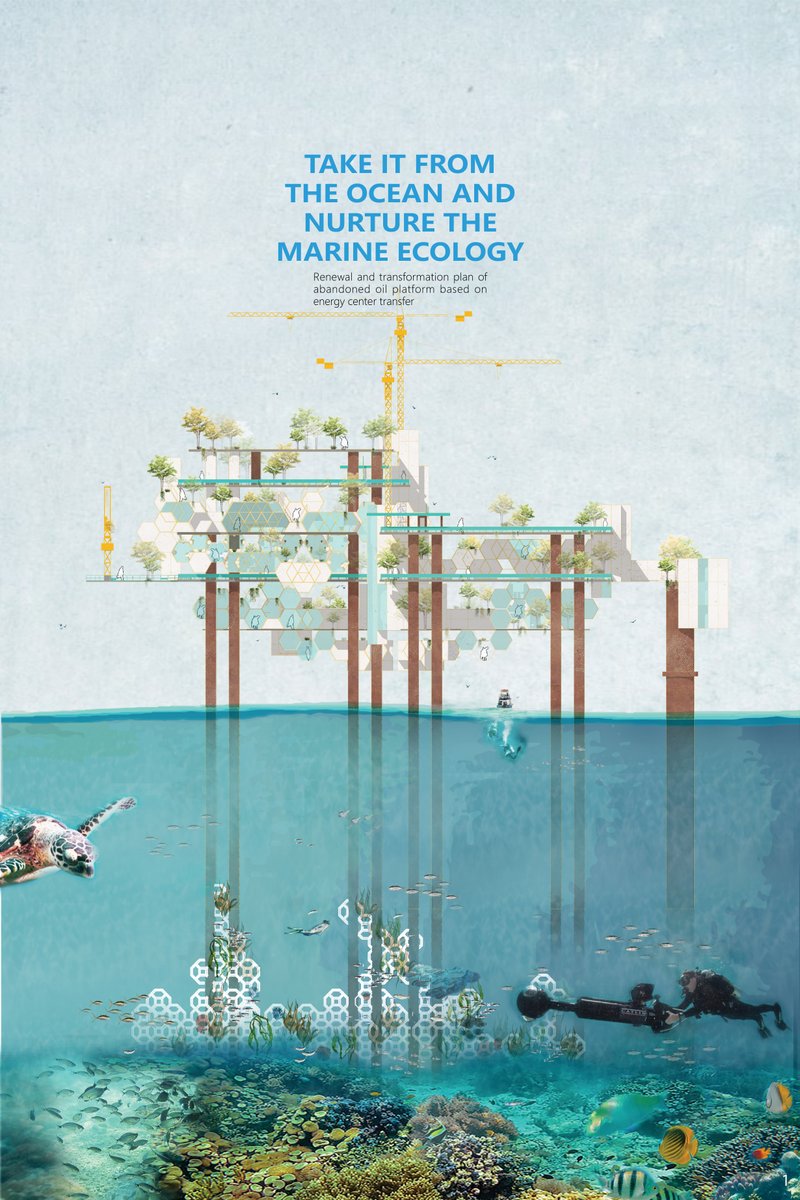
Description: Utilizing its unique geographical advantages and its affinity with surrounding marine life for many years, it will be endowed with more functions and transformed into a new bridge between nature and mankind that reversely supplies the ocean. Give mankind more to communicate with the ocean; to be friends with the ocean; to talk to nature.
--------------------
Editor’s Choice: GIRLIO
By: Hannah Rose Stollery, Gene Lee Han & Andrew Magnus
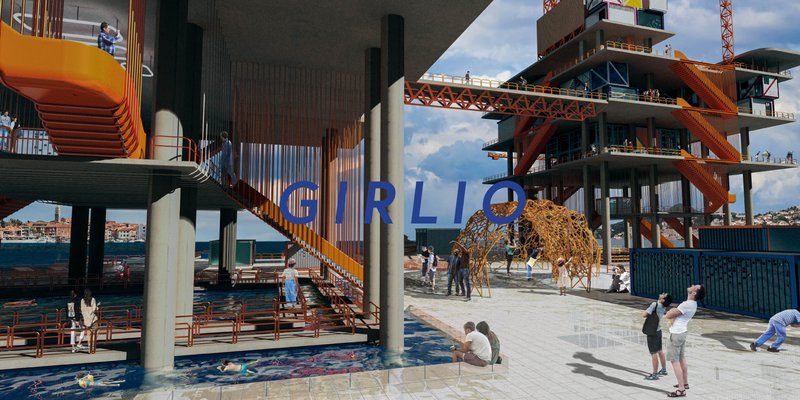
Description: GIRLIO re-purposes the oil rig as a center for Artists-at-Sea and Scientists-at-Sea to research and curate new discoveries in marine biology through an experiential archive for sea life. Scientists will research cutting-edge discoveries surrounding the future of undersea ecosystems while artists will craft new findings into multi-sensory installations.
--------------------
Editor’s Choice: ANACHRONOS
By: Kshir Bedhesi & Sumbul Pardesi
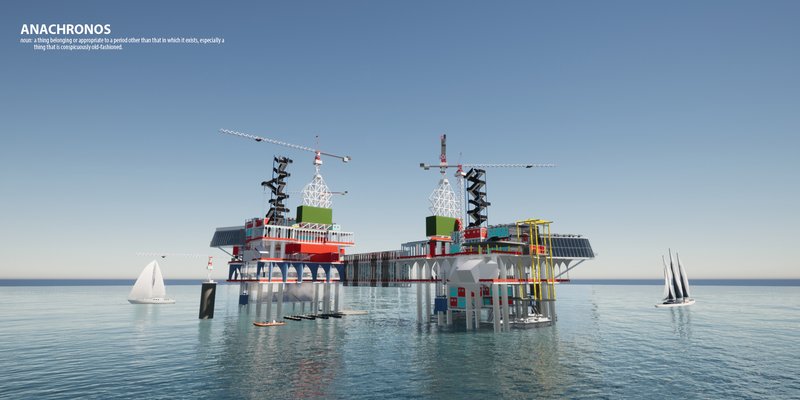
Description: The oil rig is perceived as an element in-between shores. It is a very prominent feature on the horizon. It exists in plain sight- as something that could be part of the shore and yet exists beyond the shore. In the nothingness of the sea, it becomes Anachronos. Ana from the Greek prefix meaning again and Chronos meaning time.
--------------------
Discover the design brief here: https://uni.xyz/competitions/proximity-island/info/about
Discover the full results here: https://uni.xyz/competitions/proximity-island/entries
Follow us on social media: Facebook | Instagram | LinkedIn | Twitter | Youtube
Discover other design competitions to participate here: https://uni.xyz/competitions