
Restart for the Coast
Reimagining sustainable coastal housing architecture by restoring landscapes, mobility networks, and flexible living along the Belgian coast.


Restart for the Coast is a master thesis project by Marek Vilasek that addresses one of the most pressing challenges in contemporary architecture: the housing crisis along the Belgian coastline. Framed through the lens of sustainable coastal housing architecture, the project investigates how spatial planning, mobility infrastructure, and landscape-driven design can collectively respond to long-standing territorial fragmentation and uncontrolled urban expansion.
The Belgian coast has gradually transformed into a continuous urban strip, shaped by decades of suburban housing development, tourism-driven construction, and dispersed infrastructure. This condition has weakened the relationship between cities, settlements, and the coastal landscape, leaving behind underused spaces such as caravan parks and disconnected mobility networks. Restart for the Coast proposes a comprehensive architectural and territorial strategy to reverse this trend.
Reconnecting Built and Unbuilt Landscapes
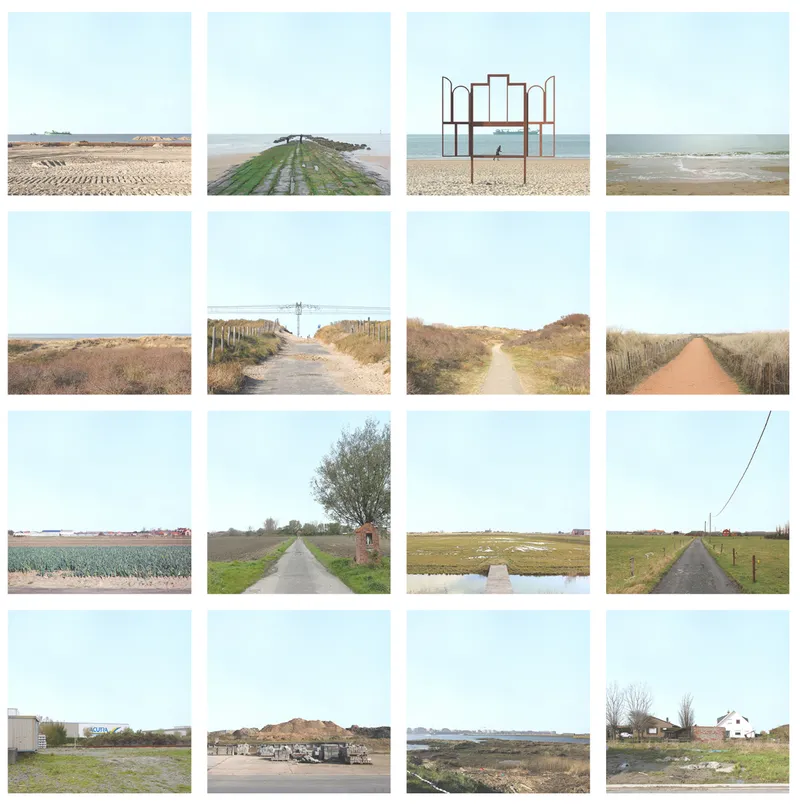
At the core of the proposal is the ambition to re-establish a meaningful relationship between the built environment and the coastal landscape. Rather than treating housing as isolated objects, the project views architecture as an integral part of a broader territorial system. Mapping exercises and visual atlases of the Belgian coastline reveal layers of infrastructural, ecological, and spatial conditions that inform targeted architectural interventions.
By redefining the seams between urbanized areas and open landscapes, the project introduces spatial continuity where fragmentation once dominated. Dunes, fields, and meadows are no longer perceived as residual spaces but become active components of a living coastal framework that supports habitation, mobility, and public life.
Mobility as Territorial Armature
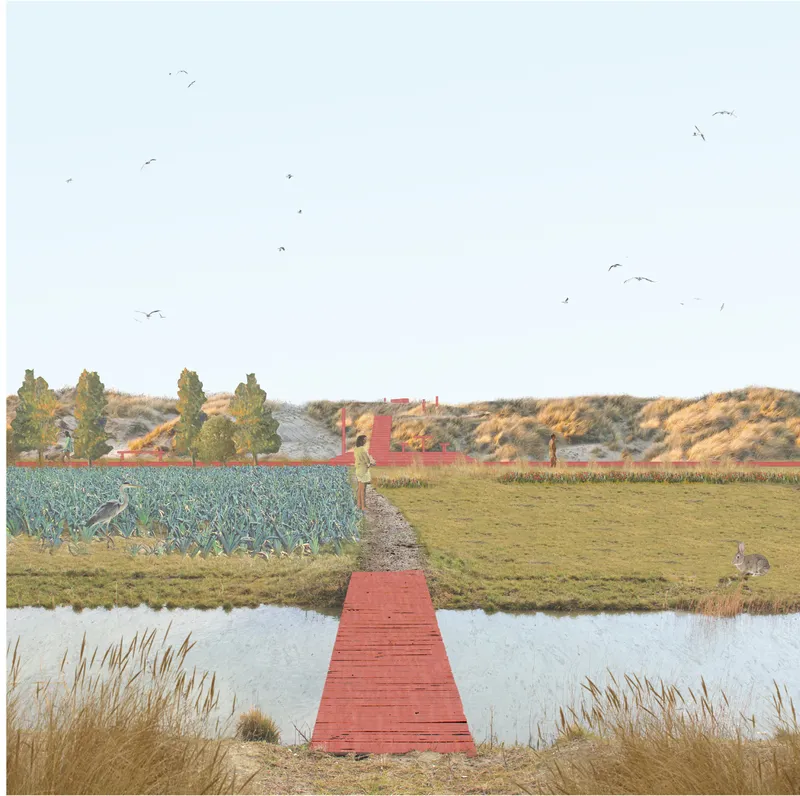
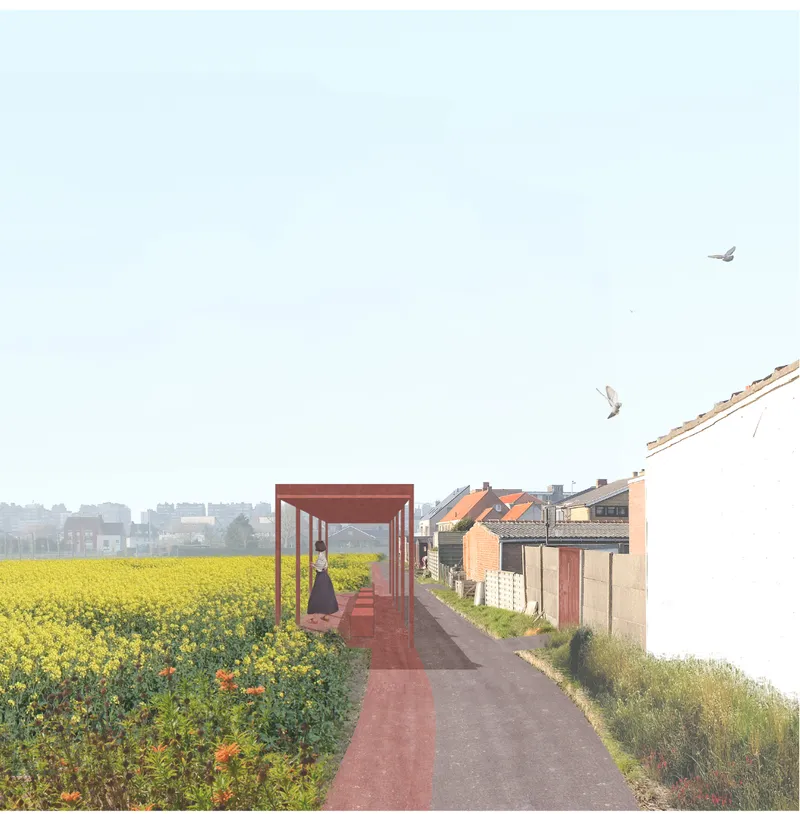
A key concept within the project is the strengthening of slow-mobility infrastructure as a unifying armature across the coastline. Two primary routes structure the proposal. The first retraces the historic Duneroad near the seashore, restoring a critical pedestrian and bicycle connection between dunes and controlled landscapes. The second route, the Backroad, runs along the boundary between built and unbuilt areas, acting as both a connector and a protective limit against further urban sprawl.
These mobility corridors are not merely paths but spatial tools that organize development, enhance accessibility, and reinforce the identity of the coastal landscape. Together, they form a continuous network that encourages sustainable movement while redefining how people experience and inhabit the coast.
Transforming Caravan Parks into New Settlements
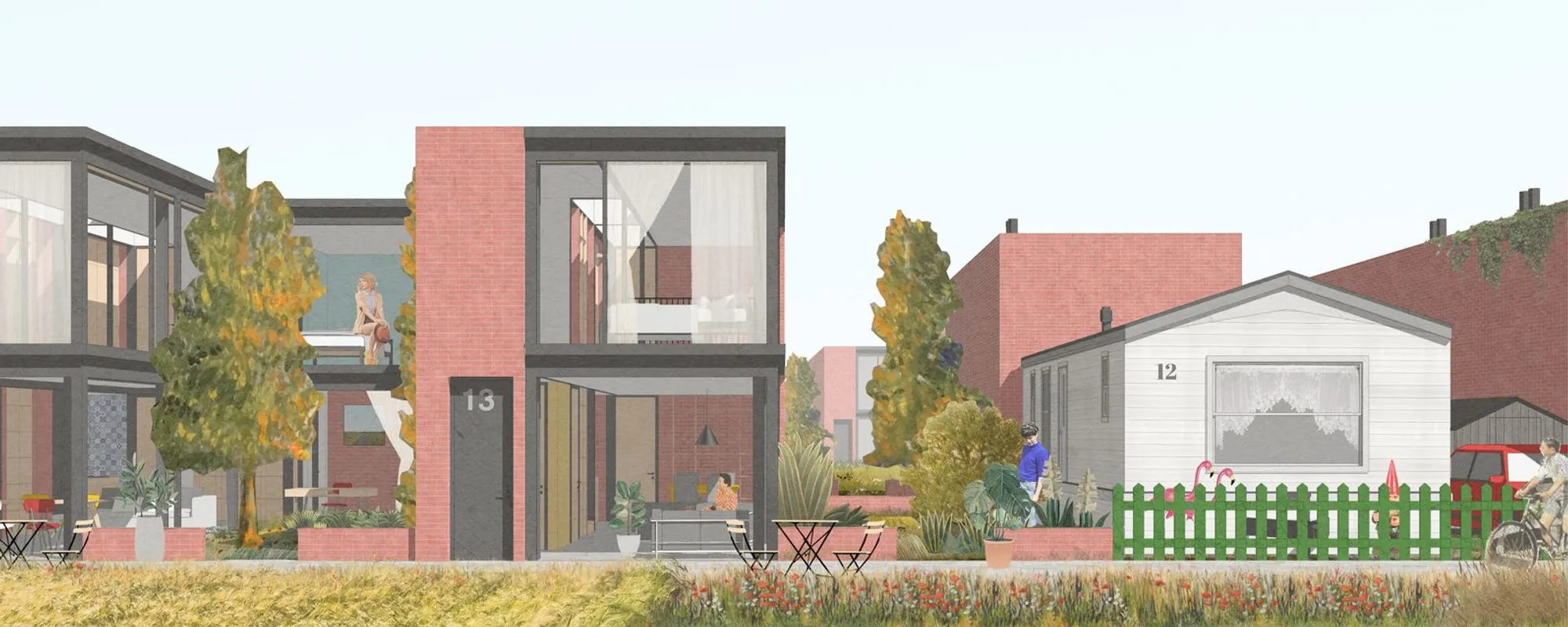
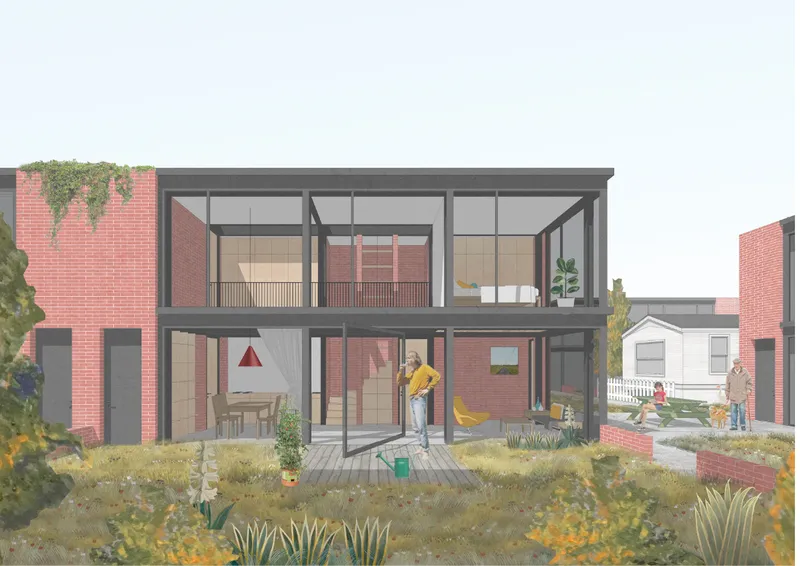
One of the most innovative aspects of Restart for the Coast is the transformation of underused caravan parks into structured, permanent settlements. Instead of inefficient and temporary housing solutions, the project introduces affordable and flexible housing typologies designed for long-term living.
These new settlements integrate public amenities, shared spaces, and community-oriented facilities along the mobility infrastructure. By doing so, they become catalysts for social interaction while maintaining a low-impact footprint on the landscape. This approach positions sustainable coastal housing architecture as both socially responsive and environmentally conscious.
Flexible and Affordable Housing Typologies
The housing units are conceived as adaptable structures that respond to changing household needs over time. A clear distinction between core and expandable spaces allows dwellings to grow or shrink without major demolition. Lightweight steel structures and modular ceiling systems enable future modifications, vertical extensions, or partial dismantling with minimal intervention.
Floor plans range from compact units to larger family homes, supporting diverse living arrangements. This flexibility ensures long-term usability and resilience, making the housing model suitable for evolving demographic and economic conditions along the coast.
Architecture as a Tool for Coastal Resilience
Restart for the Coast demonstrates how architecture can operate beyond the scale of individual buildings to shape territorial resilience. By combining landscape analysis, infrastructural design, and flexible housing strategies, the project proposes a holistic response to the Belgian coastal housing crisis.
Through the principles of sustainable coastal housing architecture, the thesis presents a future in which affordable living, ecological awareness, and spatial continuity coexist. It offers a replicable model for other coastal regions facing similar challenges, positioning architecture as a mediator between people, landscape, and long-term environmental stewardship.
Project Title: Restart for the Coast
Project Type: Master Thesis
Focus Keyword: Sustainable Coastal Housing Architecture
Designed by: Marek Vilasek




Popular Articles
Popular articles from the community


The Earth Pod: 3D Printed Homes for Resilient Refugee Communities
The Earth Pod reimagines refugee housing through 3D printed homes made from clay, combining resilience, self-sufficiency, and rapid shelter.

Play: Fragments of Their World
Familiar architecture becomes modular playground design, creating safe spaces where displaced children can learn, connect, imagine and play.

The Ocean Hive: Sustainable Architecture for a Self-Sufficient Civilization at Sea
The Ocean Hive imagines sustainable architecture at sea, where modular habitats, algae, wave power and ocean waste sustain a growing colony.

Lunar Spiral: Space Architecture Shaped by the Mathematics of the Universe
Lunar Spiral reimagines space architecture through Fibonacci geometry, lunar regolith, levitating habitats, and self-sustaining Moon living.

Similar Reads
You might also enjoy these articles

Eco Chapel: A Green Architecture Pavilion Designed in Symbiosis with the Forest
Eco Chapel uses green architecture to weave prayer, learning and reuse into a forest pavilion shaped by modular hexagonal canopies for life.
Kaffeebühnen: Coffee Shop Architecture Designed as a Civic Stage Between Vienna’s City and Park
Kaffeebühnen turns coffee shop architecture into a civic stage, linking Vienna’s park edge, urban life, warm timber yards, and coffee craft.
Healing Façade: Sustainable Architecture for Reforestation, Community, and Sacred Ecology in Ethiopia
Healing Façade reimagines sustainable architecture as a living wall that restores soil, catches water and renews Ethiopia's forest churches.


Urban Forest: A Vertical Ecosystem for 5,000 Workers in Singapore's Changi Business Park
Radially stacked pods and layered green decks turn a 7-acre plot into 47 acres of ecological workspace projected for 2040.


Comments (0)
Please login or sign up to add comments
No comments yet. Be the first to comment!