
Road to Resilience
A guide to achieve resilience by implementing simple strategies

The word “resilience” is often tossed around by environmental designers these days. In some quarters, it’s threatening to replace another popular word, “sustainability.” This is partly a reflection of the newsworthy events like Hurricane Sandy or other natural disasters that have made us more aware of the risks we face and have reminded us how vulnerable our lives are in this dangerous world. Some even say that superstorms and other disruptions are going to become more common due to climate change. We know that as environmentally responsible designers, we can’t design for every imaginable unpredictable event but we can make sure our buildings and cities are better able to weather these disruptions and bounce back afterwards.
Resilient cities evolve in an organic manner. They retain older information and thrive by adding newer adaptations. Very rarely do they create total novelty, and only the most selective of information is created as needed when trying to succeed in their environment. Any changes which are made are selected by way of testing, just like how a living organism will adapt in order to better fit into its surroundings. This mostly rules out drastic, very powerful change, as this sort of thing is typically not taken kindly by an organism's environment.
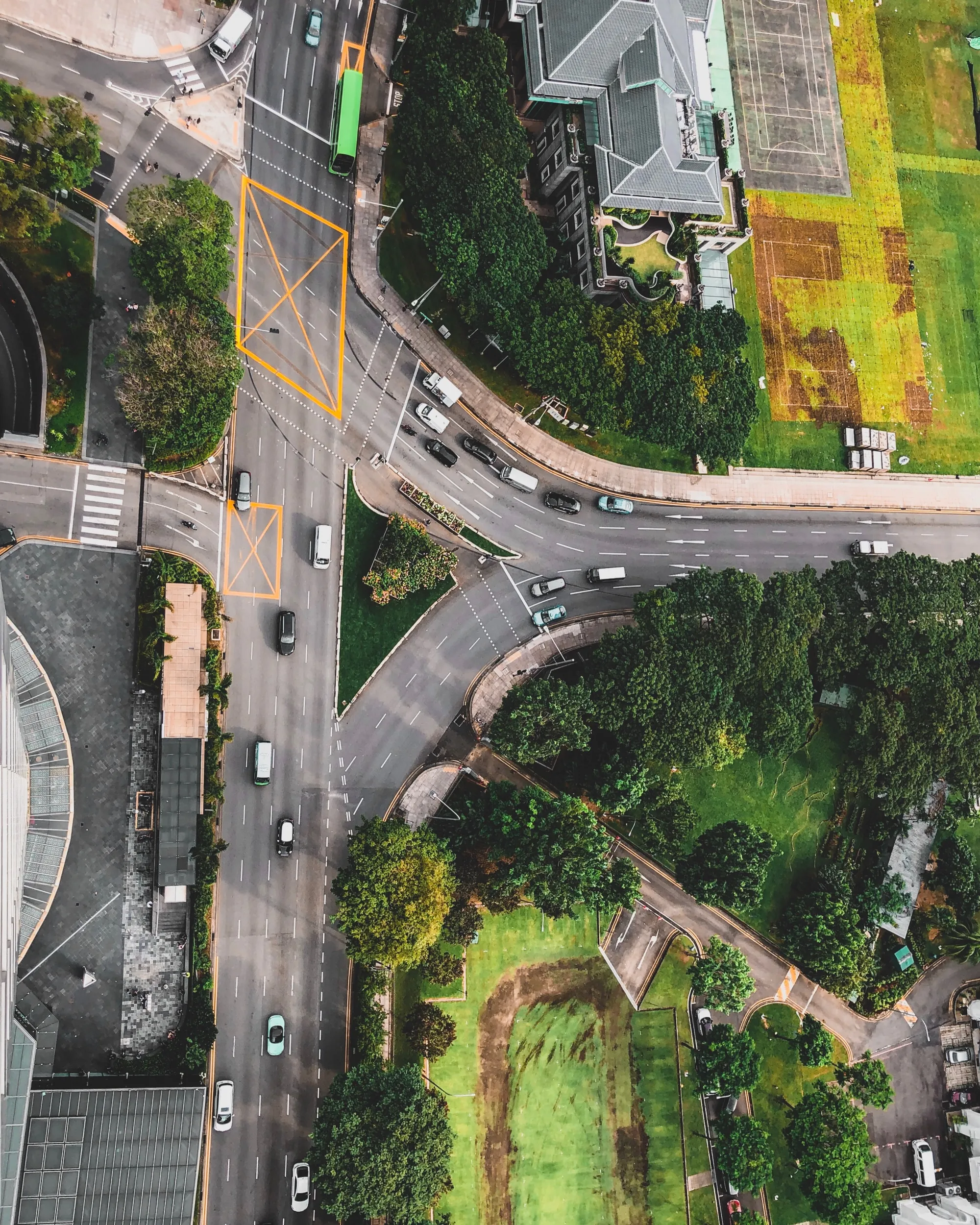
Resilient cities are thus "structure-preserving" even as they make deep structural transformations. How do these elements contribute to resilient cities in practice, in an age of resource depletion and climate change? It’s easy to see that a city with networked streets and sidewalks is going to be more walkable and less car-dependent than a city with a rigid top-down hierarchy of street types, funnelling all traffic into a limited number of “collectors” and “arterials.”
Steps to embedding resilience into designs
To address resilience, we should apply strategies at scales of individual buildings and communities, as well as larger regional and ecosystem scales, acknowledging that they will be different depending on the type of resilience being addressed. These strategies can also apply at different time scales—from immediate to long-term.
1. Diverse and redundant systems are inherently more resilient. More diverse communities, ecosystems, economies, and social systems are better able to respond to interruptions or change. Diversity is also good for efficiency, allowing systems to function as backups for each other when one fails. Whereas these attributes might conflict with building priorities that aim for energy and economic efficiency, they improve resilience against natural disasters like lightning strikes or earthquakes.
2. Simple, passive, and flexible equilibrium-seeking solutions are more resilient than complex solutions that can break down after an interruption like electricity or water cuts off the community during a storm or earthquake. Flexible solutions also allow people to adapt in the short-term and long-term after an emergency hits by seeking refuge at friends' homes or by rebuilding damaged property facilities.
3. Durability strengthens resilience. Strategies that increase durability enhance resilience. Durability means not only building practices, but also building design (beautiful buildings will be maintained and last longer), infrastructure, and ecosystems. Locally available, renewable, or reclaimed resources are more resilient than using non-renewable resources or connecting to local global trade networks and transporting goods across long distances.
4. Resilience is anticipating interruptions or a dynamic future. It is about adapting to a changing climate with higher temperatures, more intense storms, sea level rise, flooding and drought. This can be in the form of 'non-climate related' natural disasters such as earthquakes and solar flares which could one day lead to cyber terrorism. If designing resilient properties can help you prepare for some of these examples then it may be a good idea to take into account.
5. Going green also helps you build resilience within your property development business designs so that they are sustainable and cost effective depending on the client needs and various other factors as well when building aesthetically pleasing products/properties too. Going green will help you develop projects that are environmentally friendly as well as sustainable and cost efficient for your client.
6. Find and promote resilience in nature. Nature has plenty of resilient strategies; we can enhance this resiliency by learning from nature: strategies that protect the natural environment enhance resilience rankings for all living systems. Social equity and community contribute to the production of resiliency (the ability to bounce back) - strong, culturally diverse communities in which people know, respect, and care for each other will fare better during times of stress or disturbance. Just like economies need diversity when investing, it's important to have diversification within society so if one aspect is impacted you still have more than one group to rely on.
Resilience is not an absolute. Recognize that incremental steps can be taken and that total resilience in the face of all situations is not possible. Implement what is feasible in the short term and work to achieve greater resilience in stages. Resiliency is not any one solution, concept or perspective. Resiliency is a multifaceted lens through which solutions to disruptions can be better understood.
Building Level resilience strategies
Design and construct (or renovate) buildings that are able to endure damage from floods, extreme weather events, wildfire, etc. Make sure any critical systems inside your building will be shielded in the instance where flooding occurs so equipment stays operational in severe circumstances. Create buildings that can maintain liveable conditions in the event of an extended loss of power or heating fuel through energy-load reductions and rely on passive heating and cooling strategies.
Create buildings that are sturdy and beautiful as well as sustainable and have them be loved and maintained forever. Create buildings that require few to no advanced building controls and systems, but still provide manual overrides in case something goes awry with operation of said systems or they don't work at all. Optimize the use of on-site renewable energy in order to create a self-sufficient structure that could accommodate power failure or, even better, isolate itself into a completely stand-alone system unaffected by anything except for user activation through a small management unit. Consider architecting your constructions process to be more resilient to specific issues related with energy.
Resilience strategies on community level
Building or facilitating social structures means ensuring that there are a lot of social activities that take place within the community. This can include community gathering areas as well as dog parks, where neighbours get to know one another. Designing your future community with human-powered transportation options in mind is important too, because it will help minimize dependency on transportation fuels sourced from far away; these options also provide residents with important means to access key services whenever they may be needed.
Deliver food security through reliance on local or regional food systems and strategies for long-term, low-energy food storage. Design vegetated roofs and rainwater bioswales to reduce the urban heat island effect and manage stormwater. Design and build (or rebuild) physical infrastructure, such as culverts, storm sewers, roadways, and bridges, to handle increased stormwater flows. Rely on natural, biological erosion-control solutions that will grow stronger over time.
Create community facilities that can serve as gathering places when emergencies occur and interruptions in services occur. Educate residents about the benefits of texting over making calls because it uses less bandwidth on busy days thereby allowing others who need to make calls to go through while messaging still helps during those times when there may be so many people on-line at once that they join together in order to help one another!
Think about the potential of extreme weather events and climate change when considering locations for essential facilities and systems. Foster strong community education programs that help build greater understanding of energy, water and other natural resource systems as well as the workings of buildings, roads and community infrastructure. Integrate such capacity into public education programs.
Eco systemic strategies for resilience
Adopt policies to recognize and value ecosystems services and protect or restore the capacity to rely on these important services (e.g., water filtration and purification, protective buffers at coastlines, natural erosion-control along streams and rivers, healthy forests that provide us with clean air). Develop transportation options that can serve to transport not only people but also food provisions due to outbreaks of viruses or other harmful diseases and can function during times of emergency.
Develop regional, renewable power-generation systems to ensure that people have a steady supply of electricity. These can range in size from residential solar panels to regional wind or wave farms. Pursue community ownership of utility-scale renewable power systems to garner regional support and help legitimize the renewables industry.
References (6)


Popular Articles
Popular articles from the community


The Ocean Hive: Sustainable Architecture for a Self-Sufficient Civilization at Sea
The Ocean Hive imagines sustainable architecture at sea, where modular habitats, algae, wave power and ocean waste sustain a growing colony.

The Earth Pod: 3D Printed Homes for Resilient Refugee Communities
The Earth Pod reimagines refugee housing through 3D printed homes made from clay, combining resilience, self-sufficiency, and rapid shelter.

Play: Fragments of Their World
Familiar architecture becomes modular playground design, creating safe spaces where displaced children can learn, connect, imagine and play.

Co-life: Sustainable Architecture for Age-Friendly Community Living
Co-life reimagines sustainable architecture for seniors through courtyards, rammed earth, shared gardens, and spaces designed for belonging.


Similar Reads
You might also enjoy these articles

The Rhythm of Seasons
A Farmers' Market Connecting Nature and the City

More Than a Building-Designing a Living System
More Than a Building-Designing a Living System
Base Beyond
DESERT COMPOUND ARID: TOURISM OF ABSENCE AND ABUNDANCE


Comments (1)
Please login or sign up to add comments
The guide is instructive and informative with details picked up from field working. Conclusion could have been worked on but ultimately it is to the point. It presents a simplified yet effective approach to resiliency on all levels. Good job...