
Studio Link-Arc Stacks Concrete Volumes into a Wetland Museum That Mimics Egret Nests
In Shunde, China, a museum rises through a palm canopy on cantilevered boxes that echo the nesting habits of local wading birds.


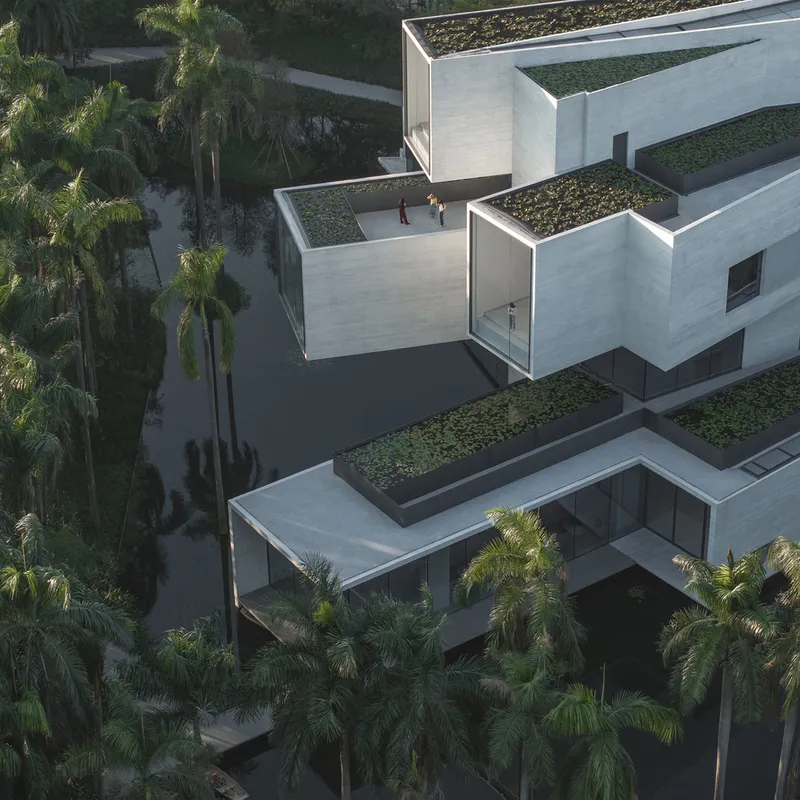
Museums dedicated to ecology face an inherent tension: they must attract visitors in volume while demonstrating respect for the very landscapes they interpret. At Shunde Yunlu Wetland Park in Guangdong Province, Studio Link-Arc resolves this by treating architecture as a canopy species. The building does not sit beside the wetland; it climbs through it, stacking white concrete volumes at successive elevations so that rooftops become planted terraces and cantilevered galleries frame views of lily ponds, palm groves, and roosting egrets.
What makes the project genuinely compelling is its refusal to flatten the site into a podium. Instead of clearing trees to create a civic forecourt, Studio Link-Arc threads narrow volumes between existing trunks and lifts program above the root zone. The resulting silhouette, a cluster of offset white boxes projecting in multiple directions, reads less like a conventional museum and more like an inhabited geological formation. It is a building that earns its ecological brief structurally, not just thematically.
A Canopy of White Boxes
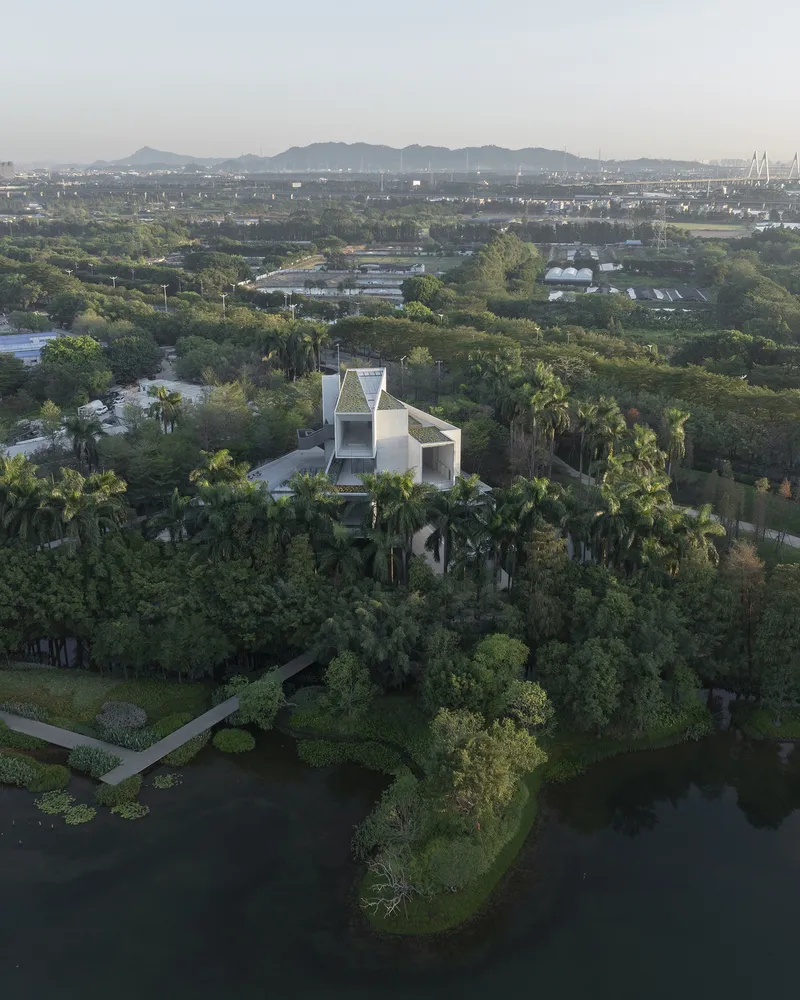
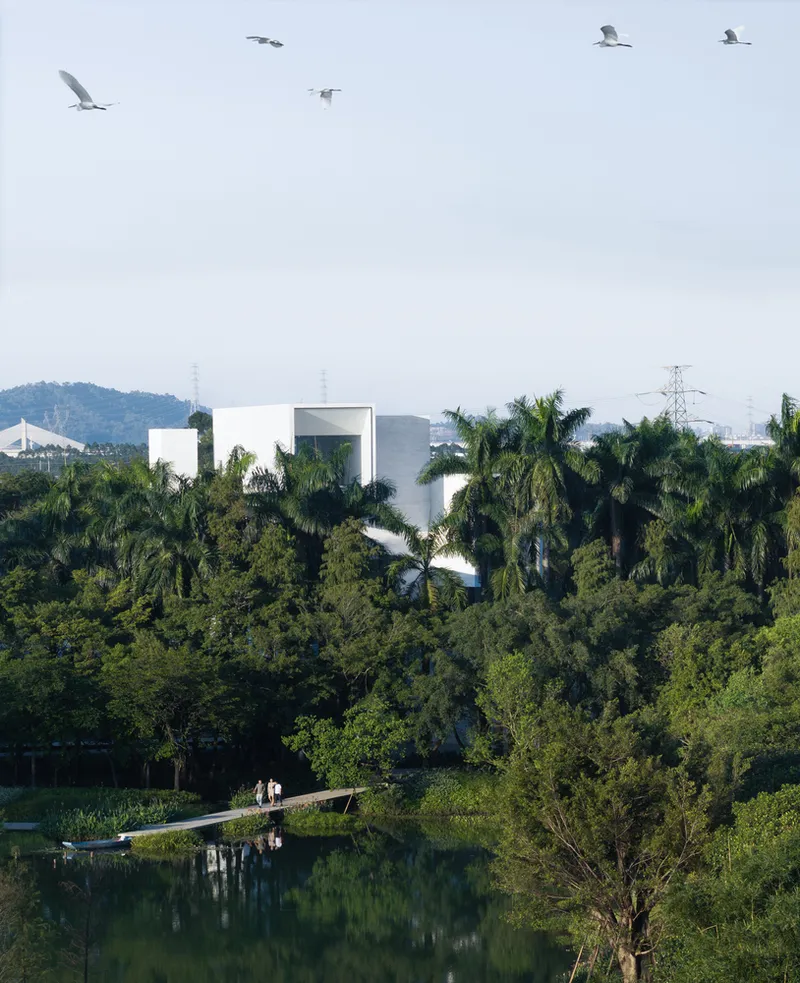
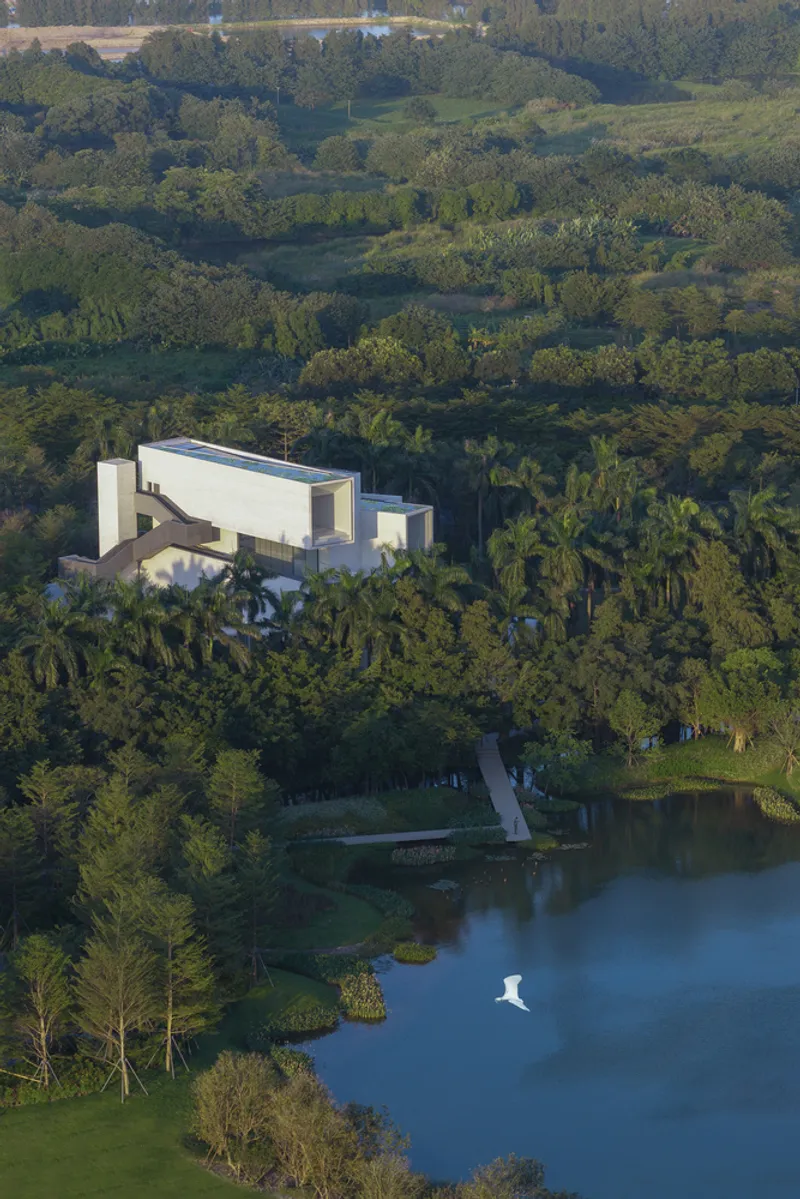
From a distance, the museum registers as a series of geometric fragments rising above the treetops, their white surfaces catching subtropical light in a way that recalls egrets settling into branches. The analogy is intentional: Studio Link-Arc studied the vertical stratification of the surrounding ecosystem, from root systems to canopy, and distributed program accordingly. Lower levels handle arrival and services; upper volumes hold galleries, a library, and bird-watching terraces.
The aerial perspectives confirm that the building's footprint is remarkably restrained for its total area. By going vertical and cantilevering rather than spreading, the design preserves the wetland's hydrology and root networks. Green roofs at multiple levels extend the planting matrix upward, blurring the boundary between architecture and landscape.
Engaging the Water
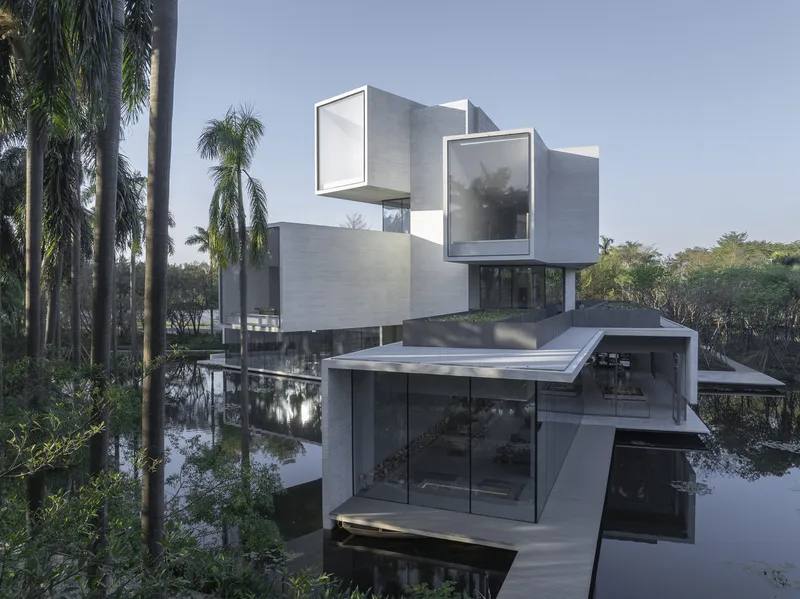
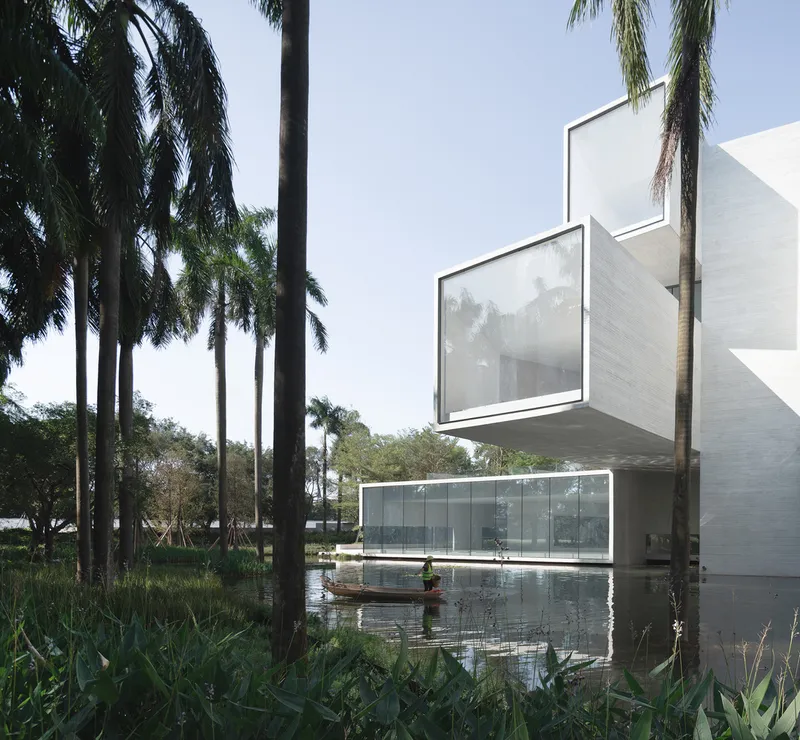
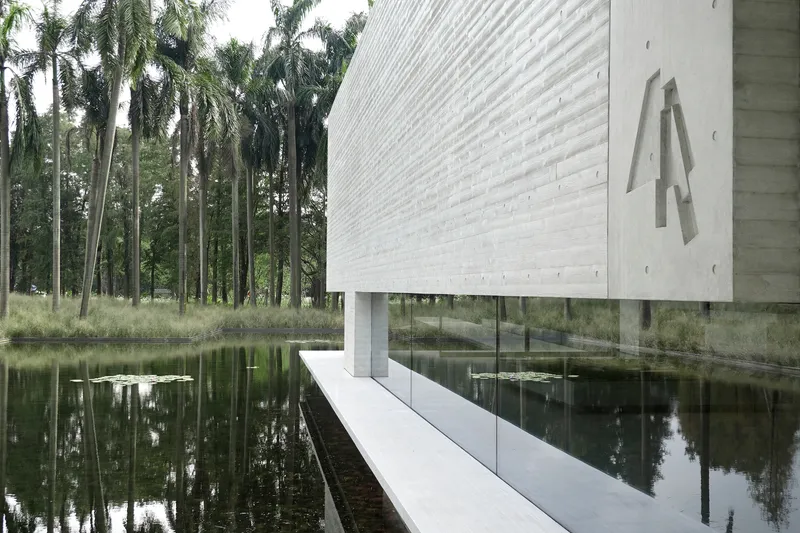
Wetland architecture lives or dies by its relationship with water, and Studio Link-Arc commits fully to that relationship. Volumes are positioned at the edge of ponds so that their reflections double the apparent scale of each box, creating a shimmering dialogue between mass and surface. The result is that the building never feels heavy; even the most monolithic cantilever appears to float once its mirror image appears below.
Beneath the raised volumes, water features thread through the ground plane, drawing the wetland under the architecture rather than pushing it away. Visitors walking along concrete paths at the base level encounter lily ponds, shallow pools, and planted edges that belong to both building and landscape simultaneously.
Cantilevers as Frames
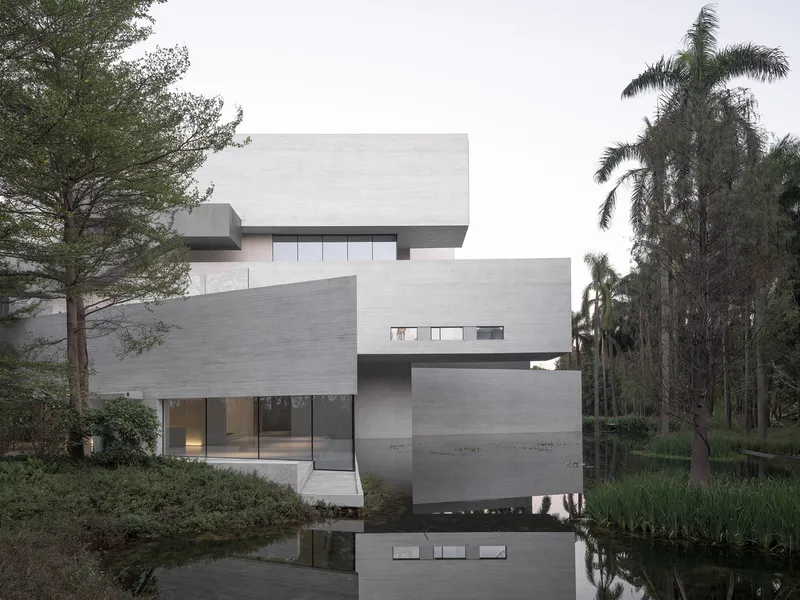
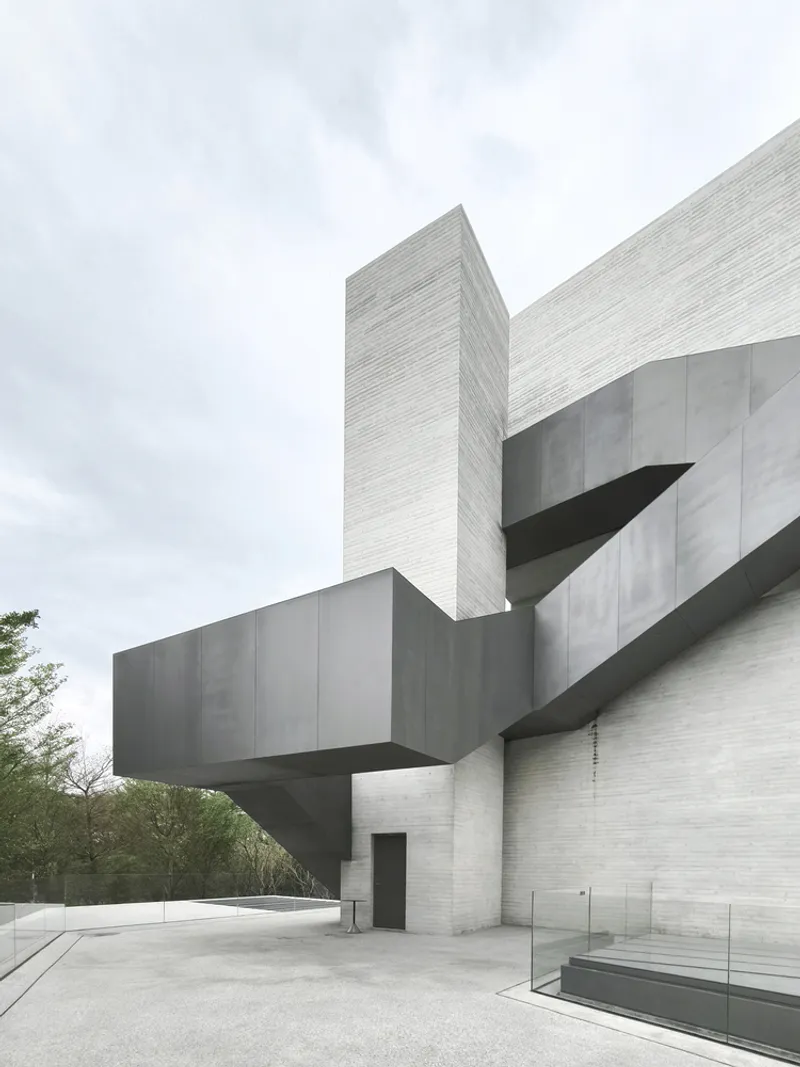
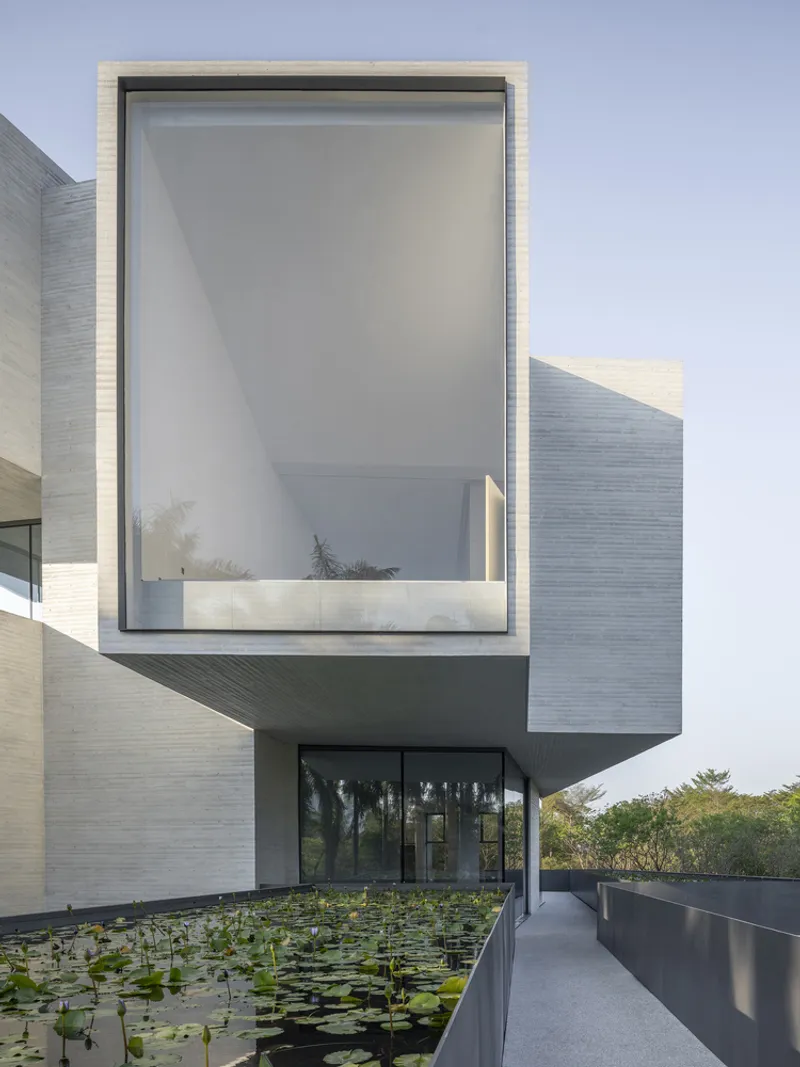
The most striking architectural gesture is the series of deep cantilevers that project from the central mass. Each one frames a specific view: a grove of palms, a pond surface, a distant ridge. They function simultaneously as structural events, exhibition platforms, and observation decks. The punched windows on the closed faces confirm that these are inhabited rooms, not sculptural gestures. People work, read, and look out from within them.
At dusk, the glazed cantilevers glow from within, turning the building into a lantern among the trees. The shift from opaque concrete to floor-to-ceiling glass is handled with discipline: solid faces address neighbors and service zones, while transparent ones always orient toward the wetland.
Interior Light and Circulation
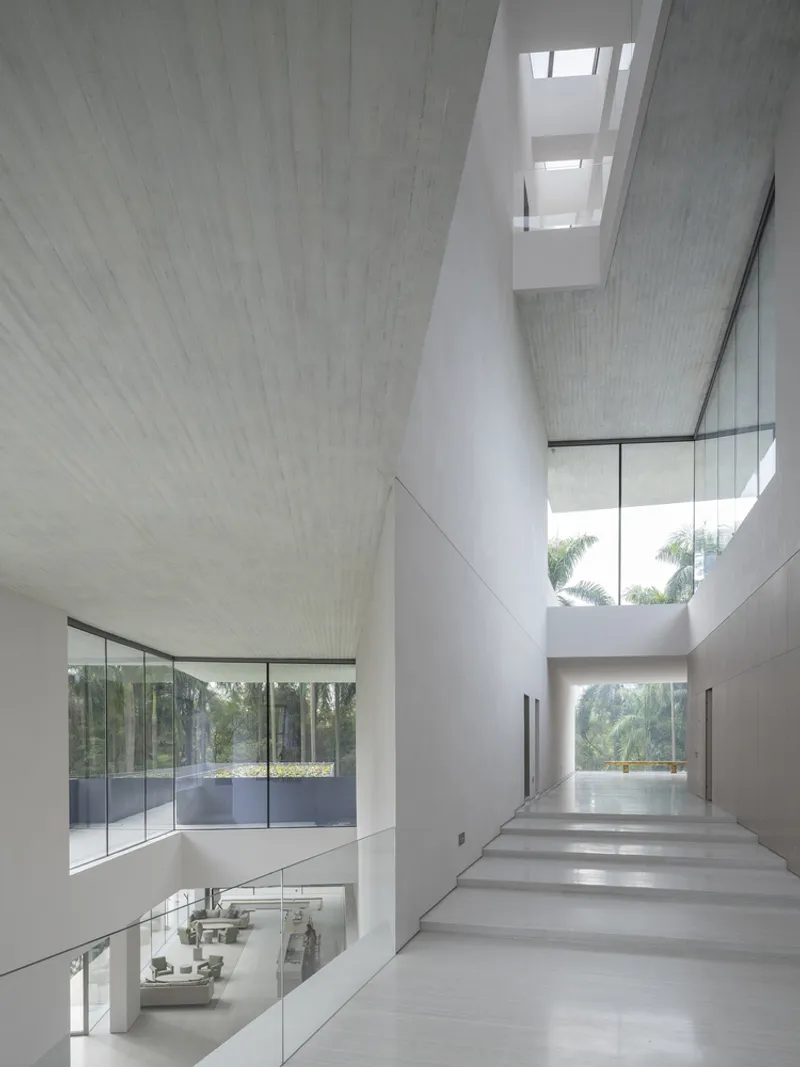
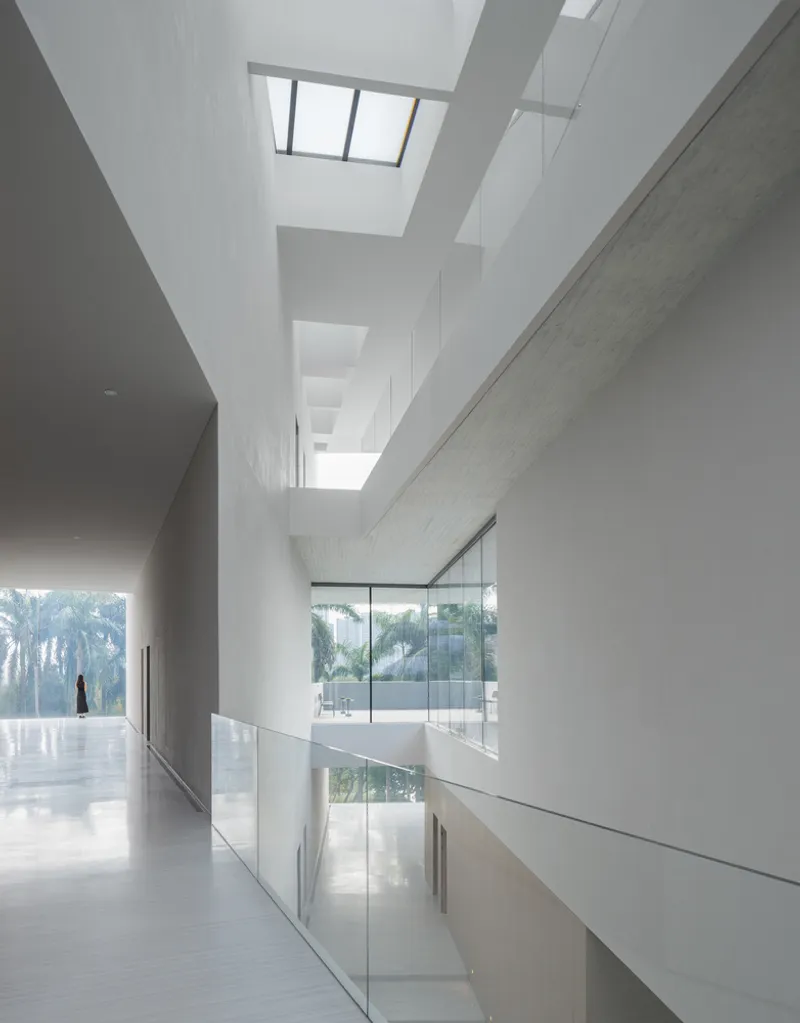
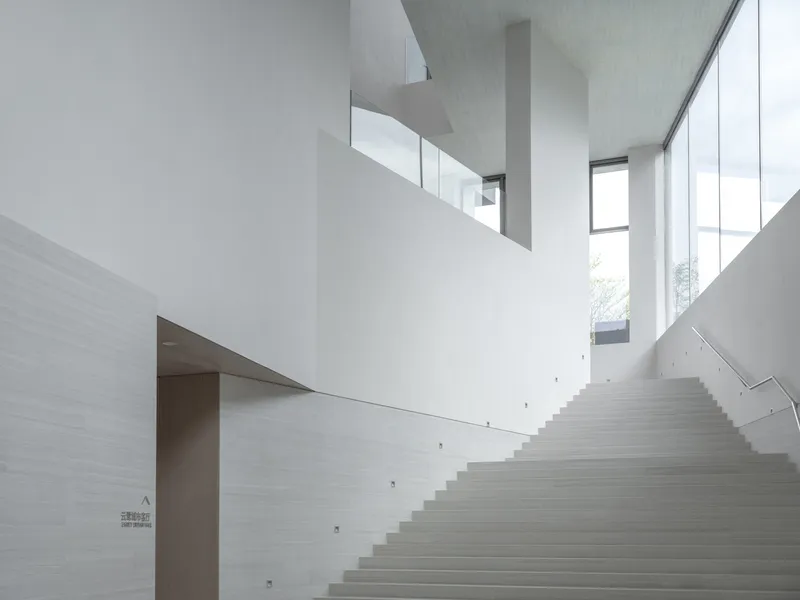
Inside, the offset stacking of volumes generates a multi-story atrium punctuated by clerestory windows and skylights. Light enters from unexpected angles, bouncing off ribbed concrete walls and textured ceiling panels. The cantilevered stairs that connect levels feel like a vertical landscape: you ascend through the building the way you might climb through forest strata, encountering new views at each landing.
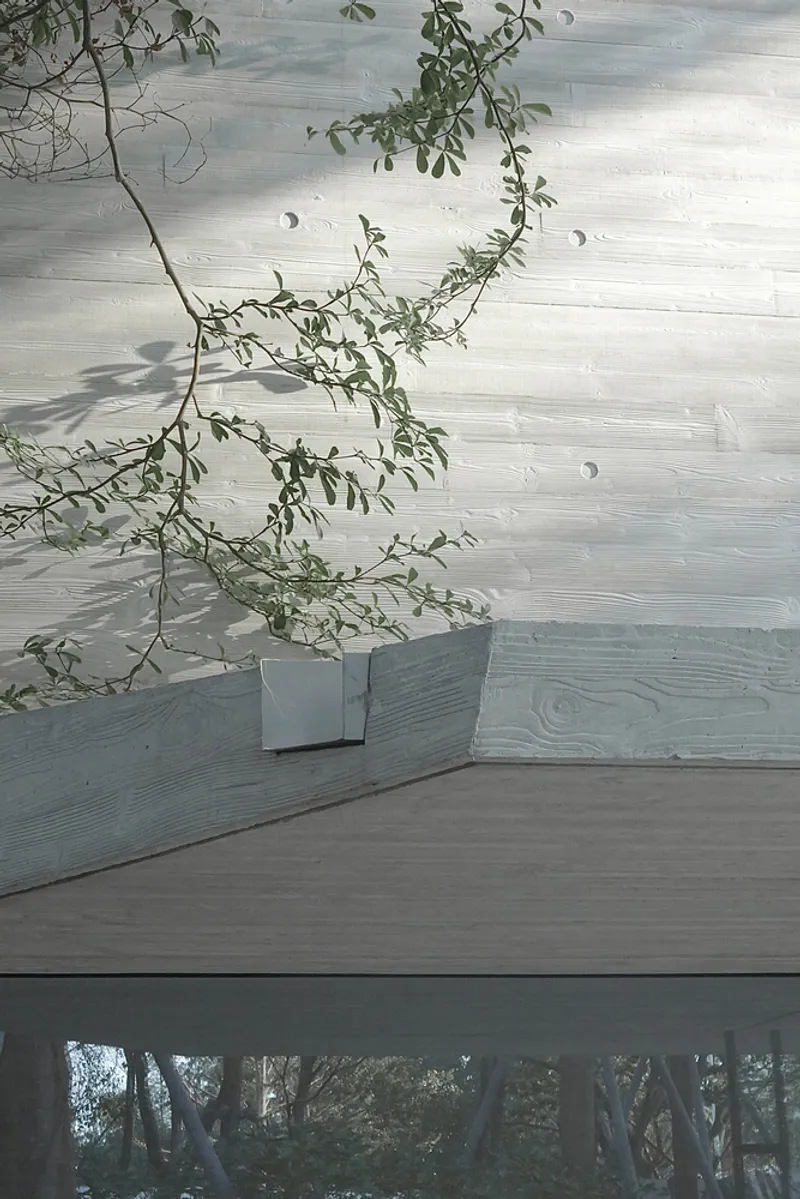
Board-formed concrete is the dominant interior material, its grain providing texture and warmth without relying on applied finishes. Combined with white-painted surfaces and natural daylight, the galleries achieve a luminous neutrality that can host a range of exhibitions without competing with their content.
Living with the Landscape
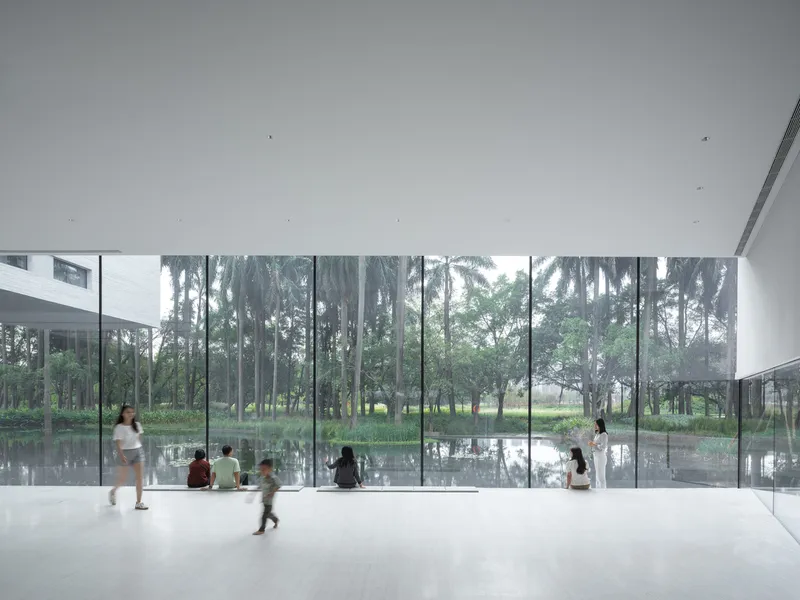
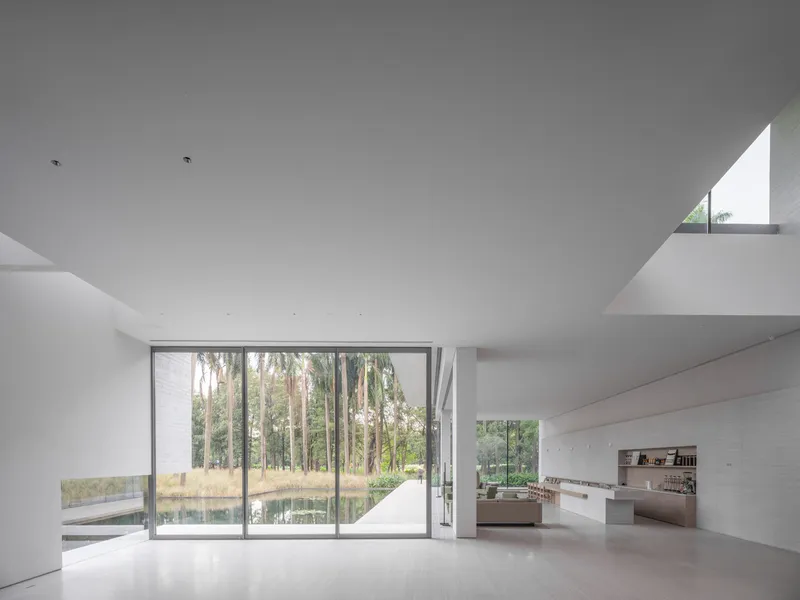
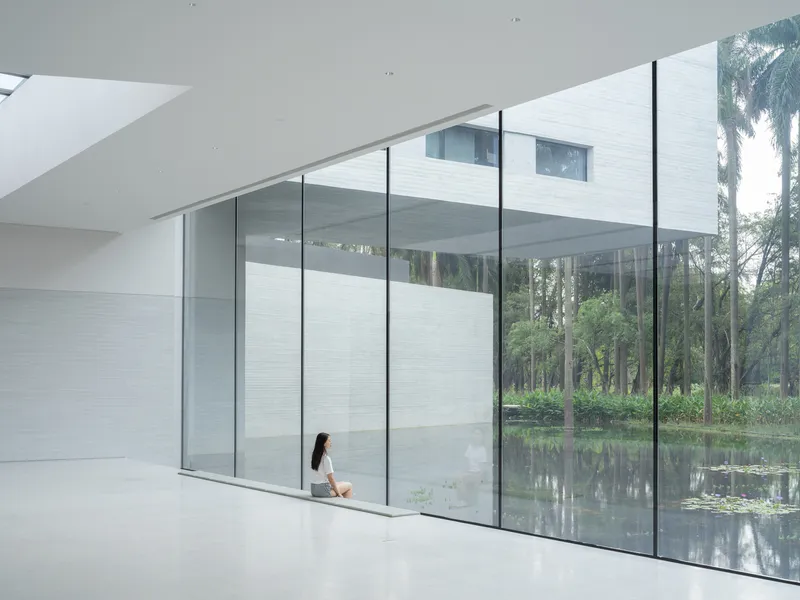
The glazed gallery spaces are where architecture and wetland become almost indistinguishable. Full-height windows pull the pond, the trees, and the sky into the room so convincingly that the interior reads as a sheltered extension of the forest. Visitors sit, read, and watch birds from within these transparent volumes, collapsing the distance between exhibition and subject.
Studio Link-Arc treats the glass wall not as a boundary but as a membrane. Reflections layer interior activity onto the exterior landscape, and on overcast days the distinction between inside and outside fades almost entirely. It is the kind of spatial generosity that only careful orientation and proportioning can achieve.
Rooftops and Terraces
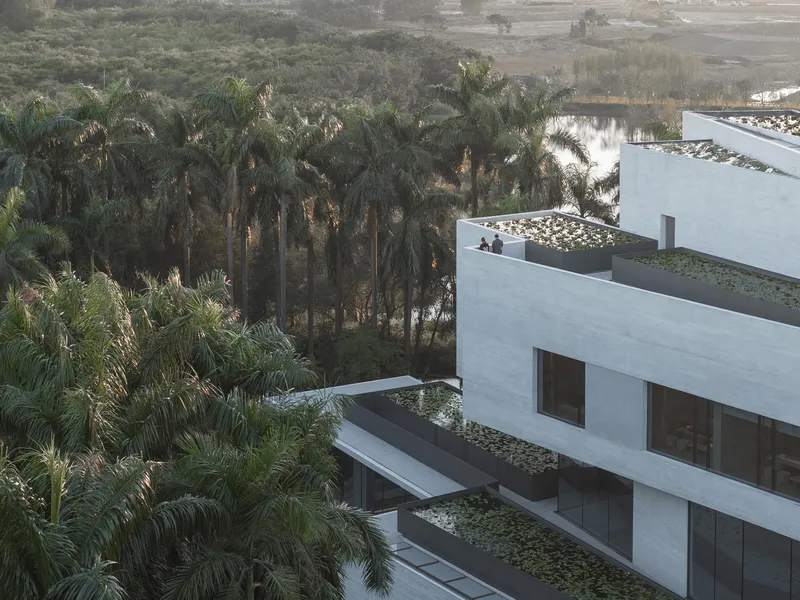
Every roof is a usable surface. Green terraces planted with native species provide habitat continuity for insects and small birds, while paved observation decks give visitors panoramic views over the surrounding canopy. The planted rooftops also perform thermally, reducing heat gain in Guangdong's intense summers and managing stormwater runoff that would otherwise burden the wetland.
The detail of trees planted in metal containers on board-marked concrete paving reveals a pragmatic approach: the building accepts its artificial nature and works within it. These are not simulated meadows but constructed landscapes, honest about their role as ecological supplements rather than replacements.
Ecological Context
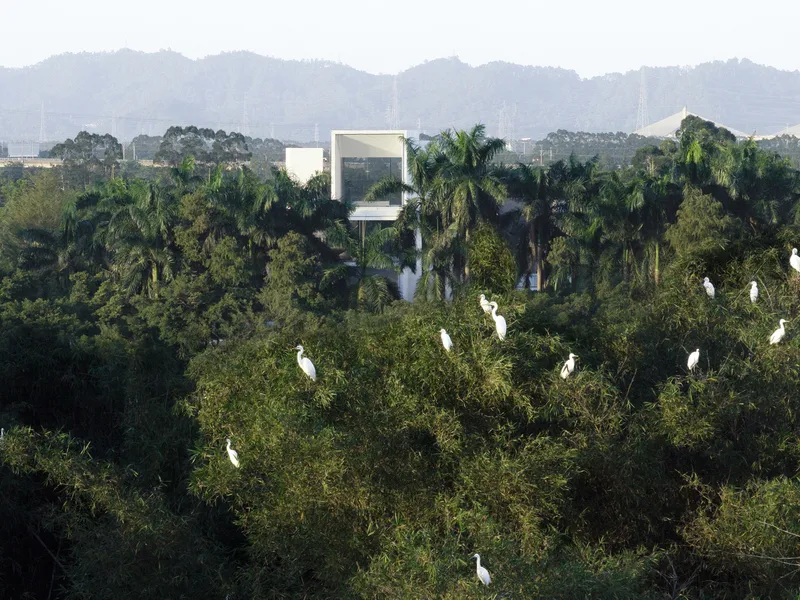
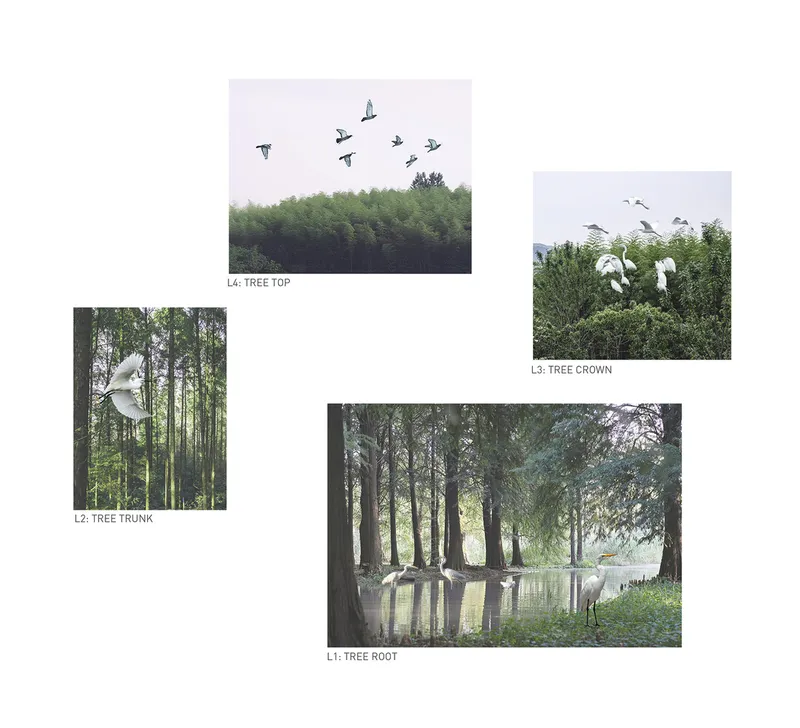
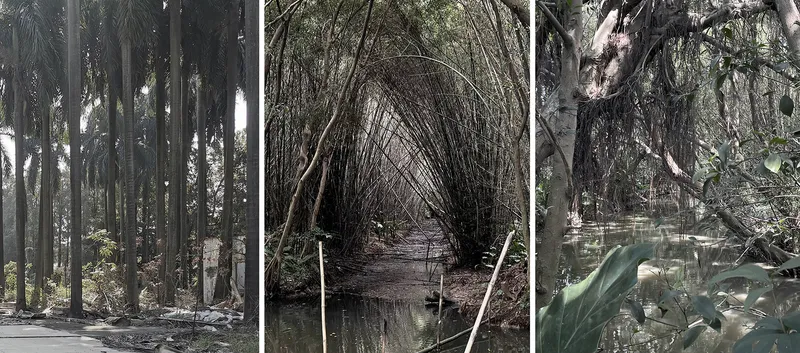
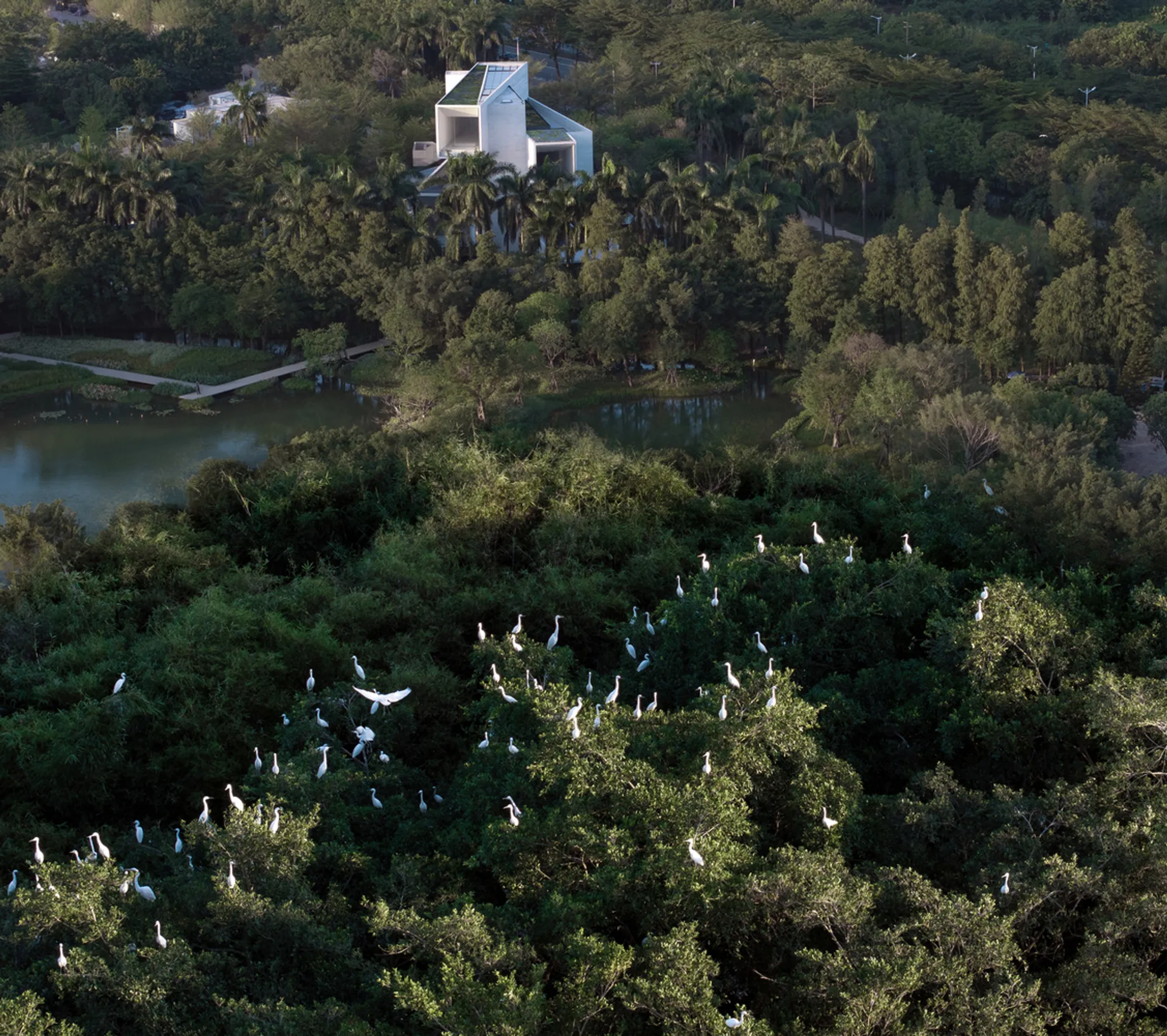
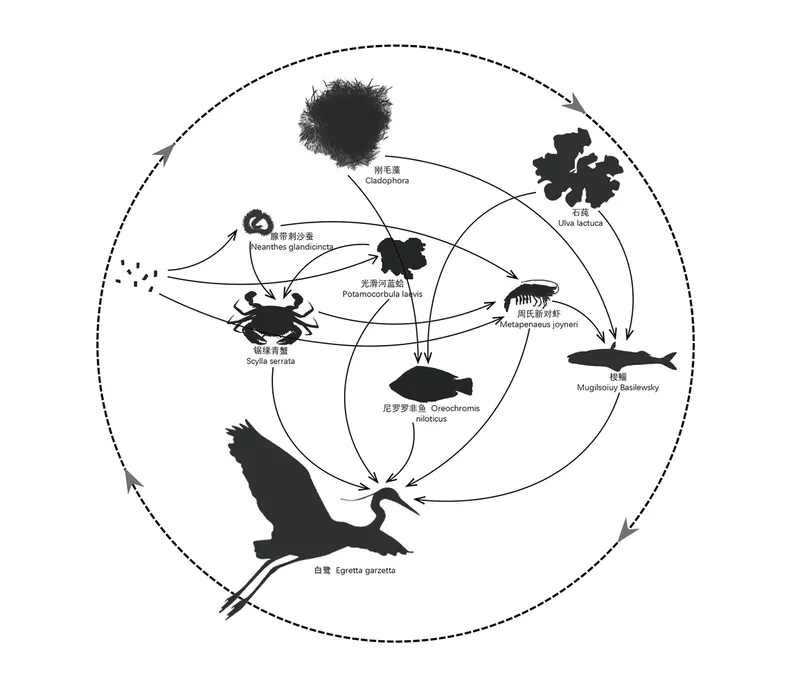
The site's existing ecology is remarkable. Tall palms, dense bamboo thickets, and established wetland forests create a layered habitat that supports egrets, crabs, fish, and a rich understory of aquatic plants. Studio Link-Arc's decision to preserve this matrix rather than clear it required an unconventional structural strategy, lifting the building above the root zone and threading it between trunks.
Photographs of egrets nesting in the surrounding trees underscore the project's success as a habitat neighbor. The birds have not fled; they roost within arm's reach of the architecture. That coexistence is a more convincing metric of ecological performance than any certification score.
Plans and Drawings
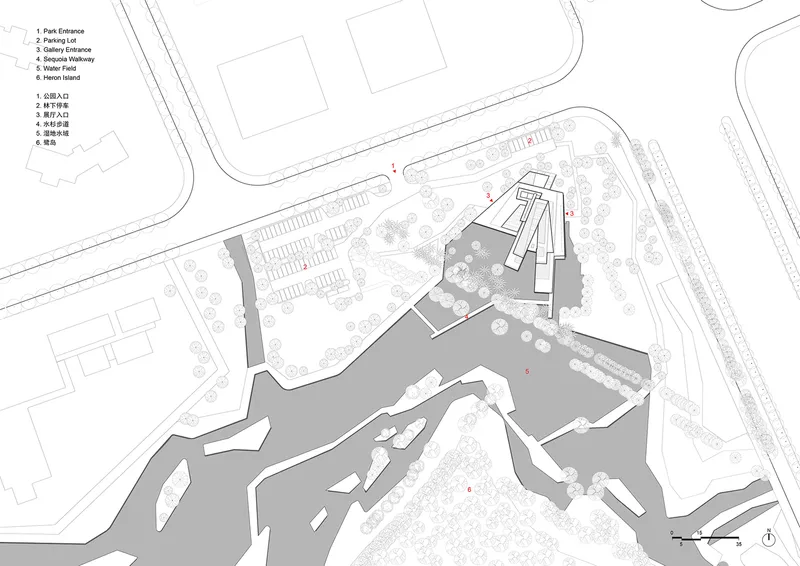
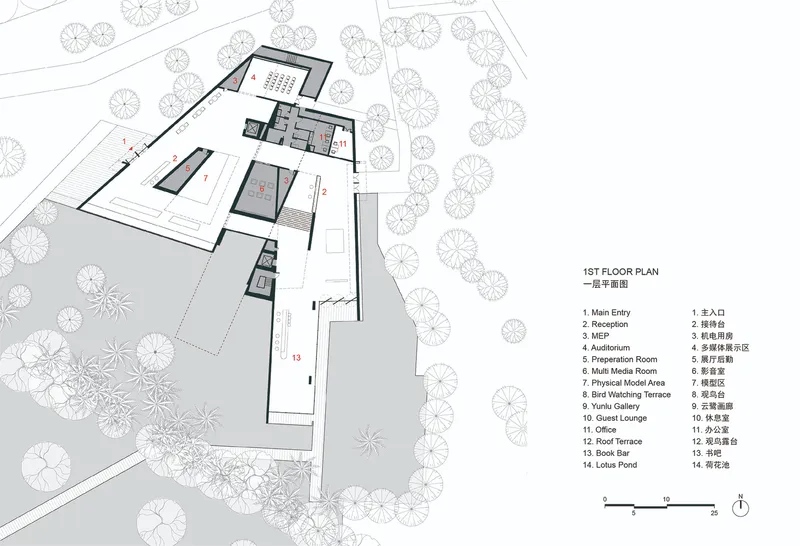
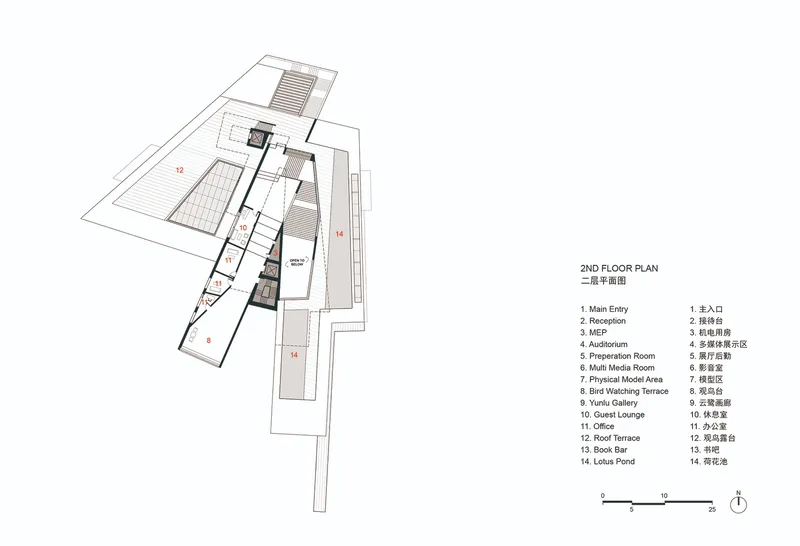
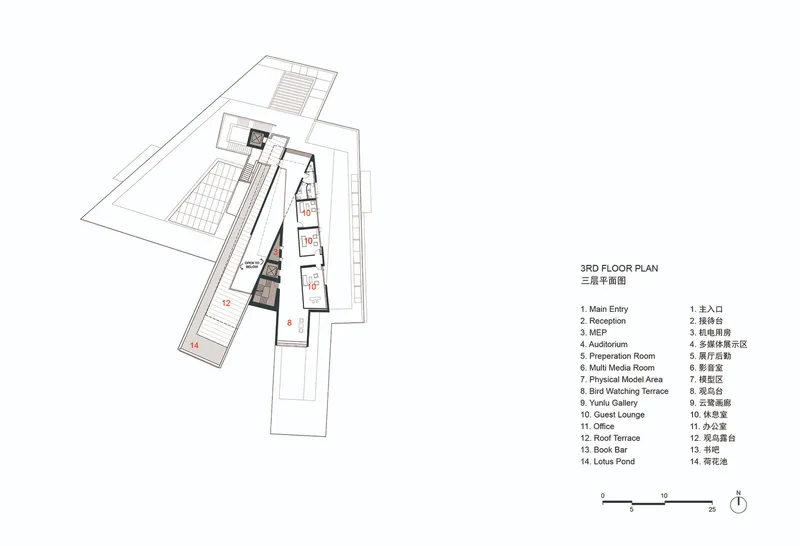
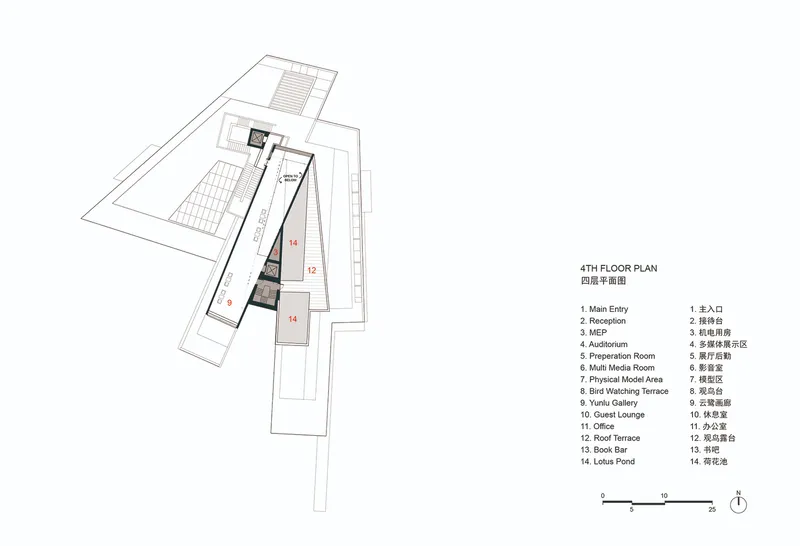
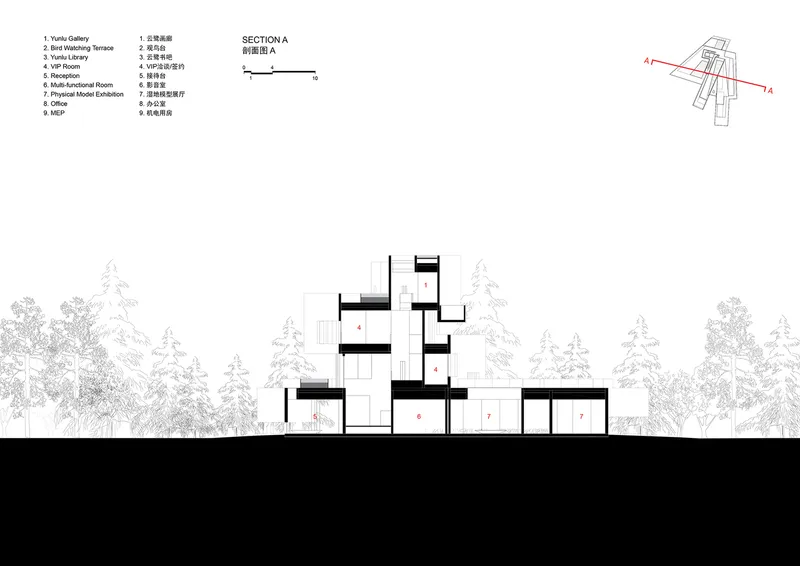
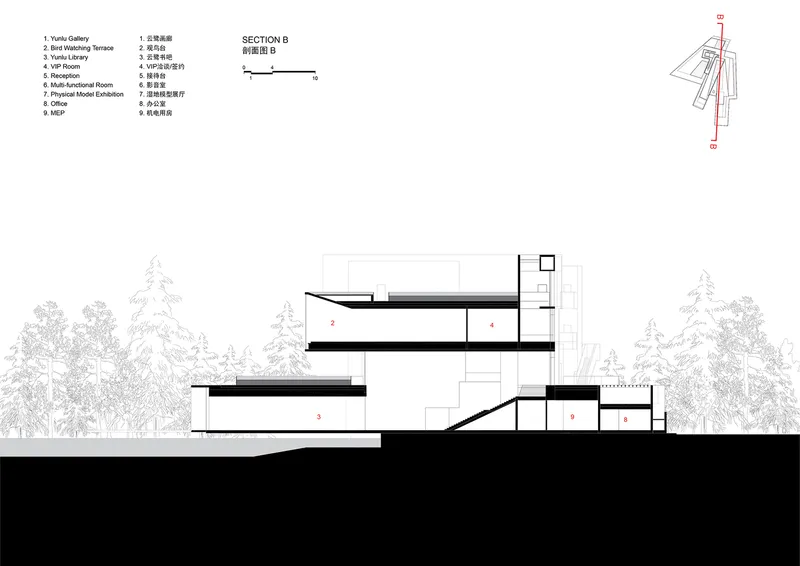
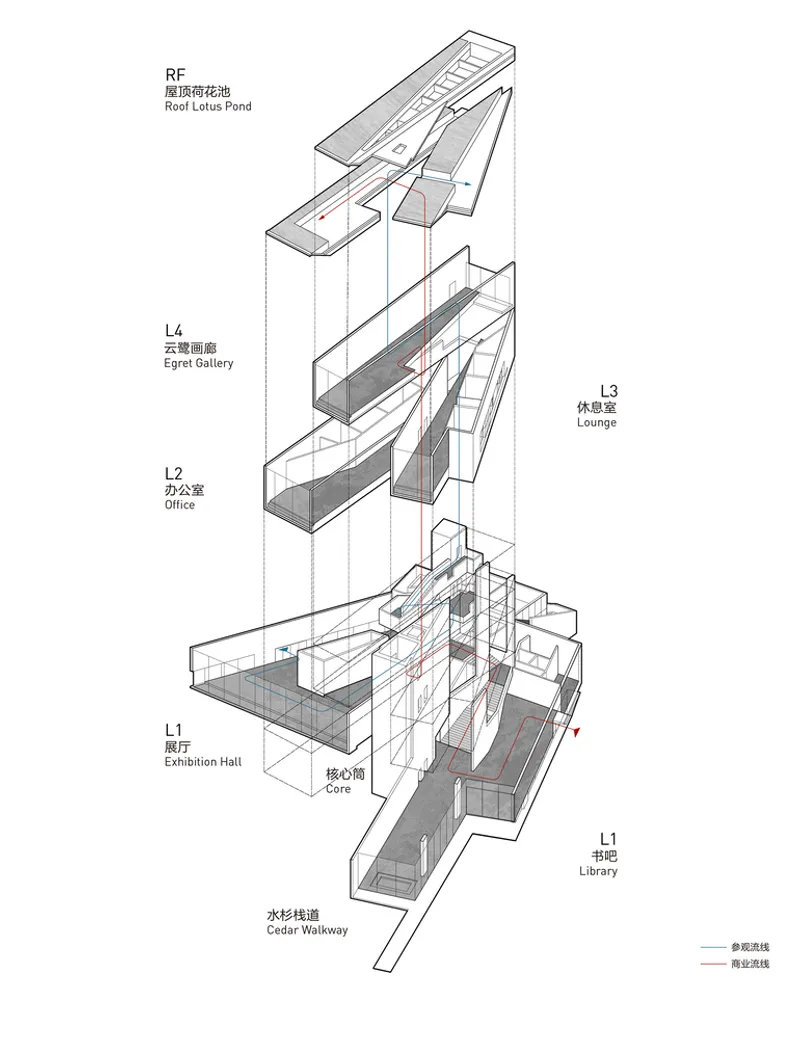
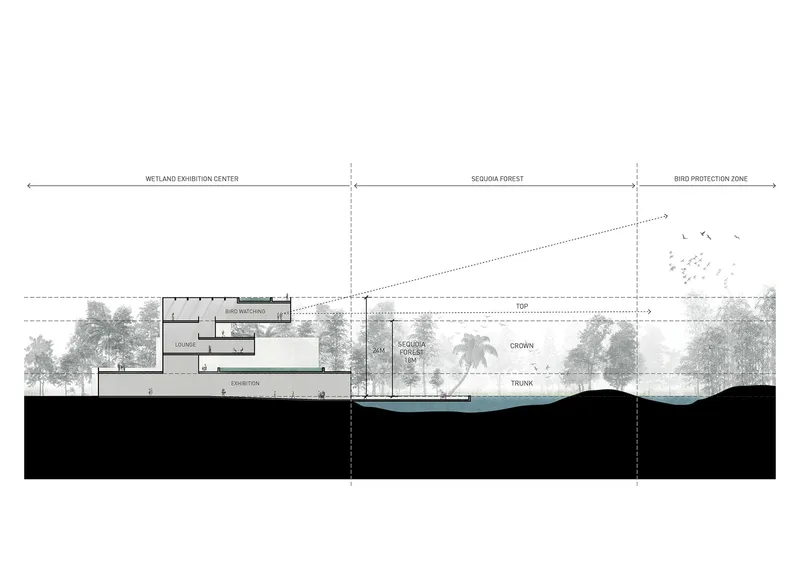
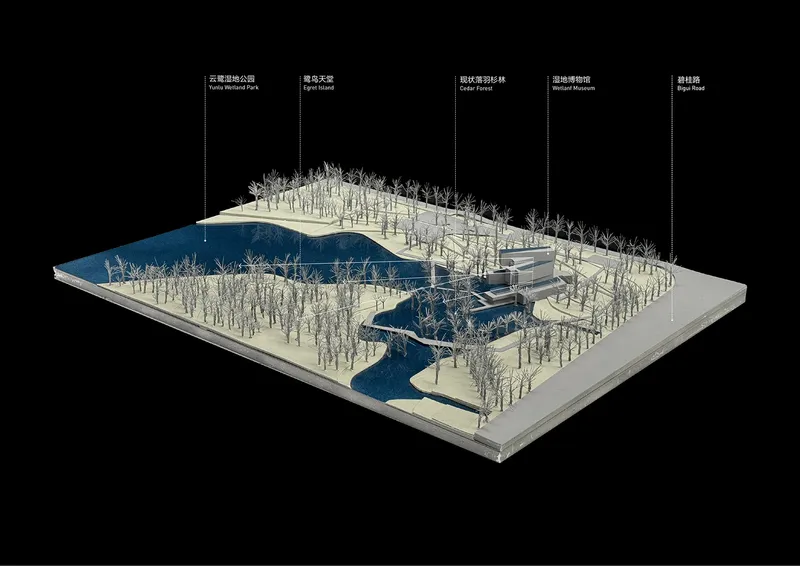
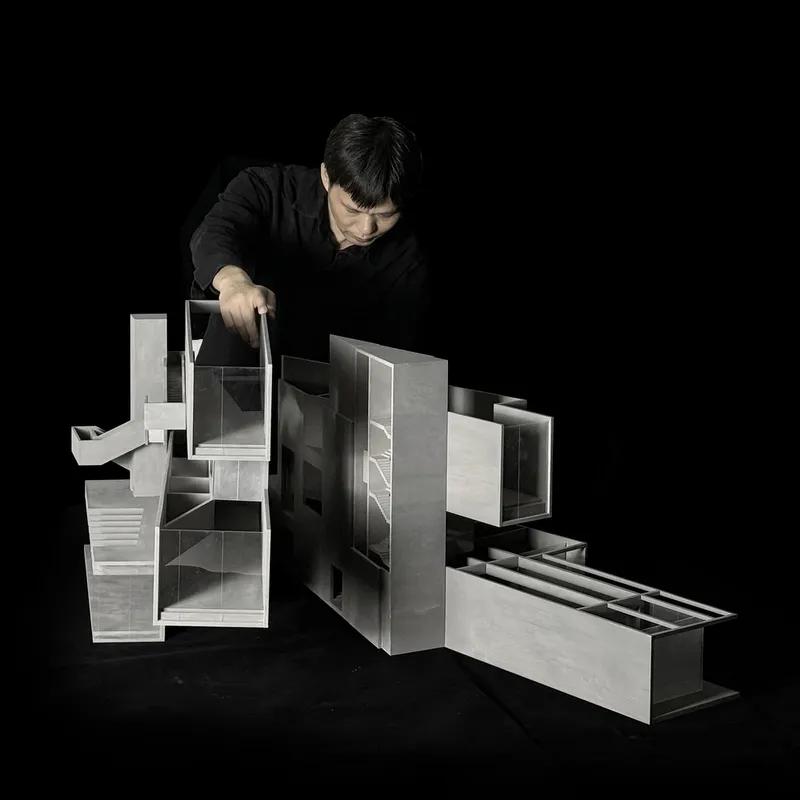
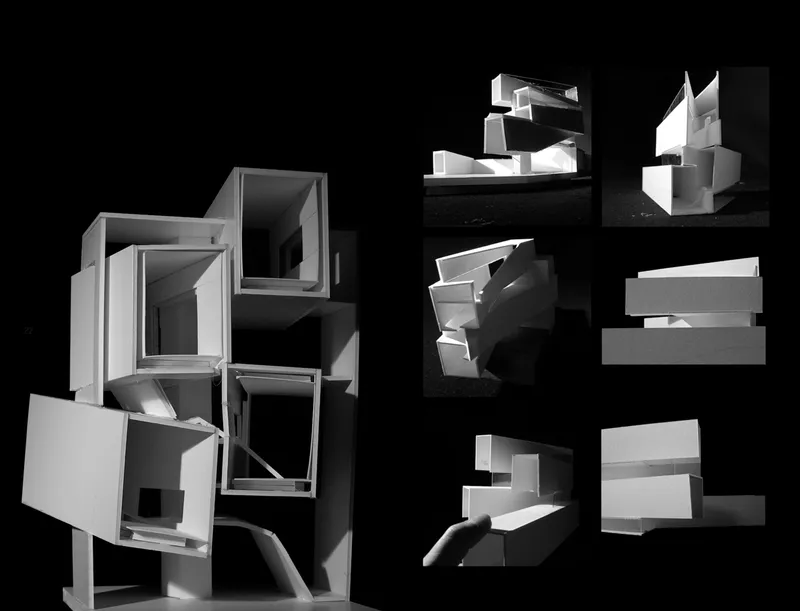
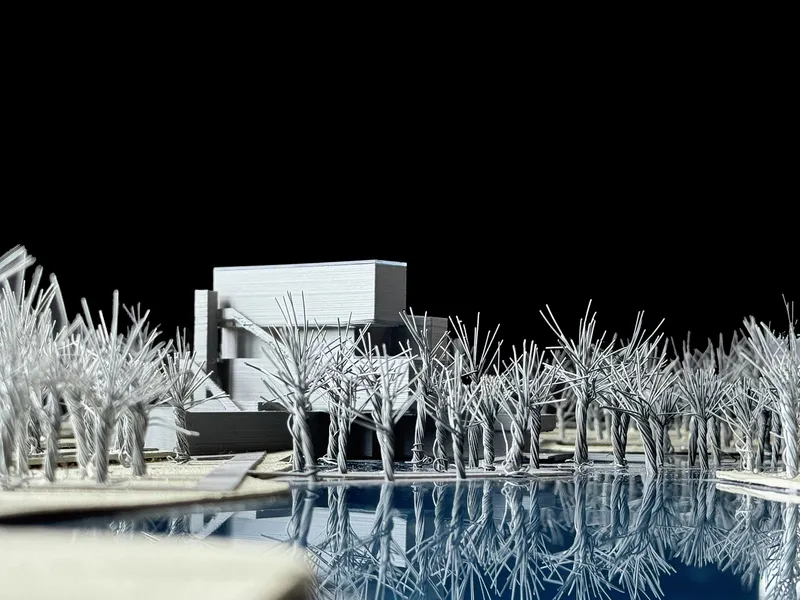
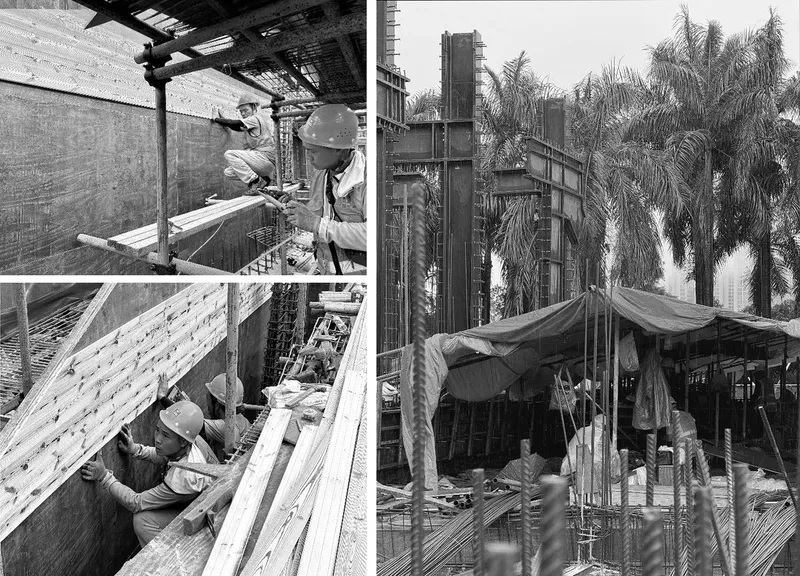
The plans reveal how the angular volumes interlock across four levels. The ground floor wraps around existing water bodies and tree stands, while upper levels rotate and cantilever to capture specific views and daylight angles. The auditorium, gallery, bird-watching terrace, book bar, and administrative offices are distributed vertically so that each program occupies a distinct altitude within the forest canopy.
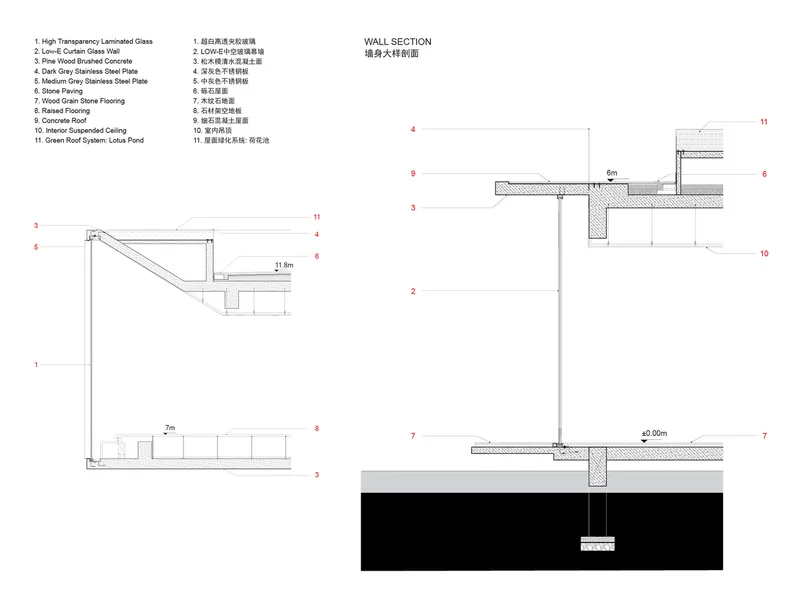
The sections are especially instructive. They show the split-level circulation connecting galleries at half-story intervals, a strategy that creates a continuous promenade through the building without corridors. The wall section detail confirms a curtain-wall-and-concrete hybrid system that integrates laminated glass, insulated panels, and planted roof assemblies into a single envelope. Study models and the exploded axonometric further illustrate how each volume was conceived as an independent structural unit, stacked and offset to produce cantilevers, terraces, and double-height spaces without column transfers.
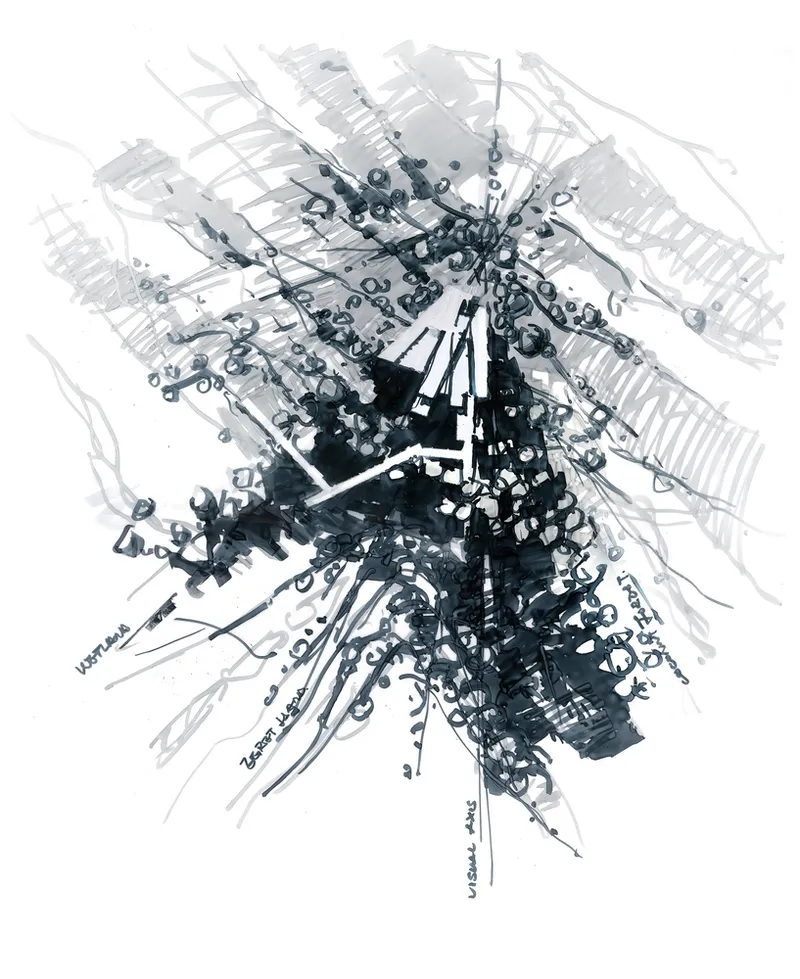
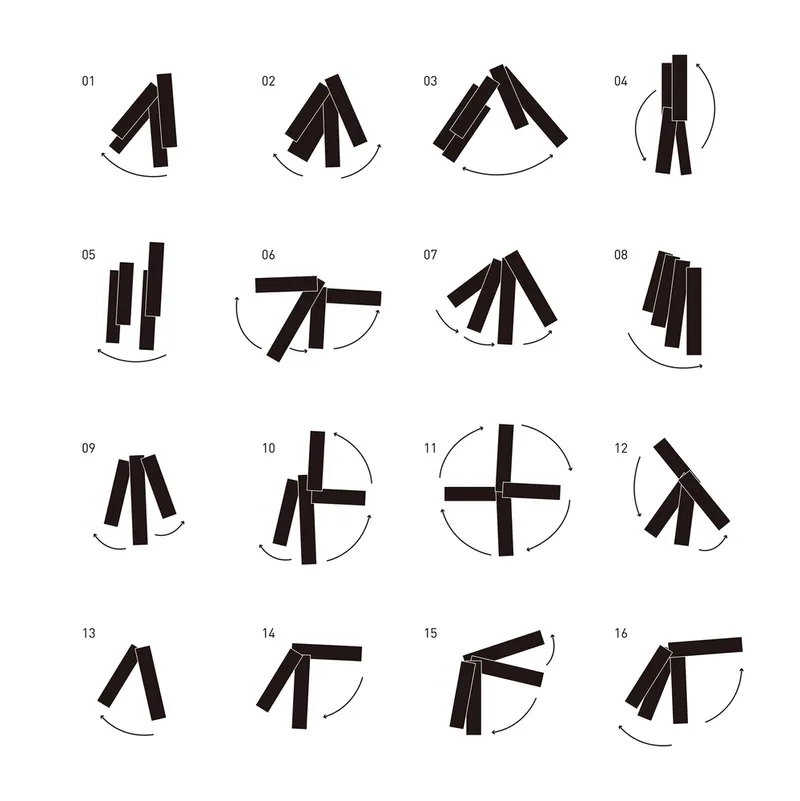
The ecological diagram and conceptual rotation studies ground the formal decisions in observable natural processes. The food-web illustration makes explicit what the architecture tries to protect, while the configuration diagram traces how the angular volumes were generated through a sequence of rotations and translations of a single bar form. Whether or not you buy the formal analogy to egret nests, the geometric discipline is rigorous.
Why This Project Matters
Ecological museums often rely on exhibition content to make their environmental argument while the architecture itself remains indifferent to the landscape it occupies. Studio Link-Arc inverts that formula. At Shunde Yunlu, the architecture is the ecological argument: it demonstrates that a substantial public building can coexist with a sensitive wetland by going vertical, minimizing its footprint, preserving mature trees, and treating every surface as potential habitat. The building does not illustrate wetland ecology; it participates in it.
The project also offers a persuasive model for subtropical institutional architecture. By stacking program and cantilevering volumes, Studio Link-Arc achieves generous floor area without sprawl, provides natural ventilation paths between offset blocks, and creates shaded ground-level zones beneath the lifted masses. These are not novel strategies individually, but their integration here, calibrated to a specific wetland site with real biodiversity stakes, makes the Shunde Yunlu Wetland Museum a reference point for anyone designing in sensitive landscapes.
Shunde Yunlu Wetland Museum by Studio Link-Arc. Shunde, Guangdong Province, China.
About the Studio
Share Your Own Work on uni.xyz
If projects like this are the kind of work you want to make, uni.xyz is a place to publish your own, find collaborators, and enter design competitions.


Popular Articles
Popular articles from the community

AL-JANNAH: Sustainable Architecture and Permaculture for Afghan Widows
AL-JANNAH uses sustainable architecture and permaculture to create resilient oasis of housing, learning, work and renewal for Afghan widows.

Co-Life: Senior Housing Design That Reconnects Older Adults With the City
Co-Life reimagines senior housing design through healing gardens, shared streets, workshops, and a sustainable community across generations.

Co-life: Sustainable Architecture for Age-Friendly Community Living
Co-life reimagines sustainable architecture for seniors through courtyards, rammed earth, shared gardens, and spaces designed for belonging.
EW PARK: Sustainable Architecture Reimagines the Future of Urban Parking
EW PARK reimagines city parking as a modular wooden tower combining automation, solar energy, electric mobility, and adaptable urban design.
Similar Reads
You might also enjoy these articles


Hodi-Mandai Geram
Project Function: Preservation and revitalization of the Intangible heritage and socio-spatial identity of the Hodi by Housing, Cultural Memory Center, Sacred Grove, landscape, local tourism economy


Olio Towers: A Mid-Rise for Performers That Fuses Housing, Rehearsal, and Stage
Located blocks from Houston's Theater District, this modular tower stacks living units around a central performance atrium.

Oasis: Modular Green Housing Carved into Dhaka's Urban Fabric
A shortlisted Plugin Housing entry reclaims unauthorized settlements in Dhaka with stepped concrete volumes, green roofs, and ventilation-driven design.

Black Hole: A Floating Megastructure for the Post-Physical Era
Emiliano Mazzarotto envisions a spherical, self-scaling arena where e-sports, digital hotels, and holographic stadiums replace traditional public space.
Explore Architecture Competitions
Discover active competitions in this discipline



Challenge to reimagine the Iron Throne


Photograph architecture without architects


Illustrate the lost glory of Angkor Wat - Render Challenge


Design challenge to reuse E-waste
Comments (0)
Please login or sign up to add comments
No comments yet. Be the first to comment!