
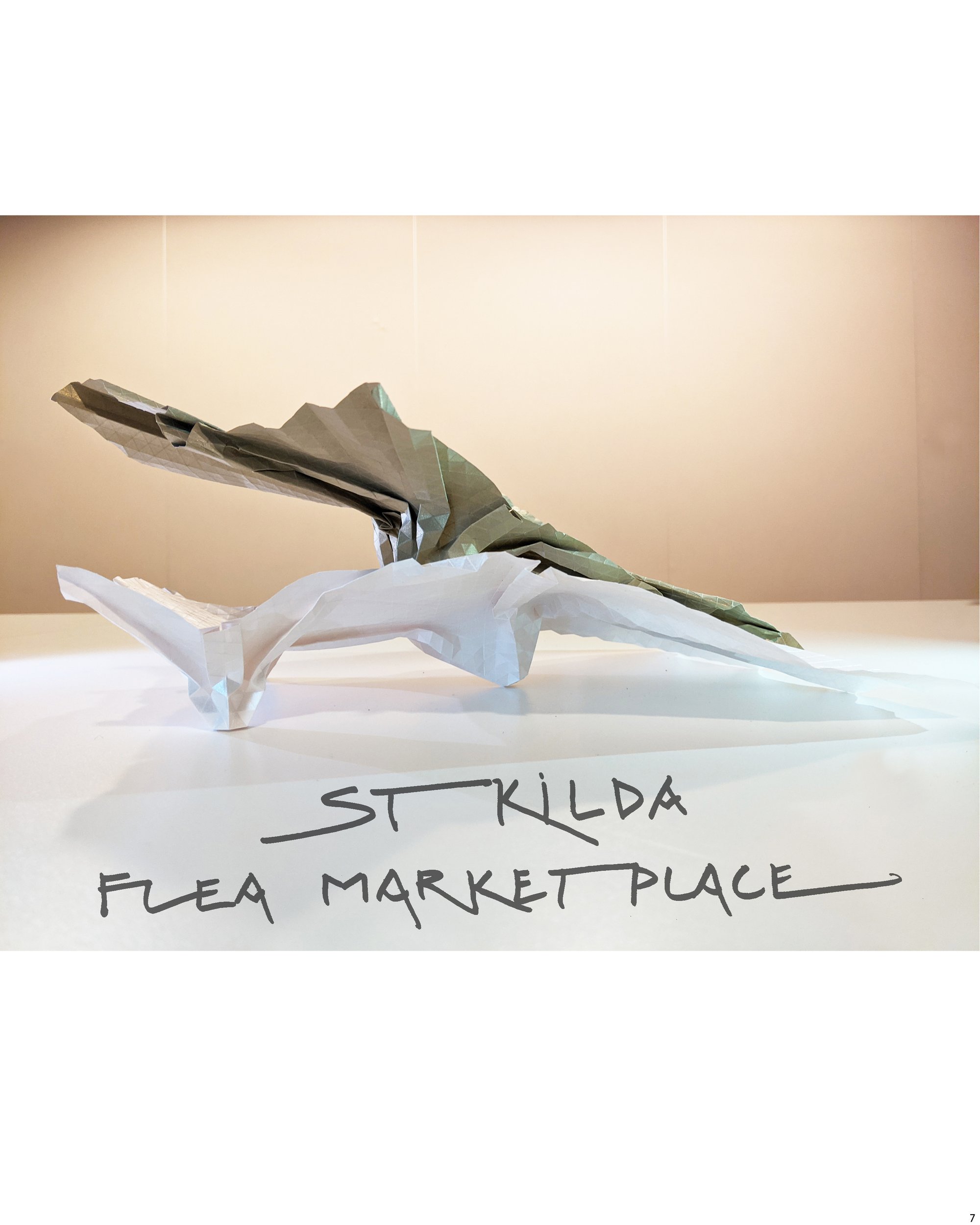
St Kilda Flea Market Place
A market design project located in St Kilda beach in Melbourne Australia

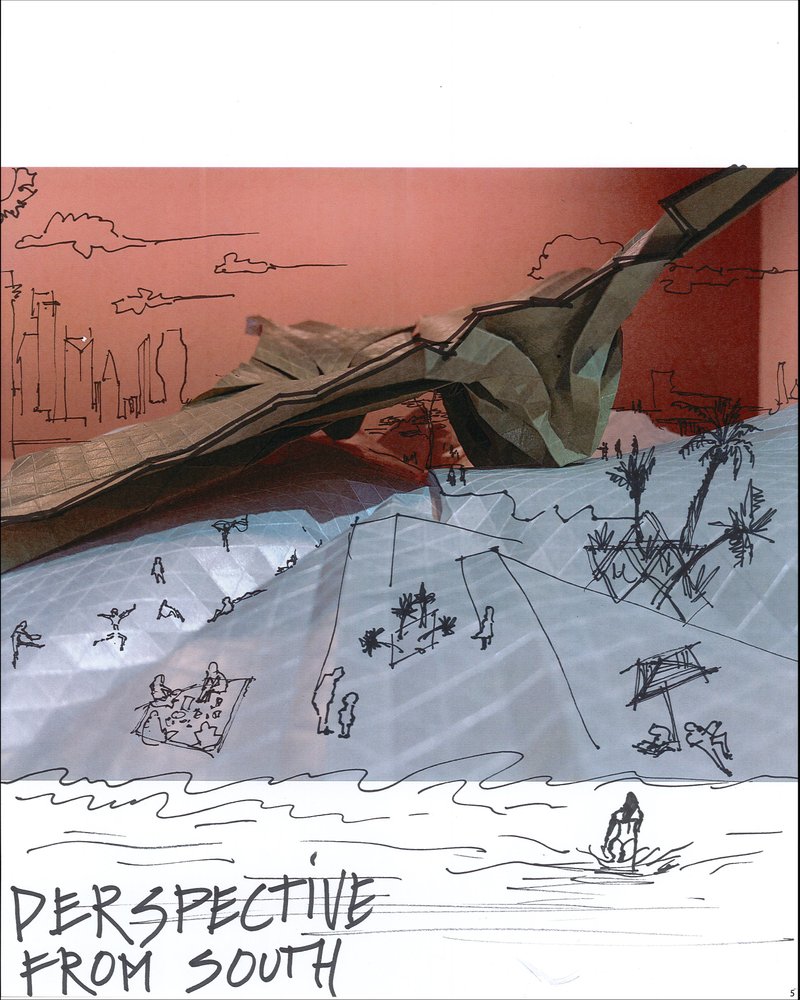
St Kilda Flea Market Place is proposed to be built in two floor levels with an area about one hectare. The project is intended to define the landscape while providing new amenities and covered areas which could be utilised for market and other public functions like temporary exhibitions or events. It is also intended to perform as a public space at other times and ultimately serve as a landmark in the area.
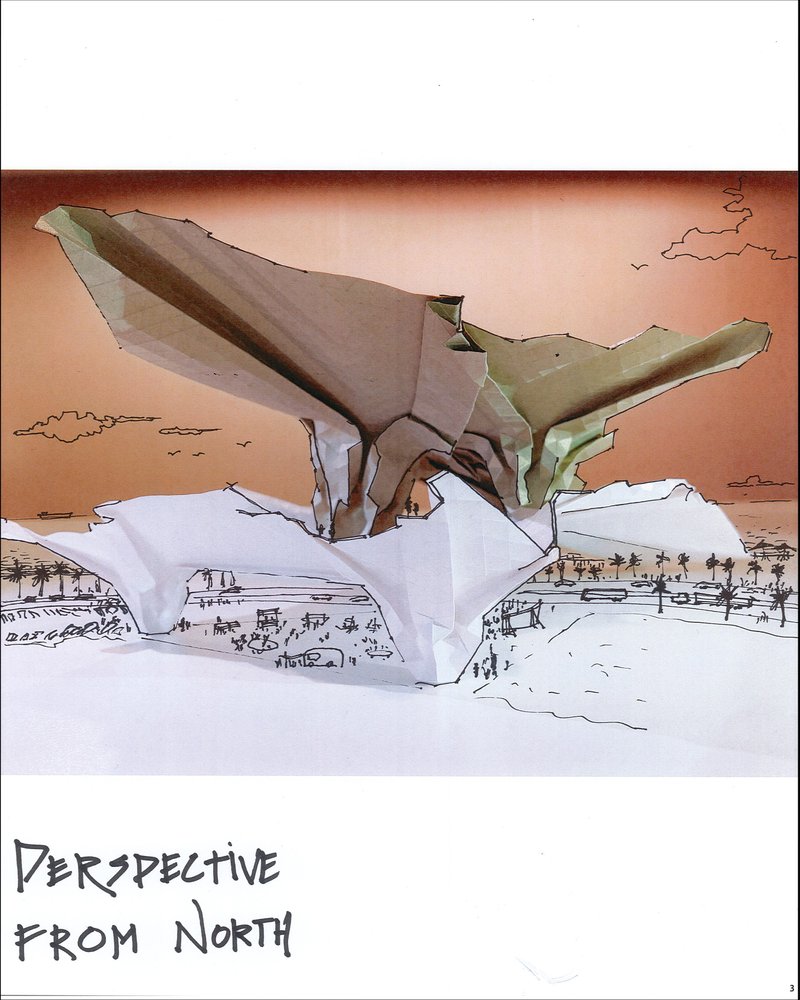
The flea market structure bridges over the beach road, creates a shelter and amenity, connects the urban context to the sea and frames the sky line. It is a landscape, it is a canopy, it is a shade and it is an outlook. It bends up from the ground. It bows down in front of the ocean. It has two intertwined floors, one arching over the road the second resembles a take off from the ground.
It is a wave of the ocean, crystallised.
In origami nothing is made or removed, there is a conservation of material. While a column grows out of the paper, the surrounding paper must shrink. The shrinking of the paper surrounding the vertical growth spreads out in various directions, forming pleats that propagate outward like rivers. Multiple columns create multiple flows of pleats which inevitably meet. Where these pleat “rivers” meet, a new outward river is formed, joining the two flows into a combined flow with a width and angle determined by the two initial pleats. Inexorably all pleats reach the edge of the paper, just as rivers reach the ocean.
Our initial approach involved free-form structures, at arbitrary angles, with outward pleats of arbitrary widths, joining up to create combined pleats of arbitrary width and angle. The resulting structures were smooth flowing, but their beauty hid the underlying geometry inherent in origami constraints. We therefore forced an extra constraint on the paper, an underlying grid to guide the column and pleat flows.
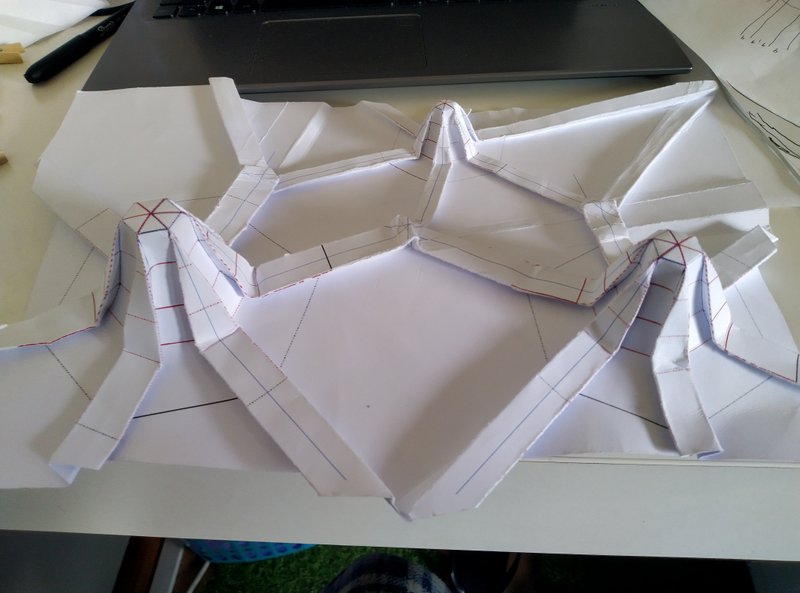
While a triangular grid tessellated our A3 paper in a regular fashion, we formed structures asymmetric and irregular. Using varying pleat widths for varied column heights created pleat rivers that joined to produce rivers that no longer flowed along the original underlying grid, either in width or angle. From our initial scaffold the rivers had deviated and escaped. The grid attempted an initial geometric order, but the rebellious pleats stirred a striking visual tension. Our untamed structures nevertheless showcase the underlying origami geometric constraints.
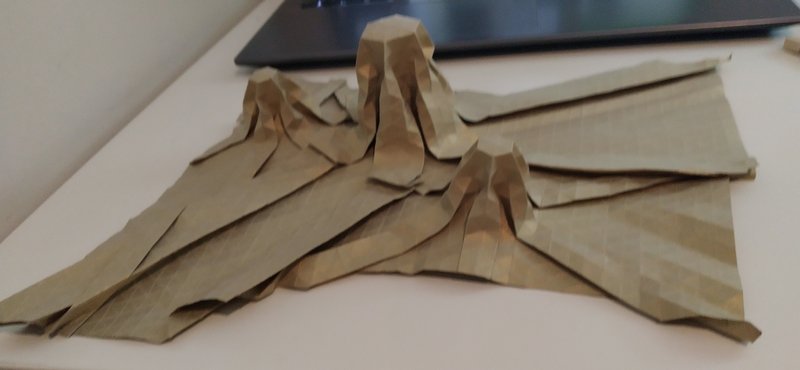
Building upon this landscape between order and chaos, we decided to subtract even more freedom and further constrain the column pleat widths to be constant. Pleat intersections no longer create wild new rivers flowing with new widths and new angles; all pleats lie along the underlying grid. Nevertheless, the nature of water is to seek out new paths to flow. We therefore began to deform the orderly pleats in order to flow at arbitrary angles, even while respecting the original grid. No longer a pleat but now a free-standing corrugation, these rivers bulge in white water rapids as they forcefully flow towards their endpoint, the wild ocean edge of the paper.
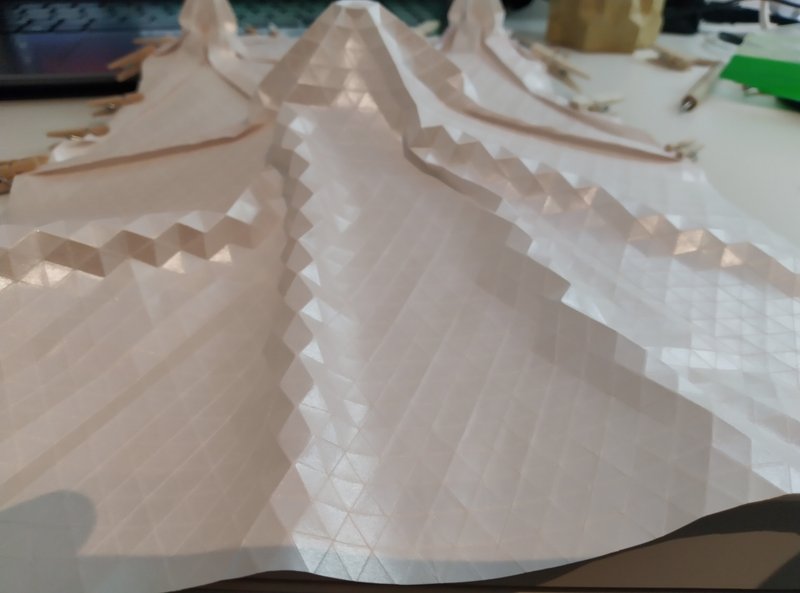
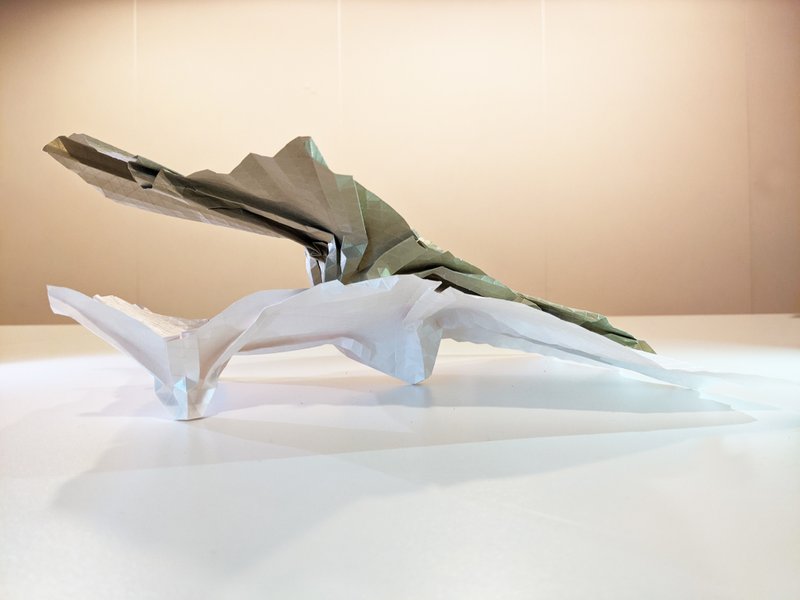
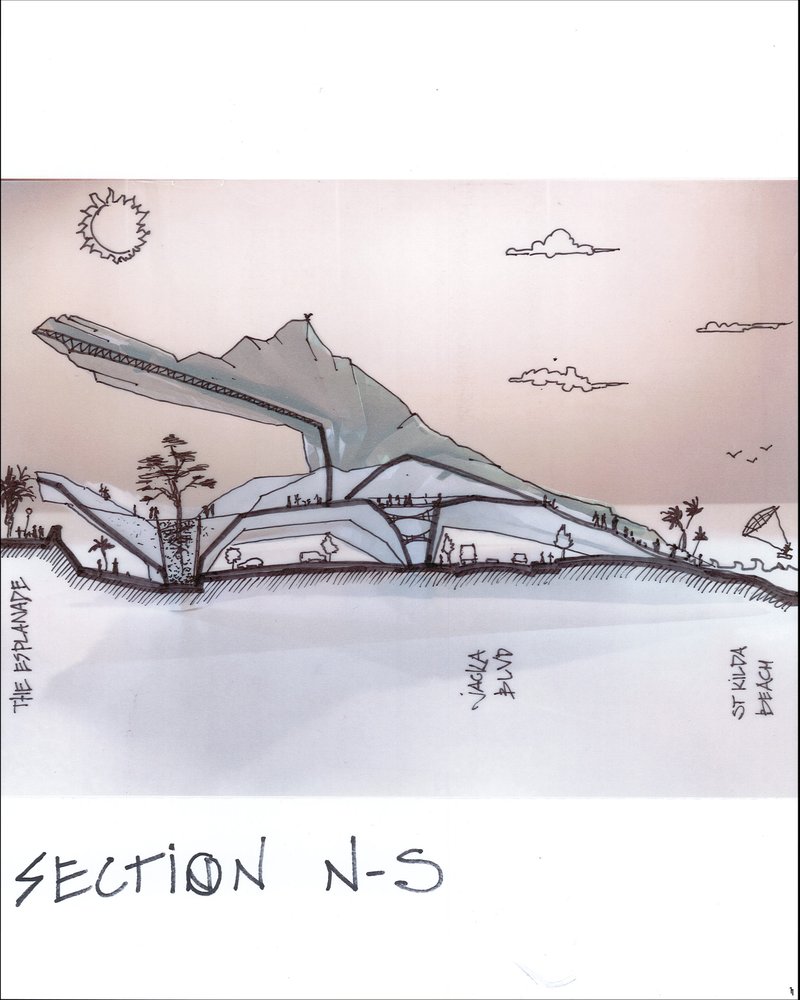
The structure is composed of two shells. Each shell consists of a curved structure which emerges from three mega columns. These columns are envisaged to participate in forming space. Where the shell is serving as a roof, there is a fall to the centre of the columns. The core of the columns is a cavity which is envisaged to perform a range of functionalities. It can be a garden bed which can house a large tree and landscaping. It can be light well with some transparent panels or partial cutouts. It can also serve as a vertical transport system to house lifts, stairs or escalators.
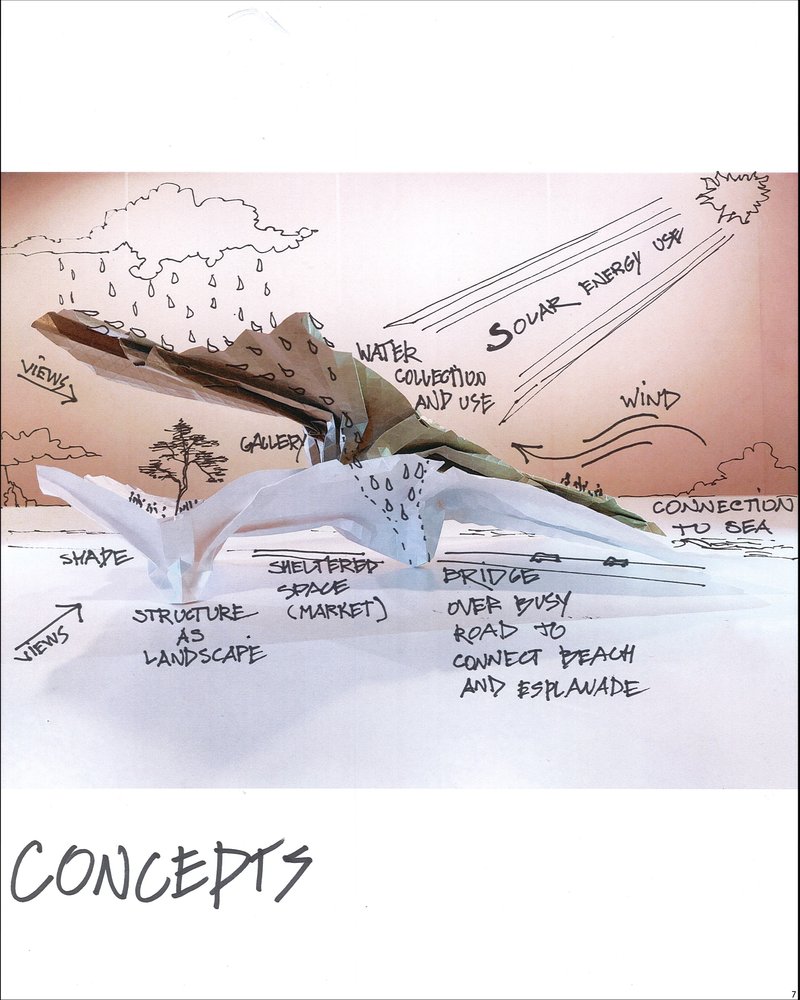
Columns are connected to reverse folds which serve as beams for the structure. These beams can be designed to work with the span they are holding but the curve form and smaller folds will make them highly efficient in load bearing. Services can also hide in the gap these beams create between the top and bottom section.
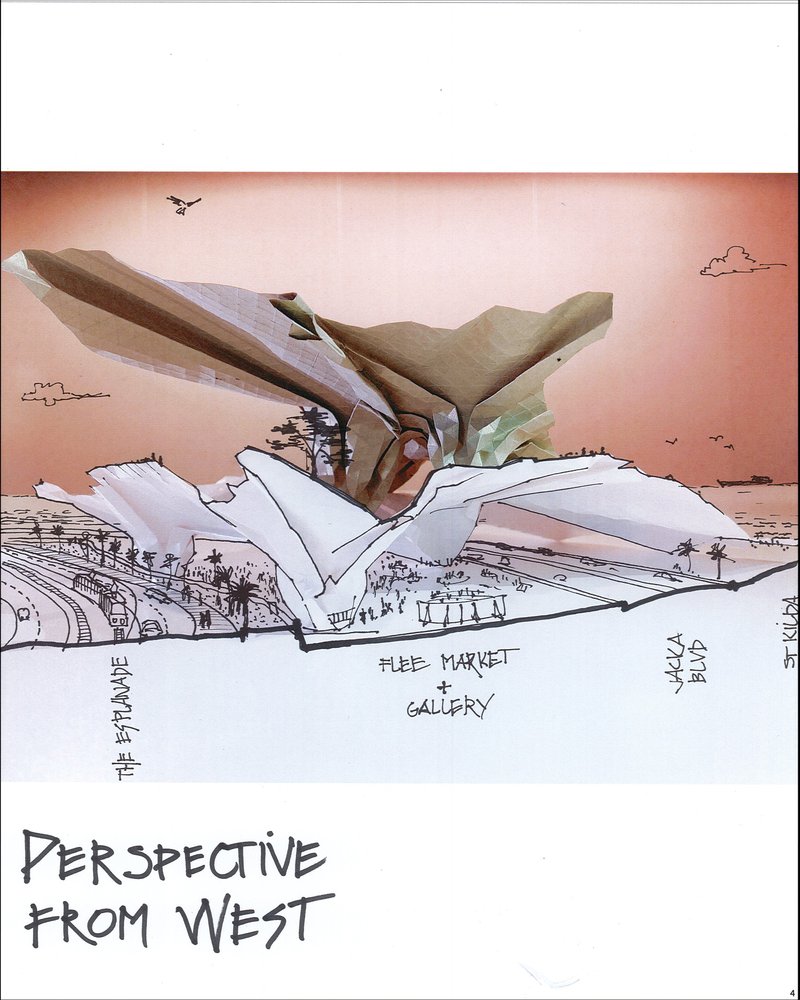
The footprint of the structure can be designed and controlled by strategic placement of the columns as well as size of the columns. Larger columns in the centre help to maintain a more rectangular plan and a more scattered placement of the columns can add dynamic movement to the whole form in plan.
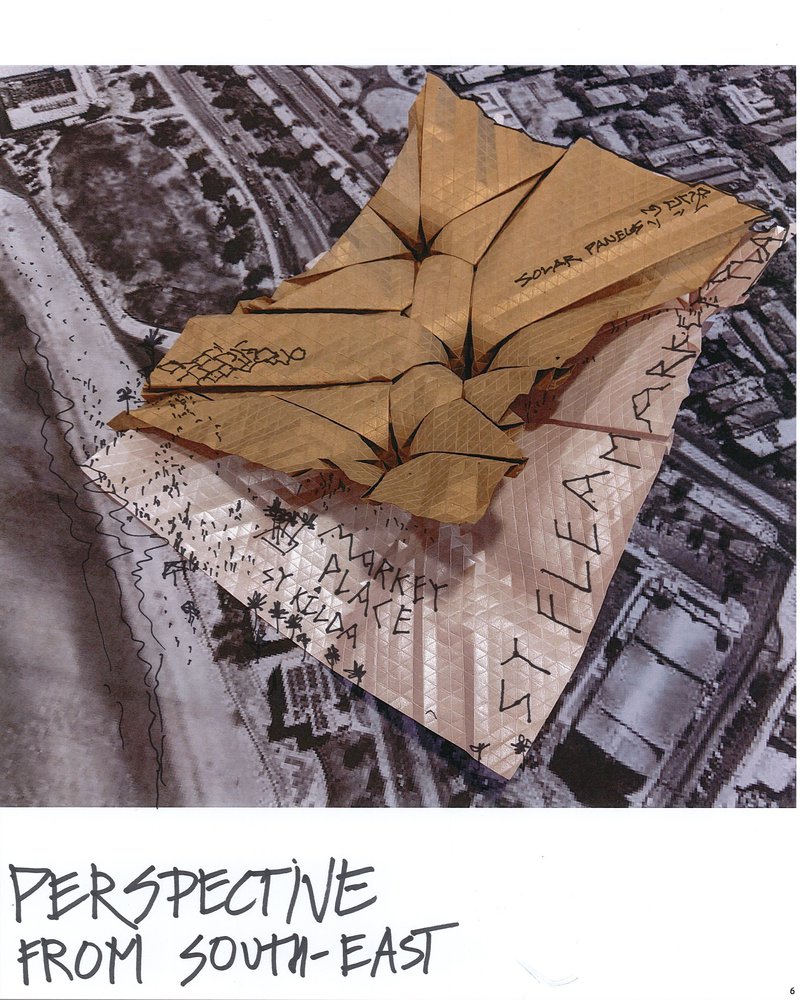
The height of the columns can also vary. This concept can well adapt to the ups and downs of a landscape. It can sit on a fall or an uphill conditioning while creating the desired special qualities.
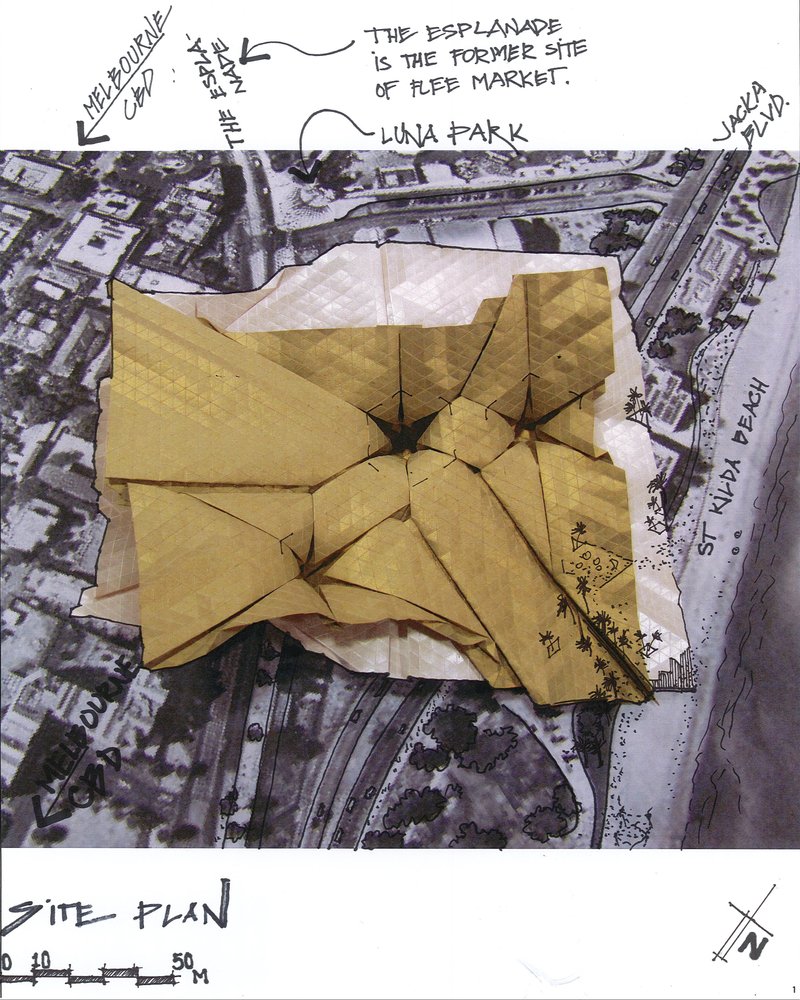
From ocean to city, from folds to structure, St Kilda Flea Market Place bridges the divide between order and chaos.
It is a fold which is unfolding architecture.




Popular Articles
Popular articles from the community

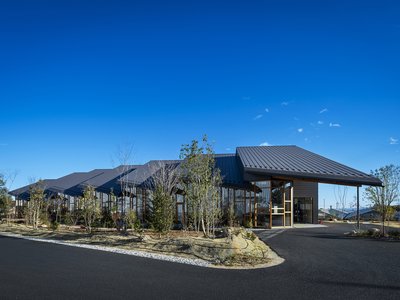
20 Most Popular Office Building Projects of 2025
From biophilic workspaces in India to net-positive energy offices in New Delhi, 20 office building projects that defined architecture in 2025.

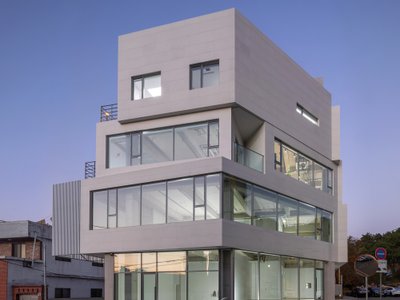
Architects Group RAUM Stacks Offset White Volumes into a Compact Office Tower in Busan
A 524-square-meter building on a tight corner lot in Haeundae plays with sunlight rights and shifting floor plates to create generous terraces.
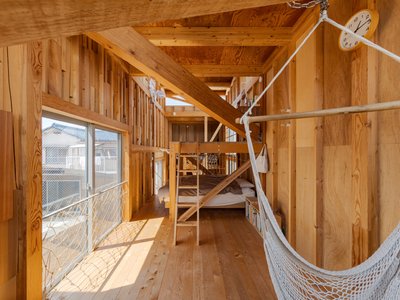
1-1 Architects Builds a Nagoya House and Office from Decades of Stockpiled Timber
A 69-square-meter tower in dense residential Nagoya transforms surplus lumber into a home and workplace for a construction company.
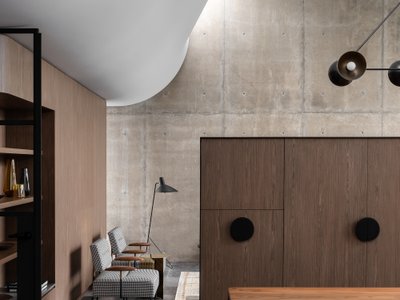
Studio Gram Unfurls a Concrete Curve Through an Adelaide Queen Anne Villa
In Rose Park, a billowing concrete threshold stitches a century-old house to a sun-chasing pavilion organized around an existing pool.


Similar Reads
You might also enjoy these articles

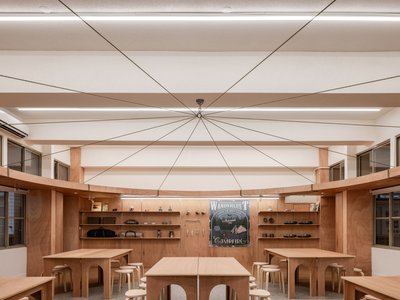
317studio Turns an 87 m² Classroom into a Forest Clearing for Scouts in New Taipei City
A rope canopy, student-made specimens, and campfire geometry replace rows of desks in this Scouting classroom in Xizhi District.
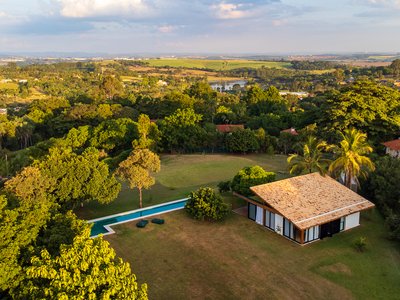
24 7 Arquitetura Builds a Timber Pavilion as a Family's First Act on a 5,000 m² Brazilian Plot
In Jaguariúna, a prefabricated glulam house nestles among mature trees as the opening move of a larger residential masterplan.
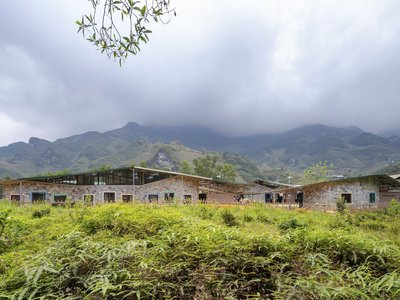
1+1>2 Architects Build a School from 900 Blocks of Hmong Stone on Vietnam's Rocky Plateau
On a barren valley in Ha Giang province, a community quarried its own stone to raise a kindergarten and primary school rooted in Hmong identity.
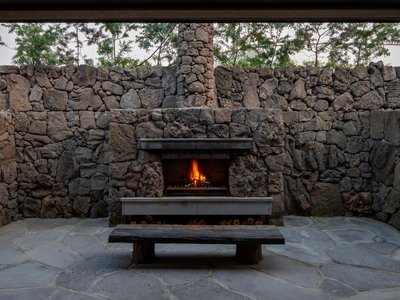
100A Associates Builds a Volcanic Stone Retreat on Jeju Island Rooted in Ritual and Restraint
Watarstay [Wa:Tar] in Bongseong-ri channels Jeju's basalt, reed, and hemp into a 150 m² hospitality space shaped by contemplation.


Explore Conceptual Architecture Competitions
Discover active competitions in this discipline




The Global Benchmark for Architecture Dissertation Awards


Challenge to design locus for the upliftment of human rights


Challenge to design a learning and healing center


Challenge to re-imagine a department store in present times
Comments (0)
Please login or sign up to add comments
No comments yet. Be the first to comment!