Sustainable Residential Design: Coihues Neighborhood by 0.7 Arquitectura
This article explores the sustainable design principles behind Coihues Neighborhood, highlighting its connection to nature and privacy.


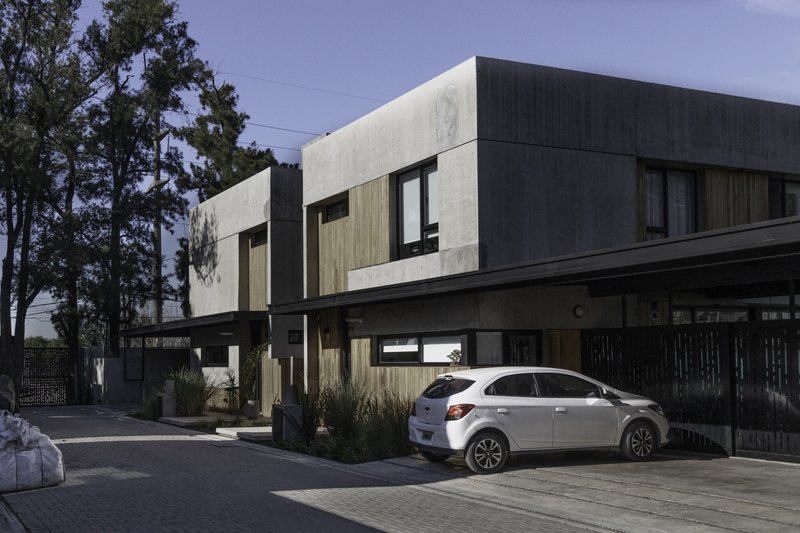
Coihues Neighborhood, located in Villa Udaondo, Argentina, is a pioneering residential development that embraces sustainable design principles and creates a harmonious relationship with its natural surroundings. Designed by 0.7 Arquitectura, this neighborhood consists of ten private homes, each thoughtfully placed to optimize natural light, privacy, and connection with the landscape.
Thoughtful Layout for Sustainability
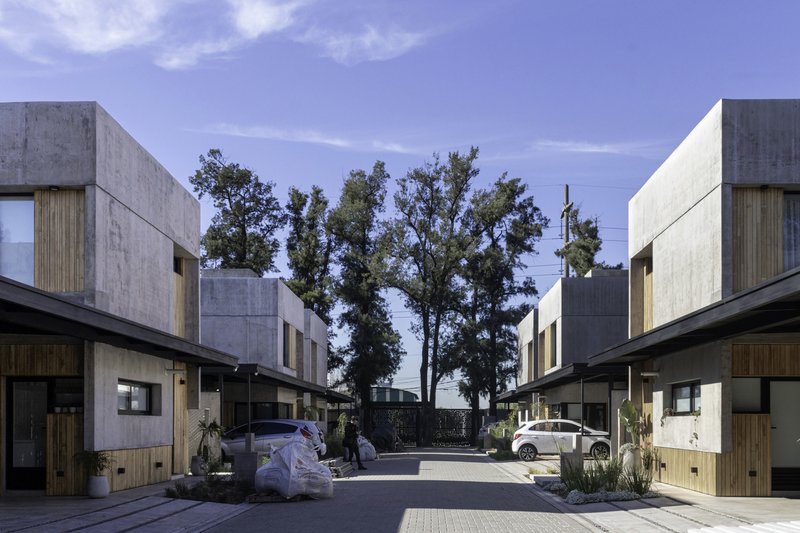
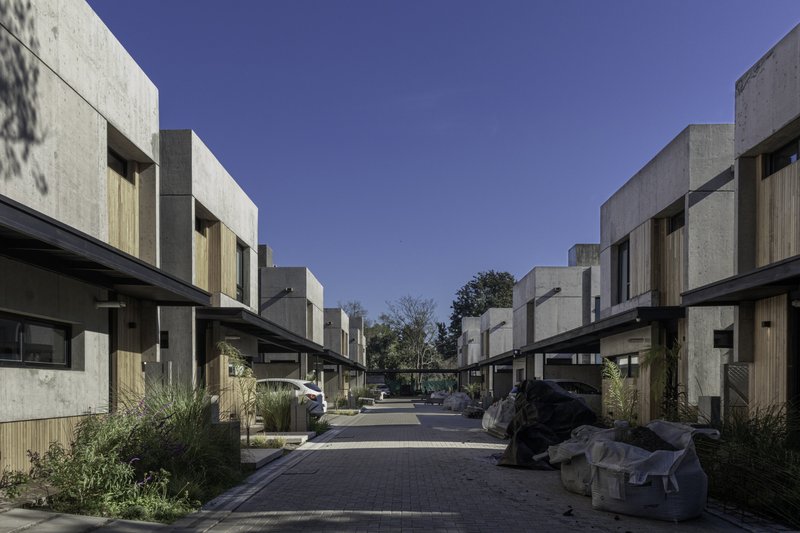
The design of Coihues Neighborhood centers on a carefully considered layout that enhances sunlight exposure while preserving the integrity of the site’s natural environment. The houses are arranged on both sides of a central community street, which allows for private access to each unit. The homes are oriented alternately to maximize solar gain, with units opening towards their private parks, ensuring that each home benefits from ample sunlight throughout the day.
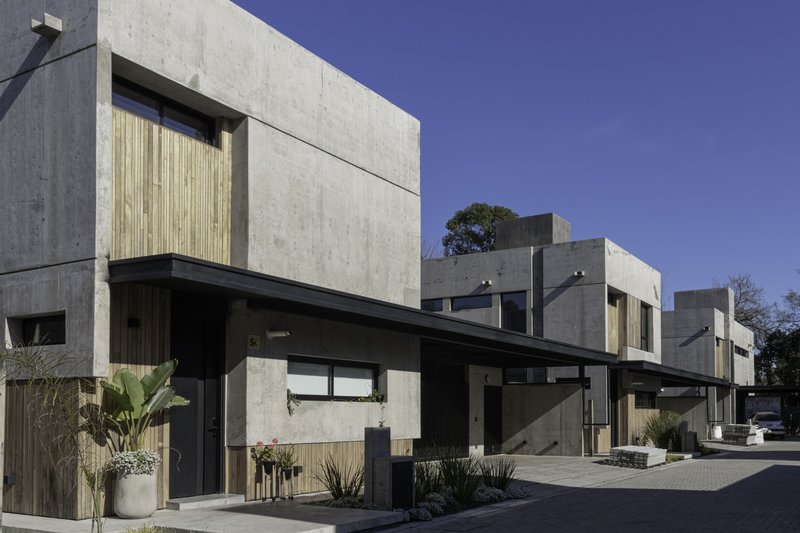
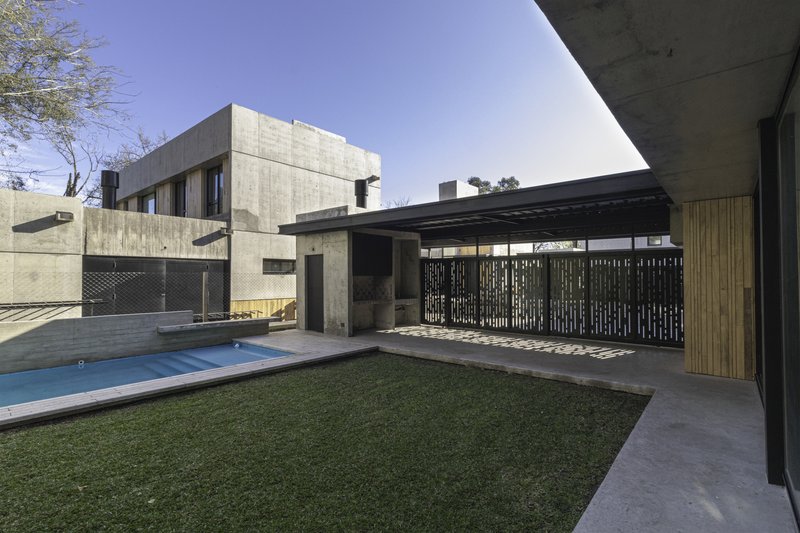
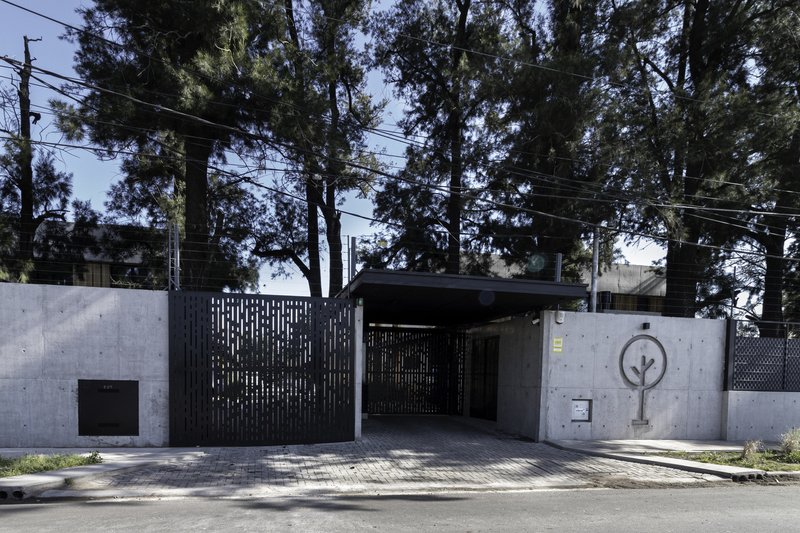
The street itself is lined with rows of trees, which provide a natural barrier between the homes and the vehicular area, promoting a sense of tranquility and privacy. The positioning of each home is a key element in the design, allowing for a small-scale neighborhood feel while maintaining large, private outdoor areas for each unit. This layout is integral in creating high-quality community spaces that offer a balance between privacy and social interaction.
Architectural Design and Materials
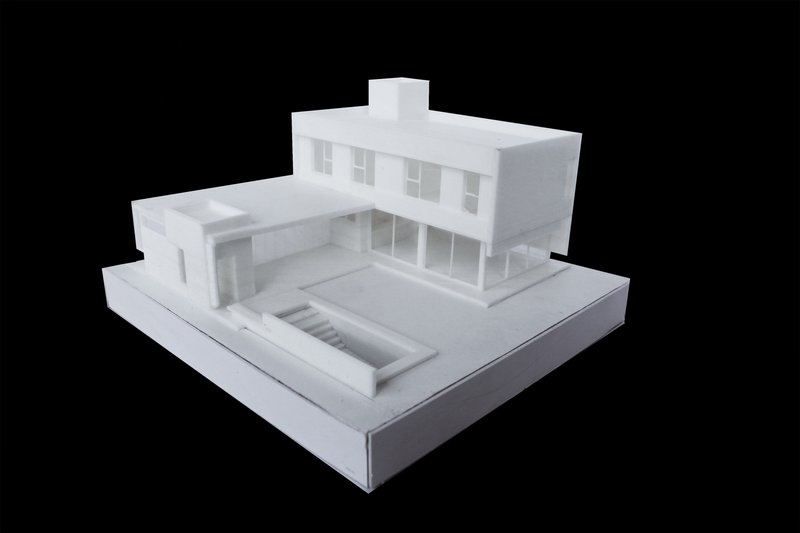
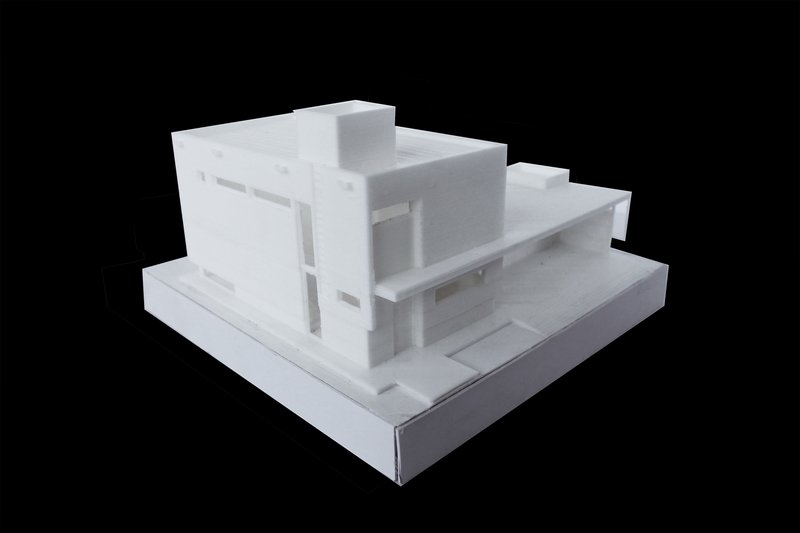
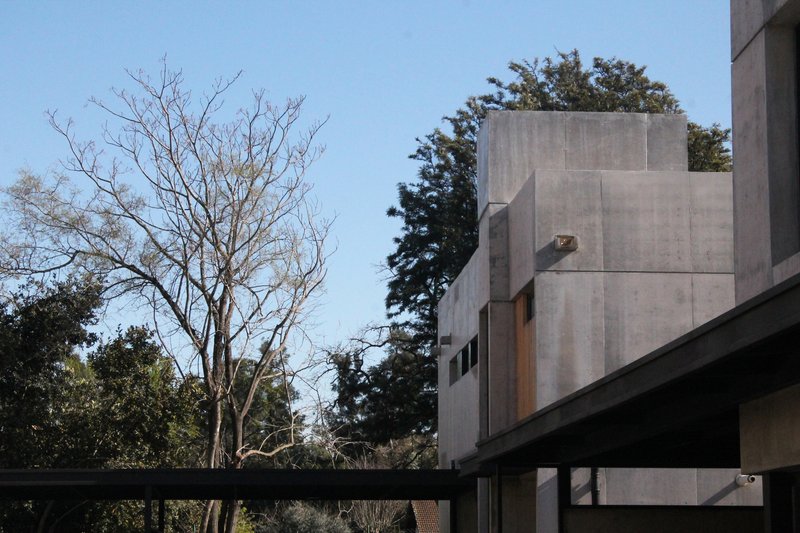
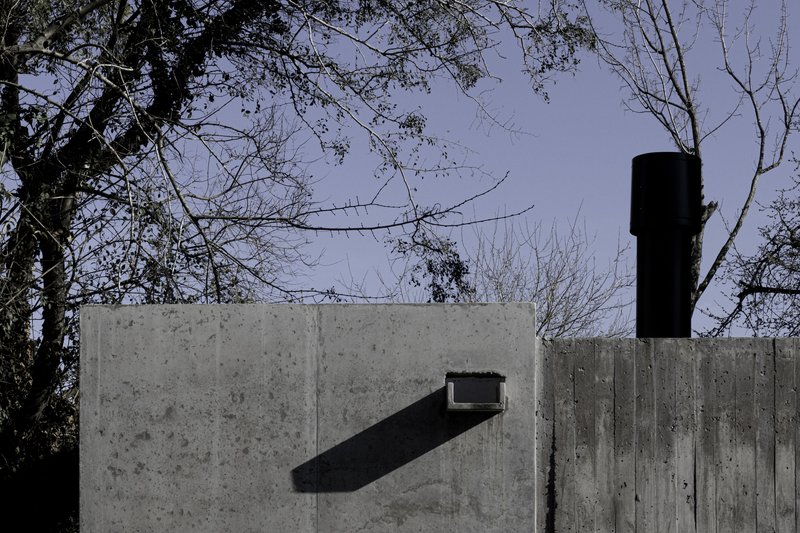
The homes in Coihues Neighborhood are based on a unique typology that avoids repetition by mirroring and alternating three different house designs. This variation helps break up the monotony of the development, ensuring that each home feels individual while maintaining a cohesive aesthetic.
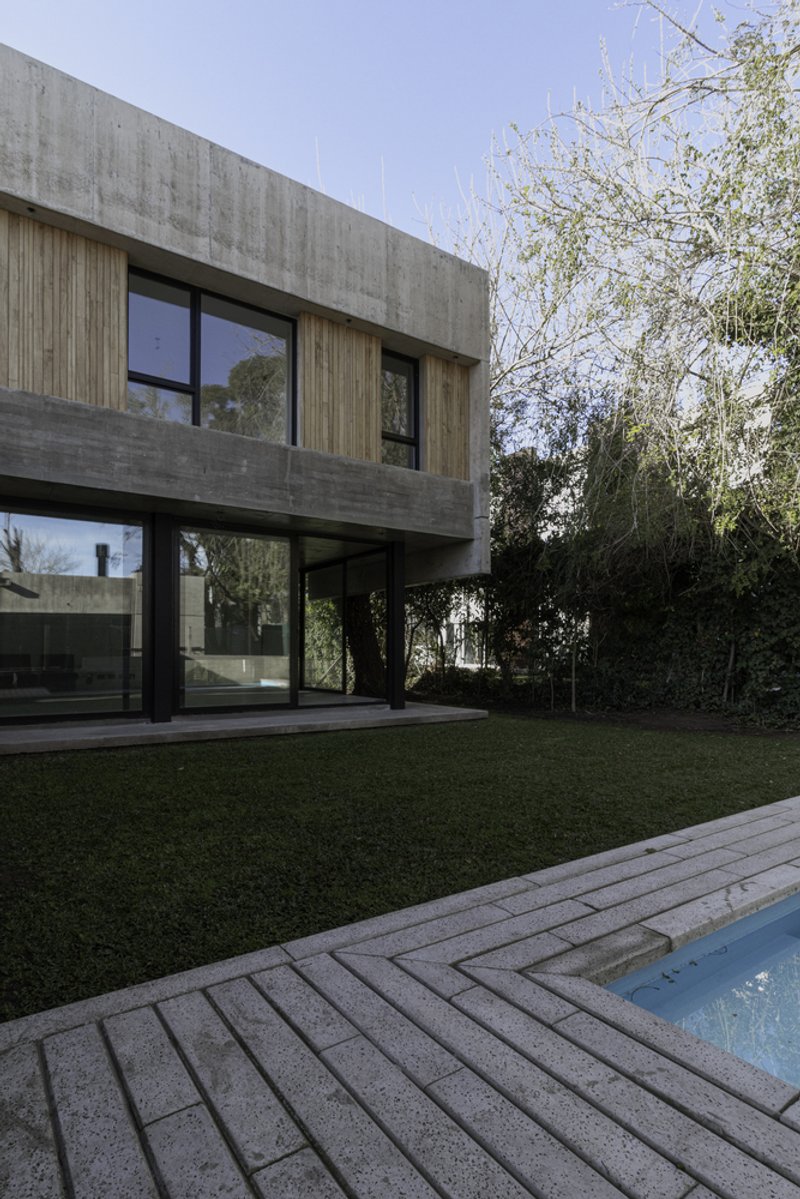
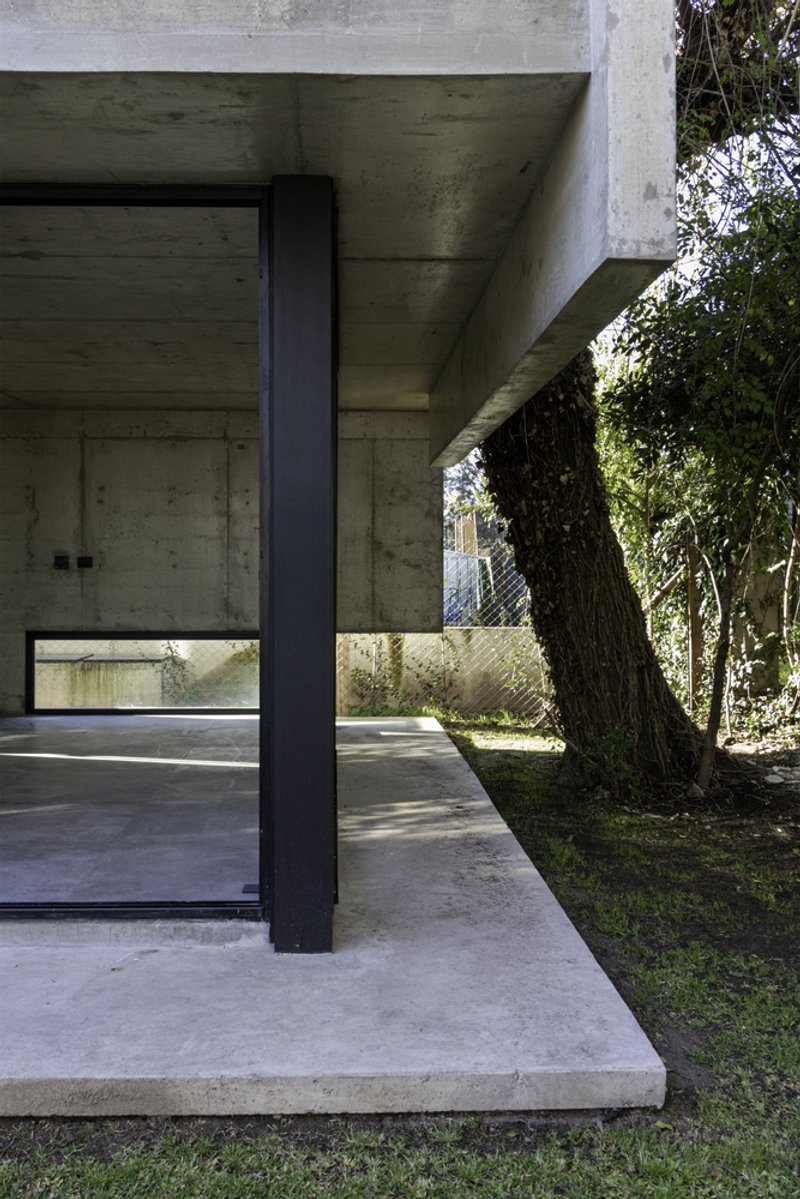
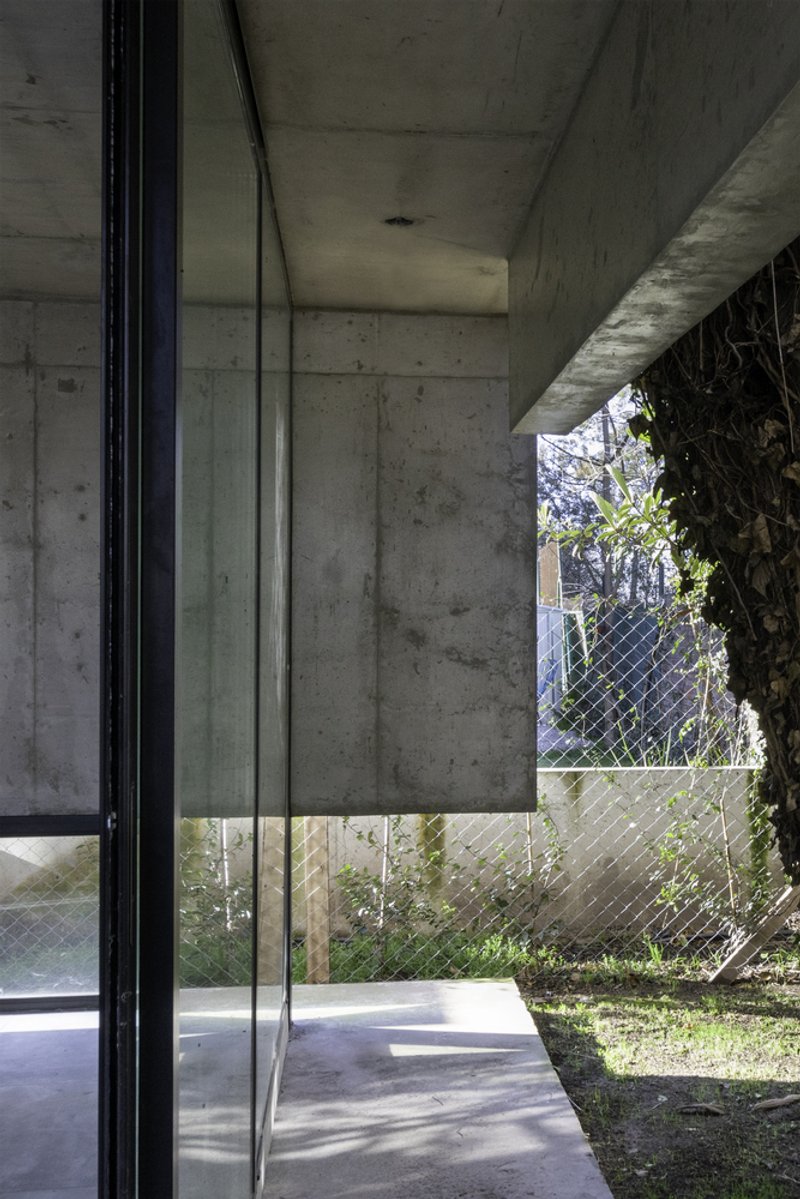
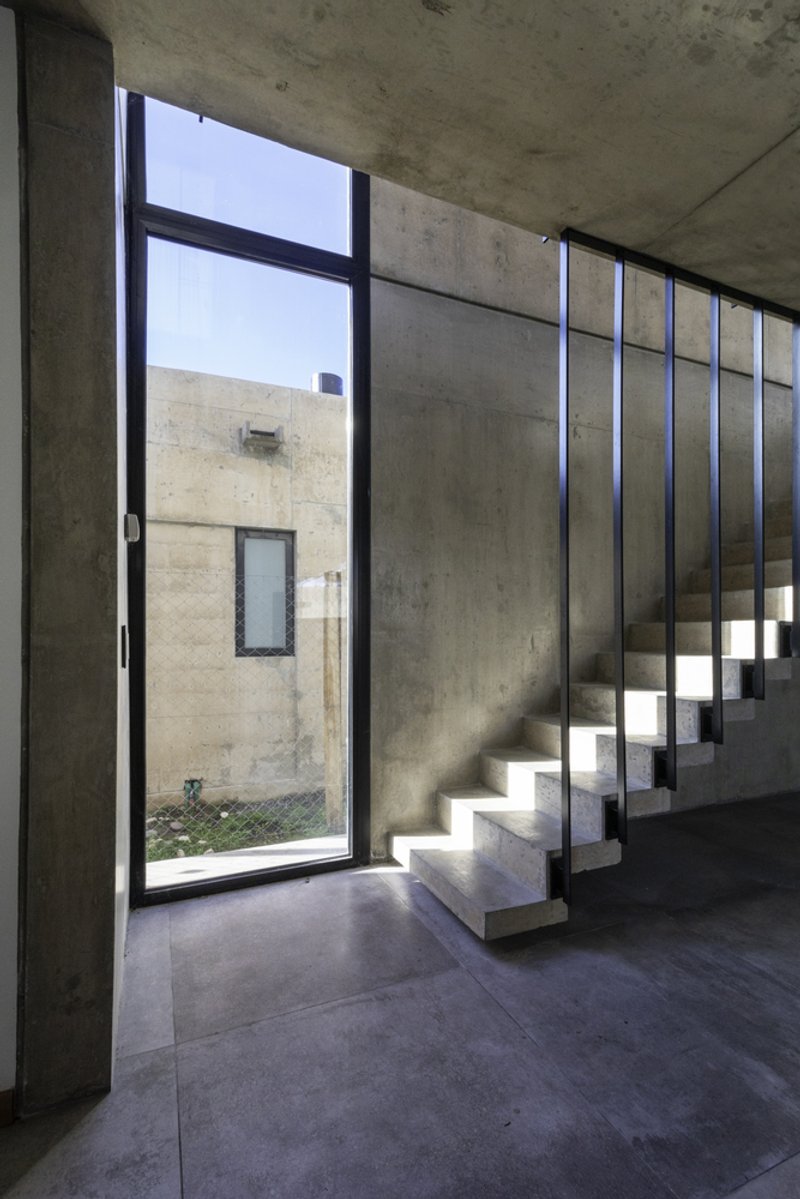
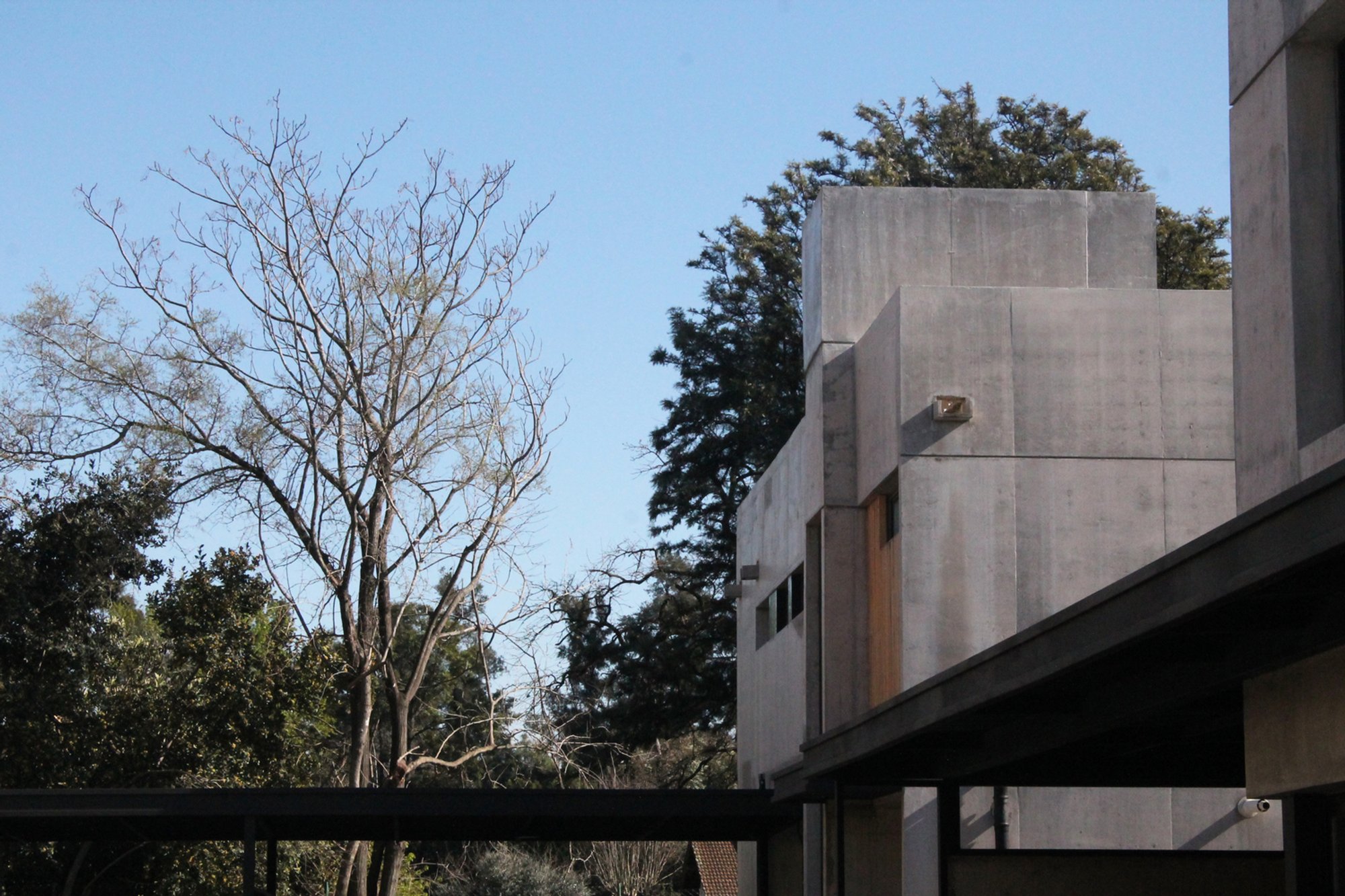
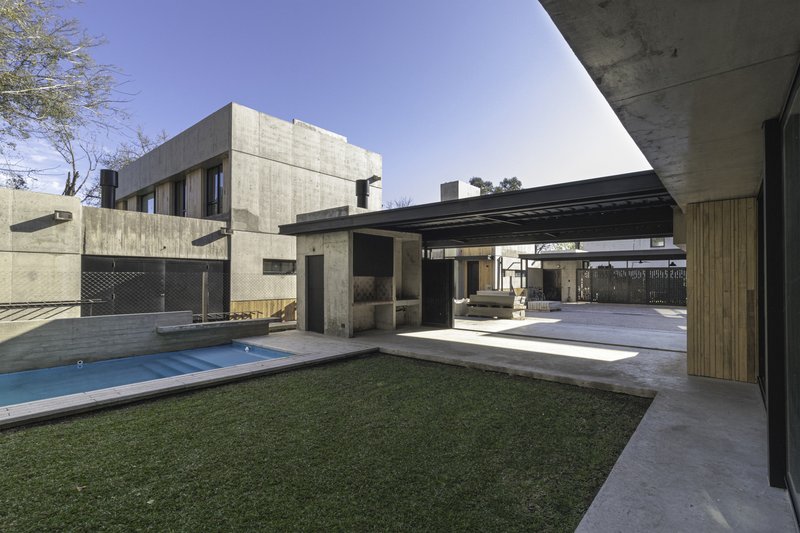
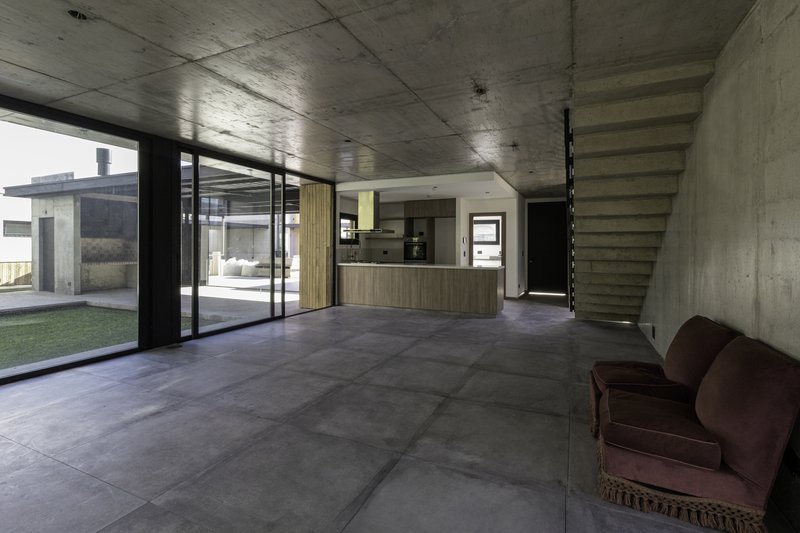
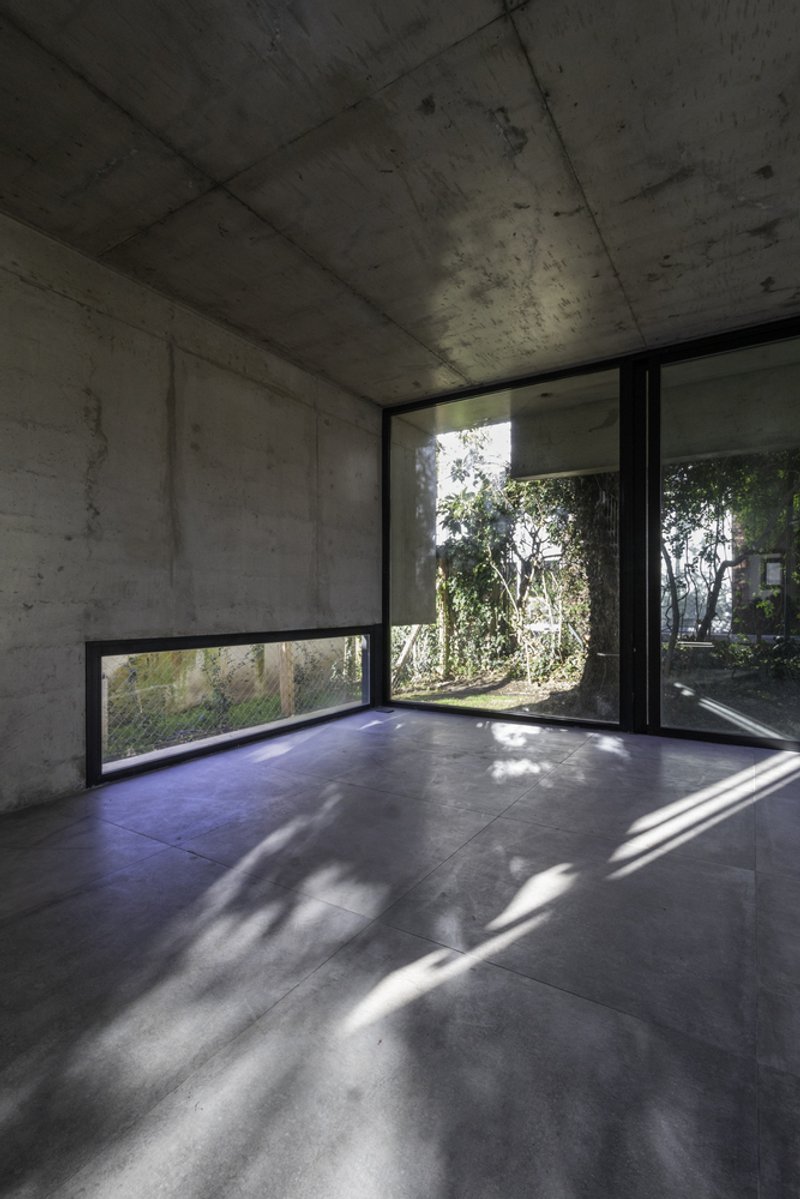
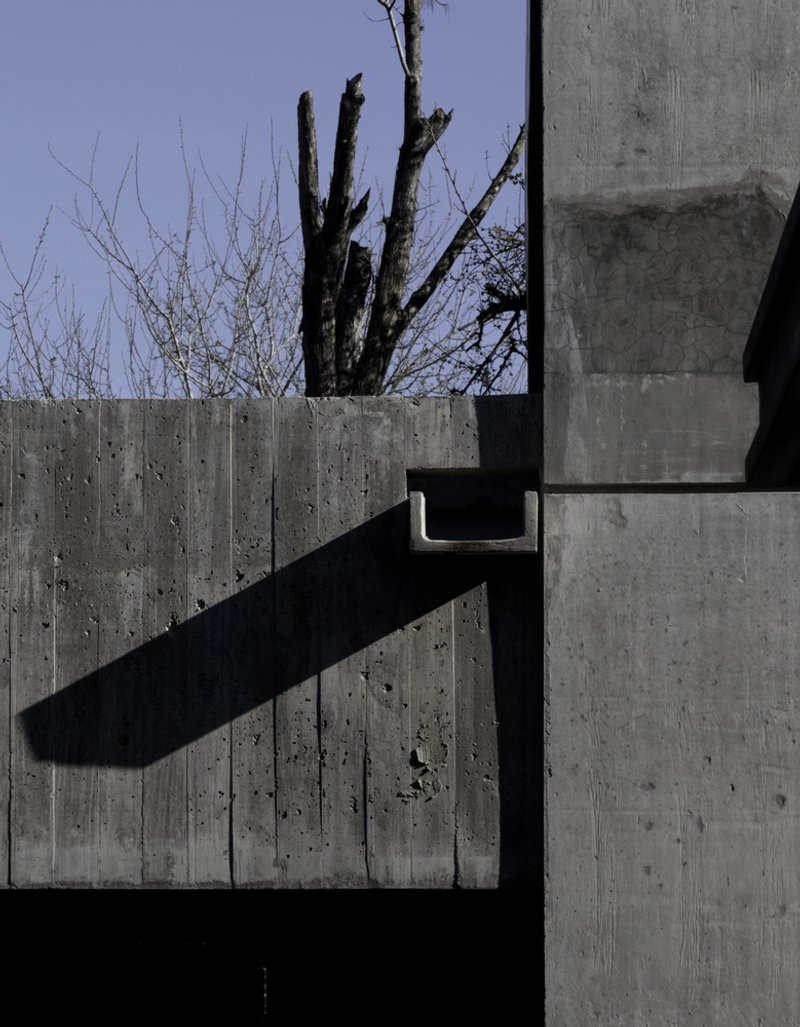
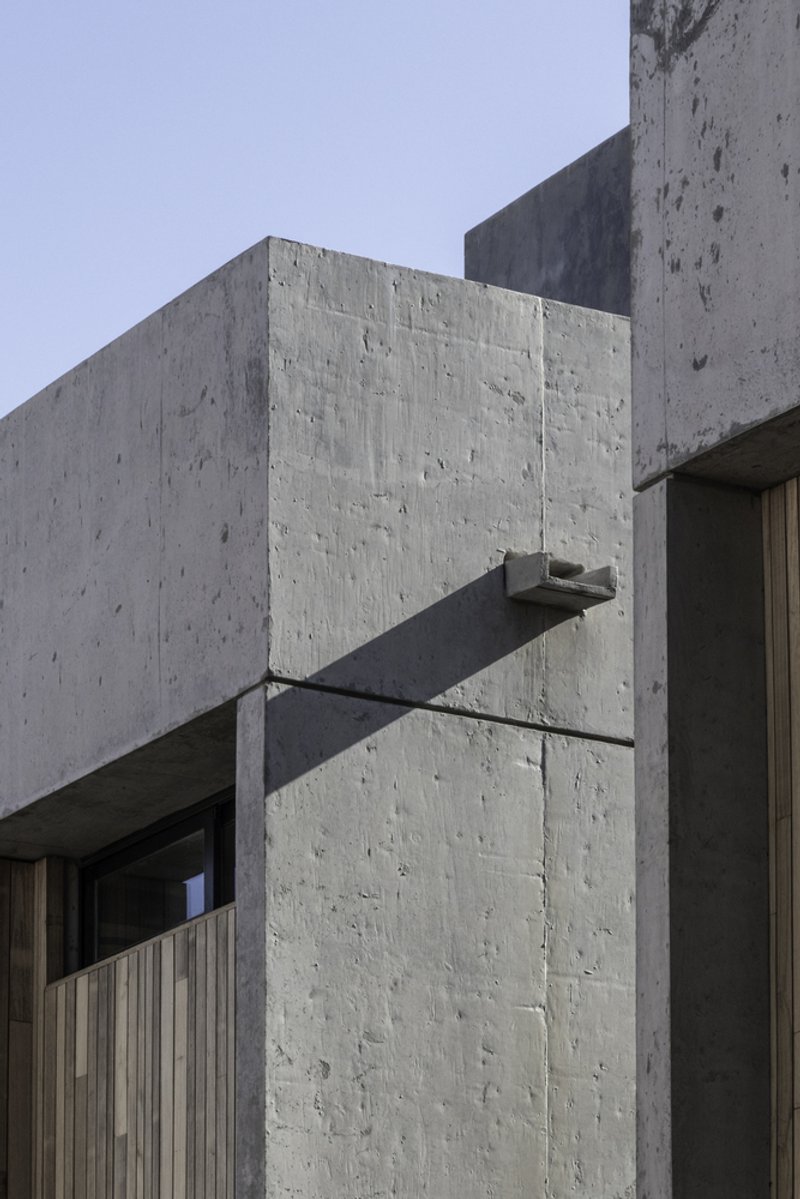
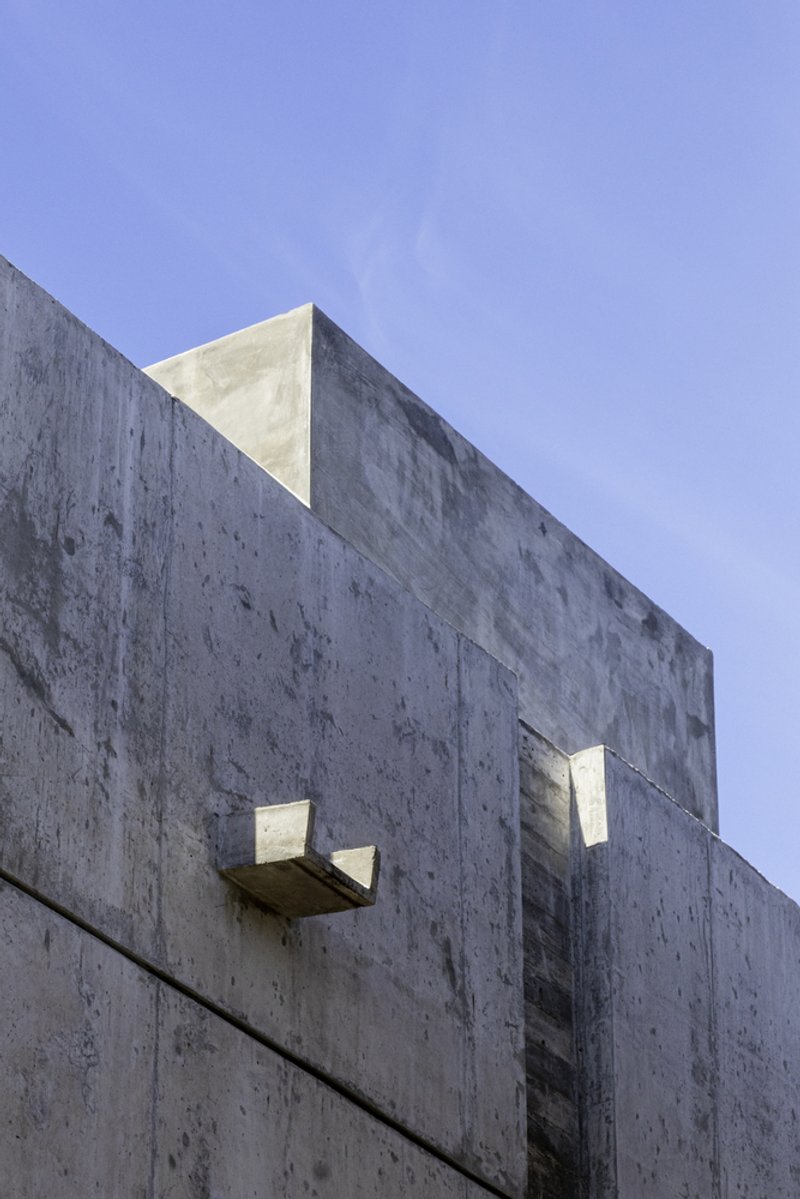
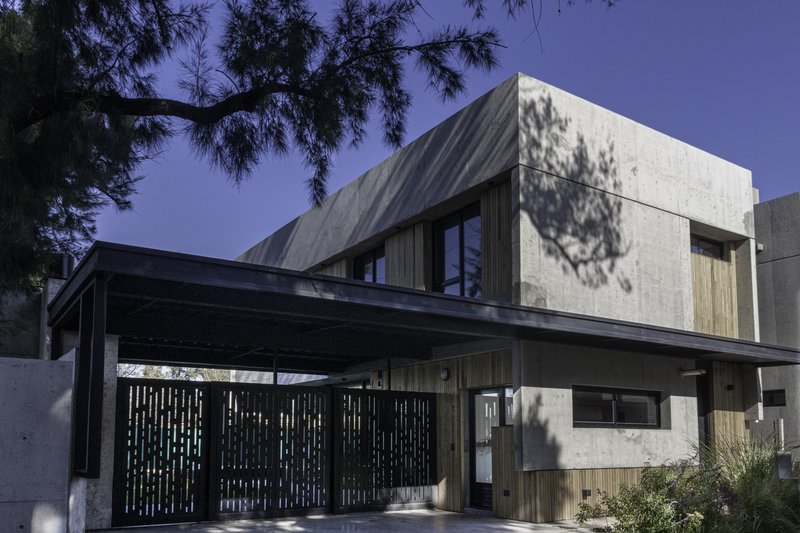
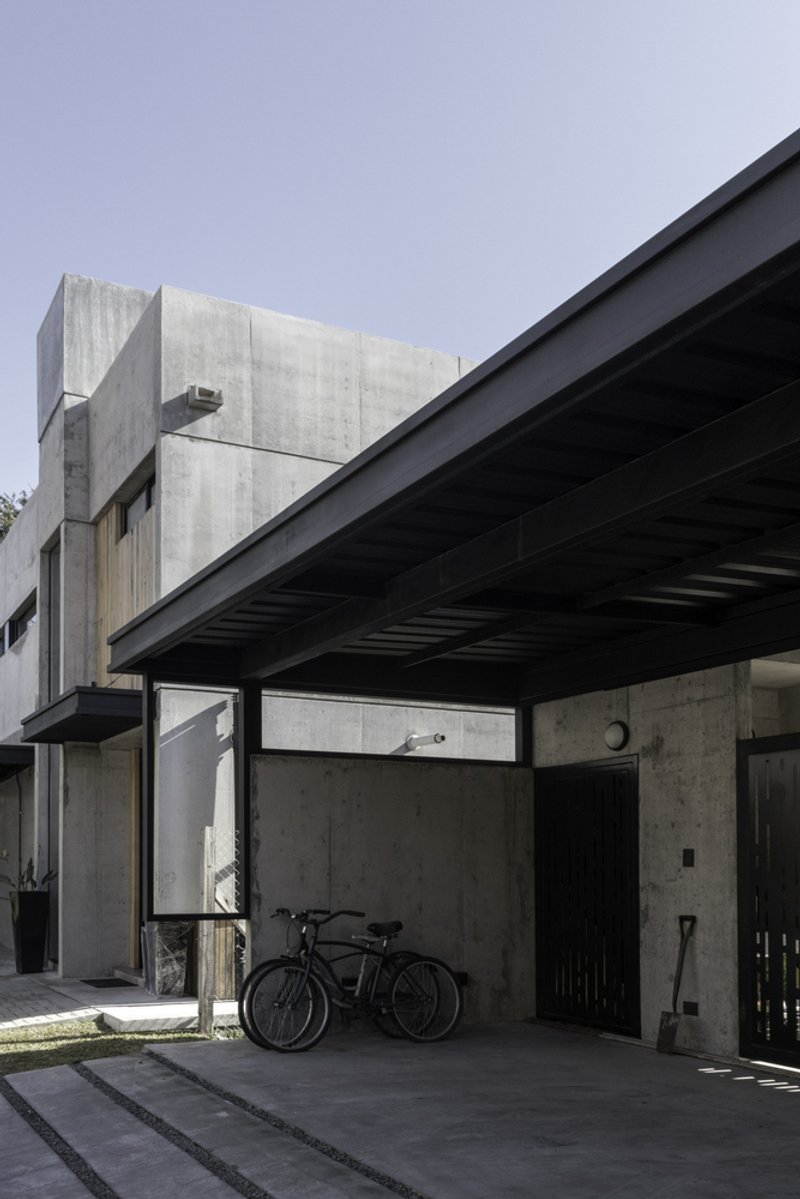
The architectural language of the project is defined by the use of reinforced concrete, which serves as both the structural base and exterior enclosure of the homes. The material’s strength allows for the creation of hanging planes that lighten the impact of the concrete, while also providing a protective shell for the private spaces on the upper floors. This innovative use of concrete ensures that the homes are both functional and aesthetically appealing, while also reducing the environmental footprint of the construction process.
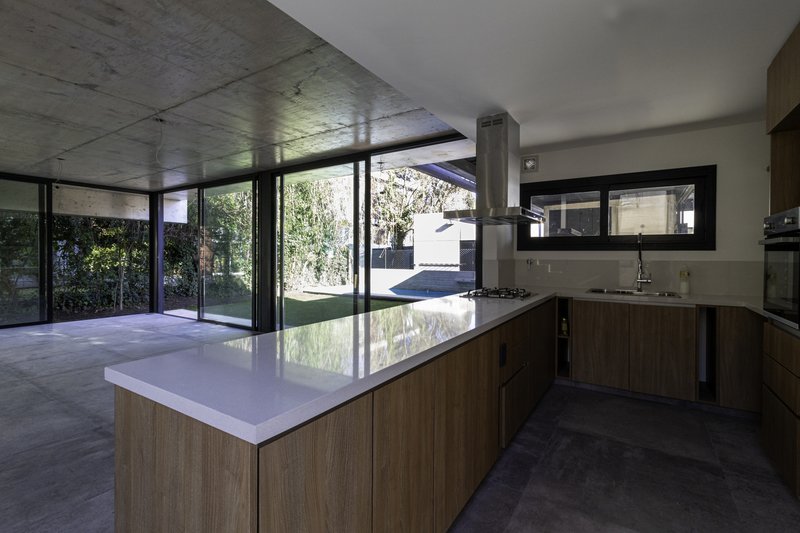
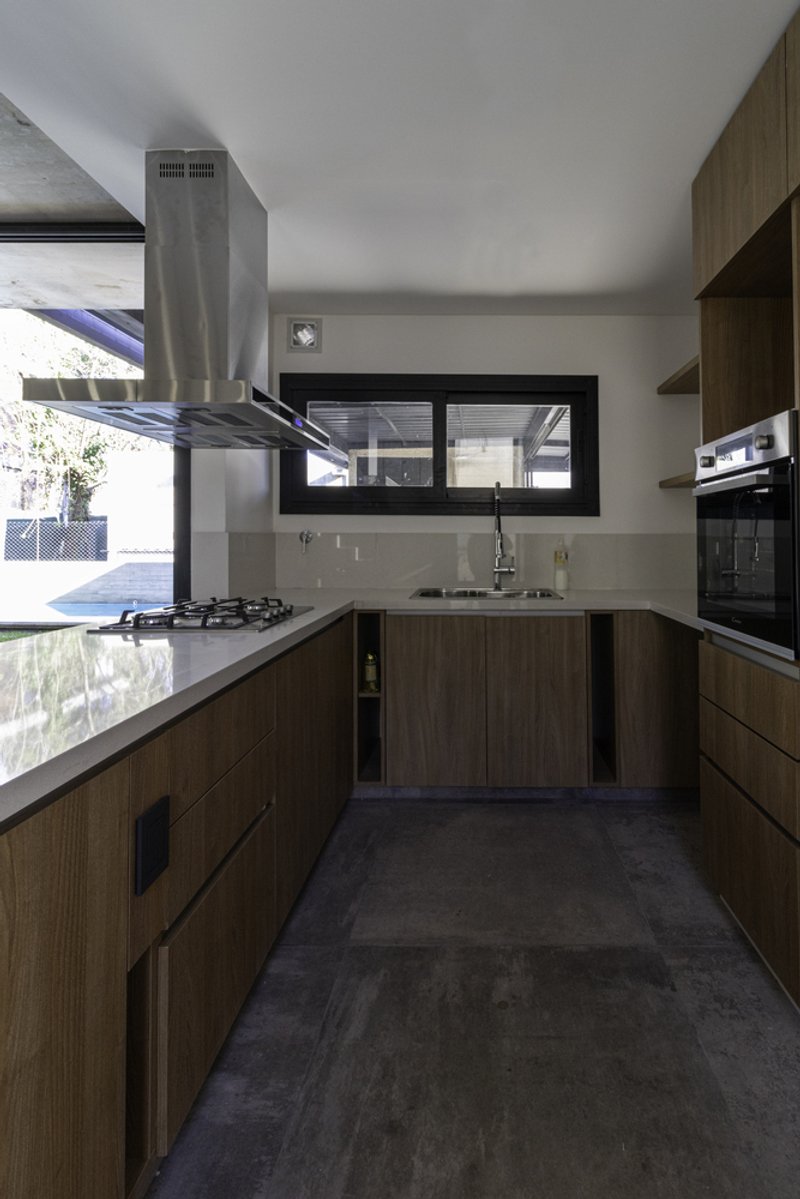
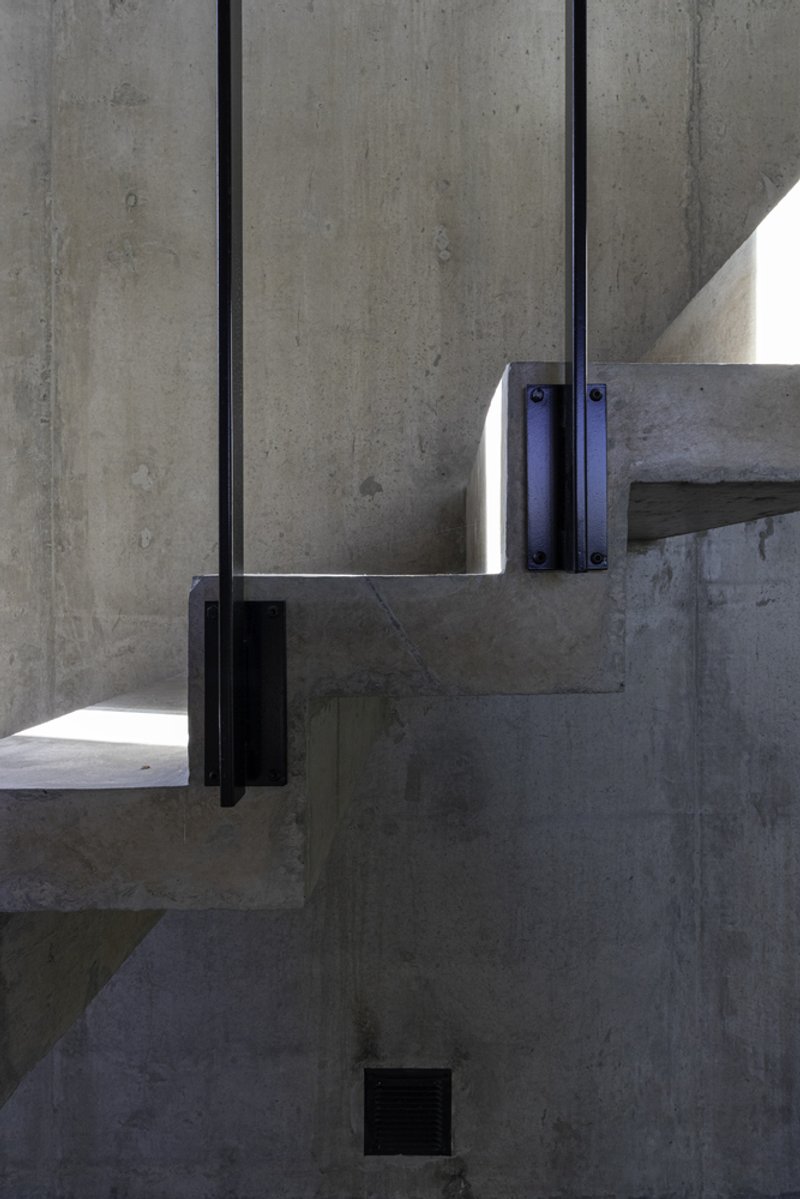
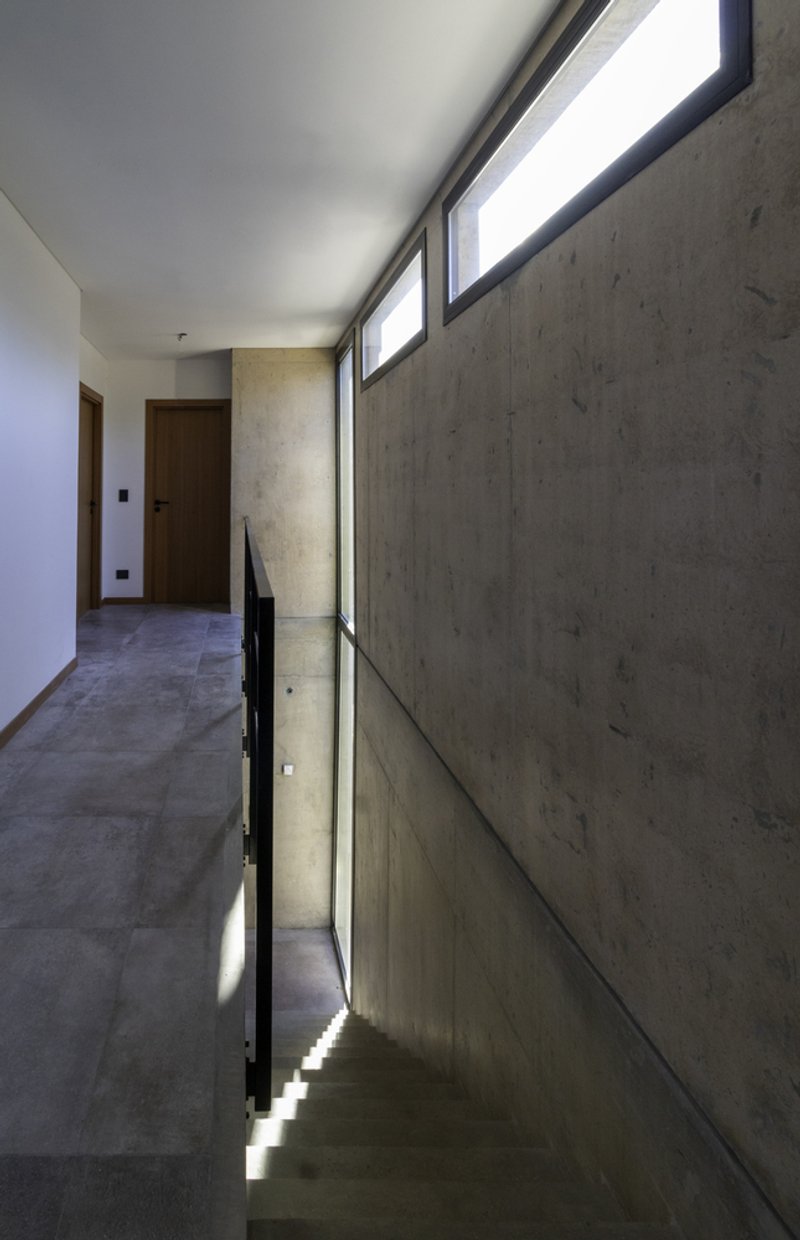
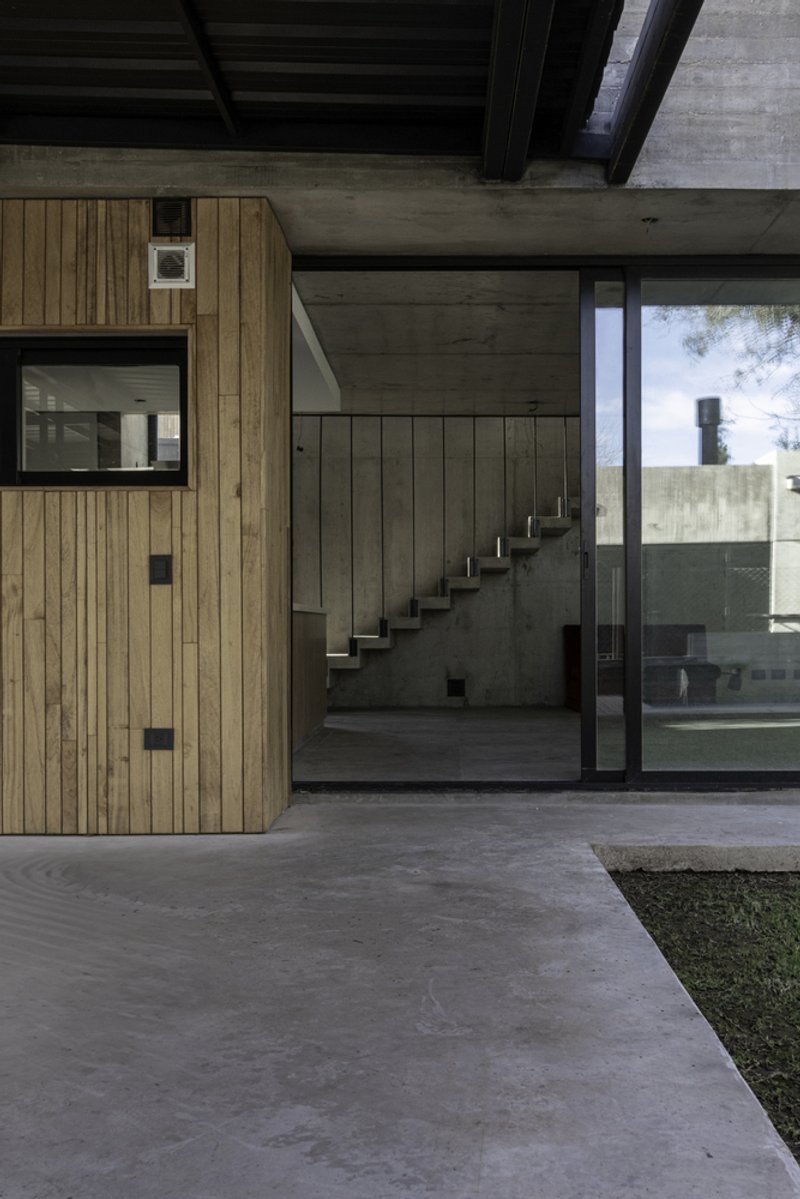
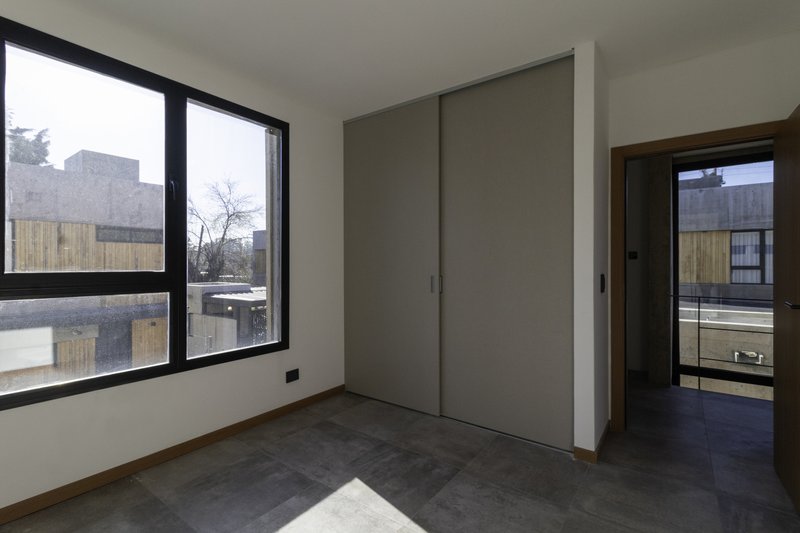
Wood cladding complements the concrete façades, introducing warmth and texture to the design. The combination of concrete and wood not only enhances the visual appeal of the homes but also aligns them with the natural environment of the forested site. This sustainable use of materials contributes to the homes' integration with the landscape, creating a seamless transition between the built environment and the surrounding nature.
Sustainable Features and Community Integration
The design of Coihues Neighborhood also focuses on creating a sense of community through shared spaces that encourage interaction while respecting privacy. Each house is equipped with private garages and outdoor park areas, providing residents with ample space for recreation and relaxation.
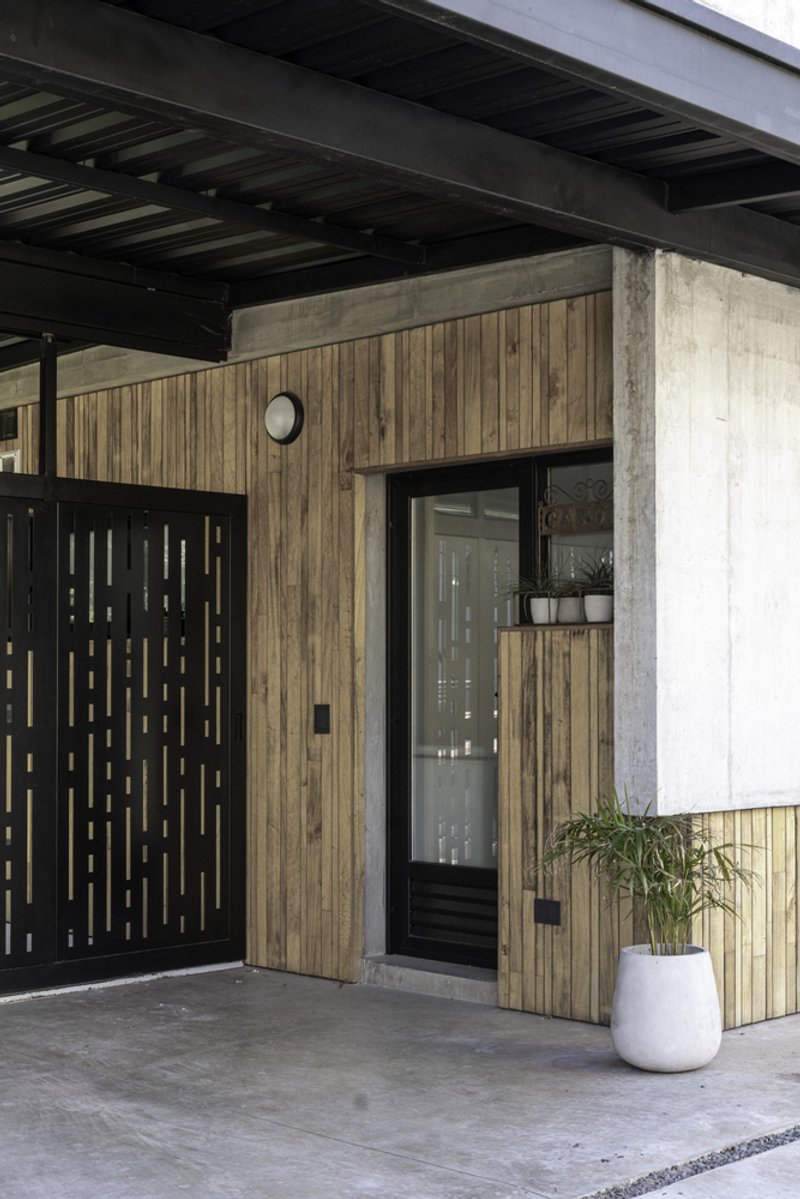
The open galleries that connect the living areas to the outdoor spaces help foster a seamless flow between indoor and outdoor living. These galleries open onto the park, enhancing the homes' connection to the environment while providing a shaded and protected outdoor area for residents to enjoy.
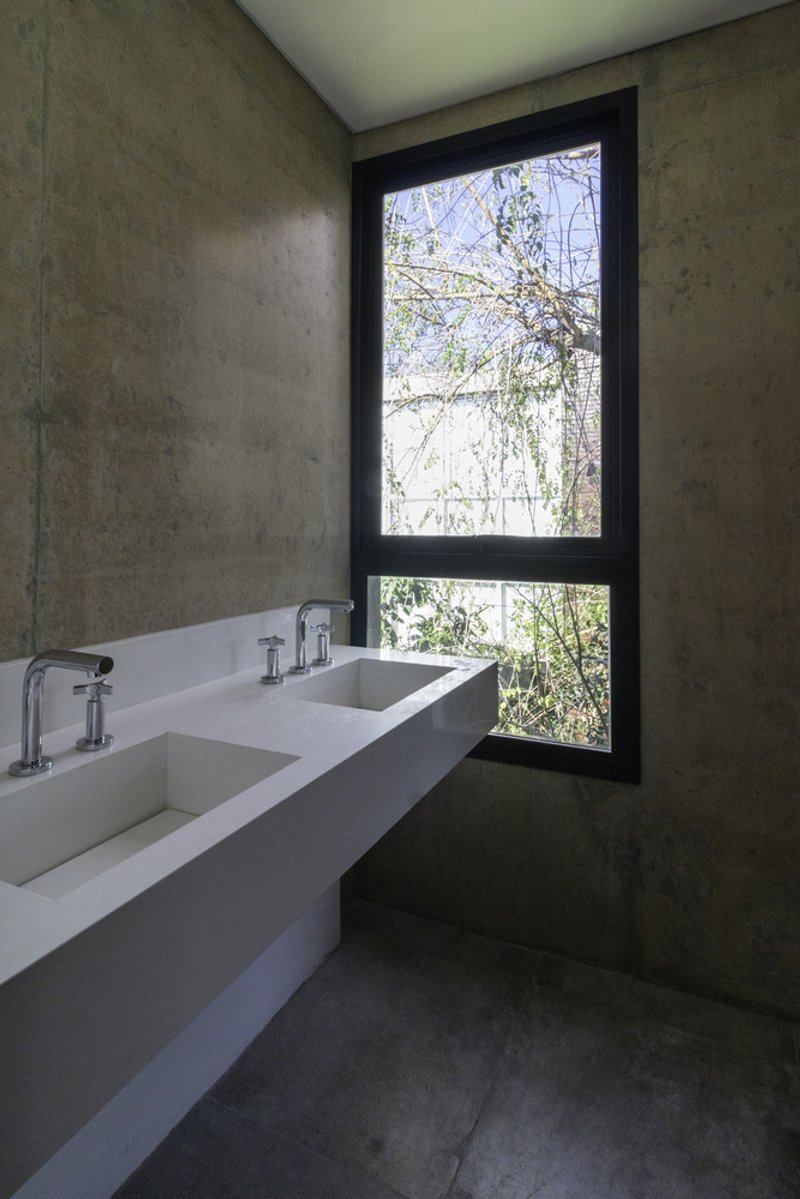
The sustainable approach to the design of Coihues Neighborhood is evident in the careful selection of materials and the emphasis on natural light, ventilation, and privacy. The thoughtful arrangement of spaces, both public and private, ensures that residents can enjoy a harmonious and comfortable living environment that is in tune with the natural landscape.
A New Vision for Residential Living
Coihues Neighborhood represents a new vision for residential communities, where sustainability and design excellence go hand in hand. By focusing on thoughtful orientation, the use of sustainable materials, and the creation of private, green spaces, 0.7 Arquitectura has created a model for future residential developments that prioritize both the environment and the well-being of residents.