

Tale of an Ocean: Oceanarium Complex at Sonadia - A Sustainable Vision
Where Architecture Meets Ocean Conservation: Sustaining Life, One Wave at a Time.


The Tale of an Ocean is a groundbreaking project by Saraf Nawer, recently recognized with the People's Choice Award in the UnIATA 2024. Located on Sonadia Island near Cox’s Bazar, Bangladesh, this proposed oceanarium complex stands out not only as an architectural marvel but as a beacon of sustainable design aimed at preserving and rejuvenating a fragile ecosystem. The complex is positioned on 13.3 acres of an ecologically critical area (ECA) designated by Bangladesh’s Environment Conservation Act, underlining its strategic importance for conservation and education.
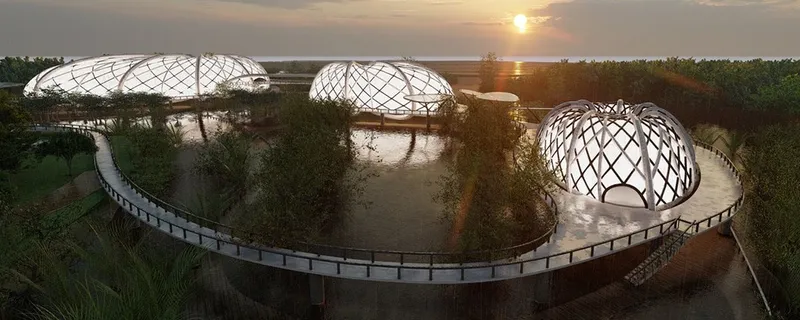
The Ecological Setting of Sonadia Island
Sonadia Island, nestled near the Bay of Bengal, is a unique ecological hub with sand dunes, estuarine environments, and black mangrove forests. It hosts over 50 vulnerable species and faces complex environmental threats due to illegal land use, climate change, and tidal surges. Recognizing its ecological value, the Bangladesh government has allocated part of this island for the Tale of an Ocean, aiming to create a sustainable structure that harmonizes with its surroundings.
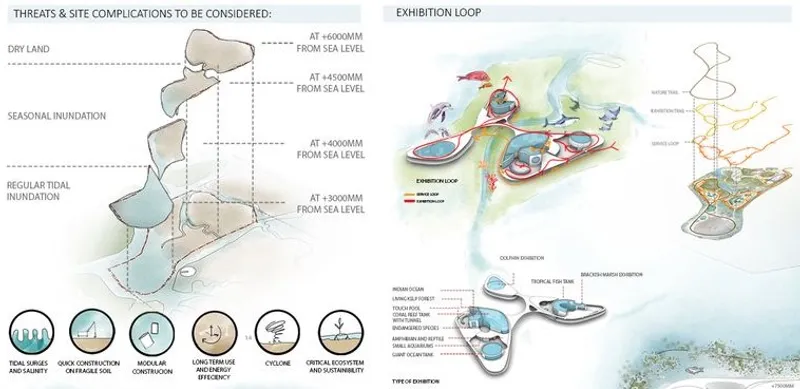
Out of Sonadia's 8,300-acre nature reserve, 900 acres are designated for public engagement, with 13.3 acres earmarked specifically for this oceanarium project. The architectural approach is based on an energy-efficient, modular design that can withstand the island's challenging environmental conditions, including high salinity, frequent water surges, and seasonal cyclones.
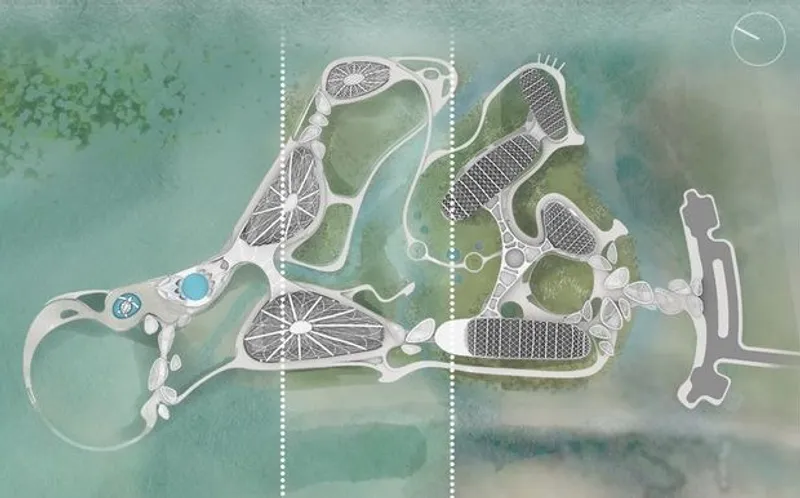
Purpose
The Tale of an Ocean oceanarium complex diverges from typical aquarium designs. Instead of confining marine life to isolated tanks, the design integrates outdoor natural exhibitions, creating a habitat that mimics the creatures' natural environments. The facility’s main objectives are threefold:
Rescue and Rehabilitation: Provide a safe, semi-natural habitat for marine life, especially vulnerable and rescued species.
Public Education and Awareness: Promote awareness about marine ecosystems and the environmental threats they face.
Research and Conservation: Enable scientific research on marine conservation and sustainable practices.
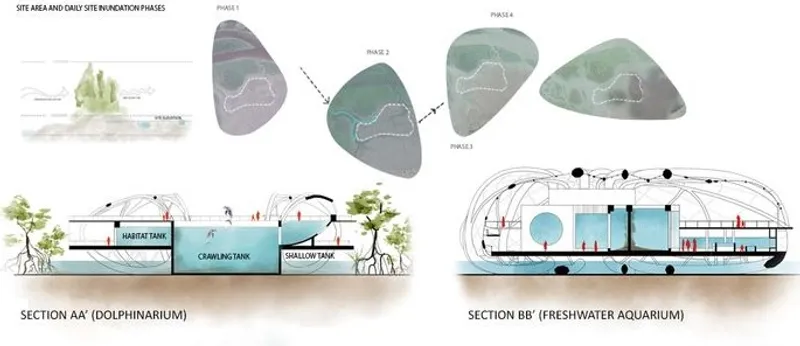
The complex comprises several zones including saltwater, freshwater, and dolphinarium exhibits, as well as a heritage museum, a research center, and public spaces such as a conference area and cafeteria. Notably, the dolphinarium is designed with shallow pools that mimic natural feeding zones, enhancing the experience for both dolphins and visitors.
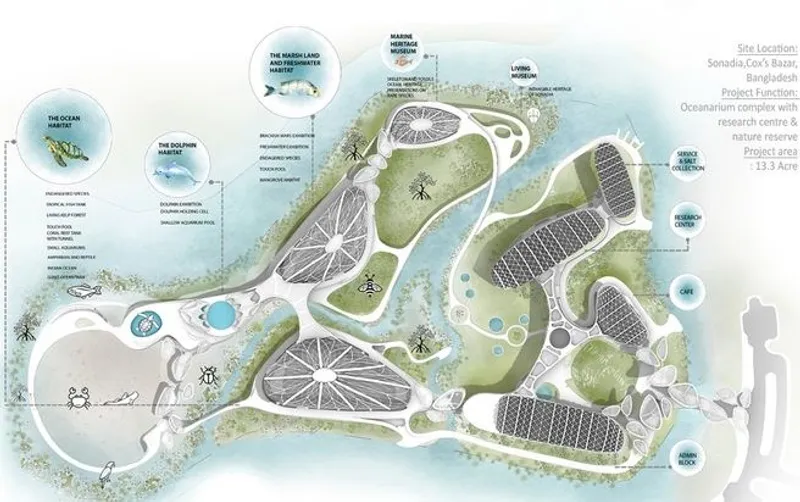
Resilient and Eco-Friendly Design
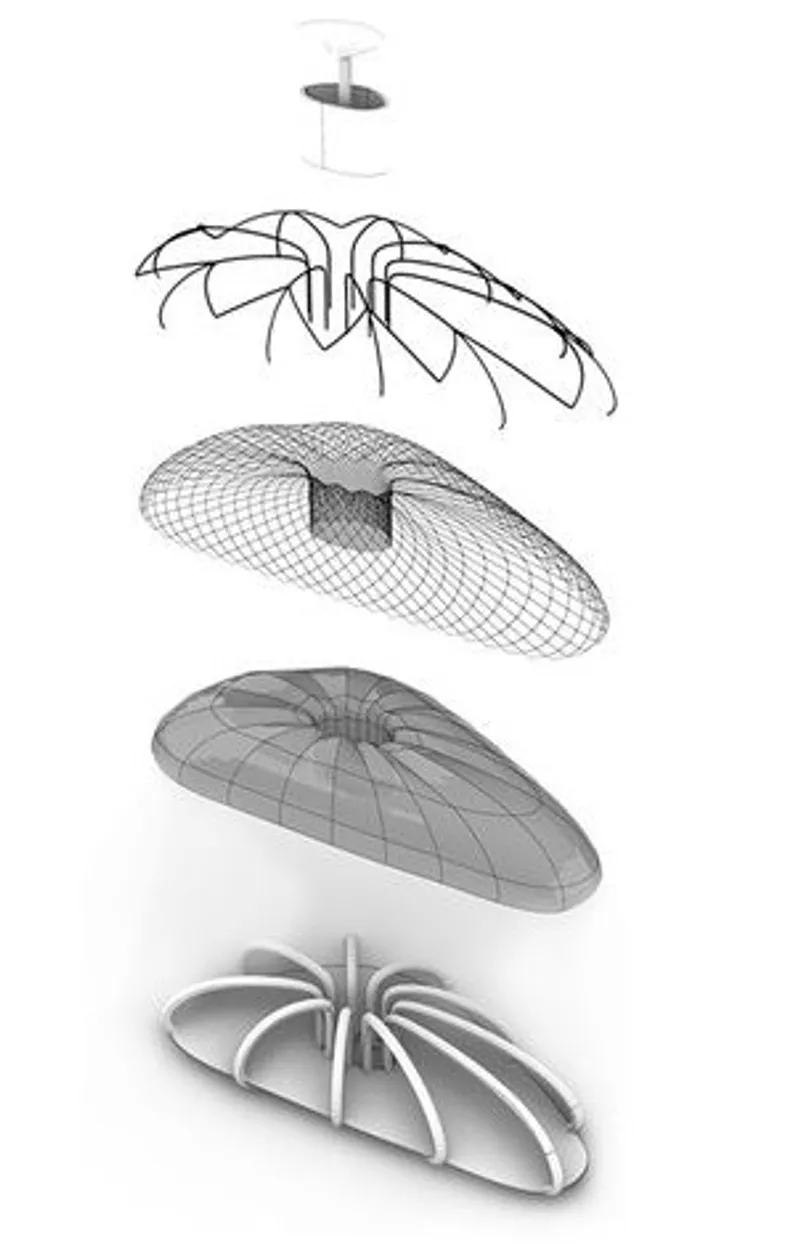
The architecture of Tale of an Ocean is characterized by domes built from Ferrock, a carbon-negative material that is lightweight, durable, and resistant to salinity. Elevated to withstand storm surges and flooding, these domes house advanced ETFE and PTFE roofing systems integrated with photovoltaic cells. These double-layered cushions are not only cyclone-resistant but also help regulate the indoor climate by reducing temperatures by up to 5 degrees Celsius, thereby minimizing cooling needs.
A central feature within each dome is a service core that includes a solar-powered desalination pod, which purifies seawater for the aquariums and general use. The by-product, salt brine, is collected and processed for local industry, reducing the environmental impact of traditional salt collection methods that often harm mangrove ecosystems by increasing soil salinity.
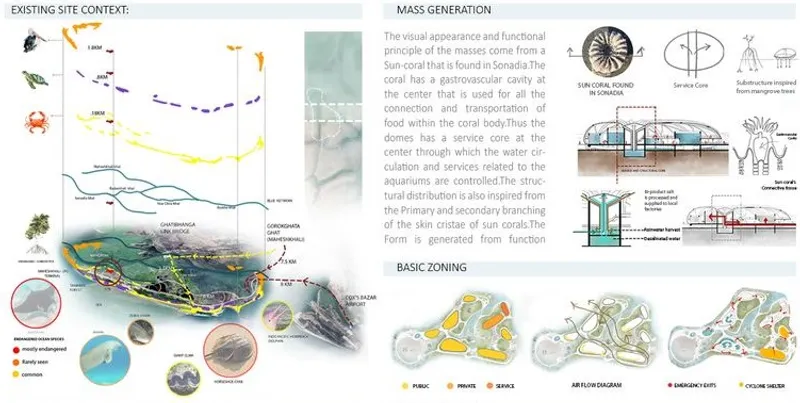
Sustainable Water and Energy Solutions
The desalination pod, powered by solar energy, exemplifies the project’s commitment to self-sufficiency. During tidal surges, seawater is directed into a desalination chamber, where it is converted into freshwater through solar-driven evaporation and condensation processes. The stored freshwater is then used for the aquariums and other site needs, while the leftover brine is recycled to support local salt production. This method is not only more energy-efficient than conventional systems but also prevents saline contamination of the island's soil, benefiting the delicate mangrove ecosystems.
Additionally, each dome is designed to capture and store rainwater, providing a backup water source during the dry season. This dual system of desalination and rain harvesting ensures the complex’s water needs are met sustainably, even in the event of extended dry periods or storm-induced disruptions.
Integration with Local Flora and Fauna
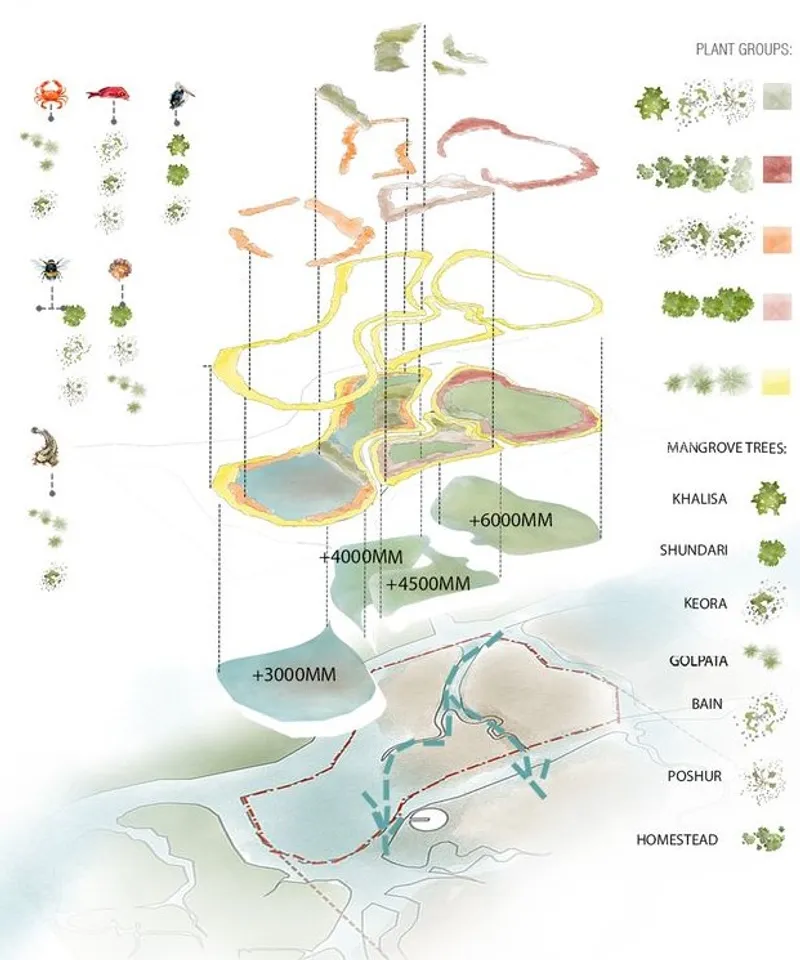
A significant aspect of the Tale of an Ocean project is its thoughtful landscaping, which draws on native plants to create a biodiverse environment that attracts local wildlife. For instance, Keora trees, whose fruits attract fish, are planted in tidal zones to foster a natural fishing habitat. Other trees, like Mangrove Cedars, encourage shorebirds and are known for their resilience to saline conditions. Sundari trees, an endangered species, are also integrated, with careful placement to support seasonal inundations.
By strategically planting these native species, the oceanarium creates a balanced ecosystem that sustains both marine and terrestrial life, effectively turning the site into an outdoor natural exhibition. This blending of architecture and ecology not only promotes biodiversity but also supports local conservation efforts by providing a habitat for endangered species.
Modular, Lightweight, and Resilient Construction
The structures within the complex are designed for modular assembly, allowing for ease of transport and quick construction. The lightweight materials, combined with modular assembly techniques, mean that the buildings can be disassembled, transported, and reassembled as needed, even via waterways. This adaptability is essential given Sonadia’s ecological sensitivity and shifting environmental conditions.
The project also takes into account future sea level rise, with all buildings elevated to anticipate potential flooding. Should sea levels exceed current predictions, the modular design would allow for parts of the complex to be relocated or reused, enhancing its resilience.
Public Interaction and Environmental Education
The Tale of an Ocean complex offers controlled visitor access to minimize disturbance to the environment and wildlife. Indoor and outdoor exhibits guide visitors through a series of immersive, educational experiences that reveal the mysteries of the ocean and the vital role ecosystems play in our world. Emergency exits and a service loop for maintenance adhere to Bangladesh National Building Code (BNBC) standards, ensuring safety and operational efficiency.
This complex serves as an educational hub, encouraging a deeper understanding of the interconnectedness between humans and marine ecosystems. By fostering awareness, Tale of an Ocean contributes to a cultural shift towards sustainability and respect for nature.
A Blueprint for Sustainable “Aquatecture”
The Tale of an Ocean oceanarium complex is more than an architectural achievement; it is a prototype for sustainable “aquatecture” that demonstrates how human structures can coexist with and even restore natural ecosystems. Through a thoughtful combination of renewable energy, desalination, local flora integration, and modular construction, the project addresses the immediate needs of Sonadia Island while setting a precedent for eco-friendly development in ecologically sensitive areas.
By harmonizing architecture with the environment, Saraf Nawer’s Tale of an Ocean not only aims to rescue and protect marine life but also offers a vision for a future where development supports, rather than hinders, ecological balance. As climate change intensifies, this approach may prove essential in safeguarding natural reserves and fostering sustainable coexistence between humans and the natural world.


Popular Articles
Popular articles from the community


graciastudio Turns a Viewless Tijuana Lot Inward Around a Courtyard of Concrete, Timber and Trees
In Tijuana, Jorge Gracia's GA2 House stacks a timber-clad private floor over exposed concrete and replaces a missing view with a planted interior patio.

FCC Arquitectura Expands a Portuguese Granite House with a Board-Marked Concrete Wing
In Portugal, JV House pairs a cleaned-up whitewashed and granite dwelling with a timber-shuttered concrete extension, courtyards and a garden pool.


Aquadapt: An Underwater Habitat That Rewrites Its Rooms by the Hour
Curved modules ring the seabed while one shell shifts from breakfast room to cinema, farm and football pitch as residents' needs change.

LT2A and OPEN Architectes Thread a Brick and Glass High School Through a Wooded Belgian Campus
In Braine-l'Alleud, a 3,000 m² wing for Collège Cardinal Mercier pairs pale brick with a glazed colonnade, deferring to a small chapel and a dense wood.

Similar Reads
You might also enjoy these articles

Vereda Arquitetos Renovates a 40-Square-Meter Apartment Inside Niemeyer's Copan Building
A compact unit in São Paulo's most iconic residential tower gets a material overhaul that pairs exposed concrete with bold blue Formica.

Shakur's House: Exposed Brick as an Interior Organiser in a 168 m² Mashhad Residence
Brick moves indoors in this Mashhad residence, where masonry walls, glass partitions and teal planes sequence a compact home without closing it off.

Day and Night Park: A Time-Based Urban Newsstand in Beijing
A temporary urban newsstand in Beijing blending travel, light, and reading through poetic colors, compact form, and community-focused design.

Modernist Patio Renovation in El Masnou, Barcelona by Oliver Segura Arquitectura + Cebrià Arquitectura
Modernist patio renovation blending tradition and innovation with a movable pool, leveled floors, and Catalan materials in El Masnou.

Comments (0)
Please login or sign up to add comments
No comments yet. Be the first to comment!