
Terrasse Orange Toi: Integrating Disaster Preparedness and Tourism Through Innovative Tsunami Evacuation Architecture
Terrasse Orange Toi seamlessly combines tsunami disaster preparedness and tourism, creating a safe yet vibrant coastal landmark in Toi, Japan.


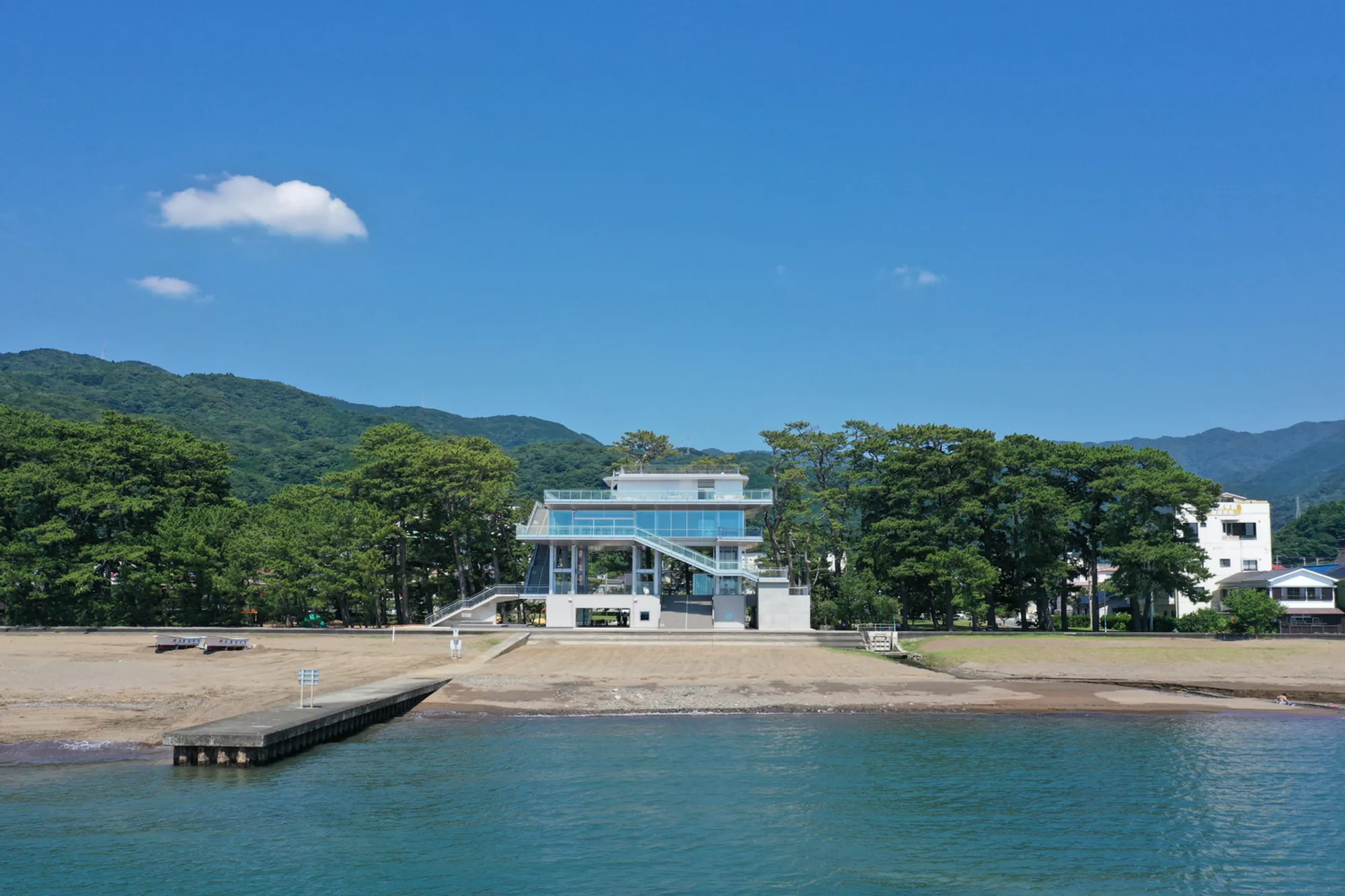
The Terrasse Orange Toi in Izu City, Japan, redefines the boundaries of disaster preparedness by combining it with tourism functions. Designed by Imai Laboratory, IIS, U Tokyo, and Nippon Koei Urban Space, this groundbreaking structure serves as Japan’s first facility to integrate tsunami disaster prevention with everyday community use. Positioned in Toi, a traditional hot spring town with breathtaking landscapes, this project is a testament to architectural innovation, blending safety and functionality while preserving the natural beauty of the region.

The Need for Tsunami Preparedness in Toi
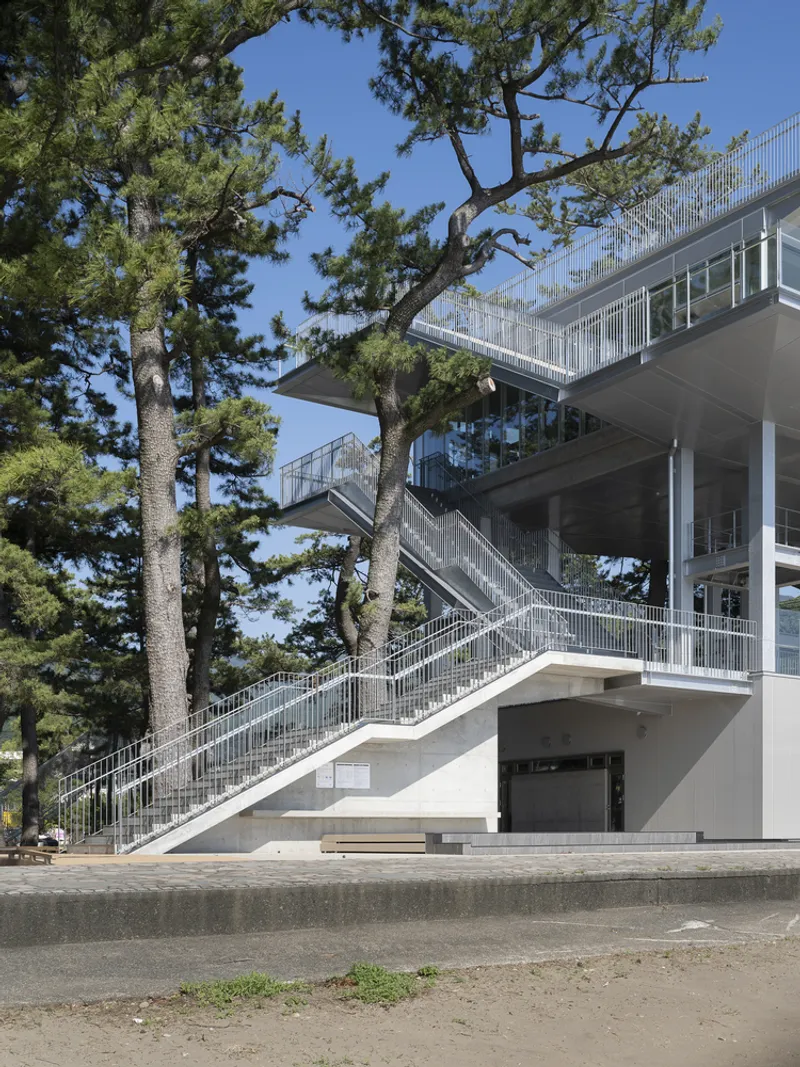
Toi is a charming coastal town known for its iconic pine groves and scenic views of Suruga Bay. However, the town faces a severe risk of tsunamis, with a 10-meter wave expected to reach the shores within six minutes of a Nankai megathrust earthquake. Unlike other coastal regions, Toi opted against constructing large seawalls, which would mar the natural beauty of the bay. Instead, the community declared the area a Tsunami Disaster Special Caution Zone, the only one of its kind in Japan, and commissioned the development of tsunami evacuation towers to enhance safety without compromising aesthetics.

Design Philosophy: Safety Meets Tourism
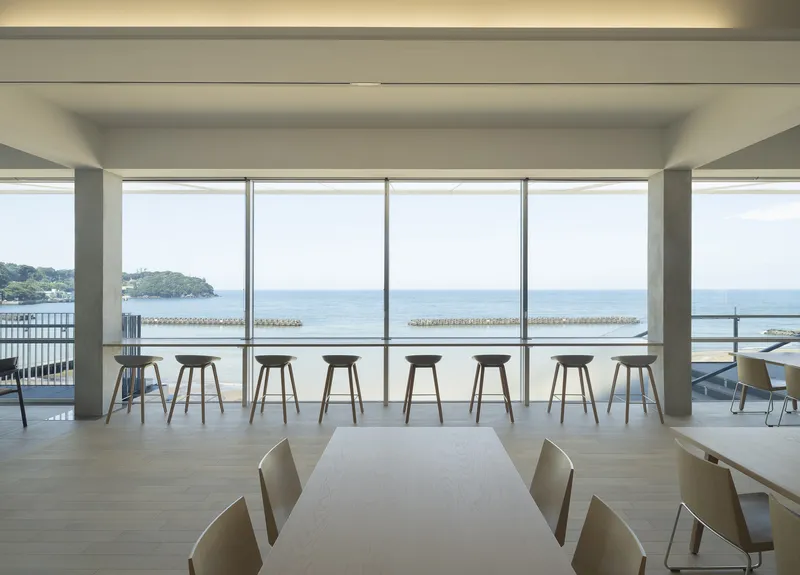
The Terrasse Orange Toi is not just an evacuation structure; it is a multi-functional facility that integrates disaster preparedness with tourism and community use. By ensuring that the structure is actively used for tourism and local gatherings, the project promotes disaster resilience through familiarity and regular interaction. This dual-purpose design ensures that the facility remains a vibrant part of the community while fulfilling its critical role during emergencies.

Harmonizing Architecture with Nature
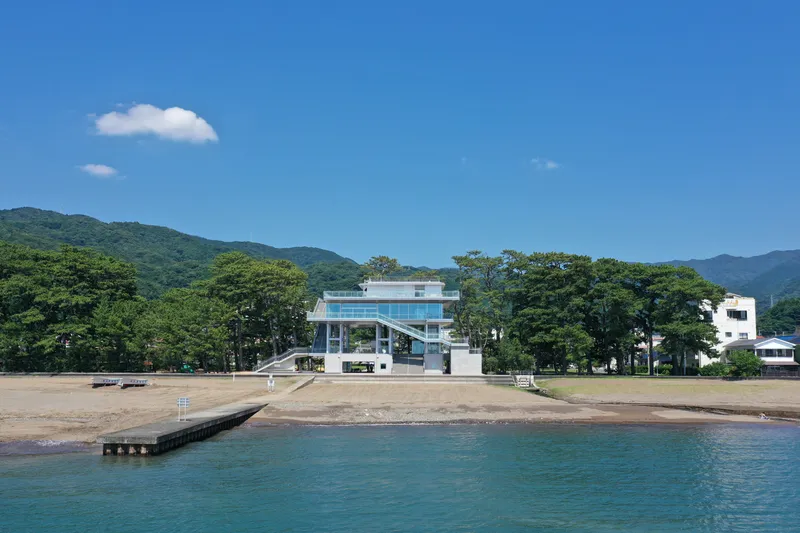
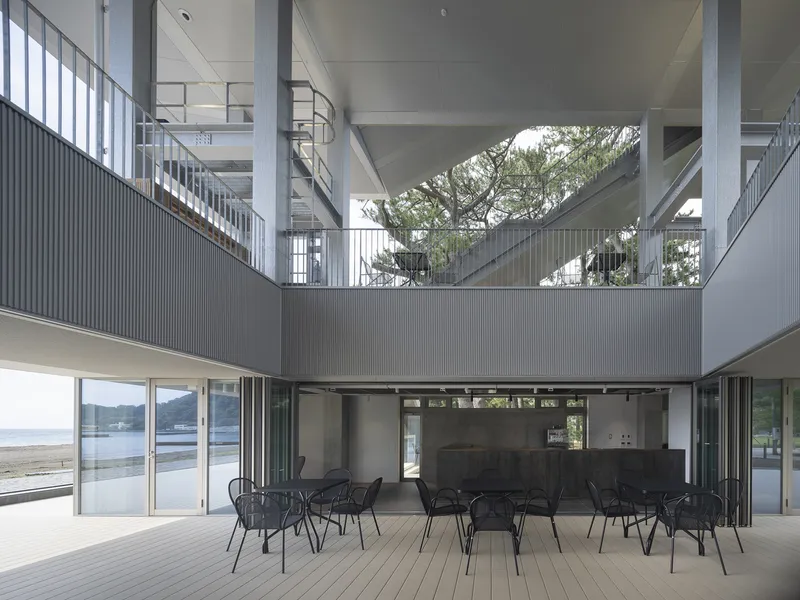
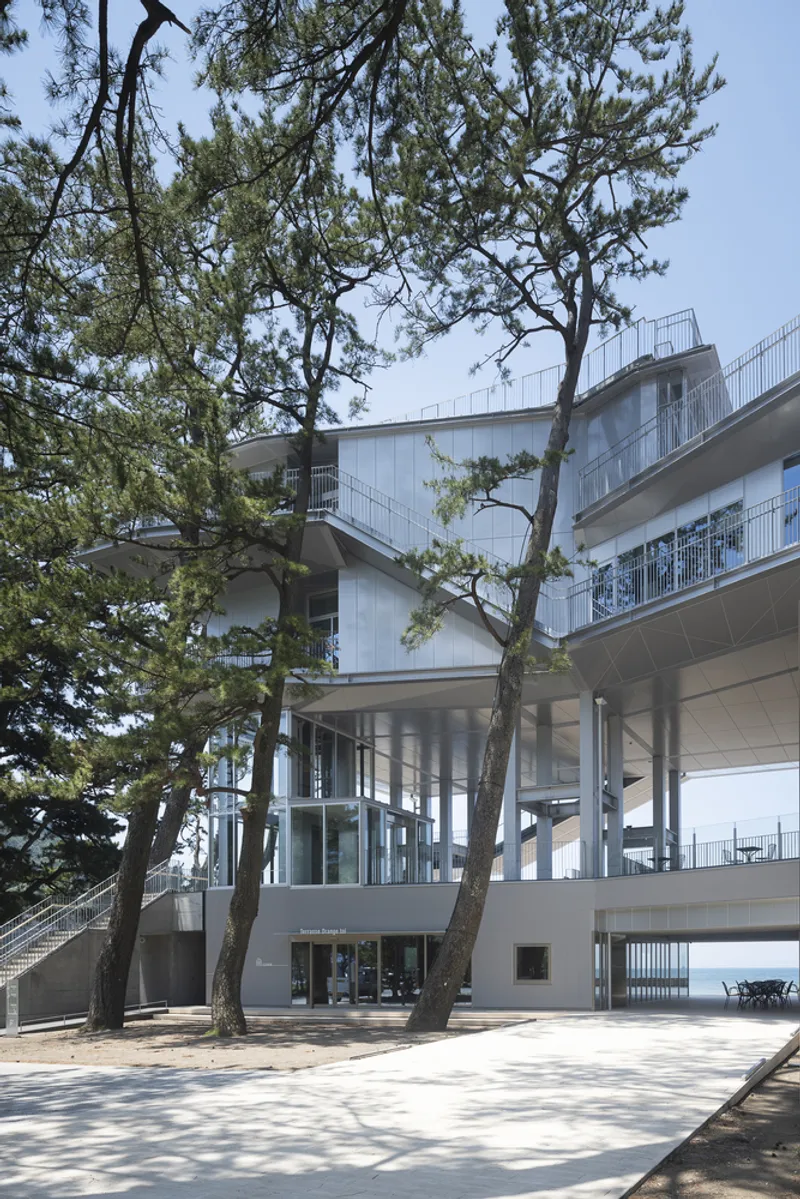
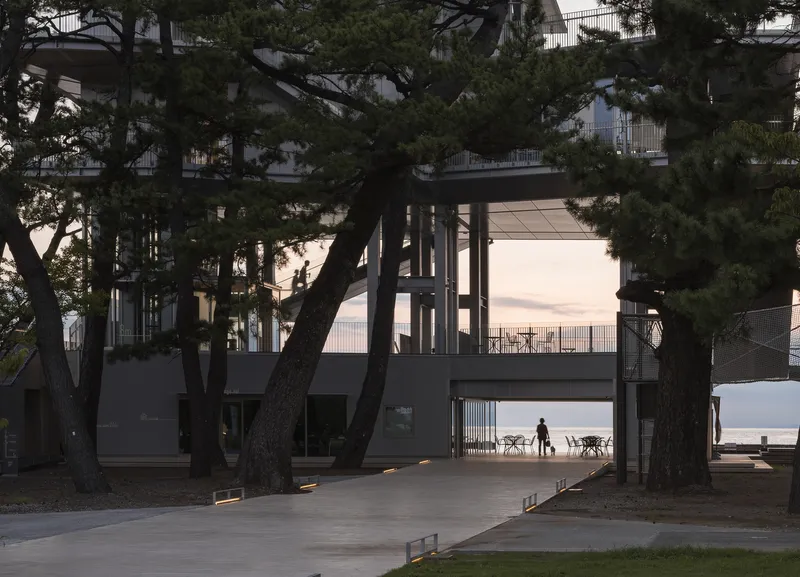
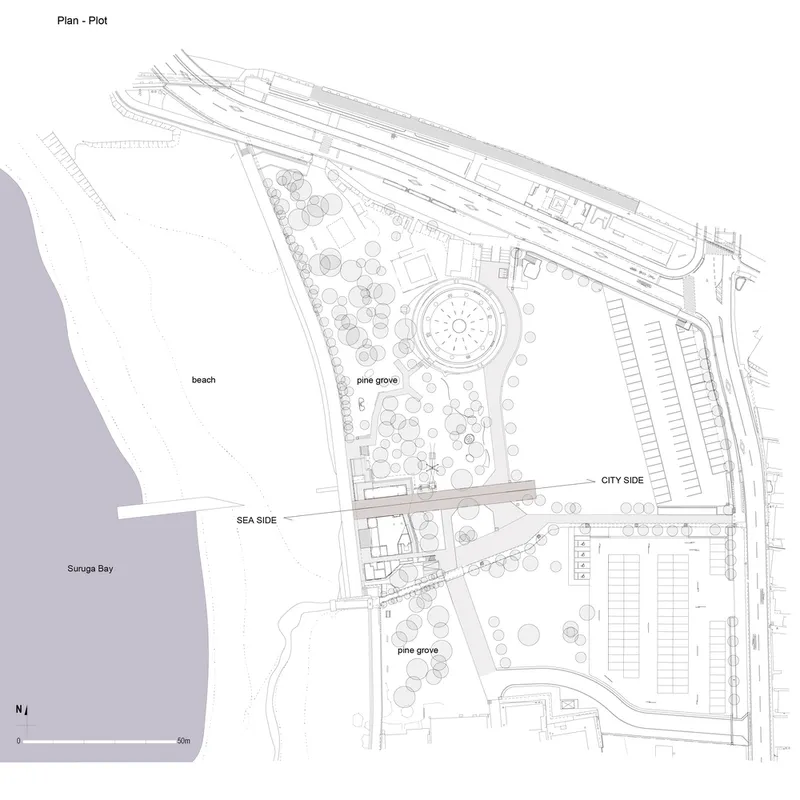
The structure is strategically located between the coastline and Matsubara Park, the town's central pine grove. A 3D scan of the pine trees shaped the building’s layout, ensuring that no large-diameter pines were cut during construction. This approach allowed the building to seamlessly coexist with the natural environment, creating a harmonious landscape where architecture and nature converge.
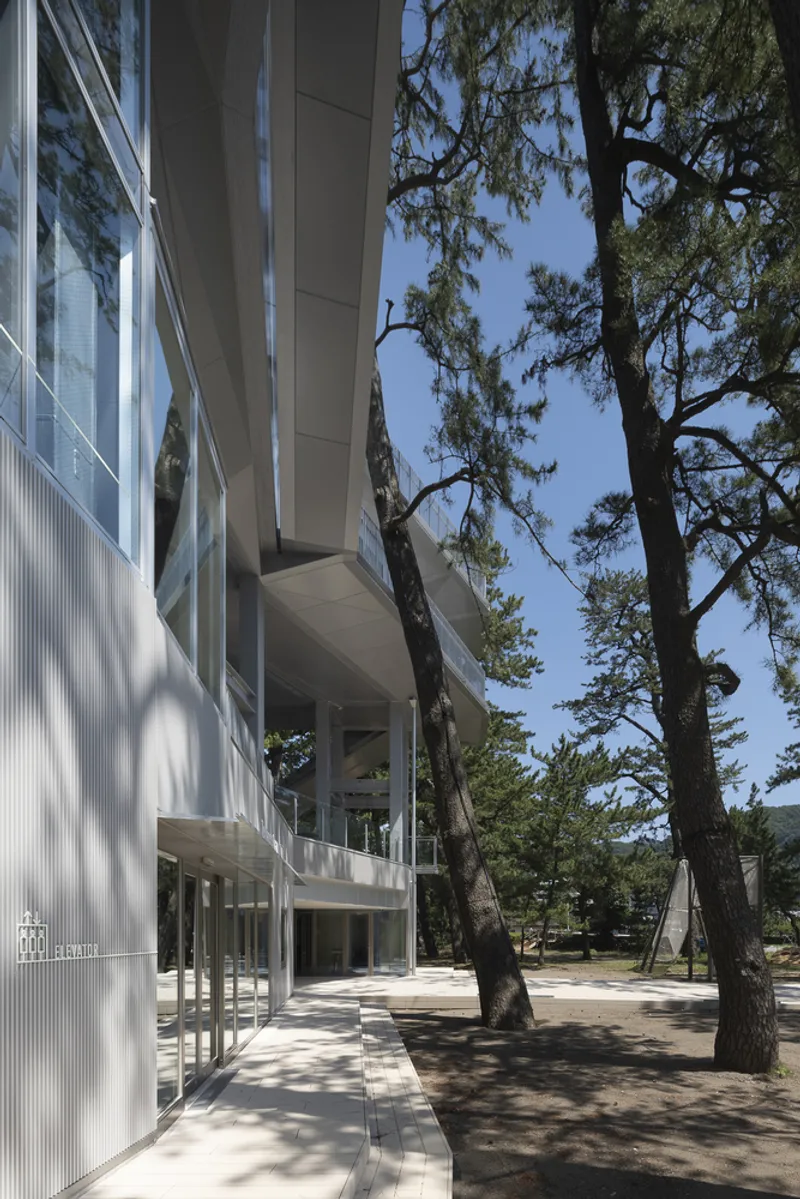
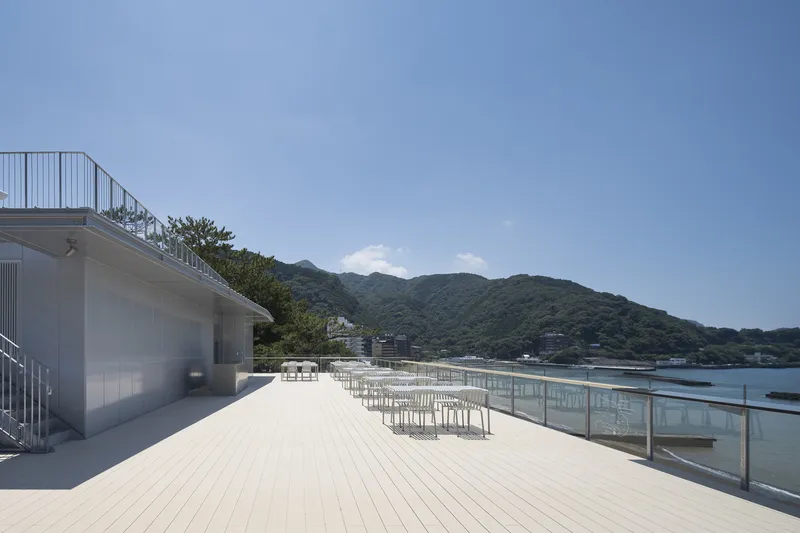
Reflective materials on the underside of the building’s piloti area mirror the surrounding scenery, including the sea, pine trees, and sunsets. This design choice further blends the structure into its environment, enhancing its aesthetic appeal.

Elevated Safety: The Tsunami Evacuation Levels
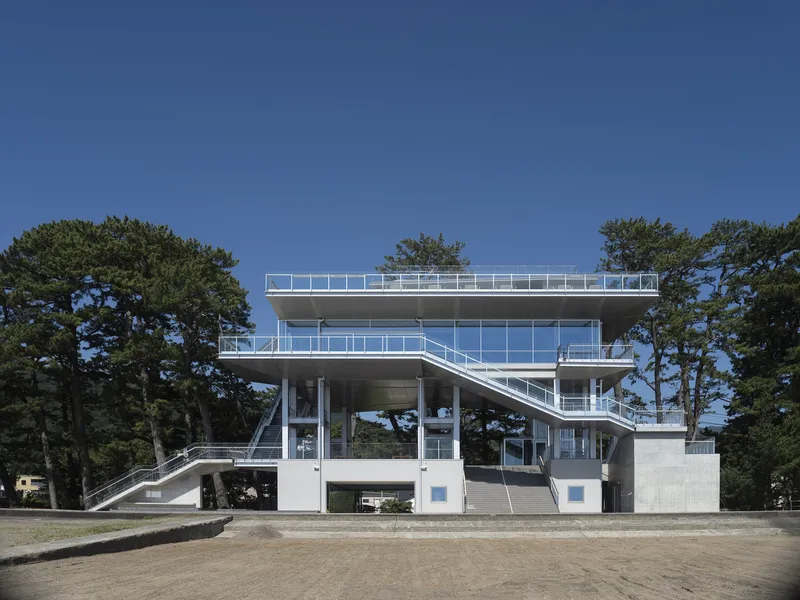
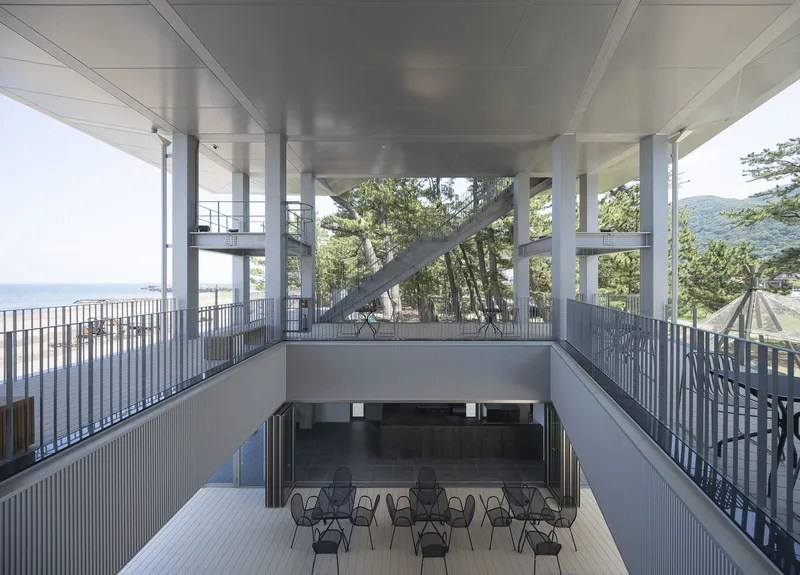
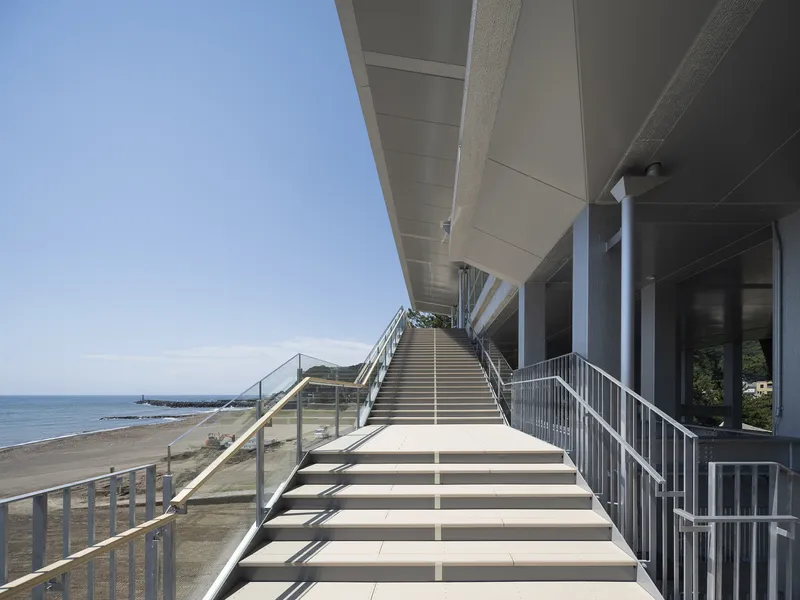
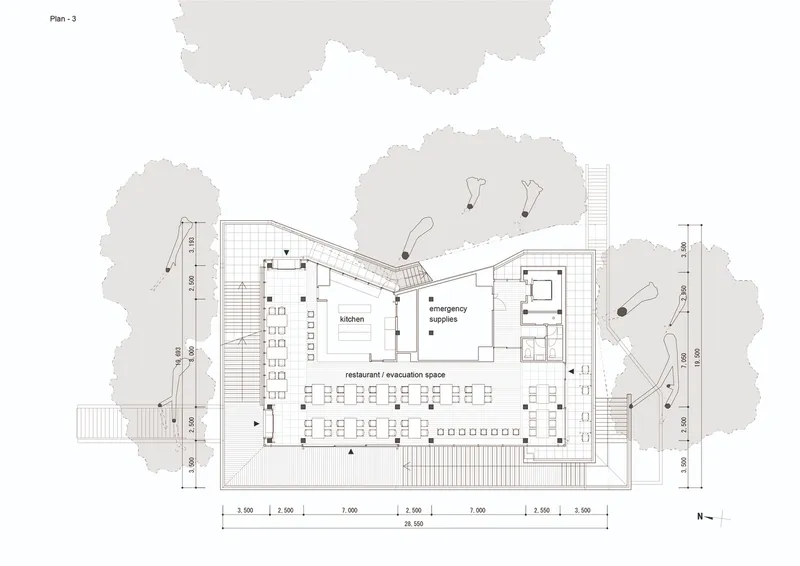
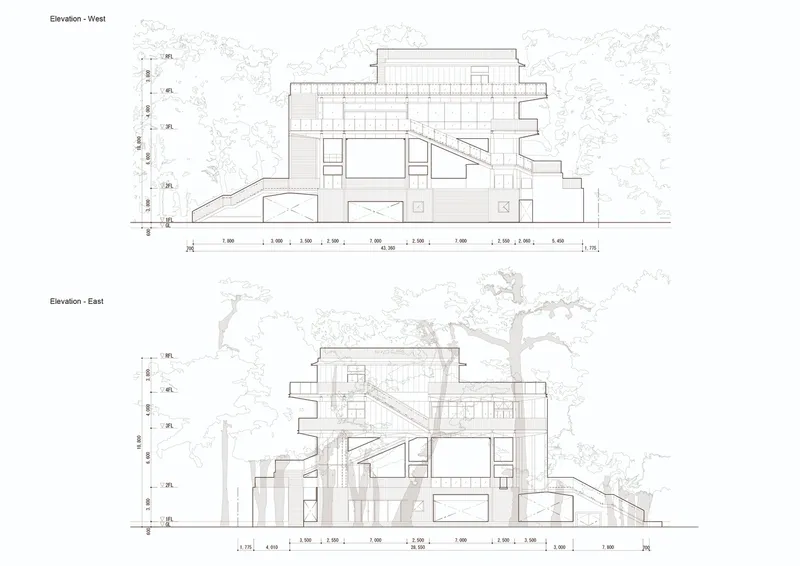
The evacuation and observation floors are located 14 meters above ground, safely above the reach of predicted tsunami waves. Below these floors, a spacious piloti area provides shade and acts as an intermediate evacuation point for beachgoers. The piloti, accessible by a wide staircase, serves as a gathering space during normal days and an essential refuge during emergencies.
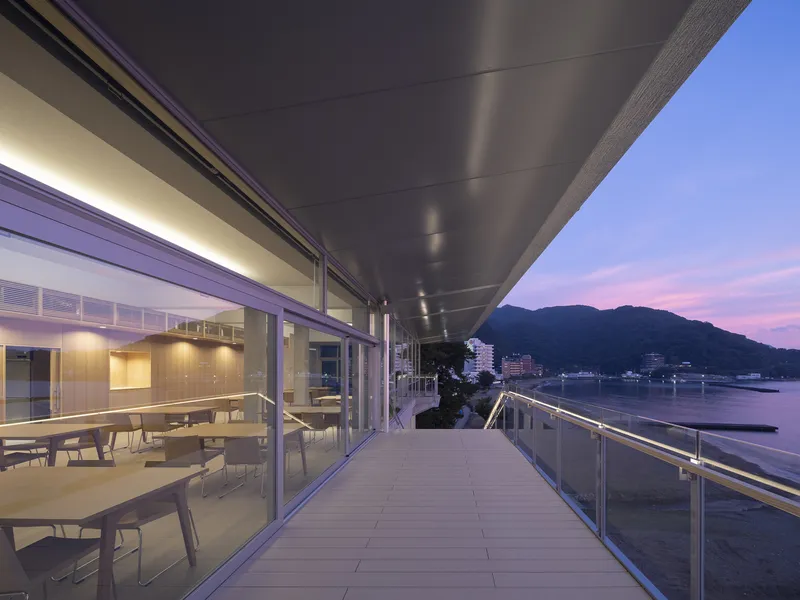

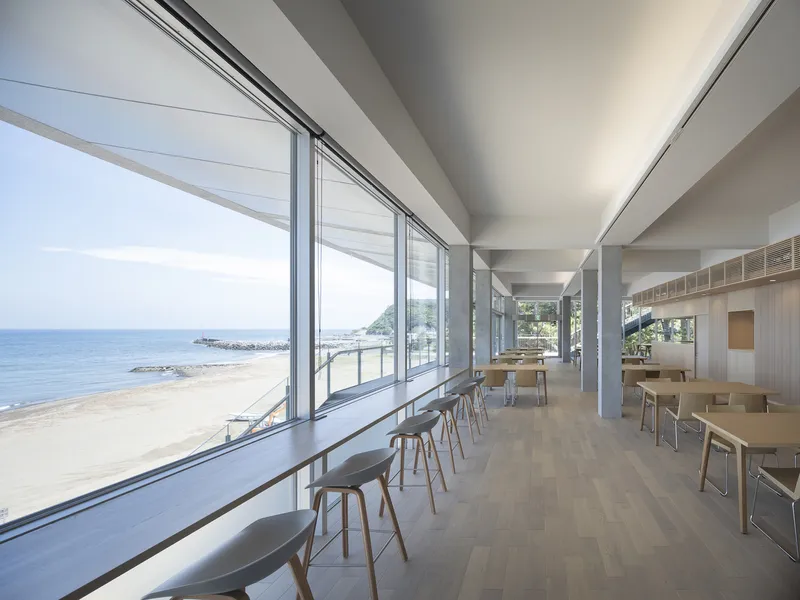
The upper floors, encased in transparent glass, house tourism functions and offer panoramic views of Suruga Bay and Matsubara Park. Supported by slender Vierendeel-girder columns, the design ensures minimal visual obstruction, maintaining the scenic beauty of the site.

Accessibility and Community Integration
The facility is designed for easy accessibility, even for tourists unfamiliar with the area. Two external staircases spiral around the building, serving as clear evacuation routes while doubling as scenic paths to the observation deck. These staircases enhance user experience by offering breathtaking views of the coastline and surrounding pine groves.


By seamlessly blending disaster preparedness with tourism, Terrasse Orange Toi transforms from a mere safety structure into a community landmark that actively enhances the town’s cultural and recreational life.

A New Standard in Tsunami Architecture
Terrasse Orange Toi represents a bold step forward in tsunami evacuation architecture. It sets a new standard by prioritizing community integration, aesthetic harmony, and disaster resilience. The structure’s dual-purpose design ensures that it remains a vital part of Toi’s identity, offering safety, beauty, and functionality in equal measure.


Through thoughtful design and collaboration, the architects have created a space where nature, community, and safety coexist, ensuring that the town of Toi is prepared for the challenges of tomorrow while celebrating the beauty of today.




Popular Articles
Popular articles from the community


Co-life: Sustainable Architecture for Age-Friendly Community Living
Co-life reimagines sustainable architecture for seniors through courtyards, rammed earth, shared gardens, and spaces designed for belonging.

Hill & Cross Opera: Sculptural Opera House Architecture Shaped by Tallinn’s Landscape and Identity
Hill & Cross Opera reimagines opera house architecture in Tallinn through its sculptural hill, civic plaza, glass wave and a luminous cross.

AL-JANNAH: Sustainable Architecture and Permaculture for Afghan Widows
AL-JANNAH uses sustainable architecture and permaculture to create resilient oasis of housing, learning, work and renewal for Afghan widows.
EW PARK: Sustainable Architecture Reimagines the Future of Urban Parking
EW PARK reimagines city parking as a modular wooden tower combining automation, solar energy, electric mobility, and adaptable urban design.


Similar Reads
You might also enjoy these articles


Hodi-Mandai Geram
Project Function: Preservation and revitalization of the Intangible heritage and socio-spatial identity of the Hodi by Housing, Cultural Memory Center, Sacred Grove, landscape, local tourism economy


Olio Towers: A Mid-Rise for Performers That Fuses Housing, Rehearsal, and Stage
Located blocks from Houston's Theater District, this modular tower stacks living units around a central performance atrium.

Oasis: Modular Green Housing Carved into Dhaka's Urban Fabric
A shortlisted Plugin Housing entry reclaims unauthorized settlements in Dhaka with stepped concrete volumes, green roofs, and ventilation-driven design.

Black Hole: A Floating Megastructure for the Post-Physical Era
Emiliano Mazzarotto envisions a spherical, self-scaling arena where e-sports, digital hotels, and holographic stadiums replace traditional public space.


Explore Architecture Competitions
Discover active competitions in this discipline



Challenge to reimagine the Iron Throne


Photograph architecture without architects


Illustrate the lost glory of Angkor Wat - Render Challenge


Design challenge to reuse E-waste
Comments (0)
Please login or sign up to add comments
No comments yet. Be the first to comment!