
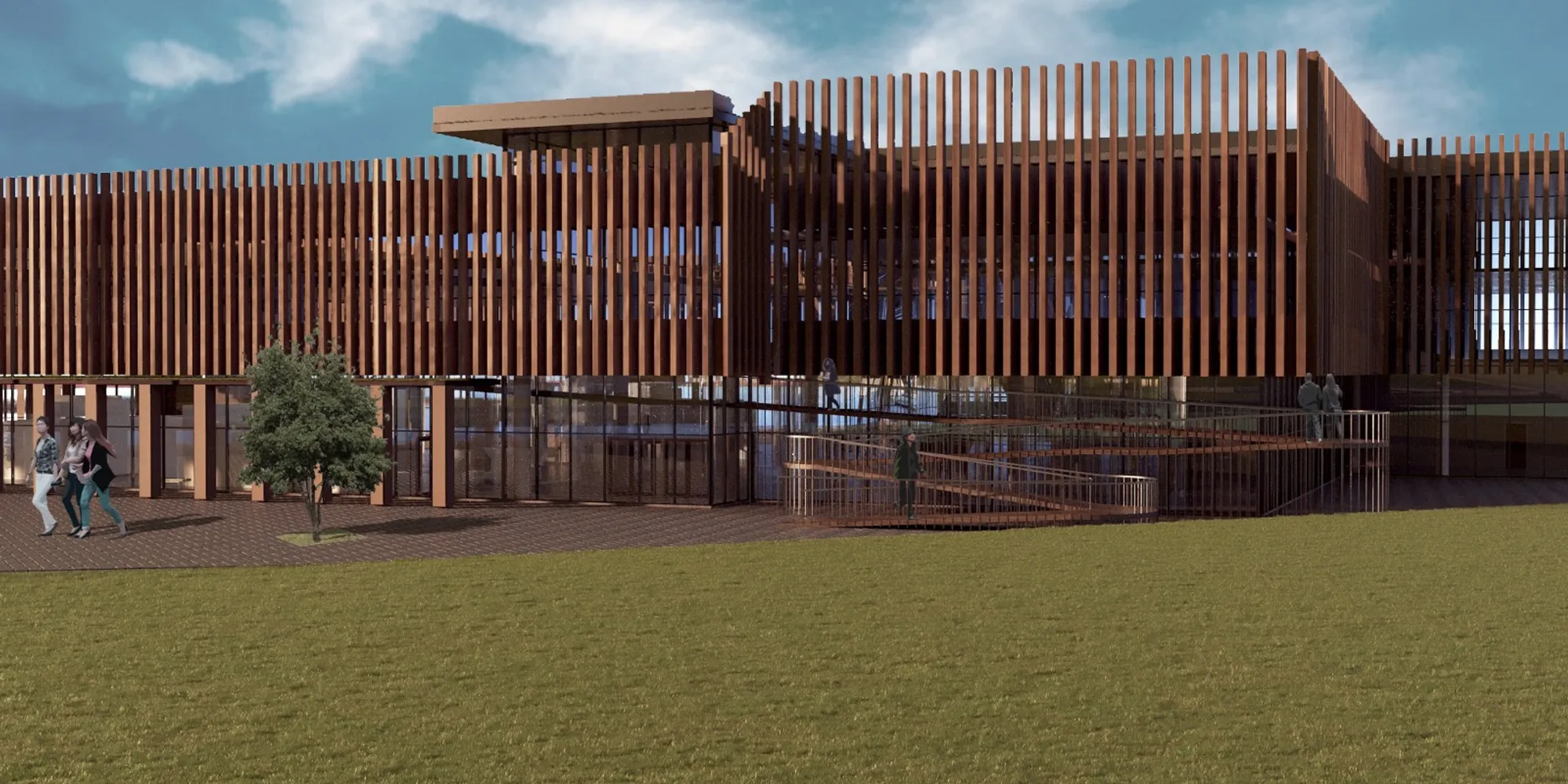
THE AXIS ATHENAEUM
The city is dynamic and constantly moving. The continuity of the movement in the building was very important for us as it would enable the architectural athenaeum to become an experience center. It is not surprising that this city, which has learned to use its energies efficiently and constantly improves it, has a green, smart and zero-carbon climate plan for 2025.

THE AXIS ATHENAEUM PROJECT REPORT
The city is dynamic and constantly moving. The continuity of the movement in the building was very important for us as it would enable the architectural athenaeum to become an experience center. It is not surprising that this city, which has learned to use its energies efficiently and constantly improves it, has a green, smart and zero-carbon climate plan for 2025.
The city is dynamic and constantly moving. The continuity of the movement in the building was very important for us as it would enable the architectural athenaeum to become an experience center. It is not surprising that this city, which has learned to use its energies efficiently and constantly improves it, has a green, smart and zero-carbon climate plan for 2025.
What was the concept behind the project?
The concept was living and learning architecture at the same time. Also creating a center which people will enjoy every piece of it and see connections. Planning decisions, historical changes layering in a city. Each new discourse and practice create meaning and material layers in time and space. The historical layers in the city, which are clearly read with the architecture, stand beside and wait to be observed. Cities of such wealth can be called palimpsest cities. Here we are in Denmark, where architectural discourses are changing faster than ever before, and current structures with new discourses attract a lot of attention while the old is preserved. Therefore, for Copenhagen as an exemplary city, it has never been more important to balance the past meanings of architecture with buildings developed with new futuristic discourses.
In order to keep the old and the new alive, axes framing the city view were created by considering the surrounding buildings. It was designed to see the old and the new together in a rapidly changing city. Frames are to give everyone the opportunity to see and learn about architecture. While the images of the axes keep the memory fresh, they connect and work together with the exhibitions designed so that the architecture can be understood by everyone. The potentials of the area are as rich as the city. This place, which has a former industrial layer, is now a multi-layered place with artistic activities, cultural eating and drinking venues, live sports activities and sustainable systems. A program has been created in order to activate these values in the project. Athenaeum interpreted architecture as a center for "seeing" and "learning" for everyone.
What was the intent behind the organization of elements across various levels (Architectural, Site,Urban)?
In this project design, it was our aim to create frameworks to show the old and the new, to explain architecture and the history of architecture to all kinds of people, to increase accessibility, to design taking into account the transportation axes of the project location and to respect the environment.
How many iterations were tried to arrive at the final outcome?
Trials continued until the last second to achieve the final result. Because architecture requires this. Architecture can reveal a new and bright idea even at the moment we decide. The point we reached when we criticize ourselves and our project is still open to development, like every project.
Which methods of design investigation?
Although we were an architecture student at first, we asked ourselves what is architecture and what does architecture need? In this process, we researched historical readings as well as contemporary architecture. We wanted not only to research architecture but also to learn about the culture of Copenhagen, and we dreamed of this building that people living there would see in their daily life. We set out by examining various sample projects and understanding the importance of learning. We researched the methods that every person is involved in learning and wanted to include it in our project. At the same time, we aimed to adapt our sustainability researches to our own structure to ensure that the building complies with Danish standards.
How was the programme condensed into final?
When our idea reached its final point, it was enriched with various questions. For example;
'' How should the exhibition areas work? ''
'' According to what should the framing system in the circulation areas be developed? ''
'' Which functions do we want to see permanent and which ones temporarily? ''
"How can we catch up with today's technology?"
We started by thinking about questions like these and finding their answers. We aimed to enrich permanent and temporary spaces in the exhibition areas with digital and moving walls and to achieve a different feeling with holograms. Since we want learning to spread to every floor, we answered the question of what kind of area we would like to see if we were there ourselves.
What/How were the materials chosen?
While choosing the material we use in the building, our priority has been to be sustainable. Considering the materials used locally in Denmark and the Danish culture, we decided to use mostly wood. By taking the concept of hygee, we have made use of wooden materials that reflect the warm, friendly and comfortable environment of such spaces in the building. The reason we mostly use glass in the building is that we designed a building that respects the sea with a permeable design without breaking the connection with the sea. In this way, we made it possible to see the framing gaps we opened in the axes we created.On the ground floor of the design, we designed a shell surrounding the building to ensure the connection with the sea and against sunlight. The reason why the material of the shell is wood is to emphasize the use of sustainable local wood. In addition to all these, we supported it with the green roof and solar panels that we positioned on the roof in the design so that it can be a sustainable building. We decided that the structure should be steel construction in terms of its load and bearing. In addition, in order to maintain the function of the building, we have positioned a workshop unit for the recycling of waste materials in the daily life of the public, where we have ensured that every person is informed about the materials, and studies are carried out to recycle useless waste materials and to raise awareness.
How will the project transform with the passing time?
We tried to build a design that will respect the old state of nature without leaving carbon traces in the future, both in terms of the materials we use in the design and the easy conversion of the structure. We made suggestions for the building to be used in different functions in terms of its location. We suggested that the meadow in front of the building be reserved for festival activities. We tried not to build a high structure that would cut off the relationship with the sea and to create the necessary volumes. By adding the building, we made it meaningful for the Danish people so that we designed a wooden structure that could see it like their home. With these small additions, we enabled the structure to expand. and we associated the function of this structure with the concept of hygee. Thus, we wanted it to be comfortable and accessible.Apart from the festival activities, anyone who wishes by creating camping areas in front of the building will be able to build his own wooden unit in the workshop and create his own transformable temporary shelter. Thus, we imagine that this structure will always be an active social structure in the future. We believe that the building will not only be an exhibition space or a museum, but will host beneficial organizations and activities for the future, and we have designed our design in this direction. By diversifying the functions of the building, we aimed to design a structure that will not invite the people but invite them and gain meaning and transform with the people. Emphasizing that design is everywhere through architecture, we created a workshop environment where the public actively participate in the architecture center so that they can contribute to humanity and then Denmark. We determined this workshop environment as a social home and a kind of education network.


Popular Articles
Popular articles from the community


The Ocean Hive: Sustainable Architecture for a Self-Sufficient Civilization at Sea
The Ocean Hive imagines sustainable architecture at sea, where modular habitats, algae, wave power and ocean waste sustain a growing colony.

The Musturak Paradise: Senior Living Architecture for a Connected Future in Temara, Morocco
The Musturak Paradise reimagines senior living architecture in Temara via private homes, social spaces, culture, community, and shared care.

Riyadh For All: Intergenerational Urban Design for Active Aging in Rabat
Riyadh For All reimagines urban design in Rabat with intergenerational co-living, adaptive courtyards, and Moroccan cultural exchange today.

The Earth Pod: 3D Printed Homes for Resilient Refugee Communities
The Earth Pod reimagines refugee housing through 3D printed homes made from clay, combining resilience, self-sufficiency, and rapid shelter.

Similar Reads
You might also enjoy these articles

Day and Night Park: A Time-Based Urban Newsstand in Beijing
A temporary urban newsstand in Beijing blending travel, light, and reading through poetic colors, compact form, and community-focused design.

Modernist Patio Renovation in El Masnou, Barcelona by Oliver Segura Arquitectura + Cebrià Arquitectura
Modernist patio renovation blending tradition and innovation with a movable pool, leveled floors, and Catalan materials in El Masnou.
Alto Residencial Coop: Cooperative Housing Development in Santiago de Compostela by Carbajo Barrios Arquitectos
A linear cooperative housing complex blending white volumes and perforated metal façades, enhancing community living, natural light, privacy, and urban integration.
Vil Genis School by BPA ARCHITECTURE – Massy, France
Vil Genis School in Massy, France, features sustainable design, south-facing classrooms, community integration, accessible spaces, and modern educational architecture.

Explore Athenaeum Competitions
Discover active competitions in this discipline




Challenge to reimagine the Iron Throne


Photograph architecture without architects


Illustrate the lost glory of Angkor Wat - Render Challenge


Design challenge to reuse E-waste
Comments (0)
Please login or sign up to add comments
No comments yet. Be the first to comment!