

The Battle of Climate Change
Sustainability and Resilience, all part of the force to fight the impending doom brought forth by Climate change

Climate change is still a major political debate, but the scientific community has reached almost complete consensus that it's real, and already impacting our planet. We cannot ignore the hard facts. We cannot run. We cannot hide. It is a global catastrophe. There’s no denying these hard facts, as world governments have established this dire situation and are trying to address it across their lands. The most severe weather patterns of our times are only few among many signs of what is to come, unless we ride our bike straight into climate change intervention. While there's a growing effort to curb emissions, we must tailor our ways of living for a planet with half its current carbon before it is too late for us at home and abroad to save ourselves from climate uncertainty.
While we may not be able to accurately predict the long-term effects of climate change, it is clear that short-term paradigms related to the design and management of infrastructure must shift in line with drastic increases in population and urbanization. In fact, a swelling global population coupled with rapid urbanization are placing increased pressure on aged infrastructure in many areas.

Wildfires, hurricanes and extreme weathers wreak havoc on all.
100 Resilient Cities (100RC) initiative refers to these profound shifts—economic, social, and environmental—as acute “shocks” and chronic “stresses.” Natural disasters are the shocks to a system, and the stresses are the daily pressures or barriers that prevent communities and individuals from thriving. In a natural disaster, these stresses can be majorly disruptive unless shock resistant systems such as healthy community social networks or an emergency warning system can withstand both sudden disasters along with weaker strains of daily challenges like frequent traffic jams slowing your commute to work when simply trying to get home safely with your family will suffice.
Understanding the City as a system
Cities are complex systems, so one needs to view all issues at hand to understand how they interdepend on each other. If a city wants to attract investment and development that was previously non-existent, it often has to hide or deny some of its vulnerabilities. In order for cities to be adaptable and respond to issues more quickly, cities need support in identifying solutions that allow them to respond better as well as plan ahead for the future. Resilient design strives for environmental, social, and economic sustainability with the ability to adapt to known and unknown risks and vulnerabilities. Community problems require community-based solutions. Applying creative systems-thinking in design innovation can result in thriving and sustainable communities which not only provide ample opportunities for people to enrich their lives and skills, but also allow both humanity and the environment they live on to prosper.
If the sustainability movement of the last 45 years has taught us anything, it's that we need to reuse, recycle and reduce our footprint. The architecture industry will have to stop seeing their projects as stands-alone buildings and develop a more holistic approach in order for them to be considered resilient. We cannot continue building skyscrapers that are only designed for paying customers - we need to develop buildings that adapt easily, embrace their surroundings and see people as a part of nature.
What is Resilience?
Resilience is a resource guarding practice that takes place in the project management domain where it’s the ability of a company or organization to quickly overcome any obstacles and restrictions presented within a given project time-frame. It’s front loaded into ground breaking projects when feature sets might not have been fully proven out as Win-Wins with internal stakeholders prior to installation because environmental conditions change rapidly during ongoing implementations of ground-breaking initiatives and thus creating opportunities for education amongst your internal stakeholders about how adaptability is key to agility and faster implementation cycles without busting budgets or deadlines.
First of all, resilience means designing adaptable structures that can “learn” from their environments and sustain life, even in the face of disaster. Second of all, architects can learn from their buildings and deploy evermore-refined designs to people. Third, it is crucial to make sure you involve the people directly in the design and creation of strong and inclusive cities.
Resilience in a social context
Resilience is the elasticity a community or building possesses when dealing with disasters and extreme weather events. Let’s take a look at how resilient communities can actually be. Resilience is best thought to be a response to extreme weather events, with its three components of maintaining the status quo through recovery, reducing vulnerability and increasing strength. Architects can now start moving in the same direction because of their increasing awareness of environmental sustainability. It is easy to get lost in the minutia of our current activities, but if we hold fast to the idea that advances in computing benefit society by providing greater economic opportunity, then we will surely continue to see people from around the globe flock towards technology degrees as a means for upward mobility and social mobility respectively.
People want choice—to choose who they are and what tools they use to live their lives—and when given no other options, it will be an inevitable outcome that this growing wave of technological entrepreneurs will step up with new ideas for the betterment of humanity in areas that once were crippled by limited resources.
Resilience in cities
In order to make a city more resilient in the face of certain unavoidable risks (e.g.: fire, weather), communities must first fight to enact building codes which are updated and aligned with common sense practices or "best practices". In order for an area to be considered well-developed, its buildings must be made using common sense construction materials which adhere to the code of safety standards designed specifically for that region by professionals in the field who pay great attention to detail when coming up with their nifty new plans!
An important part of resilience planning consists of retrofitting buildings to become more resistant to natural disasters, such as earthquakes or storm flooding. Retrofitting a building essentially means enhancing existing structures in order to prove them more resilient and make them better able to withstand natural occurrences. Retrofitting buildings involves making them in accordance to new building codes based on recent findings that take into account the previous stability of the structure and its ability to resist damage caused by extreme weather events like hurricanes or floods.
Resilience, in other words, is not strictly linear. Resilience is a process. Architects must always keep this in mind and adopt it when faced with unexpected roadblocks which inevitably occur during the design of any project! Architects need a set of principles that encourages strength in design – they need prescriptive guidelines (a new way of working) that addresses building and designs as well as how to best contribute to an emerging framework for understanding why resilience is important.


Popular Articles
Popular articles from the community


Co-life: Sustainable Architecture for Age-Friendly Community Living
Co-life reimagines sustainable architecture for seniors through courtyards, rammed earth, shared gardens, and spaces designed for belonging.

Lunar Spiral: Space Architecture Shaped by the Mathematics of the Universe
Lunar Spiral reimagines space architecture through Fibonacci geometry, lunar regolith, levitating habitats, and self-sustaining Moon living.

Riyadh For All: Intergenerational Urban Design for Active Aging in Rabat
Riyadh For All reimagines urban design in Rabat with intergenerational co-living, adaptive courtyards, and Moroccan cultural exchange today.

Co-Life: Senior Housing Design That Reconnects Older Adults With the City
Co-Life reimagines senior housing design through healing gardens, shared streets, workshops, and a sustainable community across generations.


Similar Reads
You might also enjoy these articles

Day and Night Park: A Time-Based Urban Newsstand in Beijing
A temporary urban newsstand in Beijing blending travel, light, and reading through poetic colors, compact form, and community-focused design.

Modernist Patio Renovation in El Masnou, Barcelona by Oliver Segura Arquitectura + Cebrià Arquitectura
Modernist patio renovation blending tradition and innovation with a movable pool, leveled floors, and Catalan materials in El Masnou.
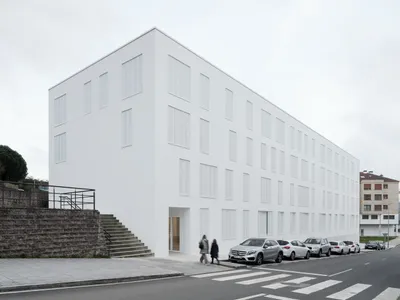
Alto Residencial Coop: Cooperative Housing Development in Santiago de Compostela by Carbajo Barrios Arquitectos
A linear cooperative housing complex blending white volumes and perforated metal façades, enhancing community living, natural light, privacy, and urban integration.
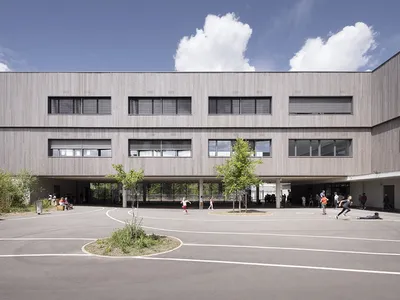
Vil Genis School by BPA ARCHITECTURE – Massy, France
Vil Genis School in Massy, France, features sustainable design, south-facing classrooms, community integration, accessible spaces, and modern educational architecture.

Explore Sustainable Cities Competitions
Discover active competitions in this discipline




Essay writing competition - Architecture in video games


Design challenge to reuse E-waste
Comments (0)
Please login or sign up to add comments
No comments yet. Be the first to comment!