
The City Link: Sustainable Urban Bridge Architecture in Copenhagen
A sustainable urban bridge architecture in Copenhagen redefining pedestrian and cycling mobility through sculptural, nature-inspired design.


The City Link is a visionary example of sustainable urban bridge architecture in Copenhagen, designed to redefine how pedestrians and cyclists experience the city. Conceived as more than a simple crossing over water, the bridge becomes an urban sculpture, a public space, and a dynamic mobility connector that responds to both human movement and maritime infrastructure.
Designed by Dominik Frelich, The City Link proposes a forward-thinking pedestrian and bicycle bridge that embraces Copenhagen’s strong cycling culture while reinforcing ecological transportation systems. It reflects a city built for people rather than machines, a core principle in contemporary sustainable urban design.
Copenhagen: A City Built for Bicycles and People
Copenhagen is globally recognized for its bicycle-friendly infrastructure and commitment to sustainable mobility. The City Link strengthens this identity by prioritizing pedestrians and cyclists while minimizing reliance on cars. The project promotes alternative transportation modes that are ecological, space-efficient, and socially engaging.
By encouraging two-wheeler communication and human-scale movement, the bridge enhances public life. Removing cars from central urban zones allows bicycles to become the dominant and most accessible means of transport. The result is cleaner air, healthier lifestyles, and a city structure designed for human interaction.
This pedestrian and bicycle bridge design is not merely infrastructure, it is an extension of Copenhagen’s sustainable urban planning philosophy.
Nature-Inspired Architecture: Waves, Fish, and Jellyfish
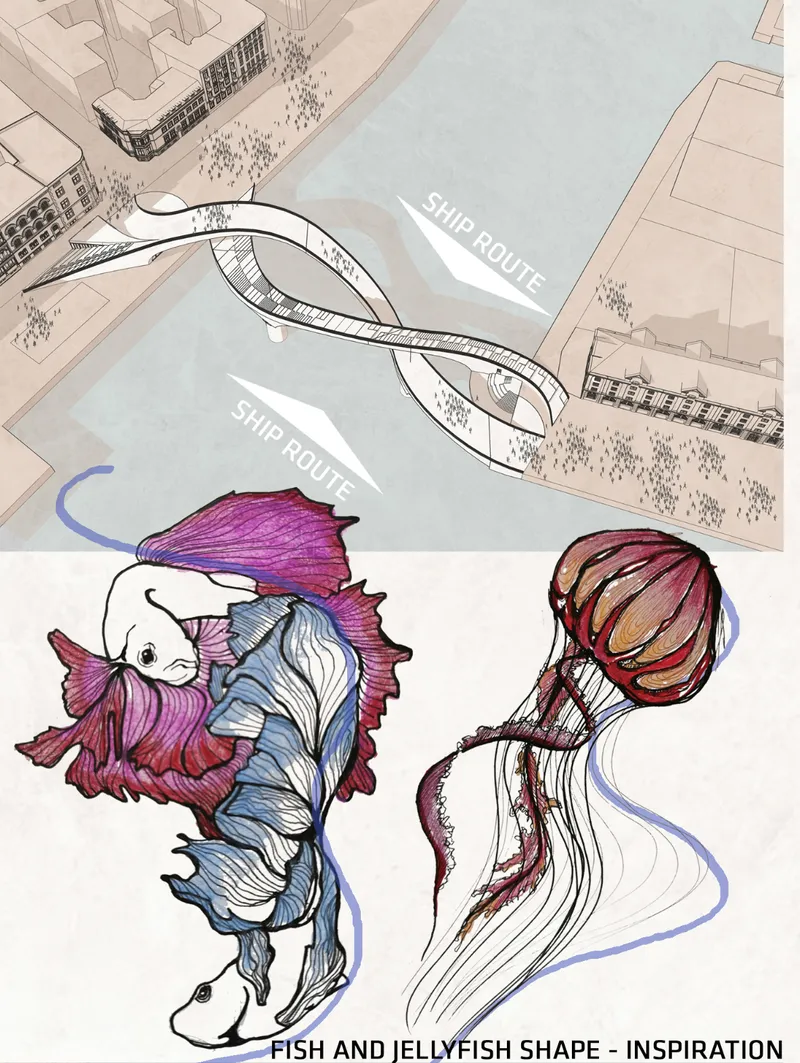
The inspiration behind The City Link emerges from ocean waves and sea creatures. The flowing silhouette resembles the movement of water striking a shoreline, while the dual intertwining threads reference the wings of a jellyfish. This biomorphic language transforms the bridge into a sculptural element within the urban landscape.
The dynamic curves symbolize two contrasting urban lifestyles:
- The fast, energetic rhythm of daily commuting.
- The calm, reflective moments of pause and rest.
Like a wave that can be gentle or powerful, the bridge expresses motion and stillness simultaneously. This architectural gesture connects Copenhagen’s maritime heritage with contemporary sustainable urban bridge architecture.
Dual Routes: Walking Route and Fast Route
The City Link introduces two distinct circulation paths:
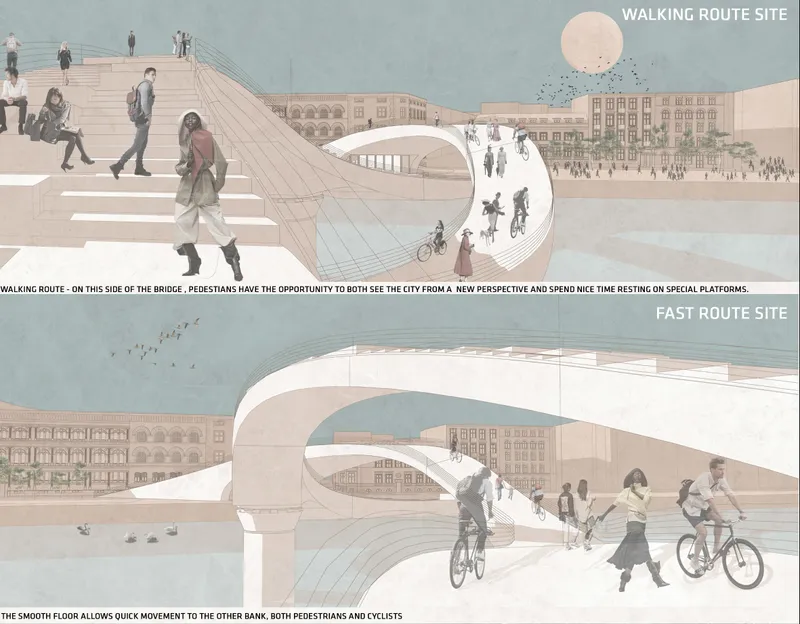
Walking Route
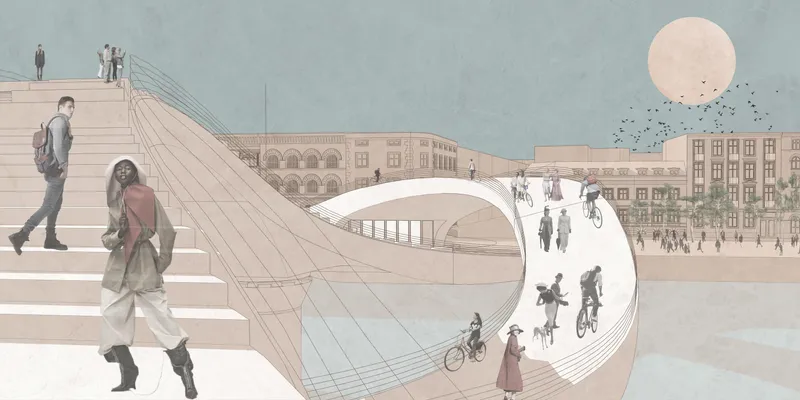
A stepped promenade with platforms for resting, observation, and social gathering. Pedestrians can pause, enjoy panoramic city views, and experience the bridge as a public space rather than merely a crossing.
Fast Route
A smooth cycling path allowing quick and uninterrupted movement between districts. The continuous surface ensures efficient travel while maintaining safety and fluidity.
This duality ensures that the bridge serves different users without conflict: commuters, families, tourists, and leisure walkers all find their place within the structure.
A Bridge That Opens: Functional Innovation
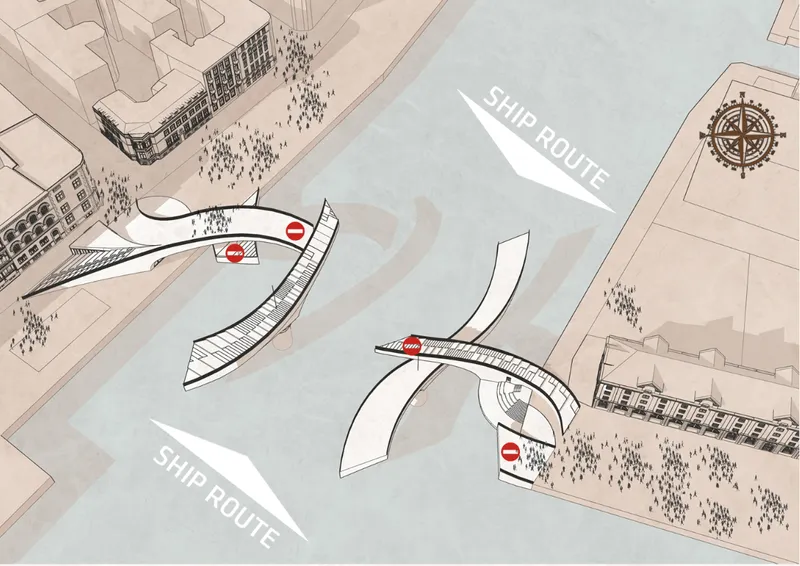
The City Link is divided into segments, with a movable central section rotating on a cylindrical shaft. When larger ships need to pass, the middle segment rotates to allow maritime flow. During this time, moving sections are temporarily excluded from pedestrian traffic for safety.
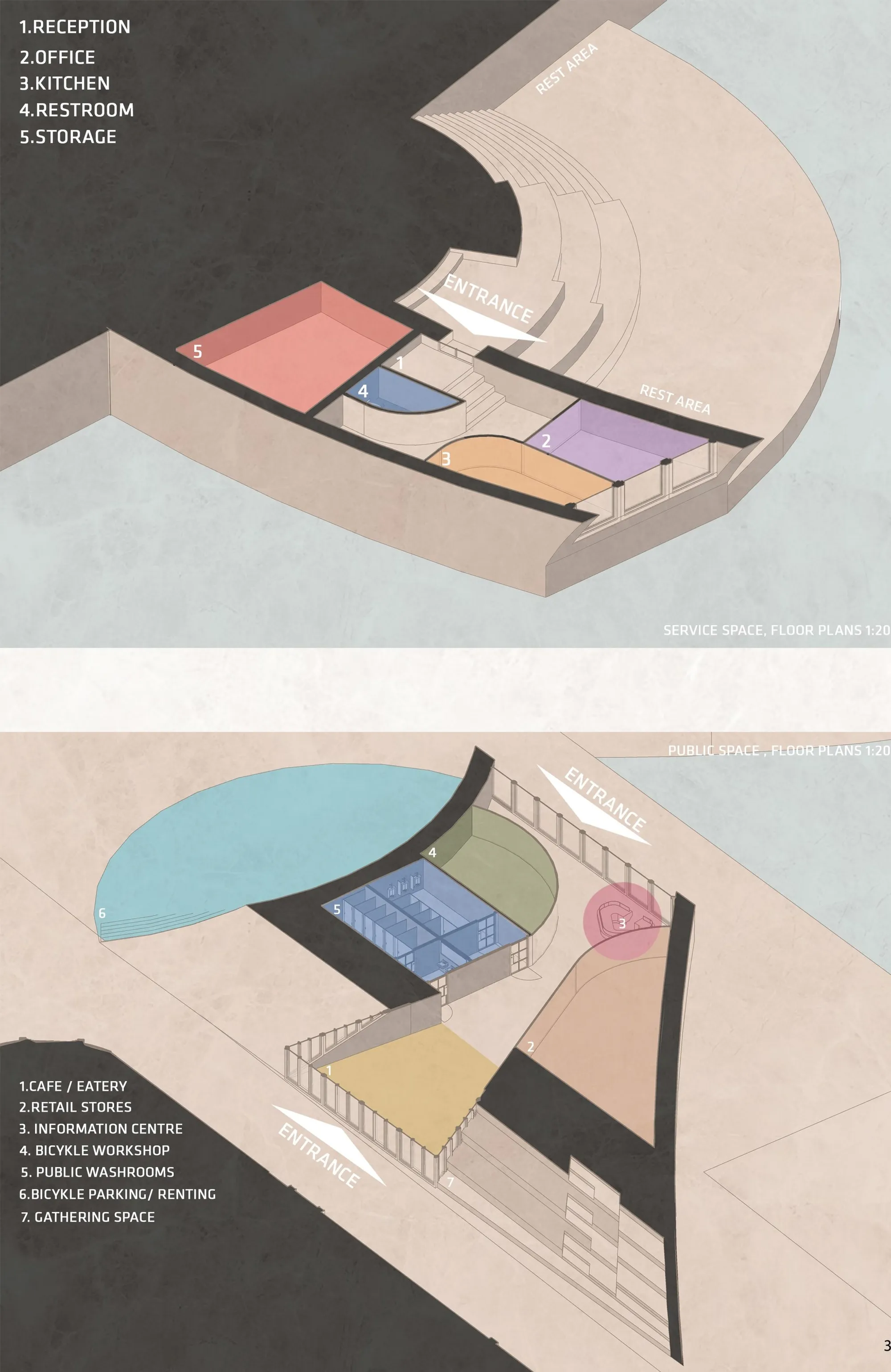
Unlike conventional movable bridges that interrupt public life entirely, the adjacent segments remain active and accessible. Cafes, amphitheater seating, rest areas, and platforms ensure that waiting becomes part of the urban experience rather than an inconvenience.
This integration of functionality and public space exemplifies advanced sustainable urban bridge architecture that balances infrastructure and lifestyle.
Public Space Activation and Urban Sculpture
The bridge incorporates stairs that double as seating areas, an amphitheater for informal gatherings, and potential retail or cafe spaces. These features activate the urban population and encourage spontaneous social interaction.
Rather than being an isolated piece of infrastructure, The City Link becomes a promenade, a breathing urban space that encourages:
- Community gatherings
- Cultural events
- Quiet reflection
- Observation of the city skyline
The elevated form creates a new perspective of Copenhagen’s architectural silhouette, allowing users to rediscover the city from a different vantage point.
A Landmark Above the Water
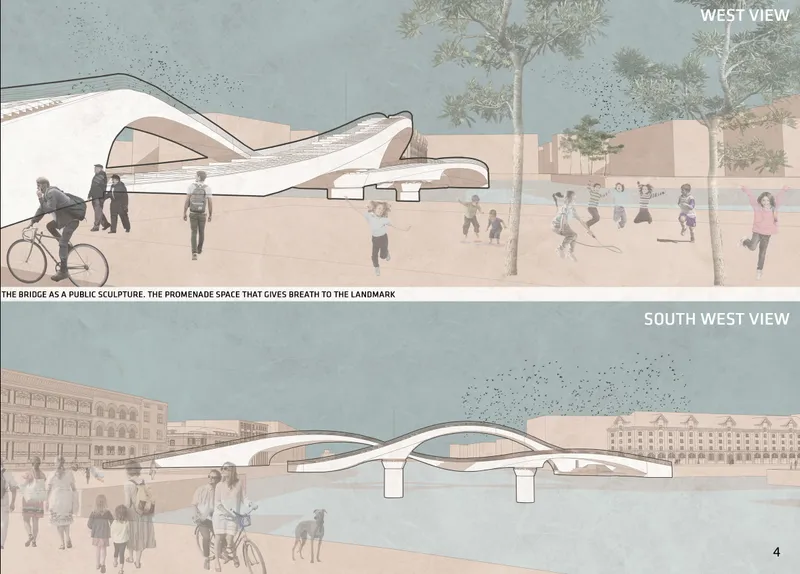
Thanks to its significant elevation and sculptural geometry, The City Link becomes a recognizable landmark within Copenhagen’s waterfront. From different viewpoints, the form appears calm and subdued: or dramatic and wave-like: depending on light, perspective, and movement.
It is both infrastructure and art.
Its flowing structure stands as a spatial sculpture that enhances the skyline while maintaining practical efficiency.
Sustainable Urban Impact
The City Link promotes:
- Reduced car dependency
- Increased cycling infrastructure
- Ecological transportation systems
- Improved public health
- Enhanced urban connectivity
By limiting car dominance and prioritizing human-scale mobility, the project strengthens Copenhagen’s commitment to sustainable urban development.
Cities are created for people, not machines. The City Link embodies this philosophy through design innovation, ecological responsibility, and cultural sensitivity.
The City Link by Dominik Frelich is a transformative example of sustainable urban bridge architecture in Copenhagen. It merges sculptural biomorphic design with practical mobility solutions, creating a pedestrian and bicycle bridge that is both functional and experiential.
Through nature-inspired forms, dual circulation paths, movable structural systems, and activated public space, the bridge redefines what urban infrastructure can be.
More than a crossing, it is a living, breathing extension of the city.



Popular Articles
Popular articles from the community


Lunar Spiral: Space Architecture Shaped by the Mathematics of the Universe
Lunar Spiral reimagines space architecture through Fibonacci geometry, lunar regolith, levitating habitats, and self-sustaining Moon living.

The Musturak Paradise: Senior Living Architecture for a Connected Future in Temara, Morocco
The Musturak Paradise reimagines senior living architecture in Temara via private homes, social spaces, culture, community, and shared care.

The Ocean Hive: Sustainable Architecture for a Self-Sufficient Civilization at Sea
The Ocean Hive imagines sustainable architecture at sea, where modular habitats, algae, wave power and ocean waste sustain a growing colony.

Co-Life: Senior Housing Design That Reconnects Older Adults With the City
Co-Life reimagines senior housing design through healing gardens, shared streets, workshops, and a sustainable community across generations.


Similar Reads
You might also enjoy these articles

Eco Chapel: A Green Architecture Pavilion Designed in Symbiosis with the Forest
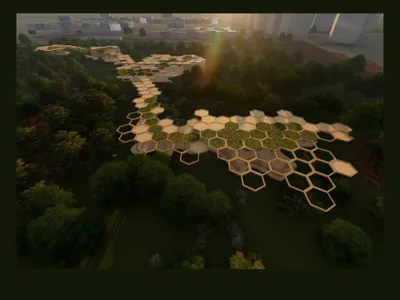
Eco Chapel uses green architecture to weave prayer, learning and reuse into a forest pavilion shaped by modular hexagonal canopies for life.
Kaffeebühnen: Coffee Shop Architecture Designed as a Civic Stage Between Vienna’s City and Park
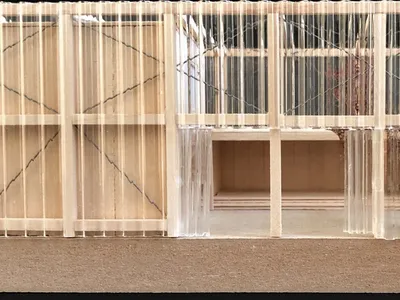
Kaffeebühnen turns coffee shop architecture into a civic stage, linking Vienna’s park edge, urban life, warm timber yards, and coffee craft.
Healing Façade: Sustainable Architecture for Reforestation, Community, and Sacred Ecology in Ethiopia
Healing Façade reimagines sustainable architecture as a living wall that restores soil, catches water and renews Ethiopia's forest churches.


Urban Forest: A Vertical Ecosystem for 5,000 Workers in Singapore's Changi Business Park
Radially stacked pods and layered green decks turn a 7-acre plot into 47 acres of ecological workspace projected for 2040.


Comments (0)
Please login or sign up to add comments
No comments yet. Be the first to comment!