The Emergence of Post-Apocalyptic Architecture Design: A Glimpse into the Future
Delving into the Bunker of Unification, this piece examines how post-apocalyptic architecture provides sustainable survival solutions in a nuclear-threatened world.


The Dawn of a New Architectural Era
As the remnants of humanity linger on the brink of extinction, the importance of resilient and sustainable architecture has never been more critical. "Post-apocalyptic architecture design" has transcended from the realms of speculative fiction into a stark reality. It's a form of architecture that fuses survivalism with innovation, creating structures that can withstand the aftermath of a catastrophe and provide hope for the future.
Bunker of Unification: A Case Study
Context and Necessity
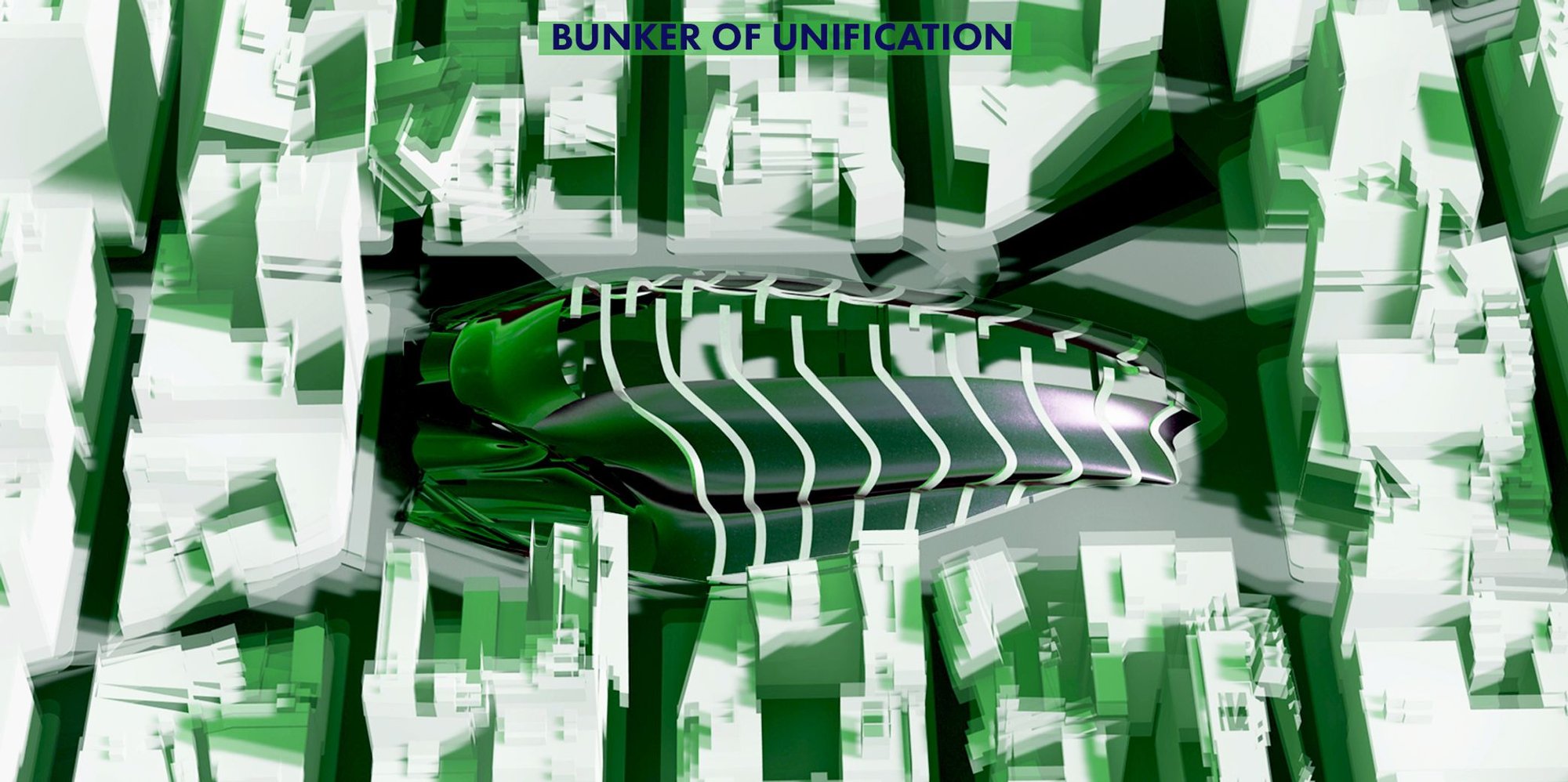
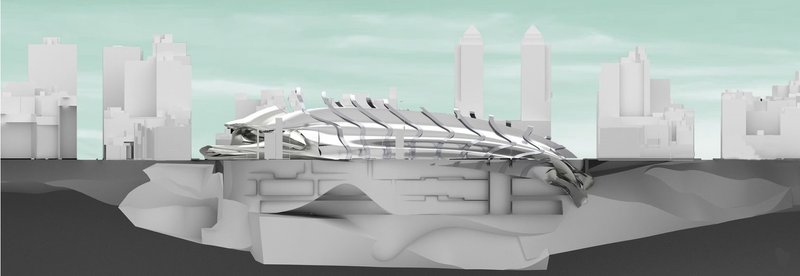
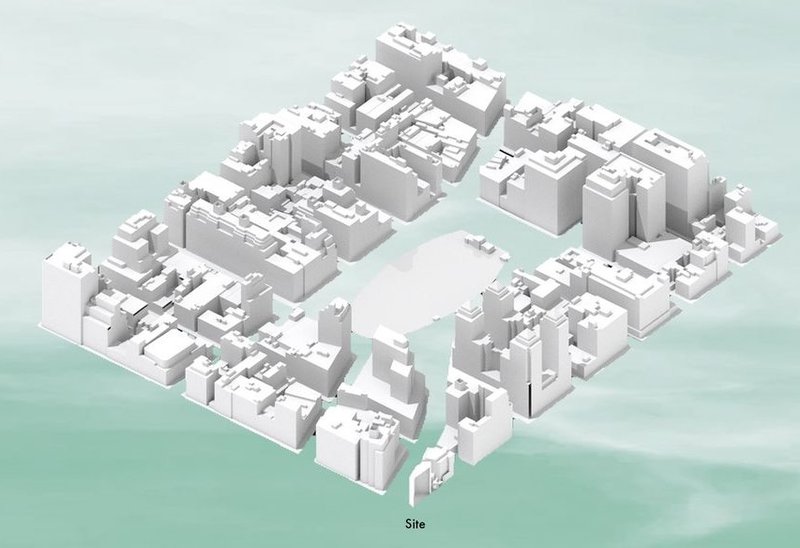
In the shadow of a looming nuclear threat between global powers, the urgency for secure and self-sustaining shelters gave rise to the Bunker of Unification, Honorable Mention entry of Architecture of the Apocalypse by Edwin Flores. Nestled within the subterranean depths of New York City's Union Square subway tunnels, this bunker represents a beacon of survival and societal rebirth.
Design Philosophy
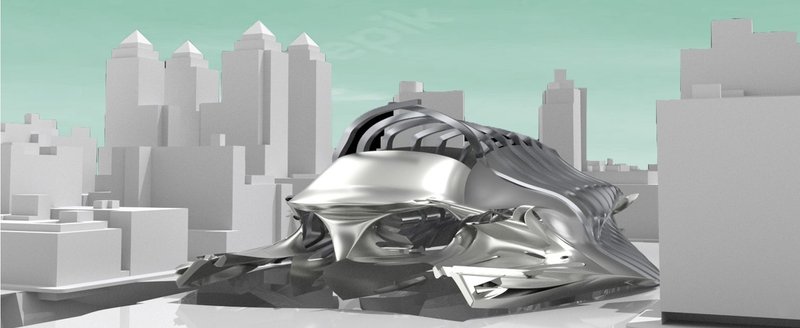
The bunker's design is a testament to the tenacity of the human spirit, embodying the essence of post-apocalyptic architecture design. Its construction was a direct response to the devastation, serving as a metaphorical and physical suture for a wounded civilization.
Structure and Sustainability
Site Situation
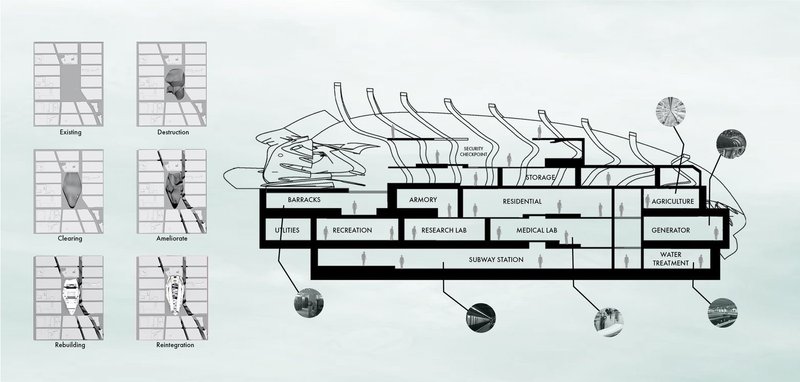
The heart of the bunker lies in its multifaceted functionality. Military personnel envisioned it as a transport hub, leveraging existing subway infrastructure to mobilize resources and people, crucial for wartime efforts and eventual societal reconstruction.
Engaging the Community
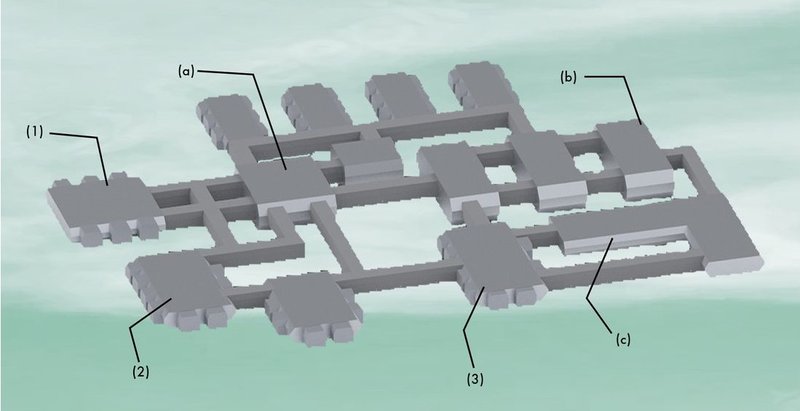
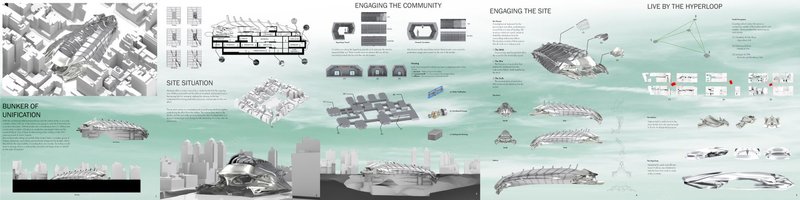
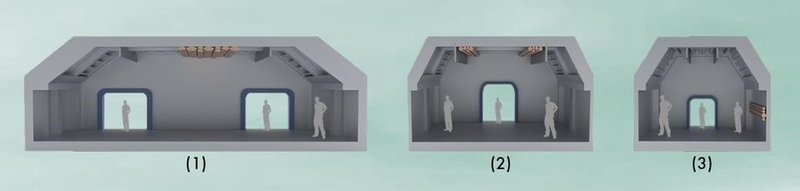
Integral to the bunker's design is its focus on community engagement. The hyperloop tunnel system minimizes spatial expansion while maximizing efficiency, connecting various segments of the shelter and promoting a sense of unity among survivors.
Housing and Living Conditions
Accommodations within the bunker are divided into three categories: barracks for soldiers, commonwealth areas for the general populace, and affluent sections for distinguished individuals. This stratification ensures that all societal needs are met, from basic survival to the maintenance of order and morale.
Self-Sustaining Features
Innovation is at the forefront, with systems in place for water purification, geothermal energy, and hydroponic farming. These features are not just functional but are a nod to the resilience and forward-thinking that post-apocalyptic architecture demands.
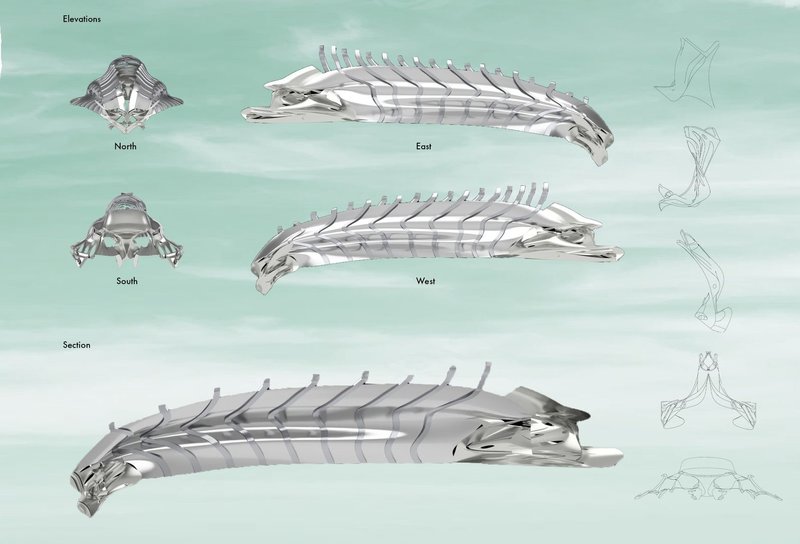
Engaging the Site: The Architectural Triad
The Wound, The Stitch, and The Scab
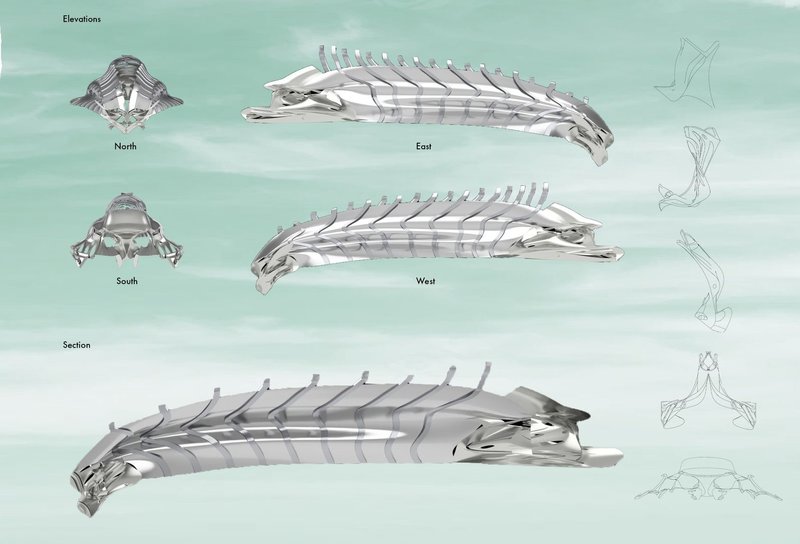
The bunker's exterior is a triad of elements: 'The Stitch' – overarching steel beams providing structural integrity, 'The Skin' – the primary protective layer against the harsh external environment, and 'The Scab' – an additional shield that doubles as the entry point into the sanctuary.
Living by the Hyperloop: Connectivity in a Post-Apocalyptic World
The Hyperloop's Role
The hyperloop isn't just transportation; it's the lifeblood of the bunker, enabling swift movement and fostering connectivity between isolated nodes, each serving a distinct purpose in the micro-society.
Nodal Navigation
Creating critical nodes within the bunker system ensures that each area retains its unique function and identity. These nodes serve as agricultural, medical, and residential hubs, vital for the continuity of human life.
The Bunker of Unification is more than a shelter; it's a blueprint for post-apocalyptic architecture design. It represents the intersection of necessity and ingenuity – a comprehensive solution to an existential threat. As humanity faces uncertain futures, such architecture is not merely speculative; it's a necessary pivot in design thinking to ensure the survival and flourishing of human civilization amidst adversities.