The Growing Citadelle
A visionary model of sustainable urban agriculture architecture where housing, food systems, and community life grow together.


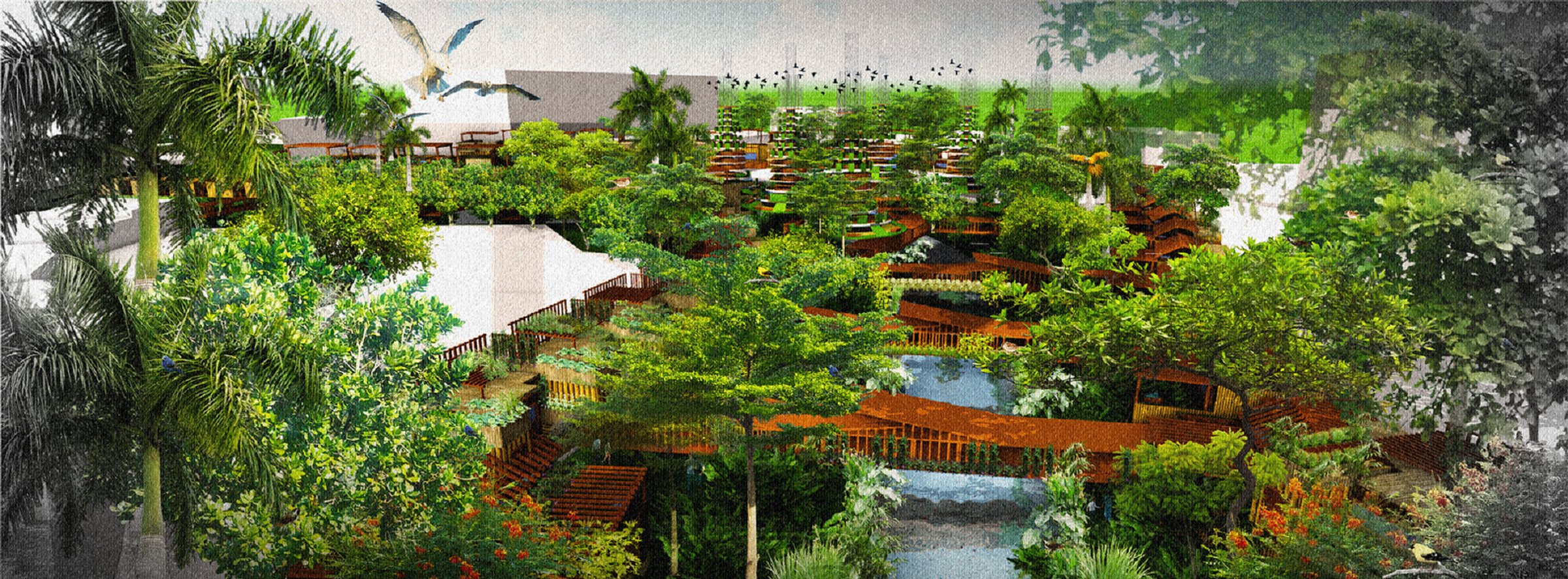
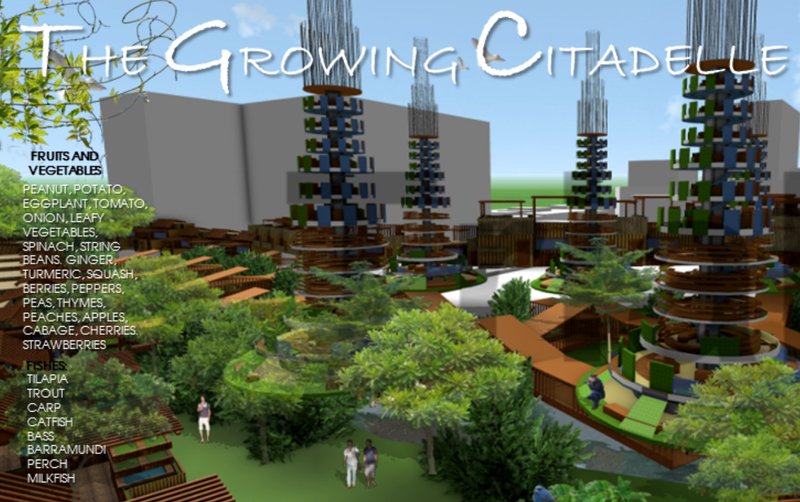
The Growing Citadelle is an ambitious architectural proposal that reimagines the future of cities through sustainable urban agriculture architecture. Conceived as a series of interconnected green towers, the project integrates housing, food production, social spaces, and ecological systems into a single adaptive urban framework. By positioning agriculture at the heart of the city, The Growing Citadelle challenges conventional boundaries between living, farming, and community-making.
Designed to evolve according to seasonal food demands, the project demonstrates how architecture can actively respond to environmental cycles while fostering food security, education, and social resilience within dense urban environments.
Concept: Architecture That Grows With Food Needs
At its core, The Growing Citadelle explores how architecture can grow, adapt, and transform based on food requirements throughout the year. Rather than treating agriculture as a peripheral activity, the project embeds it directly into the urban fabric through vertical farming towers, food-box housing systems, and shared cultivation spaces.
The name “Citadelle” draws from the idea of a fortified center—a place of protection and strength. Here, that strength is food. The project reframes food production as an urban infrastructure capable of supporting livelihoods, improving nutrition, and generating economic opportunities while reinforcing social bonds.
The Green Tower: Vertical Urban Farming Core
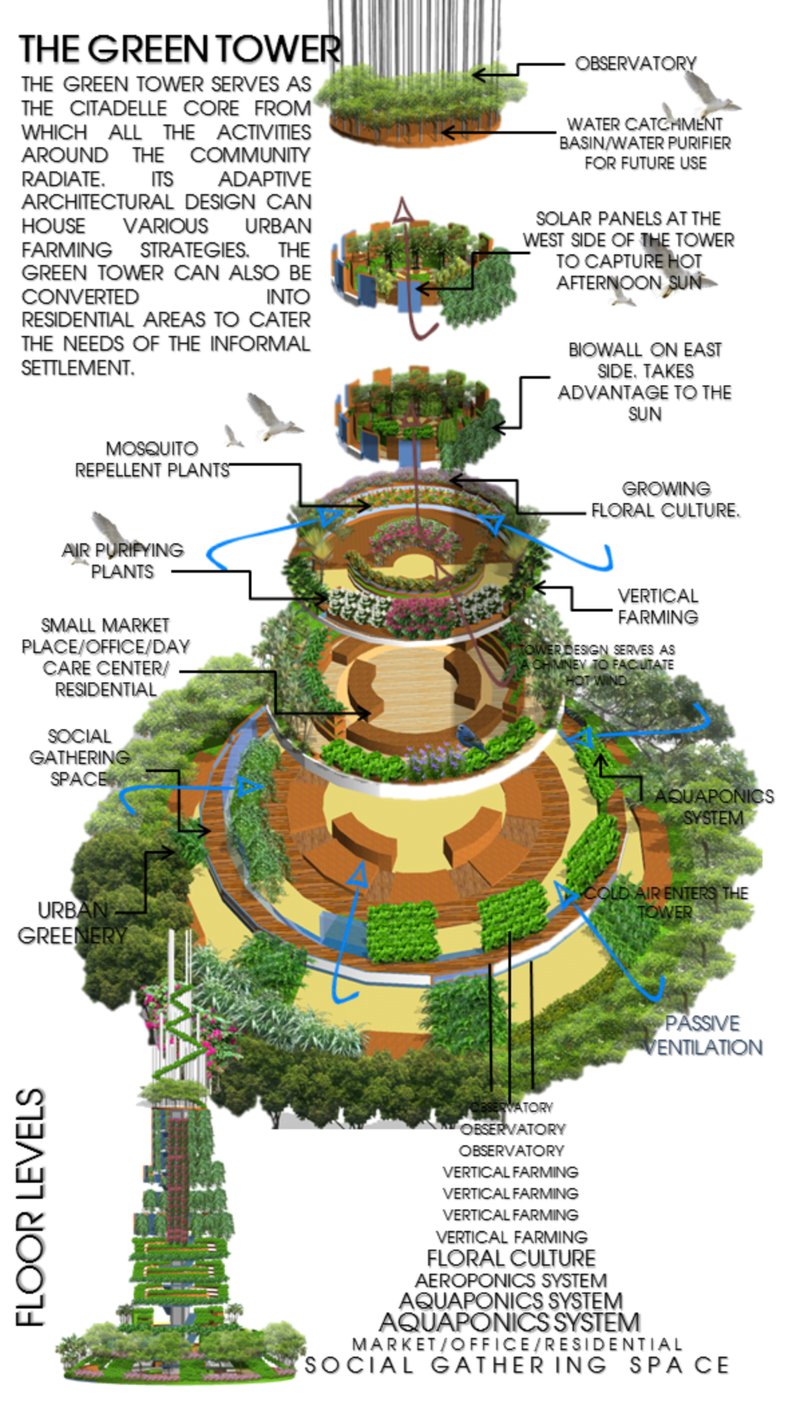
The Green Tower acts as the central spine of the development. It is the primary architectural and ecological engine from which all activities radiate. Each level of the tower is programmed to support vertical farming, aquaponics, aeroponics, and floral cultivation, while also accommodating social gathering spaces, markets, and educational platforms.
Environmental strategies are deeply embedded into the design. Water catchment basins purify and recycle water, solar panels harvest energy, and biowalls regulate temperature while improving air quality. Passive ventilation systems and strategic orientation reduce energy demand, reinforcing the project’s commitment to sustainable urban agriculture architecture.
FoodB.O.X Assemblage: Modular Housing Meets Farming
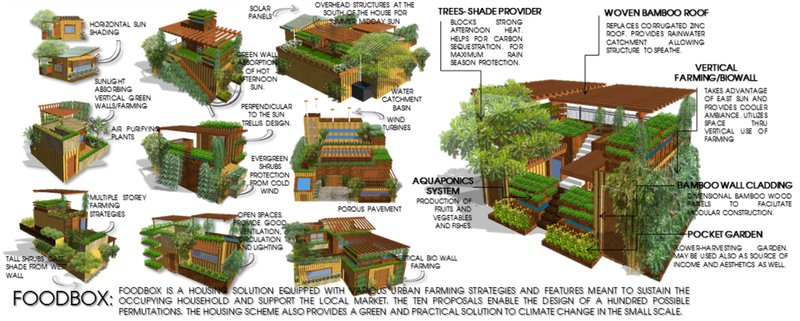
A defining feature of The Growing Citadelle is the FoodB.O.X assemblage system. These modular housing units integrate domestic life with food production, allowing residents to actively participate in growing vegetables, fruits, and herbs. The system supports multiple scales of density, from low-rise community housing to high-rise clusters capable of supporting hundreds of households.
Each FoodB.O.X unit combines traditional farming, hydroponics, aquaponics, rooftop cultivation, and vertical green walls. This flexible assemblage enables the city to expand or contract its agricultural capacity in response to population growth, climate conditions, and local demand.
Community, Education, and Urban Experience
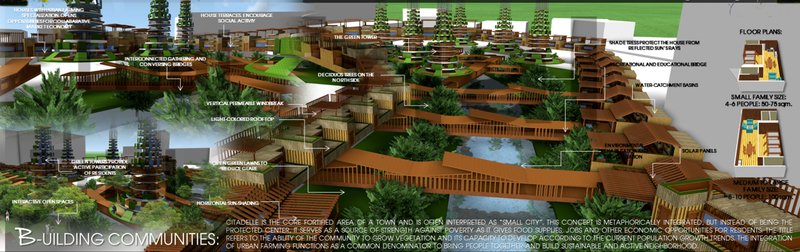
Beyond food production, The Growing Citadelle is designed as a social ecosystem. Elevated walkways, educational bridges, community gardens, and shared gathering spaces encourage interaction between residents, visitors, and farmers. Markets, daycare centers, and small offices are interwoven throughout the towers, reinforcing a mixed-use environment rooted in everyday life.
Educational spaces play a crucial role in the project. By exposing visitors to urban farming techniques, food conservation strategies, and sustainable living practices, the architecture itself becomes a learning tool—demonstrating how individual actions can reduce food waste and promote environmental responsibility.
Environmental Strategies and Material Logic
The project employs climate-responsive design principles to enhance comfort and reduce resource consumption. Shaded terraces, permeable surfaces, windbreak vegetation, and light-colored rooftops mitigate heat gain. Bamboo cladding, woven roofs, and green walls serve both structural and ecological purposes, supporting carbon sequestration and biodiversity.
Integrated aquaponics systems combine fish farming with plant cultivation, creating closed-loop cycles that maximize efficiency while minimizing waste. These strategies collectively reinforce The Growing Citadelle as a holistic example of sustainable urban agriculture architecture.
Reorganizing the City Through Food
Rather than treating agriculture as a standalone feature, The Growing Citadelle proposes food as an organizing principle for urban design. The network of towers, housing units, and public spaces creates a decentralized yet interconnected system capable of adapting to different urban contexts.
From community gardens and food boulevards to institutional integration, the project demonstrates how urban farming can reshape neighborhoods, strengthen local economies, and build resilient cities prepared for future challenges.
The Growing Citadelle presents a compelling vision for cities where architecture, agriculture, and community are inseparable. By merging housing with food systems and environmental intelligence, the project offers a scalable, adaptable model for sustainable urban living.
More than a design proposal, The Growing Citadelle is a manifesto for future cities—where growth is measured not only in density, but in nourishment, resilience, and shared responsibility.
Project by: Charl Justine Darapisa