The Hive of Play: Redefining Playground Architecture for Urban Communities
A hexagonal haven where technology, nature, and imagination merge—creating an inclusive playground that nurtures growth through play.


In cities dominated by concrete and speed, playground architecture emerges as a vital language of community, creativity, and connection. The Hive of Play reimagines how urban environments can nurture curiosity and inclusivity. Designed by Shreya Bhojani and Tirth Khiroya, this award-winning project envisions a space where children and adults alike rediscover the joy of interaction, movement, and discovery. The design transcends traditional play zones to create a living system of engagement, learning, and imagination.
Winner entry of Playground - E
Concept: A Playground for All
Inspired by the geometry of a honeycomb, The Hive of Play symbolizes strength, unity, and diversity. Each hexagonal module represents a different facet of play — physical, cognitive, natural, and social. Together, they form an adaptable, inclusive, and interconnected landscape. The design philosophy emphasizes accessibility and diversity, ensuring that every visitor, regardless of age or ability, finds a space that resonates with their curiosity.
The playground is not just a static structure but a living ecosystem that evolves with activity. By integrating digital interaction, sports, and nature-based elements, it creates a sensory-rich environment that balances technology with human experience.
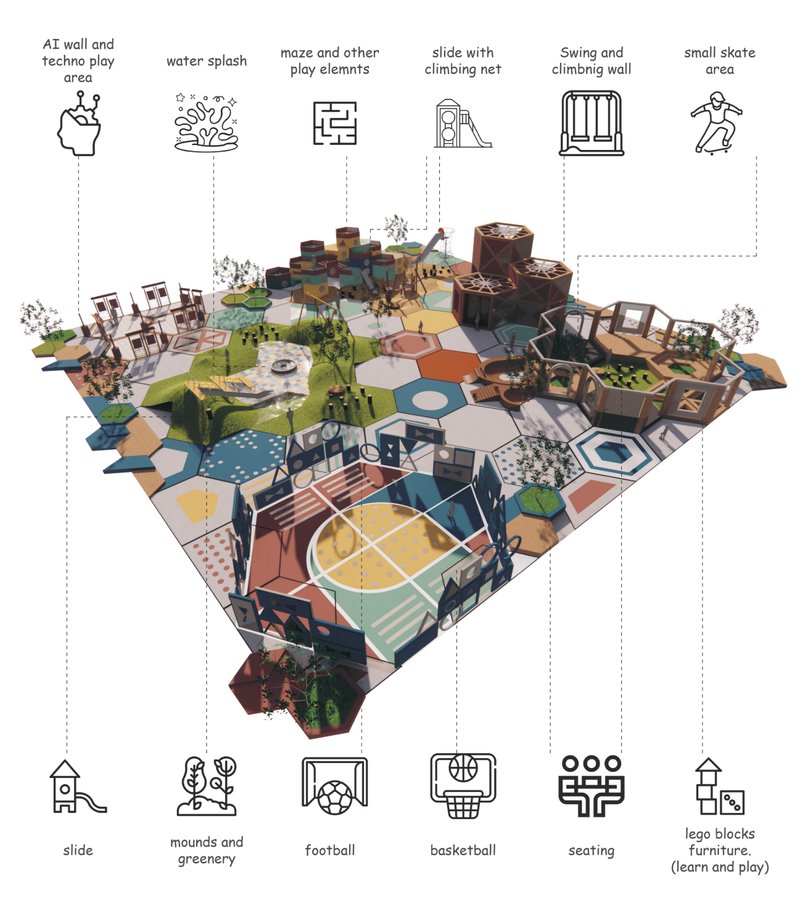
Zoning: Layers of Interaction
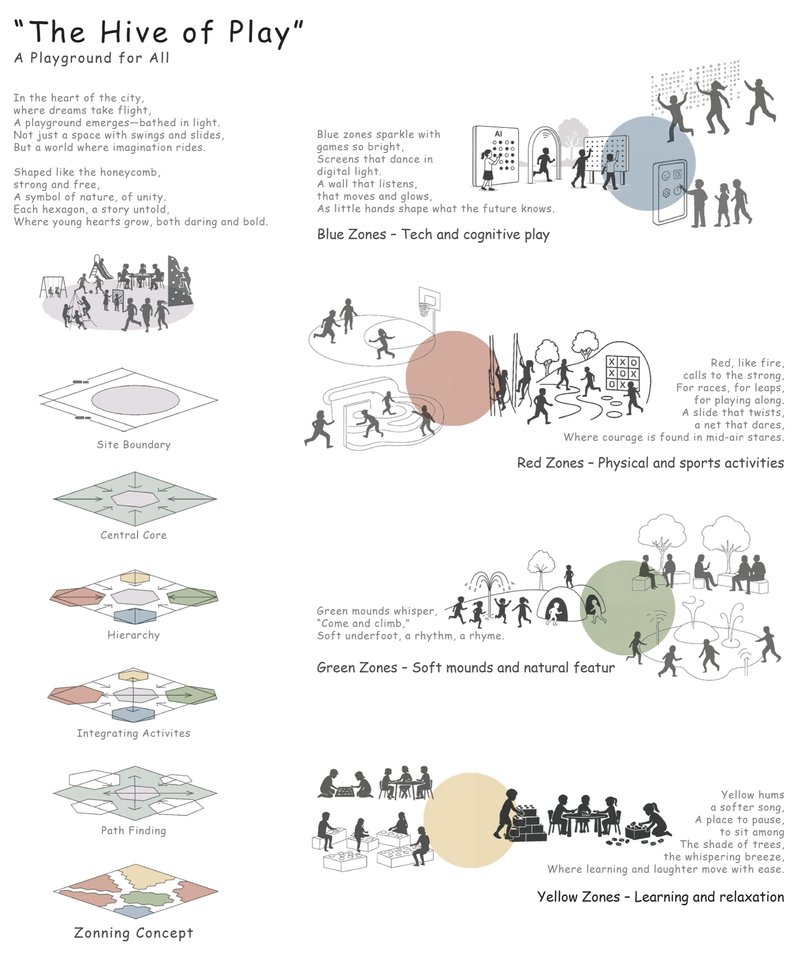
The playground is divided into four distinct yet fluid zones, each fostering a different mode of learning and engagement:
1. Blue Zones – Tech and Cognitive Play
These areas invite children to interact with AI-powered walls, responsive screens, and digital games. They encourage cognitive development, problem-solving, and creativity. Here, technology becomes a tool for exploration, not isolation — turning passive screen time into active engagement.
2. Red Zones – Physical and Sports Activities
Representing energy and courage, the red zones host basketball courts, football areas, slides, and climbing nets. These dynamic spaces promote teamwork, coordination, and confidence through movement. The bold colors and geometric layouts stimulate activity while encouraging spontaneous interaction.
3. Green Zones – Soft Mounds and Nature Features
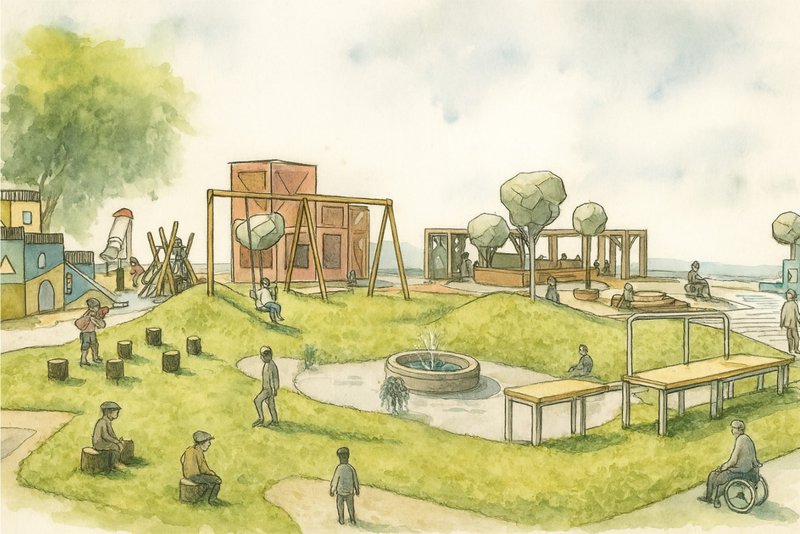
Nestled among natural mounds and water elements, the green zones offer moments of calm. They reconnect children with tactile landscapes, encouraging barefoot exploration and sensory play. The integration of greenery and flowing forms contrasts the structured play areas, creating balance and rhythm.
4. Yellow Zones – Learning and Relaxation
These are reflection spaces under tree canopies and shaded seating zones. Here, learning merges with leisure. Children build with LEGO furniture, read, or engage in collaborative learning. Parents and caregivers can rest, observe, and participate in shared storytelling moments.
Design Development: A Modular Urban Landscape
At the heart of The Hive of Play lies a modular hexagonal grid, a design language that organizes hierarchy, pathfinding, and integration. The layout fluidly connects various play typologies, ensuring seamless transition between zones. The use of vibrant colors and adaptable surfaces fosters inclusivity and visual identity.
Each module supports a specific function — from a tech wall to a water splash zone, maze, climbing slide, or seating island. Together, they create a dynamic environment that evolves with user needs. The visual and spatial rhythm of the hexagons reflects unity in diversity, much like the social fabric of an urban neighborhood.
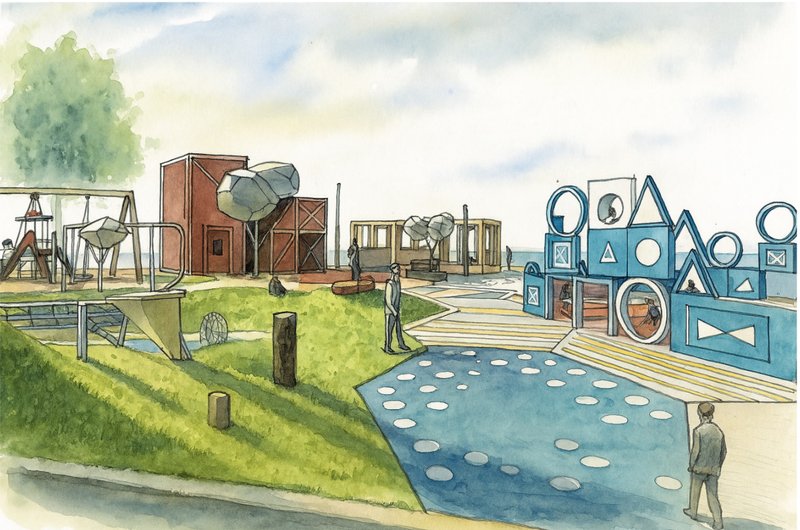
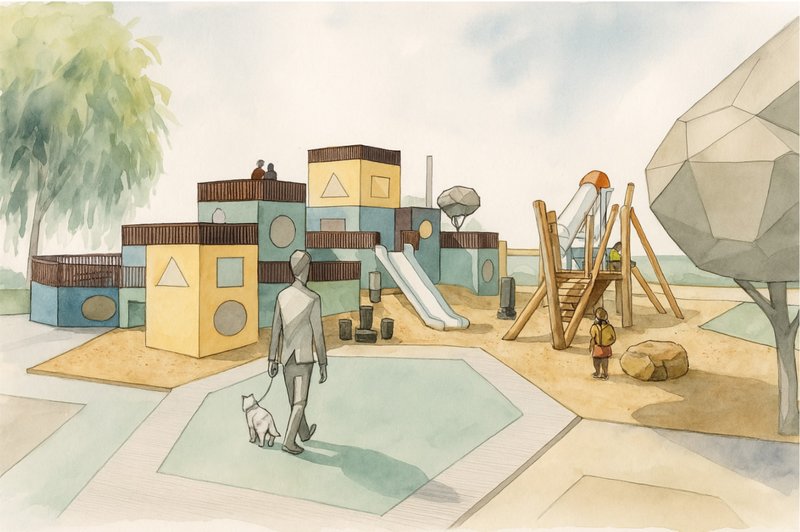
Experience: More Than a Playground
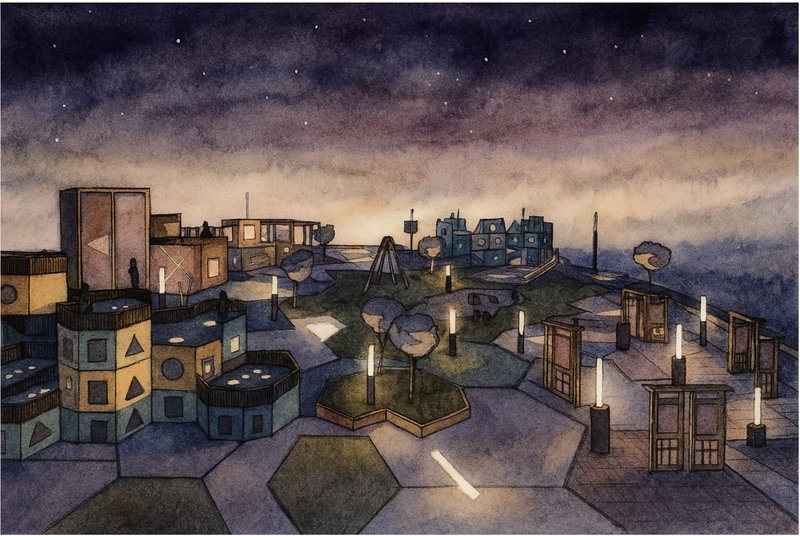
The Hive of Play extends beyond play—it becomes a living dreamscape. It transforms from a buzzing activity hub by day into a softly illuminated park by night. Benches curve around pathways; lights trace edges like glowing rivers; laughter and motion blend with quiet contemplation.
It is a space where technology and nature coexist, where learning and leisure intersect, and where every visitor contributes to the evolving narrative of the site. The project celebrates the architecture of empathy — designing not just for play, but for belonging.
Spatial Highlights
- AI and Techno Play Area: Interactive digital wall blending motion sensors and visual feedback.
- Water Splash and Green Mounds: Cooling zones combining fun and environmental awareness.
- Sports Courts: Basketball, football, and skating encourage teamwork and physical endurance.
- Learning Islands: LEGO block furniture promotes tactile learning and social creativity.
Each element contributes to a holistic environment that stimulates mind, body, and emotion.
A Vision for Future Playgrounds
In redefining playground architecture, The Hive of Play demonstrates how urban public spaces can foster inclusivity, adaptability, and sustainability. Its modular design allows easy replication and expansion in other cities, encouraging architects to think beyond playground equipment and focus on spatial storytelling.
This project invites a new generation of designers to view play as a critical component of urban well-being. It is not merely a playground—it is a microcosm of human experience, designed to inspire courage, connection, and curiosity.
A Hive Where Life Grows
Under the glowing canopy of dusk, The Hive of Play stands as a living poem—a testament to imagination, inclusion, and design excellence. Where laughter meets learning, and play becomes a universal language, this project reminds us that the most profound architecture is the one that brings people together.