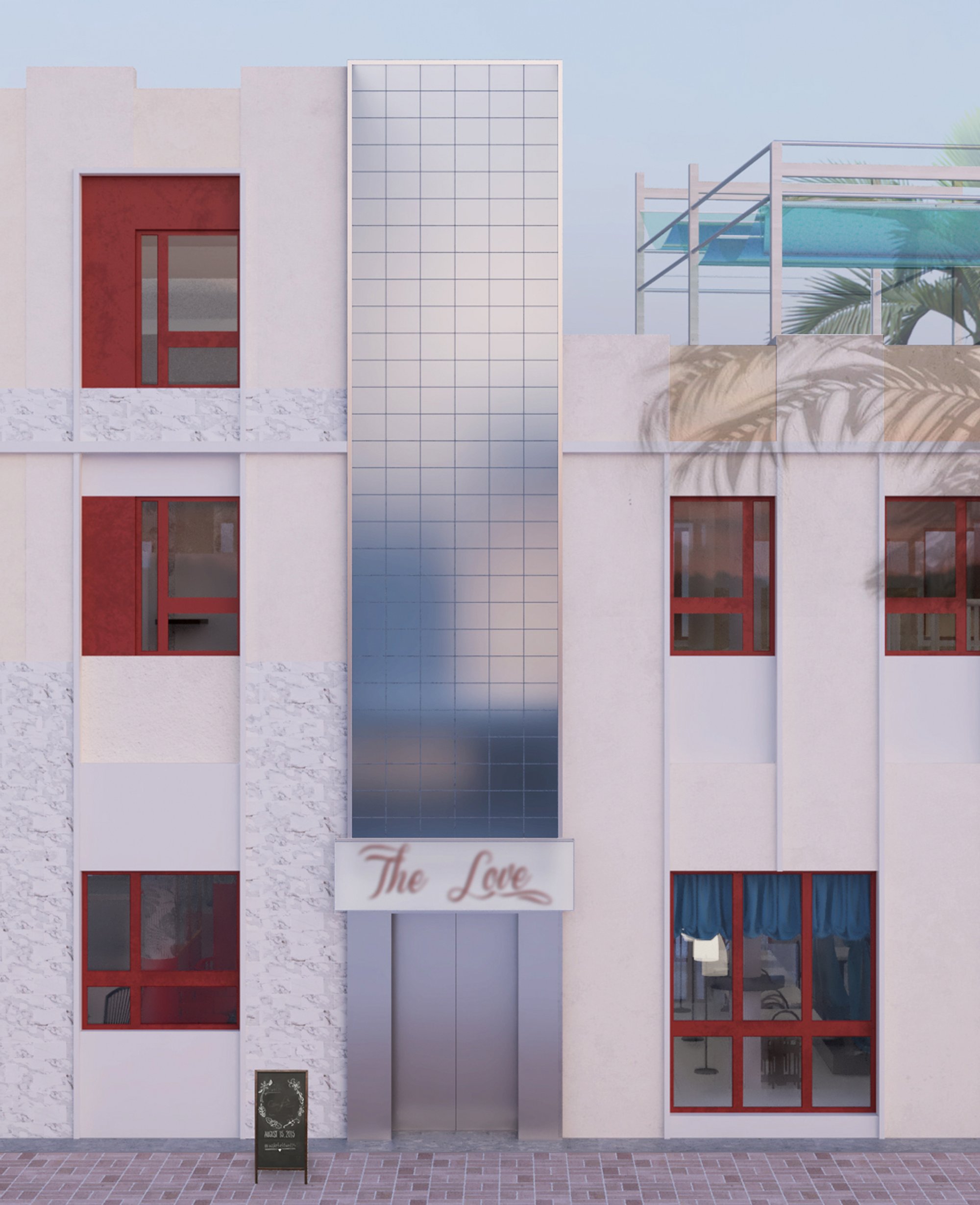
The Love
Brewed - Bali Beach themed café design challenge
Introduction
The story is about a U.S. sailor met a local girl who offered catering services on a tropical beach during shore leave. Attracted by the freshness and enthusiasm of the beautiful lady, with caffeine creating some subtle chemical reactions, the sailor seemed to be in love with this girl. They quickly became intimate with each other and enjoyed a fabulous time. Any loneliness was healed by the sunshine and shadow of the trees. Even these feelings were recalled when the sailor embarking on the boat home, the provisional “love” gradually became an eternal lyric staying in their memory.
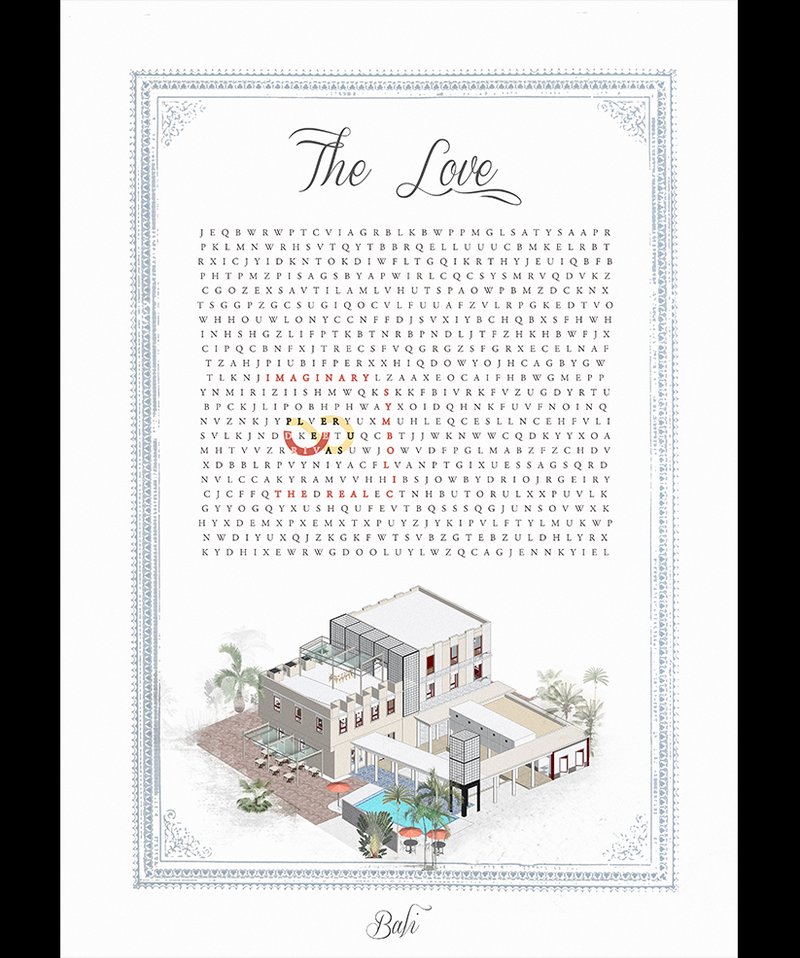
Crude Ideas
The crude ideas of our design primarily come from some special moments in the history of the coffeehouse. In the 19th century, coffeehouses in Vienna were not only a tasting room, a place for public activities, but also a centre for companionship. Alfred Polgar greatly praised these places for people to genuinely be their own, to take down the “masks” in daily life. In his Theory of the Café Central (1926), he described the place as “ the refuge of married couples and lovers from the fear of undisturbed togetherness” (5). The most inspiring parts within this writing are the observations of the atmosphere in the Café Central which enables the place to “self-mockery and to calm surrender of one’s weakness”. We continue the exploration of the modern forms of stranger sociability in our story as well in later design.
The Absinthe Drinker by Edgar Degas, painted between 1875 and 1876, displayed a more common phenomenon of social activities within the coffeehouse. It is in contrast to those in Alfred Polgar’s writing, but ironically, the lethargic and lonely woman is the epitome of the majority of people in modern life.
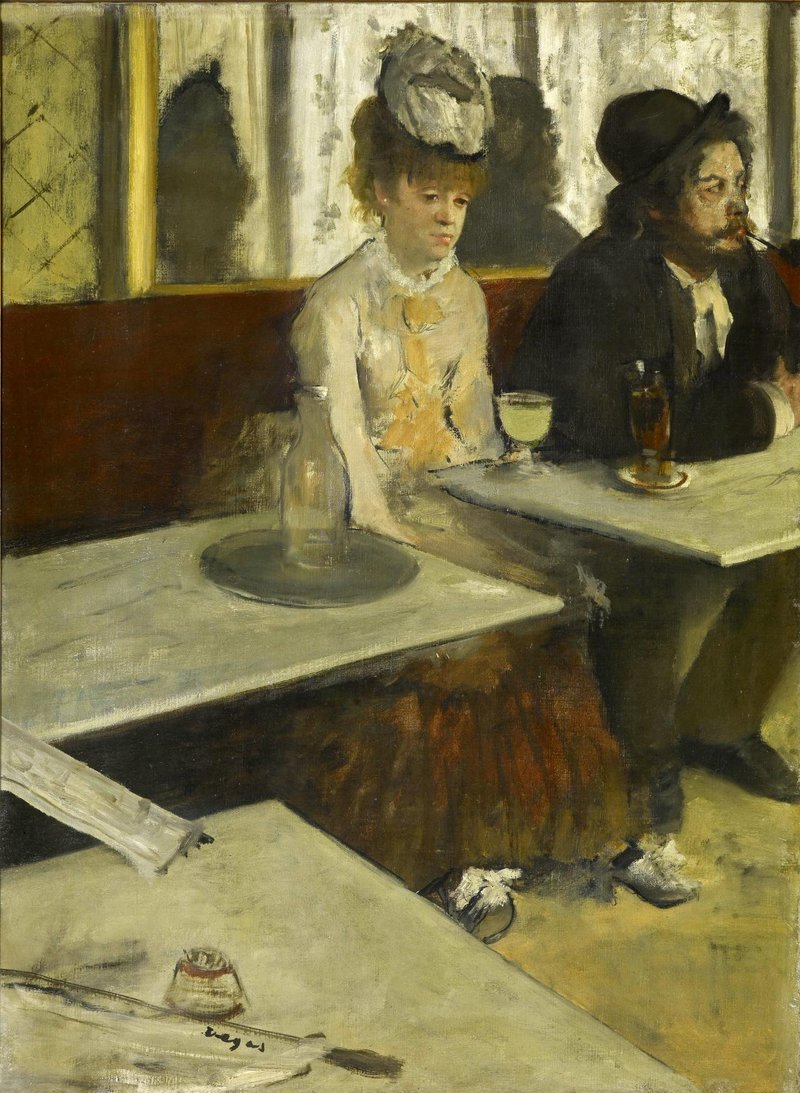
The Absinthe Drinker / Source: Wikipedia
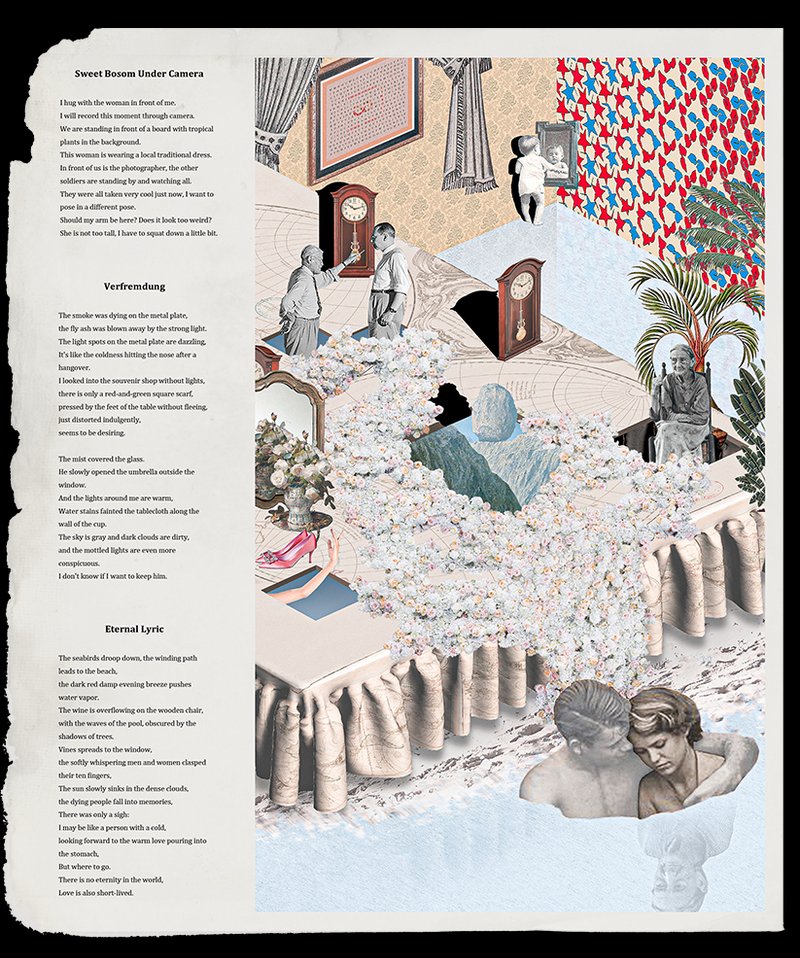
As we observe and experience the critical sociability in modern cities, the provisional nest in the Theory of the Café Central (1926) seems to be more attractive and valuable. Hence to create a space for provisional companionship, instead of a tedious space which purely satisfying social distancing and privacy become the base for our concept. We would like to build a machine for “love”. Then our research was conducted through image study and philosophy theories to brainstorm the configuration, dressing and alienation of the mechanism.
Wayne Miller’s photograph critically embodies the modern forms of stranger sociability that provisional intimacy always happens under consumption scenarios. We won’t agree to entitle this relationship to love, but we don’t know whether this lust is more close to love either. We tried to imagine this relationship further through creating poetry.
I hug with the woman in front of me.
I will record this moment through camera.
We are standing in front of a board with tropical plants in the background.
This woman is wearing a local traditional dress.
In front of us is the photographer, the other soldiers are standing by and watching all.
They were all taken very cool just now, I want to pose in a different pose.
Should my arm be here? Does it look too weird?
She is not too tall, I have to squat down a little bit.
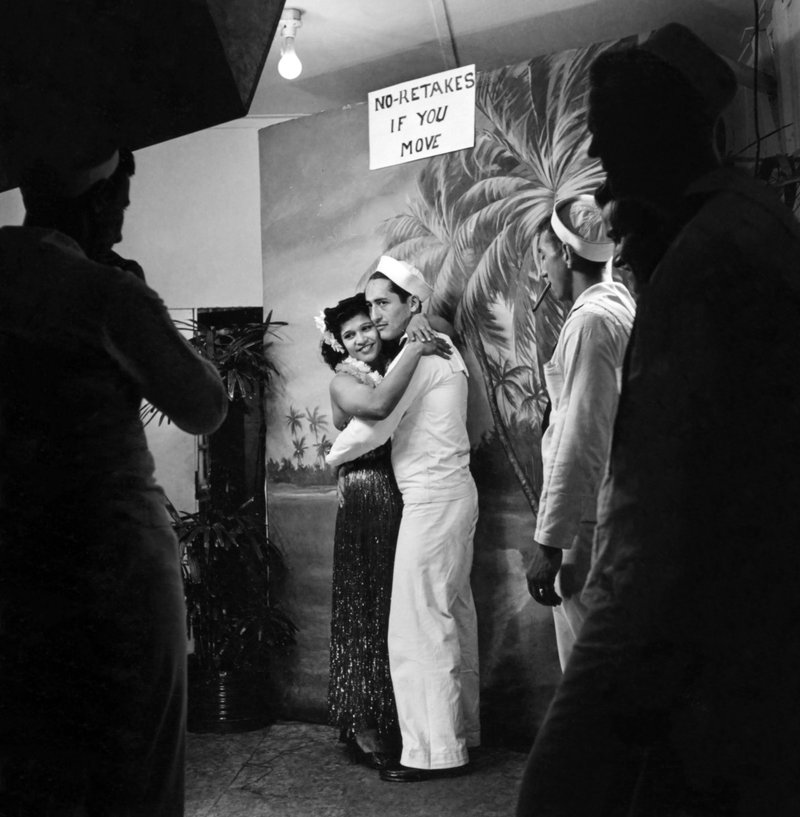
Shore Leave/ Wayne Miller
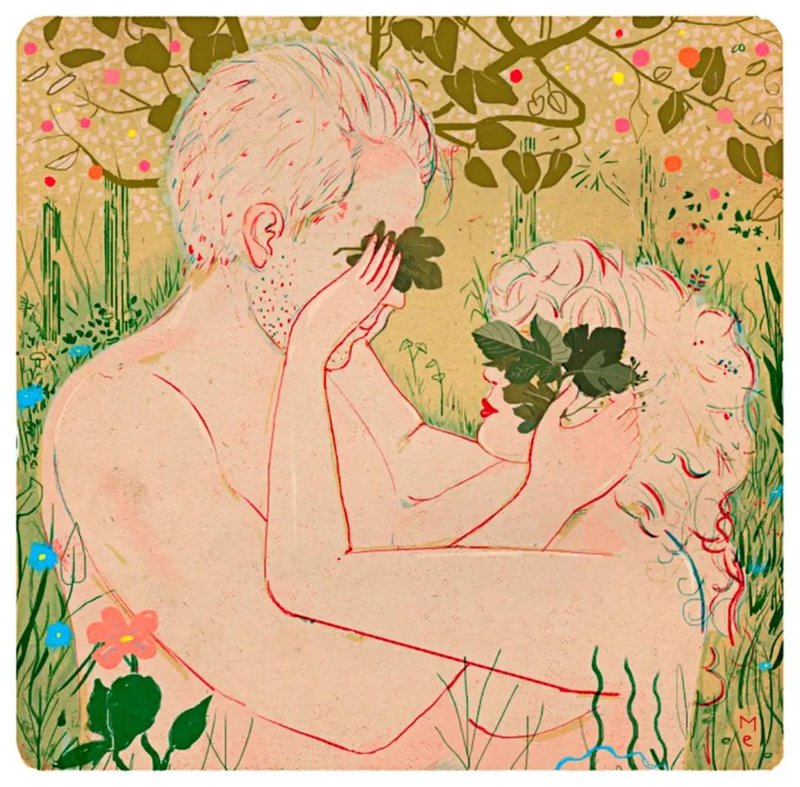
Source: The New Yorker
We found this image is so ironic when placed next to a drawing of a couple who put leaves on their eyes. Although the lady and the sailor hugged each other so closely, the camera, the slogan, the sailors nearby and the tropical plants painting in the background create a strong sense of verfremdung, showing a great contrast to the romance in the New Yorker’s drawing. Jacques Lacan argues differences between love,desire and drive. In his argument, desire is not a relation to an object but a relation to a lack, and this implies a continuous force that people are keeping looking for substitutes to satisfy their demand for the big Other “love”. He gives the answer to the meaning of love: desire is something, but love is no-thing. He also distinguished the difference between desire and drive, that the purpose of the drive is not to reach a goal but to follow its aim, meaning "the way itself" instead of "the final destination." [4] It is more similar to the scenario in Wayne Miller’s photograph and close to the concept for the place which we want to create. The Irony hidden in our concept is perfectly illustrated by the photograph taken by Martin Parr: a naked man stands on the pier, drinks the beer and behaves like an “amor fati”. This is absurd but so close to the atmosphere we want to create: to help people recognise the essence in the imaginary and the symbolic.
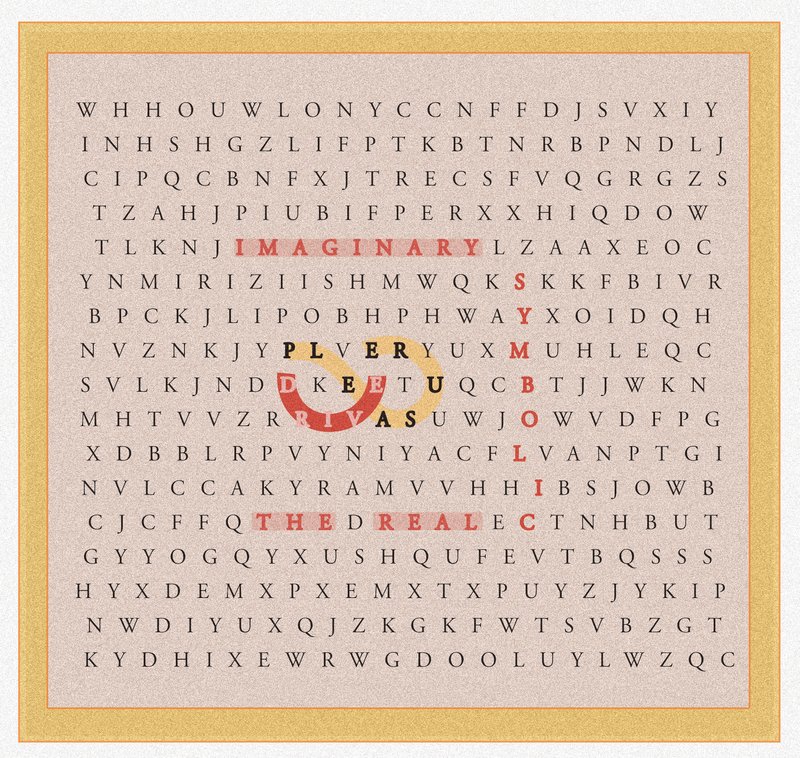
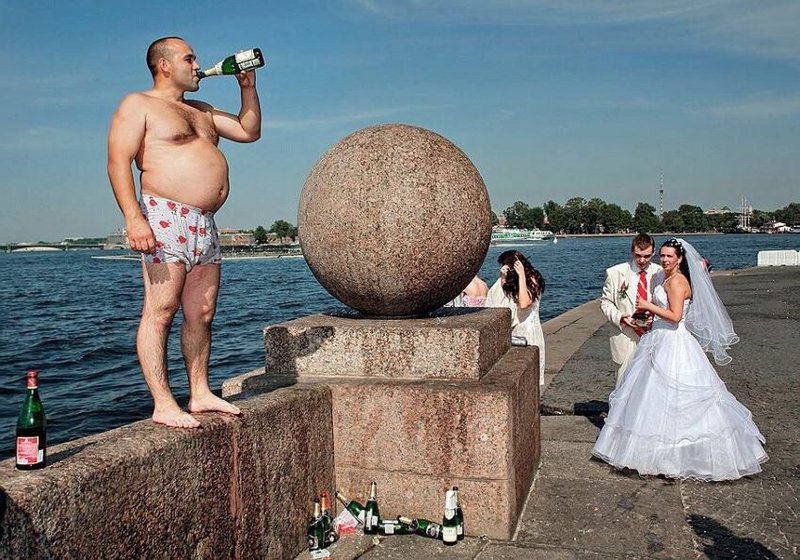
Martin Parr
Concept:
The space we want to create is a place for people to be immersed in provisional companionship without unconsciously controlled by their desire. Instead, they can clearly recognise that they are surrounded by a variety of signifiers of love from the imaginary. Love is always based on desire and signification, as Jacques Lacan regarded it as a decoration for lust. We can not interpret “love”, in another word, the real “love” is not materialised, it is the “big Other” hidden in the web weaved by libidinal predicates.
Analogy
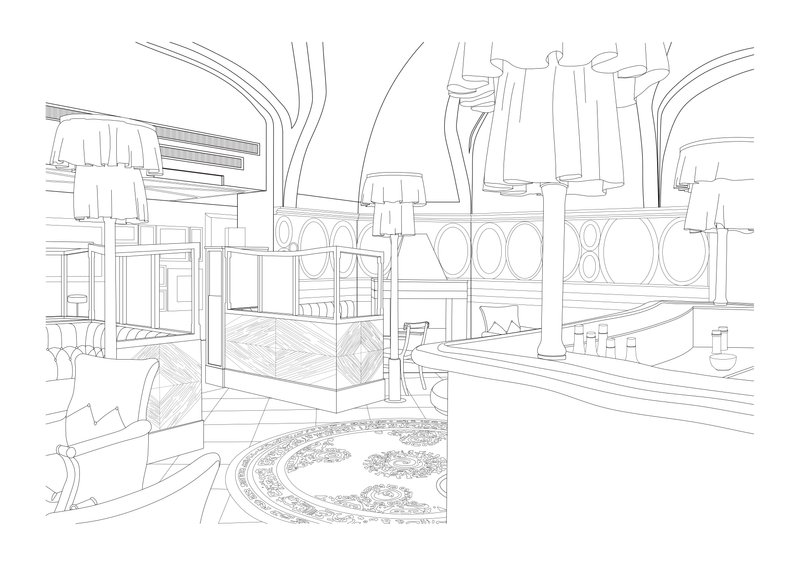
Case Study: Transformation Schwarzenberg Palais, Vienna, Austria 1984, Hermann Czech
“A contemporary concept of an elegant restaurant does not exclude a critical and ironical point of view which allows the clientele to feel comfortable but at the same time stimulated.” [3]
Outline Drawing
The Architecture Shell
The Surface Treatment
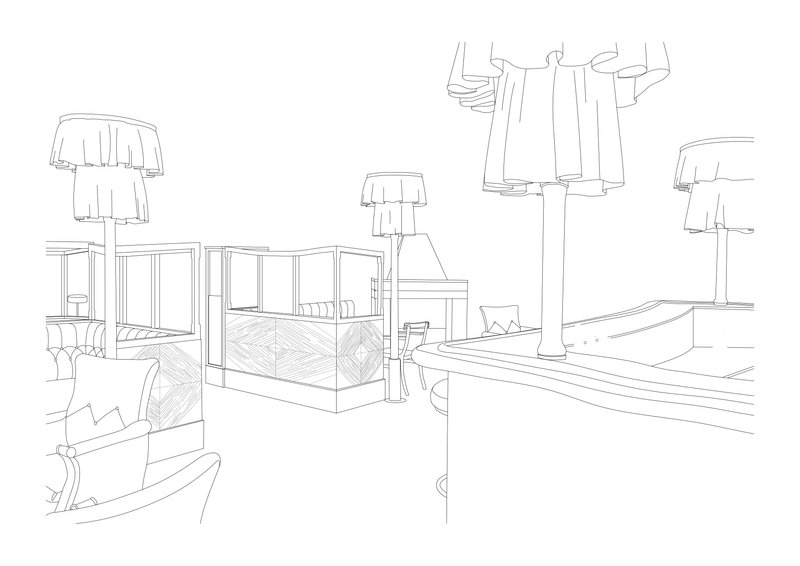
The Furniture

The Loose Objects
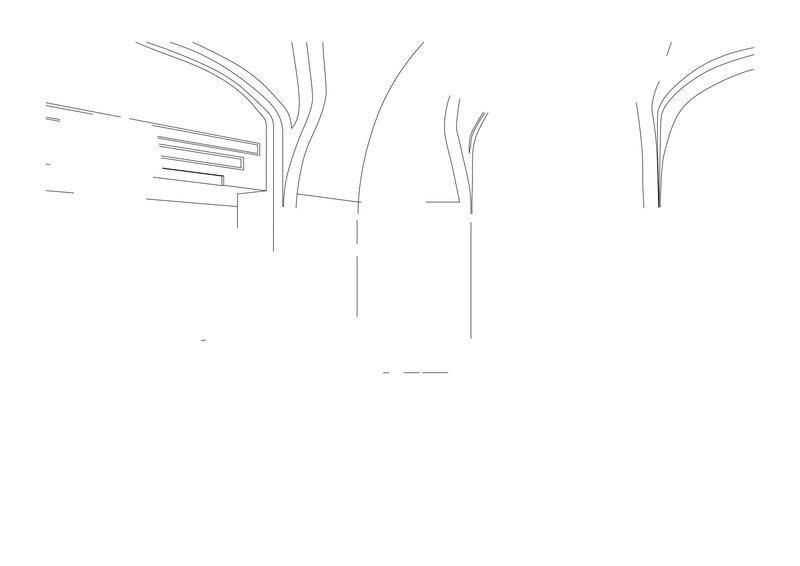
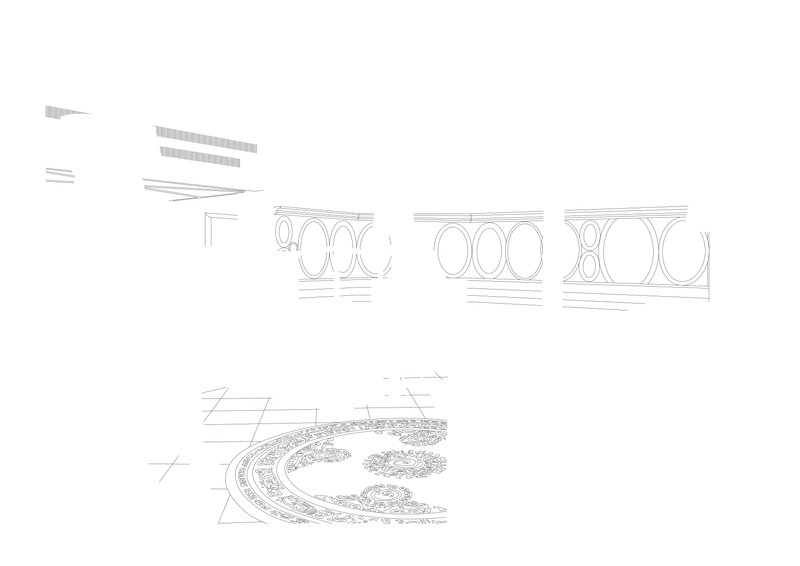
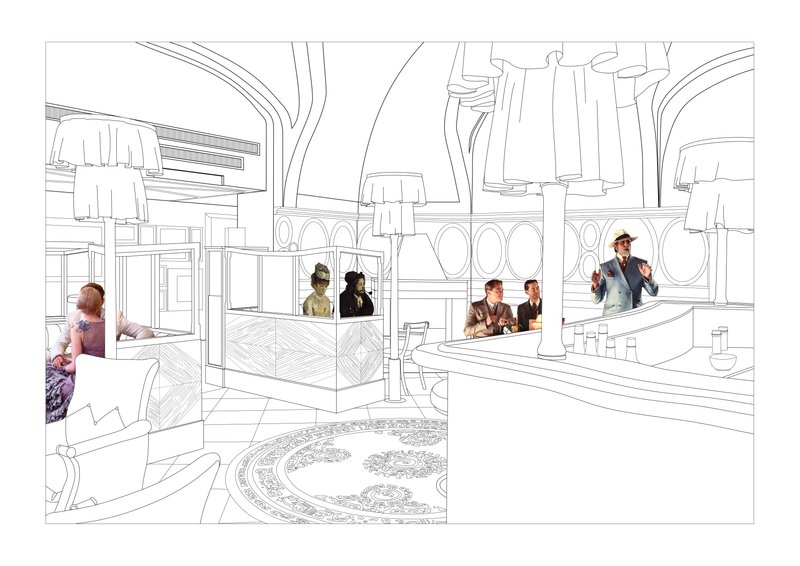
We followed the design method proposed by Miroslav Šik, “you’d take something as a reference, you’d make a copy, and then you’d start to change a little bit, creating a feeling of Verfremdung.” [2] We changed the original dome to a local mansard roof, and added characters in this image to catch the “aura”.
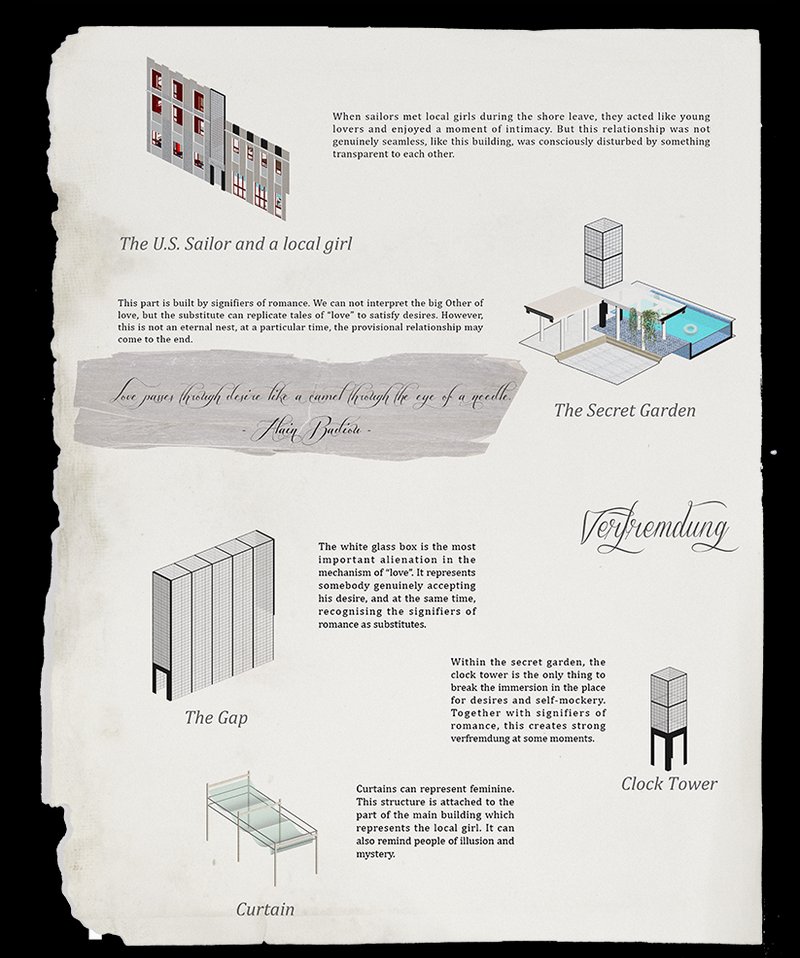
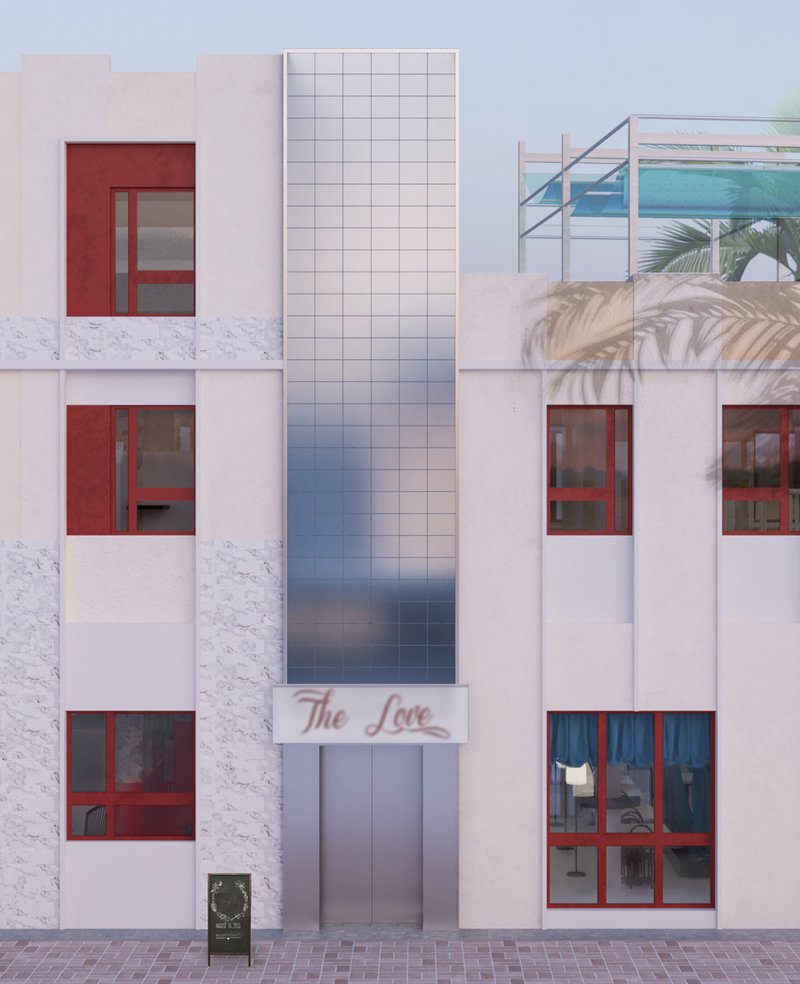
The design initiative for the massing and facade of the coffeehouse is a metaphor of a man and a woman, split by an offish glass box. When sailors met local girls during the shore leave, they acted like young lovers and enjoyed a moment of intimacy. But this relationship was not genuinely seamless, like this building, was consciously disturbed by something transparent to each other. The metal box is not only a gap, but also a lock. This represents the verfremdung effects happening inside people’s mind when falling in “love” with somebody: they may want to escape but can not, or they enjoyed this entanglement indeed.
“The Secret Garden”, built by signifiers of romance is the other significant part in our design. Within the secret garden, the clock tower is the only thing to break the immersion in the place for desires and self-mockery. Together with signifiers of romance, this creates strong verfremdung at some moments. We can not interpret the big Other of love, but the substitute can replicate tales of “love” to satisfy desires. But this is not an eternal nest, at a particular time, the provisional relationship may come to the end.
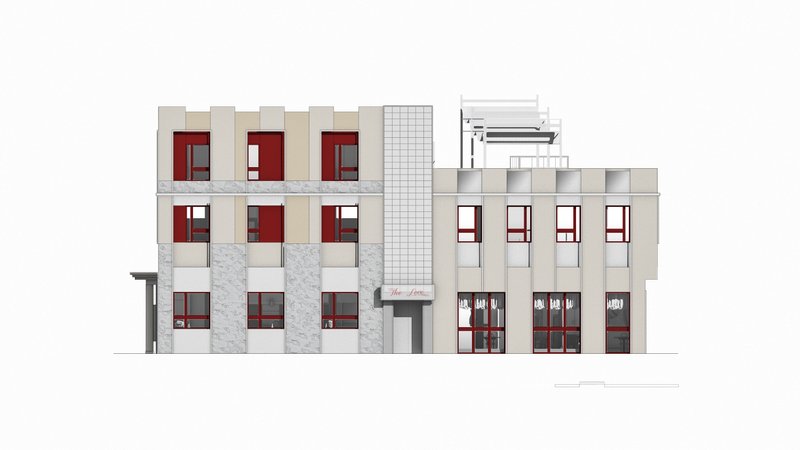
West Elevation of the Coffeehouse
In the plan of the site, an arcade diagonally cut into the woman’s part on the first floor is also an important implication of the difference between desire and love, the imaginary and the real.
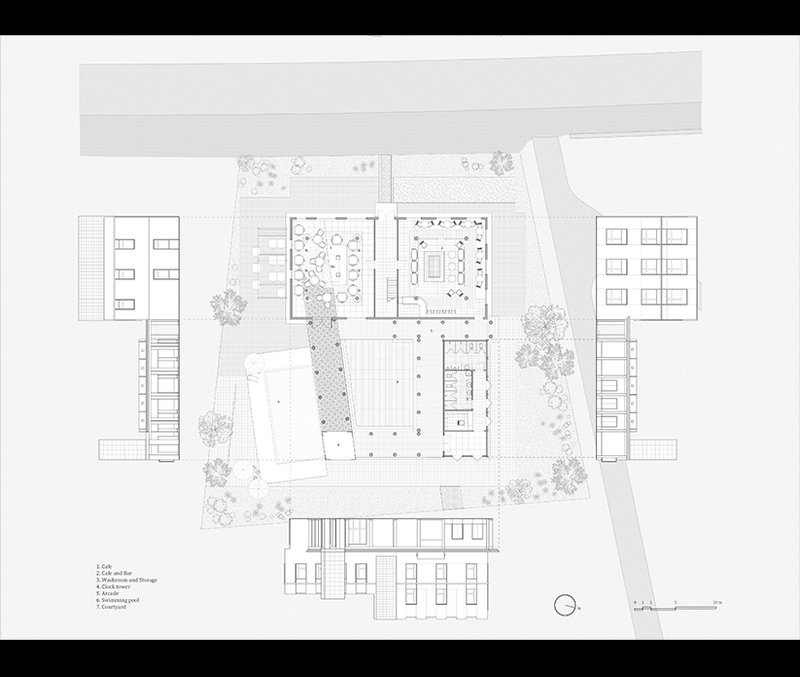
Site Plan
We emphasize the contrast between the man and the woman’s part in the interior design.
We picked up several objects to create verfremdung and replicated them in both parts. Mirror will be an important element in both parts, inspired by the mirror stage concept by Jacques Lacan, “formative of the function of the 'I' as revealed in psychoanalytic experience” [4]. Another one is the clock, to extend the effect from the clock tower to the interior.
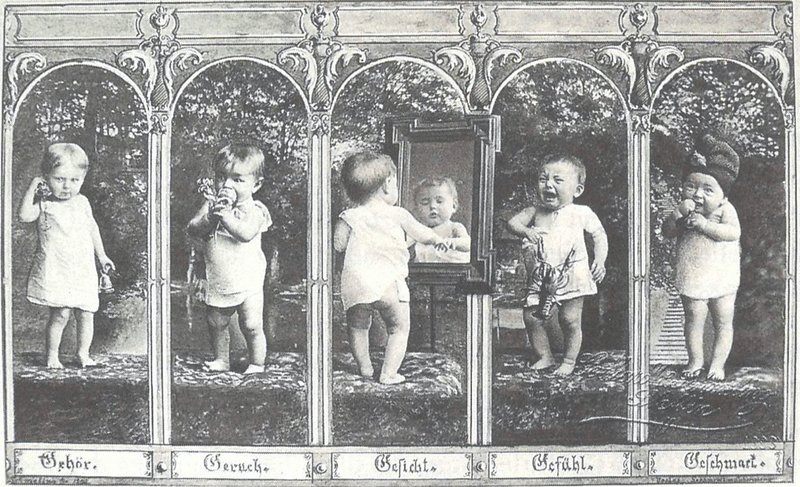
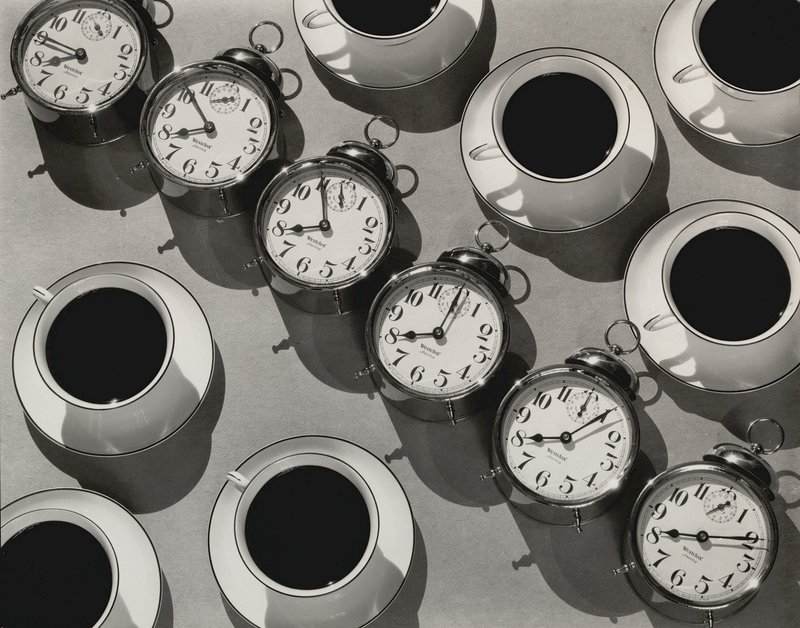
Source: VOLUPTAS
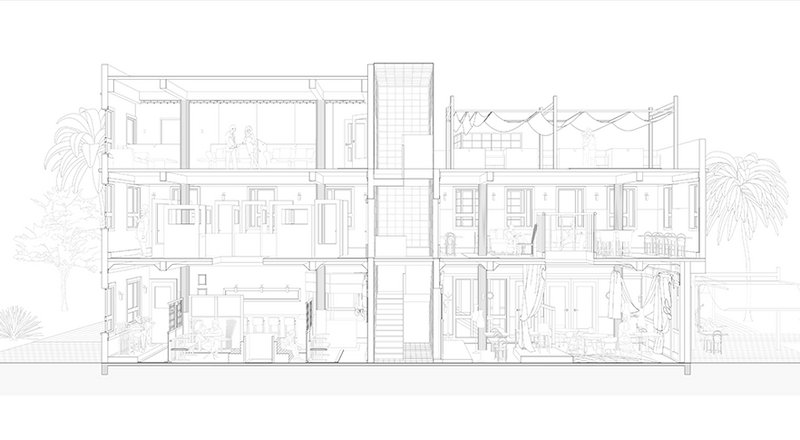
Rooms in the part representing the man are imagined as spaces within the sailing ship. Apart from the mirror and the clock, the clapboard is designed in the form of faked doors to create a sense of illusion. The orientation of benches and the white sofa, together with the chosen materials will contribute to create an atmosphere of dancing on the pier.
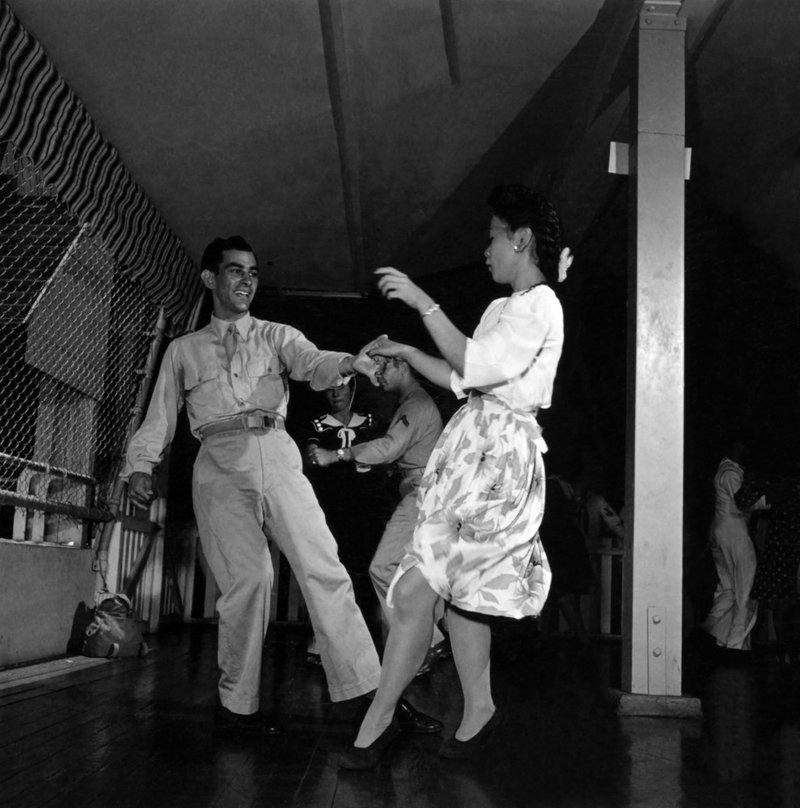
Shore Leave/ Wayne Miller
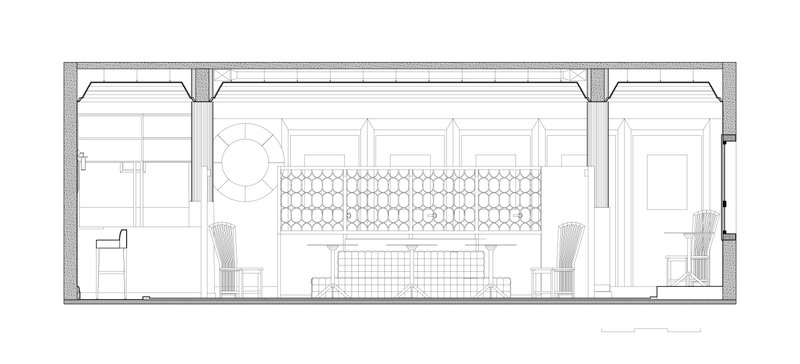
South section through the first floor interior of the man's part
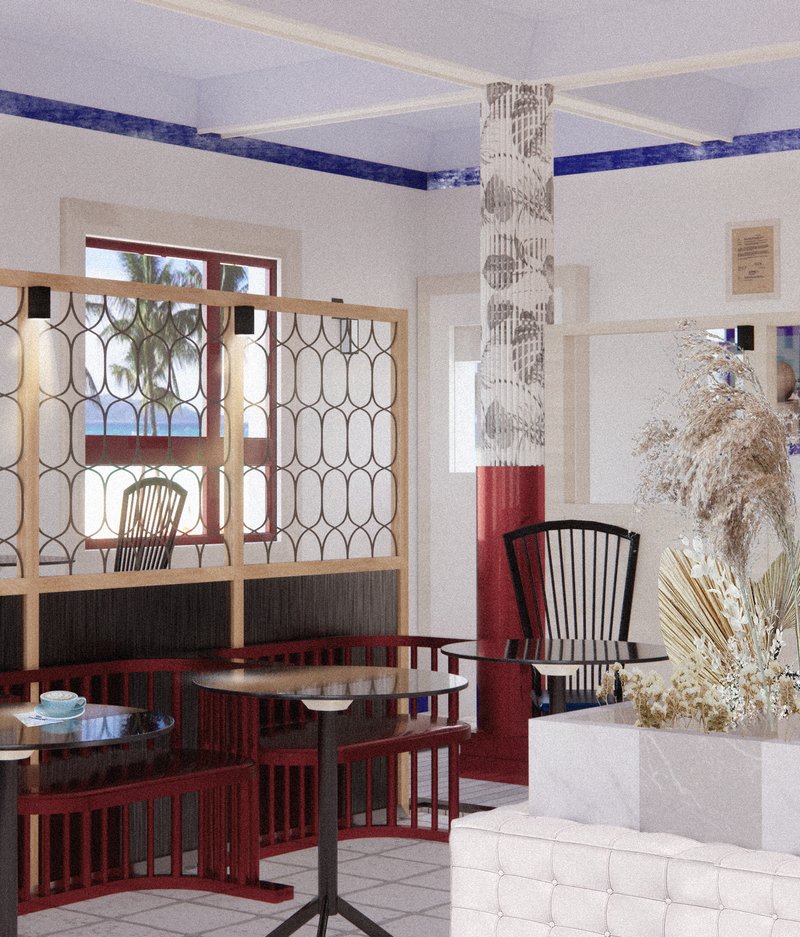
Curtains which represent feminine, illusion and mystery are continued to be used in the woman’s part. In the first floor, to reinforce the feminine, wave-shaped white tiles are decorated on the clapboard and wave-shaped floor lamps are applied. In the centre of the room is a black-painted stage, representing the undefined “love”.
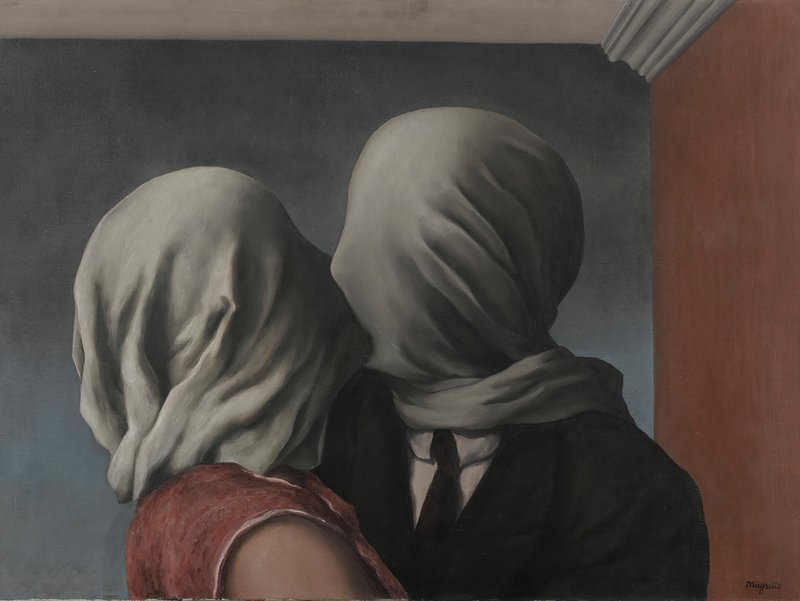
LES AMANTS (1928)/ MAGRITTE, RENÉ
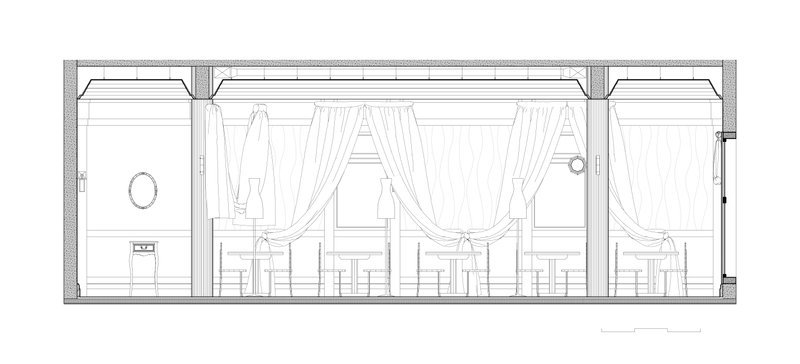
South section through the first floor interior of the woman's part
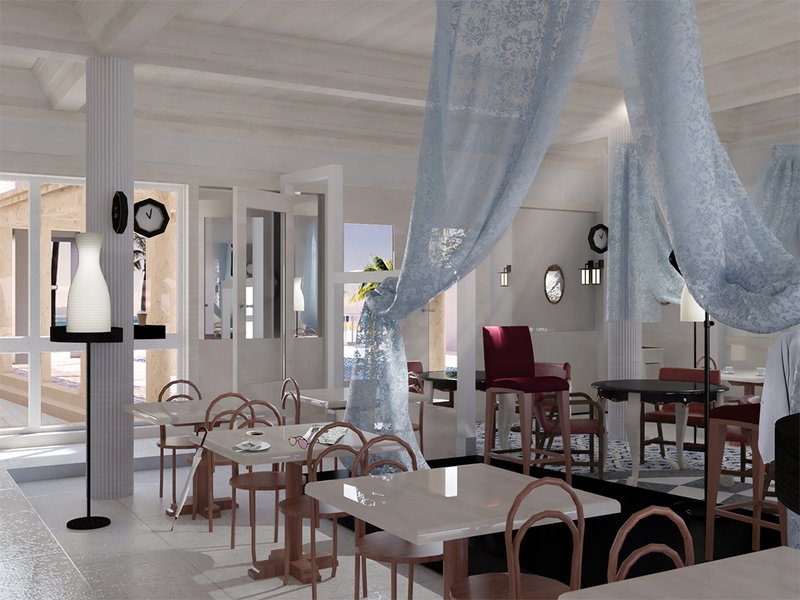
Conclusion
We leave clearing in our design, to enable people to “touch” the unknown real, no matter whether they define love as sublimation of lust, as to raise lust to the dignity of desire, or love is void.
“Love passes through desire like a camel through the eye of a needle.” [1]
—— Alain Badiou
Reference:
[1] Badiou,“What Is Love?,” Sexuation, Duke University Press, Durham 2000, p. 265
[2] Bressani, Martin. "Interview With Miroslav Šik". Taylor & Francis, 2019, https://www.tandfonline.com/doi/full/10.1080/10464883.2019.1560802.
[3] Friedrich Achleitner, Österreichische Architektur im 20. Jahrhundert
[4] "Jacques Lacan - Wikipedia". En.Wikipedia.Org, 2021, https://en.wikipedia.org/wiki/Jacques_Lacan.
[5] Polgar, Alfred. "Theory Of The Cafe Central". Depts.Washington.Edu, 2021, https://depts.washington.edu/vienna/literature/polgar/Polgar_Cafe.htm.