

The Mayoral New Warehouse Logistics Center: Sustainable Industrial Architecture in Málaga
The Mayoral New Warehouse Logistics Center blends sustainable design, energy efficiency, and textile-inspired architecture for functional industrial use.


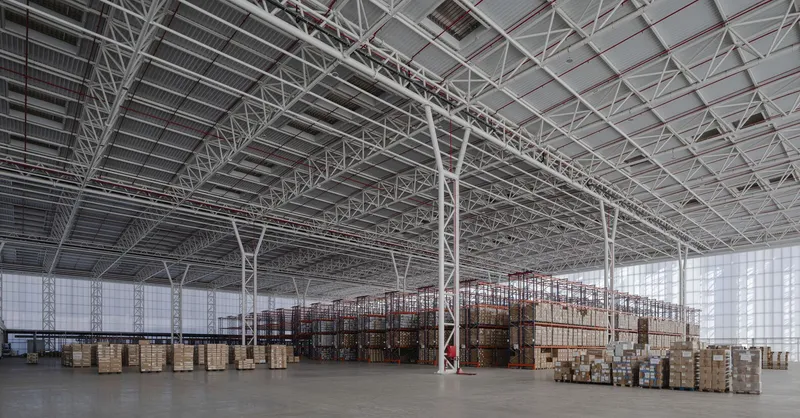
The Mayoral New Warehouse Logistics Center is an exceptional example of modern industrial architecture located in Málaga, Spain. Designed by System Arquitectura, this massive high-storage building integrates seamlessly into the Mayoral campus in Intelhorce, creating a sustainable and efficient logistics facility. Spanning 18,814 m², the warehouse stands at a height of 20 meters, blending cutting-edge design with advanced sustainability features.
Design Concept and Integration with Existing Architecture
One of the primary challenges of the Mayoral Logistics Center was its integration with the nearby protected warehouse, designed by Vázquez Molezún. To maintain harmony with the original structure, the architects approached the project with a strong focus on urban planning and volumetric integration. Despite its large size, the new building was designed with a sensitivity to the existing 11-meter-high warehouse, ensuring the new structure complements, rather than overwhelms, its surroundings.


Innovative Architectural Language
The building's design stands out due to its curved facades and textile-inspired architecture. Breaking away from the conventional rectangular prism of typical industrial buildings, the architects employed five large arches across the building’s four facades. These arches are further subdivided into smaller arches, visually softening the building’s mass and giving it a fabric-like appearance. This approach draws inspiration from the textile industry, a core element of the Mayoral brand, and evokes the works of artists Christo and Jeanne-Claude.


Energy-Efficient Facade Design
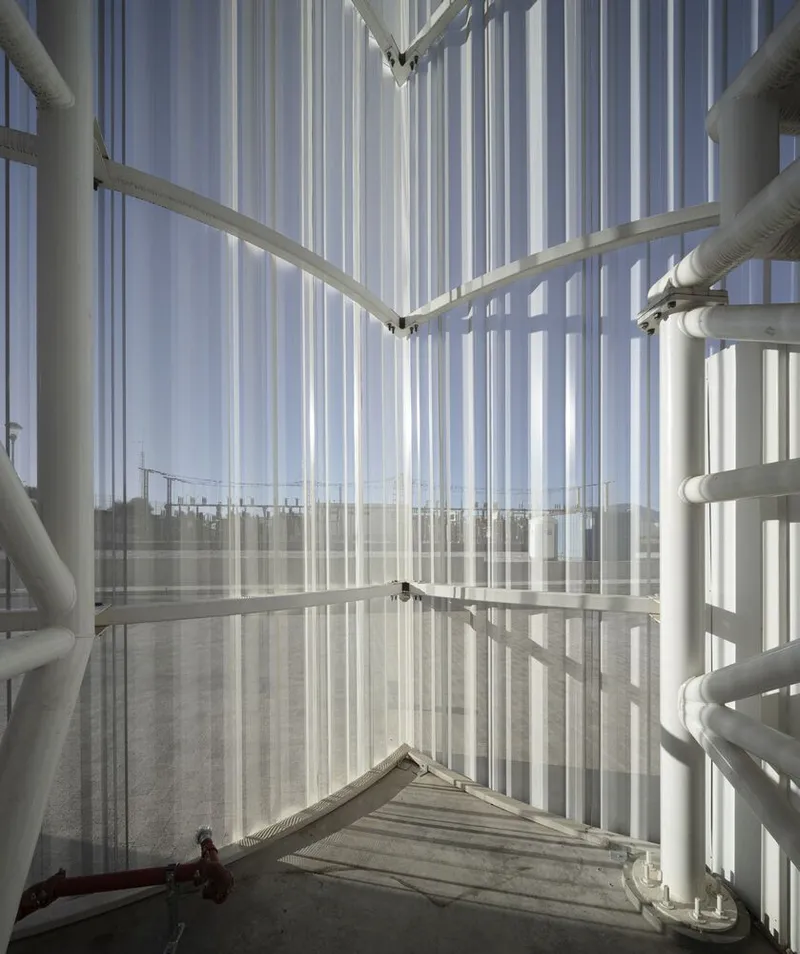
The Mayoral New Warehouse Logistics Center prioritizes energy efficiency through its innovative facade system. The building features a dual-layered facade, combining translucent polycarbonate and micro-perforated zinc. The inner layer of polycarbonate provides insulation and waterproofing, while the outer layer of zinc allows natural light to penetrate the building while shielding the polycarbonate from harsh solar radiation.
This combination of materials helps regulate the building's internal temperature and significantly improves the thermal transmission coefficient of the facade. As a result, the warehouse enjoys natural lighting throughout the day, minimizing the need for artificial lighting and reducing energy consumption.
Prefabrication and Modularity
A key feature of the Mayoral Logistics Center is its use of prefabrication and modular construction techniques. The building was largely prefabricated in the workshop, with the exception of the foundation and minor components. This approach, combined with BIM (Building Information Modeling) technology, allowed for precise planning and efficient construction, adhering strictly to project timelines and budgets.
The use of prefabrication also facilitated the sustainable assembly of the building, reducing the construction site's environmental impact and improving overall efficiency.


Structural Innovation and Materials
The building’s structural system is composed of triangulated tubular steel, manufactured in Lalín, Galicia, and spans up to 32 meters. These beams were carefully transported and assembled on-site to form the warehouse’s large and open internal spaces. Additionally, the folded zinc sheet facade was produced in Asturias, while the polycarbonate skin for the interior was sourced from Álava.
This strategic use of materials not only enhances the building's aesthetic appeal but also ensures structural integrity and sustainability.


A Sustainable and Functional Industrial Facility
The Mayoral New Warehouse Logistics Center by System Arquitectura exemplifies how modern industrial buildings can be both sustainable and architecturally innovative. With a focus on energy efficiency, prefabrication, and design integration, this facility meets the functional demands of the Mayoral company while minimizing its environmental footprint. The textile-inspired design, combined with advanced energy-efficient features, makes it a standout example of contemporary industrial architecture in Spain.


All Photographs work ofFernando Alda


Popular Articles
Popular articles from the community


Aquadapt: An Underwater Habitat That Rewrites Its Rooms by the Hour
Curved modules ring the seabed while one shell shifts from breakfast room to cinema, farm and football pitch as residents' needs change.


LT2A and OPEN Architectes Thread a Brick and Glass High School Through a Wooded Belgian Campus
In Braine-l'Alleud, a 3,000 m² wing for Collège Cardinal Mercier pairs pale brick with a glazed colonnade, deferring to a small chapel and a dense wood.

David Ortega Stacks a Two-Story Mexico City Penthouse Around a Steel Stair and a Pergola-Shaded Roof Terrace
In Colonia Roma, a 300 m² penthouse uses oak joinery, a planted steel stair and a slatted roof pergola to make a new-build apartment feel like a house.

Cube Design Draws an Ecological Corridor Between Two Shenzhen Hills with the Nankai Building
Beside Shenzhen's container docks, the Nankai Building pairs stacked balconies with a climbing green screen to connect two hillsides across its height.

Similar Reads
You might also enjoy these articles


Hodi-Mandai Geram
Project Function: Preservation and revitalization of the Intangible heritage and socio-spatial identity of the Hodi by Housing, Cultural Memory Center, Sacred Grove, landscape, local tourism economy


Olio Towers: A Mid-Rise for Performers That Fuses Housing, Rehearsal, and Stage
Located blocks from Houston's Theater District, this modular tower stacks living units around a central performance atrium.

Oasis: Modular Green Housing Carved into Dhaka's Urban Fabric
A shortlisted Plugin Housing entry reclaims unauthorized settlements in Dhaka with stepped concrete volumes, green roofs, and ventilation-driven design.

Black Hole: A Floating Megastructure for the Post-Physical Era
Emiliano Mazzarotto envisions a spherical, self-scaling arena where e-sports, digital hotels, and holographic stadiums replace traditional public space.

Explore Construction Technology Competitions
Discover active competitions in this discipline

Challenge to reimagine the Iron Throne

Photograph architecture without architects

Illustrate the lost glory of Angkor Wat - Render Challenge

Design challenge to reuse E-waste
Comments (0)
Please login or sign up to add comments
No comments yet. Be the first to comment!