
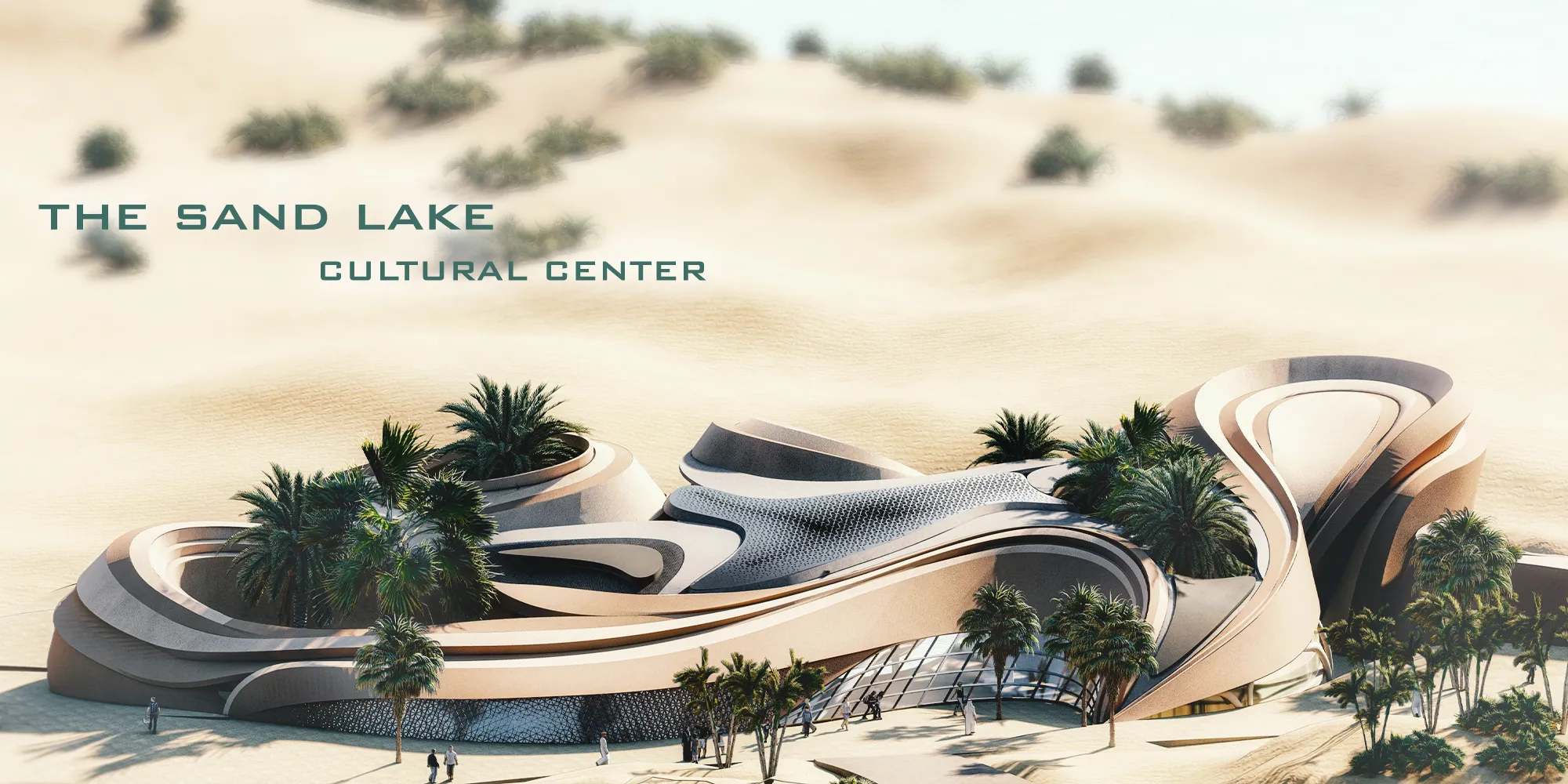
The sand lake cultural center_FAQ
Increase interaction between the natural environment, architecture and people

- 1. What was the concept behind the project?
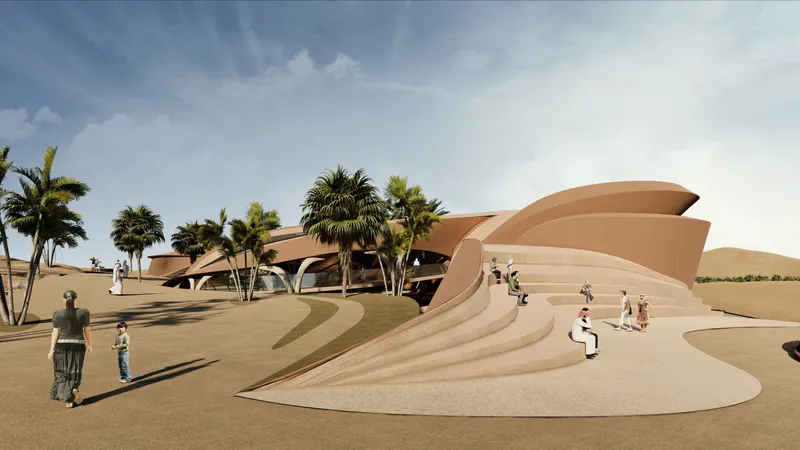
The organic texture model of Moroccan cities is the initial idea of this project. Therefore, the overall structure of the plan consists of several smaller volumes to perverse the trees on the site and pay attention to the communication paths and wind direction. This structure has taken a form in harmony with the sand in combination with the nature around the site.
 Figure 1: Inspired by Moroccan urban nodes
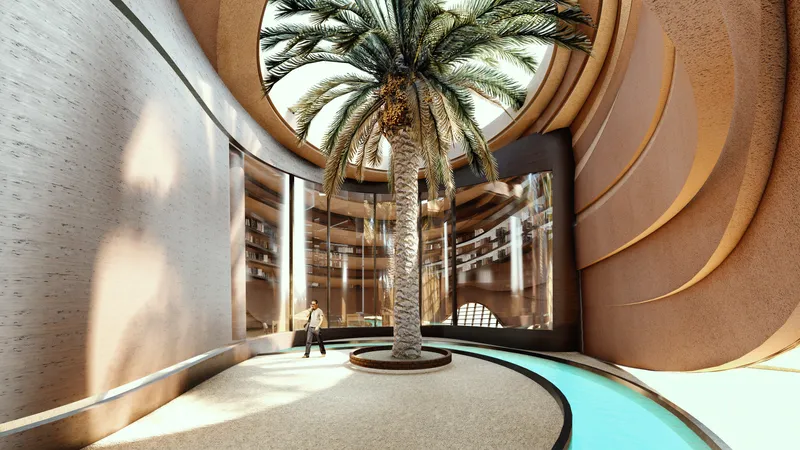
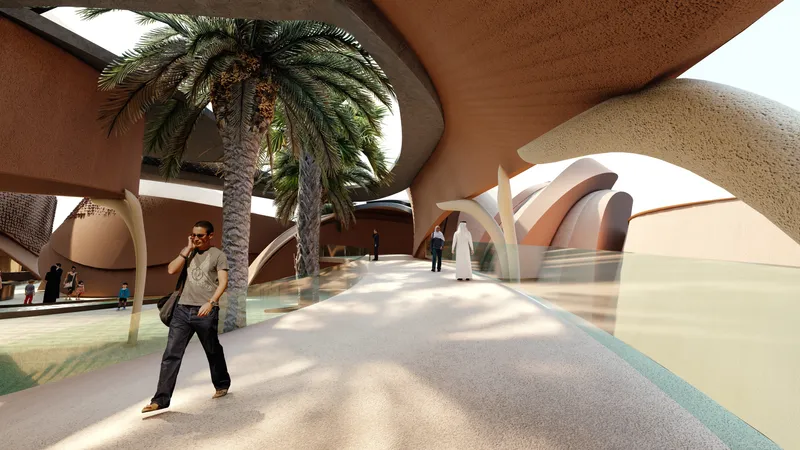
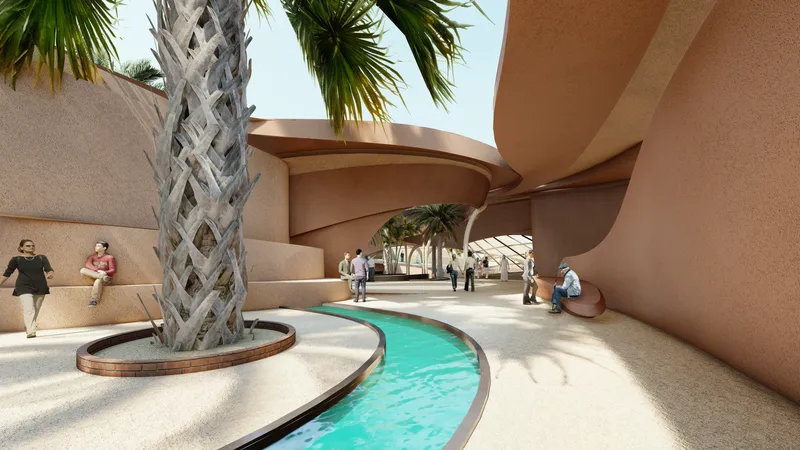
The volumes are in an introverted arrangement in coordination with the surrounding site and modeled on the oasis in which the project is located to create comfortable conditions in the harsh climate of this region and to create a favorable climate. Water flow was added to the building as one of the most essential factors in forming oases. Moreover, more favorable thermal conditions were created with the establishment of volumes at a level below ground level and with the help of existing topography. Grid shells were used in the façade to deal with heat and intense sunlight. The patterns used in these shells are inspired by traditional Moroccan architectural patterns.
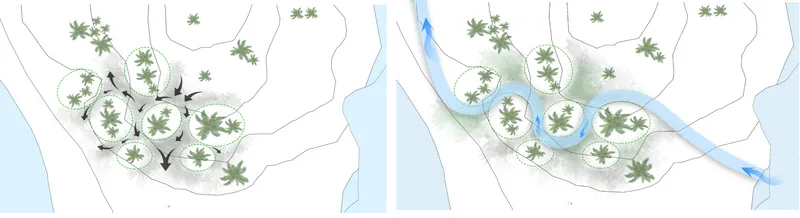 Figure 2: Attention to the site 's properties
Proper view and perspective from inside the building to the nature around the site have been one of the main factors in the formation of the building. For this purpose, the layout and form of the volumes have a panoramic view and interaction with nature and the surrounding landscape and create introversion to create a suitable microclimate.
 Figure 3: Project formation with respect to vision and perspective
- 2. How many iterations were tried to arrive at the final outcome?
Several basic concepts were designed by studying the project context, including the climatic, cultural context, etc. Then, these initial designs were evaluated according to environmental, economic and indigenous, social and cultural criteria, responsive construction methods and architecture, and the concept that was most compatible with the design context was selected. The selected concept was further upgraded to achieve the design goals and criteria during several stages. These steps include improving the performance of spaces and communication with the site, optimizing airflow, daylight, and energy.
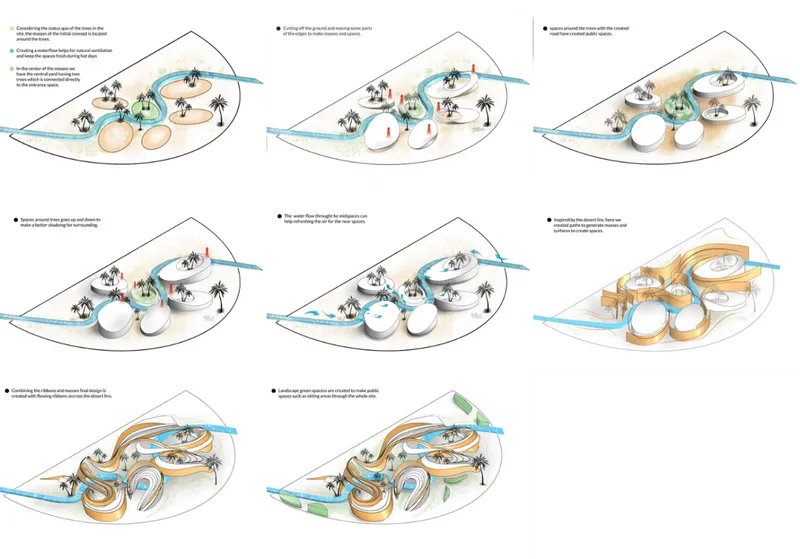 Figure 4:conceptual diagrams
- 3. What/How were the materials chosen?
Glass Fiber Reinforced Concrete is the selected material for walls and ceilings to achieving texture and color in harmony with the earthen floor of the building. Some of the reasons for choosing these panels are low weight, fire resistance, variety in size, thickness, model and color, high strength, speed of execution, recyclability and environmentally friendly, Visual and qualitative stability over time, the possibility of producing curved panels, lattice parts, and Islamic designs.
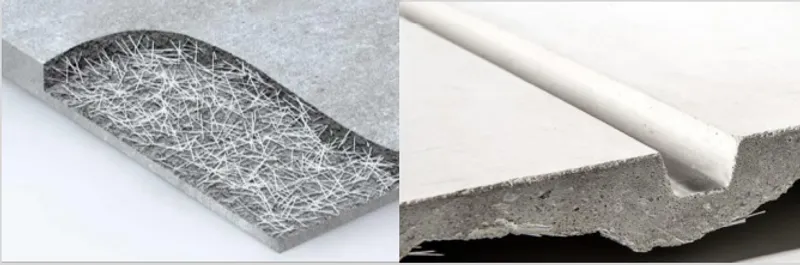 Figure 5: Glass Fiber Reinforced Concrete
The soil obtained from the excavation was considered for preparing GFRC panels for self-sufficiency and harmony of color and texture with the surrounding bed.
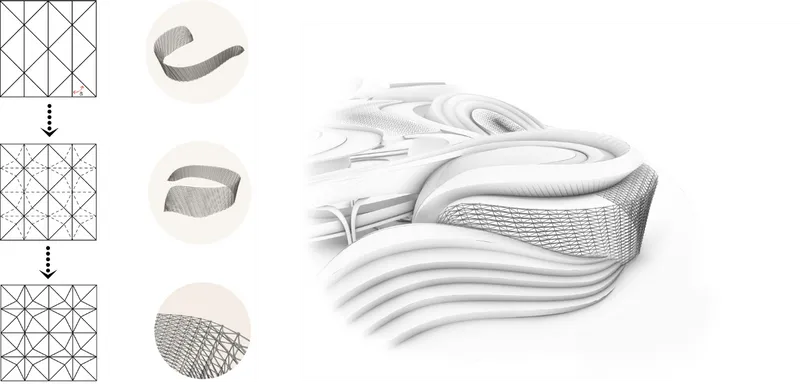 Figure 6: Combining structures with Moroccan patterns
- 4. What is the expansion plan of the project?
The division of the total volume into several smaller sections and the way they are arranged on the site is designed to allow future expansion according to the existing model in expanding and adding new sections according to the needs of users in the future.
Some suggestions were made for the future development of the collection to increase the welfare facilities and attract tourists. These features include:
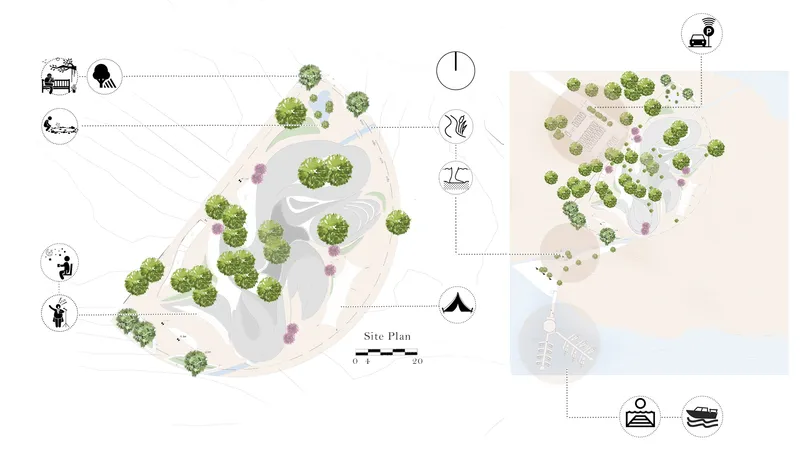
- Design a parking lot on the western front and adjacent to the communication route of the site for ease of movement. The location of the parking lot, including the parking lot of cars, bicycles, and motorcycles, has been selected to prevent the cutting of trees.
- The water branch taken from the lake to irrigate the site’s trees, with the cycle of returning water to the lake. This water cycle helps reduce water consumption and wastage due to irrigation and creates coolness when the wind blows. The presence of shading agents along the water path prevents water from evaporating and heating up. So, a favorable atmosphere will be created around Lake Lalla Takerkoust for future development by increasing the vegetation and designing a space for tourists to rest in the water flow path.
- A boat dock was designed near the project site and along the watercourse utilizing the potential of the lake to increase recreational facilities and increase the number of tourists and applicants using the cultural center due to the location of the site next to Lalla Takerkoust Lake
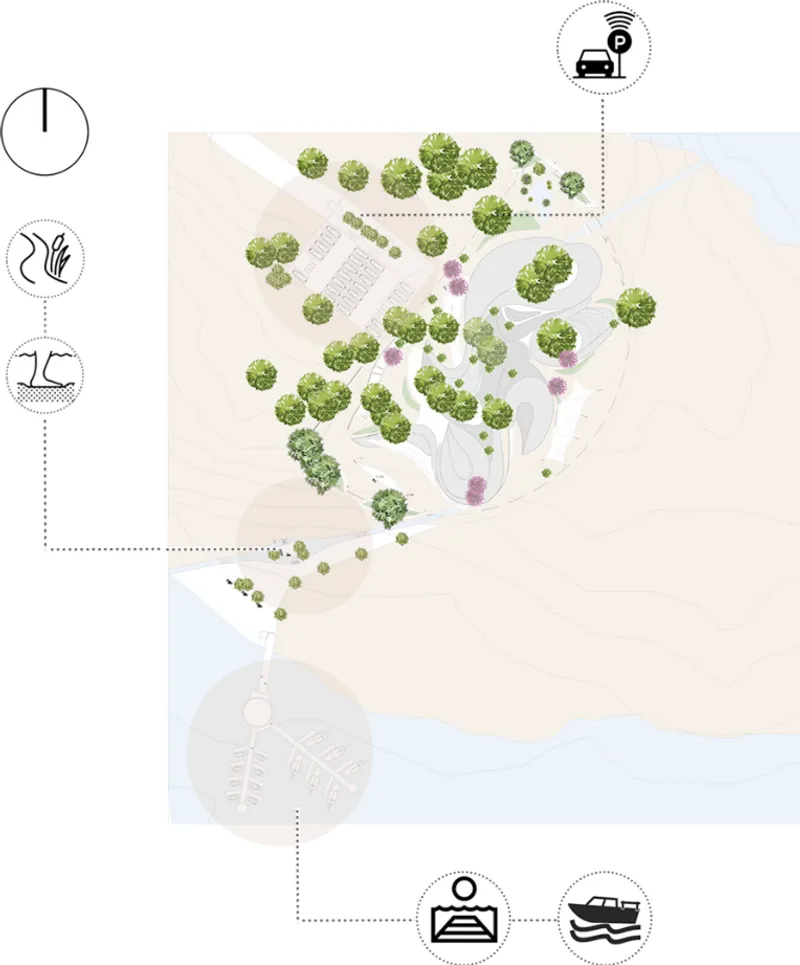 Figure 7:site expansion plan
- 5. What solutions are considered in the project to develop economic, social self-sufficiency and promote the region’s culture?
A production-to-consumption cycle of products produced in the cultural complex was considered to promote social interactions and economic conditions in the region. For this purpose, several sales booths were designed in parts of the complex. The plant products of the site were used to supply some of the goods of these booths. The products of artisanal training were used for the other part whose raw materials are obtained from wood and plant fibers of site trees such as eucalyptus, palm, etc. Indigenous people of the region are used to provide labor in these sectors and to produce and sell these products and goods, which will also help create jobs in this region.
Spaces such as open amphitheaters, black tents, and community centers, etc., were intended for activities such as holding music and singing ceremonies, observing the stars at night, and so on to create cultural activities and attract tourists.
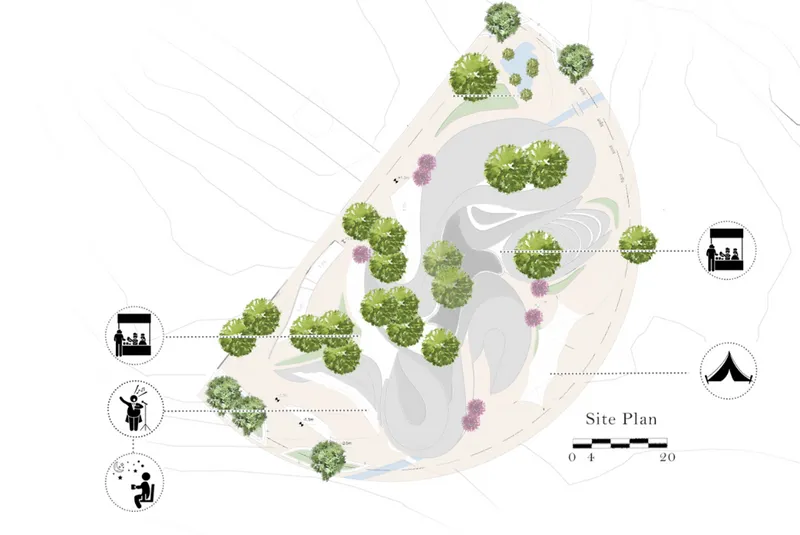 Figure 8: Economic and social activities on the Plan site
- 6. What solutions are considered to increase climatic and environmental sustainability in the project?
Sustainable design methods were used in accordance with the environmental model of the region to reduce energy consumption and harmony with the surrounding nature. The layout and establishment of different parts of the complex were done by examining the climatic data of the region and analyzing the proposed solutions. The design of the central space created a micro-climate with favorable climatic conditions through the layout of volumes around the vegetation with a lattice roof and smaller private yards for each section. Furthermore, building establishment in the soil and the use of tree shade have improved the weather conditions and reduced sunlight and heat above the comfort level. The layout of the different sections is also designed to benefit from natural ventilation by being in the desired wind direction.
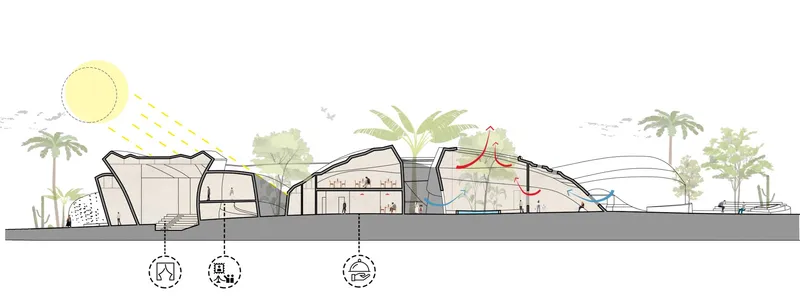 Figure 9:natural ventilation
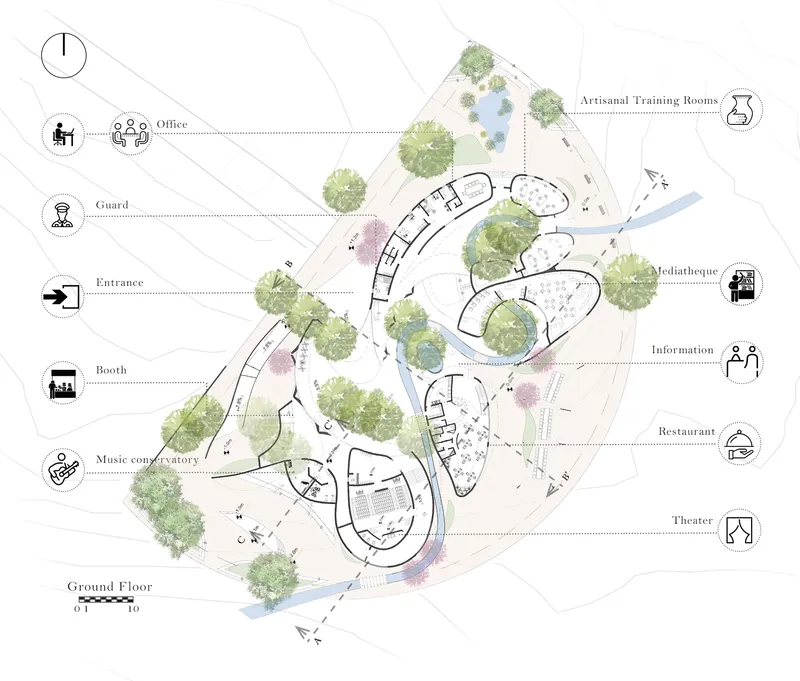
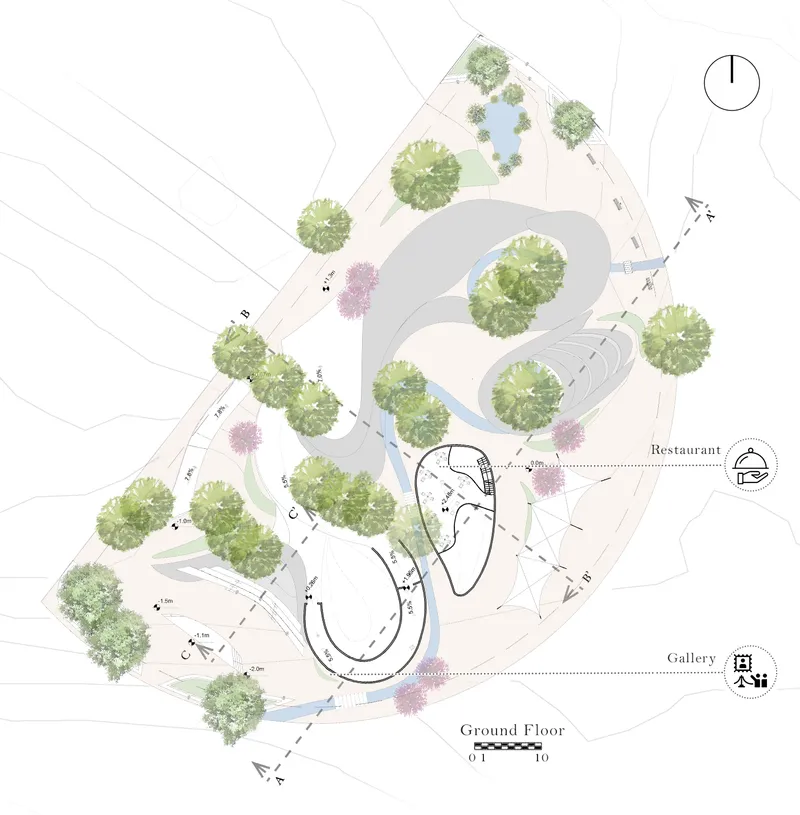
Spaces that are most active during the hot hours of the day were placed in the northern part in addition to using proper lighting to prevent high heat from entering the building due to the prevention of intense sunlight into the building during the warmer months of the year. Direct sunlight was prevented from entering the southern walls in the southern walls of the building, with a design of opening with smaller dimensions and placement of elements such as open amphitheater platforms adjacent to the south wall of the Conservatory of Music. Moreover, placing the gallery around the theater hall prevents direct sunlight on its wall and increases the received heat.
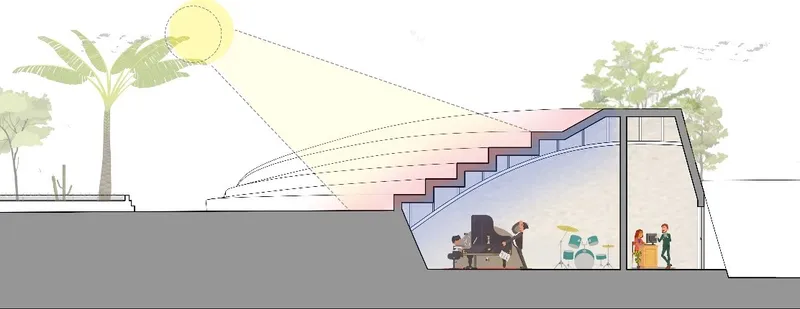 Figure 10:heat reduction solution
The design of the lattice facade has controlled the amount of sun entering the building using Moroccan patterns. Placing a wicker net behind the openings, and moistening them in the warm seasons when the humidity reaches its lowest point, allows evaporative cooling to be used.
 Figure 11: Combining structures with Moroccan patterns (Roof)
Upgrading vegetation to improve comfort conditions was one of the points considered in the design. Accordingly, it was possible to enjoy the view and landscape in all seasons by using the proposed trees such as Argan and Jujube tree for planting on the site and shading the trees on the designed platforms. Cool airflow and the possibility of using this space became possible in the hot season in the southern part of the site by designing wicker walls in the desired wind direction and moistening them. Also, a place was designed for users of the site to relax at all hours of the day by placing black tents suitable for hot and semi-humid climates.
 Figure 12: Shading in the central space
The Sand Lake project Animation
- Renders:


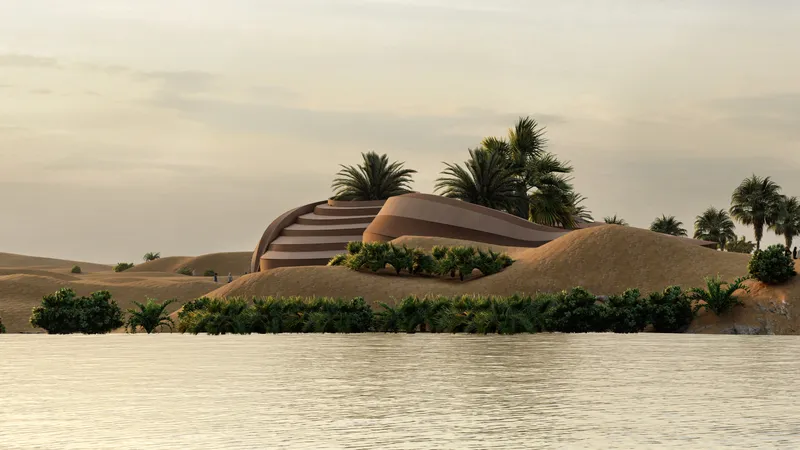
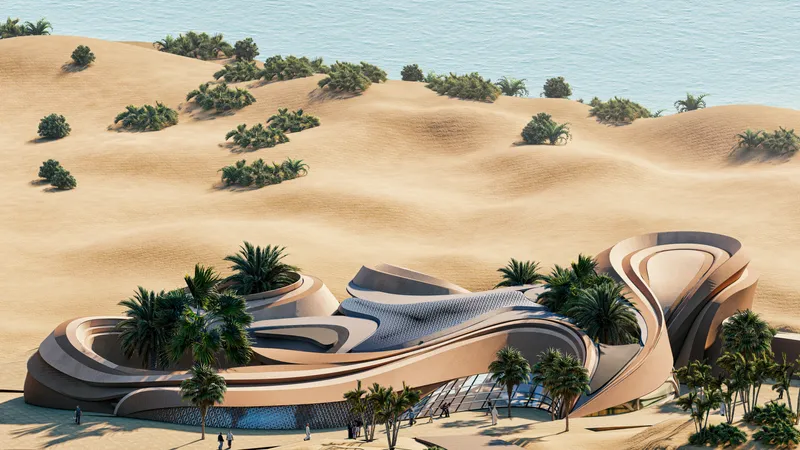
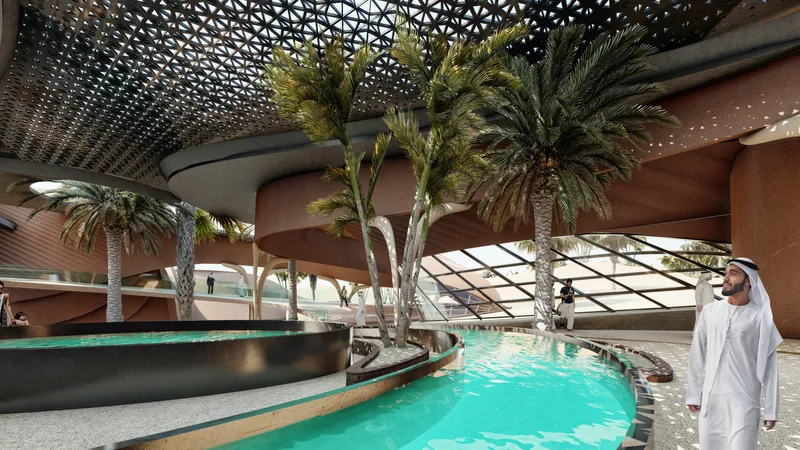




- Elevations:
 East Elevation
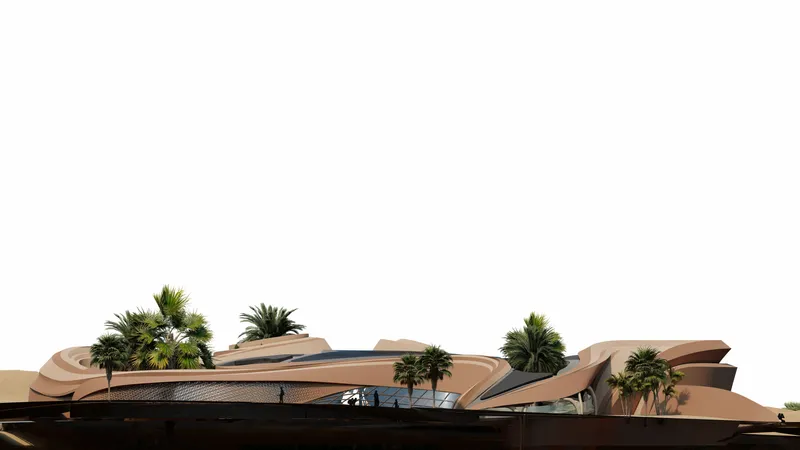 West Elevation
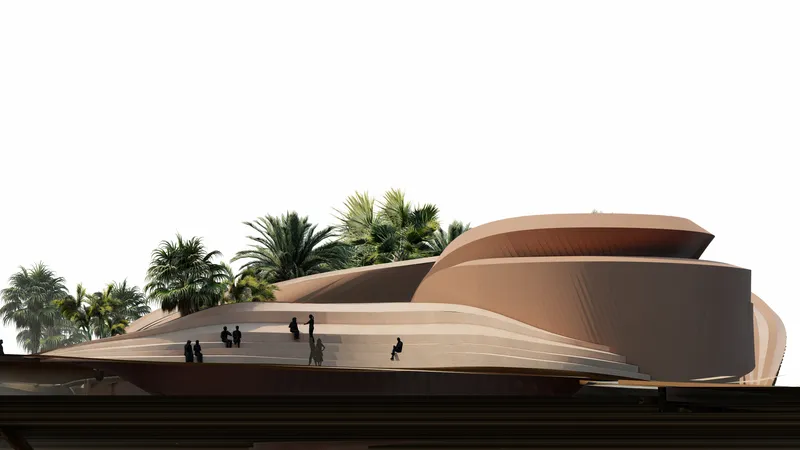 South Elevation
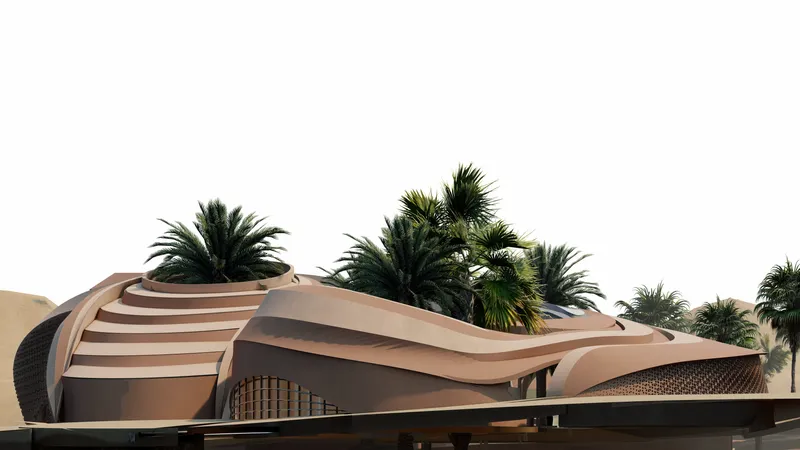 North Elevation
- Site plan:
- plans:


Popular Articles
Popular articles from the community


The Earth Pod: 3D Printed Homes for Resilient Refugee Communities
The Earth Pod reimagines refugee housing through 3D printed homes made from clay, combining resilience, self-sufficiency, and rapid shelter.

Conexión: Biophilic Design Reimagines High-Rise Living in Hong Kong
Conexión reimagines high-rise living in Hong Kong through biophilic design, green facades, shared spaces, daylight, water and nature within.

Hill & Cross Opera: Sculptural Opera House Architecture Shaped by Tallinn’s Landscape and Identity
Hill & Cross Opera reimagines opera house architecture in Tallinn through its sculptural hill, civic plaza, glass wave and a luminous cross.
AL-JANNAH: Sustainable Architecture and Permaculture for Afghan Widows
AL-JANNAH uses sustainable architecture and permaculture to create resilient oasis of housing, learning, work and renewal for Afghan widows.


Similar Reads
You might also enjoy these articles

Day and Night Park: A Time-Based Urban Newsstand in Beijing
A temporary urban newsstand in Beijing blending travel, light, and reading through poetic colors, compact form, and community-focused design.

Modernist Patio Renovation in El Masnou, Barcelona by Oliver Segura Arquitectura + Cebrià Arquitectura
Modernist patio renovation blending tradition and innovation with a movable pool, leveled floors, and Catalan materials in El Masnou.

Alto Residencial Coop: Cooperative Housing Development in Santiago de Compostela by Carbajo Barrios Arquitectos
A linear cooperative housing complex blending white volumes and perforated metal façades, enhancing community living, natural light, privacy, and urban integration.
Vil Genis School by BPA ARCHITECTURE – Massy, France
Vil Genis School in Massy, France, features sustainable design, south-facing classrooms, community integration, accessible spaces, and modern educational architecture.


Explore Cultural Architecture Competitions
Discover active competitions in this discipline



Bring back Drive In's


Design challenge to reuse E-waste
Comments (3)
Please login or sign up to add comments
👍🏻❤️
Perfect
Amazing🤩