
The Turning
"An architectural turning for a new beginning."

Prison is not just a place of punishment; it often represents a rupture in an individual's personality.
social, emotional, and family life. In Oklahoma, where the rate of incarceration of women is the highest
significantly exceeding global averages, this rupture becomes intergenerational.
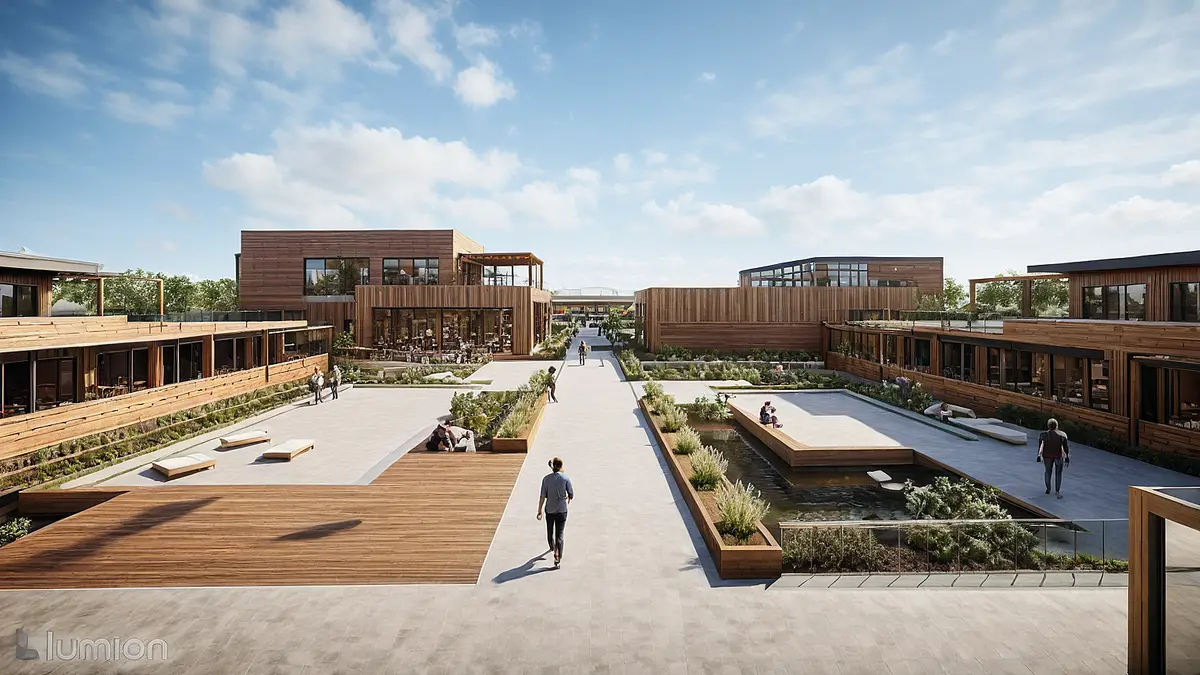
Designed as a residential and empowerment campus for formerly incarcerated women
and their children, the project aims not only to provide shelter but also to serve a restorative function,
creating a productive and socially reintegrative environment.
Conceptual Development
The project was built around three core values:
Empathy, Sense of Belonging, and Healing.
The architecture here is not a neutral backdrop, but a psychological tool. The central
design question was:
“Can the spatial experience help individuals rebuild their sense of identity and belonging throughout their lives?”
“Were they fragmented because of their prison sentence?”
In response, the design proposes an open yet secure, structured yet human campus.
By bringing together residential units, production areas, and social interaction spaces,
it serves as a temporary shelter but also a platform for transformation.
Site And Connect
The project is located in a low-density suburban area of Oklahoma City and is surrounded by
socially important elements such as schools and churches. The site
offers its users a structure that maintains a balance between security and comfort while preserving its connection to its surroundings.
These nearby institutions also provide opportunities for social participation,
enabling residents to interact with the outside world and generate income through the community
through basic services such as workshops, food production, and public events.
Functional Strategy And Spatial Organization
The campus program is organized around four core functions:
Transitional Housing
These units provide privacy, safety, and dignity for women and their children.
The atmosphere supports psychological healing and personal growth.
Skill Development Workshops
Designed to support the culinary arts, fashion, and decoration fields.
entrepreneurship, and economic independence. The workshops are connected to:
seasonal festivals and events, providing real-world experience.
Mentoring and Social Studio
A flexible, semi-public space that supports therapy, mentoring, and dialogue
with a broader community. It also encourages volunteer participation and awareness.
Children's Areas
Located in a distinct and secure area of the campus, these spaces are entirely
dedicated to children's physical, emotional, and social development.
Interactive and safe environments enable children to engage in meaningful play
while supporting their mothers' participation in campus activities. Functional Strategy and Spatial Organization
Design Process And Evolution
The initial design iterations included linear blocks, but these were quickly replaced with clustered blocks
organized around courtyards. This approach allowed for:
A sense of neighborhood and shared space
Better passive environmental performance (natural light, cross ventilation)
Visual privacy, acoustic comfort, and material tactility were carefully considered and
integrated into every aspect of the design.
Materials And Construction System
Materials and Construction System The proposed construction system combines a light steel frame system with wood cladding.
Wood was deliberately chosen to move away from a cold and institutional aesthetic
associated with prisons and instead create a warm, human-centered atmosphere.
The interior cladding prioritizes tranquility and comfort through natural textures and soft transitions.
and light tones—contributing to a soothing, invigorating environment.
Temporal Expansion And Adaption
The campus is designed to be modular and expandable, both physically and academically.
programmatically.
Workshops can evolve to reflect local needs. Social engagement components can grow
through partnerships with local NGOs, schools, and volunteers.
Over time, this campus can become not only a point of reintegration, but also a permanent place.
Conclusion
“Restart | Return” reframes architecture not only as shelter, but also as a tool for
social transformation.
Instead of reinforcing punishment and exclusion, it promotes healing, inclusion, and
empowerment.
This is architecture that builds hope even in the most fragile contexts of life.

Popular Articles
Popular articles from the community


U.GA Architects Wraps an Oval Rooftop Pool in Curved Board-Formed Concrete on Busan's Jeollidan-gil
In Busan's Jeonpo-dong, a 454 m² mixed-use block stacks a neighborhood facility, guest rooms and an oval rooftop pool inside spiraling concrete walls.

Juan García Correa, John González and Claudia Rueda Sink a Circular Amphitheater into a Manizales Engineering Building
On the La Nubia campus in Manizales, Colombia, the S1 Building folds labs and offices into a hillside of ramped lawns that double as a campus route.

David Macias Steps a Doorless Stone and Plaster House Down a Tropical Colombian Hillside
In the humid hills of Colombia, Threshold House replaces the front door with an open void and terraces its 850 m² down the slope instead of fighting it.

David Ortega Stacks a Two-Story Mexico City Penthouse Around a Steel Stair and a Pergola-Shaded Roof Terrace
In Colonia Roma, a 300 m² penthouse uses oak joinery, a planted steel stair and a slatted roof pergola to make a new-build apartment feel like a house.

Similar Reads
You might also enjoy these articles


Vereda Arquitetos Renovates a 40-Square-Meter Apartment Inside Niemeyer's Copan Building
A compact unit in São Paulo's most iconic residential tower gets a material overhaul that pairs exposed concrete with bold blue Formica.

Shakur's House: Exposed Brick as an Interior Organiser in a 168 m² Mashhad Residence
Brick moves indoors in this Mashhad residence, where masonry walls, glass partitions and teal planes sequence a compact home without closing it off.

Day and Night Park: A Time-Based Urban Newsstand in Beijing
A temporary urban newsstand in Beijing blending travel, light, and reading through poetic colors, compact form, and community-focused design.

Modernist Patio Renovation in El Masnou, Barcelona by Oliver Segura Arquitectura + Cebrià Arquitectura
Modernist patio renovation blending tradition and innovation with a movable pool, leveled floors, and Catalan materials in El Masnou.

Explore Switching Prisons Competitions
Discover active competitions in this discipline


Challenge to reimagine the Iron Throne

Photograph architecture without architects

Illustrate the lost glory of Angkor Wat - Render Challenge

Design challenge to reuse E-waste
Comments (0)
Please login or sign up to add comments
No comments yet. Be the first to comment!