Treehouse mansion
Comfort during isolation


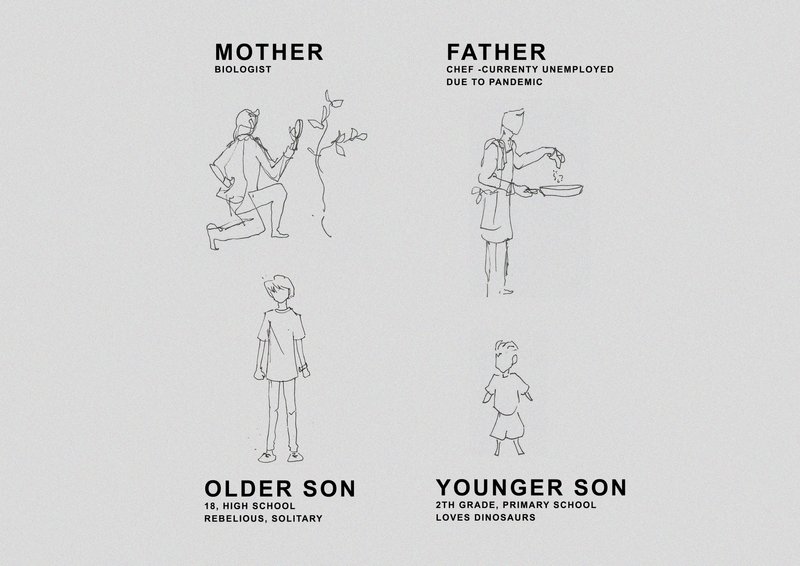
Our family model consists of parents with two children. Mother is a biologist and she is searching for and examining organic samples. Father is a chef, currently unemployed, because of the pandemic situation, his restaurant was closed. But no worries, he decided to spend this time perfecting his recipes and create some new ones. Parents want to move to isolate themselves from people and escape their daily routine. Then Mom will be able to provide new samples from a different environment, and Dad will take care of the children and work in the kitchen to master his art of cooking. Their older son is now a rebellious teenager, a sophomore student and he didn't really want to move far away from his high school friends. He wants to have his own space and do not be bothered. The younger son is a 2nd-grade student and loves dinosaurs. He needs lots of attention and someone who will look after him but is very excited about their trip to India.
Based on our research, architecture in the state of Kerala can face many difficulties, such as heavy rains (due to monsoon climate), high temperatures, and humidity all year long. The grounds are wet so the building plot often is being flattened and hardened so to make strong foundations. There also appears to have many wild animals, which can be a threat to inhabitants
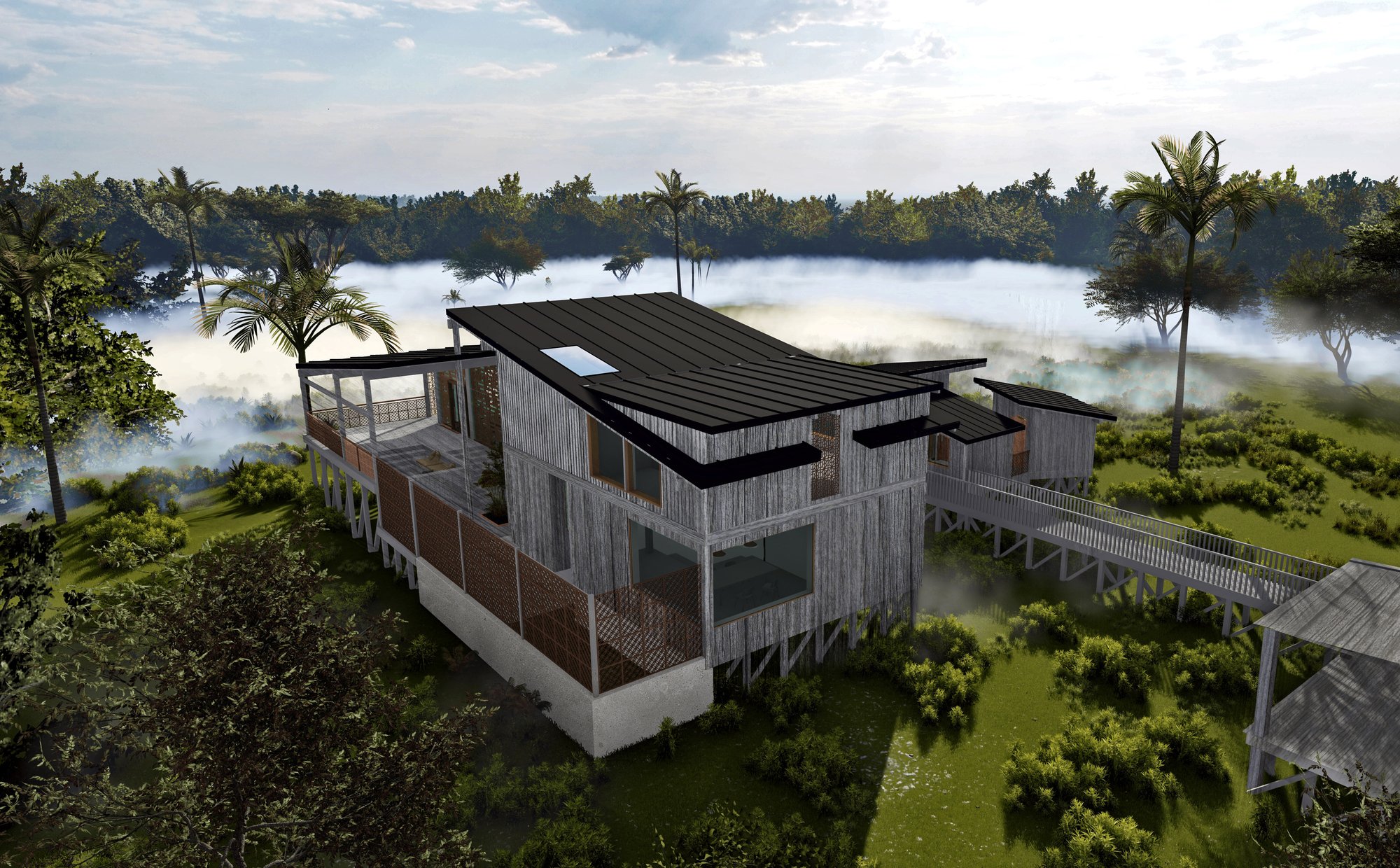
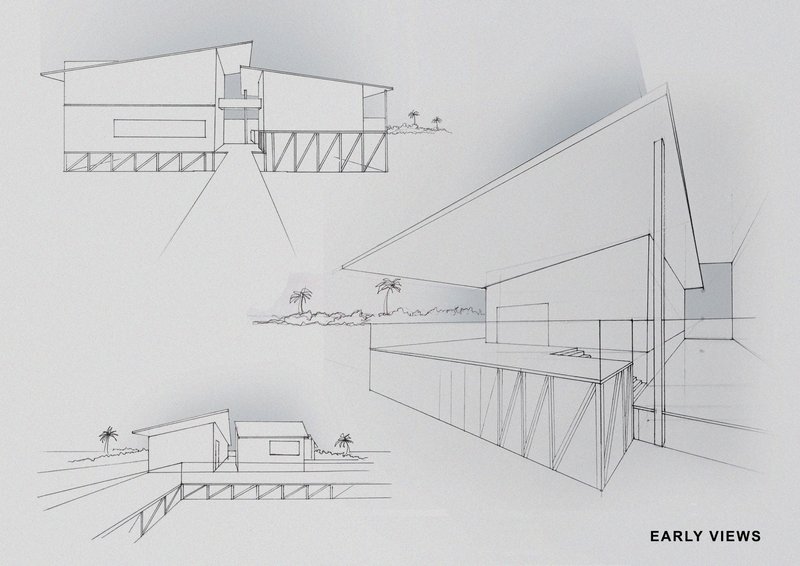
Because of the wetlands, we decided that their villa will be a stilts house and communication will be possible only by platforms, so that the field would not have to be leveled. We wanted to design a house that would be (to a certain level) resistant to harsh weather conditions and make the life of the residents comfortable.
Working from home has its advantages and disadvantages. It is comfortable to sit with your laptop in bed during video calls, but working or studying like this is not efficient and may lead to very soon burnout. That's why we decided to provide a separate workspace for each of the family members. Mather and sons will have their rooms outside the main building, to which they will have to get out of the living area and commute every day. That way they would keep a healthy work/life balance easier.
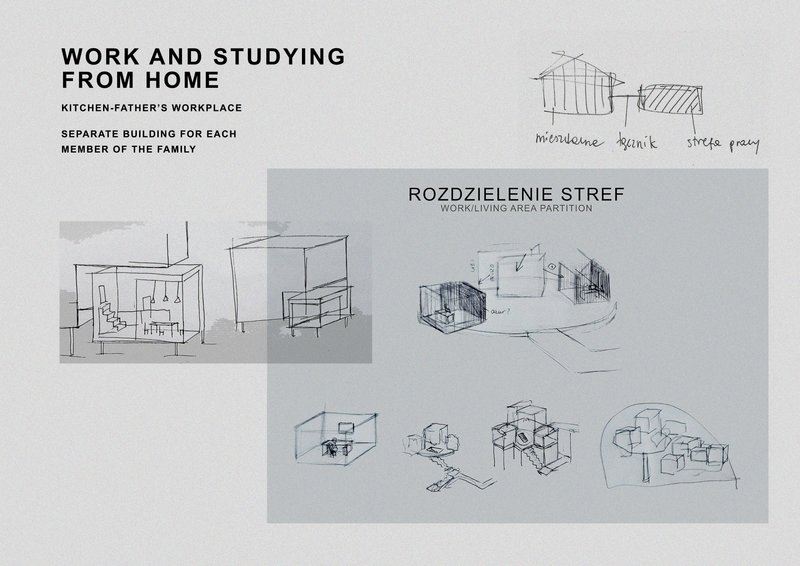
On the other hand, Father's workplace would be in the kitchen, so it should be large and spacious. We also wanted him to be able to watch after his youngest kid while he is there. That's why we arranged windows in such a way so he would be able to see what is the son doing in his study room.
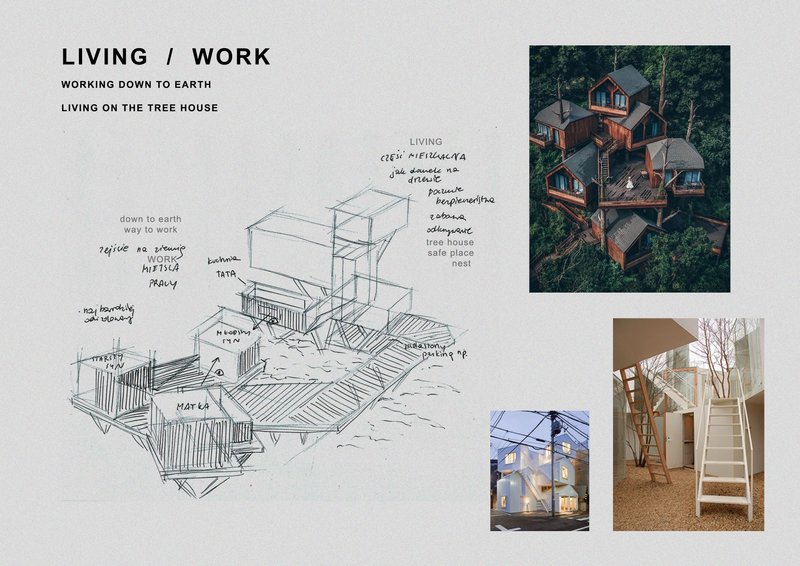
To differentiate work from free time, even more, we divided the house into smaller parts and put them on different levels. The level nearest to the ground is the workspace, containing rooms to study, mothers lab, and fathers kitchen. Then half-floor higher is the living room, considered and social zone and from there we can get to bedrooms, which are located above the kitchen and dining room so that this relax zone is on the highest floor.
That way we were able to fill in the spaces between those areas with more outdoor terraces, which would be useful to have during the isolation to spend time around nature. House on stilts with many stairs and the relax zone on the top started to remind us of a treehouse, where you can hide to escape problems or play when you are a kid.
That also creates a kind of a maze inside, which will allow residents to spend time together as well as to carve out their own peace of the shared space. Their home will provide the opportunity to differ each day by spending time in different places and that would prevent the frustration of being locked down.
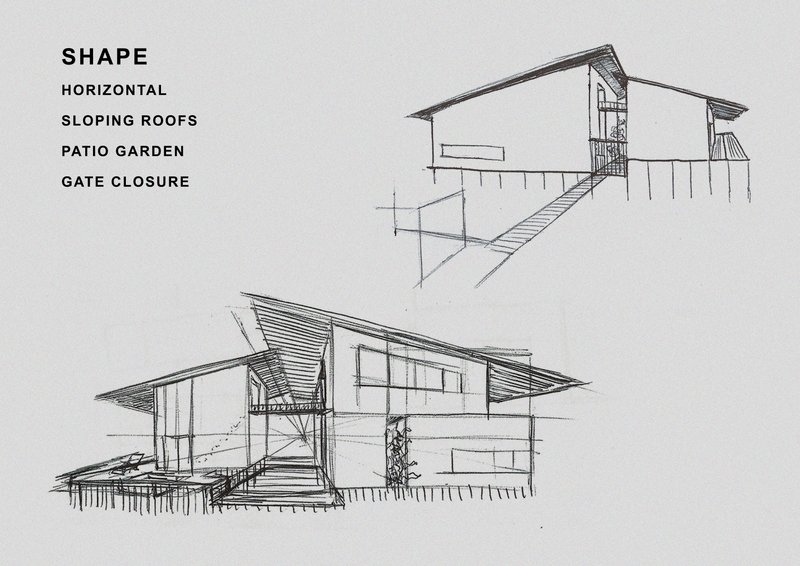
To highlight the vernacular aspect, we want to use local wood as the main construction material and create a shape that will immediately show its correlation to this place. The characteristic sloping roofs will protect from heavy rains and cover from the hot sun.
The patio can be an equivalent of the central courtyard, which is typical for traditional housing in the state of Kerala and also is an important part of villa history. Because of the high temperatures we want to limit the direct sunlight coming in through the windows, that is why they are specifically placed and there are not so many of them.
To enter the living space you have to pass the openwork metal gate and that theme appears also in railings and fences inside this part. Their different shapes and scales will cause many patterned shadows which will be aesthetically pleasing and set the oriental tone to the house.
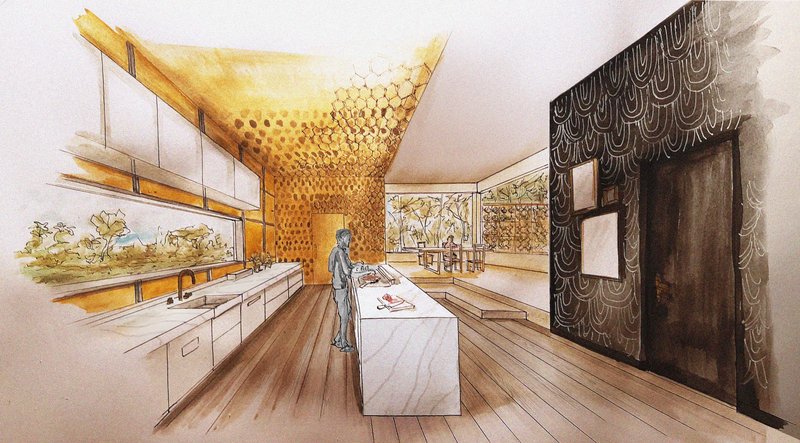
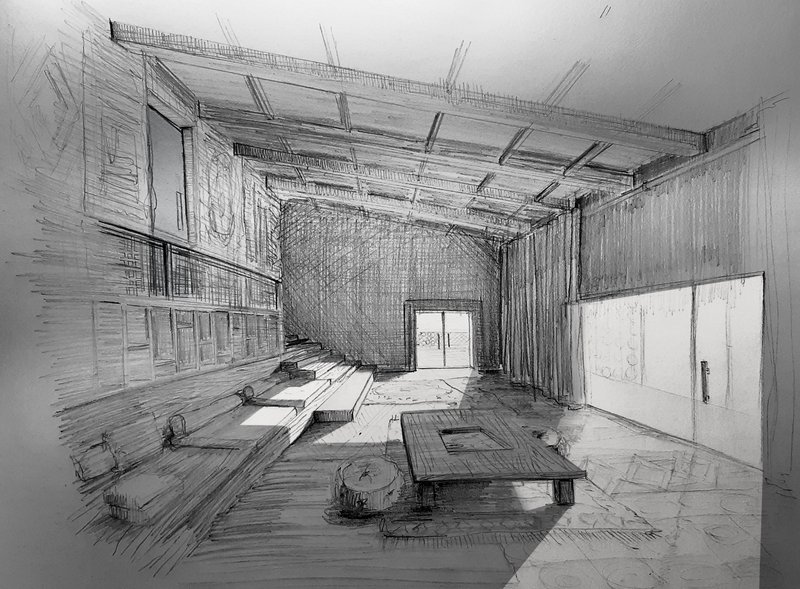
We wanted to create modern interiors but also referring to the traditional style of Kerala, by adding ornaments and details to the project, for instance using brushed plaster or making it look old and cracked. The metal trellises are also coming inside the house making it all look consistent and decorating. The living room should be very warm and cozy in its perception. Standing furniture, as well as the pillows on a wooden platform, can be moved freely and arranged to the current needs of the residents, making it all very convenient for users. Generous use of fabric is supposed to make the room warm and soft.
In summary, our project is concentrated on the needs of the family and on the vernacular aspect. We wanted it to be simple and functional, but typical to this environment, so at first glance, u would already know this house couldn't be built anywhere else.