Ulviklende Kobling
Evolving Linkage


Copenhagen is a place, a city and a harbour where is a home to a never-ending alteration. As it referred in the Gesta Danorum, the city is founded as Portus Mercatorum which is followingly turned into Hafn, a city where castles have been raised. As it follows throughout the eras, The Merchants’ Haven has evolved into the capital of Danes and evolving inwards future in order to be the capital of architecture. Inasmuch as their architecture is evolving and architecture of Denmark is leaking around the world, citizens around the world has leaked into the Danish capital and changed it something anew through the time.
Since the alteration of longhouse, castles and palaces which are the new landmarks of modern era meets the demographics and lead the architecture to transform into creating public spaces. In that case, Ulviklende Kobling (Evolving Linkage) appears as a new public realm for the city by enhancing the connection between the sea, land, Copenhagen’s old and the new cityscape. Located in a region where surroundings are a blend of contemporary and diachronic architecture, the site enables the opportunity of linking the past, present with the future. Whilst the north side of the area are predicted to be home to the future development of Refshaleøen, Kastellet and Amalienborg on the West constitute the continuous linkage with the past.
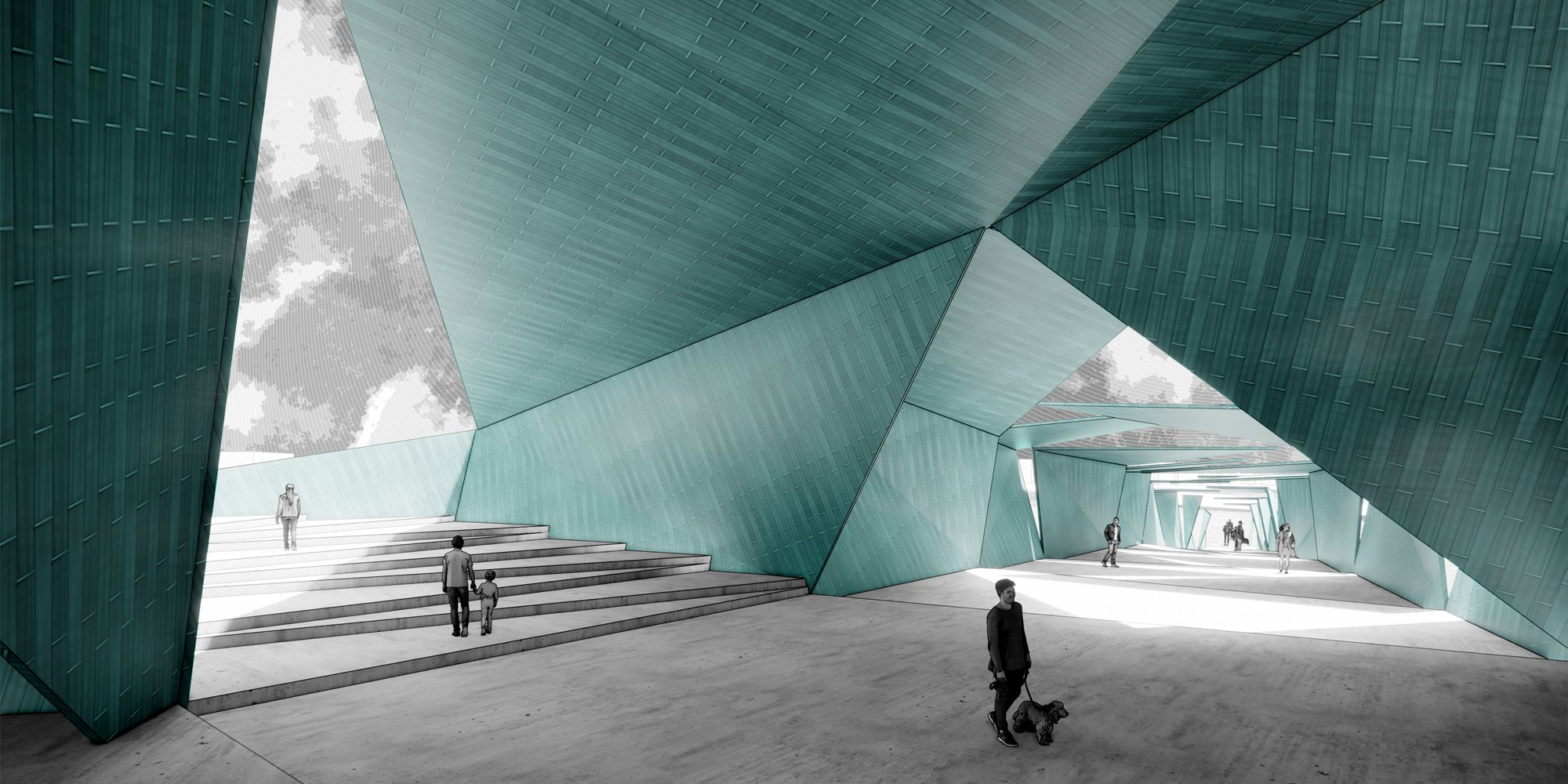
Evolving from a realm like this, Ulviklende Kobling (Evolving Linkage) has aspired to create a linkage in the current contrary. By creating a gathering space in the middle of the site yet detached from the land which faces Kastellet in order to constitute connection between the assemblage inside Ulviklende Kobling (Evolving Linkage) and surroundings. Nonetheless, its contemporary aspects that created as the result of detachment from the land, Ulviklende Kobling (Evolving Linkage) is still connected to its roots, surroundings and carry the traces of architecture of in the history of Denmark. The platforms that are allocated circumambiently around the main gathering space in the middle are inspired from the bastions of Kastellet and plan organization of Danish Citadels in terms of its triangular shapes and its feature of giving view to surroundings. While routes that connect the space with the city and the land are representing the bivious linkage between the contemporary and diachronic miens of the site within impacts of modern architecture in terms of the identical elements of the shell that envelop the routes. Inasmuch as the routes identify the connection between different features of time, but also creates the linkage between the platforms that are representing the bastions of Kastellet are enhancing the tie and continuity between several eras such as Amalienborg’s Rococo features, literary inheritance of Den lille Havfrue which also symbolises the evolution of mermaid into a human being. Correlatively to enveloping planes of the routes that constitute the connection with the city, partially encompassing overhead of the main gathering space which is derived from the connective routes between the view platforms that depict the incessantness between the past and the future architecture of Denmark and pursue the enhancement of the features of surroundings within its triangular shaped envelope which come into existence as the display of characteristics of Danish rooftops.
Whilst it takes its final shape, Ulviklende Kobling (Evolving Linkage) provides comprehensive gathering space that meets with the sea in order to refer the history of Portus Mercatorum can be a home for exhibitions, concerts, and various several gathering needs of the region in an enhancement of togetherness and constitutes the fluxional journey between the past, present and the future along the structure. As it follows, Ulviklende Kobling (Evolving Linkage) procures an educative experience by alterations, evolvement of the space through the routes giving the sense of articulating perception of the space and time by once again leaking the traces of its historical marks.