Urban Fun Farm: Redefining Sustainable Architecture in Mega-Cities
Designing interactive urban farms that merge sustainability, architecture, and community in the heart of mega-cities.


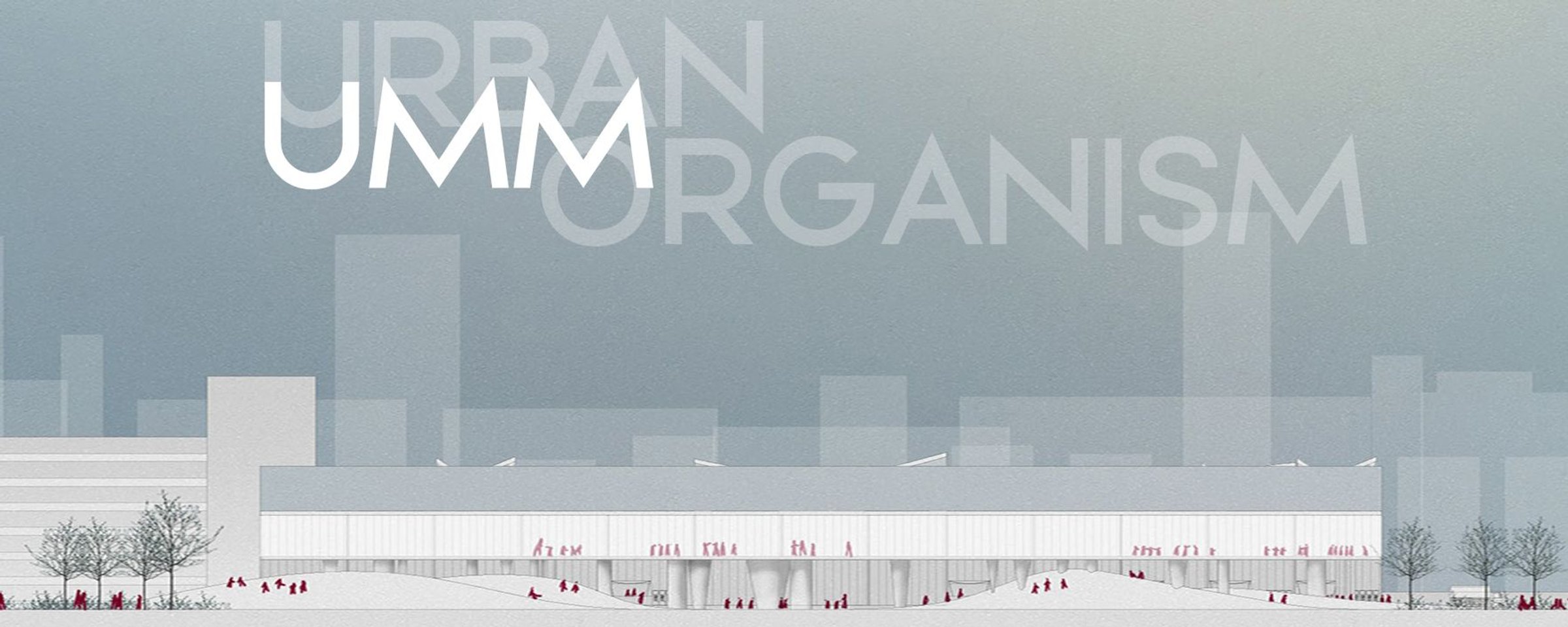
In the rapidly urbanizing world, sustainable architecture has become more than just a design choice—it is a necessity. Urban Fun Farm, a shortlisted entry for the Urban Meal Mine competition by Irina Matees, envisions a bold architectural solution that transforms food production, learning, and community engagement into a single interconnected hub.
A Fusion of Architecture and Agriculture
The Urban Fun Farm is located in one of the world's mega-cities, where the disconnect between food production and urban life is most evident. This project proposes a contemporary architectural space where agriculture and education meet modern urban lifestyles. Inspired by traditional farmland and new modular methods of planting, the farm becomes an indoor agricultural market that fosters awareness, sustainability, and interaction.
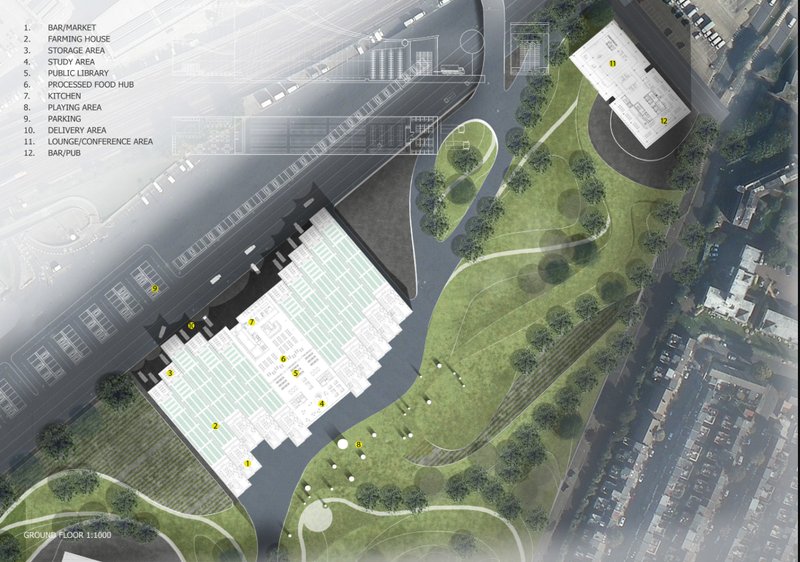
By integrating farming areas, workshops, residential zones, and leisure spaces, the design emphasizes multi-functionality. The project establishes a spatial flow where visitors can seamlessly shift from farming activities to recreational zones, making food culture an everyday experience.
Innovative Sustainable Design
At its core, the Urban Fun Farm demonstrates eco-friendly architectural practices. The design leverages natural elements of the site, including:
- Rainwater harvesting: Collecting rooftop rainwater, funneled into an underground irrigation system that nourishes both plants and public green areas.
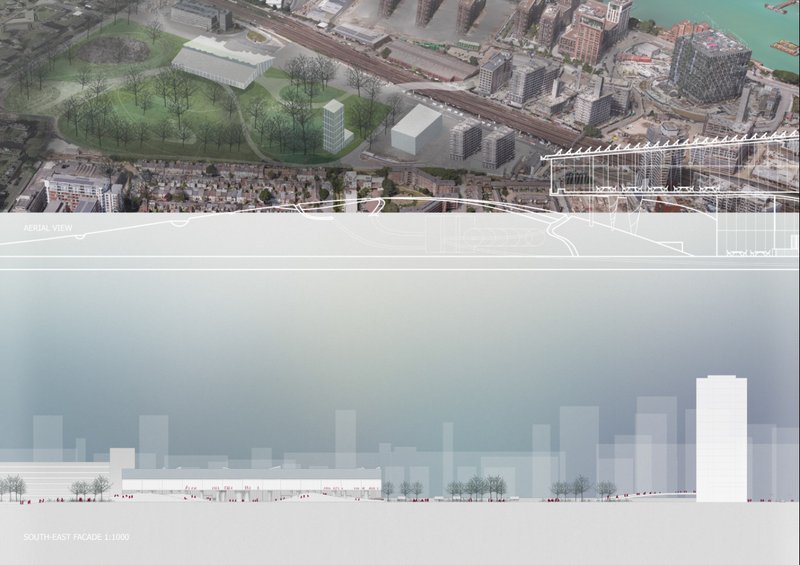
- Solar integration: A large roof provides the surface for solar panels, generating clean energy for lighting, farming equipment, and public facilities.
- Adaptive design: The structure bends and adapts visually to its urban surroundings, blending functionality with aesthetic appeal.
This integrated sustainable design not only reduces ecological footprints but also creates a blueprint for urban resilience.
Program and Spatial Organization
The project’s program is organized into diverse, interdependent zones:
- Farming and workshop areas – promoting food education and hands-on agricultural experiences.
- Educational and leisure spaces – providing classrooms, public libraries, and cultural hubs.
- Residential and recreation zones – blending living spaces with sports and leisure facilities.
- Commercial markets – indoor marketplaces for processed food, bars, and social gathering spots.
Through this spatial diversity, the architecture fosters both productivity and playfulness, creating a lively community ecosystem.
Architecture as a Social Connector
Beyond its agricultural function, the Urban Fun Farm is designed to serve as a socially inclusive public architecture. It becomes a gathering point where communities reconnect with nature, rediscover food systems, and engage in cultural exchange. The project is not only about farming but also about cultivating a shared urban identity through design.
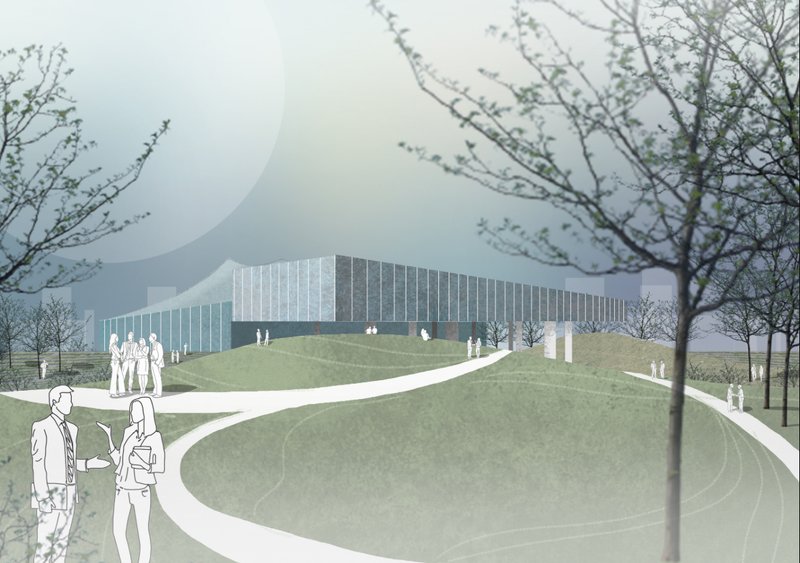
By incorporating pedestrian alleys, recreational parks, and educational hubs, the Urban Fun Farm blurs the lines between rural traditions and urban innovations.
The Urban Fun Farm by Irina Matees demonstrates the transformative power of sustainable architecture in reshaping urban food systems. By merging farming, education, leisure, and sustainability into one spatial narrative, the project envisions cities where architecture becomes a tool for resilience, awareness, and community.
As cities face increasing pressure to address climate change and food insecurity, projects like Urban Fun Farm provide a compelling glimpse into the future of urban architectural design.
Credits: Project by Irina Matees
Shortlisted Entry of Urban Meal Mine Competition