
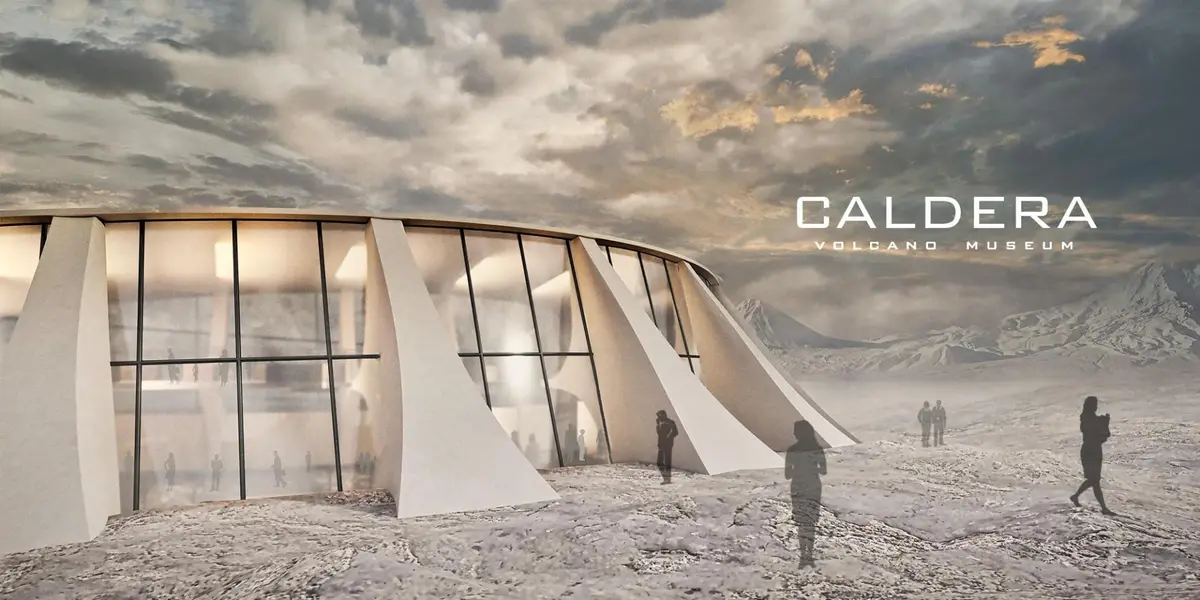
Volcano observatories: Exploring knowledge about volcanos through interactive technology in volcanic area of Turkey
Result for 'Tectonic' - Cultural Architecture Design challenge, out now.


Volcanic peaks have formed hot ash, gas, and molten lava since the inception of Earth billions of years ago. They are architects of the earth’s geology. They have created more than 80 percent of the earth’s surface, which in turn has allowed life to thrive. The explosive nature of volcanoes has destroyed landscapes and mountains. But with time the same volcanic rocks have created fertile soils that allowed civilizations to flourish.
Volcano eruptions affect our geological conditions big time. On land, when volcanoes move the ocean plate subducts too. While they are prominent active and dormant volcanoes on land, there are more long chains of underwater volcanoes that circle the planet. One million underwater volcanoes are estimated under the long mid-Atlantic ridge, and some 1,500 on land are still considered active today.
Volcanic peaks remain the most iconic and permanent part of our natural history. The deadliest eruption ever documented killed around 10,000 people immediately, followed by thousands who were prey to the year of no summer. This year was caused by volcanic ash and gas which obscured the sun and increased the earth’s reflectivity. They are the most terrifying, raw, and deadly spectacles of nature. Dramatic landscapes and raw forms of nature touch us in a way very few things can.
It makes us aware of the powerlessness and overwhelming power of nature. Encountering extremes in nature can create a deeper understanding of ourselves and enrich our lives with unknown feelings. Though it's impossible to experience and come unharmed while witnessing a dangerous natural phenomenon like volcanic eruptions. To be able to feel an exhilarating rush of nature's wrath one has to also feel safe.
Can architecture play a part in this?
Although there have been big eruptions in recorded history, volcanic eruptions are no more a frequent phenomenon than they were decades ago. Moreover, towns and settlements near volcanic peaks are more prepared due to local media and volcano observatories near active sites. Now that we are one step closer to safer environments, can we recreate these raw experiences?
Can interactive and learning design spaces add an immersive experience to it?
Brief: Design a Volcano Museum to exhibit volcanology’s past, present, and future. The design aimed to recreate the phenomenon through interactive technologies which induce learning as well as visual interaction.
The jury for the competition consisted of esteemed designers, professionals, and academicians from around the world. The Lead Jurors for the competitions were as follows:
Mojtaba Mohammad Zaheri, Co-Founder, Principal Architect, Modaam Architects, Tehran, Iran
Sanaz Ghaemmaghami, Co-Founder, CEO & senior principal Architect, Modaam Architects, Iran
Some of the Best competition projects are as follows:
Winning Project: Tectonic museum
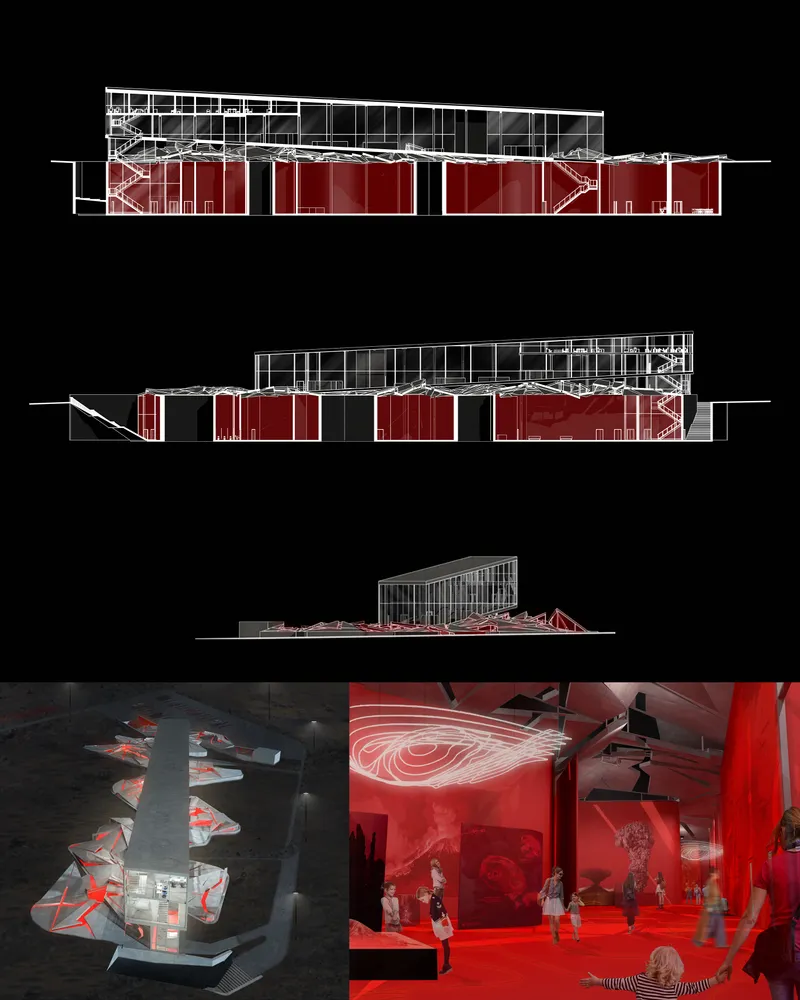
Fig: 1 Section plan and interior view
Description: The concept of the building is made in the form of flowing lava, for a harmonious fit under the mountainous terrain. The fusion of the glazed observation deck and the roof of the underground floor, which looks like a rupture of tectonic plates, conveys harmony and at the same time chaos while resembling the natural environment.
------------------------
People’s Choice: CALDERA
By: Atreya Saha, Sneha Mukherjee & Tushar Bhardwaj
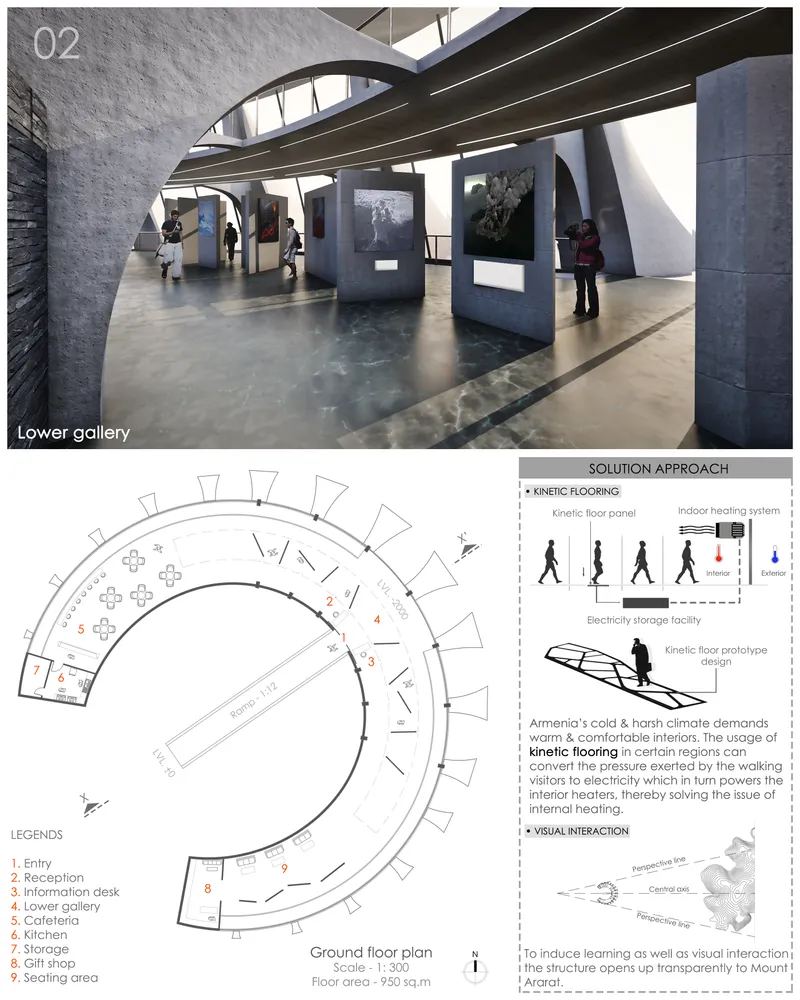
Fig: 2 Interior views and floor plan
Description: Creation of a volcano museum in the vicinity of Mount Ararat, Turkey, striving towards comprehensive experiences and recreation of volcanology's past, present, and future through interactive technologies which shall induce learning as well as visual interaction.
----------------------
Editor’s Choice: Tectonic museum. Hal
By: Mark Ligay & Марк Ли
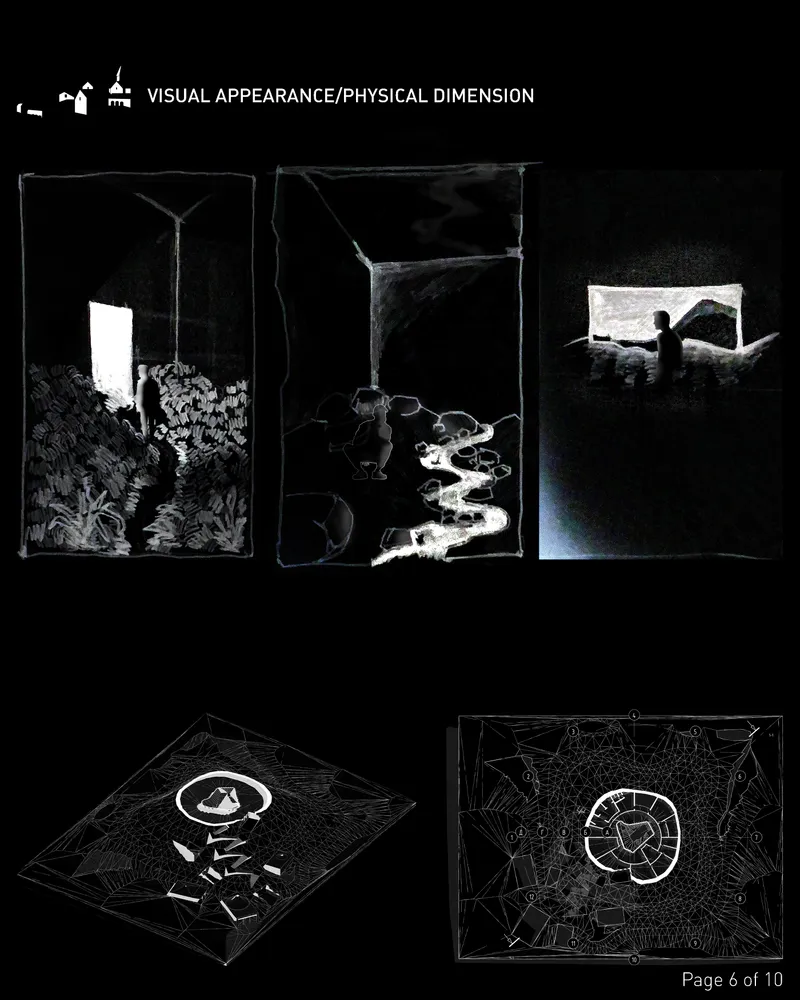
Fig: 3 Visual appearance/ physical dimension
Description: Volcanoes are large-scale natural phenomena, bringing both terrible destruction and new life. But is it really that simple? If you go a little deeper, you can learn a lot about ourselves and the universe.
------------------------
Editor’s Choice: Tectonic Design Contest for a Volcano Museum
By: Anna Zieziula
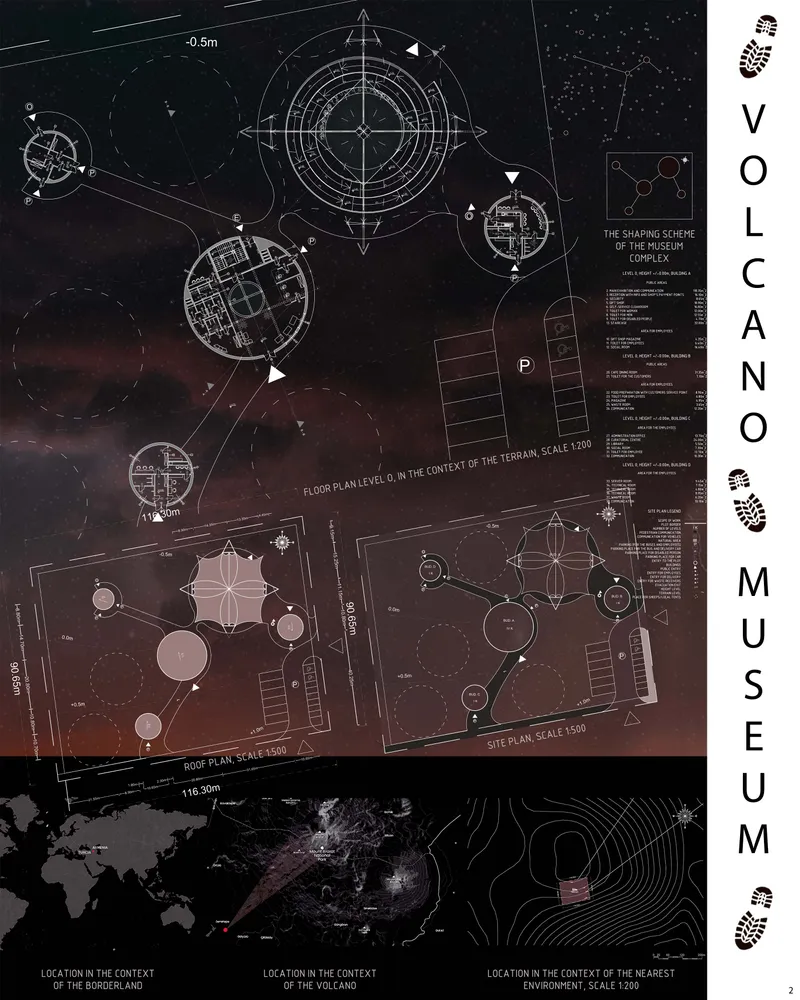
Fig: 4 Site plan
Description: The museum highlights the importance of Mount Ararat through contrast, holographic exposition, and a sightseeing route hidden in the interior of the earth. The building allows you to recreate the raw, primal sensations in a safe interior. The form was shaped by mountain contours, local Kurdish tents, a constellation called Noah's Dove, and oriental mandalas.

Follow us on social media: Facebook | Instagram | LinkedIn | Twitter | Youtube
References (3)


Popular Articles
Popular articles from the community


Manzana Morphosis: Stretching Barcelona's Grid into a Living Landscape for 2050
A radical reworking of the Eixample manzana turns density into a tool for generous public space, vertical ecology, and environmental performance.
Temporary Home for Dogs: A Reversed Zoo Rethinks Animal Shelter Architecture
In Bucharest, a sinuous corridor and freed landscape flip the logic of containment, designing a shelter that works to make itself unnecessary.

The Amber Palace Opera: A Geological Fiction Surfaces on Tallinn's Baltic Waterfront
Pierre Brillard reimagines a Baltic legend as a public landscape, opera house, and waterfront promenade rooted in Tallinn's coastal identity.
Extended Shell: Retrofitting Kolkata's Balconies as Living Urban Thresholds
A modular retrofit system recovers the social and environmental intelligence of Kolkata's historic verandas for contemporary Park Street residents.

Similar Reads
You might also enjoy these articles
The Amber Palace Opera: A Geological Fiction Surfaces on Tallinn's Baltic Waterfront
Pierre Brillard reimagines a Baltic legend as a public landscape, opera house, and waterfront promenade rooted in Tallinn's coastal identity.
Dynamic Modules Shelter: A Telescopic Ring for Mountain Pilgrimage
A circular modular framework of steel, bamboo, and fabric grows vertically with demand, wrapping communal ground in adaptable shelter.

Singing Woman: Contemporary Architecture Inspired by Estonia’s Voice and the Sea
Singing Woman turns Estonia’s song culture into flowing opera house architecture, blending public life, landscape, sea, and national memory.
HYPERBLOCK: Flexible Urban Design for Barcelona’s Future City
HYPERBLOCK reimagines Barcelona as flexible urban design, layering density, daylight, public space and adaptable housing above Cerdà’s grid.

Explore Cultural Architecture Competitions
Discover active competitions in this discipline

Challenge to design locus for the upliftment of human rights

Bring back Drive In's

Design challenge to reuse E-waste
Comments (0)
Please login or sign up to add comments
No comments yet. Be the first to comment!