Wood, tree, unite
work together
Introduction
The project aims to embody the natural essence and growth pattern of a tree within an architectural framework, creating a dynamic and organic environment for its occupants. Inspired by the various stages of a tree's life cycle, the building design progresses from the roots, represented by the basement, to the canopy, embodied by the rooftop garden. This innovative approach not only enhances the aesthetic appeal of the structure but also provides functional and engaging spaces tailored to the needs of its users. The design focuses on integrating natural elements, sustainable materials, and thoughtful spatial organization to foster a connection with nature and promote a healthy, productive, and enjoyable environment. This comprehensive and creative design strategy sets a new standard for office and recreational spaces, blending nature and architecture seamlessly.
Concept Behind the Project
The concept behind the project was inspired by the theme of a tree, with the building's design reflecting the natural growth and branching structure. Each floor represents different elements of a tree, from the roots and soil to the canopy and highest branches, creating a dynamic and organic structure.
Intent Behind the Organization of Elements Across Various Levels
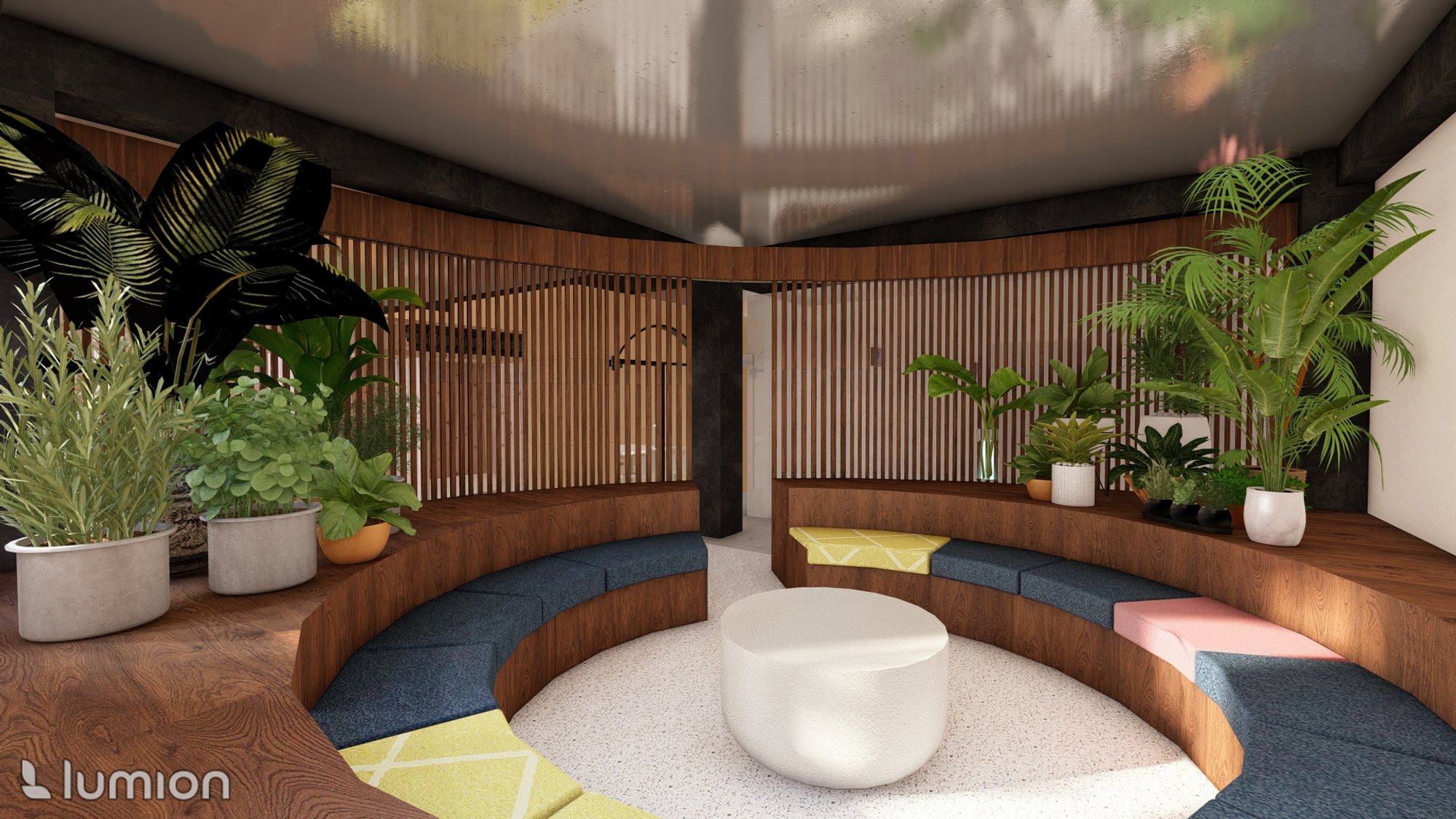
Architecturally, each level of the building is designed to reflect a different part of a tree, getting more complex and divided as it ascends. The basement represents the roots, providing a darker, more relaxed space for rest and entertainment, with design elements symbolizing soil and rocks. The ground floor starts to introduce greenery, symbolizing the tree emerging from the ground. As the building rises, floors incorporate more natural light and greenery, culminating in a rooftop botanical garden, representing the tree's canopy. This vertical organization not only supports the thematic concept but also ensures functional distribution of spaces suitable for different activities.
Iterations to Arrive at the Final Outcome
Several design iterations were explored to refine the concept and ensure functionality and aesthetic coherence. The process included multiple revisions of floor plans, spatial arrangements, and material selections to achieve the final design that balances theme, usability, and comfort.
Methods of Design Investigation
The design investigation included conceptual sketches, digital modeling, and physical mock-ups. These methods helped visualize the spatial relationships, natural lighting effects, and material interactions, ensuring that each design element contributed effectively to the overall theme.
Condensation of the Programme into the Final Design
The program was condensed through careful consideration of the building's functional requirements and thematic concept. Each floor was assigned specific functions that align with the tree theme, from communal spaces and individual work areas to relaxation zones and recreational facilities. This strategic condensation ensured a cohesive and purposeful design.
Material Selection
Materials were chosen to reinforce the tree theme and enhance the building's aesthetic and functional qualities. Natural materials like wood and stone were selected for their visual and tactile resemblance to tree elements, while green tiles and see-through walls with natural light integration were used to create a connection to nature.
Meeting Specific Objectives
The specific objective of creating a tree-themed building was met through thoughtful design choices that integrate natural elements, provide functional spaces, and enhance user experience. Key design features like the centrally highlighted pillar, rooftop garden, and strategically placed rest areas contributed to achieving this objective.
Expansion Plan of the Project
The expansion plan includes maintaining the thematic integrity while possibly adding more floors or extending existing spaces. Future additions could involve more advanced sustainable technologies, expanded recreational facilities, or additional greenery to enhance the building's environmental impact and user experience.
Transformation with Time
As time passes, the project is expected to evolve by integrating more advanced sustainability practices and adapting to changing user needs. The natural materials and greenery will mature, enhancing the building's aesthetic and environmental value. Regular updates and maintenance will ensure the building remains a functional, vibrant, and inspiring space for all users.