

Yangjiang Cultural Center – Architectural Landmark in Yangjiang, China
The Yangjiang Cultural Center blends mountains and sea inspiration, sustainable design, and multifunctional cultural spaces, energizing the community creatively.


The Yangjiang Cultural Center is a dynamic cultural landmark situated on the north side of Moyang Lake Park in Yangjiang City. Nestled in a picturesque urban setting with panoramic lake and river views, the center integrates multiple institutions, including the Archives Center, Party History Museum, Local Records Museum, Hall of Fame, planning hall, museum, and the Workers’ Cultural Palace. This multifunctional cultural hub brings vitality to the surrounding community and serves as a beacon of arts, culture, and education in the new urban area of Yangjiang.
Innovative Design Strategy
1. Functional Integration and Shared Spaces
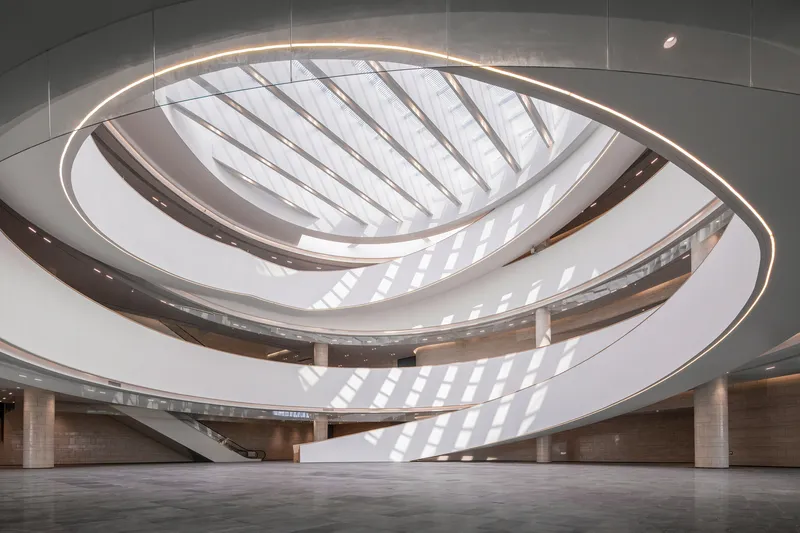
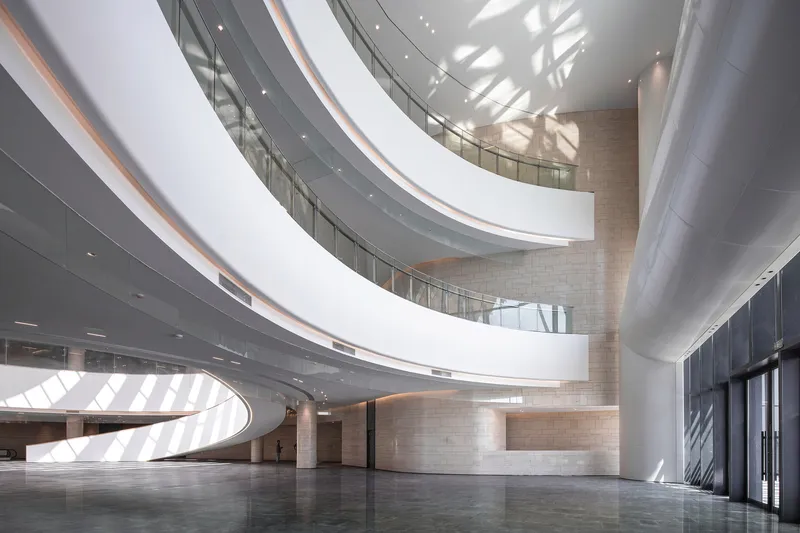
The design adopts a “seven halls in one” layout, concentrating seven independent institutions around a shared central atrium. This innovative approach creates:
- Enhanced public experience through diverse spatial interactions.
- Efficient operational management and centralized services.
- Sustainable land and energy use, reducing construction footprint, HVAC energy, and resource waste.
The functional integration model sets a new standard for medium-sized city cultural complexes in China.
2. Community Activation through Open Design
The cultural center is designed as an open platform that energizes the community:
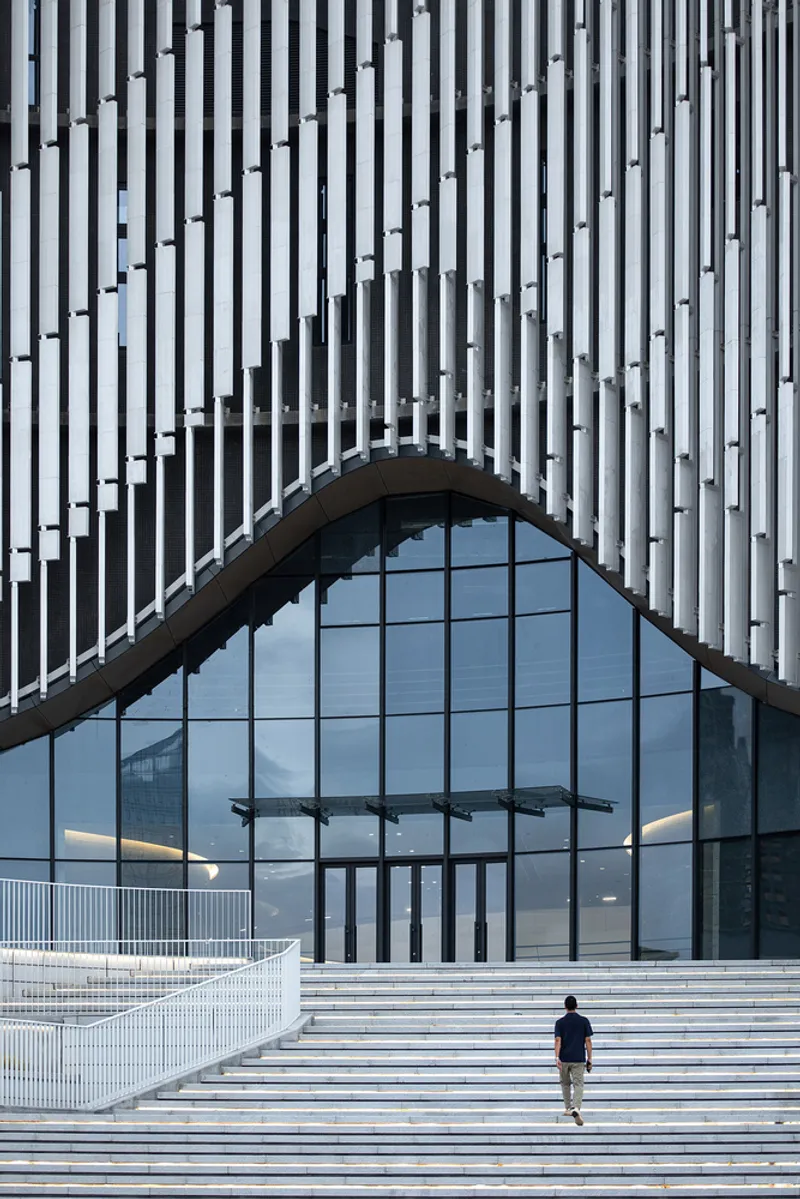
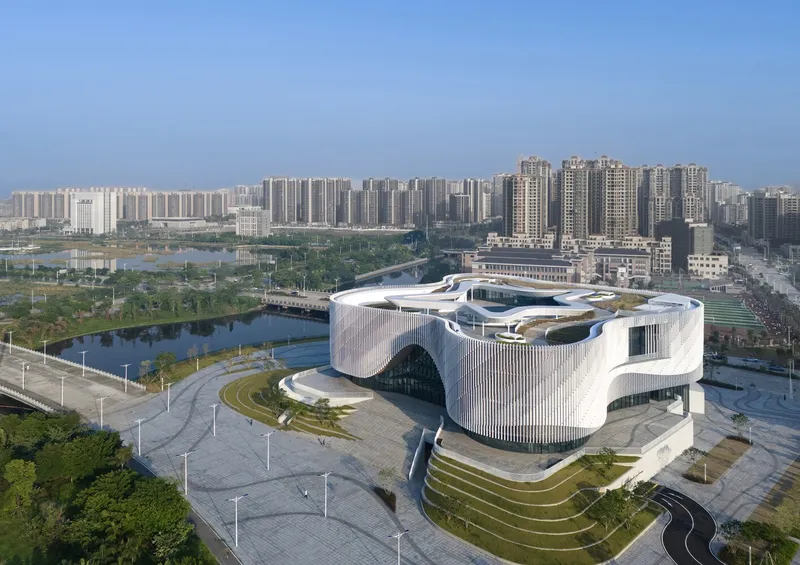
- The podium seamlessly extends into Moyang Lake Park, with grassy slopes and recreational areas.
- Cafes, bookbars, and leisure spaces invite citizens to linger, socialize, and enjoy panoramic views.
- Green platforms and landscaped steps integrate the center with the park, enabling social activities without disrupting the environment.
This approach transforms the traditional public building into a vibrant community hub, enhancing cultural engagement and social connectivity.

3. Passive Design and Parametric Architecture
Situated in a subtropical coastal climate, the center incorporates passive design strategies to optimize energy efficiency:
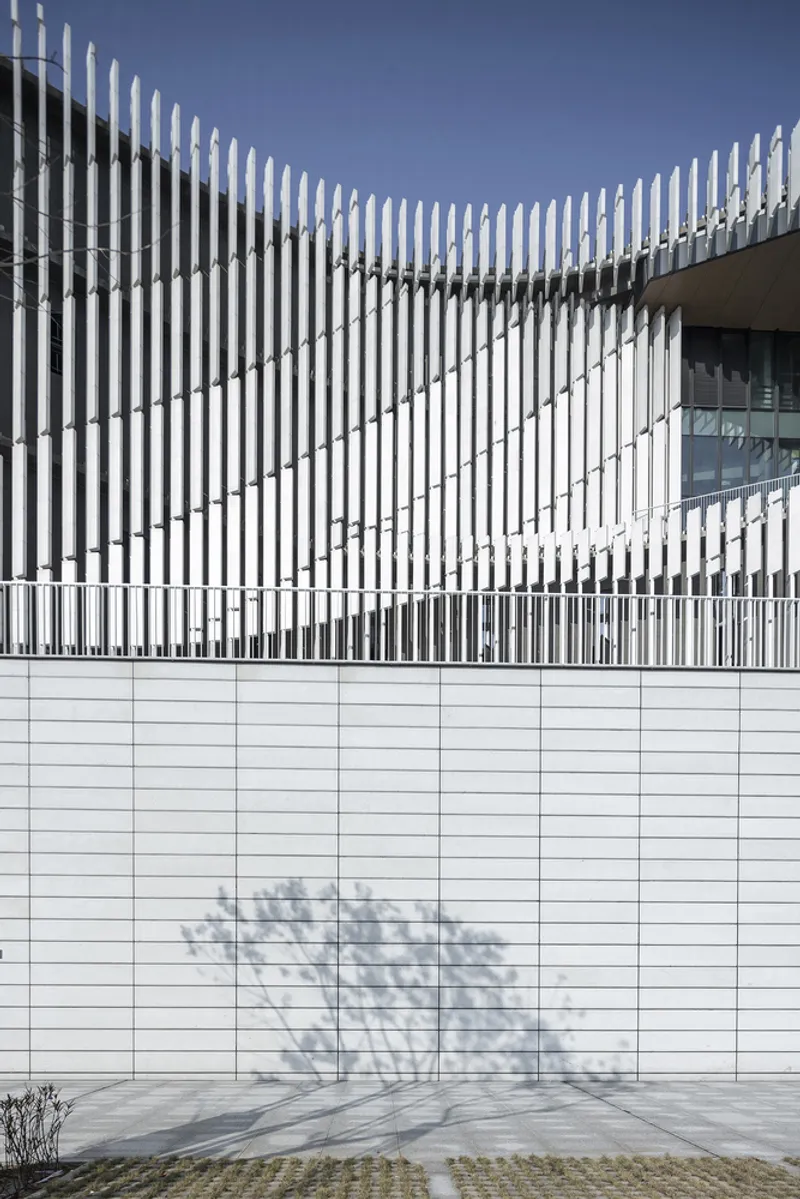
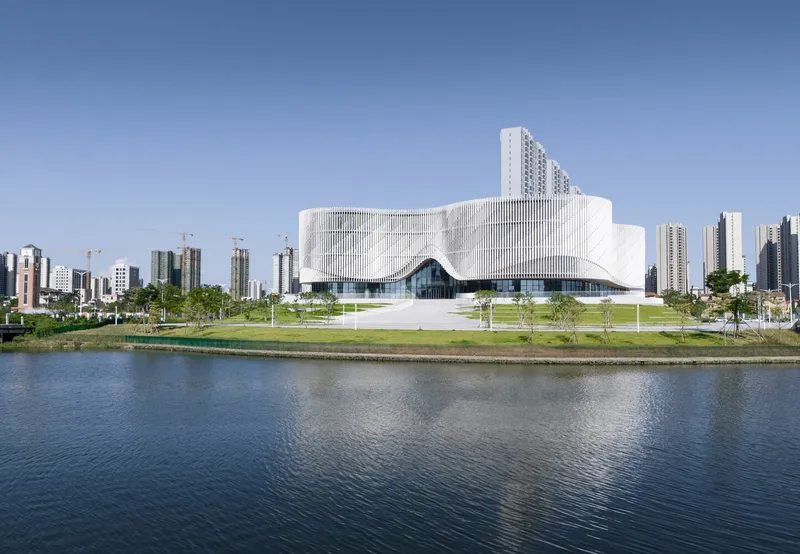
- Parametric pottery rod façade system with patented composite rods provides optimal sun shading, heat insulation, and natural lighting.
- Ventilated atrium and strategic window placement facilitate natural ventilation, reducing energy consumption during spring and autumn.
- Roof garden and rainwater harvesting system enhance ecological sustainability, acting as a sponge city feature for water retention and landscape irrigation.
4. Regional Inspiration: Mountains and Sea
Reflecting Yangjiang’s unique mountain and sea geography, the architectural form embodies:
- White upper volumes symbolizing the sea.
- Green lower platforms representing mountains and rivers.
- Flowing curves and dynamic contours inspired by natural landscapes.
The parameterized pottery rod façade casts shifting shadows under sunlight, evoking the motion of sails and waves, emphasizing regional identity and cultural pride.
Design Impact
The Yangjiang Cultural Center stands as a benchmark for cultural infrastructure in mid-sized cities, blending architectural innovation, community integration, and sustainable design. It embodies a new paradigm of multifunctional, energy-efficient, and socially engaging public spaces.


Popular Articles
Popular articles from the community


longwave studio Reorganizes a 112 m² Tainan Apartment Around the Daily Routines of a Family and Two Cats
In Tainan, Taiwan, birch plywood, rust-red furniture and a freestanding plaster wall link arrival, storage, work and family life in one apartment.

Jaramillo Van Sluys Arquitectura and Urbanismo Turn a Demolished Registry Lot in Quito into an Orchard Plaza
In Quito's Centro Histórico, a 2,800 m² plaza exposes the San Agustín convent wall and redraws its lost Augustinian orchard in volcanic stone.

David Ortega Stacks a Two-Story Mexico City Penthouse Around a Steel Stair and a Pergola-Shaded Roof Terrace
In Colonia Roma, a 300 m² penthouse uses oak joinery, a planted steel stair and a slatted roof pergola to make a new-build apartment feel like a house.

GROUP A Strips a 1969 Rotterdam Harbor Headquarters to Its Frame and Wraps It in Timber Louvers
In Rotterdam's M4H harbor district, Ferro Offices reuses a 1969 frame, adds one timber storey and reaches BREEAM-NL Outstanding.

Similar Reads
You might also enjoy these articles


Hodi-Mandai Geram
Project Function: Preservation and revitalization of the Intangible heritage and socio-spatial identity of the Hodi by Housing, Cultural Memory Center, Sacred Grove, landscape, local tourism economy


Olio Towers: A Mid-Rise for Performers That Fuses Housing, Rehearsal, and Stage
Located blocks from Houston's Theater District, this modular tower stacks living units around a central performance atrium.

Oasis: Modular Green Housing Carved into Dhaka's Urban Fabric
A shortlisted Plugin Housing entry reclaims unauthorized settlements in Dhaka with stepped concrete volumes, green roofs, and ventilation-driven design.

Black Hole: A Floating Megastructure for the Post-Physical Era
Emiliano Mazzarotto envisions a spherical, self-scaling arena where e-sports, digital hotels, and holographic stadiums replace traditional public space.

Explore Cultural Architecture Competitions
Discover active competitions in this discipline

Challenge to reimagine the Iron Throne

Photograph architecture without architects

Illustrate the lost glory of Angkor Wat - Render Challenge

Bring back Drive In's
Comments (0)
Please login or sign up to add comments
No comments yet. Be the first to comment!