Building Information Modeling in Architecture
BIM Webinar Chapter 1 | Basics and Fundamentals of Revit (LIVE)
OVERVIEW
In this course, we will walk you through the parametric modeling features that Revit Architecture has to offer. Revit Architecture by Autodesk is one of the leading applications in the industry for Building Information Modelling and is reshaping the way we design and build. The ability to create smart 3d models, where each object has attributes that collectively create a robust database for coordinating and extracting information, is one of the most relevant skills any designer should learn today. After this course, you will know the basics of Revit Architecture, and you will feel confident to start creating your BIM models and retrieve information for your presentations.
What is BIM and Why is it a good fit for me?
Building Information Modeling (BIM) is an intelligent 3D model-based process that gives architecture, engineering, and construction (AEC) professionals the insight and tools to more efficiently plan, design, construct and manage buildings and infrastructure. BIM is used to design and document building and infrastructure designs. Every detail of a building is modeled in BIM. The model can be used for analysis to explore design options and to create visualizations that help stakeholders understand what the building will look like before it’s built. The model is then used to generate the design documentation for construction.
What will I learn in this certification course?
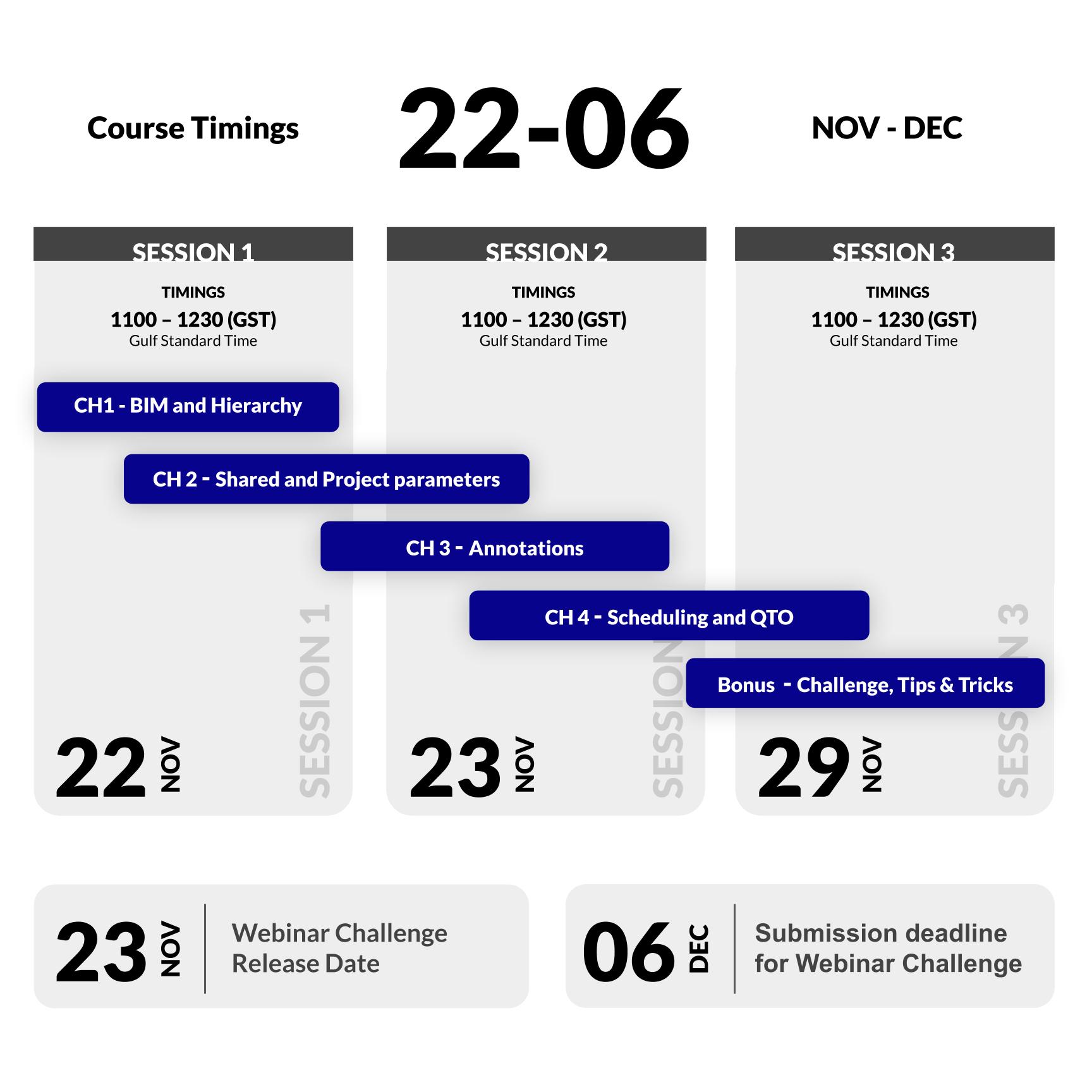
We will start gripping up by brief introduction in BIM and the tools. Then we will start following with the fundamentals and hierarchy of elements in Revit which will be finished by plugging up grids and working in an organised Project browser environment. After finishing up, we will end up the course with the scheduling and by digging in through the project and shared the environment, with extracting the quantities.
Why is it Important to know “I” in BIM?
BIM is all about sharing and managing information – and there’s heaps of data that can be used to enrich your models. Just think of all the information that can be used to describe just one object in a system: dimensions, price, material type, brand, and several other types of data. But since you want to maintain a high design speed, plus a model that’s light and easy to work with, how do you decide which information should actually be in it? Find out in this course!
“In any design and construction project there are an unlimited number of participants, as well as infinite interactions between parties. The projects are multidisciplinary and include information that is not necessary to all involved. So who is responsible for what in each project? How far does my responsibility go and where does yours start? BIM helps to order the complexity of this process. “
BIM is a Process, and not a tool.
◉ REC Lectures will be available once all the webinar sessions have concluded.