
Bio-Wellness
Wellness centre: Biophilic design challenge
Overview
 Fig: 1 -Nature has always been the common link between us and the planet (Credits-Luis Dalva)
REFUGE FROM THE CITY
Biophilia is a term that explains the affection and affinity we have towards nature.
Humans have evolved across centuries to have an inherent connection with nature and its surroundings. Since ancient times, there is evidence that indicates the proximity we have shared with nature since our evolution. Our existence and development had been founded on basic concepts of 'refuge and prospects'. Both of which originated and developed in nature.
In ancient times the connection between prospect and refuge had been close, they weren't regarded as two different entities.
The patterns and connections that were found in the prospect were similar in the refuge. This fundamental understanding has been a basic building block in our psychology and how we perceive our environments. With time, we lost this connection as we developed away from nature and became a totally separate entity. Thus affecting our overall well-being and existence.
What happens when we completely lose this connection?
 Fig: 2 - Is this concrete Jungle how can we re-establish our connection with nature? (Credits-Ben-o-bro)
RECONNECTING TO NATURE
We shape our buildings and afterwards the buildings shape us - the notion of how we respond and are affected by our environments has a broad effect on our psychological and physiological well being. Natural connection in cities is becoming a major cause of increased mental health problems.
Biophilia is considered to be the missing link in sustainable design. The goal of biophilia is not to reduce the harm but to make this process of mental health well-being more habitable, enjoyable and healthy.
Multidisciplinary studies have confirmed a link between exposure to nature and improved mental and physical well-being and recovery in people.
Do these observations and research generate a question as to how the introduction of biophilia principles will bring about a mental and physiological betterment in well-being spaces? and by doing so can we design better spaces?
 Fig: 3 - Can we provide better spaces by introducing biophilia in our built environment? (Credits-Thimo-van-leeuwen)
BRIEF OF THE COMPETITION
Certain building environments trigger our psychological responses. Different environments can affect our adaptability, alertness, attention and emotions.
Can we create spaces that promote the process of recovery, repair, renewal and reintegration that brings about a total mental and physical well-being of the person?
The introduction of biophilic principles helps provide an improved Architectural solution that caters for our emotional well-being. How will the wellbeing spaces change if we design by using biophilic principles?
What architectural and interior design interventions can bring about and enhance the experience and recovery of people in wellbeing spaces?
Brief: The architecture competition brief calls for a design of a therapeutic wellness centre that will be based on biophilic principles, which aid for emotional and physiological well-being.
OBJECTIVES
Visual connection with nature: To create a design that provides an effective and open visual connection with nature.
Use of biomorphic forms/patterns: To provide patterns and designs that represent or reflect the concepts of biomorphic forms.
Material choice: To design spaces that are created with materials that create a connection with nature.
Application of principles: To create spaces that are created in consideration of the biophilic principles of design.
SITE
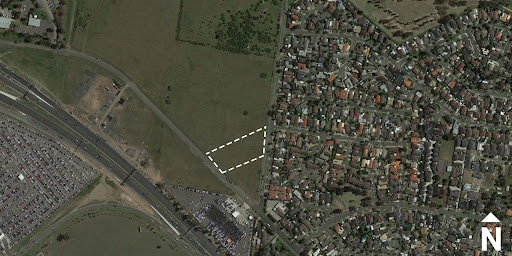
Westmeadows VIC 3049, Australia
The site for this challenge is located in Australia. Australia, the smallest continent and one of the largest countries on Earth, lying between the Pacific and Indian oceans in the Southern Hemisphere. The most striking characteristics of the vast country are its global isolation, its low relief, and the aridity of much of its surface.
The site is located near a widely spread urban city. The major part of the site neighbourhood is housed by residential buildings and small commercial buildings. The buildings in the nearby area are creating a dense urban environment. The site offers a connection with the context.
- Coordinates: 37°40'45.1"S 144°52'17.5"E
- Area: 10,198 sqm
- Height limit: 10m
- FAR (Floor Area Ratio): 1
- Ground coverage: 50%
AREA PROGRAMME
The programmatic outline is intended for one module capacity of 30 people. This is recommended for this challenge.
The space ideas are as follows:
- Spaces to live: 50 %
- Spaces for recreation: 20 %
- Individual/private spaces: 10 %
- Spaces for leisure: 10 %
- Services and ancillary spaces: 10 %
Other additional spaces can be added by the participants as per their design needs.
