
Cinema Box
Challenge is to design a film exhibition center that reaffirms contextual identity
OVERVIEW
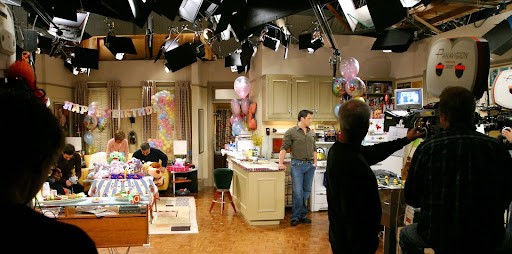 Fig: 1 - A movie scene being shot inside an apartment studio.
CINEMA CULTURE
A room of audience erupts into a fit of giggles as a comical tramp with a short mustache, wearing a suit and tall hat slips on a banana peel. The couple embraces as the man makes her stand on the railing of the ship, grabs her arms, and extends them out. "I'm flying," she says, as people swoon in unison over their romantic harmony and impending tragedy.
A celebration, an escape, hours of personal indulgence- cinema connects, rejuvenates, and educates. It is one of the biggest cultural activities in the world. An art form with the biggest influence, budget, and widespread connectivity. Inducing emotions and crafting perspective, as it grows to be a visual medium connecting the world as we know it today.
In 2002 it was reported that 20% of tourists visited UK because of the way it was portrayed in films. With globalization, it’s easy to access files of any culture. Stories become a source of identification, displayed images manifest into representation. Cinema is a form of communication that becomes a powerful tool within human culture.
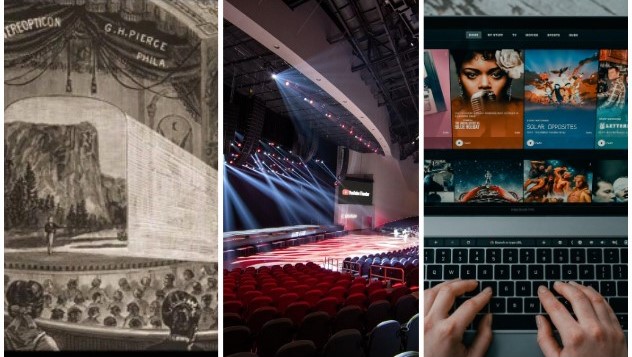 Fig: 2 - From Magic Lantern, to movie theatre to personal portable medium like laptop, movie viewing has come long way.
CINEMA CONTRIBUTION
Sundance Film Festival began in 1979 in the state of Utah, USA. As an effort to attract more filmmakers to the state. Initially, the goal of the festival was to showcase American-made films, highlight the potential of independent films, and to increase visibility for filmmaking in Utah. The festival now contributes $182 million to the state economy as it displays films from all over the world.
These platforms are a communal experience that enthralls people as they come together to celebrate cinema. And that shapes the social activities and fabric of the city. It breeds togetherness and opens up many revenues - avalanching into a mutual thread of film conversation. It reignites community prospectus, by playing an important cultural and economic role.
But with technological advancement, cinema has undergone a wave of change. Not only the way it's produced but also consumed. From a public exhibition to group activity and now to an isolated experience - viewing habits are changing. As platforms are digitized, how can we regain the potential of films in the physical realm?
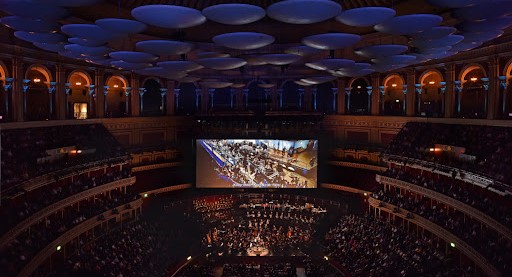 Fig: 3 - Titanic being shown in The Royal Albert Hall, London to capacity of 8000 people. Live orchestra plays.
BRIEF OF THE COMPETITION
Films are essentially a communal experience where people shared a dialogue and society interaction prospered. But with time, public exhibition of films is slowly disappearing.
Despite the increased population, footfall for Hindi films in India decreased from 32.8 crores to 29.6 crore footfalls in a year. With increased ticket prices, lack of cinema halls in developing countries and government funding - people prefer to watch films online. With piracy and streaming services, anyone can watch anything from anywhere.
In the century of ‘clip thinking,’ a platform is needed where people can watch and enjoy films. A meeting place that encourages conversations and dialogue between people. On a macro scale, a space that helps in reaffirming contextual identity and brings the city into the frame.
Brief: To design a convention center for cyclic film enthusiasts, where the focus is on viewing and building dialogue through cinema.
OBJECTIVES
- Form: Intent to experiment with form and create a structure that acts like a landmark.
- Multi-use: Space can be used for events other than film festivals for the rest of the year.
- Community: Interaction between film enthusiasts and locals at macro and micro levels.
- Technology: Appreciate the evolution of cinema in terms of its consumption and production.
The following objectives can be a point of beginning to conceive this design. Participants can assume their own contexts and users before initiating their design process.
The aim is to create a global-level platform that could expand the ‘idea of films’ and uphold the spirit of its group exhibition
Design can be programmed anywhere within the extent of the site.
SITE
UAE
In 2009 more than 85% of the UAE’s economy was based on oil exports. Lifting the ban on cinema in the mid-1990s has been one of the most visible economic initiatives undertaken by the government. The country’s large-scale goal now remains to leverage the potential of non-oil sectors to generate jobs and subsequently improve quality of life.
The UAE today has the largest movie business in the Middle East, most of it generated in its two biggest cities, Dubai and Abu Dhabi. But as a country with no previous history in movies, the UAE presents a unique approach to the building of film culture. Unlike many major film business hubs, routed in its history, UAE’s cinema is relatively new. The films playing are primarily Hollywood along with few Bollywood and Egyptian films. Only three of the UAE’s films have screened in the multiplexes, all made since 2010.
The proposed convention center besides propagating an idea of a national heritage on a global stage is looking to play an important role economically and socially.
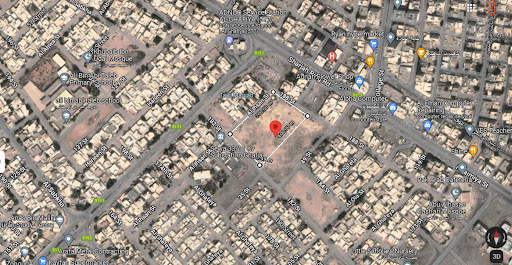
- Location: 25.381543, 55.409652
- Site Area: 15017 sqm
- Height limit: 45 m
- Ground Coverage: 30%
- No. Of People (Expected) - 13,200
The site is located in Al Riqa Suburb, a village in the Sharjah district of the United Arab Emirates.. Al Riqa Suburb is a cluster of eight residential communities in Sharjah. These include Al Sabkha, Al Hazzanah, Al Mansoura, Al Ramla East, Al Jazzat, Al Ghafiya, Al Azra and Al Falaj. Al Riqa Suburb is situated amidst popular districts such as Al Heerah Suburb, Wasit Suburb and the Halwan Suburb.
The residential communities of Al Riqa Suburb mostly feature beautiful villas. Al Riqa Suburb is a collection of eight residential communities with a culturally diverse population. Community parks allow residents to enjoy a nature-friendly lifestyle. One will find easy access to amenities such as schools, shopping malls, supermarkets, restaurants and hospitals.

