Cinema Futurismo
Designing the future of Cinema, in the now.
OVERVIEW
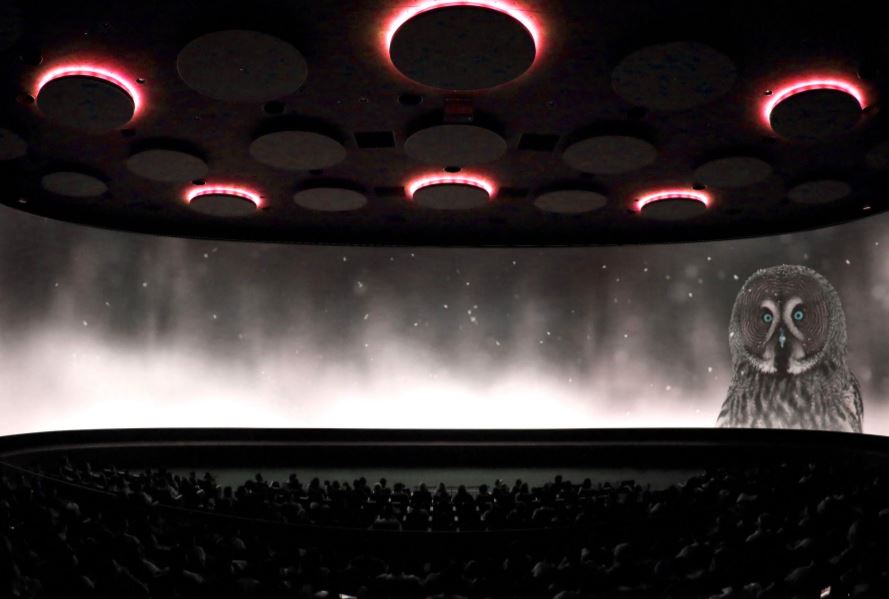
Img 1: The 40m wide Orbi theatre in Yokohama, Japan. Sega X BBC Earth. Source
Film Entertainment
The realm of entertainment, its notions, responsibilities, and media of representation are a constantly transforming landscape. Within that, there is no sphere broader than that of films to encompass that fully. Cinema, a medium considered to be an immensely accessible and influential one, has come a long way, both in its production and exhibition.
From moving images on celluloid constituting the first minute-long films, to the first feature-length film, the introduction of sound, colour, 3D, and later computer-generated imagery, to entirely machinated and highly sophisticated projection systems on the largest screens possible today, the display of films have been on an ever-upward curve.
Where does it go from here?
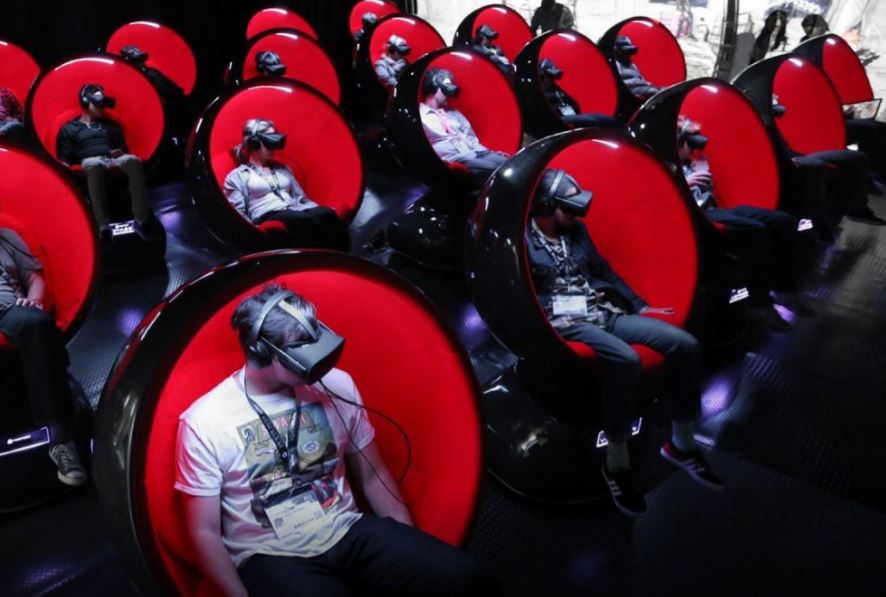
Img 2: The Positron Voyager individual VR pods installed at SXSW, 2017 at Austin, Texas. Source
The Future is Now?
Within the span of the last decade itself, theatres and film production companies sought to introduce newer, more immersive mediums of film display for audiences. A ton of new formats available today including IMAX, RealD, 4DX, Dolby, DoubleD, Atmos, and VR aim to transform an individual’s theatre going experience to a more holistic, nigh otherworldly one.
However, while these mediums are being made more accessible to the enthusiast and the layman, there is no denying that the film viewing experience stands to be further completely turned around in the space of the coming decade, owing to progressing technology. The predictions for that range between something as intimate as a VR booth to an urban level movie theme park. But the future of the film theatre itself as we know, may be in jeopardy
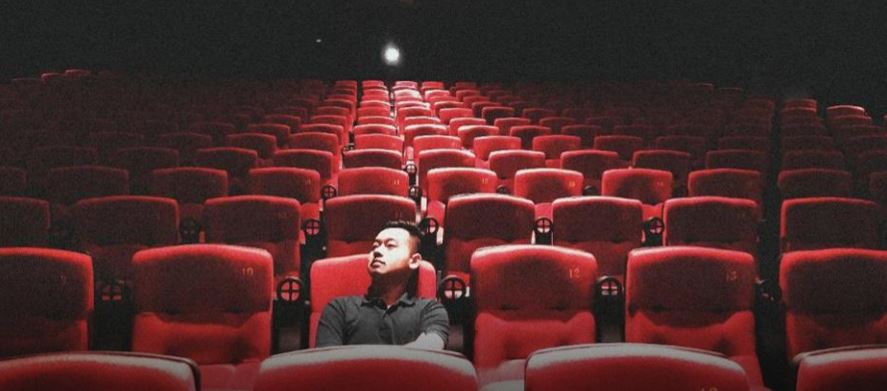
Img 3: A representative image of a lone viewer in the cinema hall. Source
Cinema vs Streaming
This advancement in technology has proven to be a double edged sword for cinema. With growing sophistication in the production and exhibition of films, streaming services on mobile devices too have made huge strides. While the excitement for a new release and the rage of a big screen experience among fanatics still thrives at large, there is a rising discontent among film viewers owing to the vastly varying conditions under which they have to physically travel to the theatre to experience a film.
Traffic, timings, high tariffs, impolite fellow audience members, long commercials, etc have all latently contributed to lesser footfalls. Those that pay for the theatre experience, despite, end up having a case of high expectations from it. Thus, it has become increasingly rare for the audiences to derive a full value of the money they end up spending. Coupled with that, the rising prices of film tickets and condiments in theatres haven’t helped either. As a reason, a number of film goers now prefer to reserve their money for event films, or big budget summer blockbusters.
Streaming on the other hand, allows a number of viewers the flexibility to choose what they want to watch, when and how. The content in this arena too is fast expanding to the extent that the modern viewer may never have the sense of being caught up. Quality wise too, streaming services produce content that is just as enriched in the cinematic arts, if not more.
The question that arises then is this: amid stiff competition, huge production costs and no guarantee of a fruitful return, will the cinema theatre thrive?
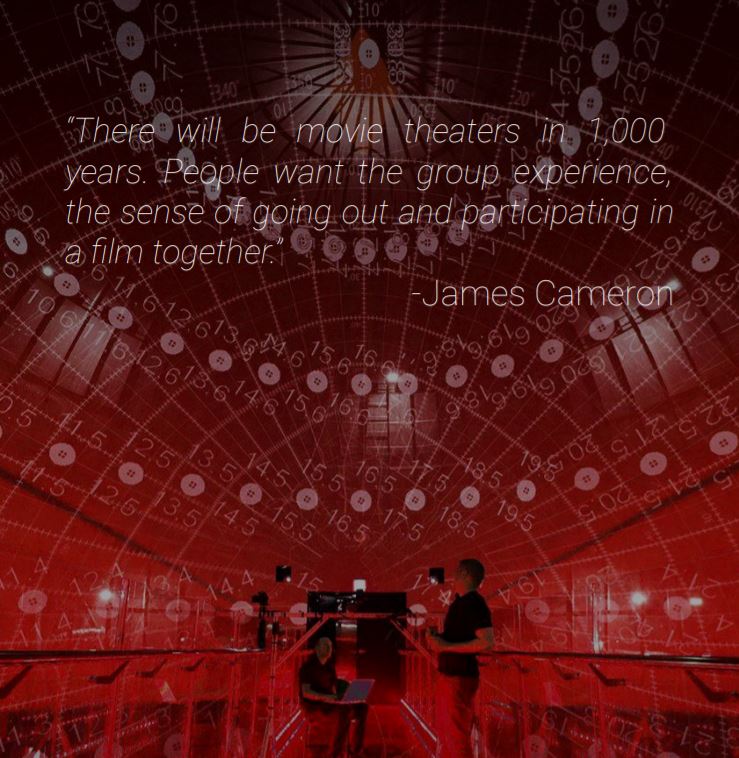
Img 4: South Korea’s 360 Full Dome Theatre Experience. Source
But, if film theatres have to thrive. they will have to evolve.
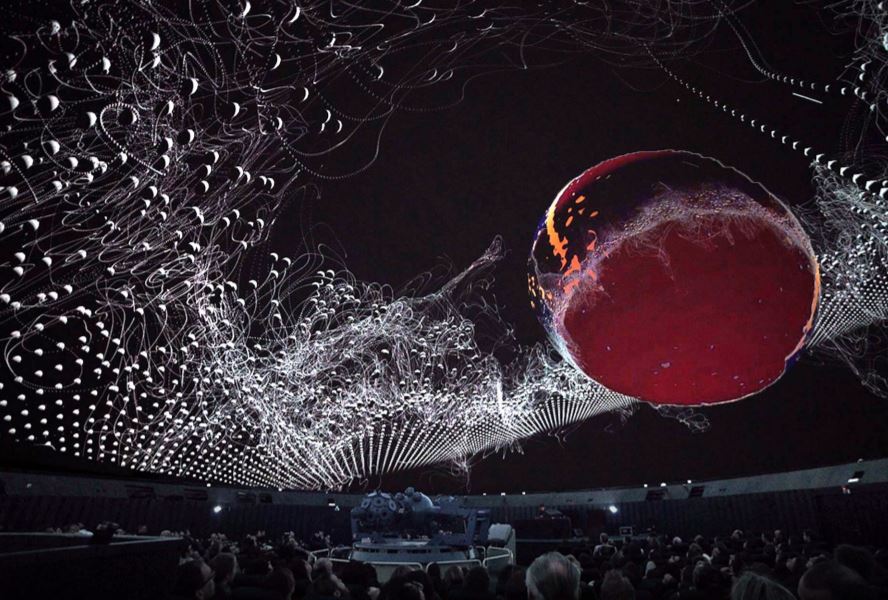
Img 5: The DOT Dome Cinema Experience at Groningen, Netherlands. Source
Brief of the competition
The design challenge is to extrapolate and visualize the cinema space of/for the future for a total of 75 people in an adaptive volume (detailed in the brief).
The design should incorporate various trends that have emerged in the sphere, and extrapolate a decade into the future to come up with a design that represents the future of cinema ten years from now: one that is as suitably public, commercially viable and artistically expressive as the very medium of film itself.
The challenge here would be to process a reinvention of sorts of the theatre going experience for the individual and deliver a universal architectural outcome. It should, in essence keep the format and its charm alive, as opposed to more people switching to streaming from home as the preferred form of entertainment they consume. The scale, style, medium and purpose of the intervention are to be carefully thought of, designed, and represented through lucid graphics and other suitable modes of presentation.
Objectives
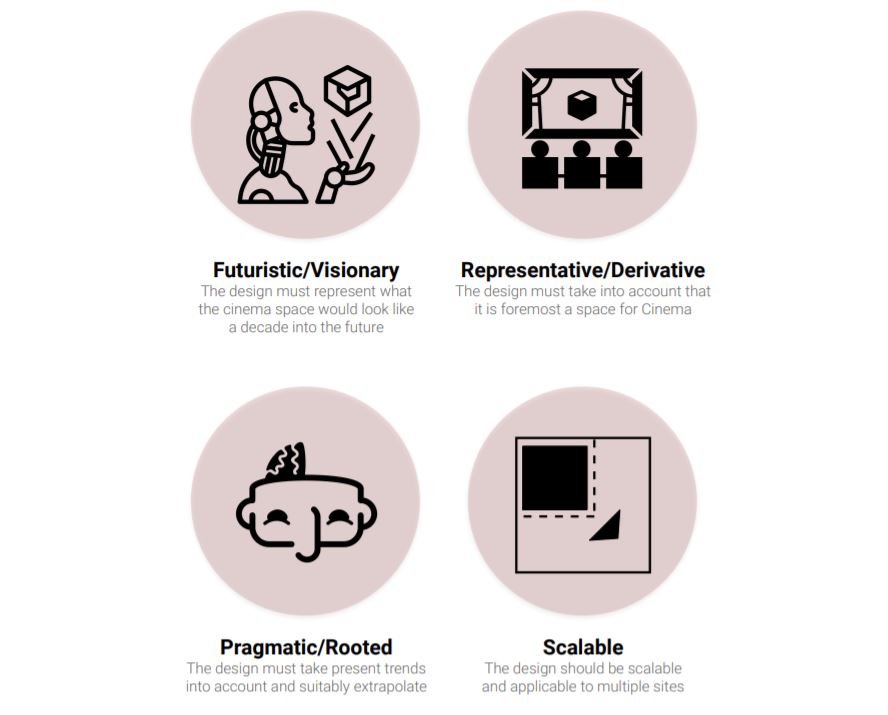
The following objectives can be a point of beginning to conceive this design. Participants can assume the context of a metro city of the future and its residents as users before initiating their design process.
Programmatic Outline
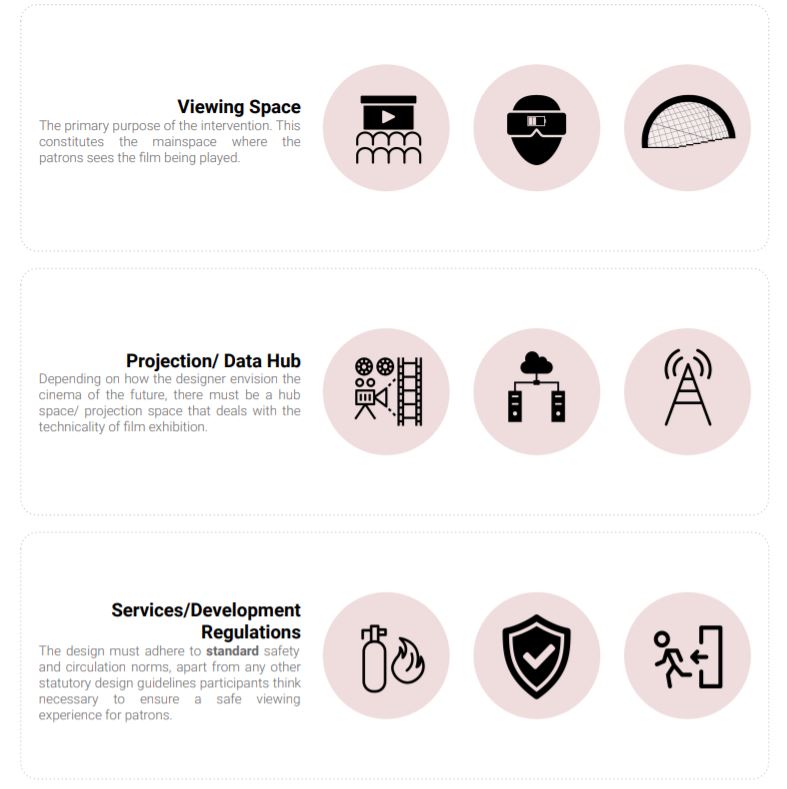
The functions and the accompanying graphics are in no way exhaustive and participants are free to explore other programs (and their subsets) depending upon their design.
The Metro City of the Future
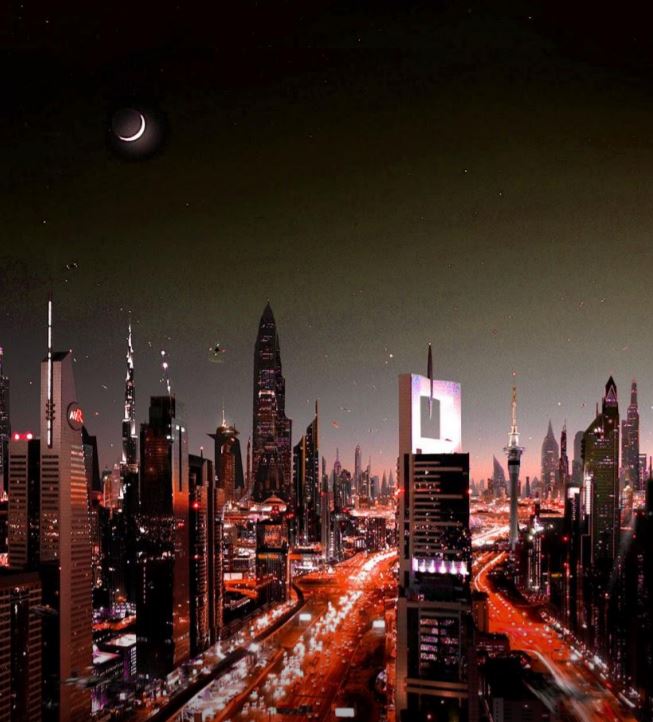
The cinema of the future has to be designed such that it can be placed in multiple urban locations with high settlement densities. It is not to be seen as a replacement of the traditional multiplex venue itself, but as something that can be incorporated within. A new attraction for film-goers, including both enthusiasts and the general public.
Current Densities
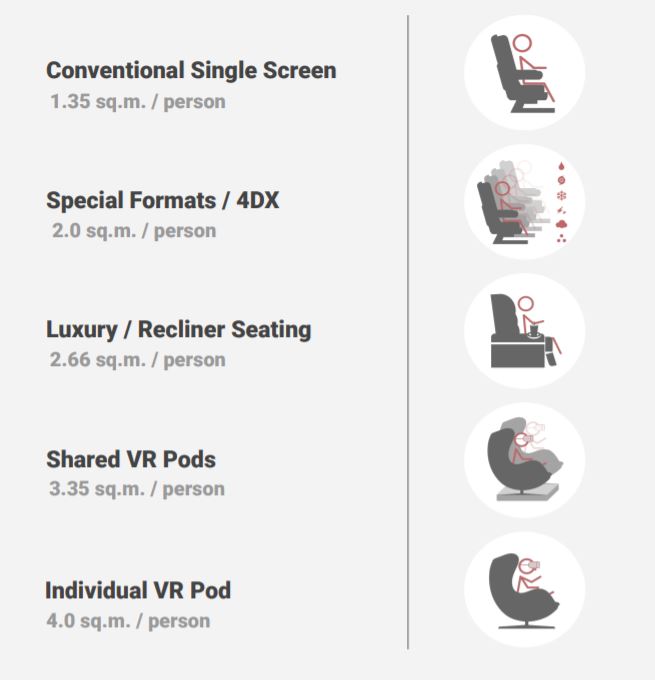
The densities stated above are inclusive of circulation space, screen space and projection space and are meant to give participants an idea of the existing trends in the exhibition of films, and their architectural repercussions in the planning of that space. Based on the given sizes, the cinema for the future may be designed in the modular space defined ahead.
Intervention Volume
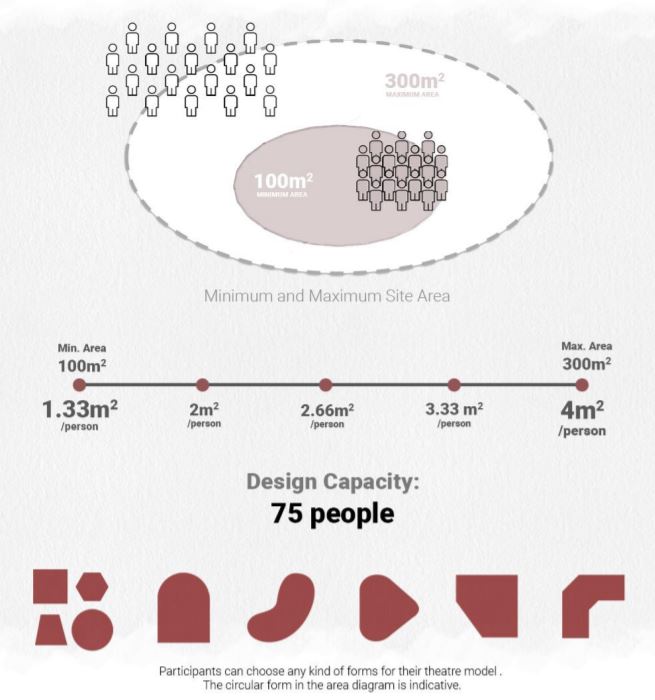
The cinema theatre must be designed to be able to accommodate 75 patrons in total, regardless of the technological nature of the intervention. Based on the above figure, the adaptive volume in which the theatre has to be designed must measure a minimum of 100 sq.m. and a maximum of 300 sq.m in plan. There are no height restrictions on the volume and participants are free to explore the shape and form of the space.