
Communicate
Design challenge for citizens to liaise with policy makers
Overview
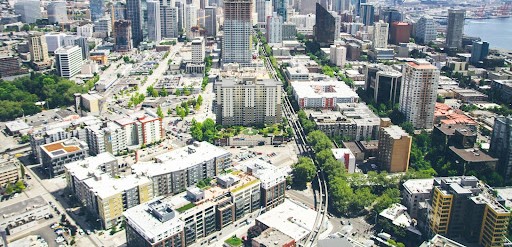 Fig: 1 - City planning is an extensive endeavor that is undertaken by a handful of professionals with least public participation.
CITY - POLICIES AND PLANNING
Author Jane Jacobs said, “Cities have the capability of providing something for everybody, only because and only when they are created by everybody.” Most urban scapes, however, emerge as a result of top-down policy employment by the governing policymakers and experts.
The citizens or residents that actually make the base of this city are often left out of the conversation. Furthermore, once implemented the rationale that has brought about the policies becomes obscure to access without significant and dedicated efforts.
Even if we look at this problem the other way, given the sheer size of city populations policymakers often do not receive feedback on their implemented policies.
H3: If cities can only be successful and effective in the implementation of new policies when channels of communication are eased, how might design facilitate this?
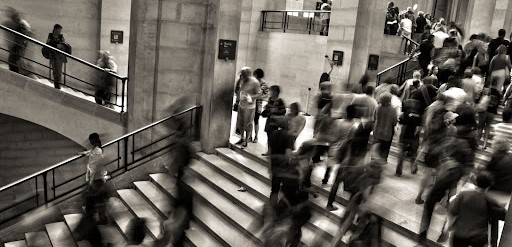 Fig: 2 - The dynamic between people and government is enriched with meaningful engagement and design inputs from users.
RESPONSIBILITY OF THE CITIZENS
“Why doesn’t the government do something about this?” is an often voiced complaint that characterises many of our lives.
Historically, the onus of placemaking and urban policy lay in the hands of a few select and deemed capable individuals. With democratization, this onus shifted to elected personnel who were meant to represent the people who chose them.
While this top-down policy creation is often the most effective way of implementation, it tends to lose ties to ground realities. Thus, it may be posed that this onus of effective change-making is an equal if not greater responsibility of the citizens.
If our cities are to work better for us, these channels of communication need to be drastically improved. Furthermore, this channel of communication must not just work for the physically and economically able but for the population across economic strata with various degrees of accessibility.
 Fig: 3 - Public spaces can become the catalyst in strengthening community relations with conscious design interventions.
Means of public communication
Cities have complex and diverse populations. This diversity is only further intensified as newer people migrate to these spaces. As policymakers, the sheer scale of this population becomes daunting. Creating channels of communication to share and receive information and collect feedback becomes a herculean task.
What if through design we could imagine installations in public spaces that could help facilitate these conversations?
H3: Brief: The architecture competition brief calls for a design of an installation in a public space that would help create channels of communication between policymakers and citizens.
The design must make implemented policies and their rationales more evident for citizens to access but also allow citizens to voice their grievances. Keep in mind that the citizens of a city are diverse with various knowledge and skillsets. Thus, the design must be accessible to individuals across physical and economic strata.
OBJECTIVES
Communicate: How does the design offer an equal two-way channel of communication between citizens and policymakers and foster changemaking?
Accessible: The design must be accessible by users with various knowledge and skillsets across economic and physical boundaries.
Robust: The design must be able to sustain considerable adversities both natural and manmade in its public location.
User Interface: Can the design go beyond digital interfaces and also incorporate more analogue elements?
SITE AND SCALE
This project is intended to be located in Vienna, Austria, a country with an existing overarching document focusing on citizen engagement. The project here is imagined as a fixture on a sidewalk with volumetric constraints measuring 3m x 3m x 3m (Area = 9m, Height = 3m). The site location selected for the installation must be justified by the participant.
However, the project should be easily scalable so that it may be implemented across the country in various locations and maybe even the world.
Similar Competitions
Discover competitions you might be interested in


Challenge to design an open learning module for the elderly

Challenge to design a portable music platform

Challenge to design a portable theatre