
Conquer
Design an LGBT Resource Center
OVERVIEW
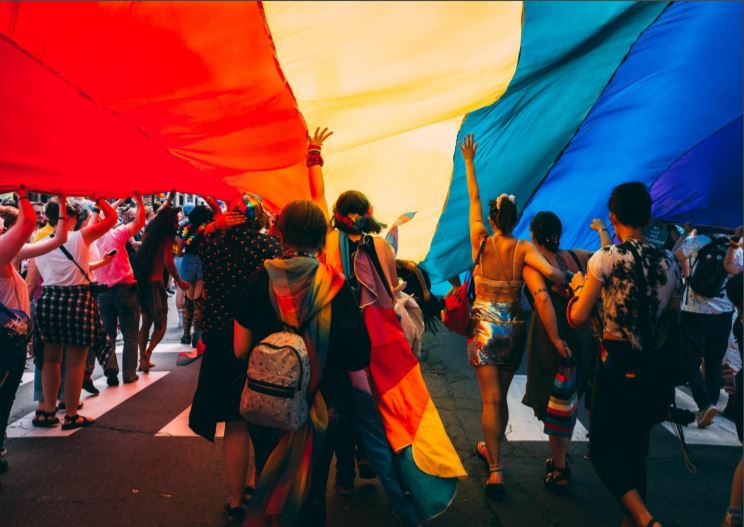
Img 1: A snapshot from a Pride Walk/ March/ Parade, celebrating the social and self acceptance, achievements, legal rights of LGBTQ+ persons
LGBTQ+ Community
The last two decades have seen enormous strides in terms of social perceptions and policies concerned with the rights of the LGBTQ+ community in several countries around the world, some positive, some negative.
However major challenges remain on a global level. Approximately 80 countries still criminalize LGBT relationships one way or the other, and several others deny even the most basic rights and dignity.
This includes the right to assembly, expression and information, and discrimination in employment, health, and education.
1 in 4 LGBT people reports discrimination worldwide.
Where does this hostility come from? On what is it based?
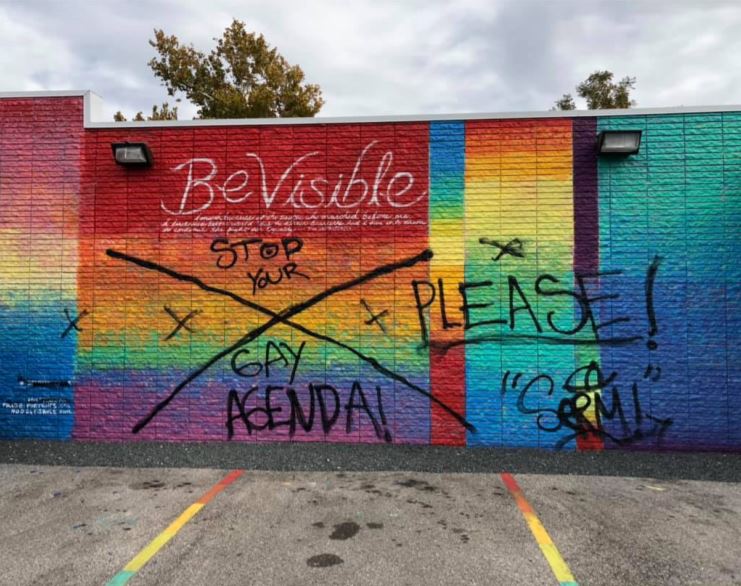
Img 2: Image representative of hate and discrimination. Homophobic comments over a mural designed to remind the community that visibility is imperative to everyone’s right to exist in society..Source
Even as activists advocate for a broader representation and access to accurate information about gender and sexuality there is a huge gap between policy and practice- at home, in medical facilities, educational institutions and in the public sphere.
What is the foundation for this prejudice? How can we change misconceptions and break the stigma?
How can we foster positive attitudes and where do we start from?

Img 3: Image representative of the stigmatization and the criminalization that the LGBTQ+ community is subject to.
Stigma in Society
Why are people being subject to stigmatization, discrimination, violence and even criminalization because of their sexual orientation and gender identity?
Do our attitudes mirror our experiences? Are they formed by cues that we pick up from our immediate environment?
Could this be the reason for the largely seen negative perceptions about the LGBT+ community? Is this due to a lack of visibility or rather due to the visibility of warped representation?
How do we go about creating an informed society?
How do we make sure our youth have access to information and resources and access to a non-judgmental community space which takes into account their life, health, and well-being?
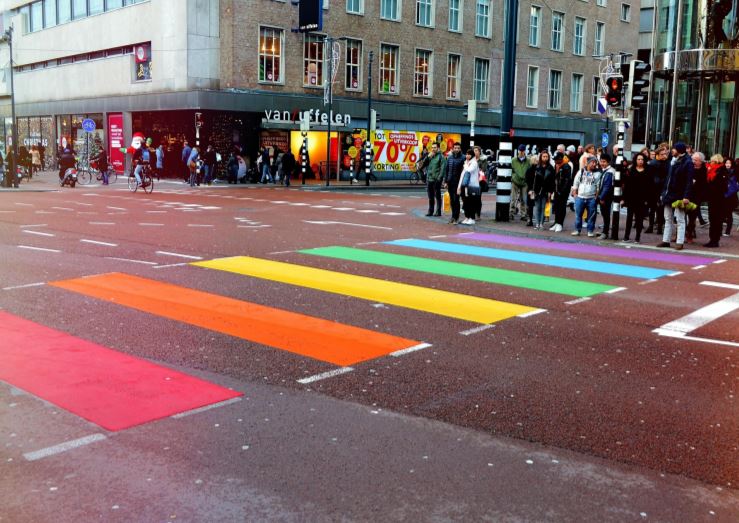
Img 4: Image representative of the complete support that the LGBTQ+ Community has from its home city. In this particular case Utrecht, Netherlands.
Rights in Europe
Despite Europe’s reputation for being known as a champion of LGBT rights, the perception of the LGBT community and their rights vary diversely across the continent.
In an annual study (the Rainbow Index) by the ILGA - Europe, 49 nation states of Europe were ranked against each other assessed based on their perception and attitude as well as laws and policies governing the LGBT+ community.
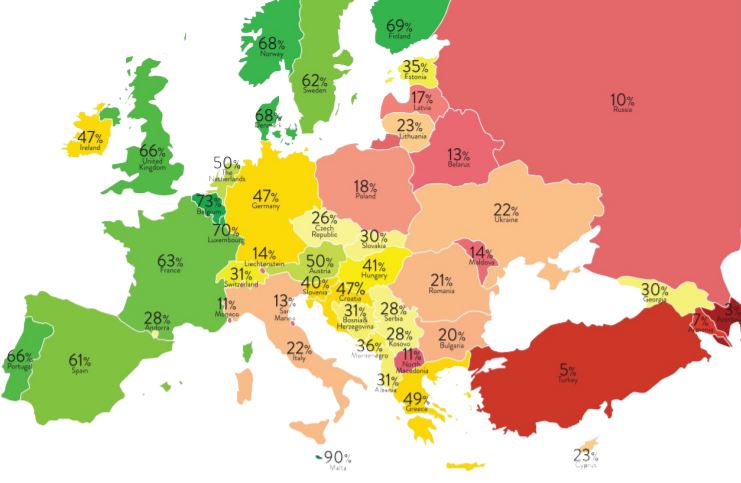
Img 5: Image reflecting the legal and policy human rights situation of lesbian, gay, bisexual, trans, intersex people in Europe.
Placed at No.01, Malta scored an average 90% across the categories of Equality and Non- discrimination(80%), Family(100%), (Government Policies Against) Crime and Hate Speech(100%), Legal gender recognition & bodily integrity( 100%), (Access to) Civil society space (100%) and Asylum (33%).
By comparative study we can see, even though Malta has most of its policies in place, it still lacks significantly in the equality & non-discrimination sector, contradicted by both Finland and Montenegro.
Below Malta on the Rainbow Index, Finland and Montenegro, both record a lower reading with respect to policy but have a significantly better score when it comes to equality and nondiscrimination.
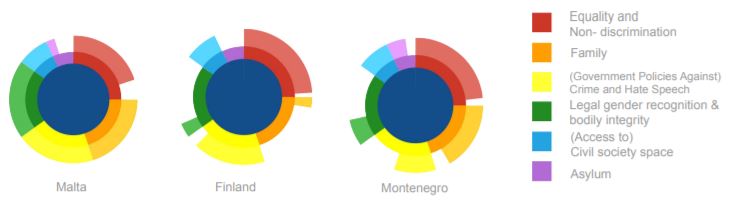
Source : https://rainbow-europe.org/
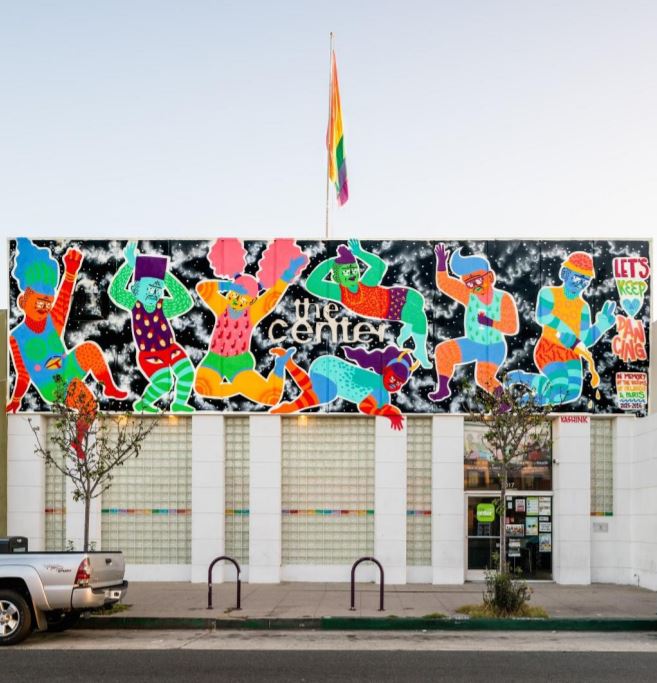
Img 6: The Center, Long Beach, California. Source
While legal rights are an important measure of how any country treats its LGBT citizens, it is only one measure of broader social acceptance and of realities faced by the community.
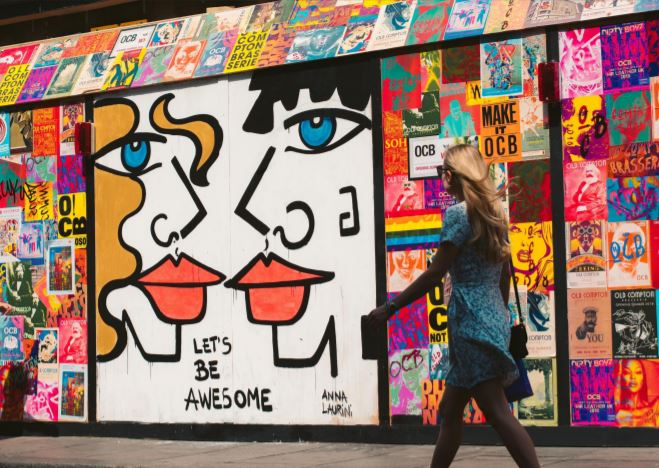
Img 7: Image representative of how visual art and the built form can be used to communicate with the community..
Brief of the competition
Understanding that many LGBT+ persons run the risk of discrimination and violence on a daily basis, due to mis- informed and prejudiced community, peers and family, can design be a solution that this issue seeks?
Design Challenge: Use the built form as a narrative to design a community space which sensitizes the public, and becomes an affirmative safe space where LGBT+ youth have access to resources, information and support.
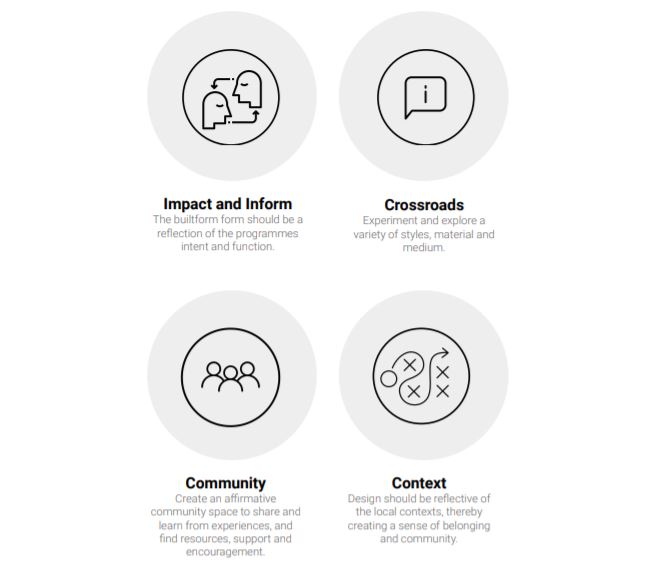
Objectives
The following objectives can be a point of beginning to conceive this design. Participants can assume their own contexts and users before initiating their design process.
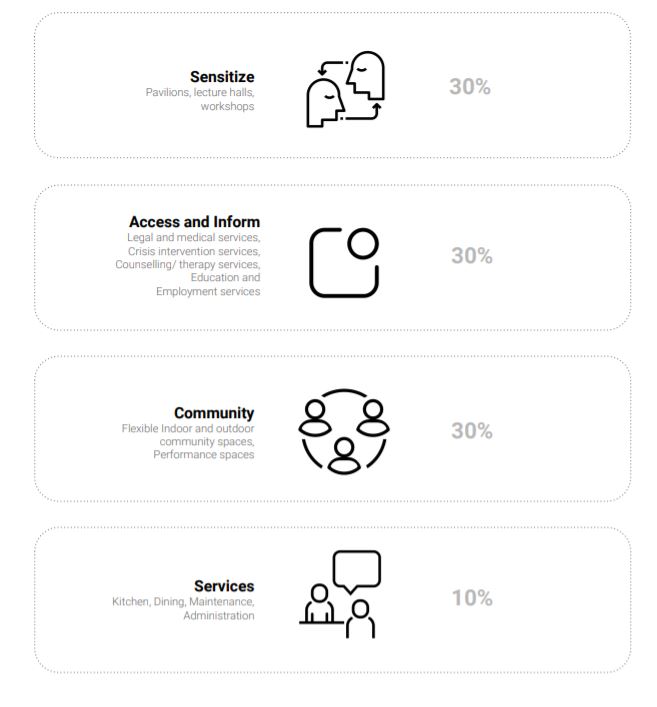
Programmatic Outline
A programmatic outline intended to host about 75 people at immediate expanse with a floating population of about 120/150 people is recommended for this challenge. Participants are recommended to craft a schematic programme based on these given segments or they can propose something new altogether.
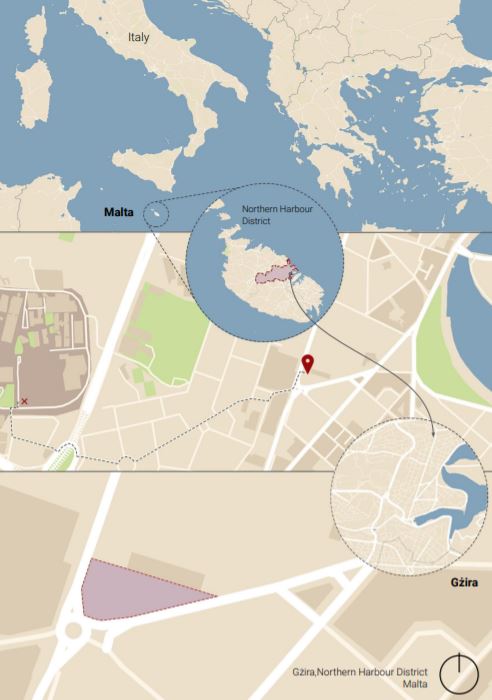
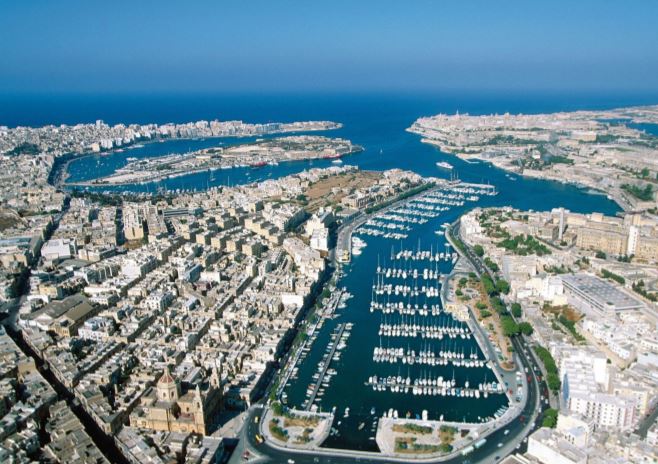
Location
A Southern European island country in the Mediterranean, Malta is one of the smallest countries in Europe. Recorded as a naval base, Malta is teeming with history and takes you back to the Neolithic era (4th millennium BC) and has had a succession of foreign administrative powers including the Phoenicians, Greeks, Romans, Arabs, Normans, Crusaders, the French and the British.
Located in the North Eastern coast, Gżira is a small town sandwiched between Msida and Sliema, in the Central Region of Malta,with views of the walled city of Valletta (Country Capital). Developed as a working class neighborhood, it is well connected to the rest of the island, including all the major towns.
Msida on the other hand is a university town today, seeing its origins as a fishing village, reclaimed from the sea after World War II, growing to keep up its thriving student community (of the University of Malta and G.F. Abela - Junior College).
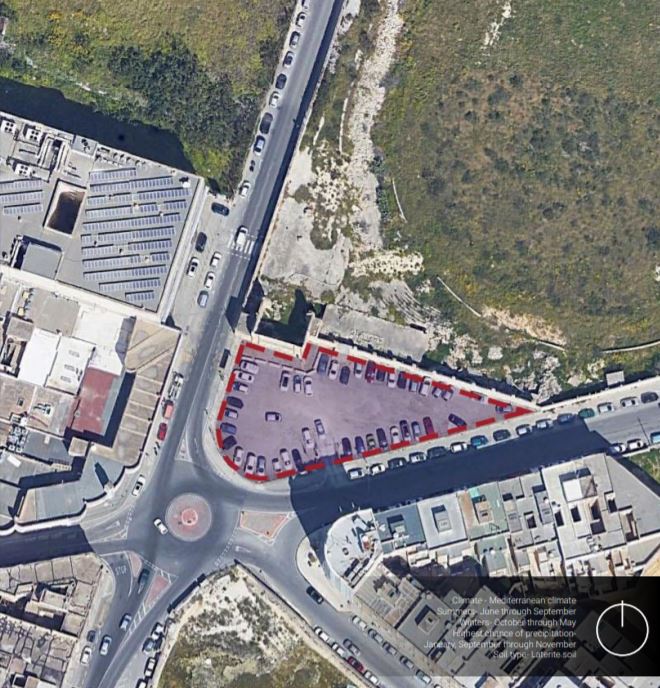
Site Plan
At a distance of 800 m from the University of Malta, the site conveniently sits at a junction, it's visible front, accessibility (to the nearby university town and the well frequented seafront) and the demographics of its neighbourhood, its most important asset. Adjacent to it the old Empire Stadium, Gżira (which is no longer in use, having been replaced by the Ta' Qali National Stadium).
- FAR 0.1
- SIte area: 995.271 sq m
- Coordinates: 35°54'05.8"N 14°29'30.5"E
Judging Criteria
The entries will be judged by an international jury of the competition on the following criterions:
Presentation: The fundamental to a good entry is a good presentation.
Concept/Idea: Quality of thought and intent in pre-design phase.
Spaces/Programme: How the spaces are calculated and ordered.
Design Outcome: The final architectural outcome of the solution.
The judging panel can also add other criterions based on their internal discussions - which will be in line with the problem statement. Participants are advised to fulfil above given criterions first in their design.

Similar Competitions
Discover competitions you might be interested in




Design challenge to reuse E-waste



Imagining parliament for an unified world.


Design challenge fostering public involvement in wildlife research

Design an urban fitness centre

