
Di - Generic Cities: Los Angeles
Break generic
OVERVIEW
Background
The 21st century is known for the age of globalization. The process of urbanization in cities, the interaction between people and integration among businesses & society are no longer driven just by local forces like climate, culture, geography or its inhabitants. It’s also a well-known fact that data-driven technologies are playing a major role in shaping us and the kind of cities we live in today.
These forces of technology, for all the good they are doing to us in so many ways, are also powerfully speeding up the homogenization of culture. This force of technology in the world we live in today has been there for quite some time and now seems to be unstoppable. In the past, cities have always been seen as an incubator for creative ideas and human evolution
However, with our technological evolution, the question this brief seeks is retaining this distinct identity of a city as an incubator of creative ideas in the next century.
Technology and state of the cities today
Technologies that we use today, have strengthened our connection with each other as a human being which resulted in reducing time & space. It has also allowed us to have a virtual presence anywhere in the world at any time. This sounds wonderful until we realize that this has resulted, in some ways, making us feel like we are less where we really are. In other ways it makes all places seem more or less the same.
When we try to connect with someone for any purpose, we can immediately connect whether we are on a vacation or at work. Today, we are more bonded to our interest groups for collaborative development, which is possible from any geographical location because of the virtual networks and our handheld devices.
What does it mean? : Every place is so generic that it feels like just a node or a network to connect, and so do we as a person act like a node or a network.
"People can inhabit anything. And they can be miserable in anything and ecstatic in anything. More and more I think that architecture has nothing to do with it. Of course, that's both liberating and alarming. But the generic city, the general urban condition, is happening everywhere, and just the fact that it occurs in such enormous quantities must mean that it's habitable. Architecture can't do anything that the culture doesn't. We all complain that we are confronted by urban environments that are completely similar. We say we want to create beauty, identity, quality, singularity. And yet, maybe in truth, these cities that we have are desired. Maybe their very characterless ness provides the best context for living." —Rem Koolhaas for an interview in Wired, July 1996
Globalization and the city
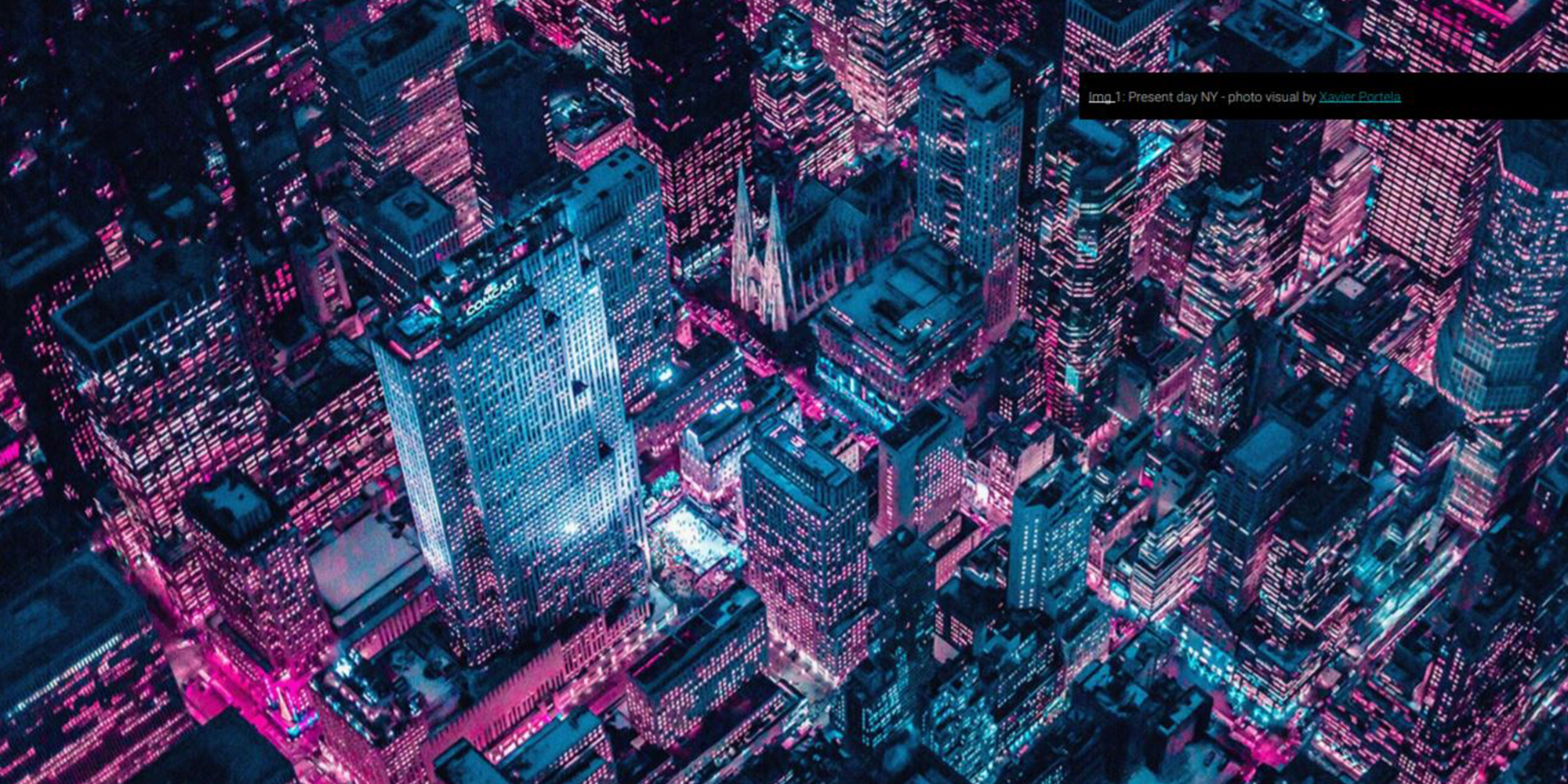
The urban setup we live in today is a result of the multi-layered evolution that our cities have gone through. If we take the example of cities of western countries, urban areas were known for issues, crisis or challenges in the past. The urban crisis was a given, cities were deemed harsh, dirty and dangerous. On the contrary, the Asian cities that now loom so large were large, but they did not loom. These Asian cities had very little to do with the global economy and they were technologically backward. The major cities on the world stage were European and American for the most part, and many of them were known for the mess that they had in the cities.
Today we might have come over these issues, Asian cities like Shanghai, Tokyo or Mumbai are known for their presence in the global economy, cities from the west are setting examples for others to follow. But this has also generated a plethora of urban issues for which we seek a new solution today.
The word Urban crisis might not be there but has taken a new shape. Pedestrianization, climate change, traffic congestion are some of the many issues for which we seek the solution today. These common issues in almost all the mega-cities, in turn started generating universal solutions. In this race of making the world a better place for ourselves, we have shaped the cities what we see today, that is what we promote, that is what we as an activist, architect, designer, planner, filmmaker or any other stakeholders of the city seek. This race, in turn, has given birth to a “Generic city” that we see in Megacities, be it, New York, Tokyo, Mumbai, or Shanghai. This poses a question for the cities of the next century or rather centuries.
What will make a city special? Will stakeholders of the city ever be able to build special places in the next century?
Your Utopia, my Dystopia
Cities of the 21st century are racing with each other to make a utopian society. They are setting up examples for each other to be followed by each other. This race is the process in which we are building a “Generic city” driven by wealth and technology. We cannot underestimate the extent to which, nowadays our cities feel the same. It is because the people in them are more the same than they once were.
These cities can be anywhere yet it may give you a sense of being nowhere. Today nowhere is virtually any place, every place that is the world of technology, accessible to all of us. Now every place is, to a greater or lesser extent, a product of its time.
Challenge
Does architecture yet again have the potential to make our cities di-generic? Can we save our cities from the destined?
If skylines around the world are looking too much the same, Is this because the new and important buildings are done by the big names (designers) from far away and not by the locals or the opposite is true? In the age where the information is easy to consume, what role does starchitecture play, or what role does local architecture play? Not only skyscrapers but museums, civic center's, concert halls, bridges, libraries, opera houses all give cities part of their identity as well.
Many of these buildings that succeed best and make places feel special may not be designed by local architects either, but by architects who were hired because it was thought that they could bring more imagination and a sense of freshness to the problem.
Which brings us to so many questions that are the starting point of untangling this issue: - How can we reclaim our cities to act differently from each other in the next centuries? - What does the architectural design need to have or provide to disengage and distinguish itself from the evolving technology? - Can architecture be more than an object or an icon? If so, how? - What kind of urban programs do we consider to be useful to its inhabitants and what do they seek from the city? - Can architecture again become a node or intersection for people? If so, how? - What kind of space possesses a question that you are in a special place for all age groups where they can interact with each other?
Entertainment center
Every city needs to be a place in which the basic idea of the urban fabric of streets and public places and decent architecture forms the foundation. But if that is all we have, and if we lose our desire for great and special buildings that break out of all of this then we have failed our cities just as much.
The “Generic city” is not only a place with identical glass towers and freeways and malls. It is also the place that stops caring about things that are different and no longer builds buildings that break the rules and makes us feel that we are in a place that is like no place else. And that, the feeling of being in a special place, is one of the greatest gifts that any city can give us.
Can an architectural building in one of the “Generic cities” make the urban space/architecture special?
Objectives
Your outcome can be a combination of any one, two or all three forces that exist in a city. Function:
- Function: A function-driven outcome to make people understand that function matters in a technology-driven society.
- Local Forces: A combination of multiple local forces, like climate, people, culture, geography, etc.
- Global Forces: A unique unmatched style which breaks the boundary of architecture and design that we know today.
Los Angeles
Los Angeles, USA In 1877, Los Angeles was just a tiny pueblo that would one day become Downtown, but by the turn of the 20th century but it eventually grew up to a sprawl of roughly 4,900 square miles.
The development of LA as a global city begun fairly after WW2 when the population picked up its steady growth as today. With such an outstanding growth rate, It’s going to get even more interesting when we see LA in perspective of the coming century. LA’s population has kept growing, but, with the push for more housing and denser development near transit, the city is starting to check its sprawl.
The downtown is already showing signs of how LA’s popularity as a city of the future might look like. If the city is destined to become loaded with skyscrapers overriding its fundamental sprawl nature - what will keep LA from becoming generic?
Function - GEN (Global Entertainment Nucleus)
Entertainment trends of today and our transformation as a society has a very significant link. This extends to the venues that have evolved so far to house these entertainment spaces with the changing cultures.
A stadium today is seen as a place or venue for (mostly) outdoor sports, concerts, or other events and consists of a field or stage either partly or completely surrounded by a tiered structure. This evolution began from the time of blood-soaked arenas to cricket stadiums to everything online. As our entertainment consumptions are becoming generic and so are our stadiums. Even after belonging from different places and cultures, almost all the new stadiums of the world now look the same with different skins applied thanks to the technology and digital media that bound us to this universal form of recreation.
In a world of media-savvy audiences and a never-ending thirst of consuming what’s new, how will this new Nucleus of Global entertainment be?
Site
Island White, Los Angeles
Site Area: 123,750 sqm (~29 Acres)
Max Ground coverage: 40%
Coordinates: 33°45'09.7"N 118° 09'34.3"W
Location: Long Beach, LA
No restrictions of building codes are applicable on this challenge.
United States is the one of the leading players in entertainment industries currently in the world and that is not changing anytime soon.
The export of content and media created in US is predicted to be communicating to the entire world as our cities become more and more generic.
The site for GEN presently houses an oil field under CRC California. Assuming it’s probable decommission because of shifting energy priorities, this island is chosen to build the World’s first ‘Global Entertainment Nucleus’ world’s most epic entertainment arena for live-action entertainment. Separated from the realities of today, and connected to the entire world watching from homes and watching it live at once.
Explore other editions of Di-Generic cities:

Similar Competitions
Discover competitions you might be interested in


Design challenge to reuse E-waste

Illustrate the lost glory of Angkor Wat - Render Challenge

Photograph architecture without architects

Challenge to reimagine the Iron Throne
