Earth Made 2020
Building a modern mud house
Overview
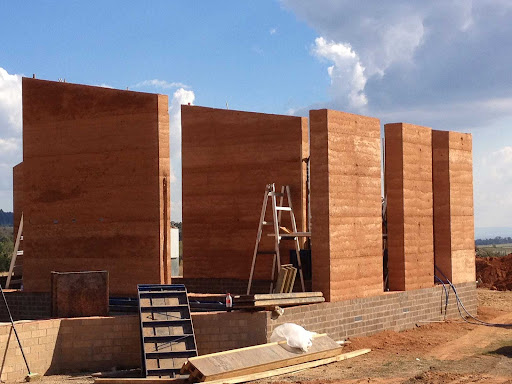
Img 1: Building using rammed earth technique
Premise
The art of building with earth is an ancient one that has stood through the test of time. Archaeological evidence can date entire cities constructed of the earth back over 10,000 years - the City of Bam, Persia, Babylon, Yemen, and the great wall of china are the few examples. Even today, 40% of the world’s population continue to live in houses made up of mud. [1]
A wall made from raw earth serves as a natural air conditioner, making the interiors warm in winters and cool in summers. Earth being a natural material is ecological in nature. Therefore, proving to be infinitely recyclable, by returning back to soil when demolished.
History has proved that humans can achieve sustainable living. Earth was used as a raw material with great sensitivity. Modern fashion of 20th century created a break in the millennia old developments – with earth being exploited and polluted with processed materials. 21st century is trying to find again the harmonious link between man, nature and spirit.
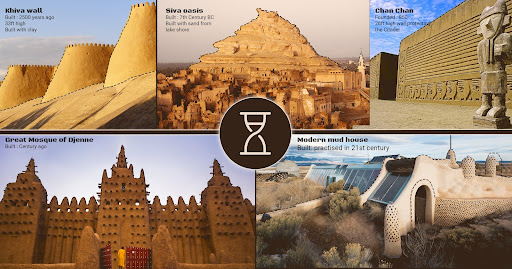
Img 2: Cities and structures built with earth that stood through the test of time
Prejudice
The notion, that houses made of mud are ‘ephemeral’ vs houses made of cement are ‘permanent’ has been inculcated in our mind since early age. It has been associated with limited technique, as a last resort when no other building material is available, and particularly vulnerable to seismic events.
On the contrary, history has repetedly proved that earthen architecture has been adopted by choice. When Spaniards arrived in Peru, they continued using stone as primary construction material. Soon they discovered that earth was a better construction material to withstand seismic events.
After being largely shunned since the arrival of concrete in the 1950’s, Earth is now back in practice. Its ecological and aesthetic benefits are attracting the attention of contemporary architects and eco builders. Many are moving towards a more efficient, affordable and artistic way of building mainly to avoid the perilous environmental effects of concrete.
Despite the fact that mud has proven to be beneficial in various aspects, why is it not used more often? Is it the problem of mud itself or is this merely a problem of modern mind?
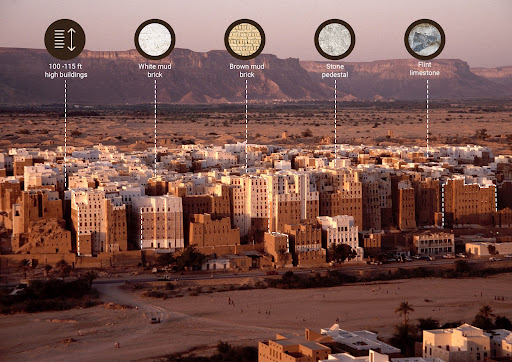
Img 3: Shibam city, Yemen - skyline of mud houses
Roadblock
Modern construction has made a shift to cement and concrete which is costlier and involves a more tedious process. It is terrifying to see how a single material has taken over landscapes, vernacularity and identity of built forms.
Another major roadblock for practicing earth architecture is the misbelief that houses made of earth can attain maximum height of 1-2 stories. The lack of possible vertical planning leads to over exploitation of land as a resource. However, Shibam, a city in Yemen debunks the above belief. Shibam, also known as the Manhattan of desserts is known as the first city on earth with a vertical masterplan. The city has buildings as high as 100ft, completely made out of mud.
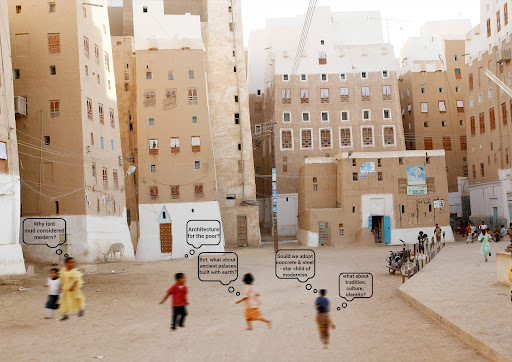
Img 4: Communal nodes of shibam, Yemen
Brief
The practice of earth architecture can prove to be a humanitarian step by providing homes for those who can’t afford. At the same time a well executed earth architecture design can help in removing the stigma that earth architecture is poor architecture.
The aim is to design a modern apartment building to accommodate 30-40 families using earth architecture techniques. The designed structure should be such that it becomes an icon of polished sustainable living that is at par with modern construction materials.
Cement or other processed construction materials can be used as stabilizers but the core material should be belonging to the discipline of earth architecture.
Objectives
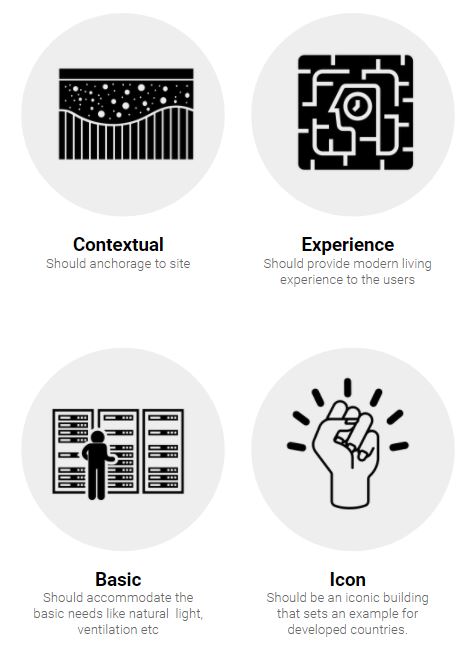
The apartment building can use any form of earth architecture technique. The structure should be able to accommodate 30-40 families.
Program
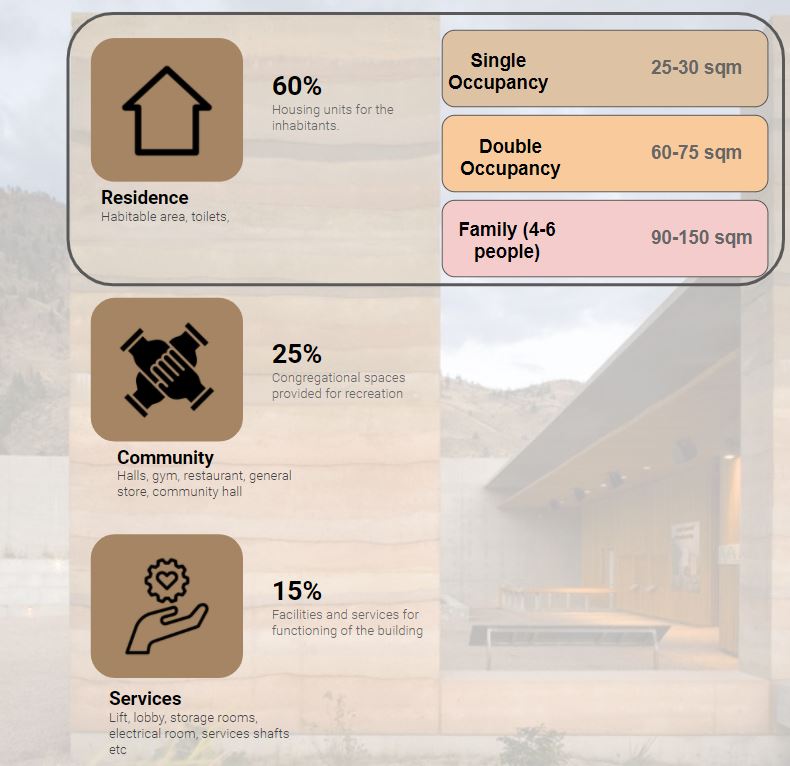
Given guidelines are outlined for the ease of designing. Participants are encouraged to add new functions according to their design requirements. The housing units will be based on the given carpet areas. The ratio of the single, double aqnd family units are flexible and are to be decided as per the design requirements.
Ghana
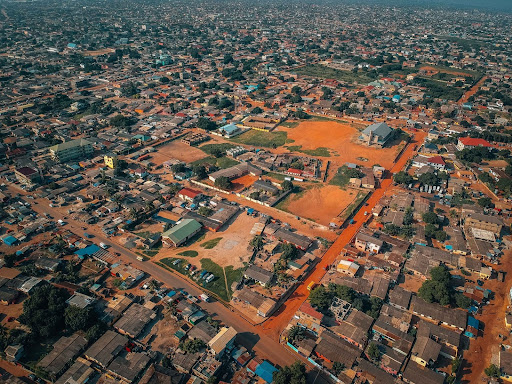
Ghana is a country in western Africa, situated on the coast of the Gulf of Guinea. Ghana’s administrative capital is the coastal city of Accra. In addition to being known for its lush forests, diverse animal life, and miles of sandy beaches along a picturesque coast, Ghana is also celebrated for its rich history. Building with earth has been a traditional construction technique but with concrete and steel leading the wave of modernity, the foundation of a humble mudhouse is quivering.
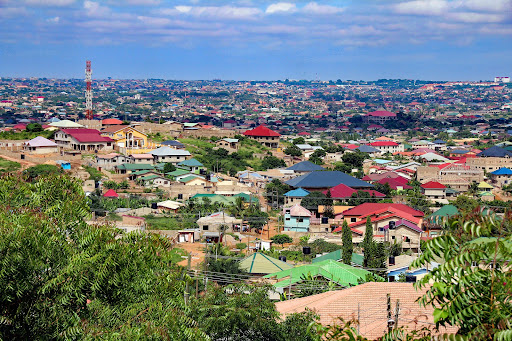
Img 5: Aerial view of Accra
Accra, Ghana
Housing challenges in Ghana
Accra, capital city of ghana is considered to be slowly converting into a concrete jungle. Thereby, losing its cultural identity.
There is a need for approximately 2 million houses per year in Ghana, but most of them are concentrated in Accra. However, the cost of construction is so high because of the imported construction items that they become unaffordable.
Using locally available materials would remove the import costs thereby making housing affordable and available to all.
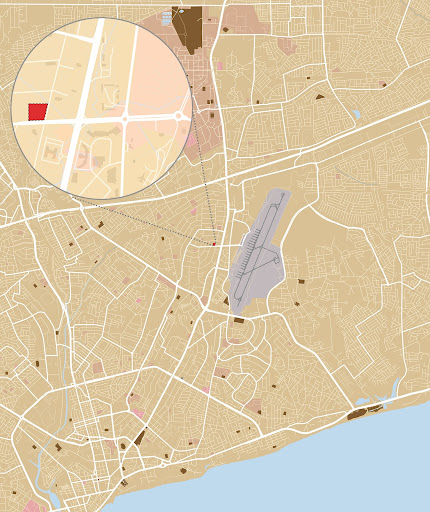
Img 6: Site plan
Site Plan
The site is located in airport residential area, Accra in the close proximity of hotels, cafes, and other residential apartments. Airport residence is considered one of the most desirable living areas in accra. Ease of accesibilty is one of the benefit of a corner plot.
Ground cover: 30% | Site Area: 5600 Sqm |
Coordinates: 5°36'21.0"N 0°10'46.0"W | Height restrictions - 32m
Built up -15,000sqm | Set backs of 10m on all 4 sides