
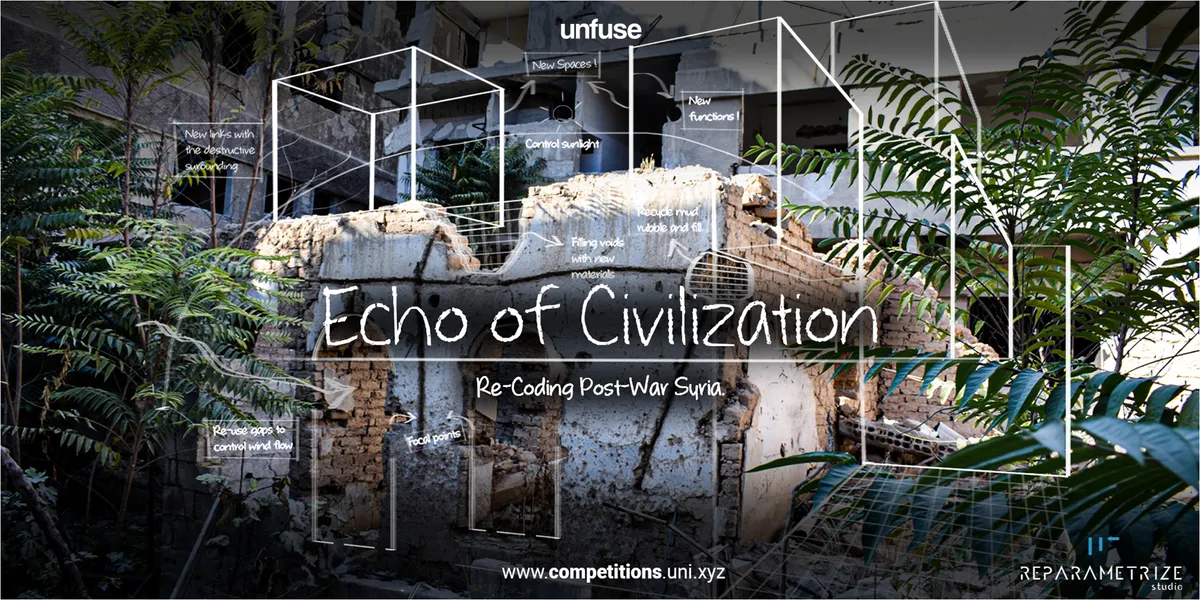
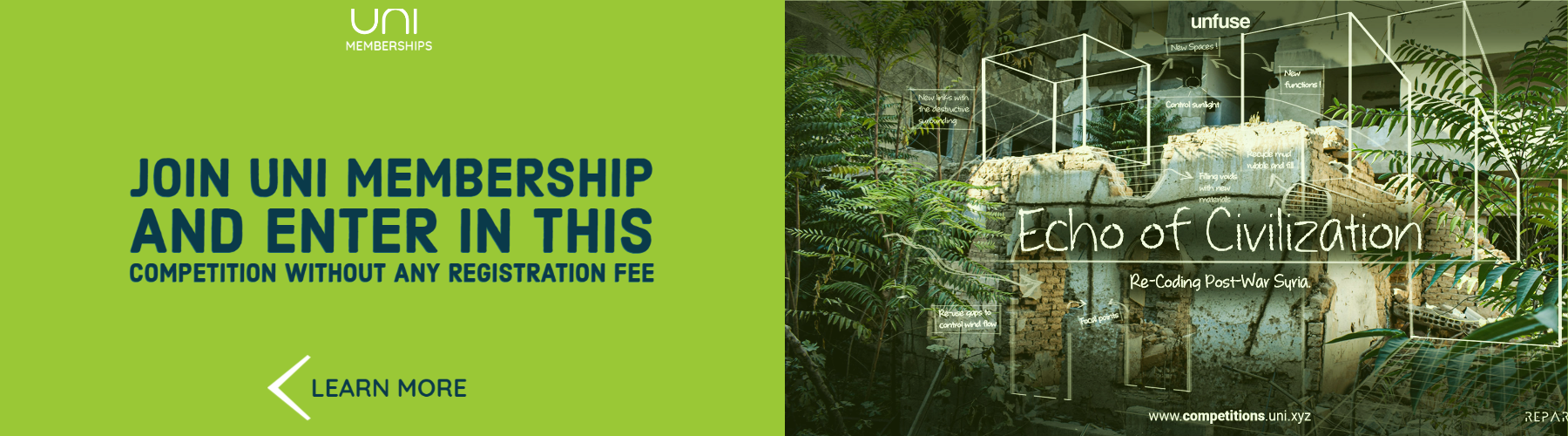
Echo of Civilization
Re-Coding Post-War Syria
OVERVIEW
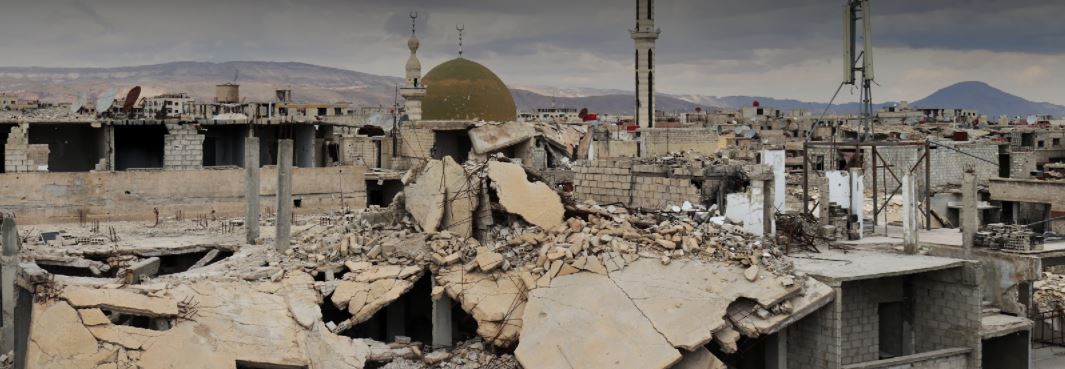
United Nations reports death of 400,00 people in Syrian war. Image courtesy of reparametrize studio
Description
The Syrian Civil War is one of the worst humanitarian crises, that has entered its eighth year. There are a lot of plans for post-war reconstruction, and most of these plans are for the complete demolition of the existing damaged fabric by replacing it with a new urban fabric. But in the process, the participation of the community in these reconstructing plans is completely missing.
Post-war effects are widely spread and can be long term or short term. Meaningful post-war redevelopment should consider the balance between architectural infrastructure, public health provision, and social order. Reducing the importance of one of these three axes can lead to a collapse of social structure, services, education, health care and also has a long-term impact on society.
The main focus should be on understanding how communities can be involved in the rehabilitation of these aspects.
Major destruction to archaeological and cultural fabric of the city. Image courtesy of reparametrize studio
Premise
“Throughout the millennia, urban civilizations have left behind traces that besides being recognized as heritage of their country, are also an extraordinary contribution to the whole world. Cities that were born well before the Roman colonisation, and that survived well after its end; living cities and dead cities that both share the presence of ruins created by time, and rubble produced by war.” Syria – The Making of Future- From Urbicide to The Architecture of The City Book – Universita luav di Venezia
When we look at the image of the ancient cities in the Middle Eastern regions, we see the urban texture that extends horizontally according to the needs of societies. If we bring the image closer, we see the paths that extend like veins reaching to the unit that forms all this beauty. At center stage of this discovery often is the ancient mud house.
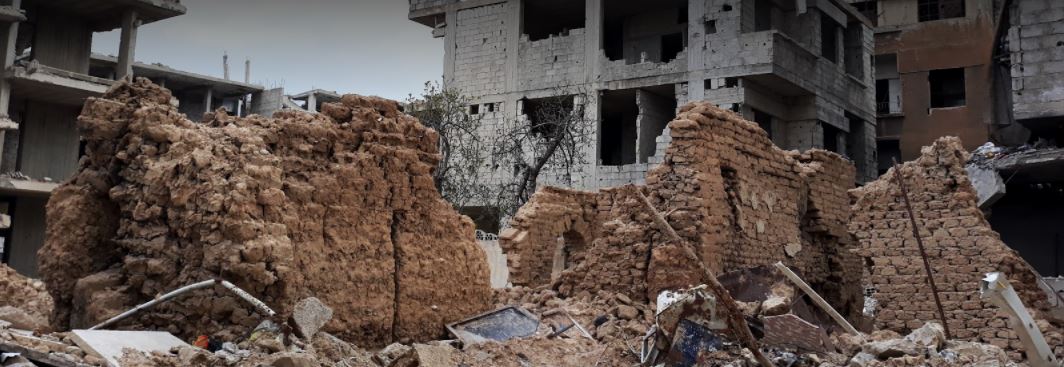
Ancient mud houses are the basis of societies in these regions. Especially since they are built by the inhabitants, from their land, and to serve their environment. It is a sustainable urban social and functional fabric that varies between cities and rural areas.
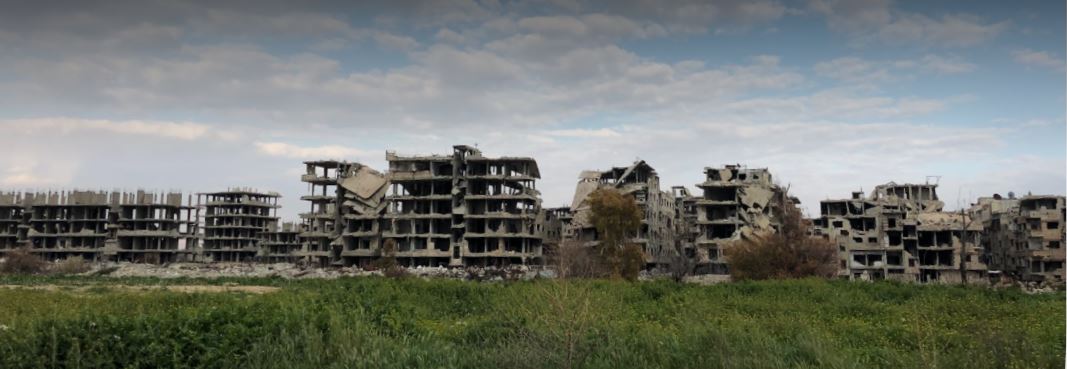
“Only complete destruction can allow a new existence, a new state of things, by preventing evolution and promoting revolution” Syria – The Making of Future
Buildup
Urban studies and architecture are focusing recently on solutions and rethinking ways to serve affected communities. This has led to the removal of old formulas like ancient mud houses and vertical expansion, their presence and the knowledge of their techniques and affection has become very rare.
If we went a step back and shed light on the remains of these old houses that are precisely the ancient mud houses between residential buildings in towns and neighborhoods, we find that they give scale to these areas.
But there is an arid assumption that life will not return to it and we have to remove it. Why can’t we say that it is a center of life and that there is a great tangency for it's a function to be restructured?
How can a flower grow out of the rubble?
How can local communities participate in the rehabilitation process?
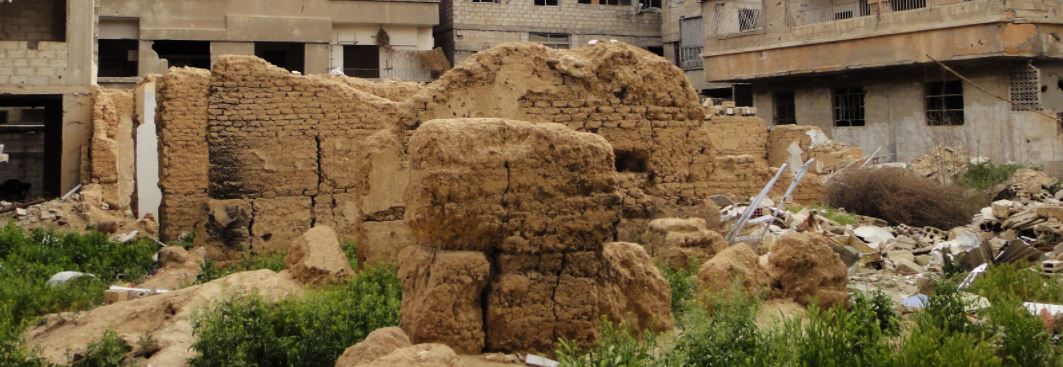
Image courtesy of reparametrize studio
Brief
The cost of war cannot be quantified but the price Syria has to pay now is much more than it can afford. And even if we assume that the conflict is solved, still the daily life they used to live is impaired. It is the community of people in Syria that have suffered the most and without including them, the significance of the place will perish.
Challenge is to create a space that acts as a vessel in reviving the destructed neighbourhoods and encouraging inhabitants to come back. A space that respects the past, responds to present and incorporates the possibility of a bright future of Syria.
A space that reinterprets the ancient mud house and uses it as a tool for a cultural revival.
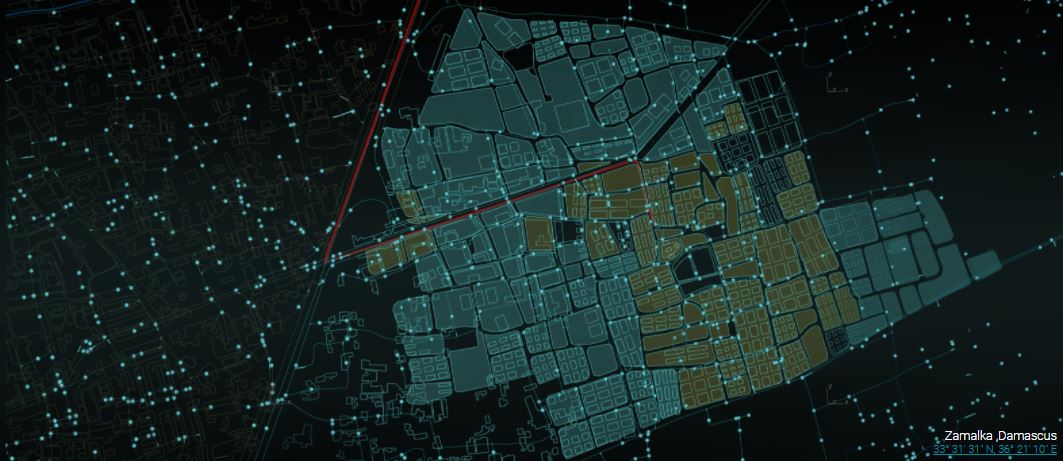
Digital map of Zamalka, Damascus courtesy of reparametrize studio
Zamalka, Damascus
The Ancient City of Damascus is the historic city center of Damascus,Syria.It is one of the oldest continuously inhabited cities in the world ,which contains numerous archaeological sites. Many cultures have left their mark in Damascus , especially Hellenistic, Roman, Byzantine and Islamic. Damascus was considered aS World Heritage Site by UNESCO.
Zamalka is a town in Duma region in the province of Damascus. It is very close to the capital Damascus, 10 kilometers east of the capital. It is part of Al Ghouta (the urban extension of the capital). Zamalka was one of the most beautiful cities of the Damascus countryside, which was almost completely destroyed during the war. Around 150 thousand people habitat the place.
Zamalka ,Damascus: 33° 31′ 31″ N, 36° 21′ 10″ E
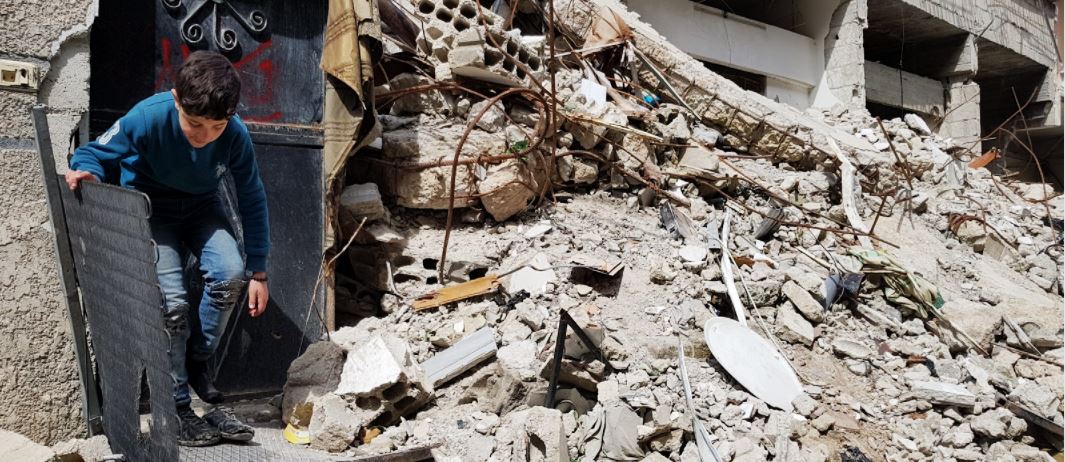
Life style, needs and aspirations of the neighbourhood, inhabitants. Image courtesy of reparametrize studio
Context
Freedom of movement and access to services remain extremely limited and challenging.The majority of the inhabitants are women, kids and old men. Shelter and infrastructure damage has taken place on a massive scale. Syrian heritage and cultural legacies like The Old Zamalka Bath and Grand Mosque got destroyed. These acted as community spaces where people met for Friday prayer. A social point of interaction.
On the other hand, a significant number of inhabitant were able or would like to return to their communities of origin. In areas hosting a large number of displaced people or returnees, community-based support to facilitate access to basic services and livelihood opportunities will be needed.
Relief Organizations provide fresh water for inhabitants. Electricity lines destroyed everywhere. Some inhabitants manage to secure their necessary needs by crossing between neighborhoods. High Percentage of repairing work is being done by locals.
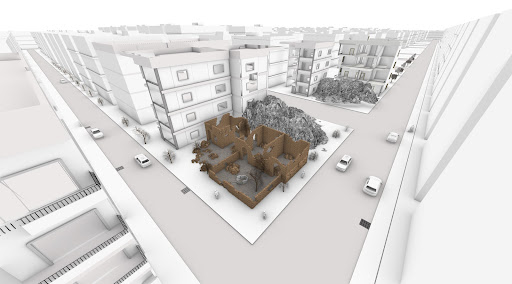
Site of intervention. Image courtesy reparametrize studio
Site
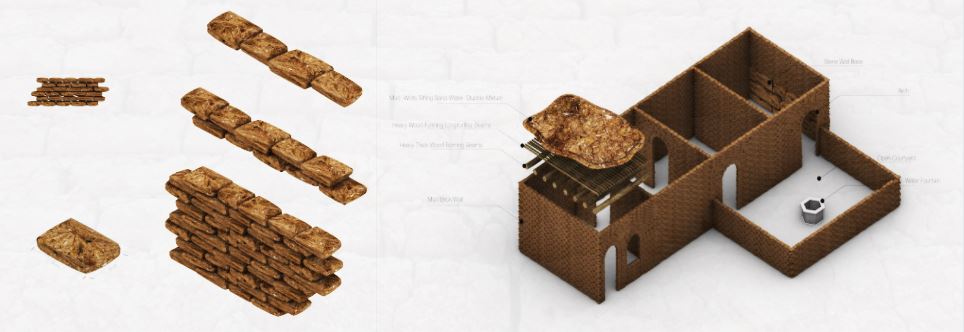
3rd model of design site detailing elements of mud house (Intervention to be held here) courtesy of reparametrize studio
Typical mud house
The old mud houses are characterized by adjacent surfaces for easy communication between neighbours. The number of rooms in a house depends on the size of the house, and each wall in it consists of two opposite walls called "two pills" filling the space between them with a quantity of mud bricks or small stones. As for the threshold, it is built over the door with long stones or a long piece of wood. Atones are built on top of it forming the” Arch”.
In the center or out of the house is the “The Courtyard” which is the most important part of the house. It uses a unique cooling system using plants, the water fountain in the center and sunlight. It can be used for several functions such as family gathering and social occasions, so it is considered as the main place for in the house. Furthermore roof is structured from thick solid wood forming beams and a mixture of hay, mud ,white sand and water is installed on top of it .
Mud is cost effective and has lower maintenance compared to various other building materials. It is long lasting ,it absorbs heat in summer , it is also a sustainable material as it uses components from nature and it can be recycled as well.
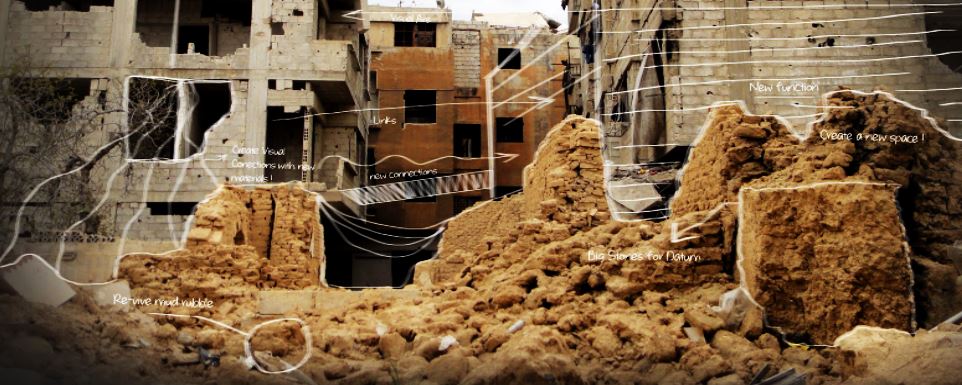
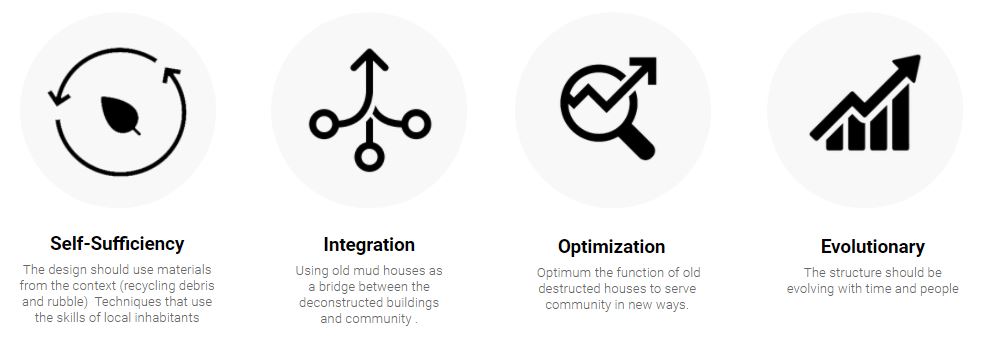
Objectives
Participants are required to design new spaces taking into consideration convenient solutions, and also create new links with the destruction around. The design should incorporate safety and it should be adapted to the context in a way that it revives it.
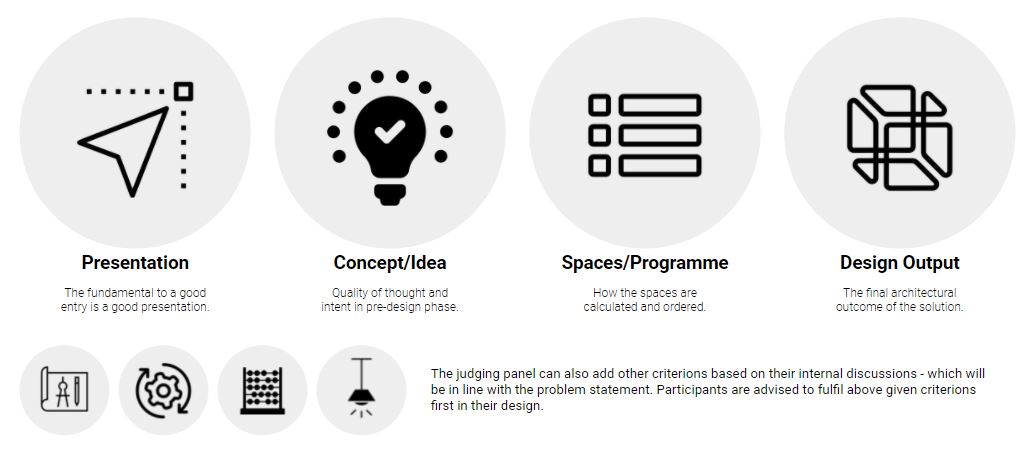
Judging Criteria
The entries will be judged by an international jury of the competition on the following criterions:
About

The Reparametrize Studio span from design, research, consultancy, publication to project realization. Reparametrize states the attitude and core value of the practice that the research is not just accept what it is in the state of art design manner, it practices parametric design but reorganize and reinvent the value judgment, it reconstructs the design process in order to response to more complex question in realistic condition, it reunites the innovative mind and practical hand to work together in order to make new contribution to the profession.
With the help of advanced parametric design, VR/AR enhancement, and rapid prototyping technology, the studio established an innovative, integrated, articulated design methodology, aim to improve rapid development and coexistence in new era of technology. Based on the design principle, the studio dedicated to solve side effects and problems caused by the constantly changing of the world.
The studio work as an equal, flat decentralized system with interdisciplinary cooperation, strong reasoning procedural and rigorous research system. It is a strong network of architects, researchers, experts and partners. Together the multiple objective of design could be taking care of and making a new alternative to the future.
Website : http://reparametrize.com/
Queries: support@uni.xyz
Discover other competitions: https://uni.xyz/competitions
Facebook: https://www.facebook.com/unixyzglobal/
Instagram: https://www.instagram.com/uni.xyz/
Discover FAQ’s about this competition on our help forum here: http://help.uni.xyz/
Similar Competitions
Discover competitions you might be interested in



Packaging challenge - Design meets sustainability

Design challenge to equip cities with modern furniture

The Global Benchmark for Architecture Dissertation Awards

