
Embassy
Challenge to design an Embassy of distinct architectural influences
Overview
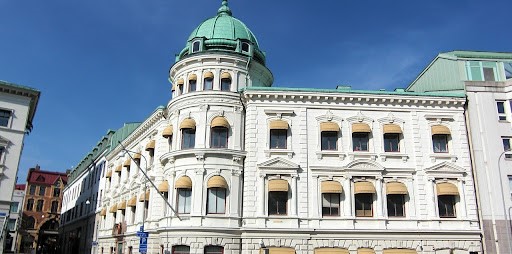 Fig: 1 - Not just the government officials but even the structure that houses the office for political relations is called the embassy.
INSTITUTION OF DIPLOMACY
Embassies are not unfamiliar concepts in our modern world. As the world becomes increasingly global there is an important need to establish trade and diplomatic connections between nations.
There is also a need to create opportunities for representation and protection of a country’s residents rights in a foreign nation. Embassies and consulates become important offices to pursue these goals. While different embassies enjoy different freedoms in their receiving states they are an unmistakable representation of their home countries.
Yet often these structures emerge as homogeneous spaces that don’t always represent the cultural amalgamation they offer in theory.
Can we imagine embassy spaces that celebrate this cultural amalgamation even through its design?
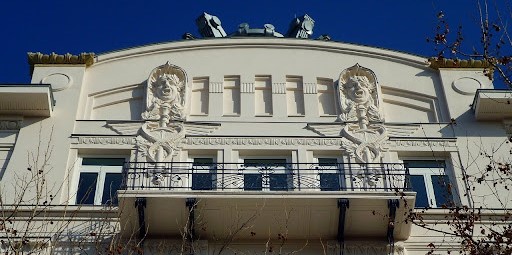 Fig: 2 - Embassy architecture serves as a powerful symbol that provides an instantaneous and indelible impression of a country.
THE IRISH CONSULATE
To begin experimenting with this idea of creating spaces that combine architectural practices from two different regions of the world to represent unity even in structure it is important to first establish a context.
In this project, the chosen context is the newly proposed Irish embassy in Morocco.
The Irish government has now maintained diplomatic relationships in the African continent for 60 years and is represented in 12 embassies across the continent. The Irish government goal is to be expanded with three new embassies by 2050 including a new embassy in Morocco. The primary goal behind this expansion is to improve economic transactions and bolster trade and investment between the nations.
Intriguingly Ireland and Morocco have distinctly diverse architectural heritages and it may be interesting to consider how these styles can coalesce aesthetically in space to celebrate unity.
 Fig: 3 - Style and diplomatic terms are to be balanced making the embassy building look impressive yet maintaining its transparency.
BRIEF
Brief: The challenge here is to imagine an embassy space for Ireland in Morocco that attempts to use architectural elements inspired by both nations' styles to represent unity.
An embassy is a public building with a heavy political element to it but remains accessible to all. The design must be functional and convenient to navigate for dignitaries and staff. Privacy and interaction must be guided in the layout as per the nature of activities.
The aim is to challenge individuals to push spatial design skills by attempting to imagine a space that borrows from two distinctly different architectural skills. This project is only speculation to challenge design abilities.
The design outcome should be a space where foreigners can learn basic information about the history of Ireland, its culture, its economy and the language. In combining the architectural style the design should not neglect the receiving countries' predominant climatic conditions.
OBJECTIVES
Functional: The design outcome should have a functional layout that serves the various purposes of an embassy with ease
Accessible: The designed space should be easily accessible
Balance: embassies have a precarious balance between public and private spaces that function for both their employees as well as visitors
Combine: How does the design outcome combine the two distinct architectural styles to produce a cohesive structure that represents unity.
SITE
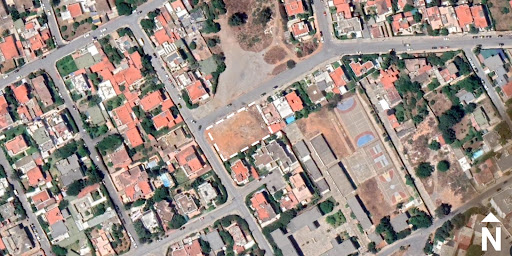
Rabat, Morocco
As determined by the chosen context, the site for this project is located in Rabat, Morocco. The site is located in central Rabat in a residential area with larger houses. Embassies in Rabat are spread across the city and there are several other embassies a short distance away from the site.
Site Area: 1309 sqm
Height Restriction: 10 meters
Ground Coverage: 20%
Maximum FAR: 0.5
Setbacks (as per CAD plan)
Coordinates: 33°59'28.9"N 6°49'18.5"W
AREA PROGRAMME
The design outcome must contain the following spaces:
- Entrance: Reception and waiting ~ 50 sq.m
- Offices and workspaces for Consulate and Embassy:
- Consul Office ~ 60 sq.m
- Office of Ambassador ~ 40 sq.m
- Financiers Office ~ 20 sq.m
- Attache Offices ~ 60 sq.m
- Protocol Room ~ 30 sq.m
- Meeting Room (for individuals and groups both) ~ 4 rooms of 40 sq.m each
- Conference room ~ 2 rooms of 50 sq.m each
- Chancery ~ 40 sq.m
- Administration/Operations:
- Director’s chamber ~ 20 sq.m
- Staff lounge and desks ~ 80 sq.m
- Canteen ~ 40 sq.m
- Staff residences (for temporary stay) ~ 60 sq.m
- Guard house (for security detail, staff and surveillance room)~ 60 sq.m
- Public Spaces:
- A multi purpose hall for talks/workshops/exhibitions ~ 80 sq.m
- Library and curated gallery of Irish history, heritage and culture ~ 60 sq.m
- Formal dining area ~ 60 sq.m
- Open-air Theatre/amphitheatre for events, performances etc.
- Landscaping features like courtyards, terrace gardens, green roofs, memorial gardens and so on.
4. Circulation (20% of built area), Services and Parking.
(Note: You can add more functions in relevance or modify the above design programme.)
Similar Competitions
Discover competitions you might be interested in




Design challenge to reuse E-waste




Imagining parliament for an unified world.


Design challenge fostering public involvement in wildlife research


Design an urban fitness centre
