
Erudition
Competition to design a library and learning hub
Overview
 Fig: 1 - There is an evident information overload in current times (Credits-Shutterstock)
COMMUNITY LEARNING
The world around us is constantly evolving and there is a ton of information being formulated and brought into everyday life. Adapting to the changing times we are expected to get hold of this new age while still being able to navigate our way through this overwhelming amount of information available. This abundance of information has expanded our scope for growth and for building a better future. But the most effective way of addressing such information is through self and community learning.
In the 21st century access to education is a basic concept, but there are areas where education and learning resources are still inaccessible.
The lack of sufficient resources and accessibility towards it is creating a need to adapt and innovate through these problems.
Self-learning through reading is one of the major sources for us to equip ourselves and our community with the changing paradigm of learning and the information age.
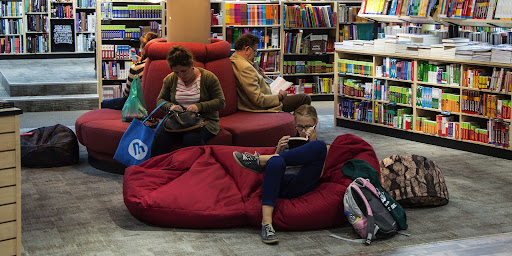 Fig: 2 - Books have and still continue to bind communities, can we extend libraries for learning too? (Credits-Pixabay-2)
PUBLIC LIBRARIES
Books since ancient times have been the generator of the abundance of knowledge, they've helped mankind evolve and flourish across ages. The way of reading has transitioned with time from audiobooks, digital to visual information, but none of the methods could replace the traditional approach of book reading at a library. Despite innovations, books continue to be the only resource that is accessible to the remotest communities through public libraries, where they lack an internet connection.
Can we create a library, a social incubator for education, as a space that not only provides resources for reading but also aid and access to education, sharing of knowledge and interaction of ideas?
Can this space withhold the community fabric together, through learning spaces?
How can we envision a learning space that transcends beyond a traditional library space, while encouraging the exploration and creation of a collaboration between the community?
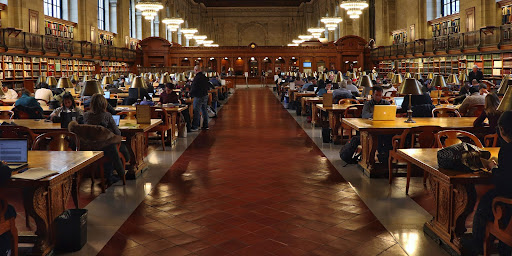 Fig: 3 - How would your library and learning spaces look in today's times? (Credits-Shravankumar Hiregoudar)
BRIEF OF THE COMPETITION
How can the perception towards public libraries be expanded by extending their function and introducing public learning spaces? What architectural solution can help in aiding the process of learning in remote locations?
Brief: The architecture competition brief calls for a design of a public library that will transcend itself by becoming a learning hub for the people.
The space designed should function as a learning hub for the local community with the primary aim of boosting public interactions and community development. Cost of construction, affordability and optimum usage of the provided space is an important aspects of the design. Encouraging energy-efficient and sustainable designs that are context conscious. Being a learning hub for a community, the design should develop and innovate beyond the traditional frameworks of learning and library spaces.
This design primarily aims to become an instrument of social change through community learning.
OBJECTIVES
Concept/innovative approach: How this design expands and innovates the traditional learning space framework.
Social inclusion in learning: To create a design for people from different age groups, backgrounds and educational levels.
Multifunctionality/flexibility of spaces: The ability of the design to adapt and evolve its functions, to incorporate learning as well as reading.
The following objectives are the point of beginning the design. Participants are free to assume the users and program to conceive their design. They are urged to be creative in an attempt to design a library that fulfils its typological goal and also includes spaces of education and learning as an extension to it.
SITE
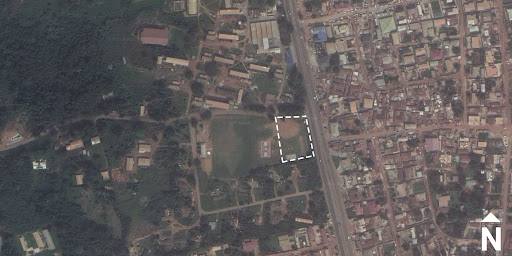
Kumasi, Ghana
Ghana, a country of western Africa, is situated on the coast of the Gulf of Guinea. Although relatively small in area and population, known for its lush forests, diverse animal life, and miles of sandy beaches along a picturesque coast it has a fascinating repository of cultural heritage.
The site is located in the dense urban neighbourhood of Kumasi, Ghana. Surrounded majorly by the small residential clusters. This site has one major access road and is connected by open public ground which makes it perfect for the intervention.
- Coordinates: 6°39'39.4"N 1°38'37.4"W
- Area: 5,799 sqm
- Height limit: 12m
- FAR (Floor Area Ratio): 1
- Ground coverage: 30%

