
Experiential
Challenge to reimagine schools through Waldorf’s philosophy
Overview
 Fig: 1 -Numerous schooling strategies over the years involve rigid classroom learning. While it helps in academics the overall development of the child is ignored (CreditsMuseums Victorian)
PREMISE
Alternative education is a term basically used to describe a variety of pedagogical approaches that are extinct. Different ranges of educational systems exist today in the world, the majority of these alternative learning systems aim for integrated learning; Development of a whole human being.
There are different alternative schooling strategies that make them apart from other conventional ways of learning. An individualized child-centric approach that is focused on creating a holistic upbringing of the child, this approach is satisfied through experiential learning that the child learns by itself through exploration and curiosity.
Based on this philosophy, of bringing about holistic learning of a child, Waldorf’s learning philosophy is practised. Waldorf philosophy proposes experiential learning strategies and provides the child with a scope to explore the world 'by doing things themselves.
How can this new pedagogical approach be classified into architecture interventions?
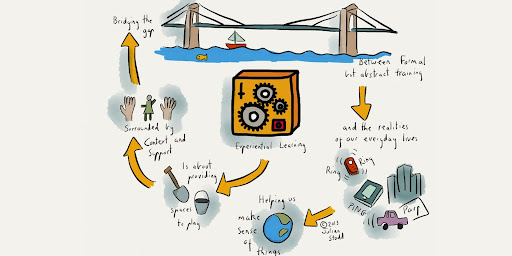 Fig: 2 - To mitigate the rigid schooling can we introduce the core philosophy of schools? (Credits-Julian Stood’s Learning Blog)
PHILOSOPHY
Waldorf's philosophy is coined to bring about a change in the approach of learning and education. Along with other philosophies, Waldorf’s philosophy has a focused aim of bringing about holistic learning through hands-on learning activities that the children perform by themselves.
Overall around the world, this approach of learning has been adopted and is applied extensively, as it generates a higher self-development in the child. Providing better learning capabilities and personality development the approach listed above are nonconventional, and so are the requirements of the spaces needed to perform them. The majority of learning spaces today are imagined as classrooms, but in the Waldorf concept, learning challenges the core pedagogical space.
Learning spaces are dynamic and constantly evolving spaces, where the users, the children are regarded as a driving force for this change.
How can architecture understand this change, and help promote these hands-on learning activities?
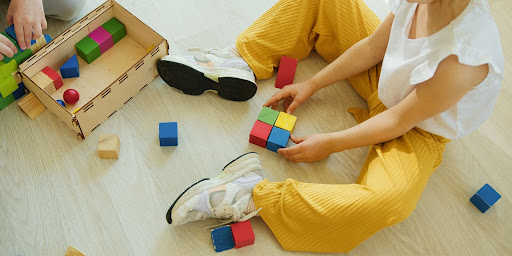 Fig: 3 -In what ways can architecture induce Waldorf’s philosophy in today’s times? (Credits-Artem Podrez)
BRIEF OF THE COMPETITION
Understanding the Waldorf principles and its approach is a basic need for creating a space that is focused on child-centric activities.
The aim of this competition is to rethink and reimagine the Waldorf school design beyond the perception of the mold of classroom design.
Brief: The architecture competition brief calls for a design of an activity-based, hands-on learning primary school design that is based on Waldorf learning principles.
The complex understanding of children's development and pedagogical spaces can be brought into tangible architectural solutions through the introduction of concepts and ideas.
The competition aims to challenge the conventional classroom design and promote a new design that facilitates a hands-on approach to learning.
OBJECTIVES
Flexibility in design: How does this design provide individual freedom and flexibility to the students to perform activities in their own way?
Innovation: What factors make the design challenging and innovative?
Multifunctional space: How efficiently is the design able to carry multiple functions?
Inclusion of philosophy: Is the design reflecting the philosophy of the school?
SITE
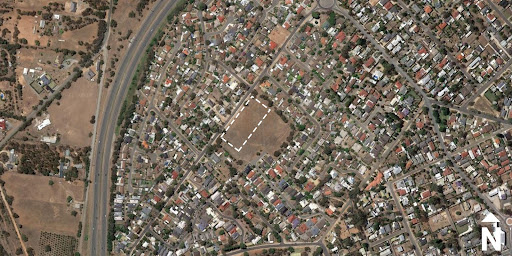
Willaston, Australia
Australia is the sixth-largest country by total area. It houses 26 million people. It has two different spheres of areas found in its region, the majority of which is urbanized and heavily concentrated, while on the other hand, it has dense and developed forest areas. A mega-diverse country the size gives a variety of landscapes and climates, with deserts in the centres and tropical rainforests in the northeastern regions. A variety of mountain regions and rainforests are existent on this continent.
The site is located in the central region of the highly crowded areas, it provides a variety of spaces around the site. Including the landscape, residential and commercial spaces. Provision for open areas and future multiplication this space offers a large avenue for architectural expansion and development.
Coordinates: 34°35'09.6"S 138°44'09.2"E
Area: 8579 sqm
Height limit: 10m
FAR (Floor Area Ratio): 1
Ground coverage: 50%
PROGRAMMATIC OUTLINE
User idea: The programmatic outline is intended for a capacity of 60 students. This number is recommended for this challenge.
The space ideas are as follows:
- Classroom/Learning/Instructional Areas: 40%
- Administration and staff areas: 25%
- Common open/closed recreational/landscape spaces: 25%
- Ancillary spaces, services and storage: 10%
Other additional spaces can be added by the participants as per their design needs.
Similar Competitions
Discover competitions you might be interested in




Challenge to design public laboratory


The Global Benchmark for Architecture Dissertation Awards
